

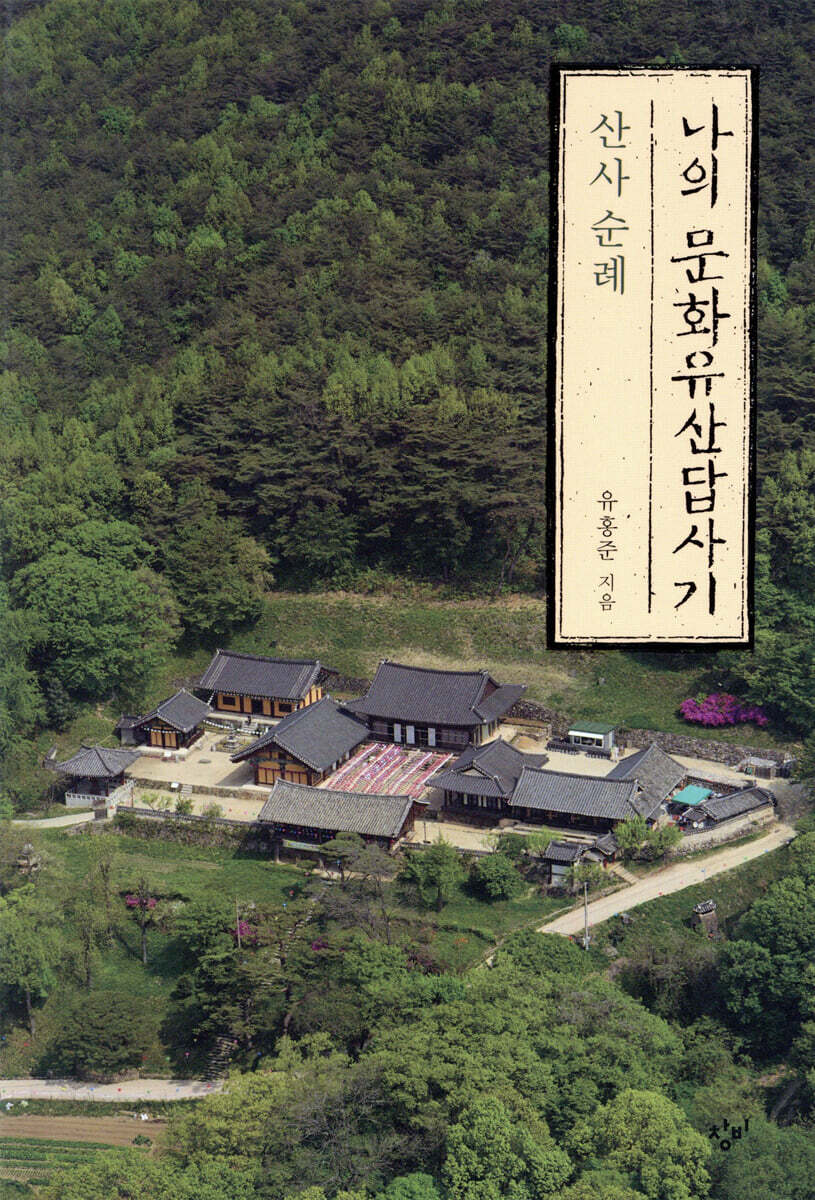
My Cultural Heritage Tour: Pilgrimage to a Mountain Temple
 |
Description
Book Introduction
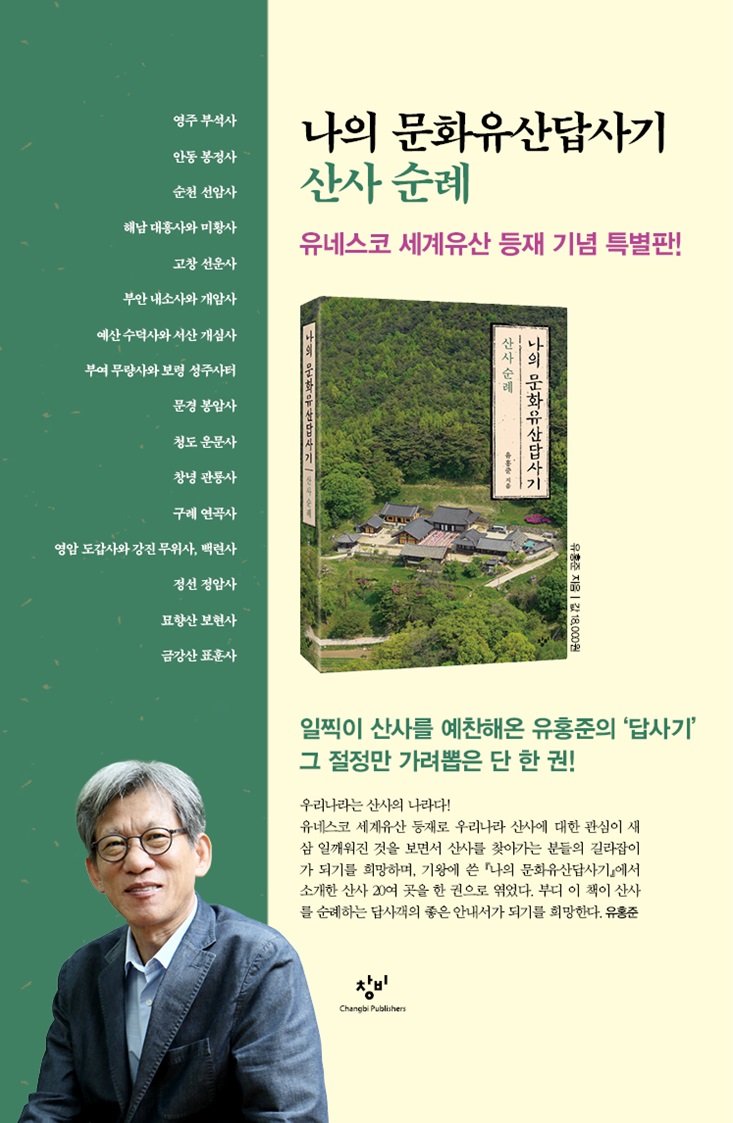
'Korean Mountain Temples', a special edition commemorating its listing as a UNESCO World Heritage Site!
A single volume of Yoo Hong-jun's 'Travelogue', which has long praised the mountain temple, and contains only the best of it!
Since the publication of the first volume, "Namdo Exploration No. 1," in 1994, the longest-running best-selling series in Korea, "My Cultural Heritage Exploration," has sold over 4 million copies as of this year. The series has diligently and painstakingly introduced "mountain temples" from all over Korea in its 10 domestic volumes.
The author, Professor Yoo Hong-jun, is also one of Korea's leading experts who has paid attention to, widely publicized, and praised the value and beauty of our mountain temples.
Last June, seven of our mountain temples were registered as UNESCO World Heritage Sites, so now ‘mountain temples’ are not just our cultural heritage, but a proud cultural heritage recognized by the world.
To commemorate the UNESCO World Heritage designation, we have selected 20 representative mountain temples in South Korea that have been featured in our travelogues, as well as two mountain temples in North Korea that we cannot visit yet but will someday.
This is a new edition of writings compiled over a long period of time, designed to help today's readers focus on the value and history of our mountain temples.
In Korea, where you can always find a mountain temple no matter where you go, I hope that this will be a faithful and attentive guide for this fall's hiking trails, where you can experience the beauty of the mountain temple firsthand.
A single volume of Yoo Hong-jun's 'Travelogue', which has long praised the mountain temple, and contains only the best of it!
Since the publication of the first volume, "Namdo Exploration No. 1," in 1994, the longest-running best-selling series in Korea, "My Cultural Heritage Exploration," has sold over 4 million copies as of this year. The series has diligently and painstakingly introduced "mountain temples" from all over Korea in its 10 domestic volumes.
The author, Professor Yoo Hong-jun, is also one of Korea's leading experts who has paid attention to, widely publicized, and praised the value and beauty of our mountain temples.
Last June, seven of our mountain temples were registered as UNESCO World Heritage Sites, so now ‘mountain temples’ are not just our cultural heritage, but a proud cultural heritage recognized by the world.
To commemorate the UNESCO World Heritage designation, we have selected 20 representative mountain temples in South Korea that have been featured in our travelogues, as well as two mountain temples in North Korea that we cannot visit yet but will someday.
This is a new edition of writings compiled over a long period of time, designed to help today's readers focus on the value and history of our mountain temples.
In Korea, where you can always find a mountain temple no matter where you go, I hope that this will be a faithful and attentive guide for this fall's hiking trails, where you can experience the beauty of the mountain temple firsthand.
- You can preview some of the book's contents.
Preview
index
In publishing the book
The aesthetics of mountain temples
Yeongju Buseoksa Temple
I go and go again with a heavy heart
Andong Bongjeongsa Temple
The nobleman's hometown speaks of the dignity of the scholar.
Suncheon Seonamsa Temple
The aesthetics of a mountain temple, or a deep temple in the deep mountains
Daeheungsa Temple and Mihwangsa Temple in Haenam
When coziness and spaciousness come together
Gochang Seonunsa Temple
Camellia flowers, monk Baekpa, and sunset at Nakjodae
Buan Naeso Temple and Gaeam Temple
The temples that have preserved precious beauties to the end
Yesan Sudeoksa Temple and Seosan Gaesimsa Temple
The Daeungjeon Hall and the small mirror pond, which seem to be tired of longing
Buyeo Muryangsa Temple and Boryeong Seongjusa Temple Site
The wind, the stones, and the trees are like a mountain and water gate.
Bongamsa Temple in Mungyeong
The stars return to heaven
Cheongdo Unmunsa Temple
When the clear dawn prayer rings softly
Changnyeong Gwanryongsa Temple
A historic mountain temple in the old town of Bihwagayaya
Yeongoksa Temple in Gurye
A thousand-year-old temple steeped in the lyricism of the Seomjin and Boseong Rivers
Yeongam Dogapsa Temple, Gangjin Muwisa Temple, and Baekryeonsa Temple
Quiet temples calling out to the arrival of spring in the southern region
Jeongseon Jeongamsa Temple
A mossy Zen temple under a triple sky
Pohyonsa Temple on Myohyangsan Mountain
So the mountain was called Myohyang and the temple was called Bohyeon.
Geumgangsan Pyohunsa Temple
The pulse of Geumgang is still beating
Source of original text included in the article
The aesthetics of mountain temples
Yeongju Buseoksa Temple
I go and go again with a heavy heart
Andong Bongjeongsa Temple
The nobleman's hometown speaks of the dignity of the scholar.
Suncheon Seonamsa Temple
The aesthetics of a mountain temple, or a deep temple in the deep mountains
Daeheungsa Temple and Mihwangsa Temple in Haenam
When coziness and spaciousness come together
Gochang Seonunsa Temple
Camellia flowers, monk Baekpa, and sunset at Nakjodae
Buan Naeso Temple and Gaeam Temple
The temples that have preserved precious beauties to the end
Yesan Sudeoksa Temple and Seosan Gaesimsa Temple
The Daeungjeon Hall and the small mirror pond, which seem to be tired of longing
Buyeo Muryangsa Temple and Boryeong Seongjusa Temple Site
The wind, the stones, and the trees are like a mountain and water gate.
Bongamsa Temple in Mungyeong
The stars return to heaven
Cheongdo Unmunsa Temple
When the clear dawn prayer rings softly
Changnyeong Gwanryongsa Temple
A historic mountain temple in the old town of Bihwagayaya
Yeongoksa Temple in Gurye
A thousand-year-old temple steeped in the lyricism of the Seomjin and Boseong Rivers
Yeongam Dogapsa Temple, Gangjin Muwisa Temple, and Baekryeonsa Temple
Quiet temples calling out to the arrival of spring in the southern region
Jeongseon Jeongamsa Temple
A mossy Zen temple under a triple sky
Pohyonsa Temple on Myohyangsan Mountain
So the mountain was called Myohyang and the temple was called Bohyeon.
Geumgangsan Pyohunsa Temple
The pulse of Geumgang is still beating
Source of original text included in the article
Detailed image
Publisher's Review
Korea's mountain temples become UNESCO World Heritage sites.
At the end of June, the 42nd World Heritage Committee decided to inscribe ‘Sansa, Buddhist Mountain Monasteries in Korea’ on the World Heritage List.
‘Sansas, Buddhist Mountain Monasteries in Korea’ became Korea’s 13th World Heritage Site.
The seven temples are Yangsan Tongdosa, Yeongju Buseoksa, Andong Bongjeongsa, Boeun Beopjusa, Gongju Magoksa, Suncheon Seonamsa, and Haenam Daeheungsa.
The World Heritage Committee evaluated that 'Sansa, Buddhist Mountain Monasteries in Korea' met the 'Outstanding Universal Value', which is a condition for World Heritage listing, for its 'continuity from its founding in the 7th to 9th centuries to the present and the deep historical significance of Korean Buddhism.'
It is not just those seven temples, but we can say that there are mountain temples everywhere in the country, and it is not an exaggeration to say that there are far more mountain temples than mountains.
To that extent, the mountain temple and temple culture that is familiar to us has now become recognized worldwide.
Although it is receiving more attention and interest thanks to its designation as a World Heritage Site, how much do we really know about the mountain temples that can be found everywhere in our mountains?
The recently published 『My Cultural Heritage Travelogue: Mountain Temple Pilgrimage』 (hereafter referred to as 『Travelogue: Mountain Temple Pilgrimage』) introduces four of the seven temples: Buseoksa Temple in Yeongju, Bongjeongsa Temple in Andong, Seonamsa Temple in Suncheon, and Daeheungsa Temple in Haenam, as well as 15 temples in South Korea that are not included in the list but are of equal beauty and value, and two temples in North Korea.
From the layout of the temple to the seating arrangement, the value and aesthetics of a mountain temple
In 『Travelogue: Pilgrimage to Mountain Temples』, the history of mountain temples is not only praised, but also the layout of each mountain temple, the way the mountain temples are nestled against the mountain, and the ‘aesthetics of mountain temples’ created by the harmony between the mountain temples and nature are praised by selecting representative mountain temples from around the country.
Yeongju Buseoksa Temple, which is in harmony with the ridge of the Sobaek Mountains, adds to the serenity of the mountain temple from its steep entrance road and apple orchard, and the view from Muryangsujeon Hall is a landscape painting in itself.
Bongjeongsa Temple in the noble town of Andong is a temple that you must visit not only for its neat layout but also for its beautiful hanok and courtyard.
Seonamsa Temple in Suncheon is a representative temple of the Taego Order, where every detail of the mountain temple is alive from the entrance, and Daeheungsa Temple in Haenam, a village at the southernmost tip of the land, is a temple worth enjoying for its many famous plaques written by Chusa Kim Jeong-hui and Choui Seonsa.
Although not designated as a World Heritage Site, 『Travelogue: Pilgrimage to Mountain Temples』 introduces famous temples from all over the country that everyone has heard of and visited at least once.
Seonunsa Temple in Gochang and Naeso Temple in Buan, representative temples of Jeolla Province, are temples that can be enjoyed with the sunset over the West Sea. Sudeoksa Temple in Yesan and Muryangsa Temple in Buyeo are located within a distance that can be visited in a day, and each temple has its own story and history.
Bongamsa Temple in Mungyeong is a pristine temple with restricted access to the general public, and there are not many articles describing its scenery. Therefore, the history and introduction to cultural heritage contained in 『Travelogue: Pilgrimage to a Mountain Temple』 will provide a valuable experience.
Unmunsa Temple in Cheongdo, a nunnery that brings to mind the gentle sounds of dawn prayers no less than the scenery of a Buddhist temple; Gwanryongsa Temple in Changnyeong, located on Hwawangsan Mountain, famous for its relics from the Bihwagayaya period and fields of reeds; and Jeongamsa Temple in Jeongseon, famous for its Sumanotap Pagoda that stands out from afar, are outstanding mountain temples that are at one with nature and exude a serene atmosphere within the mountains.
Here, 『Travelogue: Pilgrimage to Mountain Temples』 introduces two temples in North Korea.
These are Pohyonsa Temple in Myohyangsan Mountain and Pyohunsa Temple in Geumgangsan Mountain, which are included in the ‘North Korea section’ of ‘My Cultural Heritage Tour’.
Since North Korea has a different Buddhist tradition from South Korea, the scenery of its mountain temples is somewhat different from that of South Korea, but we have included temples with well-preserved cultural heritage.
If inter-Korean relations improve and tourism to Mt. Kumgang resumes immediately, we expect it will soon become a viable destination for field trips.
Praising the beauty of our unique traditions and mountain temples
Most of the Chinese temples listed as UNESCO World Heritage Sites are cave temples, and Kyoto, Japan, has 14 temples with beautiful gardens listed as World Heritage Sites.
In contrast, we were able to create a legacy called 'Sansa' thanks to our unique natural environment with mountains and valleys wherever we go.
Although they are temples under the same Buddhist tradition, they look different in each country.
Based on its uniqueness, the book 『Travelogue: Pilgrimage to Mountain Temples』, which gathers and unfolds the history, structure, and value, is a book full of the love for mountain temples of author Yoo Hong-jun, who was one of the first to pay attention to our mountain temples and took the lead in praising and publicizing them.
Perhaps these could be said to be the most climactic parts of the 'Dapsagi'.
Regardless of your religion, whether you have one or not, this will be a faithful guide to an autumn hiking trail where you can truly experience the beauty of the mountain temple.
At the end of June, the 42nd World Heritage Committee decided to inscribe ‘Sansa, Buddhist Mountain Monasteries in Korea’ on the World Heritage List.
‘Sansas, Buddhist Mountain Monasteries in Korea’ became Korea’s 13th World Heritage Site.
The seven temples are Yangsan Tongdosa, Yeongju Buseoksa, Andong Bongjeongsa, Boeun Beopjusa, Gongju Magoksa, Suncheon Seonamsa, and Haenam Daeheungsa.
The World Heritage Committee evaluated that 'Sansa, Buddhist Mountain Monasteries in Korea' met the 'Outstanding Universal Value', which is a condition for World Heritage listing, for its 'continuity from its founding in the 7th to 9th centuries to the present and the deep historical significance of Korean Buddhism.'
It is not just those seven temples, but we can say that there are mountain temples everywhere in the country, and it is not an exaggeration to say that there are far more mountain temples than mountains.
To that extent, the mountain temple and temple culture that is familiar to us has now become recognized worldwide.
Although it is receiving more attention and interest thanks to its designation as a World Heritage Site, how much do we really know about the mountain temples that can be found everywhere in our mountains?
The recently published 『My Cultural Heritage Travelogue: Mountain Temple Pilgrimage』 (hereafter referred to as 『Travelogue: Mountain Temple Pilgrimage』) introduces four of the seven temples: Buseoksa Temple in Yeongju, Bongjeongsa Temple in Andong, Seonamsa Temple in Suncheon, and Daeheungsa Temple in Haenam, as well as 15 temples in South Korea that are not included in the list but are of equal beauty and value, and two temples in North Korea.
From the layout of the temple to the seating arrangement, the value and aesthetics of a mountain temple
In 『Travelogue: Pilgrimage to Mountain Temples』, the history of mountain temples is not only praised, but also the layout of each mountain temple, the way the mountain temples are nestled against the mountain, and the ‘aesthetics of mountain temples’ created by the harmony between the mountain temples and nature are praised by selecting representative mountain temples from around the country.
Yeongju Buseoksa Temple, which is in harmony with the ridge of the Sobaek Mountains, adds to the serenity of the mountain temple from its steep entrance road and apple orchard, and the view from Muryangsujeon Hall is a landscape painting in itself.
Bongjeongsa Temple in the noble town of Andong is a temple that you must visit not only for its neat layout but also for its beautiful hanok and courtyard.
Seonamsa Temple in Suncheon is a representative temple of the Taego Order, where every detail of the mountain temple is alive from the entrance, and Daeheungsa Temple in Haenam, a village at the southernmost tip of the land, is a temple worth enjoying for its many famous plaques written by Chusa Kim Jeong-hui and Choui Seonsa.
Although not designated as a World Heritage Site, 『Travelogue: Pilgrimage to Mountain Temples』 introduces famous temples from all over the country that everyone has heard of and visited at least once.
Seonunsa Temple in Gochang and Naeso Temple in Buan, representative temples of Jeolla Province, are temples that can be enjoyed with the sunset over the West Sea. Sudeoksa Temple in Yesan and Muryangsa Temple in Buyeo are located within a distance that can be visited in a day, and each temple has its own story and history.
Bongamsa Temple in Mungyeong is a pristine temple with restricted access to the general public, and there are not many articles describing its scenery. Therefore, the history and introduction to cultural heritage contained in 『Travelogue: Pilgrimage to a Mountain Temple』 will provide a valuable experience.
Unmunsa Temple in Cheongdo, a nunnery that brings to mind the gentle sounds of dawn prayers no less than the scenery of a Buddhist temple; Gwanryongsa Temple in Changnyeong, located on Hwawangsan Mountain, famous for its relics from the Bihwagayaya period and fields of reeds; and Jeongamsa Temple in Jeongseon, famous for its Sumanotap Pagoda that stands out from afar, are outstanding mountain temples that are at one with nature and exude a serene atmosphere within the mountains.
Here, 『Travelogue: Pilgrimage to Mountain Temples』 introduces two temples in North Korea.
These are Pohyonsa Temple in Myohyangsan Mountain and Pyohunsa Temple in Geumgangsan Mountain, which are included in the ‘North Korea section’ of ‘My Cultural Heritage Tour’.
Since North Korea has a different Buddhist tradition from South Korea, the scenery of its mountain temples is somewhat different from that of South Korea, but we have included temples with well-preserved cultural heritage.
If inter-Korean relations improve and tourism to Mt. Kumgang resumes immediately, we expect it will soon become a viable destination for field trips.
Praising the beauty of our unique traditions and mountain temples
Most of the Chinese temples listed as UNESCO World Heritage Sites are cave temples, and Kyoto, Japan, has 14 temples with beautiful gardens listed as World Heritage Sites.
In contrast, we were able to create a legacy called 'Sansa' thanks to our unique natural environment with mountains and valleys wherever we go.
Although they are temples under the same Buddhist tradition, they look different in each country.
Based on its uniqueness, the book 『Travelogue: Pilgrimage to Mountain Temples』, which gathers and unfolds the history, structure, and value, is a book full of the love for mountain temples of author Yoo Hong-jun, who was one of the first to pay attention to our mountain temples and took the lead in praising and publicizing them.
Perhaps these could be said to be the most climactic parts of the 'Dapsagi'.
Regardless of your religion, whether you have one or not, this will be a faithful guide to an autumn hiking trail where you can truly experience the beauty of the mountain temple.
GOODS SPECIFICS
- Date of publication: August 24, 2018
- Page count, weight, size: 400 pages | 588g | 142*208*30mm
- ISBN13: 9788936476694
- ISBN10: 8936476696
You may also like
카테고리
korean


korean

![GQ KOREA Mark (Monthly): December [2025]](http://librairie.coreenne.fr/cdn/shop/files/8ef265dbbfbf186523ed75ba7319009d.jpg?v=1765340328&width=3840)


