

The MIND Diet: A Brain-Healthy Diet for Cognitive Impairment and Dementia
 |
Description
Book Introduction
“In the age of 100, a smart choice for dementia prevention, brain health, and slow aging!
Transform your dining table with the easy and delicious Korean MIND diet!”
Dementia: A terrifying disease that began 15-20 years ago, with a population of 1 million.
In the age of 100, many people choose 'dementia' as the most feared disease.
Currently, the prevalence of mild cognitive impairment in Korea is 20% of the elderly population, and the prevalence of dementia patients is 7%.
The population is over 1 million and continues to grow.
Although dementia mainly appears with age (after age 65), it is not a disease that actually occurs suddenly.
This is because the cause of dementia (beta-amyloid protein) begins to gradually accumulate in the brain 15 to 20 years ago, leading to the development of the disease.
Dementia is a disease that is greatly influenced by family history, so you should prepare for it starting in your mid-forties.
So, what should we do first? We need to change our lifestyle and eating habits.
Transform your dining table with the easy and delicious Korean MIND diet!”
Dementia: A terrifying disease that began 15-20 years ago, with a population of 1 million.
In the age of 100, many people choose 'dementia' as the most feared disease.
Currently, the prevalence of mild cognitive impairment in Korea is 20% of the elderly population, and the prevalence of dementia patients is 7%.
The population is over 1 million and continues to grow.
Although dementia mainly appears with age (after age 65), it is not a disease that actually occurs suddenly.
This is because the cause of dementia (beta-amyloid protein) begins to gradually accumulate in the brain 15 to 20 years ago, leading to the development of the disease.
Dementia is a disease that is greatly influenced by family history, so you should prepare for it starting in your mid-forties.
So, what should we do first? We need to change our lifestyle and eating habits.
- You can preview some of the book's contents.
Preview
index
Prologue
04 My Grandmother and Her Relationship with Dementia (written by medical nutritionist Park Yu-kyung)
06 Time to Create Life: What You Eat Makes You (written by culinary researcher Im Kyung-mi)
12 First! My Diet Checklist / Are you eating a diet that promotes slow aging and brain health?
[ GUIDE / Understanding the MIND Diet for Slow Aging and Cognitive Impairment and Dementia ]
16 Cognitive decline, a common aging phenomenon / Examining the differences between natural aging, mild cognitive impairment, and dementia
24 Essential Diet and Nutrition Guidelines for Slow Aging and Brain Health / Understanding the MIND Diet: 7 Essential Nutrients for Brain Health
40 Korean-style MIND diet to start today / Ingredient selection, seasoning, cooking methods, meal pattern guide, recommended ingredients and frequency of eating for the Korean-style MIND diet, and meal plan composition
58 Q&A / Questions and answers on everything from nutrition and cooking to lifestyle habits.
[ RECIPE / Korean-style MIND diet: Easy and delicious recipes to put into practice ]
Part 1.
A MIND versatile item that can be used for every meal by making a generous amount of super-simple side dishes.
MIND Ssamjang
68 Nut Ssamjang
70 Olive Oil Ssamjang
70 Green Pepper Mushroom Ssamjang
hummus
72 Chickpea Hummus
74 Paprika Hummus
74 Turmeric Hummus
pesto
76 Basil Pesto
78 Mushroom Pesto
78 Olive Pesto
Lape
80 Turmeric Kohlrabi
80 Vitrape
81 Cabbage Rape
81 Carrot Rape
Pickled vegetables in oil
84 Tomato Garlic Oil Pickles
84 Assorted Mushrooms Pickled in Oil
85 Paprika Oil Pickles
85 Spicy Eggplant Pickled in Oil
Dipping sauces & salsas
88 Tuna Dipping Sauce
88 Tomato Salsa
89 Cucumber Yogurt Dipping Sauce
89 Perilla Leaf Salsa
Appendix 1 / 7 types of MIND healthy food
Appendix 2 / 5 MIND Low-Sugar Snacks
Part 2.
Vegetables, mushrooms, and protein side dishes perfect for the Korean MIND table.
Vegetable & Mushroom Side Dishes (Choose 2 per meal)
103 Raw water parsley salad
104 Cucumber and Sesame Salad
105 Pickled vegetables in sesame oil
106 Cabbage and Carrot Salad
107 Grilled Eggplant Salad
108 Cold Lotus Root Salad
110 Burdock and Carrot Salad
111 Tomato, Onion, and Peanut Salad
112 Broccoli and Perilla Leaf Salad
114 Steamed Bok-gyeong-chae
116 Braised Eggplant with Green Peppers
118 Host Egg Stir-fry
120 Paprika Shrimp Mustard Salad
122 Grilled shiitake mushrooms in sesame oil
123 Braised Mushrooms
124 Stir-fried deer antler mushrooms and zucchini
126 Mushroom Japchae
128 Mushroom Egg Pancake
Tofu & Bean Side Dishes (choose at least 3 times a week)
130 Tofu and Seaweed Salad
132 Soft tofu and egg stew
134 Stir-fried Broccoli with Tofu
136 Grilled Tofu and Cod Roe
138 Tofu Okonomiyaki
140 Kkanpung Tofu
142 Tofu and Anchovy Stew
143 Tofu and Mushroom Stew with Turmeric
144 Peanut and Walnut Stew
145 Konjac and Chickpea Stew
146 Vegetable Bean Pancake
Chicken & Duck Side Dishes (Select at least twice a week)
148 Chicken and Vegetable Wrap
150 Chicken and Cashew Stir-fry
152 Chicken and Eggplant Stir-fry
154 Chicken Pancake and Green Onion Salad
156 Chicken and Vegetable Stew
158 Grilled Chicken Legs with Green Onions and Perilla Leaf Salsa
160 Chicken Breast Margherita
162 Smoked Roast Duck and Cold Vegetables
164 Smoked Duck with Vegetables
166 Duck meat stew
Fish & Seafood Side Dishes (Select at least once a week)
168 Grilled Tuna with Mustard
170 Mackerel braised in soy sauce
172 Grilled Mackerel and Potato Stew
174 White meat sashimi with vegetable salad
176 Gwamegi Peanut Wrap
178 Cold Tomato Octopus Salad
180 Abalone Paprika Grill
182 Shrimp Tomato Gambas
184 Steamed Salmon, Clams, and Vegetables
186 Salmon Steak with Mushroom Sauce
Part 3.
MIND One-Bowl Meal: Breakfast, Rice, Noodles, Salad, and Sandwich. Vegetables, Sweet Potatoes, and Beans.
15-minute breakfast prep
190 Natto Raw Tofu and Green Salad
192 Suran Greek Yogurt and Berries
194 Leek Omelette and Fruit Salad
196 Mushroom and Egg Open Sandwich
198 Soft Tofu Egg Rice Bowl
Meal salad without dressing
200 Tomato Greek Yogurt Salad
202 Egg Vegetable Steamed Salad
204 Cashew Apple Cabbage Salad
206 Chicken Breast, Mushroom, and Orange Salad
208 Roasted Eggplant and Bean Salad
210 Grilled Mushroom Tofu Salad
212 Burrata Cheese Tomato Salad
214 Garlic Shrimp Lentil Salad
216 Salmon Chickpea Salad
218 Tuna Cobb Salad
A bowl of rice
220 Grilled Tofu and Mushroom Bibimbap
222 Shrimp and Beef Stir-fried Rice
224 Pork and Eggplant Rice Bowl
226 Chicken Mushroom Konjac Rice
228 Root Vegetable Steak Pot Rice
230 Sandwich Kimbap
232 Carrot Lafe Egg Kimbap
A bowl of delicacy
234 Chicken Lentil Noodle Soup
236 Sesame Oil Nut Makguksu
238 Beef and Vegetable Stir-fried Noodles
240 Natto and Cod Roe Pasta
242 Avocado Berry Open Sandwich
244 Grilled Eggplant Mushroom Sandwich
246 Smoked Salmon Whole Wheat Tortilla Wraps
248 Tofu Noodles Vietnamese Spring Roll
Menu Plan / Korean MIND 2-Week Meal Plan
Index / Find menus by main ingredient
04 My Grandmother and Her Relationship with Dementia (written by medical nutritionist Park Yu-kyung)
06 Time to Create Life: What You Eat Makes You (written by culinary researcher Im Kyung-mi)
12 First! My Diet Checklist / Are you eating a diet that promotes slow aging and brain health?
[ GUIDE / Understanding the MIND Diet for Slow Aging and Cognitive Impairment and Dementia ]
16 Cognitive decline, a common aging phenomenon / Examining the differences between natural aging, mild cognitive impairment, and dementia
24 Essential Diet and Nutrition Guidelines for Slow Aging and Brain Health / Understanding the MIND Diet: 7 Essential Nutrients for Brain Health
40 Korean-style MIND diet to start today / Ingredient selection, seasoning, cooking methods, meal pattern guide, recommended ingredients and frequency of eating for the Korean-style MIND diet, and meal plan composition
58 Q&A / Questions and answers on everything from nutrition and cooking to lifestyle habits.
[ RECIPE / Korean-style MIND diet: Easy and delicious recipes to put into practice ]
Part 1.
A MIND versatile item that can be used for every meal by making a generous amount of super-simple side dishes.
MIND Ssamjang
68 Nut Ssamjang
70 Olive Oil Ssamjang
70 Green Pepper Mushroom Ssamjang
hummus
72 Chickpea Hummus
74 Paprika Hummus
74 Turmeric Hummus
pesto
76 Basil Pesto
78 Mushroom Pesto
78 Olive Pesto
Lape
80 Turmeric Kohlrabi
80 Vitrape
81 Cabbage Rape
81 Carrot Rape
Pickled vegetables in oil
84 Tomato Garlic Oil Pickles
84 Assorted Mushrooms Pickled in Oil
85 Paprika Oil Pickles
85 Spicy Eggplant Pickled in Oil
Dipping sauces & salsas
88 Tuna Dipping Sauce
88 Tomato Salsa
89 Cucumber Yogurt Dipping Sauce
89 Perilla Leaf Salsa
Appendix 1 / 7 types of MIND healthy food
Appendix 2 / 5 MIND Low-Sugar Snacks
Part 2.
Vegetables, mushrooms, and protein side dishes perfect for the Korean MIND table.
Vegetable & Mushroom Side Dishes (Choose 2 per meal)
103 Raw water parsley salad
104 Cucumber and Sesame Salad
105 Pickled vegetables in sesame oil
106 Cabbage and Carrot Salad
107 Grilled Eggplant Salad
108 Cold Lotus Root Salad
110 Burdock and Carrot Salad
111 Tomato, Onion, and Peanut Salad
112 Broccoli and Perilla Leaf Salad
114 Steamed Bok-gyeong-chae
116 Braised Eggplant with Green Peppers
118 Host Egg Stir-fry
120 Paprika Shrimp Mustard Salad
122 Grilled shiitake mushrooms in sesame oil
123 Braised Mushrooms
124 Stir-fried deer antler mushrooms and zucchini
126 Mushroom Japchae
128 Mushroom Egg Pancake
Tofu & Bean Side Dishes (choose at least 3 times a week)
130 Tofu and Seaweed Salad
132 Soft tofu and egg stew
134 Stir-fried Broccoli with Tofu
136 Grilled Tofu and Cod Roe
138 Tofu Okonomiyaki
140 Kkanpung Tofu
142 Tofu and Anchovy Stew
143 Tofu and Mushroom Stew with Turmeric
144 Peanut and Walnut Stew
145 Konjac and Chickpea Stew
146 Vegetable Bean Pancake
Chicken & Duck Side Dishes (Select at least twice a week)
148 Chicken and Vegetable Wrap
150 Chicken and Cashew Stir-fry
152 Chicken and Eggplant Stir-fry
154 Chicken Pancake and Green Onion Salad
156 Chicken and Vegetable Stew
158 Grilled Chicken Legs with Green Onions and Perilla Leaf Salsa
160 Chicken Breast Margherita
162 Smoked Roast Duck and Cold Vegetables
164 Smoked Duck with Vegetables
166 Duck meat stew
Fish & Seafood Side Dishes (Select at least once a week)
168 Grilled Tuna with Mustard
170 Mackerel braised in soy sauce
172 Grilled Mackerel and Potato Stew
174 White meat sashimi with vegetable salad
176 Gwamegi Peanut Wrap
178 Cold Tomato Octopus Salad
180 Abalone Paprika Grill
182 Shrimp Tomato Gambas
184 Steamed Salmon, Clams, and Vegetables
186 Salmon Steak with Mushroom Sauce
Part 3.
MIND One-Bowl Meal: Breakfast, Rice, Noodles, Salad, and Sandwich. Vegetables, Sweet Potatoes, and Beans.
15-minute breakfast prep
190 Natto Raw Tofu and Green Salad
192 Suran Greek Yogurt and Berries
194 Leek Omelette and Fruit Salad
196 Mushroom and Egg Open Sandwich
198 Soft Tofu Egg Rice Bowl
Meal salad without dressing
200 Tomato Greek Yogurt Salad
202 Egg Vegetable Steamed Salad
204 Cashew Apple Cabbage Salad
206 Chicken Breast, Mushroom, and Orange Salad
208 Roasted Eggplant and Bean Salad
210 Grilled Mushroom Tofu Salad
212 Burrata Cheese Tomato Salad
214 Garlic Shrimp Lentil Salad
216 Salmon Chickpea Salad
218 Tuna Cobb Salad
A bowl of rice
220 Grilled Tofu and Mushroom Bibimbap
222 Shrimp and Beef Stir-fried Rice
224 Pork and Eggplant Rice Bowl
226 Chicken Mushroom Konjac Rice
228 Root Vegetable Steak Pot Rice
230 Sandwich Kimbap
232 Carrot Lafe Egg Kimbap
A bowl of delicacy
234 Chicken Lentil Noodle Soup
236 Sesame Oil Nut Makguksu
238 Beef and Vegetable Stir-fried Noodles
240 Natto and Cod Roe Pasta
242 Avocado Berry Open Sandwich
244 Grilled Eggplant Mushroom Sandwich
246 Smoked Salmon Whole Wheat Tortilla Wraps
248 Tofu Noodles Vietnamese Spring Roll
Menu Plan / Korean MIND 2-Week Meal Plan
Index / Find menus by main ingredient
Detailed image

Publisher's Review
The MIND diet, a slow-aging diet that is gaining attention, is a dementia prevention diet.
One of the most notable health keywords for the 100-year lifespan era is slow aging.
There are various practices being introduced, but the one that is particularly recommended in terms of eating habits is the 'MIND diet'.
This diet combines the Mediterranean diet, which helps prevent cognitive decline, and the DASH diet, which helps prevent and manage high blood pressure. Numerous studies have proven that it's the most effective diet for dementia prevention, brain health, and slowing aging among all known healthy diets. Compared to other healthy diets, the MIND diet is less demanding.
If you eat whole grains, vegetables, protein, nuts, berries, and olive oil regularly in the recommended amount, you will be fine.
Sustainable 'Korean MIND Diet'
This is a globally recognized diet for brain health and slow-aging, but it was developed in the United States and needs to be supplemented to suit the Korean diet. There is a medical nutritionist who has been consistently researching this.
This is Professor Park Yu-kyung (Professor, Graduate School of East-West Medical Science, Kyung Hee University), a medical nutritionist who has been researching the Korean-style MIND diet as part of the Super Brain Team, which was formed with support from the Ministry of Health and Welfare.
In fact, she is also a family member of a patient with dementia and mild cognitive impairment.
In this book, Professor Park Yu-kyung thoroughly introduces everything from brain health nutrients to the MIND diet and Korean MIND diet guidelines.
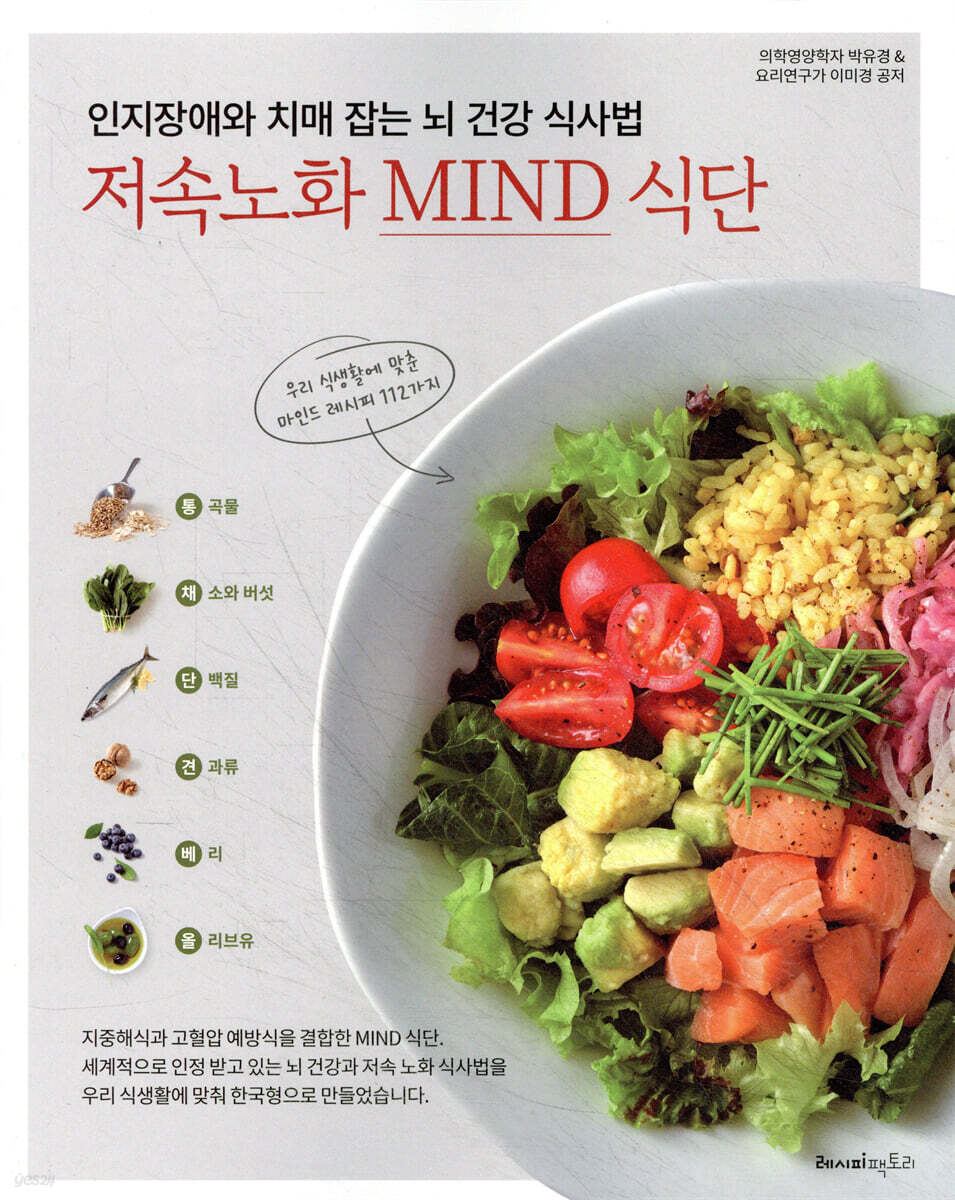
We named the 6 MIND ingredients that are good to eat every day as 'Whole.Chae.Dan.Gyeon.Be.Ol (Whole grains / Vegetables / Protein foods / Nuts / Berries / Olive oil)' to make it easy for anyone to remember, and we also organized a table of priority ingredients that are good to eat more often through nutritional analysis of the ingredients in each category.
112 MIND Recipes That Are Easy, Delicious, and Easy to Practice
Following the guidance of Professor Park Yu-kyung, culinary researcher Im-Kyung Lee, who developed and introduced the MIND recipe and diet, is an expert in natural health food who teaches healthy food for dementia prevention at the Well-Aging Center in Gangnam-gu, Seoul.
Even if a diet is healthy, if the recipes are difficult to follow, it is difficult to implement and is therefore less sustainable. In this book, she presents delicious, ingredient-centered dishes that people of all ages can enjoy, using minimal seasoning and simple cooking methods.
The most notable corner in the recipe section is '21 MIND versatile items, super-easy side dishes to add to your daily diet.'
Ssamjang, hummus, pesto, rappe, oil pickles, sauces, etc. made with 'Tong. Chae. Dan. Gyeon. Be. Ol' are suitable for both Korean and Western cuisine, so make 1-2 generously and serve them at every meal.
The side dish section is divided into vegetable side dishes, mushroom side dishes, and protein side dishes (beans and tofu, chicken and duck, fish and seafood), so pick one and easily create your MIND diet.
Finally, to make this book even more useful, we've included a variety of 15-minute breakfasts, salads without sweet and salty dressings, and one-bowl meals with whole vegetables.
Those who would like to recommend the Korean MIND diet
* There's a lot of information about slow aging, but what should I eat today?
The diet that is being talked about in slow aging is the MIND diet.
We adapted this American-inspired diet to our Korean style and developed simple, delicious recipes that you can follow every day.
We've provided instructions on how to create a meal plan and even provided sample meal plans, so you can follow along with ease.
* My memory and concentration aren't what they used to be.
Although it is a natural aging process, you can slow it down by consistently eating foods rich in brain-healthy nutrients.
Explore seven brain-healthy nutrients recommended by medical nutritionists, and enjoy these nutrient-rich whole-vegetable recipes.
* I always worry about my family history because someone in my family suffered from dementia.
Dementia can be influenced by family history, but it can be prevented with healthy lifestyle habits and diet.
Understand the characteristics of cognitive impairment and dementia introduced in this book, and slowly change your eating habits to the Korean MIND diet.
* A family member was diagnosed with cognitive impairment.
How should I take care of it?
Mild cognitive impairment can be managed well and can slow the progression to dementia.
Use each recipe in the book to align your overall diet with the MIND diet.
It is also recommended for dementia patients.
Exercise is also important, so please refer to the 7530 exercise method.
One of the most notable health keywords for the 100-year lifespan era is slow aging.
There are various practices being introduced, but the one that is particularly recommended in terms of eating habits is the 'MIND diet'.
This diet combines the Mediterranean diet, which helps prevent cognitive decline, and the DASH diet, which helps prevent and manage high blood pressure. Numerous studies have proven that it's the most effective diet for dementia prevention, brain health, and slowing aging among all known healthy diets. Compared to other healthy diets, the MIND diet is less demanding.
If you eat whole grains, vegetables, protein, nuts, berries, and olive oil regularly in the recommended amount, you will be fine.
Sustainable 'Korean MIND Diet'
This is a globally recognized diet for brain health and slow-aging, but it was developed in the United States and needs to be supplemented to suit the Korean diet. There is a medical nutritionist who has been consistently researching this.
This is Professor Park Yu-kyung (Professor, Graduate School of East-West Medical Science, Kyung Hee University), a medical nutritionist who has been researching the Korean-style MIND diet as part of the Super Brain Team, which was formed with support from the Ministry of Health and Welfare.
In fact, she is also a family member of a patient with dementia and mild cognitive impairment.
In this book, Professor Park Yu-kyung thoroughly introduces everything from brain health nutrients to the MIND diet and Korean MIND diet guidelines.
We named the 6 MIND ingredients that are good to eat every day as 'Whole.Chae.Dan.Gyeon.Be.Ol (Whole grains / Vegetables / Protein foods / Nuts / Berries / Olive oil)' to make it easy for anyone to remember, and we also organized a table of priority ingredients that are good to eat more often through nutritional analysis of the ingredients in each category.
112 MIND Recipes That Are Easy, Delicious, and Easy to Practice
Following the guidance of Professor Park Yu-kyung, culinary researcher Im-Kyung Lee, who developed and introduced the MIND recipe and diet, is an expert in natural health food who teaches healthy food for dementia prevention at the Well-Aging Center in Gangnam-gu, Seoul.
Even if a diet is healthy, if the recipes are difficult to follow, it is difficult to implement and is therefore less sustainable. In this book, she presents delicious, ingredient-centered dishes that people of all ages can enjoy, using minimal seasoning and simple cooking methods.
The most notable corner in the recipe section is '21 MIND versatile items, super-easy side dishes to add to your daily diet.'
Ssamjang, hummus, pesto, rappe, oil pickles, sauces, etc. made with 'Tong. Chae. Dan. Gyeon. Be. Ol' are suitable for both Korean and Western cuisine, so make 1-2 generously and serve them at every meal.
The side dish section is divided into vegetable side dishes, mushroom side dishes, and protein side dishes (beans and tofu, chicken and duck, fish and seafood), so pick one and easily create your MIND diet.
Finally, to make this book even more useful, we've included a variety of 15-minute breakfasts, salads without sweet and salty dressings, and one-bowl meals with whole vegetables.
Those who would like to recommend the Korean MIND diet
* There's a lot of information about slow aging, but what should I eat today?
The diet that is being talked about in slow aging is the MIND diet.
We adapted this American-inspired diet to our Korean style and developed simple, delicious recipes that you can follow every day.
We've provided instructions on how to create a meal plan and even provided sample meal plans, so you can follow along with ease.
* My memory and concentration aren't what they used to be.
Although it is a natural aging process, you can slow it down by consistently eating foods rich in brain-healthy nutrients.
Explore seven brain-healthy nutrients recommended by medical nutritionists, and enjoy these nutrient-rich whole-vegetable recipes.
* I always worry about my family history because someone in my family suffered from dementia.
Dementia can be influenced by family history, but it can be prevented with healthy lifestyle habits and diet.
Understand the characteristics of cognitive impairment and dementia introduced in this book, and slowly change your eating habits to the Korean MIND diet.
* A family member was diagnosed with cognitive impairment.
How should I take care of it?
Mild cognitive impairment can be managed well and can slow the progression to dementia.
Use each recipe in the book to align your overall diet with the MIND diet.
It is also recommended for dementia patients.
Exercise is also important, so please refer to the 7530 exercise method.
GOODS SPECIFICS
- Date of issue: September 9, 2025
- Page count, weight, size: 256 pages | 746g | 200*240*17mm
- ISBN13: 9791192366593
- ISBN10: 119236659X
You may also like
카테고리
korean


korean

![ELLE 엘르 스페셜 에디션 A형 : 12월 [2025]](http://librairie.coreenne.fr/cdn/shop/files/b8e27a3de6c9538896439686c6b0e8fb.jpg?v=1766436872&width=3840)


