

100 Garden Plants for Easy Gardening
 |
Description
Book Introduction
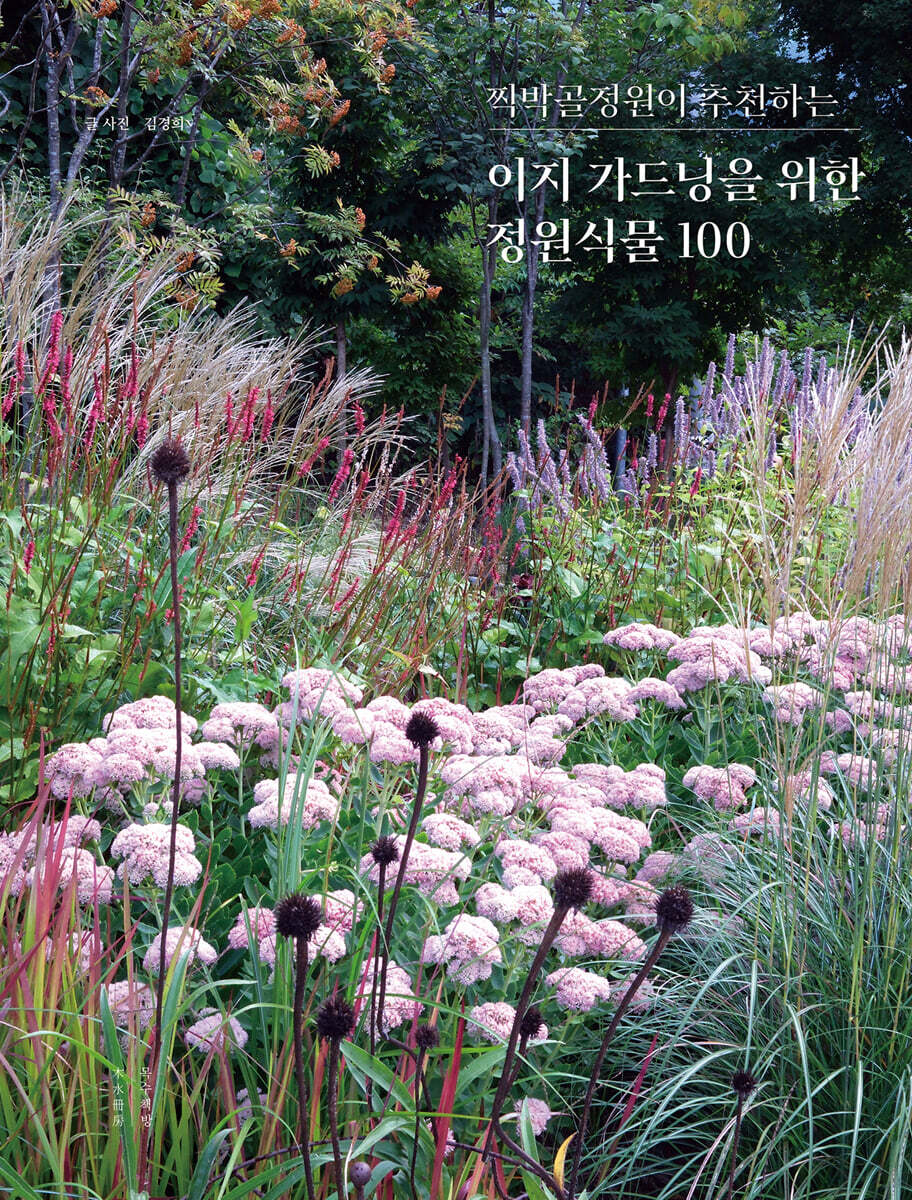
This book introduces 100 types of garden plants recommended by the gardener of Jikbakgol Garden.
The author's information on beautiful, sturdy, and easy-to-care-for garden plants, which he has cultivated through over ten years of trial and error, will be of great help to gardeners who are wondering what plants to bring into their gardens.
It contains useful gardening know-how gained through long experience, as well as ideas for garden plant combinations and interesting gardening stories told by a gardener who is serious about gardening.
The author's information on beautiful, sturdy, and easy-to-care-for garden plants, which he has cultivated through over ten years of trial and error, will be of great help to gardeners who are wondering what plants to bring into their gardens.
It contains useful gardening know-how gained through long experience, as well as ideas for garden plant combinations and interesting gardening stories told by a gardener who is serious about gardening.
- You can preview some of the book's contents.
Preview
index
preface
spring
Salvia nemorosa 'Caradona' | Starflower 'Storm Cloud' | Nepeta racemosa 'Walker's Row' | Oriental poppy 'Helen Elizabeth' | Helleborus orientalis | Brunera macrophylla 'Jack Frost' | Bleeding heart | Phlox divaricata | Columbine 'White Star' | Persicaria bistorta 'Superba' | Geum 'Mrs. Jay Bradshaw' | Snakeroot | Alchemilla mollis | Large-flowered trifoliate | Astrantia | Olaya grandiflora | Dianthus cruentus | Gilenia trifoliata | Ram's ear | Root-fasting bud | Iris | Menzies cucumber | Velvet ball | Pasqueflower | Baptismal flower | Baptismal geranium minor | Perennial geranium [Lausanne]
summer
Echinacea | Echinacea Pallidae, Echinacea Paradoxa | Aster 'Blue Shade' | Astilbe | Helenium 'Moorheim Beauty' | Daylily | Virginia creeper 'Fascination' | Salvia pratense | Western red tangle 'Venusta' | Creeper's-eye 'Bleeding Heart' | Liatris spicata | Persicaria amplexicaulis 'Firetail' | Clematis 'Blue Fortune' | Russian sage 'Blue Spire' | Eupatorium dubium 'Baby Joe' | Liriope mongolia | Candlestick 'Black Negligee' | Hosta | Euphorbia militaris | Monarda 'Bubblegum Blast' | Glistening Pheasant's Foot
autumn
Oregon dandelion | Wrinkled dandelion 'Fireworks' | Greater dandelion 'Autumn Joy' | Dahlia | Aster | Pine crocus | Common sedge | Sedge 'Hameln' | Aureola | Aster 'Pixie Fountain' | Common dandelion 'Heavy Metal' | Common dandelion 'Chocolata' | Eleutherococcus 'Overdam' | Trifolium pratense 'Red Baron' | Miscanthus 'Morning Light' | Brachytrytria | Miscanthus 'Dixieland' | Miscanthus 'Little Kitten' | Mollinia cerulea 'Morehexe'
bulbous plants
Daffodils | Scilla | Spanish Bluebell | Allium 'Purple Sensation' | Nectarine 'Gravetie Giant' | Muscari | Tulip | Martagna 'Claude Schreide' | Lilies | Dahlia Happy Single 'Romeo'
Trees and shrubs
Clematis | Heary | Japanese birch | Japanese maple 'Diablo' | Fragrant hibiscus | Rose of Sharon Chiffon Series | Juneberry 'Ballerina' | Elm 'Sapporo Autumn Gold' | Thuja 'Danica' | Dogwood | Japanese dogwood | Birch | Western elderberry 'Black Lace' | American rhododendron 'Tiger Eyes' | Willow | Aster | Snow yew | Hydrangea | Japanese quince | Clematis japonica | Horseshoe crabapple | Hairy squirrel 'Lanas' | Hamamelis | Japanese quince | Privet
spring
Salvia nemorosa 'Caradona' | Starflower 'Storm Cloud' | Nepeta racemosa 'Walker's Row' | Oriental poppy 'Helen Elizabeth' | Helleborus orientalis | Brunera macrophylla 'Jack Frost' | Bleeding heart | Phlox divaricata | Columbine 'White Star' | Persicaria bistorta 'Superba' | Geum 'Mrs. Jay Bradshaw' | Snakeroot | Alchemilla mollis | Large-flowered trifoliate | Astrantia | Olaya grandiflora | Dianthus cruentus | Gilenia trifoliata | Ram's ear | Root-fasting bud | Iris | Menzies cucumber | Velvet ball | Pasqueflower | Baptismal flower | Baptismal geranium minor | Perennial geranium [Lausanne]
summer
Echinacea | Echinacea Pallidae, Echinacea Paradoxa | Aster 'Blue Shade' | Astilbe | Helenium 'Moorheim Beauty' | Daylily | Virginia creeper 'Fascination' | Salvia pratense | Western red tangle 'Venusta' | Creeper's-eye 'Bleeding Heart' | Liatris spicata | Persicaria amplexicaulis 'Firetail' | Clematis 'Blue Fortune' | Russian sage 'Blue Spire' | Eupatorium dubium 'Baby Joe' | Liriope mongolia | Candlestick 'Black Negligee' | Hosta | Euphorbia militaris | Monarda 'Bubblegum Blast' | Glistening Pheasant's Foot
autumn
Oregon dandelion | Wrinkled dandelion 'Fireworks' | Greater dandelion 'Autumn Joy' | Dahlia | Aster | Pine crocus | Common sedge | Sedge 'Hameln' | Aureola | Aster 'Pixie Fountain' | Common dandelion 'Heavy Metal' | Common dandelion 'Chocolata' | Eleutherococcus 'Overdam' | Trifolium pratense 'Red Baron' | Miscanthus 'Morning Light' | Brachytrytria | Miscanthus 'Dixieland' | Miscanthus 'Little Kitten' | Mollinia cerulea 'Morehexe'
bulbous plants
Daffodils | Scilla | Spanish Bluebell | Allium 'Purple Sensation' | Nectarine 'Gravetie Giant' | Muscari | Tulip | Martagna 'Claude Schreide' | Lilies | Dahlia Happy Single 'Romeo'
Trees and shrubs
Clematis | Heary | Japanese birch | Japanese maple 'Diablo' | Fragrant hibiscus | Rose of Sharon Chiffon Series | Juneberry 'Ballerina' | Elm 'Sapporo Autumn Gold' | Thuja 'Danica' | Dogwood | Japanese dogwood | Birch | Western elderberry 'Black Lace' | American rhododendron 'Tiger Eyes' | Willow | Aster | Snow yew | Hydrangea | Japanese quince | Clematis japonica | Horseshoe crabapple | Hairy squirrel 'Lanas' | Hamamelis | Japanese quince | Privet
Detailed image

Into the book
The intensity of garden work is initially influenced by the hardscape.
This includes paving paths, installing edges to define the edges of gardens, building sheds to store farm equipment, creating shelters, and improving facilities to ensure easy access to water and electricity.
Once these architectural and civil engineering issues are resolved, gardening becomes much easier.
But as time goes by, it is the plants themselves that make gardening easier.
Plants that don't need deadheading, plants that cover the ground, plants that don't fall over, plants that don't grow aggressively, plants that don't need to be replanted every year, etc.
So, most of the plants living in the Jjikbakgol Garden are perennials.
According to the data, this plant is classified as an aggressive plant with a high spontaneous germination rate.
However, after growing it in the Jjikbakgol Garden for 5-6 years, I found that it was not a big problem.
But after creating a forest garden and planting it in semi-shade, I got a real kick in the ass.
It sprouted naturally 'aggressively'.
I learned a lot about the fact that aggression varies depending on the environment in which the plant lives.
Plants that thrive near water will not grow well if you move them to a dry place, or plants that prefer sunlight will not grow well if you plant them in the shade.
Fortunately, it was a bad environment for Alchemilla to grow during that time.
Silvery plants are generally sensitive to moisture.
The original silver or grayish white color is a color that appears when sunlight is scattered in various directions rather than directly hitting the leaves because the leaves are covered with dense, fine hairs.
Because the hairs have the ability to reflect sunlight, the leaves can withstand strong sunlight and have the effect of lowering the leaf temperature.
However, if there is too much moisture, the light reflection effect will be weak, and there is also a risk that the leaves will easily rot or become infected with mold.
So, it is better to cut the rams' ears to the ground as early as the rainy season begins, or as late as after the rainy season ends.
Of course, even if you cut it, it will sprout white leaves again.
Originally, the rock garden was a garden planted with only drought-resistant plants, as the rock itself was dry and the area was sloped.
So, even during the spring drought, I never had to water the plants separately.
Then, one year, when the spring drought was very severe, I started watering the plants.
But then unexpected things happened.
The growth of players known for their resistance to dryness, such as Nepeta, Perovskia, Liatris, and Great Pheasant's Amaranth, has noticeably changed.
It grew much more robustly and abundantly than before and did not fall over.
I have found that even the most drought-tolerant plants grow much better and create a more bountiful garden when provided with adequate moisture and nutrients.
Based on my gardening experience of a little over 10 years, I think the bulbous plant best suited to our country's climate is definitely the lily.
It does well in sunny or semi-shaded locations, is good for overwintering, and is not a problem during the rainy season.
No plant supports or deadheading are required.
Reproduction is also done quietly, by creating nests to raise a family and growing in size.
He is a plant like a gentle manager who is impeccable, doesn't throw tantrums, doesn't demand late-night company dinners, doesn't pass the buck to his subordinates, and doesn't give a damn if he leaves work early.
I planted a Heeri tree that I dug up from the mountain five years ago, and it took about four years for it to finally bloom.
It must be because it took time to get started.
However, when I planted a seedling about a meter tall, it bloomed and grew rapidly the following year.
It seems that there is no need to plant mature trees for plants that grow this fast.
While the mature trees brought from the mountains are getting established, the seedlings grow and after 4-5 years, there doesn't seem to be much difference.
When you plant a tree, you realize that children are quick to take root.
There are no body aches, no branches dying, and no leaves falling in midsummer.
If I had to choose an evergreen again today, I would probably choose yew over a Western arborvitae like 'Emerald Green' or 'Blue Angel'.
First of all, unlike Western arborvitae, it does not lose leaves.
You don't have to prune it every spring.
Also, most evergreen trees grow poorly in shaded areas, but the yew tree is a representative shade-loving evergreen tree, so it does not suffer any problems in shaded areas.
And it grows slowly, making it easy to manage.
Unfortunately, however, there is no horticultural variety like 'Blue Angel', which has silvery leaves that cover the tree like Western arborvitae.
If you're looking for a consistent and sincere actor on the stage called Garden, he's definitely the leading actor, but when it comes to capturing attention in crucial scenes, it's the Western Arborvitae who's in charge.
As always, there are little traps hidden in life's choices.
This includes paving paths, installing edges to define the edges of gardens, building sheds to store farm equipment, creating shelters, and improving facilities to ensure easy access to water and electricity.
Once these architectural and civil engineering issues are resolved, gardening becomes much easier.
But as time goes by, it is the plants themselves that make gardening easier.
Plants that don't need deadheading, plants that cover the ground, plants that don't fall over, plants that don't grow aggressively, plants that don't need to be replanted every year, etc.
So, most of the plants living in the Jjikbakgol Garden are perennials.
According to the data, this plant is classified as an aggressive plant with a high spontaneous germination rate.
However, after growing it in the Jjikbakgol Garden for 5-6 years, I found that it was not a big problem.
But after creating a forest garden and planting it in semi-shade, I got a real kick in the ass.
It sprouted naturally 'aggressively'.
I learned a lot about the fact that aggression varies depending on the environment in which the plant lives.
Plants that thrive near water will not grow well if you move them to a dry place, or plants that prefer sunlight will not grow well if you plant them in the shade.
Fortunately, it was a bad environment for Alchemilla to grow during that time.
Silvery plants are generally sensitive to moisture.
The original silver or grayish white color is a color that appears when sunlight is scattered in various directions rather than directly hitting the leaves because the leaves are covered with dense, fine hairs.
Because the hairs have the ability to reflect sunlight, the leaves can withstand strong sunlight and have the effect of lowering the leaf temperature.
However, if there is too much moisture, the light reflection effect will be weak, and there is also a risk that the leaves will easily rot or become infected with mold.
So, it is better to cut the rams' ears to the ground as early as the rainy season begins, or as late as after the rainy season ends.
Of course, even if you cut it, it will sprout white leaves again.
Originally, the rock garden was a garden planted with only drought-resistant plants, as the rock itself was dry and the area was sloped.
So, even during the spring drought, I never had to water the plants separately.
Then, one year, when the spring drought was very severe, I started watering the plants.
But then unexpected things happened.
The growth of players known for their resistance to dryness, such as Nepeta, Perovskia, Liatris, and Great Pheasant's Amaranth, has noticeably changed.
It grew much more robustly and abundantly than before and did not fall over.
I have found that even the most drought-tolerant plants grow much better and create a more bountiful garden when provided with adequate moisture and nutrients.
Based on my gardening experience of a little over 10 years, I think the bulbous plant best suited to our country's climate is definitely the lily.
It does well in sunny or semi-shaded locations, is good for overwintering, and is not a problem during the rainy season.
No plant supports or deadheading are required.
Reproduction is also done quietly, by creating nests to raise a family and growing in size.
He is a plant like a gentle manager who is impeccable, doesn't throw tantrums, doesn't demand late-night company dinners, doesn't pass the buck to his subordinates, and doesn't give a damn if he leaves work early.
I planted a Heeri tree that I dug up from the mountain five years ago, and it took about four years for it to finally bloom.
It must be because it took time to get started.
However, when I planted a seedling about a meter tall, it bloomed and grew rapidly the following year.
It seems that there is no need to plant mature trees for plants that grow this fast.
While the mature trees brought from the mountains are getting established, the seedlings grow and after 4-5 years, there doesn't seem to be much difference.
When you plant a tree, you realize that children are quick to take root.
There are no body aches, no branches dying, and no leaves falling in midsummer.
If I had to choose an evergreen again today, I would probably choose yew over a Western arborvitae like 'Emerald Green' or 'Blue Angel'.
First of all, unlike Western arborvitae, it does not lose leaves.
You don't have to prune it every spring.
Also, most evergreen trees grow poorly in shaded areas, but the yew tree is a representative shade-loving evergreen tree, so it does not suffer any problems in shaded areas.
And it grows slowly, making it easy to manage.
Unfortunately, however, there is no horticultural variety like 'Blue Angel', which has silvery leaves that cover the tree like Western arborvitae.
If you're looking for a consistent and sincere actor on the stage called Garden, he's definitely the leading actor, but when it comes to capturing attention in crucial scenes, it's the Western Arborvitae who's in charge.
As always, there are little traps hidden in life's choices.
--- From the text
Publisher's Review
Stop gardening by repeating ‘plant and pull out’!
“Nothing goes my way!” Anyone who has ever gardened has probably thought this to themselves when faced with a plant.
I had a hard time finding the 'dream plant' I'd only seen in pictures and invited it into my garden, but it didn't grow as I wanted.
Even if you work your butt off in the garden and keep pouring money into it, the garden will never turn out the way you want it to.
If you keep repeating 'plant and pull out, plant and kill', the gardener's burning passion will quickly lose its luster.
This book is a gardening guide filled with practical advice for gardeners who started gardening with high hopes but then encountered obstacles.
The key to 'easy gardening' is plants!
There is no garden plant that does not require human care, although the degree may vary.
Therefore, choosing the right plants is the first condition for ‘happy gardening.’
No matter how beautiful a plant is, it is meaningless if it does not fit the environment and concept of my garden.
Every year, new varieties dazzle gardeners, but these too must undergo a tedious process of experimentation and adaptation in our gardens before they become "my plants."
This book introduces 100 beautiful, sturdy, and easy-to-care-for garden plants that the gardener of Jikbakgol Garden 'highly recommends' based on his experience.
The 66 species of plants that bloom in spring, summer, and fall, and the 34 recommended bulbs, trees, and shrubs featured in the book, are plants that have survived healthily in the author's garden so far, and are attractive plants that gardeners hope will survive, even though they are still struggling to adapt.
Each garden has different regional, climatic, soil, and environmental conditions, and plants are living things that constantly adapt to their environment, so in reality, all of our gardening is bound to experience failure.
While this plant information may not be the right answer for everyone, the experience of experienced gardeners who have learned it firsthand in their own gardens will serve as a guide to help you reduce failures.
What plants should I bring into my garden?
① The flowering period should be long, about 3 to 4 weeks.
② Aggressive propagation by roots or seeds should not occur.
③ Plants that cover the ground and prevent weeds are always welcome.
④ It should stand relatively well even without support.
⑤ The space should not be empty even after the flowers have withered.
These are the conditions that the author has found that plants that can be brought into the garden must meet, as discovered after growing various plants in the garden for over 10 years.
These are the characteristics that garden plants should have for 'easy gardening', which will reduce the gardener's work.
The author emphasizes that in order to create a garden that is easy to manage, it is important to boldly pave over areas where plants do not live, and to create hardscapes for efficient gardening, such as by adding edges to all borders of the garden to clearly divide the management zones.
He also advises that trees that require annual pruning due to limited space should be moved to a larger space, that shrubs of the same size should be chosen over herbaceous plants, and that plants that do not need to be replanted every year (perennials) should be given priority.
Not only does it provide detailed information about each plant, such as cold tolerance, average plant height and width, flowering period, optimal sunlight requirements, and soil moisture, but the author's gardening know-how, acquired through trial and error, is also very helpful when selecting plants to plant in the garden.
In addition to providing information on individual plants, it also provides ideas on how to combine plants according to the season, making it a particularly useful guide for novice gardeners.
“Nothing goes my way!” Anyone who has ever gardened has probably thought this to themselves when faced with a plant.
I had a hard time finding the 'dream plant' I'd only seen in pictures and invited it into my garden, but it didn't grow as I wanted.
Even if you work your butt off in the garden and keep pouring money into it, the garden will never turn out the way you want it to.
If you keep repeating 'plant and pull out, plant and kill', the gardener's burning passion will quickly lose its luster.
This book is a gardening guide filled with practical advice for gardeners who started gardening with high hopes but then encountered obstacles.
The key to 'easy gardening' is plants!
There is no garden plant that does not require human care, although the degree may vary.
Therefore, choosing the right plants is the first condition for ‘happy gardening.’
No matter how beautiful a plant is, it is meaningless if it does not fit the environment and concept of my garden.
Every year, new varieties dazzle gardeners, but these too must undergo a tedious process of experimentation and adaptation in our gardens before they become "my plants."
This book introduces 100 beautiful, sturdy, and easy-to-care-for garden plants that the gardener of Jikbakgol Garden 'highly recommends' based on his experience.
The 66 species of plants that bloom in spring, summer, and fall, and the 34 recommended bulbs, trees, and shrubs featured in the book, are plants that have survived healthily in the author's garden so far, and are attractive plants that gardeners hope will survive, even though they are still struggling to adapt.
Each garden has different regional, climatic, soil, and environmental conditions, and plants are living things that constantly adapt to their environment, so in reality, all of our gardening is bound to experience failure.
While this plant information may not be the right answer for everyone, the experience of experienced gardeners who have learned it firsthand in their own gardens will serve as a guide to help you reduce failures.
What plants should I bring into my garden?
① The flowering period should be long, about 3 to 4 weeks.
② Aggressive propagation by roots or seeds should not occur.
③ Plants that cover the ground and prevent weeds are always welcome.
④ It should stand relatively well even without support.
⑤ The space should not be empty even after the flowers have withered.
These are the conditions that the author has found that plants that can be brought into the garden must meet, as discovered after growing various plants in the garden for over 10 years.
These are the characteristics that garden plants should have for 'easy gardening', which will reduce the gardener's work.
The author emphasizes that in order to create a garden that is easy to manage, it is important to boldly pave over areas where plants do not live, and to create hardscapes for efficient gardening, such as by adding edges to all borders of the garden to clearly divide the management zones.
He also advises that trees that require annual pruning due to limited space should be moved to a larger space, that shrubs of the same size should be chosen over herbaceous plants, and that plants that do not need to be replanted every year (perennials) should be given priority.
Not only does it provide detailed information about each plant, such as cold tolerance, average plant height and width, flowering period, optimal sunlight requirements, and soil moisture, but the author's gardening know-how, acquired through trial and error, is also very helpful when selecting plants to plant in the garden.
In addition to providing information on individual plants, it also provides ideas on how to combine plants according to the season, making it a particularly useful guide for novice gardeners.
GOODS SPECIFICS
- Date of issue: September 30, 2025
- Format: Hardcover book binding method guide
- Page count, weight, size: 264 pages | 944g | 190*250*20mm
- ISBN13: 9791188806706
- ISBN10: 118880670X
You may also like
카테고리
korean


korean

![ELLE 엘르 스페셜 에디션 A형 : 12월 [2025]](http://librairie.coreenne.fr/cdn/shop/files/b8e27a3de6c9538896439686c6b0e8fb.jpg?v=1766436872&width=3840)


