

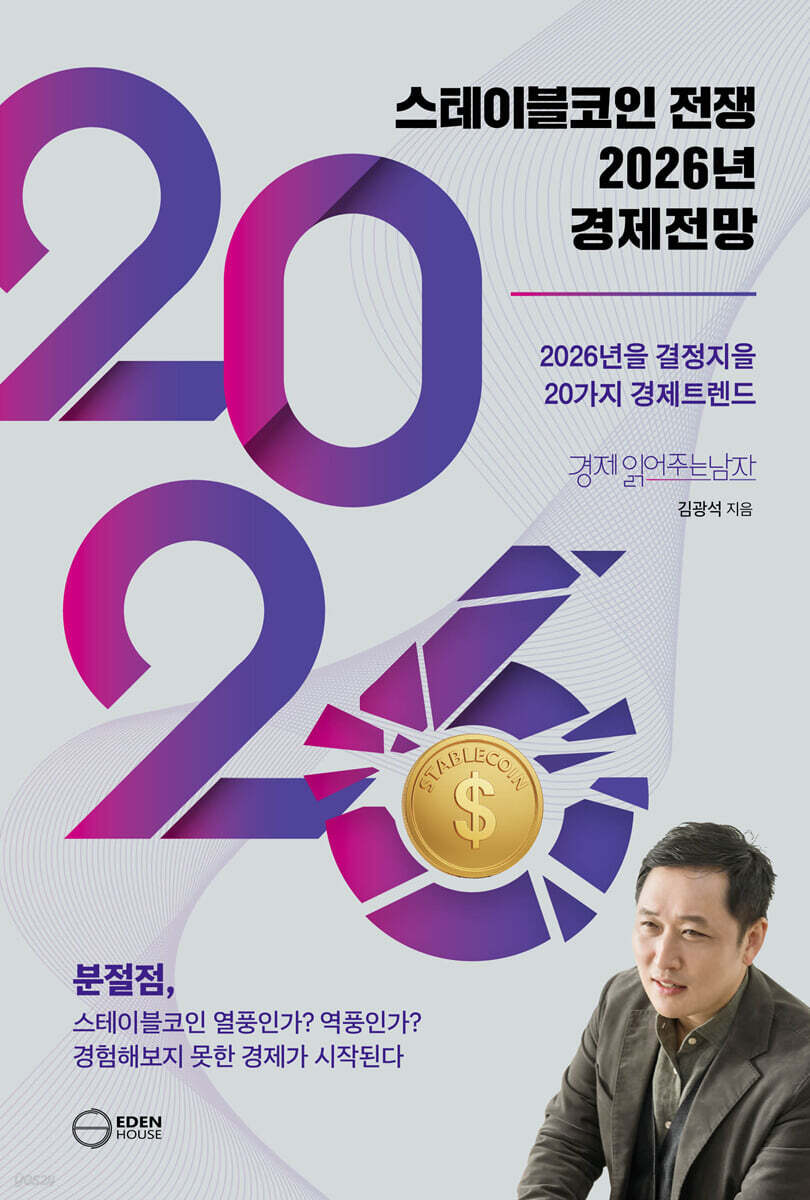
The Stablecoin Wars: Economic Outlook for 2026
 |
Description
Book Introduction
The Age of Pivot: How to Respond?
From Globalization to Fragmentation: The Year 2026: How Stablecoins Will Change the World
The fight against risk has begun.
It's a geopolitical risk.
It's as if a farmer has to fight against floods, or a house builder has to weather an earthquake.
The era of globalization is over, and the era of geoeconomic fragmentation has arrived.
Geo-economics refers to the phenomenon of achieving political goals by using economic means, such as trade policy, economic policy, and economic sanctions.
Unlike geopolitics, which achieves political goals based on geographical factors, geoeconomics uses the economy as a 'weapon' to wage a 'war for hegemony' between nations.
The world economy is in turmoil.
First, the spatially well-fitted puzzle of the globe is being scattered and fragmented.
Major countries around the world are putting ideology aside and pursuing practical cooperation and solidarity.
Meanwhile, the world economy is becoming fragmented in space and time.
The years 2025 and 2026 are clearly distinct.
This is why this book calls the 2026 economy the Point of Fragmentation.
2026 is a year marked by the simultaneous emergence of war, the fragmentation of supply chains, and experiments with new monetary systems.
"Stablecoin Wars: Economic Outlook 2026" defines this shift as an "era of global fragmentation," sharply diagnosing the comprehensive fragmentation of geopolitics, economy, finance, industry, and technology.
20 Economic Trends That Will Define 2026
Part 1.
Global Economic Trends 2026 explores the geoeconomic fragmentation that will unfold alongside the end of globalization.
The normalization of wars, such as the war between Russia and Ukraine and the conflict between Israel and Iran, undermines the foundation of global cooperation.
The tariff war between the United States and China.
The prolonged stagnation of the European economy, the increase in NATO defense spending, a second Plaza Accord, and the weaponization of resources are accelerating economic fragmentation.
The Trump administration's liquidity party, Treasury bond war, and legalization of stablecoins are shaking confidence in the dollar and Treasury markets, heralding a major shift in the global economic order.
Part 2.
The 2026 Korean Economic Trends analyze the realities facing the Korean economy.
Amidst the expectations and concerns that Jae-nomics will bring, Korea is likely to be stuck in a low-growth phase with a growth rate in the 1% range.
As self-employed business closures reach one million, perceived stagflation deepens, and the Bank of Korea faces a monetary policy dilemma.
As political fragmentation amplifies economic instability, South Korea faces the challenge of structural redesign to create a "second Korea."
Part 3.
Industry Trends for 2026 illuminate the front lines of the industrial and technological hegemony race. The AI platform competition, intertwined with the Korean Won stablecoin debate, will put Korea's financial sovereignty to the test, while China aims to go beyond technological catching up and turn the tables.
New battlefields such as green steel, cybersecurity, and rare earth warfare are creating a new Cold War structure that combines advanced technology and the weaponization of resources.
In this competitive environment, industry and technology are emerging as strategic variables that go beyond the simple economic realm and determine national survival.
The final fourth part presents response strategies that each economic entity should adopt.
Households should closely monitor the flow of liquidity in asset markets and prepare for both the opportunities and pitfalls of a liquidity party, while businesses should secure new growth engines centered on advanced technologies, new industries, and the defense industry.
The government must thoroughly manage national debt and exchange rate risks, develop strategies to address supply chain fragmentation, and secure K-defense industry sophistication and resource security.
The author's eighth economic outlook, which integrates macroeconomic changes into everyday economic life.
The 2021 Economic Outlook addresses how to navigate the chaos of the 2020 COVID-19 pandemic and find new opportunities, while the 2022 Economic Outlook provides an in-depth analysis of the crumbling legacy and the resulting structural changes.
Furthermore, the 2023 economic outlook focuses on the era of austerity brought about by inflation and interest rate hikes that have arrived for the first time in 40 years, while the 2024 economic outlook addresses stagflation brought about by inflation and high interest rates as a result of austerity.
And in the 2025 economic outlook, we delve into how to respond to the "pivot era," a transition from an era of austerity to an era of easing.
The 2026 Economic Outlook, published this time, sharply diagnoses the overall fragmentation of geopolitics, economy, finance, industry, and technology in an era of fragmentation.
From Globalization to Fragmentation: The Year 2026: How Stablecoins Will Change the World
The fight against risk has begun.
It's a geopolitical risk.
It's as if a farmer has to fight against floods, or a house builder has to weather an earthquake.
The era of globalization is over, and the era of geoeconomic fragmentation has arrived.
Geo-economics refers to the phenomenon of achieving political goals by using economic means, such as trade policy, economic policy, and economic sanctions.
Unlike geopolitics, which achieves political goals based on geographical factors, geoeconomics uses the economy as a 'weapon' to wage a 'war for hegemony' between nations.
The world economy is in turmoil.
First, the spatially well-fitted puzzle of the globe is being scattered and fragmented.
Major countries around the world are putting ideology aside and pursuing practical cooperation and solidarity.
Meanwhile, the world economy is becoming fragmented in space and time.
The years 2025 and 2026 are clearly distinct.
This is why this book calls the 2026 economy the Point of Fragmentation.
2026 is a year marked by the simultaneous emergence of war, the fragmentation of supply chains, and experiments with new monetary systems.
"Stablecoin Wars: Economic Outlook 2026" defines this shift as an "era of global fragmentation," sharply diagnosing the comprehensive fragmentation of geopolitics, economy, finance, industry, and technology.
20 Economic Trends That Will Define 2026
Part 1.
Global Economic Trends 2026 explores the geoeconomic fragmentation that will unfold alongside the end of globalization.
The normalization of wars, such as the war between Russia and Ukraine and the conflict between Israel and Iran, undermines the foundation of global cooperation.
The tariff war between the United States and China.
The prolonged stagnation of the European economy, the increase in NATO defense spending, a second Plaza Accord, and the weaponization of resources are accelerating economic fragmentation.
The Trump administration's liquidity party, Treasury bond war, and legalization of stablecoins are shaking confidence in the dollar and Treasury markets, heralding a major shift in the global economic order.
Part 2.
The 2026 Korean Economic Trends analyze the realities facing the Korean economy.
Amidst the expectations and concerns that Jae-nomics will bring, Korea is likely to be stuck in a low-growth phase with a growth rate in the 1% range.
As self-employed business closures reach one million, perceived stagflation deepens, and the Bank of Korea faces a monetary policy dilemma.
As political fragmentation amplifies economic instability, South Korea faces the challenge of structural redesign to create a "second Korea."
Part 3.
Industry Trends for 2026 illuminate the front lines of the industrial and technological hegemony race. The AI platform competition, intertwined with the Korean Won stablecoin debate, will put Korea's financial sovereignty to the test, while China aims to go beyond technological catching up and turn the tables.
New battlefields such as green steel, cybersecurity, and rare earth warfare are creating a new Cold War structure that combines advanced technology and the weaponization of resources.
In this competitive environment, industry and technology are emerging as strategic variables that go beyond the simple economic realm and determine national survival.
The final fourth part presents response strategies that each economic entity should adopt.
Households should closely monitor the flow of liquidity in asset markets and prepare for both the opportunities and pitfalls of a liquidity party, while businesses should secure new growth engines centered on advanced technologies, new industries, and the defense industry.
The government must thoroughly manage national debt and exchange rate risks, develop strategies to address supply chain fragmentation, and secure K-defense industry sophistication and resource security.
The author's eighth economic outlook, which integrates macroeconomic changes into everyday economic life.
The 2021 Economic Outlook addresses how to navigate the chaos of the 2020 COVID-19 pandemic and find new opportunities, while the 2022 Economic Outlook provides an in-depth analysis of the crumbling legacy and the resulting structural changes.
Furthermore, the 2023 economic outlook focuses on the era of austerity brought about by inflation and interest rate hikes that have arrived for the first time in 40 years, while the 2024 economic outlook addresses stagflation brought about by inflation and high interest rates as a result of austerity.
And in the 2025 economic outlook, we delve into how to respond to the "pivot era," a transition from an era of austerity to an era of easing.
The 2026 Economic Outlook, published this time, sharply diagnoses the overall fragmentation of geopolitics, economy, finance, industry, and technology in an era of fragmentation.
index
prolog
Read this first | Key Economic Trends for 2026
Part 1: Global Economic Trends 2026
1.
The era of geopolitical fragmentation
2.
Between the Liquidity Party and the Liquidity Trap
3.
Trump's weaknesses exposed, will a national debt war ensue?
4.
The Second Plaza Accord
5.
Stablecoins and the Digital Currency War
6.
Europe is becoming poorer
Part 2: Korean Economic Trends in 2026
1.
Expectations and Concerns About Jae-nomics
2.
The swamp of 1% growth
3.
Redesign for a 'Second Korea'
4.
Perceived stagflation
5.
The era of 1 million self-employed business closures
6.
The Bank of Korea's monetary policy dilemma
7.
The politics of segmentation, the economy of segmentation
8.
Real Estate Market Outlook for 2026
Part 3: Industry Trends in 2026
1. The AI Platform Era
2.
The Dilemma of Won Stablecoins
3.
Chinese Technology: Catch-up or Reversal?
4.
Green Steel Battle
5.
In the age of cybersecurity, a second SKT incident is coming.
6.
Rare Earth Wars and the Weaponization of Resources
Part 4: Economic Outlook and Response Strategies for 2026
1.
World Economic Outlook 2026
2.
2026 Korean Economic Outlook and Response Strategies
Read this first | Key Economic Trends for 2026
Part 1: Global Economic Trends 2026
1.
The era of geopolitical fragmentation
2.
Between the Liquidity Party and the Liquidity Trap
3.
Trump's weaknesses exposed, will a national debt war ensue?
4.
The Second Plaza Accord
5.
Stablecoins and the Digital Currency War
6.
Europe is becoming poorer
Part 2: Korean Economic Trends in 2026
1.
Expectations and Concerns About Jae-nomics
2.
The swamp of 1% growth
3.
Redesign for a 'Second Korea'
4.
Perceived stagflation
5.
The era of 1 million self-employed business closures
6.
The Bank of Korea's monetary policy dilemma
7.
The politics of segmentation, the economy of segmentation
8.
Real Estate Market Outlook for 2026
Part 3: Industry Trends in 2026
1. The AI Platform Era
2.
The Dilemma of Won Stablecoins
3.
Chinese Technology: Catch-up or Reversal?
4.
Green Steel Battle
5.
In the age of cybersecurity, a second SKT incident is coming.
6.
Rare Earth Wars and the Weaponization of Resources
Part 4: Economic Outlook and Response Strategies for 2026
1.
World Economic Outlook 2026
2.
2026 Korean Economic Outlook and Response Strategies
GOODS SPECIFICS
- Date of issue: September 26, 2025
- Page count, weight, size: 320 pages | 152*225*30mm
- ISBN13: 9791194353317
- ISBN10: 1194353312
You may also like
카테고리
korean


korean

![ELLE 엘르 스페셜 에디션 A형 : 12월 [2025]](http://librairie.coreenne.fr/cdn/shop/files/b8e27a3de6c9538896439686c6b0e8fb.jpg?v=1766436872&width=3840)


