

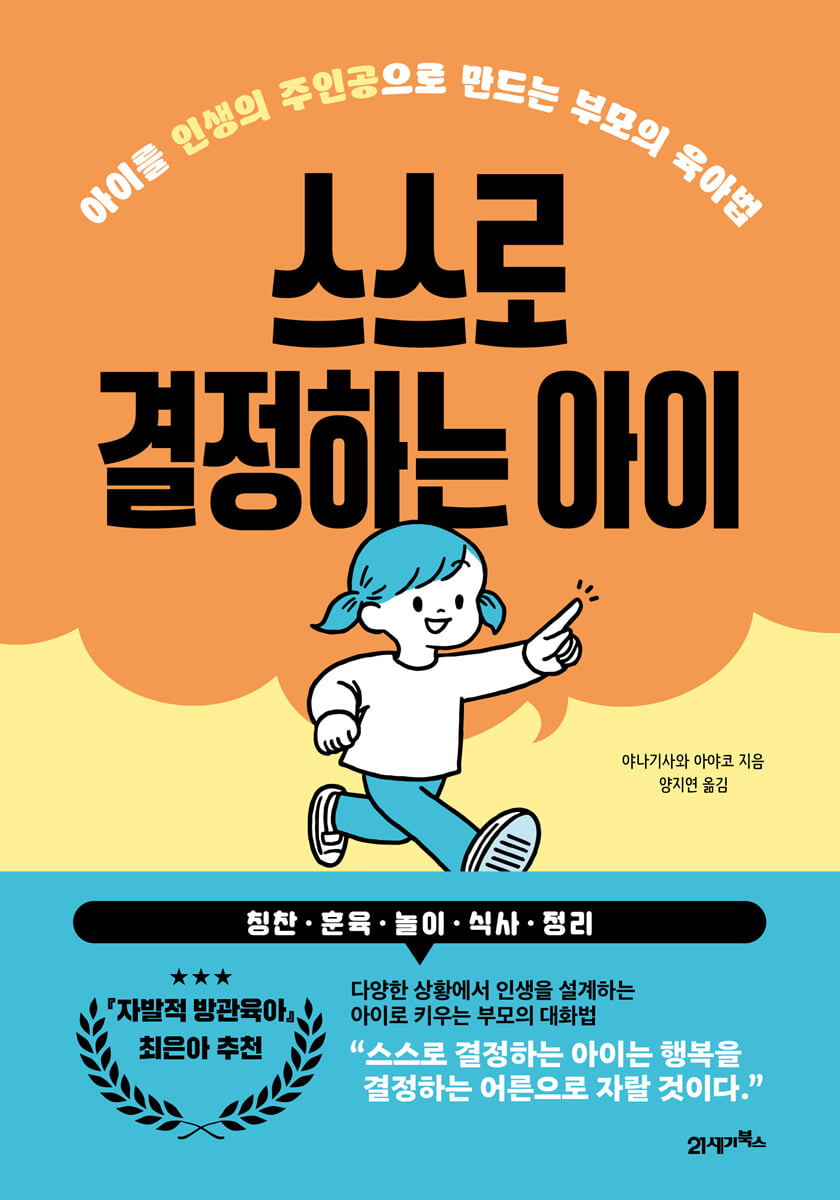
A child who makes his own decisions
 |
Description
Book Introduction
The author, a doctor and mother, discovered scientific parenting methods from over 500 research papers.
The younger the child, the more often parents decide the little things in life, such as what clothes to wear that day, what to play, what to bring for a picnic, when to do homework, and even which school to go to and which club to join.
Unfortunately, parents cannot always help with all of this.
Life is a series of choices.
And children have countless choices ahead of them in life.
As children grow into adults, there are countless decisions they make on their own, including major life-changing decisions like their future career aspirations.
Ultimately, if a child has the ability to think and make decisions for himself, he will be able to confidently navigate new environments or situations on his own, and when he does, his happiness will increase.
The author, a mother and a doctor, works as a researcher and reads over 500 of the world's latest scientific papers annually. Based on the evidence extracted from numerous scientific papers, she has summarized what attitude parents should have toward their children and what words they should use in what manner to raise them to be 'children who make their own decisions.'
The younger the child, the more often parents decide the little things in life, such as what clothes to wear that day, what to play, what to bring for a picnic, when to do homework, and even which school to go to and which club to join.
Unfortunately, parents cannot always help with all of this.
Life is a series of choices.
And children have countless choices ahead of them in life.
As children grow into adults, there are countless decisions they make on their own, including major life-changing decisions like their future career aspirations.
Ultimately, if a child has the ability to think and make decisions for himself, he will be able to confidently navigate new environments or situations on his own, and when he does, his happiness will increase.
The author, a mother and a doctor, works as a researcher and reads over 500 of the world's latest scientific papers annually. Based on the evidence extracted from numerous scientific papers, she has summarized what attitude parents should have toward their children and what words they should use in what manner to raise them to be 'children who make their own decisions.'
index
Recommendation
prolog
Chapter 1: Communication Skills: The Power to Increase Knowledge and Experience
Parents' words that influence communication skills
Age-Specific Practices to Develop Communication Skills
*Builds the foundation of communication skills for children ages 3-6
*7-9 years old, leaving home and going out
*Preparing to communicate with adults aged 10-12
Chapter 2 Thinking: The Power to Find Solutions to Problems
The ability to think for living in a complex world
Age-Specific Practices to Develop Thinking Skills
*Ages 3-6: A period in which children develop the ability to think for themselves.
*7~9 years old: Learn the joy of thinking for yourself
*10~12 years old Expressing thoughts in one's own words
Chapter 3 Self-Affirmation: The Power of Believing in Yourself
A child's self-esteem grows at home.
Age-Specific Practices to Boost Self-Affirmation
*Building a safe space for children aged 3 to 6
*For children aged 7 to 9 to feel the love of their parents
*Recognizing the diversity of children aged 10-12
Chapter 4: Never Give Up: The Power to Get Back Up After Failure
The common trait of successful people is their never-give-up spirit.
Age-Specific Practices for Developing a Never-Give-Up Spirit
*Do not destroy the original unyielding spirit of children aged 3-6.
*7~9 years old Experience the fruits of a never-say-die spirit
*10~12 years old I often talk about not giving up
Chapter 5: Passion for Love: The Power to Grow Yourself
Passion that becomes a life goal
Age-specific practical tips for fostering passion for things you enjoy
*Respect the tastes of children aged 3-6
*7~9 years old Various opportunities to experience things you like and have fun doing
*10~12 years old Freedom is given based on trust
Author's Note
References
prolog
Chapter 1: Communication Skills: The Power to Increase Knowledge and Experience
Parents' words that influence communication skills
Age-Specific Practices to Develop Communication Skills
*Builds the foundation of communication skills for children ages 3-6
*7-9 years old, leaving home and going out
*Preparing to communicate with adults aged 10-12
Chapter 2 Thinking: The Power to Find Solutions to Problems
The ability to think for living in a complex world
Age-Specific Practices to Develop Thinking Skills
*Ages 3-6: A period in which children develop the ability to think for themselves.
*7~9 years old: Learn the joy of thinking for yourself
*10~12 years old Expressing thoughts in one's own words
Chapter 3 Self-Affirmation: The Power of Believing in Yourself
A child's self-esteem grows at home.
Age-Specific Practices to Boost Self-Affirmation
*Building a safe space for children aged 3 to 6
*For children aged 7 to 9 to feel the love of their parents
*Recognizing the diversity of children aged 10-12
Chapter 4: Never Give Up: The Power to Get Back Up After Failure
The common trait of successful people is their never-give-up spirit.
Age-Specific Practices for Developing a Never-Give-Up Spirit
*Do not destroy the original unyielding spirit of children aged 3-6.
*7~9 years old Experience the fruits of a never-say-die spirit
*10~12 years old I often talk about not giving up
Chapter 5: Passion for Love: The Power to Grow Yourself
Passion that becomes a life goal
Age-specific practical tips for fostering passion for things you enjoy
*Respect the tastes of children aged 3-6
*7~9 years old Various opportunities to experience things you like and have fun doing
*10~12 years old Freedom is given based on trust
Author's Note
References
Detailed image

Into the book
The problem usually lies in the mother giving advice without listening carefully to the child.
Think about a time when adults were having a conversation.
Adults first listen to each other's story until the end and try to understand the situation.
I don't suddenly get angry without hearing the circumstances.
But the closer we are to someone, like a child or family member, the more we want to give advice right away.
Especially for children, parents unconsciously give unsolicited advice such as “You should do this” or “You shouldn’t do this” based on their past experiences.
Active listening requires focusing on clearly understanding the intentions of the person speaking, while empathizing with their situation and words.
--- p.36
Even if you disagree with your parents, if you feel confident that they will accept you, you won't give up in advance, thinking, "It won't work anyway," and you won't give ambiguous answers to try to please them.
Only then does the child say what he really feels and thinks.
A child who grows up in such an environment speaks confidently even if his or her opinion differs from that of others.
We acknowledge each other's diversity and respect and accept both ourselves and others.
A child who does not listen to his parents and does not follow them obediently is actually a result of poor parenting.
This is possible because the child sees his parents as a safe haven.
When we respect children as separate individuals and talk to them as equals, their thinking skills also deepen.
--- p.74~75
To help your child experience a sense of accomplishment, it's a good idea to create small success experiences.
However, when using this method, you must be careful not to do unnecessary things, such as giving your child monetary rewards or excessive praise for his or her work.
Extravagant praise or rewards have a momentary effect of increasing motivation and self-esteem.
However, many studies have shown that the effects are temporary and can actually have negative effects in the long run.
Research shows that if you keep rewarding yourself with things like, “If you get 100 points, I’ll buy you this,” it can have negative effects not only on mental health issues like anxiety and depression, but also on physical health and interpersonal relationships.
--- p.106~107
No parent would look on without concern at a child who is just entering puberty.
Worrying itself isn't a problem, but from a self-esteem perspective, when a child sees or feels their parents worrying about them, rather than thinking, "I'm loved," or "I'm happy," they perceive it as, "They're worried because I'm not good enough," or, "They don't trust me yet."
If you do this, your self-esteem will gradually decline.
If parents' concerns are interpreted in an unintended way and lower their children's self-esteem, they cannot just sit back and watch.
Give your child trust instead of worry.
Parents must demonstrate their trust in their children through their words and actions.
--- p.119
A child's ability to understand his or her own situation, not give up in the face of difficulties, and continue to move toward his or her goal gives him or her a sense of accomplishment.
Then, as you gain experience in setting your own goals and doing your best until the end, you will gain the strength to continue repeating this flow.
Children at this age notice differences in how their parents react to them and how other parents react to them.
And they watch their parents' words and actions much more closely than their parents think.
It is most important for parents to express their feelings and attitude to their children, saying, "I trust you and will protect you, so think about it for yourself."
This is obviously passed on to the child as well.
--- p.150~151
A place with nothing is the best place to observe what a child sees, hears, touches, feels, and wants to do.
There may be children who sit crouching for long periods of time, staring intently at the anthill.
There may be children who are captivated by the ever-changing shapes of light filtering through the leaves.
There are also children who diligently search for acorns.
That's your chance.
Observe what your child does.
Put down your smartphone and camera for a moment.
You will definitely discover a new side of your child, thinking, 'This child reacts like this when he sees this.'
Think about a time when adults were having a conversation.
Adults first listen to each other's story until the end and try to understand the situation.
I don't suddenly get angry without hearing the circumstances.
But the closer we are to someone, like a child or family member, the more we want to give advice right away.
Especially for children, parents unconsciously give unsolicited advice such as “You should do this” or “You shouldn’t do this” based on their past experiences.
Active listening requires focusing on clearly understanding the intentions of the person speaking, while empathizing with their situation and words.
--- p.36
Even if you disagree with your parents, if you feel confident that they will accept you, you won't give up in advance, thinking, "It won't work anyway," and you won't give ambiguous answers to try to please them.
Only then does the child say what he really feels and thinks.
A child who grows up in such an environment speaks confidently even if his or her opinion differs from that of others.
We acknowledge each other's diversity and respect and accept both ourselves and others.
A child who does not listen to his parents and does not follow them obediently is actually a result of poor parenting.
This is possible because the child sees his parents as a safe haven.
When we respect children as separate individuals and talk to them as equals, their thinking skills also deepen.
--- p.74~75
To help your child experience a sense of accomplishment, it's a good idea to create small success experiences.
However, when using this method, you must be careful not to do unnecessary things, such as giving your child monetary rewards or excessive praise for his or her work.
Extravagant praise or rewards have a momentary effect of increasing motivation and self-esteem.
However, many studies have shown that the effects are temporary and can actually have negative effects in the long run.
Research shows that if you keep rewarding yourself with things like, “If you get 100 points, I’ll buy you this,” it can have negative effects not only on mental health issues like anxiety and depression, but also on physical health and interpersonal relationships.
--- p.106~107
No parent would look on without concern at a child who is just entering puberty.
Worrying itself isn't a problem, but from a self-esteem perspective, when a child sees or feels their parents worrying about them, rather than thinking, "I'm loved," or "I'm happy," they perceive it as, "They're worried because I'm not good enough," or, "They don't trust me yet."
If you do this, your self-esteem will gradually decline.
If parents' concerns are interpreted in an unintended way and lower their children's self-esteem, they cannot just sit back and watch.
Give your child trust instead of worry.
Parents must demonstrate their trust in their children through their words and actions.
--- p.119
A child's ability to understand his or her own situation, not give up in the face of difficulties, and continue to move toward his or her goal gives him or her a sense of accomplishment.
Then, as you gain experience in setting your own goals and doing your best until the end, you will gain the strength to continue repeating this flow.
Children at this age notice differences in how their parents react to them and how other parents react to them.
And they watch their parents' words and actions much more closely than their parents think.
It is most important for parents to express their feelings and attitude to their children, saying, "I trust you and will protect you, so think about it for yourself."
This is obviously passed on to the child as well.
--- p.150~151
A place with nothing is the best place to observe what a child sees, hears, touches, feels, and wants to do.
There may be children who sit crouching for long periods of time, staring intently at the anthill.
There may be children who are captivated by the ever-changing shapes of light filtering through the leaves.
There are also children who diligently search for acorns.
That's your chance.
Observe what your child does.
Put down your smartphone and camera for a moment.
You will definitely discover a new side of your child, thinking, 'This child reacts like this when he sees this.'
--- p.176~177
Publisher's Review
Five Strengths a Child Should Possess to Make Their Own Decisions
Based on the philosophy that "self-decision-making leads to happiness," this book presents five elements that parents should cultivate to help their children make independent choices and grow.
It provides specific, age-appropriate practical guidance on how parents can guide their children, focusing on five elements: communication skills, thinking skills, self-affirmation, a spirit of perseverance, and passion for what they love.
Each chapter introduces specific habits that parents can use to help their children develop their abilities naturally in their daily lives, along with their role as parents.
In particular, it focuses on introducing specific methods to develop effective communication skills (communication skills), problem-solving skills (thinking skills), self-confidence (self-esteem), a never-give-up mindset, and passion to continue because you like something, depending on your age.
"It's Okay to Not Be Perfect." A Guide to Facing the Reality of Parenting
As a first-time mother, I often waver and hesitate several times a day when dealing with my child, wondering, "Is this okay? Is this right?" I check out parenting-related social media and read books, but it's not easy to become a perfect parent who actually puts those thoughts into practice in real life.
As a mother of two and the author of this book, I find it incredibly helpful to read credible research from scientists around the world whenever I feel confused.
As you follow the author's friendly guide, you'll discover that filling your child's life with happiness isn't so difficult, and you'll also realize that as your child grows into a self-made person, your life will become easier as time goes by.
Based on the philosophy that "self-decision-making leads to happiness," this book presents five elements that parents should cultivate to help their children make independent choices and grow.
It provides specific, age-appropriate practical guidance on how parents can guide their children, focusing on five elements: communication skills, thinking skills, self-affirmation, a spirit of perseverance, and passion for what they love.
Each chapter introduces specific habits that parents can use to help their children develop their abilities naturally in their daily lives, along with their role as parents.
In particular, it focuses on introducing specific methods to develop effective communication skills (communication skills), problem-solving skills (thinking skills), self-confidence (self-esteem), a never-give-up mindset, and passion to continue because you like something, depending on your age.
"It's Okay to Not Be Perfect." A Guide to Facing the Reality of Parenting
As a first-time mother, I often waver and hesitate several times a day when dealing with my child, wondering, "Is this okay? Is this right?" I check out parenting-related social media and read books, but it's not easy to become a perfect parent who actually puts those thoughts into practice in real life.
As a mother of two and the author of this book, I find it incredibly helpful to read credible research from scientists around the world whenever I feel confused.
As you follow the author's friendly guide, you'll discover that filling your child's life with happiness isn't so difficult, and you'll also realize that as your child grows into a self-made person, your life will become easier as time goes by.
GOODS SPECIFICS
- Date of issue: February 19, 2025
- Page count, weight, size: 194 pages | 140*200*20mm
- ISBN13: 9791171179848
- ISBN10: 1171179847
You may also like
카테고리
korean


korean

![GQ KOREA Mark (Monthly): December [2025]](http://librairie.coreenne.fr/cdn/shop/files/8ef265dbbfbf186523ed75ba7319009d.jpg?v=1765340328&width=3840)


