

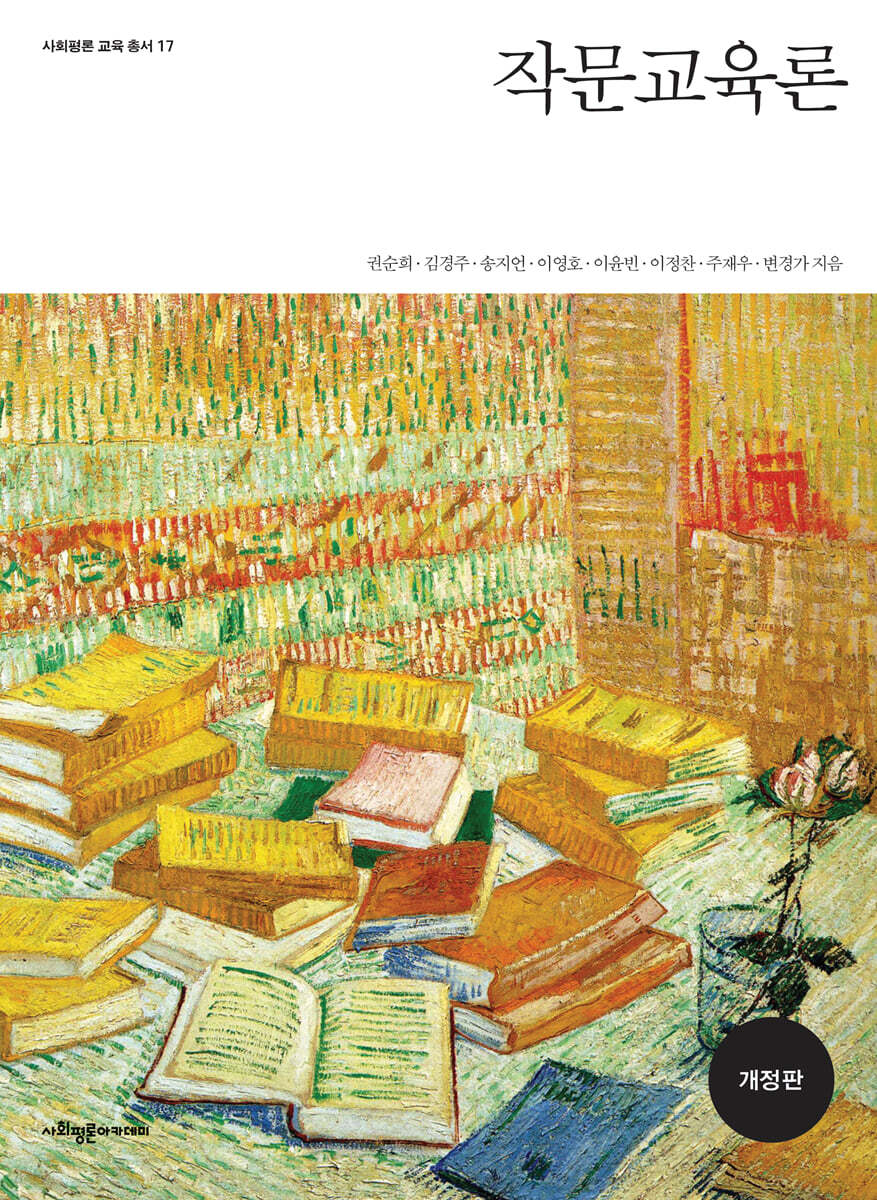
Writing Education Theory
 |
Description
Book Introduction
For community writing, practical writing, and integrated writing
Starting point for writing education
This book contains essential content that must be taught in writing education, including the theoretical foundations of writing, understanding of writing education, and practice.
This book covers the content of writing education, focusing on theories relevant to our educational reality, case studies tailored to students' level, and recent curriculum and research trends. In particular, it organizes practical writing types into individual chapters to help students learn the fundamentals of writing.
It can also be said to be a cutting-edge writing education textbook that includes new writing styles such as online writing, changes in the way information is produced and received due to the Internet and social media, and writing using ChatGPT.
Starting point for writing education
This book contains essential content that must be taught in writing education, including the theoretical foundations of writing, understanding of writing education, and practice.
This book covers the content of writing education, focusing on theories relevant to our educational reality, case studies tailored to students' level, and recent curriculum and research trends. In particular, it organizes practical writing types into individual chapters to help students learn the fundamentals of writing.
It can also be said to be a cutting-edge writing education textbook that includes new writing styles such as online writing, changes in the way information is produced and received due to the Internet and social media, and writing using ChatGPT.
- You can preview some of the book's contents.
Preview
index
Preface to the Revised Edition
preface
Part 1: Theoretical Basis of Writing and Changes in the Literacy Environment
Chapter 1: The Nature of Writing and the Stages of Writing Development
1 What is writing?
2 How do writing skills develop?
3 What role does writing play?
Chapter 2: Development of Writing Theory
1 How has writing theory developed?
2 Results-Oriented Writing Theory
3 Process-centered writing theory
4 Alternative Writing Theories
Chapter 3: The Writing Process
1 What is the writing process?
2 What are some writing process models?
Chapter 4 Writing Strategies
1 What is a writing strategy?
2 What are some planning strategies?
3 What are some strategies for generating content?
4 What are some strategies for organizing content?
5 What are some expressive strategies?
6 What are some rewriting strategies?
Chapter 5: The Changing Literacy Environment and the Role of Writing Education
1 How is the literary environment changing?
2. What is the reality of expression patterns according to changes in the literary environment?
3. What direction should writing education take?
Part 2: Understanding Writing Education
Chapter 6 Writing Curriculum
1 How has the writing curriculum changed?
2 Syllabus~3rd Curriculum─Composition Curriculum in the Age of Light Writing
3. The Fourth Curriculum - A Writing Curriculum Reconstructed with Rhetorical Theory
4. 5th to 7th Curriculum - Writing Curriculum Incorporating Cognitive Theory
5 2007 and 2009/2011 Revised Curriculum - A Writing Curriculum Seeking Integration with Social Constructivism Theory
6 2015 and 2022 Revised Curriculum - Writing Curriculum Reorganized into Core Competencies
Chapter 7 Writing Textbook
1 How is a writing textbook structured?
2 How is writing theory reflected in textbooks?
3. How can we analyze the writing theory reflected in textbooks?
4. What about a writing textbook that increases practicality?
Chapter 8: Teaching and Learning Writing
1. What are the principles of teaching and learning writing?
2. What are the methods of teaching and learning writing?
3 How should writing teaching and learning be implemented?
Chapter 9: Evaluation of Writing
1 What is a Writing Assessment?
2 What are the important factors in writing assessment?
3 What types of writing assessments are there?
4. How far has automated writing grading technology come?
Part 3: The Practice of Writing Education
Chapter 10: Writing for Information Conveyance
1 What is writing for informational purposes?
2 How is writing for information delivery reflected in the curriculum?
3. How to Write an Informational Message
4. What are the types of informational writing and how are they taught?
Chapter 11: Persuasive Writing
1 What is persuasive writing?
2 How is persuasive writing reflected in the curriculum?
3 How to Write a Persuasive Essay
4 What are persuasive writings and how are they taught?
Chapter 12: Expressive Writing
1 What is expressive writing?
2 How is expressive writing reflected in the curriculum?
3 Expressive Writing: Why Teach It?
4 What are expressive writing styles and how are they taught?
Chapter 13: Writing for Learning
1 How is writing for learning represented in the curriculum?
2 What is the relationship between learning and writing?
3 What role can writing instruction play in subject learning?
4 What is writing for learning and how is it taught?
Search
About the writers
preface
Part 1: Theoretical Basis of Writing and Changes in the Literacy Environment
Chapter 1: The Nature of Writing and the Stages of Writing Development
1 What is writing?
2 How do writing skills develop?
3 What role does writing play?
Chapter 2: Development of Writing Theory
1 How has writing theory developed?
2 Results-Oriented Writing Theory
3 Process-centered writing theory
4 Alternative Writing Theories
Chapter 3: The Writing Process
1 What is the writing process?
2 What are some writing process models?
Chapter 4 Writing Strategies
1 What is a writing strategy?
2 What are some planning strategies?
3 What are some strategies for generating content?
4 What are some strategies for organizing content?
5 What are some expressive strategies?
6 What are some rewriting strategies?
Chapter 5: The Changing Literacy Environment and the Role of Writing Education
1 How is the literary environment changing?
2. What is the reality of expression patterns according to changes in the literary environment?
3. What direction should writing education take?
Part 2: Understanding Writing Education
Chapter 6 Writing Curriculum
1 How has the writing curriculum changed?
2 Syllabus~3rd Curriculum─Composition Curriculum in the Age of Light Writing
3. The Fourth Curriculum - A Writing Curriculum Reconstructed with Rhetorical Theory
4. 5th to 7th Curriculum - Writing Curriculum Incorporating Cognitive Theory
5 2007 and 2009/2011 Revised Curriculum - A Writing Curriculum Seeking Integration with Social Constructivism Theory
6 2015 and 2022 Revised Curriculum - Writing Curriculum Reorganized into Core Competencies
Chapter 7 Writing Textbook
1 How is a writing textbook structured?
2 How is writing theory reflected in textbooks?
3. How can we analyze the writing theory reflected in textbooks?
4. What about a writing textbook that increases practicality?
Chapter 8: Teaching and Learning Writing
1. What are the principles of teaching and learning writing?
2. What are the methods of teaching and learning writing?
3 How should writing teaching and learning be implemented?
Chapter 9: Evaluation of Writing
1 What is a Writing Assessment?
2 What are the important factors in writing assessment?
3 What types of writing assessments are there?
4. How far has automated writing grading technology come?
Part 3: The Practice of Writing Education
Chapter 10: Writing for Information Conveyance
1 What is writing for informational purposes?
2 How is writing for information delivery reflected in the curriculum?
3. How to Write an Informational Message
4. What are the types of informational writing and how are they taught?
Chapter 11: Persuasive Writing
1 What is persuasive writing?
2 How is persuasive writing reflected in the curriculum?
3 How to Write a Persuasive Essay
4 What are persuasive writings and how are they taught?
Chapter 12: Expressive Writing
1 What is expressive writing?
2 How is expressive writing reflected in the curriculum?
3 Expressive Writing: Why Teach It?
4 What are expressive writing styles and how are they taught?
Chapter 13: Writing for Learning
1 How is writing for learning represented in the curriculum?
2 What is the relationship between learning and writing?
3 What role can writing instruction play in subject learning?
4 What is writing for learning and how is it taught?
Search
About the writers
Into the book
The most common misconception about the writing process is that it consists of ancestral steps.
In other words, after the planning process is over, the content creation process takes place, and only after the content creation process is over can the content organization process begin.
However, (…) I organize the content while I am creating it, and sometimes I stop writing and go back to the planning process.
In short, the writing process is both simultaneous and recursive.
Therefore, the boundaries of the writing process should be understood as loosely set for convenience rather than clearly defined.
--- p.88
Writing strategies used in writing education refer to 'the optimal method that a writer consciously chooses to achieve a specific goal during the writing process.'
The fact that writing strategies are chosen here to 'achieve goals' shows that the term presupposes the writing process as problem solving.
Strategy is what I choose to solve various problems I encounter in the writing process.
--- p.115
As technology changes, the educational environment will also face a new phase.
If ChatGPT emerges as a new writing tool, sufficient discussion is needed on the specific skills and development methods required to utilize it, as well as the problems and solutions associated with introducing new tools into the educational field.
--- p.173
Both textbooks appear very similar, as they both apply cognitive constructivist writing theory in their activity structure.
However, a closer look at each activity reveals that the writing theories underlying the two textbooks differ.
The biggest difference between the two textbooks in actual writing activities is the presence or absence of collaborative writing activities.
--- p.261
Traditionally, writing assessments have generally been based on the results.
However, interest in process evaluation in writing assessment has increased as it has been argued that it is more effective to directly help learners' cognitive and performance abilities, rather than the writing itself.
In addition to assigning numerical and graded scores to the final product, evaluation also includes diagnosing and providing appropriate feedback on each step of the writing process.
--- pp.331-332
Writing for learning functions as a learning tool that deepens learners' understanding of the content by having them solve problems related to their subject matter through writing.
In the process of writing for learning, learners experience the activation of thinking and the construction of meaning, and through this, they reach a deeper understanding of the learning content.
In this respect, in order to maximize the effectiveness of writing for learning as a learning tool, it is necessary to develop educational methods that can promote learners' active meaning construction.
In other words, after the planning process is over, the content creation process takes place, and only after the content creation process is over can the content organization process begin.
However, (…) I organize the content while I am creating it, and sometimes I stop writing and go back to the planning process.
In short, the writing process is both simultaneous and recursive.
Therefore, the boundaries of the writing process should be understood as loosely set for convenience rather than clearly defined.
--- p.88
Writing strategies used in writing education refer to 'the optimal method that a writer consciously chooses to achieve a specific goal during the writing process.'
The fact that writing strategies are chosen here to 'achieve goals' shows that the term presupposes the writing process as problem solving.
Strategy is what I choose to solve various problems I encounter in the writing process.
--- p.115
As technology changes, the educational environment will also face a new phase.
If ChatGPT emerges as a new writing tool, sufficient discussion is needed on the specific skills and development methods required to utilize it, as well as the problems and solutions associated with introducing new tools into the educational field.
--- p.173
Both textbooks appear very similar, as they both apply cognitive constructivist writing theory in their activity structure.
However, a closer look at each activity reveals that the writing theories underlying the two textbooks differ.
The biggest difference between the two textbooks in actual writing activities is the presence or absence of collaborative writing activities.
--- p.261
Traditionally, writing assessments have generally been based on the results.
However, interest in process evaluation in writing assessment has increased as it has been argued that it is more effective to directly help learners' cognitive and performance abilities, rather than the writing itself.
In addition to assigning numerical and graded scores to the final product, evaluation also includes diagnosing and providing appropriate feedback on each step of the writing process.
--- pp.331-332
Writing for learning functions as a learning tool that deepens learners' understanding of the content by having them solve problems related to their subject matter through writing.
In the process of writing for learning, learners experience the activation of thinking and the construction of meaning, and through this, they reach a deeper understanding of the learning content.
In this respect, in order to maximize the effectiveness of writing for learning as a learning tool, it is necessary to develop educational methods that can promote learners' active meaning construction.
--- p.486
Publisher's Review
A basic book on writing education that contains all the necessary information for writing education, including the theoretical foundations of writing and the goals and methods of writing education.
This revised edition analyzed the achievement standards and overall content of the "Writing" and "Reading and Writing" sections of the 2022 revised curriculum, and significantly supplemented them to account for changes in the literacy environment due to advancements in artificial intelligence technology and writing education utilizing ChatGTP.
Additionally, we have supplemented the content on automatic writing scoring technology and IB education.
This book is largely divided into three parts.
Part 1, 'Theoretical Basis of Writing and Changes in the Literacy Environment,' covers the definition and function of writing, the history of the development of writing theory, and changes in writing education due to changes in the writing environment.
Part 2, "Understanding Writing Education," provides a general overview of the history of writing education in the Korean language curriculum, the structure and content of writing textbooks, and methods of teaching, learning, and evaluating writing.
Part 3, "The Practice of Writing Education," presents various types of writing that appear in the curriculum, such as writing for information, persuasive writing, expressive writing, and writing for learning, as well as writing methods and teaching and learning methods appropriate for each.
Each chapter covers relevant theory, history, current curriculum, and research trends.
By using examples from writings by students, writers, or reporters, you can explain abstract content in a more concrete way.
In addition, we added a "Glossary" that explains unfamiliar terms to help readers understand the terms from a writing education perspective, and we provided various diagrams and photographs to help readers expand their understanding of the text or organize concepts.
Finally, at the end of each chapter, you can review the material covered in that chapter and expand your thoughts through “Let’s Think About It.”
In modern society, the concept of writing is changing from simple writing to complex writing.
Also, writing is not done in a limited space, but in a space closely related to life.
Writing education that reflects these changes is also needed in schools.
I hope this book can contribute to creating a utopia for writing education.
This revised edition analyzed the achievement standards and overall content of the "Writing" and "Reading and Writing" sections of the 2022 revised curriculum, and significantly supplemented them to account for changes in the literacy environment due to advancements in artificial intelligence technology and writing education utilizing ChatGTP.
Additionally, we have supplemented the content on automatic writing scoring technology and IB education.
This book is largely divided into three parts.
Part 1, 'Theoretical Basis of Writing and Changes in the Literacy Environment,' covers the definition and function of writing, the history of the development of writing theory, and changes in writing education due to changes in the writing environment.
Part 2, "Understanding Writing Education," provides a general overview of the history of writing education in the Korean language curriculum, the structure and content of writing textbooks, and methods of teaching, learning, and evaluating writing.
Part 3, "The Practice of Writing Education," presents various types of writing that appear in the curriculum, such as writing for information, persuasive writing, expressive writing, and writing for learning, as well as writing methods and teaching and learning methods appropriate for each.
Each chapter covers relevant theory, history, current curriculum, and research trends.
By using examples from writings by students, writers, or reporters, you can explain abstract content in a more concrete way.
In addition, we added a "Glossary" that explains unfamiliar terms to help readers understand the terms from a writing education perspective, and we provided various diagrams and photographs to help readers expand their understanding of the text or organize concepts.
Finally, at the end of each chapter, you can review the material covered in that chapter and expand your thoughts through “Let’s Think About It.”
In modern society, the concept of writing is changing from simple writing to complex writing.
Also, writing is not done in a limited space, but in a space closely related to life.
Writing education that reflects these changes is also needed in schools.
I hope this book can contribute to creating a utopia for writing education.
GOODS SPECIFICS
- Date of issue: August 31, 2023
- Page count, weight, size: 516 pages | 188*257*35mm
- ISBN13: 9791167071248
- ISBN10: 1167071247
You may also like
카테고리
korean


korean

![ELLE 엘르 스페셜 에디션 A형 : 12월 [2025]](http://librairie.coreenne.fr/cdn/shop/files/b8e27a3de6c9538896439686c6b0e8fb.jpg?v=1766436872&width=3840)


