

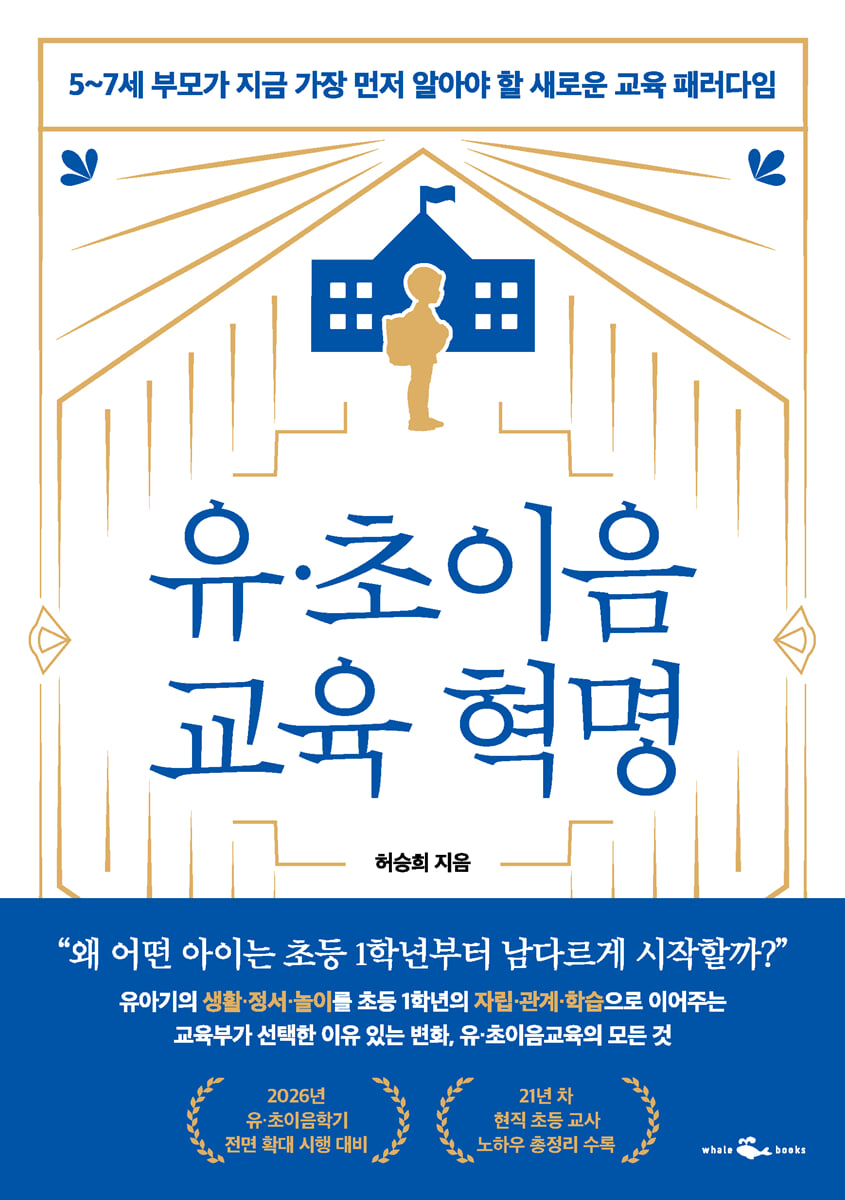
The Yu-Choi-Eum Education Revolution
 |
Description
Book Introduction
“If parents of children aged 5 to 7 miss out now,
After entering elementary school, the child stops in the classroom.”
The first book to teach how to practice early childhood education at home.
A practical solution from a 21-year veteran teacher and mother of four.
The 'Yu-Choi I-eum Semester' will be implemented nationwide starting in 2026.
Now, how parents and teachers can work together to effectively bridge the significant transition from early childhood education institutions (kindergartens and daycare centers) to elementary school is emerging as a critical issue both in terms of parenting and education.
《The Revolution in Early Childhood Education》 goes beyond a simple book on preparing for elementary school admissions. It is a book that fundamentally resolves the anxieties and tensions of parents and children. It is the first guidebook to concretize parenting and education methods that can be recognized and practiced at home first during the enormous change of the early childhood and early childhood years.
As an elementary school teacher with 21 years of experience and a parent of four children, the author has personally raised four children and taught countless others, and has witnessed firsthand the tension and confusion children experience during the transitional period between kindergarten and early childhood.
With the implementation of the Yu-Choi I-eum semester just around the corner, the author's conclusion, based on his extensive experience, is clear.
The smartest way to transition from early childhood education to primary school, from ages 5 to 7 to first grade, is to begin with a systematic 'connection' between the two periods.
In particular, this book accurately points out that “policy is already reality, but practice is still a gap.”
Given the significant time required for the introduction of new systems to provide immediate, practical benefits to parents, teachers, and children, this book serves as the first guide to providing concrete methods and examples of early childhood education.
Beyond simply providing accessible information, it's even more useful because it contains practical guidelines that parents can immediately apply, from how they talk to their children at the dinner table tonight to how teachers manage children's emotions in the classroom.
Here's why every parent and teacher should read this and apply it to their children right now.
After entering elementary school, the child stops in the classroom.”
The first book to teach how to practice early childhood education at home.
A practical solution from a 21-year veteran teacher and mother of four.
The 'Yu-Choi I-eum Semester' will be implemented nationwide starting in 2026.
Now, how parents and teachers can work together to effectively bridge the significant transition from early childhood education institutions (kindergartens and daycare centers) to elementary school is emerging as a critical issue both in terms of parenting and education.
《The Revolution in Early Childhood Education》 goes beyond a simple book on preparing for elementary school admissions. It is a book that fundamentally resolves the anxieties and tensions of parents and children. It is the first guidebook to concretize parenting and education methods that can be recognized and practiced at home first during the enormous change of the early childhood and early childhood years.
As an elementary school teacher with 21 years of experience and a parent of four children, the author has personally raised four children and taught countless others, and has witnessed firsthand the tension and confusion children experience during the transitional period between kindergarten and early childhood.
With the implementation of the Yu-Choi I-eum semester just around the corner, the author's conclusion, based on his extensive experience, is clear.
The smartest way to transition from early childhood education to primary school, from ages 5 to 7 to first grade, is to begin with a systematic 'connection' between the two periods.
In particular, this book accurately points out that “policy is already reality, but practice is still a gap.”
Given the significant time required for the introduction of new systems to provide immediate, practical benefits to parents, teachers, and children, this book serves as the first guide to providing concrete methods and examples of early childhood education.
Beyond simply providing accessible information, it's even more useful because it contains practical guidelines that parents can immediately apply, from how they talk to their children at the dinner table tonight to how teachers manage children's emotions in the classroom.
Here's why every parent and teacher should read this and apply it to their children right now.
- You can preview some of the book's contents.
Preview
index
Prologue: Ages 5-7: Prepare your child for their first transition with early childhood education.
Part 1: A New Growth Formula for Children Ages 5-7: Early Childhood Education
01 What is the difference between a 5-year-old toddler and a first-grade elementary school student?
02 What is the difference between first graders 10 years ago and first graders today?
03 Elementary school entrance preparation through Yu-Choi-Ium education
04 Yu-Choi-Ium Education: Leading Confusion to Growth
05 Amazing changes that occur when you understand and practice the Yu-Choi-Ieum education
06 Three strengths that must be nurtured in children aged 5 to 7
* Checklist for basic competency in early childhood education
Part 2: The Revolutionary Code of Yu and Choyim for Growing Up Children Aged 5-7 I.
The Power of Life
01 How are the powers of life different in infancy and elementary school?
02 What happens when you lack the strength to live
03 How to Build Strength in Your Life at Home
04 Parents' Conversation Methods to Develop Life Skills
Part 3: The Revolutionary Code for the Growth of Children Aged 5-7: The Code of Yu and Choyim II.
The power of emotion
01 Why Parents Need to Know Emotional Intelligence
02 How are emotional powers different in infancy and elementary school?
03 What Happens When Emotional Strength Is Lacking
04 How to Develop Emotional Strength at Home
05 Parents' Conversation Methods to Develop Emotional Strength
Part 4: The Revolutionary Code for the Growth of Children Aged 5-7: The Code of Yu and Choyim III.
The power of learning
01 How are the learning powers different in early childhood and elementary school?
02 What Happens When Learning Power Is Lacking
03 How to Develop the Power of Learning at Home
04 Parental Conversation Methods to Develop Learning Power
Part 5: Starting in the first grade of elementary school, other children start like this.
01 Looking at elementary school admission through early childhood education
02 The power of life to prevent school adjustment stress
03 The power of emotions that instill confidence in school life
04 The power of learning that establishes the foundation for elementary school studies
05 Preview of 1st Grade School Life
06 All About After-School Activities
Part 1: A New Growth Formula for Children Ages 5-7: Early Childhood Education
01 What is the difference between a 5-year-old toddler and a first-grade elementary school student?
02 What is the difference between first graders 10 years ago and first graders today?
03 Elementary school entrance preparation through Yu-Choi-Ium education
04 Yu-Choi-Ium Education: Leading Confusion to Growth
05 Amazing changes that occur when you understand and practice the Yu-Choi-Ieum education
06 Three strengths that must be nurtured in children aged 5 to 7
* Checklist for basic competency in early childhood education
Part 2: The Revolutionary Code of Yu and Choyim for Growing Up Children Aged 5-7 I.
The Power of Life
01 How are the powers of life different in infancy and elementary school?
02 What happens when you lack the strength to live
03 How to Build Strength in Your Life at Home
04 Parents' Conversation Methods to Develop Life Skills
Part 3: The Revolutionary Code for the Growth of Children Aged 5-7: The Code of Yu and Choyim II.
The power of emotion
01 Why Parents Need to Know Emotional Intelligence
02 How are emotional powers different in infancy and elementary school?
03 What Happens When Emotional Strength Is Lacking
04 How to Develop Emotional Strength at Home
05 Parents' Conversation Methods to Develop Emotional Strength
Part 4: The Revolutionary Code for the Growth of Children Aged 5-7: The Code of Yu and Choyim III.
The power of learning
01 How are the learning powers different in early childhood and elementary school?
02 What Happens When Learning Power Is Lacking
03 How to Develop the Power of Learning at Home
04 Parental Conversation Methods to Develop Learning Power
Part 5: Starting in the first grade of elementary school, other children start like this.
01 Looking at elementary school admission through early childhood education
02 The power of life to prevent school adjustment stress
03 The power of emotions that instill confidence in school life
04 The power of learning that establishes the foundation for elementary school studies
05 Preview of 1st Grade School Life
06 All About After-School Activities
Detailed image

Into the book
This book is not simply a preparatory book for parents to read to help their children adjust well to elementary school.
This is a practical guide to help children build the foundation for navigating a constantly changing world through the previously hidden but now re-examined period of early childhood.
--- From "Prologue --- Prepare your child's first transition with early childhood education for ages 5 to 7"
This is precisely why early childhood education is necessary.
We need an educational approach that turns the experience of "disconnection" that children experience between early childhood education institutions and elementary school into an opportunity for "connection," and that transforms the "anxiety and confusion" felt by parents into "understanding and waiting."
· Play in early childhood should be connected to life and learning in elementary school.
· Children must learn about differences in the classroom environment through exploration and observation.
· Parents should shift their role from teaching to becoming partners who prepare and support their children.
Although there is only one year between a five-year-old toddler and first grader, that year is the first leap forward in a child's life.
To ensure that the foundation for a leap forward remains unshaken, we hope that everyone, including children, parents, teachers, and schools, remember that early childhood education is an important starting point that must be pursued together.
--- From “Part 1 - Early Childhood Education to Reduce Parental Anxiety and Child Confusion”
From infancy to elementary school, children naturally develop life skills by repeating daily routines.
In infancy, children develop self-help skills and basic physical strength by moving and playing according to routines and taking care of their own bodies and belongings. In particular, the Nuri course emphasizes enjoying physical activities, living a healthy and safe life, and knowing and respecting oneself.
This is an important starting point for a child to develop a sense of their body and the ability to take care of themselves.
This foundation naturally leads to the first grade curriculum, “Good Living and Wise Living,” after entering elementary school.
Children move according to a set schedule, learn their roles and rules while working with their peers in the classroom, and begin to learn how to manage their own belongings and time.
At first, you'll be repeating questions like, "What time is it?" or "Where are my crayons?", but gradually you'll learn the structure of your day and develop a rhythm to your life.
--- From "Part 2 --- Early Childhood vs. After Elementary School, Summarizing the Power of Life"
Emotional intelligence is a crucial ability that determines a child's academic performance, interpersonal relationships, social life, and even quality of life.
And emotional intelligence is most sensitive and grows most rapidly during the toddler and early childhood years, that is, between the age of 7 and the early elementary school years.
Why? Because this is the period when children begin to form relationships with peers, are exposed to a variety of social situations, and have the most opportunities to learn and regulate their emotions.
It is also a time when the development of the frontal lobe of the brain and the maturation of the autonomic nervous system rapidly progress, and it is also a golden time when basic social and emotional capabilities, including emotional control and empathy, are formed.
--- From "Part 3 --- Examining the Components of Emotional Intelligence"
The power of learning comes not from the ability to memorize or understand, but from the attitude to learn, the courage to be wrong, and the power to persist.
And these powers are connected to the following capacities that were mentioned earlier in the power of life and the power of emotions.
· Learning persistence: the ability to complete a task and the attitude of not giving up halfway through.
· Self-regulation: Attempts to focus even in distracting environments, the cycle of planning, doing, and checking
· Self-efficacy: The belief that "I can do it" stems from experiences of accomplishment.
· Problem-solving skills: Attempt to approach problems in various ways without fear of making mistakes
· Lifelong learning competencies: Enjoyment of learning and an attitude to learn on one's own.
A child who lacks the ability to learn is not just a child who cannot study.
I'm afraid of learning and have lost the confidence to try.
Learning is a process of repeated mistakes, and true strength is gained through enduring these processes and accumulating experience through repeated attempts.
If you don't feel your child has much motivation to learn, the first thing you should look at is 'how willing they are to learn' rather than 'what and how much they know'.
Parents should allow their children to fail so they can try again, and encourage small, consistent achievements.
--- From "Part 4 - Where the Power of Learning Begins"
As their children prepare to enter elementary school, parents are filled with excitement and worry.
However, a child's growth is not a period of time set like an exam.
The transition from infancy to elementary school is not a sudden and abrupt process, but rather a smooth and gradual progression to the next stage, like a relay race.
The Yu-Choi-Ieum education is an institutional preparation and perspective to warmly nurture this process of connection.
If your child's early childhood is well-filled, preparing for elementary school is not a separate project, but something that can be accomplished naturally as an extension of life.
This is a practical guide to help children build the foundation for navigating a constantly changing world through the previously hidden but now re-examined period of early childhood.
--- From "Prologue --- Prepare your child's first transition with early childhood education for ages 5 to 7"
This is precisely why early childhood education is necessary.
We need an educational approach that turns the experience of "disconnection" that children experience between early childhood education institutions and elementary school into an opportunity for "connection," and that transforms the "anxiety and confusion" felt by parents into "understanding and waiting."
· Play in early childhood should be connected to life and learning in elementary school.
· Children must learn about differences in the classroom environment through exploration and observation.
· Parents should shift their role from teaching to becoming partners who prepare and support their children.
Although there is only one year between a five-year-old toddler and first grader, that year is the first leap forward in a child's life.
To ensure that the foundation for a leap forward remains unshaken, we hope that everyone, including children, parents, teachers, and schools, remember that early childhood education is an important starting point that must be pursued together.
--- From “Part 1 - Early Childhood Education to Reduce Parental Anxiety and Child Confusion”
From infancy to elementary school, children naturally develop life skills by repeating daily routines.
In infancy, children develop self-help skills and basic physical strength by moving and playing according to routines and taking care of their own bodies and belongings. In particular, the Nuri course emphasizes enjoying physical activities, living a healthy and safe life, and knowing and respecting oneself.
This is an important starting point for a child to develop a sense of their body and the ability to take care of themselves.
This foundation naturally leads to the first grade curriculum, “Good Living and Wise Living,” after entering elementary school.
Children move according to a set schedule, learn their roles and rules while working with their peers in the classroom, and begin to learn how to manage their own belongings and time.
At first, you'll be repeating questions like, "What time is it?" or "Where are my crayons?", but gradually you'll learn the structure of your day and develop a rhythm to your life.
--- From "Part 2 --- Early Childhood vs. After Elementary School, Summarizing the Power of Life"
Emotional intelligence is a crucial ability that determines a child's academic performance, interpersonal relationships, social life, and even quality of life.
And emotional intelligence is most sensitive and grows most rapidly during the toddler and early childhood years, that is, between the age of 7 and the early elementary school years.
Why? Because this is the period when children begin to form relationships with peers, are exposed to a variety of social situations, and have the most opportunities to learn and regulate their emotions.
It is also a time when the development of the frontal lobe of the brain and the maturation of the autonomic nervous system rapidly progress, and it is also a golden time when basic social and emotional capabilities, including emotional control and empathy, are formed.
--- From "Part 3 --- Examining the Components of Emotional Intelligence"
The power of learning comes not from the ability to memorize or understand, but from the attitude to learn, the courage to be wrong, and the power to persist.
And these powers are connected to the following capacities that were mentioned earlier in the power of life and the power of emotions.
· Learning persistence: the ability to complete a task and the attitude of not giving up halfway through.
· Self-regulation: Attempts to focus even in distracting environments, the cycle of planning, doing, and checking
· Self-efficacy: The belief that "I can do it" stems from experiences of accomplishment.
· Problem-solving skills: Attempt to approach problems in various ways without fear of making mistakes
· Lifelong learning competencies: Enjoyment of learning and an attitude to learn on one's own.
A child who lacks the ability to learn is not just a child who cannot study.
I'm afraid of learning and have lost the confidence to try.
Learning is a process of repeated mistakes, and true strength is gained through enduring these processes and accumulating experience through repeated attempts.
If you don't feel your child has much motivation to learn, the first thing you should look at is 'how willing they are to learn' rather than 'what and how much they know'.
Parents should allow their children to fail so they can try again, and encourage small, consistent achievements.
--- From "Part 4 - Where the Power of Learning Begins"
As their children prepare to enter elementary school, parents are filled with excitement and worry.
However, a child's growth is not a period of time set like an exam.
The transition from infancy to elementary school is not a sudden and abrupt process, but rather a smooth and gradual progression to the next stage, like a relay race.
The Yu-Choi-Ieum education is an institutional preparation and perspective to warmly nurture this process of connection.
If your child's early childhood is well-filled, preparing for elementary school is not a separate project, but something that can be accomplished naturally as an extension of life.
--- From "Part 5: Looking at Elementary School Entrance through Early Childhood Education"
Publisher's Review
“Parents’ impatience is support for their children,
A child's anxious mind grows into a strong sense of self-efficacy.
Essential Connection Formula: "Yu-Choi Connection Education"
Before children enter a world centered on schedules and textbooks, where everyday life is a learning experience, here are three strengths parents must cultivate in their children.
In early childhood, children learn through their senses and experiences, centered around play in everyday life.
They develop their emotions around protection and attachment, and grow within loose rules centered around care and growth.
On the other hand, from the time they enter elementary school, children must move within a schedule centered on their subjects.
They undergo emotional changes that require autonomy and responsibility, and are expected to fulfill their roles and learn.
For a child between the ages of 5 and 7, this change is truly enormous.
So, it is no exaggeration to say that the success or failure of a child's future 12 years of education depends on how they spend this period.
It is for this very reason that early childhood education is being implemented on a full-scale scale.
The core of the "Yu-Choi-Ium Education Revolution" is the three powers that must be developed in children between the ages of 5 and 7, or at the latest before or after entering elementary school: "the power of life, the power of emotion, and the power of learning."
This includes everything from small independence like packing your own bag and managing your own daily routine, to the ability to express your feelings and manage conflicts with friends, to the ability to enjoy play and exploration and lead to learning.
This is in direct line with the four basic competencies of early childhood education (physical motor skills, social-emotional skills, lifelong learning skills, and self-regulation skills) proposed by the Ministry of Education, and is also the most realistic and essential foundation for growth that parents can foster in their children in their daily lives.
Ultimately, this book kindly explains the Ministry of Education's policy of 'Yu-Choi-Ieum Education' and the discussion centered on the field system in a language that is easiest for parents to understand, and provides abundant examples of daily life routines, play methods, and conversation methods that parents can immediately practice at home for their children, clearly providing the answer to 'what should I do starting today?'
The book is filled with specific examples and friendly guidance on how to cultivate the three strengths in children.
The process of a child who was struggling to find his pencil case in his bag and not knowing where it was, now gathering his own supplies through routine practice, and the scene of a child who only reacted to an argument with a friend by crying and now resolving a relationship by saying “I’m upset” through an emotion card game, provide readers with not only practical methods but also deep empathy.
It also reminds us of the importance of a patient attitude, as it reminds us that when parents cannot bear their anxiety and take care of everything for their children, they end up missing out on opportunities for independence.
Furthermore, this book helps parents develop the ability to properly observe their child's current developmental stage.
It leads us to change the impatient question, “Is my child slow?” into the fundamental question, “What strengths is my child developing right now?”
In fact, the moment parents' perspectives change, children develop self-efficacy by repeating small successes with support rather than coercion.
These changes go beyond simply supporting growth and transform the very relationship between parent and child, transforming parents from guides to partners and observers.
The author also emphasizes the fact that “each child grows at a different pace and with different results” based on her experience raising four children for 18 years.
What worked for the eldest child didn't work for the second child, and the third and youngest child needed a different approach.
These experiences encourage parents to think for themselves about how to best suit their child's temperament and pace, rather than searching for the right answer.
“Yu-Choi-I-Eum education that captures the heart of a child from the very first classroom door,
“A child who plays becomes a child who learns.”
To connect the joys of infancy with the learning of elementary school.
A completely new educational paradigm created by parents, children, and teachers together.
A child's entry into elementary school is the first turning point in life where emotions, environment, relationships, and roles all change at once.
Many parents are left feeling bewildered when their children come home from school crying or looking confused, even after they've checked off their school preparation checklist.
However, the author emphasizes that this situation should not be viewed as a failure, but rather as a sign of growth.
The moments when a child cannot stand in line properly in the cafeteria, hesitates to go to the bathroom, or feels frustrated with the teacher are all just a part of the child's process of adapting to the new order.
When parents and teachers recognize this period as a process of "getting through it together," children can use the confusion as a stepping stone to strengthen their inner self.
"The Revolution in Early Childhood Education" is the first practical guide to connecting national policy with the field of childcare and education, and is a child education guidebook that best understands parents' hearts.
For parents who are anxious about what else to teach their children as they approach elementary school, ages 5 to 7, this book offers insight into the question, "What strengths should my child develop now so they can continue to thrive in the future?"
Children develop self-efficacy through small successes and waiting, and parents transform from mere instructors to companions walking the path of growth together.
Above all, this book helps children see school not as a place they have to go to when the time comes, but as a place where they can discover new possibilities.
It also provides parents with an eye for their child's current position, teachers with educational language that bridges the gap between infancy and elementary school, and children with a sense of 'I can do it.'
The first six years of elementary school are not just a time for learning, but also a time to build the foundation for self-regulation, social skills, and self-esteem.
Depending on whether you can open that starting point stably, your subsequent learning attitude, relationship building, and even self-esteem will change.
This book is not simply a preparatory book for the few months before and after entering elementary school.
It provides a long-term developmental process that spans from ages 5 to 7 and up to the early elementary school years, and provides parents with a parenting philosophy, teachers with an educational perspective, and children with practical methods to cultivate inner strength.
Ultimately, "The Early Childhood Education Revolution" is the starting point of a new educational paradigm that connects the growth of parents, teachers, and children, and will be a friendly guide that will most firmly protect children during their first transition.
If you are a parent of a child between the ages of 5 and 7, there is absolutely no need to look at other parenting or educational methods.
All you have to do is join this new 'revolution'.
A child's anxious mind grows into a strong sense of self-efficacy.
Essential Connection Formula: "Yu-Choi Connection Education"
Before children enter a world centered on schedules and textbooks, where everyday life is a learning experience, here are three strengths parents must cultivate in their children.
In early childhood, children learn through their senses and experiences, centered around play in everyday life.
They develop their emotions around protection and attachment, and grow within loose rules centered around care and growth.
On the other hand, from the time they enter elementary school, children must move within a schedule centered on their subjects.
They undergo emotional changes that require autonomy and responsibility, and are expected to fulfill their roles and learn.
For a child between the ages of 5 and 7, this change is truly enormous.
So, it is no exaggeration to say that the success or failure of a child's future 12 years of education depends on how they spend this period.
It is for this very reason that early childhood education is being implemented on a full-scale scale.
The core of the "Yu-Choi-Ium Education Revolution" is the three powers that must be developed in children between the ages of 5 and 7, or at the latest before or after entering elementary school: "the power of life, the power of emotion, and the power of learning."
This includes everything from small independence like packing your own bag and managing your own daily routine, to the ability to express your feelings and manage conflicts with friends, to the ability to enjoy play and exploration and lead to learning.
This is in direct line with the four basic competencies of early childhood education (physical motor skills, social-emotional skills, lifelong learning skills, and self-regulation skills) proposed by the Ministry of Education, and is also the most realistic and essential foundation for growth that parents can foster in their children in their daily lives.
Ultimately, this book kindly explains the Ministry of Education's policy of 'Yu-Choi-Ieum Education' and the discussion centered on the field system in a language that is easiest for parents to understand, and provides abundant examples of daily life routines, play methods, and conversation methods that parents can immediately practice at home for their children, clearly providing the answer to 'what should I do starting today?'
The book is filled with specific examples and friendly guidance on how to cultivate the three strengths in children.
The process of a child who was struggling to find his pencil case in his bag and not knowing where it was, now gathering his own supplies through routine practice, and the scene of a child who only reacted to an argument with a friend by crying and now resolving a relationship by saying “I’m upset” through an emotion card game, provide readers with not only practical methods but also deep empathy.
It also reminds us of the importance of a patient attitude, as it reminds us that when parents cannot bear their anxiety and take care of everything for their children, they end up missing out on opportunities for independence.
Furthermore, this book helps parents develop the ability to properly observe their child's current developmental stage.
It leads us to change the impatient question, “Is my child slow?” into the fundamental question, “What strengths is my child developing right now?”
In fact, the moment parents' perspectives change, children develop self-efficacy by repeating small successes with support rather than coercion.
These changes go beyond simply supporting growth and transform the very relationship between parent and child, transforming parents from guides to partners and observers.
The author also emphasizes the fact that “each child grows at a different pace and with different results” based on her experience raising four children for 18 years.
What worked for the eldest child didn't work for the second child, and the third and youngest child needed a different approach.
These experiences encourage parents to think for themselves about how to best suit their child's temperament and pace, rather than searching for the right answer.
“Yu-Choi-I-Eum education that captures the heart of a child from the very first classroom door,
“A child who plays becomes a child who learns.”
To connect the joys of infancy with the learning of elementary school.
A completely new educational paradigm created by parents, children, and teachers together.
A child's entry into elementary school is the first turning point in life where emotions, environment, relationships, and roles all change at once.
Many parents are left feeling bewildered when their children come home from school crying or looking confused, even after they've checked off their school preparation checklist.
However, the author emphasizes that this situation should not be viewed as a failure, but rather as a sign of growth.
The moments when a child cannot stand in line properly in the cafeteria, hesitates to go to the bathroom, or feels frustrated with the teacher are all just a part of the child's process of adapting to the new order.
When parents and teachers recognize this period as a process of "getting through it together," children can use the confusion as a stepping stone to strengthen their inner self.
"The Revolution in Early Childhood Education" is the first practical guide to connecting national policy with the field of childcare and education, and is a child education guidebook that best understands parents' hearts.
For parents who are anxious about what else to teach their children as they approach elementary school, ages 5 to 7, this book offers insight into the question, "What strengths should my child develop now so they can continue to thrive in the future?"
Children develop self-efficacy through small successes and waiting, and parents transform from mere instructors to companions walking the path of growth together.
Above all, this book helps children see school not as a place they have to go to when the time comes, but as a place where they can discover new possibilities.
It also provides parents with an eye for their child's current position, teachers with educational language that bridges the gap between infancy and elementary school, and children with a sense of 'I can do it.'
The first six years of elementary school are not just a time for learning, but also a time to build the foundation for self-regulation, social skills, and self-esteem.
Depending on whether you can open that starting point stably, your subsequent learning attitude, relationship building, and even self-esteem will change.
This book is not simply a preparatory book for the few months before and after entering elementary school.
It provides a long-term developmental process that spans from ages 5 to 7 and up to the early elementary school years, and provides parents with a parenting philosophy, teachers with an educational perspective, and children with practical methods to cultivate inner strength.
Ultimately, "The Early Childhood Education Revolution" is the starting point of a new educational paradigm that connects the growth of parents, teachers, and children, and will be a friendly guide that will most firmly protect children during their first transition.
If you are a parent of a child between the ages of 5 and 7, there is absolutely no need to look at other parenting or educational methods.
All you have to do is join this new 'revolution'.
GOODS SPECIFICS
- Date of issue: September 10, 2025
- Page count, weight, size: 360 pages | 504g | 148*210*21mm
- ISBN13: 9791194627142
- ISBN10: 1194627145
You may also like
카테고리
korean


korean

![GQ KOREA Mark (Monthly): December [2025]](http://librairie.coreenne.fr/cdn/shop/files/8ef265dbbfbf186523ed75ba7319009d.jpg?v=1765340328&width=3840)


