

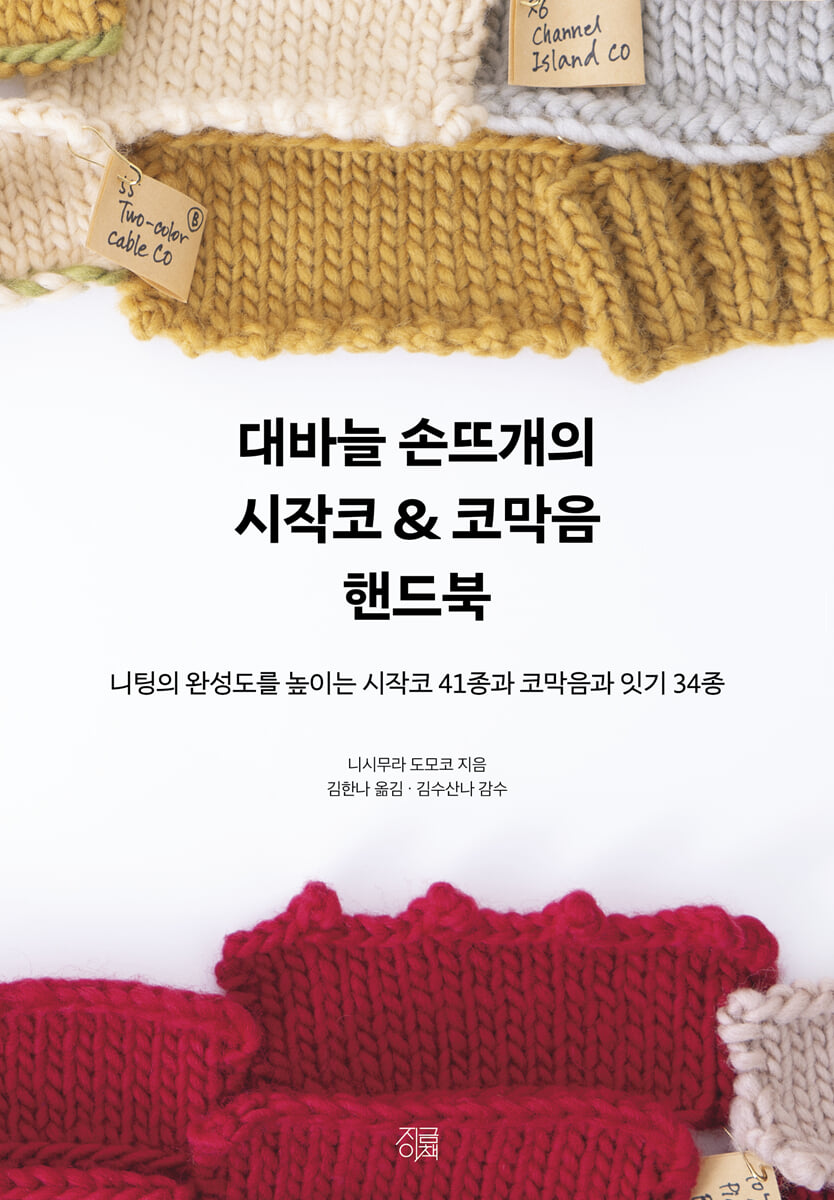
Handbook for Beginners and Beginners of Large Needle Knitting
 |
Description
Book Introduction
“How many different ways to start a knitting needle do you know?”
There are different starting and closing methods depending on the characteristics and purpose of the knitting!
Even those who have been knitting for a long time often overlook the importance of the starting and closing techniques.
When it comes to starting or closing a piece, some people stick to the same old, familiar methods, while others follow the instructions in the design without thinking about why they do it that way.
However, both the starting and stopping noses have intended functions such as decoration, elasticity, and sturdiness, and there are countless subtly different techniques that pursue the same function.
Tomoko Nishimura, the author of this book, reminds us that seemingly trivial techniques such as opening the nose and blocking the nose can have a significant impact on the overall impression of a work, and that there are techniques appropriate for different purposes. She has carefully selected frequently used and useful techniques to know and published them in a handbook.
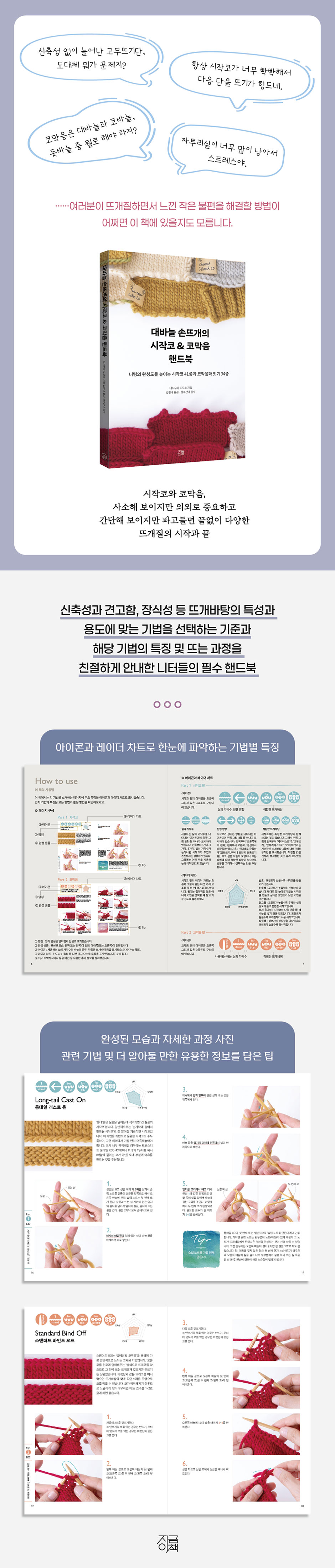
Part 1 is about 'Starting the Nose' and Part 2 is about 'Blocking and Connecting the Nose'. The pages introducing each technique display the main features with icons and radar charts that are easy to understand at a glance, and photos showing the specific process are included following a general explanation to help anyone easily follow along.
It's also worth noting tips that contain useful information, such as related similar techniques, how to knit the same shape in different ways, and know-how to reduce mistakes.
Now that you're starting to knit, keep this handbook close at hand and refer to it whenever you want.
Many problems can be solved surprisingly easily.
There are different starting and closing methods depending on the characteristics and purpose of the knitting!
Even those who have been knitting for a long time often overlook the importance of the starting and closing techniques.
When it comes to starting or closing a piece, some people stick to the same old, familiar methods, while others follow the instructions in the design without thinking about why they do it that way.
However, both the starting and stopping noses have intended functions such as decoration, elasticity, and sturdiness, and there are countless subtly different techniques that pursue the same function.
Tomoko Nishimura, the author of this book, reminds us that seemingly trivial techniques such as opening the nose and blocking the nose can have a significant impact on the overall impression of a work, and that there are techniques appropriate for different purposes. She has carefully selected frequently used and useful techniques to know and published them in a handbook.
Part 1 is about 'Starting the Nose' and Part 2 is about 'Blocking and Connecting the Nose'. The pages introducing each technique display the main features with icons and radar charts that are easy to understand at a glance, and photos showing the specific process are included following a general explanation to help anyone easily follow along.
It's also worth noting tips that contain useful information, such as related similar techniques, how to knit the same shape in different ways, and know-how to reduce mistakes.
Now that you're starting to knit, keep this handbook close at hand and refer to it whenever you want.
Many problems can be solved surprisingly easily.
- You can preview some of the book's contents.
Preview
index
prolog
How to use this book
Making a 'slip note'
Part 1 Start Code
Tips for Choosing a Starter
Starter code 'made with a finger'
Long Tail Cast On
Twisted Longtail Cast On
Two-color longtail cast-on
Two-color braided cast-on
Herringbone Cast On
Tricolor Braided Cast On
Combined Longtail Cast On
Left-handed cast on
German Twisted Cast On
Pearl Half Hitch Cast On
Knit One Pearl One Rib Cast On
Fringe Cast On
Pico Live Cast On
Channel Island Cast On
The starting point of the 'Gamako' series
Loop Cast On
Backwards Loop Cast On
Twisted Loop Cast On
Twisted Cast On
The start of 'making it by floating'
Double Chain Cast On
Knitted Cast On
Pearl Cast On
Cable Cast On
Pearl Cable Cast On
Pico Edge Cast On
A 'useful' starter code
Crocheted Chain Cast On
Invisible Cast On
Italian Tubular Cast On
iCode Cast On
Pico Chain Cast On
Circular Cast On
Turkish Cast On
Judith Magic Cast On
Figure Eight Cast On
Part 2: Nasal congestion
Tips for Choosing a Nasal Plug and Plug
Nasal blockage using a needle or crochet hook
Standard Bind Off
Crochet Bind Off
Without Knitting Bind Off
Decrease Bind Off
Single crochet bind off
Suspended Bind Off
Stretch bind off
Stretch bind-off pony knit one-pearl one-rib
Yarn over bind off
Simple two-color bind-off
Pico Chain Bind Off
Braided Rib Bind Off
Icelandic Bind Off
Russian Bind Off
Pico Edge Bind Off
Two Row Bind Off
Double Chain Bind Off
One over to bind off
Double stitch bind off
iCode Bind Off
Knotted Knit to Together Bind Off
Nasal blockage using a rag
Soun Bind Off
Stem stitch bind off
Italian bind off
Knit to Pearl to Rib Bind Off
Tubular bind off
Loop bind off
'Itgi' technique
Kitchener Stitch on Stockinette Stitch
Kitchener Stitch on Reverse Stockinette Stitch
Kitchener Stitch on Garter Stitch
Three Needle Bind Off
Japanese three-needle bind-off
Three Needle Eye Code Bind Off
Russian grafting
Search
Tips
What's the first thing you make with slip notes?
How to make a long tail cast-on loose?
Longtail cast-on made with two strands of yarn
Which way to twist is better?
Herringbone can be made with one or two colors.
How to overlap two strands of thread on the base
Can be used on any rubber band
Two-color fringe cast-on
Tips and tricks for using Knitted & Pearled Cast On
Knitted & Cable Cast On in 2 colors
Structure of the length and spacing of pico? Start code
How to Make and Release a Provisional Cast On
Italian Cast On in 2 Colors
How to keep your 'last nose' from growing longer
Structure of the length and spacing of pico? Nose blockage
Two-color one-over-two bind-off
1st nostril rubber block with the first nostril not knitted
Rubber knitting needle that divides the knitting into two needles
How to join knitted fabrics that have been blocked
How to use this book
Making a 'slip note'
Part 1 Start Code
Tips for Choosing a Starter
Starter code 'made with a finger'
Long Tail Cast On
Twisted Longtail Cast On
Two-color longtail cast-on
Two-color braided cast-on
Herringbone Cast On
Tricolor Braided Cast On
Combined Longtail Cast On
Left-handed cast on
German Twisted Cast On
Pearl Half Hitch Cast On
Knit One Pearl One Rib Cast On
Fringe Cast On
Pico Live Cast On
Channel Island Cast On
The starting point of the 'Gamako' series
Loop Cast On
Backwards Loop Cast On
Twisted Loop Cast On
Twisted Cast On
The start of 'making it by floating'
Double Chain Cast On
Knitted Cast On
Pearl Cast On
Cable Cast On
Pearl Cable Cast On
Pico Edge Cast On
A 'useful' starter code
Crocheted Chain Cast On
Invisible Cast On
Italian Tubular Cast On
iCode Cast On
Pico Chain Cast On
Circular Cast On
Turkish Cast On
Judith Magic Cast On
Figure Eight Cast On
Part 2: Nasal congestion
Tips for Choosing a Nasal Plug and Plug
Nasal blockage using a needle or crochet hook
Standard Bind Off
Crochet Bind Off
Without Knitting Bind Off
Decrease Bind Off
Single crochet bind off
Suspended Bind Off
Stretch bind off
Stretch bind-off pony knit one-pearl one-rib
Yarn over bind off
Simple two-color bind-off
Pico Chain Bind Off
Braided Rib Bind Off
Icelandic Bind Off
Russian Bind Off
Pico Edge Bind Off
Two Row Bind Off
Double Chain Bind Off
One over to bind off
Double stitch bind off
iCode Bind Off
Knotted Knit to Together Bind Off
Nasal blockage using a rag
Soun Bind Off
Stem stitch bind off
Italian bind off
Knit to Pearl to Rib Bind Off
Tubular bind off
Loop bind off
'Itgi' technique
Kitchener Stitch on Stockinette Stitch
Kitchener Stitch on Reverse Stockinette Stitch
Kitchener Stitch on Garter Stitch
Three Needle Bind Off
Japanese three-needle bind-off
Three Needle Eye Code Bind Off
Russian grafting
Search
Tips
What's the first thing you make with slip notes?
How to make a long tail cast-on loose?
Longtail cast-on made with two strands of yarn
Which way to twist is better?
Herringbone can be made with one or two colors.
How to overlap two strands of thread on the base
Can be used on any rubber band
Two-color fringe cast-on
Tips and tricks for using Knitted & Pearled Cast On
Knitted & Cable Cast On in 2 colors
Structure of the length and spacing of pico? Start code
How to Make and Release a Provisional Cast On
Italian Cast On in 2 Colors
How to keep your 'last nose' from growing longer
Structure of the length and spacing of pico? Nose blockage
Two-color one-over-two bind-off
1st nostril rubber block with the first nostril not knitted
Rubber knitting needle that divides the knitting into two needles
How to join knitted fabrics that have been blocked
Detailed image
Publisher's Review
The beginning and end of a hand-knitted piece
Everything you need to know about the 'starting point' and 'closing point' that determine strength, elasticity, and decorativeness.
The number of techniques introduced in this book is 41 for starting the nose and 34 for blocking and connecting the nose.
There are so many knitting techniques in the world that the number of techniques selected and included is as follows.
However, the fact that so many techniques were developed means that a variety of techniques were needed.
Each knitting has its own appropriate technique depending on its characteristics, purpose, and design.
If you use a technique that doesn't match the beginning and end without much thought, you'll end up with some unsatisfactory aspects, such as the foundation of the beginning part sticking out and looking awkward, sleeves or necklines that need elasticity feeling stuffy, or parts that need to be finished solidly looking weakly wide.
This handbook introduces starting stitches, block stitches, and tying techniques that can be selected according to the knitting base or purpose to enhance the perfection of knitting.
The main characteristics of each technique are explained in an easy-to-understand manner, and techniques that are slightly modified from the basic technique, techniques that knit with a single color and techniques that knit with multiple colors, techniques that have the same shape but different knitting processes, and paired start-stop techniques are explained.
The icons at the top of the page indicate the number of yarn strands and needle type used, as well as whether the stitch is suitable for the four basic knitting patterns: knitting, rubber, knitting needles, and garter stitch.
The radar chart provides an at-a-glance overview of five key characteristics, including difficulty, flexibility, and robustness.
Tips, compiled in bite-sized chunks or applied versions, contain useful information that will make knitting easier.
Since many knitters use English patterns and the names of techniques are often known in English, the English names are written in Korean and the English names are also written when first mentioned to help people become familiar with the English names.
Let's learn various techniques and use them appropriately.
Cast On, Getting Started is Half the Battle!
The method of starting the stitch varies depending on the purpose of the knit.
A cast on is the stitch you grab when you start knitting, and is called a cast on (CO) in English.
The most commonly used cast-ons are the long-tail cast-on, commonly known as the "regular cast-on," the loop cast-on, also known as the "roll-on cast-on," and the provisional cast-on, also known as the "later-unrolled cast-on" or the "separate chain cast-on." However, there are 41 different cast-on techniques included in this book.
Based on the knitting method, it is divided into 'starting stitch made by hanging on the finger', 'starting stitch of the wrapping type', 'starting stitch made by knitting', and 'starting stitch with a purpose', and each has big and small differences in the finished appearance and knitting base characteristics.
When choosing a nose bridge, you should consider a variety of factors, including shape, direction of travel, flexibility and firmness, and combination with the nasal obstruction technique.
Let's take a look at the descriptions of each technique and find out which starting point would be suitable for the piece you want to create.
Not only can it create design points or add practicality, it can also surprisingly easily solve the problem of the starting stitch becoming loose or tight.
In particular, 'useful starting stitches' are introduced for specific knitting patterns, such as single-stitch knitting or lace knitting, and for specific shapes, such as circular knitting patterns or knitting socks starting from the toe, so it will be helpful to know them in many ways.
Bind off, all's well that ends well!
The nasal plug and connection that determine elasticity and decorativeness
The 'bind off (BO)' technique, which prevents the remaining stitches at the end of the knit from coming undone, also makes a big difference in the finished look depending on the technique chosen, just like the starting stitch.
The first thing to consider when choosing a nasal obstruction technique is whether you want it to be noticeable or inconspicuous.
Accordingly, you can finish it by keeping the pattern of the knitted base, or you can create a point by using a method that combines knitting with border knitting.
Of course, for practicality, you need to consider flexibility and sturdiness, and it is also good to choose a start-and-end technique to match the beginning and end.
Depending on the tool used, nasal blocking is divided into 'nasal blocking using a needle or crochet hook' and 'nasal blocking using a cotton needle', and the characteristics of nasal blocking by the three tools are presented in a table at the beginning of Part 2.
Some nose plugs are suited to specific uses, so if you want to add fringe to the edges of your nose plug or create a sturdy buttonhole, you'll need to choose the right technique.
In the process of finishing a piece, 'connection' is as important as blocking the nose.
Generally, it is important that the seams are smooth and do not affect the outer surface, but sometimes the seams are intentionally exposed to add a design point or to make clothes made of very fine yarn more comfortable to wear.
It includes detailed introductions to three types of stockinette stitches, including the Kitchener stitch on stockinette stitch, commonly known as the 'mattress stitch', as well as the three-needle bind-off, a method of 'binding with a single needle', and the Japanese three-needle bind-off, also known as the 'overlock stitch'.
Everything you need to know about the 'starting point' and 'closing point' that determine strength, elasticity, and decorativeness.
The number of techniques introduced in this book is 41 for starting the nose and 34 for blocking and connecting the nose.
There are so many knitting techniques in the world that the number of techniques selected and included is as follows.
However, the fact that so many techniques were developed means that a variety of techniques were needed.
Each knitting has its own appropriate technique depending on its characteristics, purpose, and design.
If you use a technique that doesn't match the beginning and end without much thought, you'll end up with some unsatisfactory aspects, such as the foundation of the beginning part sticking out and looking awkward, sleeves or necklines that need elasticity feeling stuffy, or parts that need to be finished solidly looking weakly wide.
This handbook introduces starting stitches, block stitches, and tying techniques that can be selected according to the knitting base or purpose to enhance the perfection of knitting.
The main characteristics of each technique are explained in an easy-to-understand manner, and techniques that are slightly modified from the basic technique, techniques that knit with a single color and techniques that knit with multiple colors, techniques that have the same shape but different knitting processes, and paired start-stop techniques are explained.
The icons at the top of the page indicate the number of yarn strands and needle type used, as well as whether the stitch is suitable for the four basic knitting patterns: knitting, rubber, knitting needles, and garter stitch.
The radar chart provides an at-a-glance overview of five key characteristics, including difficulty, flexibility, and robustness.
Tips, compiled in bite-sized chunks or applied versions, contain useful information that will make knitting easier.
Since many knitters use English patterns and the names of techniques are often known in English, the English names are written in Korean and the English names are also written when first mentioned to help people become familiar with the English names.
Let's learn various techniques and use them appropriately.
Cast On, Getting Started is Half the Battle!
The method of starting the stitch varies depending on the purpose of the knit.
A cast on is the stitch you grab when you start knitting, and is called a cast on (CO) in English.
The most commonly used cast-ons are the long-tail cast-on, commonly known as the "regular cast-on," the loop cast-on, also known as the "roll-on cast-on," and the provisional cast-on, also known as the "later-unrolled cast-on" or the "separate chain cast-on." However, there are 41 different cast-on techniques included in this book.
Based on the knitting method, it is divided into 'starting stitch made by hanging on the finger', 'starting stitch of the wrapping type', 'starting stitch made by knitting', and 'starting stitch with a purpose', and each has big and small differences in the finished appearance and knitting base characteristics.
When choosing a nose bridge, you should consider a variety of factors, including shape, direction of travel, flexibility and firmness, and combination with the nasal obstruction technique.
Let's take a look at the descriptions of each technique and find out which starting point would be suitable for the piece you want to create.
Not only can it create design points or add practicality, it can also surprisingly easily solve the problem of the starting stitch becoming loose or tight.
In particular, 'useful starting stitches' are introduced for specific knitting patterns, such as single-stitch knitting or lace knitting, and for specific shapes, such as circular knitting patterns or knitting socks starting from the toe, so it will be helpful to know them in many ways.
Bind off, all's well that ends well!
The nasal plug and connection that determine elasticity and decorativeness
The 'bind off (BO)' technique, which prevents the remaining stitches at the end of the knit from coming undone, also makes a big difference in the finished look depending on the technique chosen, just like the starting stitch.
The first thing to consider when choosing a nasal obstruction technique is whether you want it to be noticeable or inconspicuous.
Accordingly, you can finish it by keeping the pattern of the knitted base, or you can create a point by using a method that combines knitting with border knitting.
Of course, for practicality, you need to consider flexibility and sturdiness, and it is also good to choose a start-and-end technique to match the beginning and end.
Depending on the tool used, nasal blocking is divided into 'nasal blocking using a needle or crochet hook' and 'nasal blocking using a cotton needle', and the characteristics of nasal blocking by the three tools are presented in a table at the beginning of Part 2.
Some nose plugs are suited to specific uses, so if you want to add fringe to the edges of your nose plug or create a sturdy buttonhole, you'll need to choose the right technique.
In the process of finishing a piece, 'connection' is as important as blocking the nose.
Generally, it is important that the seams are smooth and do not affect the outer surface, but sometimes the seams are intentionally exposed to add a design point or to make clothes made of very fine yarn more comfortable to wear.
It includes detailed introductions to three types of stockinette stitches, including the Kitchener stitch on stockinette stitch, commonly known as the 'mattress stitch', as well as the three-needle bind-off, a method of 'binding with a single needle', and the Japanese three-needle bind-off, also known as the 'overlock stitch'.
GOODS SPECIFICS
- Date of issue: August 30, 2025
- Page count, weight, size: 144 pages | 300g | 146*210*16mm
- ISBN13: 9791188554881
- ISBN10: 1188554883
You may also like
카테고리
korean


korean

![GQ KOREA Mark (Monthly): December [2025]](http://librairie.coreenne.fr/cdn/shop/files/8ef265dbbfbf186523ed75ba7319009d.jpg?v=1765340328&width=3840)


