

It tastes as good as you know
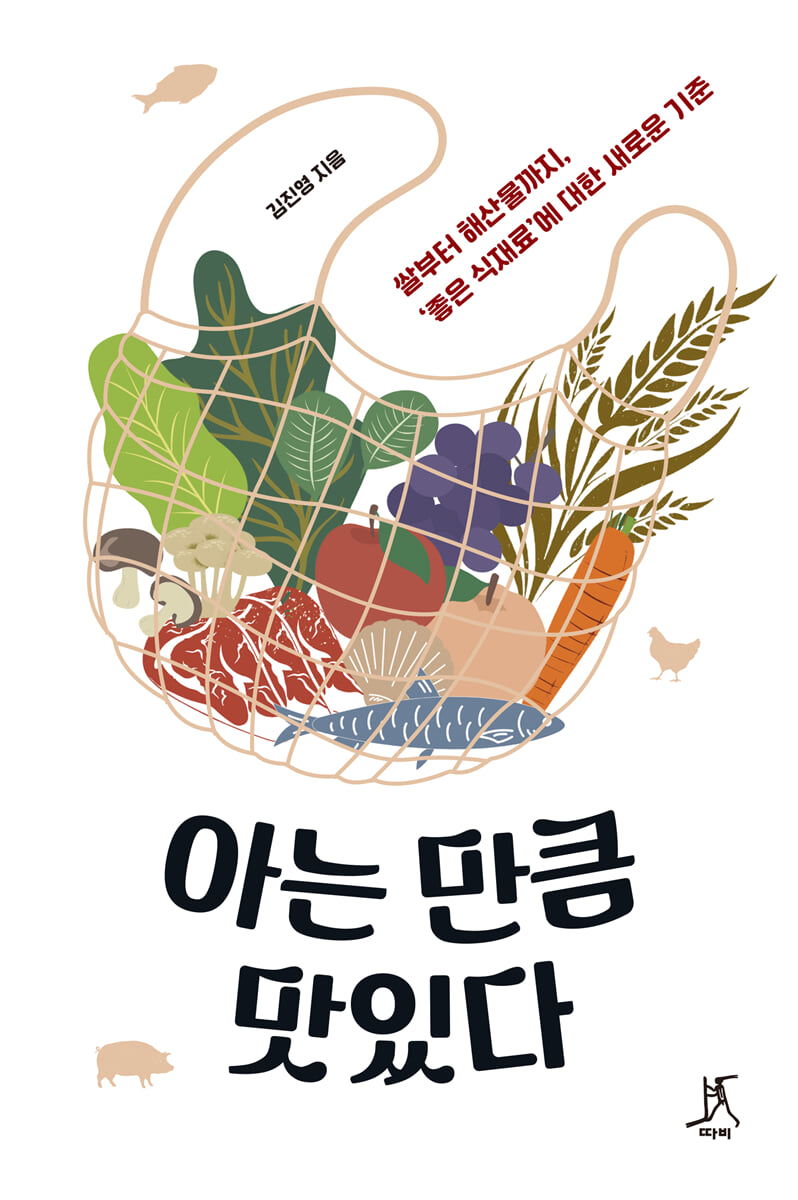 |
Description
Book Introduction
Rice, vegetables, fruits, beef, pork, chicken, seafood
How much do we know about these ingredients that are the centerpiece of our dining table?
Do you really know the variety or season?
The Qualifications of "Good Ingredients" Explained by a Food MD with 30 Years of Experience
Green grapes are best eaten when there's frost, not in summer.
Let's buy beef and age it at home.
Instead of the taste of marbling, you can taste the taste of time.
You can choose the breed you like, such as Berkshire K, Durok, Cheongridak, and Jeju native chicken.
We eat food every day.
Whether you cook at home or buy food from a restaurant, you eat rice, side dishes, and sometimes snacks with alcohol.
What criteria do we use to select and purchase these food ingredients, which are sometimes manufactured in factories, but are mostly agricultural products, seafood, or livestock products that are grown naturally?
In the new book "The More You Know, the Better - From Rice to Seafood, a New Standard for 'Good Ingredients'" by Tabi Publishing, the author, who has worked as a food MD for many years, provides essential new information when selecting ingredients.
How much do we know about these ingredients that are the centerpiece of our dining table?
Do you really know the variety or season?
The Qualifications of "Good Ingredients" Explained by a Food MD with 30 Years of Experience
Green grapes are best eaten when there's frost, not in summer.
Let's buy beef and age it at home.
Instead of the taste of marbling, you can taste the taste of time.
You can choose the breed you like, such as Berkshire K, Durok, Cheongridak, and Jeju native chicken.
We eat food every day.
Whether you cook at home or buy food from a restaurant, you eat rice, side dishes, and sometimes snacks with alcohol.
What criteria do we use to select and purchase these food ingredients, which are sometimes manufactured in factories, but are mostly agricultural products, seafood, or livestock products that are grown naturally?
In the new book "The More You Know, the Better - From Rice to Seafood, a New Standard for 'Good Ingredients'" by Tabi Publishing, the author, who has worked as a food MD for many years, provides essential new information when selecting ingredients.
- You can preview some of the book's contents.
Preview
index
Publishing a book… 6
Chapter 1: Rice is the staple food, but why can't we eat delicious rice?
The myth that "Gyeonggi-mi" is delicious… 13
Seocheon's Baekjinju, introducing the taste of rice varieties… 16
There are so many delicious rice varieties to choose from… 19
Three Criteria for Choosing Rice… 24
The best choice for rice is growing rice… 27
Why Instant Rice Tastes So Delicious… 34
Now let's turn our attention to native rice... 40
Chapter 2: The Delicious Bitterness Is Disappearing
Why the Delicious Bitterness Disappears… 47
The Trap of Large, Beautiful Vegetables… 51
Reasons to be Concerned About Hydroponic Farming… 57
A vegetable must have a scent… 61
Before you forget the true taste of vegetables… 65
Chapter 3: The Story of How I Came to Eat Fruit Without Flavor
Chaos ahead of Chuseok… 73
Fruit that has lost its fragrance… 79
Reasons for ripening… 84
Chapter 4: The Flavor of Beef Isn't Just About Fat
Memories of Some Beef… 91
What is marbling?… 93
1++ Korean beef is expensive because it is delicious… 99
The taste of aging, not marbling… 101
One well-raised cow, not jealous of ten marblings
Chapter 5: To find delicious pork in the land of pork belly
The Samgyeopsal Day Dilemma… 121
I didn't eat it roasted from the beginning... 123
Let's choose a variety and eat it... 129
Even if the variety is different, it's delicious even if it's not grilled... 147
Chapter 6: Native chickens are tough
Chickens that feed the community… 157
Was the Siamese hen I caught for my son-in-law tasty? … 159
If only we could eat like them… 162
You can choose from native chickens… 168
Should I only eat native chicken in boiled form? … 170
Let's break away from 'one'... 174
Fertilized eggs, native eggs… 176
Chapter 7: Knowing the Seasons of Seafood and Eating It Properly
Seasons of the Land, Seasons of the Sea… 183
The consequences of poor seasonality… 190
Marbling in beef, white streaks in salmon? … 194
Why we need to call it by its correct name… 200
Misconceptions about Shellfish Farming… 206
Clam Clam Masterpiece… 211
Epilogue … 218
Source of the illustration … 222
Chapter 1: Rice is the staple food, but why can't we eat delicious rice?
The myth that "Gyeonggi-mi" is delicious… 13
Seocheon's Baekjinju, introducing the taste of rice varieties… 16
There are so many delicious rice varieties to choose from… 19
Three Criteria for Choosing Rice… 24
The best choice for rice is growing rice… 27
Why Instant Rice Tastes So Delicious… 34
Now let's turn our attention to native rice... 40
Chapter 2: The Delicious Bitterness Is Disappearing
Why the Delicious Bitterness Disappears… 47
The Trap of Large, Beautiful Vegetables… 51
Reasons to be Concerned About Hydroponic Farming… 57
A vegetable must have a scent… 61
Before you forget the true taste of vegetables… 65
Chapter 3: The Story of How I Came to Eat Fruit Without Flavor
Chaos ahead of Chuseok… 73
Fruit that has lost its fragrance… 79
Reasons for ripening… 84
Chapter 4: The Flavor of Beef Isn't Just About Fat
Memories of Some Beef… 91
What is marbling?… 93
1++ Korean beef is expensive because it is delicious… 99
The taste of aging, not marbling… 101
One well-raised cow, not jealous of ten marblings
Chapter 5: To find delicious pork in the land of pork belly
The Samgyeopsal Day Dilemma… 121
I didn't eat it roasted from the beginning... 123
Let's choose a variety and eat it... 129
Even if the variety is different, it's delicious even if it's not grilled... 147
Chapter 6: Native chickens are tough
Chickens that feed the community… 157
Was the Siamese hen I caught for my son-in-law tasty? … 159
If only we could eat like them… 162
You can choose from native chickens… 168
Should I only eat native chicken in boiled form? … 170
Let's break away from 'one'... 174
Fertilized eggs, native eggs… 176
Chapter 7: Knowing the Seasons of Seafood and Eating It Properly
Seasons of the Land, Seasons of the Sea… 183
The consequences of poor seasonality… 190
Marbling in beef, white streaks in salmon? … 194
Why we need to call it by its correct name… 200
Misconceptions about Shellfish Farming… 206
Clam Clam Masterpiece… 211
Epilogue … 218
Source of the illustration … 222
Into the book
Nowadays, rice is cooked with rice grown in Gimje, ‘Dragon’s Eye’ from Haenam, or native rice from Yangpyeong.
You can feel the difference when you eat it.
There is no difference between good and bad.
These are rices with different flavors and textures.
So you can choose what you want to eat.
--- p.24
In restaurants, things get even more complicated.
It's because of the free rice.
Cook a large amount of rice at once, place it in a stainless steel rice bowl, and cover it with a lid.
I press down hard, thinking that it is good to give a lot of rice.
The rice starts to suffocate.
The steam that should escape is blocked by the lid and forms droplets.
With the heat from the refrigerator added, the inside of the rice bowl becomes like a steam room with water dripping from the ceiling.
Water droplets falling from the lid soak the rice and spoil the texture.
--- p.35
The problem is that children and the younger generation do not know the taste of vegetables.
You have to try it to know, but I've never tried it.
This doesn't mean that I don't eat vegetables themselves.
Because I have only eaten vegetables grown in hydroponics and vegetables grown using conventional farming methods, I have rarely experienced the original taste, aroma, and texture of vegetables.
If the taste and aroma of the vegetable itself are preserved, nothing else is needed.
To know that, you have to eat delicious vegetables.
--- p.61
If Chuseok falls in September, fruit distribution managers are on high alert from the beginning of the year.
Naturally, producers are busy turning on boilers in their greenhouses, administering growth hormones, and installing silver foil reflectors starting in midwinter.
This happens because fruits like apples and pears are often commercialized as gift sets.
As the saying goes, “A pretty rice cake tastes good too,” the large, red fruit looks tempting.
But this fruit, which looks so tempting, actually has no scent or taste.
It even softens quickly.
--- p.77
They say, 'You are what you eat!', but it really means, 'A cow is what a cow eats!'
In the industrial age, cattle eat mass-produced feed.
They use regional names as brands, saying, “Where’s the cow, where’s the cow,” but the breed is the same and the feed is the same, so how can the taste be that different?
In this situation, if you want to enjoy a different kind of beef, you have to eat something different and look for a big cow.
--- pp.109~110
Want to run a restaurant that stands out from the crowd? Then look to pig breeds for the answer.
Until now, pork roast specialty restaurants have differentiated themselves by the way they grill or the side dishes they serve.
Fire (charcoal, gas, briquettes), grilling plate (cast iron, stone plate, griddle) were put first, and kimchi, steamed eggs, etc. were added.
Even with these attempts, the competition is endless.
--- p.152
Native chickens are said to be tough.
However, if you are not raising chickens yourself and eating them when they become stale, then if you are 'buying' chickens, they are not tough.
Because they are not grown long enough to become tough and are not sold.
It's chewy, not tough.
--- p.170
While we're on the topic of abalone, let's talk about how to eat it.
Many people think that when you abalone, you have to eat it raw.
However, abalone is delicious when it is exposed to a certain amount of heat, whether steamed or grilled.
Because abalone is hard, it is sliced as thinly as possible, which makes it difficult to properly enjoy its flavor and texture.
You can feel the difference when you eat it.
There is no difference between good and bad.
These are rices with different flavors and textures.
So you can choose what you want to eat.
--- p.24
In restaurants, things get even more complicated.
It's because of the free rice.
Cook a large amount of rice at once, place it in a stainless steel rice bowl, and cover it with a lid.
I press down hard, thinking that it is good to give a lot of rice.
The rice starts to suffocate.
The steam that should escape is blocked by the lid and forms droplets.
With the heat from the refrigerator added, the inside of the rice bowl becomes like a steam room with water dripping from the ceiling.
Water droplets falling from the lid soak the rice and spoil the texture.
--- p.35
The problem is that children and the younger generation do not know the taste of vegetables.
You have to try it to know, but I've never tried it.
This doesn't mean that I don't eat vegetables themselves.
Because I have only eaten vegetables grown in hydroponics and vegetables grown using conventional farming methods, I have rarely experienced the original taste, aroma, and texture of vegetables.
If the taste and aroma of the vegetable itself are preserved, nothing else is needed.
To know that, you have to eat delicious vegetables.
--- p.61
If Chuseok falls in September, fruit distribution managers are on high alert from the beginning of the year.
Naturally, producers are busy turning on boilers in their greenhouses, administering growth hormones, and installing silver foil reflectors starting in midwinter.
This happens because fruits like apples and pears are often commercialized as gift sets.
As the saying goes, “A pretty rice cake tastes good too,” the large, red fruit looks tempting.
But this fruit, which looks so tempting, actually has no scent or taste.
It even softens quickly.
--- p.77
They say, 'You are what you eat!', but it really means, 'A cow is what a cow eats!'
In the industrial age, cattle eat mass-produced feed.
They use regional names as brands, saying, “Where’s the cow, where’s the cow,” but the breed is the same and the feed is the same, so how can the taste be that different?
In this situation, if you want to enjoy a different kind of beef, you have to eat something different and look for a big cow.
--- pp.109~110
Want to run a restaurant that stands out from the crowd? Then look to pig breeds for the answer.
Until now, pork roast specialty restaurants have differentiated themselves by the way they grill or the side dishes they serve.
Fire (charcoal, gas, briquettes), grilling plate (cast iron, stone plate, griddle) were put first, and kimchi, steamed eggs, etc. were added.
Even with these attempts, the competition is endless.
--- p.152
Native chickens are said to be tough.
However, if you are not raising chickens yourself and eating them when they become stale, then if you are 'buying' chickens, they are not tough.
Because they are not grown long enough to become tough and are not sold.
It's chewy, not tough.
--- p.170
While we're on the topic of abalone, let's talk about how to eat it.
Many people think that when you abalone, you have to eat it raw.
However, abalone is delicious when it is exposed to a certain amount of heat, whether steamed or grilled.
Because abalone is hard, it is sliced as thinly as possible, which makes it difficult to properly enjoy its flavor and texture.
--- p.209
Publisher's Review
Can we trust the common beliefs about food ingredients?
There are many common beliefs about good ingredients.
The best rice is the 'Icheon rice' (Gyeonggi rice) presented to the king, the best season for puffer fish is December, and native chicken is tough and must be boiled thoroughly before eating.
Some of these common theories were true in the past but are now false, and some are incorrect conclusions based on faulty grounds from the beginning.
The problem is that as these common beliefs are passed around by people or reported in the media without verification, consumers often end up 'paying a lot of money and eating tasteless food.'
The author examines the ingredients that form the core of our diet, including rice, vegetables, fruits, beef, pork, chicken, and seafood, one by one, to understand why these misconceptions arose, and provides new information that consumers need to know in order to replace these misconceptions.
The first piece of information the author emphasizes is 'variety'.
During the Japanese colonial period, war, and industrialization period, the emphasis placed on ‘productivity’ in agricultural and livestock production was significant.
Whether it's rice or meat, we bred and cultivated them with a focus on producing a lot and eating plenty.
Nowadays, with the abundance of products that cannot be compared to those of the past, there are many new varieties created with a focus on 'taste', but consumers are unaware of this fact and have no choice but to consume according to the prevailing opinion.
The author introduces a variety of 'choice-worthy' varieties of rice, fruit, pork, and chicken, each with a different flavor.
If you know, you can eat more delicious food at a cheaper price.
Information about varieties can be important not only to consumers but also to restaurant operators, as differentiating ingredients by variety can provide a competitive edge in an already saturated restaurant industry.
The second is ‘season’.
Seasonality is a problem for many foods, particularly fruits and fish.
Among these, the author points out that fruits are shipped a little earlier than others to get a little better price, and fish are not known to have their seasons because they do not distinguish between the seasons of the sea and land and the spawning season and the season when the fish is at its best.
If you buy fruit and fish out of season, you'll not only end up eating something that tastes bad, but you'll also be paying a lot of money for it.
Moreover, improper harvesting leads to excessive input use in fruit farming, which not only reduces fish catches but also leads to depletion of fish stocks.
Knowing the 'right' season may be part of maintaining our dining table.
How to eat 'deliciously'
As the ingredients change, the cooking method and eating method also change.
The rice variety called 'Baekjinju', which has a strong glutinous nature, becomes chewy if the water used for cooking is mixed like that of non-glutinous rice.
Instead, you can enjoy a chewy texture with rice that is cooked properly with water.
Also, the fat from Berkshire pork has a chewy texture when grilled and a clear, clean broth when boiled, making it perfect for making a unique pork soup.
Wonhwang pears are smaller than Shingo pears and are not popular as holiday gifts, but they can be eaten with the skin on.
Just as strong as stereotypes about varieties and seasons are stereotypes about cooking methods.
There are stereotypes such as pork being best when grilled, native chicken being best when boiled, or croaker or abalone being best when eaten raw.
The author provides information on ingredients, such as varieties, and also shares cooking tips for enjoying those ingredients in their most delicious form.
He shares his own experiences on how to enjoy not only well-marbled beef but also beef that has been aged to add a touch of flavor to it, as well as a variety of recipes that allow you to enjoy pork that has different flavors depending on the breed.
The author points out that there is more to cooking than just using good ingredients and using the right cooking method.
It is a basic awareness that in food, taste is more important than cheap price or the convenience of the person serving the food.
For example, rice.
The author shares tips for eating delicious rice: first, choose the variety; second, check the milling date and choose the most recently milled; and third, buy it in small packages.
One more important thing to add here is to not let cooked rice sit in a rice cooker for too long.
This is the same condition when serving rice to customers in a restaurant. If you have to eat old rice that has been in a refrigerator in a covered stainless steel rice bowl, the variety or cooking method will not be effective.
While running a food shopping mall and even opening a restaurant to promote the "taste of different breeds" of pork, the author describes himself as a "food MD," an abbreviation for "merchandiser."
Although their role may vary slightly depending on the distribution environment, they are ultimately the ones who connect producers and consumers.
If consumers choose delicious ingredients, there will be more farmers who grow delicious rice, vegetables, and fruits, more livestock farmers who raise delicious breeds of cattle, pigs, and chickens, and more fishermen who catch fish in season.
There will also be a variety of local specialties featuring delicious ingredients.
This is the delicious world the author dreams of.
There are many common beliefs about good ingredients.
The best rice is the 'Icheon rice' (Gyeonggi rice) presented to the king, the best season for puffer fish is December, and native chicken is tough and must be boiled thoroughly before eating.
Some of these common theories were true in the past but are now false, and some are incorrect conclusions based on faulty grounds from the beginning.
The problem is that as these common beliefs are passed around by people or reported in the media without verification, consumers often end up 'paying a lot of money and eating tasteless food.'
The author examines the ingredients that form the core of our diet, including rice, vegetables, fruits, beef, pork, chicken, and seafood, one by one, to understand why these misconceptions arose, and provides new information that consumers need to know in order to replace these misconceptions.
The first piece of information the author emphasizes is 'variety'.
During the Japanese colonial period, war, and industrialization period, the emphasis placed on ‘productivity’ in agricultural and livestock production was significant.
Whether it's rice or meat, we bred and cultivated them with a focus on producing a lot and eating plenty.
Nowadays, with the abundance of products that cannot be compared to those of the past, there are many new varieties created with a focus on 'taste', but consumers are unaware of this fact and have no choice but to consume according to the prevailing opinion.
The author introduces a variety of 'choice-worthy' varieties of rice, fruit, pork, and chicken, each with a different flavor.
If you know, you can eat more delicious food at a cheaper price.
Information about varieties can be important not only to consumers but also to restaurant operators, as differentiating ingredients by variety can provide a competitive edge in an already saturated restaurant industry.
The second is ‘season’.
Seasonality is a problem for many foods, particularly fruits and fish.
Among these, the author points out that fruits are shipped a little earlier than others to get a little better price, and fish are not known to have their seasons because they do not distinguish between the seasons of the sea and land and the spawning season and the season when the fish is at its best.
If you buy fruit and fish out of season, you'll not only end up eating something that tastes bad, but you'll also be paying a lot of money for it.
Moreover, improper harvesting leads to excessive input use in fruit farming, which not only reduces fish catches but also leads to depletion of fish stocks.
Knowing the 'right' season may be part of maintaining our dining table.
How to eat 'deliciously'
As the ingredients change, the cooking method and eating method also change.
The rice variety called 'Baekjinju', which has a strong glutinous nature, becomes chewy if the water used for cooking is mixed like that of non-glutinous rice.
Instead, you can enjoy a chewy texture with rice that is cooked properly with water.
Also, the fat from Berkshire pork has a chewy texture when grilled and a clear, clean broth when boiled, making it perfect for making a unique pork soup.
Wonhwang pears are smaller than Shingo pears and are not popular as holiday gifts, but they can be eaten with the skin on.
Just as strong as stereotypes about varieties and seasons are stereotypes about cooking methods.
There are stereotypes such as pork being best when grilled, native chicken being best when boiled, or croaker or abalone being best when eaten raw.
The author provides information on ingredients, such as varieties, and also shares cooking tips for enjoying those ingredients in their most delicious form.
He shares his own experiences on how to enjoy not only well-marbled beef but also beef that has been aged to add a touch of flavor to it, as well as a variety of recipes that allow you to enjoy pork that has different flavors depending on the breed.
The author points out that there is more to cooking than just using good ingredients and using the right cooking method.
It is a basic awareness that in food, taste is more important than cheap price or the convenience of the person serving the food.
For example, rice.
The author shares tips for eating delicious rice: first, choose the variety; second, check the milling date and choose the most recently milled; and third, buy it in small packages.
One more important thing to add here is to not let cooked rice sit in a rice cooker for too long.
This is the same condition when serving rice to customers in a restaurant. If you have to eat old rice that has been in a refrigerator in a covered stainless steel rice bowl, the variety or cooking method will not be effective.
While running a food shopping mall and even opening a restaurant to promote the "taste of different breeds" of pork, the author describes himself as a "food MD," an abbreviation for "merchandiser."
Although their role may vary slightly depending on the distribution environment, they are ultimately the ones who connect producers and consumers.
If consumers choose delicious ingredients, there will be more farmers who grow delicious rice, vegetables, and fruits, more livestock farmers who raise delicious breeds of cattle, pigs, and chickens, and more fishermen who catch fish in season.
There will also be a variety of local specialties featuring delicious ingredients.
This is the delicious world the author dreams of.
GOODS SPECIFICS
- Date of issue: October 30, 2025
- Page count, weight, size: 224 pages | 140*210*13mm
- ISBN13: 9791192169521
You may also like
카테고리
korean


korean

![GQ KOREA Mark (Monthly): December [2025]](http://librairie.coreenne.fr/cdn/shop/files/8ef265dbbfbf186523ed75ba7319009d.jpg?v=1765340328&width=3840)


