

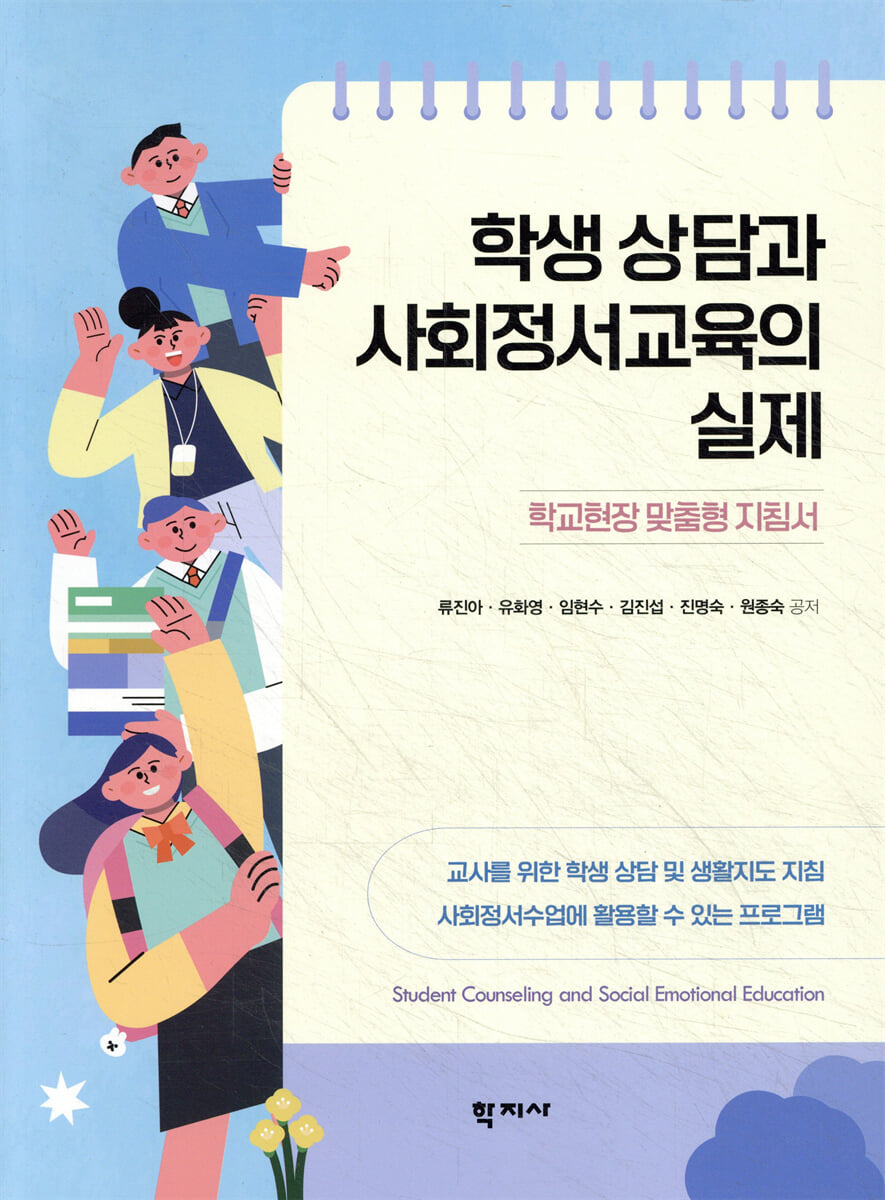
Student Counseling and Social-Emotional Education in Practice
 |
Description
Book Introduction
This book addresses the necessity and practical methods of social-emotional education to support students' holistic growth.
Modern school education tends to focus on intellectual ability, so it is important to develop social and emotional competencies so that students can understand their own minds, become masters of their own lives, and realize their potential.
Social-emotional learning aims to develop the ability to recognize and regulate one's own emotions, understand and care for others, and make responsible decisions within a community.
Rather than addressing specific issues after the fact, this type of education focuses on preventing socio-emotional difficulties that students in general may experience.
The process by which students understand themselves and develop their potential is a process of discovering their unique value in a safe environment. Developing community capacity is a process of fostering the power to cooperate and coexist, fostering the fundamental strength of human relationships even in a technology-driven era.
In particular, experiential social-emotional education goes beyond simply imparting knowledge and helps students experience emotions and behaviors and naturally practice them in their daily lives.
The book is structured to seamlessly integrate social-emotional education into teachers' student counseling and school life, and presents a self-enhancement and community social-emotional education program based on psychological theory, field-oriented programs, and experiential approaches.
It can be flexibly utilized not only by elementary, middle, and high school students but also in various educational and counseling settings, and is designed to practically support students' positive growth and mental health promotion.
Modern school education tends to focus on intellectual ability, so it is important to develop social and emotional competencies so that students can understand their own minds, become masters of their own lives, and realize their potential.
Social-emotional learning aims to develop the ability to recognize and regulate one's own emotions, understand and care for others, and make responsible decisions within a community.
Rather than addressing specific issues after the fact, this type of education focuses on preventing socio-emotional difficulties that students in general may experience.
The process by which students understand themselves and develop their potential is a process of discovering their unique value in a safe environment. Developing community capacity is a process of fostering the power to cooperate and coexist, fostering the fundamental strength of human relationships even in a technology-driven era.
In particular, experiential social-emotional education goes beyond simply imparting knowledge and helps students experience emotions and behaviors and naturally practice them in their daily lives.
The book is structured to seamlessly integrate social-emotional education into teachers' student counseling and school life, and presents a self-enhancement and community social-emotional education program based on psychological theory, field-oriented programs, and experiential approaches.
It can be flexibly utilized not only by elementary, middle, and high school students but also in various educational and counseling settings, and is designed to practically support students' positive growth and mental health promotion.
index
preface
Part 1: Understanding the Student Mind through Psychology
Chapter 1: Emotion-Centered Psychology Made Easy
1.
Freudian Psychoanalysis: The Unconscious and Libido
1) The Underground Factory of the Mind: The World of the Unconscious
2) A power struggle between psychological forces (id, ego, superego)
3) Sexual energy (libido) fulfillment and personality
2.
Jung's Analytical Psychology: Listen to Your Inner Voice
1) Messages from the unconscious, a treasure trove of potential and wisdom
2) When to move forward in life vs. when to fear life and retreat
3) Awareness of complexes and shadows
3.
Human-centered: The Seeds of Self-Actualization
1) One basic motivation: the tendency toward self-actualization.
2) (Dis)match between the process of valuing and self-experience
4.
Object relationship: A good enough mother
1) Essential human desire: love
2) True Self vs. False Self
Chapter 2: Easy-to-Understand Brain Science and Behavioral? Cognitive-Centered Psychology
1.
Behaviorism: The mind is also learned
1) Learning adaptive and maladaptive behaviors
2) Self-efficacy: I can do it
2.
Cognitive-behavioral: You feel and act as you think.
1) Irrational beliefs and automatic thoughts
2) Socratic dialogue
3.
Understanding the mind through brain science
1) Hot emotions and cool reason
2) Repeated good experiences and brain remodeling
Chapter 3: Understanding Students' Minds through Temperament and Character
1.
Understanding students' temperaments
1) Temperament: Innate tendency
2) Type of temperament
3) Dimension of temperament
2.
Understanding the student's personality
1) Personality: Unique individuality and uniqueness
2) Personality types and traits
3) Character Strengths: Positive Personality 'High Six'
Part 2: Field-Oriented Student Counseling and Guidance
Chapter 4 Preparation and Foundations for Student Counseling and Guidance
1.
Preparation for student counseling and guidance
1) What is student counseling and guidance?
2) Preparation for student counseling
2.
Foundation for student counseling and guidance
1) Welcoming students
2) Counseling techniques you must know
Chapter 5: Counseling and Guidance Considering the School Environment and Academic Calendar
1.
Counseling and guidance according to the academic operation process
1) Student counseling and guidance at the beginning of the school year
2) Counseling and guidance for students in the middle of the school year
3) Student counseling and guidance at the end of the school year
4) Student counseling and guidance during exam periods
2.
Counseling and guidance according to work hours
1) Consultation during break time
2) Lunchtime consultation
3) After-school counseling
3.
Utilizing the consultation space
1) Teacher's office
2) Classroom
3) Counseling room
4) Other spaces (playground, special activity room, etc.)
4.
Student Counseling Activity-Based Techniques
1) Breathing method
2) Butterfly Hug
3) Positive self-suggestion
4) Learn about my experience (structured listening)
5) Subjective Pain Rating Scale
6) Draw my brain structure
7) Finding my mood
8) Be grateful
9) Student Mind Checklist
Chapter 6 Counseling Methods and Strategies by Area of Appeal: School and Home
1.
School and Academics
1) Students who are habitually late
2) Students who avoid classes due to academic stress
3) Students with learning difficulties
2.
Career and Future
1) Students who struggle because they have no dreams
2) Students who experience conflict with their parents over career paths
3.
school violence
1) Students who have experienced cyberbullying
2) Students who are struggling with negative rumors
3) Students who have experienced physical violence
4.
Refusal to attend school and dropping out of school
1) Students who refuse to go to school due to friendships
2) Students who wish to drop out of school to pursue their career goals
5.
Family and Multiculturalism
1) Students who run away from home due to conflict and discord within the family
2) Students who are multicultural (immigrants) and complain of identity and academic issues
Chapter 7: Counseling Methods and Strategies by Area of Appeal: Emotional Behavior and Peer Relationships
1.
Peer relationships
1) Students who pass on their responsibilities to their friends
2) Students who are hurt by their friends' words but cannot express it.
3) Students who feel alienated from their peers
2.
Self-harming behavior and suicidal thoughts
1) Students who have difficulty controlling and expressing their emotions and engage in self-harming behavior.
2) Students who feel suicidal due to neglect and conflict with their friends
3.
Depression and anxiety
1) Students expressing depression on social media
2) Students who struggle with test anxiety
4.
drinking and smoking
1) Students with drinking and smoking problems
5.
Smartphone Overreliance and Cyber Gambling
1) Students who are overly dependent on smartphones (SNS, shopping)
2) Students who engage in cyber gambling
6.
Heterosexual relationships and cyber sexual violence
1) Students who find it difficult to be excessively intimate with friends of the opposite sex.
2) Students who suffered damage from the distribution of deepfake videos
Chapter 8 Guidance and Education of Ordinances and Ceremonies: Teaching Life Schedule
1.
The meaning of etiquette and the creation of a culture
1) Etiquette is an expression of consideration and respect for others.
2) Body language to express feelings: I will greet you first.
3) Basic manners and consideration include a bright expression and warm eyes.
4) Let's create a culture of discussion and learning through class meetings.
2.
Image making
1) The Primacy Effect: The first three seconds of a first meeting determine my impression.
2) Factors determining a good impression: facial expression, appearance, speaking, listening
3) Mehrabian's Law: A good voice and body language are more important than the content of the words.
Chapter 9: Guidance and Education During Ordinances and Ceremonies: Teaching Self-Management
1.
Learning motivation and study methods
1) Study as if you were explaining to a friend.
2) Let's develop our own note-taking habits.
3) Koi's Law: You grow only as much as you set for yourself.
4) How to remember for a long time: Say it out loud and sing it repeatedly.
5) Literacy is the foundation for improving learning ability.
6) Beginner's Mind: Don't forget the goals and passion you had when you first started.
7) Selection and Focus: Focus on core subjects and weak areas.
8) Find your own study method
2.
Time and space management
1) You must first understand the importance of time.
2) Use visible time management methods.
3) Time management is important even during exams.
4) Tidy up your space at the beginning and end of each day.
3.
Stress Management and Coping
1) Let's get rid of stress by developing a habit of practicing.
2) Let's be considerate and understand the differences to avoid misunderstandings.
3) Hardship and pain are gifts for growth.
4) Let's have the power of positivity to boost self-esteem.
5) A single word can repay a debt of a thousand nyang.
6) The Teresa Effect: Helping others makes me healthier.
4.
Courage and ambition for your career path
1) Create your own path
2) Prepare in advance by seeking accurate information.
3) It is important to experience it firsthand.
4) Choosing a career path should be a rational decision.
5) The secret to success: discover your own value.
6) The world's best talent sticks to the basics.
7) Practice speaking in a way that makes the other person empathize.
8) Small details make a difference in skill.
9) Overcoming hardships and trials is growth.
10) The Philosophical Meaning of Hardship and Adversity: It Makes You Strong and Mature
Part 3: Social and Emotional Education Programs Considering the Academic Calendar
Chapter 10: Self-Empowerment Social-Emotional Education Program: Self-Concept and Self-Esteem
1.
What is the self?
2.
A self-enhancing social and emotional education program centered on basic concepts
1) The necessity and characteristics of self-enhancing social and emotional education
2) Program components and objectives
3) Program composition contents
3.
Self-Empowerment Social-Emotional Education Program in Practice: Self-Concept
1) Self-concept
2) Reality of the self-concept enhancement program
4.
Self-Esteem: A Real-Life Social-Emotional Education Program
1) Self-esteem
2) The actual implementation of the self-esteem enhancement program
Chapter 11: Self-Strengthening Social-Emotional Education Program: Self-Identity and Self-Resilience
1.
The Reality of Self-Empowerment Social-Emotional Education Programs: Self-Identity
1) Self-identity
2) The actual self-identity strengthening program
2.
The Reality of Self-Empowerment Social-Emotional Education Programs: Ego-Resilience
1) Ego-resilience
2) The actual self-resilience strengthening program
Chapter 12: Community Social and Emotional Education Program: Semester 1
1.
The psychological significance of community consciousness
1) Adler's Individual Psychology: 'Social Interest' is the Key to Happiness and Growth
2) Seligman's positive psychology: The relationship between happiness and community
3) Maslow's humanistic psychology: Community is a place for need fulfillment
2.
Why is community social and emotional education necessary?
3.
Community Social and Emotional Education Program
1) Program components and objectives
2) Program composition contents
4.
Community Awareness Enhancement Program in Practice: First Half of Semester (March-April)
1) March: The beginning of the class community
2) April: Setting Community Goals
5.
Community Awareness Enhancement Program in Practice: Second Half of Semester 1 (May-July)
1) May: A Community of Helping One Another
2) June: A community that shares emotions
3) July: A community that encourages each other
Chapter 13: Community Social and Emotional Education Program: Semester 2
1.
Community Awareness Enhancement Program in Practice: First Half of Semester 2 (August-October)
1) August: A Community That Heals Each Other
2) September: Actively Participating Community
3) October: A community that embraces differences and diversity and leads to growth.
2.
Community Awareness Enhancement Program in Practice: Second Half of Semester 2 (November-December)
1) November: A community that recognizes each other's strengths
2) December: A community that appreciates each other
References
Search
Part 1: Understanding the Student Mind through Psychology
Chapter 1: Emotion-Centered Psychology Made Easy
1.
Freudian Psychoanalysis: The Unconscious and Libido
1) The Underground Factory of the Mind: The World of the Unconscious
2) A power struggle between psychological forces (id, ego, superego)
3) Sexual energy (libido) fulfillment and personality
2.
Jung's Analytical Psychology: Listen to Your Inner Voice
1) Messages from the unconscious, a treasure trove of potential and wisdom
2) When to move forward in life vs. when to fear life and retreat
3) Awareness of complexes and shadows
3.
Human-centered: The Seeds of Self-Actualization
1) One basic motivation: the tendency toward self-actualization.
2) (Dis)match between the process of valuing and self-experience
4.
Object relationship: A good enough mother
1) Essential human desire: love
2) True Self vs. False Self
Chapter 2: Easy-to-Understand Brain Science and Behavioral? Cognitive-Centered Psychology
1.
Behaviorism: The mind is also learned
1) Learning adaptive and maladaptive behaviors
2) Self-efficacy: I can do it
2.
Cognitive-behavioral: You feel and act as you think.
1) Irrational beliefs and automatic thoughts
2) Socratic dialogue
3.
Understanding the mind through brain science
1) Hot emotions and cool reason
2) Repeated good experiences and brain remodeling
Chapter 3: Understanding Students' Minds through Temperament and Character
1.
Understanding students' temperaments
1) Temperament: Innate tendency
2) Type of temperament
3) Dimension of temperament
2.
Understanding the student's personality
1) Personality: Unique individuality and uniqueness
2) Personality types and traits
3) Character Strengths: Positive Personality 'High Six'
Part 2: Field-Oriented Student Counseling and Guidance
Chapter 4 Preparation and Foundations for Student Counseling and Guidance
1.
Preparation for student counseling and guidance
1) What is student counseling and guidance?
2) Preparation for student counseling
2.
Foundation for student counseling and guidance
1) Welcoming students
2) Counseling techniques you must know
Chapter 5: Counseling and Guidance Considering the School Environment and Academic Calendar
1.
Counseling and guidance according to the academic operation process
1) Student counseling and guidance at the beginning of the school year
2) Counseling and guidance for students in the middle of the school year
3) Student counseling and guidance at the end of the school year
4) Student counseling and guidance during exam periods
2.
Counseling and guidance according to work hours
1) Consultation during break time
2) Lunchtime consultation
3) After-school counseling
3.
Utilizing the consultation space
1) Teacher's office
2) Classroom
3) Counseling room
4) Other spaces (playground, special activity room, etc.)
4.
Student Counseling Activity-Based Techniques
1) Breathing method
2) Butterfly Hug
3) Positive self-suggestion
4) Learn about my experience (structured listening)
5) Subjective Pain Rating Scale
6) Draw my brain structure
7) Finding my mood
8) Be grateful
9) Student Mind Checklist
Chapter 6 Counseling Methods and Strategies by Area of Appeal: School and Home
1.
School and Academics
1) Students who are habitually late
2) Students who avoid classes due to academic stress
3) Students with learning difficulties
2.
Career and Future
1) Students who struggle because they have no dreams
2) Students who experience conflict with their parents over career paths
3.
school violence
1) Students who have experienced cyberbullying
2) Students who are struggling with negative rumors
3) Students who have experienced physical violence
4.
Refusal to attend school and dropping out of school
1) Students who refuse to go to school due to friendships
2) Students who wish to drop out of school to pursue their career goals
5.
Family and Multiculturalism
1) Students who run away from home due to conflict and discord within the family
2) Students who are multicultural (immigrants) and complain of identity and academic issues
Chapter 7: Counseling Methods and Strategies by Area of Appeal: Emotional Behavior and Peer Relationships
1.
Peer relationships
1) Students who pass on their responsibilities to their friends
2) Students who are hurt by their friends' words but cannot express it.
3) Students who feel alienated from their peers
2.
Self-harming behavior and suicidal thoughts
1) Students who have difficulty controlling and expressing their emotions and engage in self-harming behavior.
2) Students who feel suicidal due to neglect and conflict with their friends
3.
Depression and anxiety
1) Students expressing depression on social media
2) Students who struggle with test anxiety
4.
drinking and smoking
1) Students with drinking and smoking problems
5.
Smartphone Overreliance and Cyber Gambling
1) Students who are overly dependent on smartphones (SNS, shopping)
2) Students who engage in cyber gambling
6.
Heterosexual relationships and cyber sexual violence
1) Students who find it difficult to be excessively intimate with friends of the opposite sex.
2) Students who suffered damage from the distribution of deepfake videos
Chapter 8 Guidance and Education of Ordinances and Ceremonies: Teaching Life Schedule
1.
The meaning of etiquette and the creation of a culture
1) Etiquette is an expression of consideration and respect for others.
2) Body language to express feelings: I will greet you first.
3) Basic manners and consideration include a bright expression and warm eyes.
4) Let's create a culture of discussion and learning through class meetings.
2.
Image making
1) The Primacy Effect: The first three seconds of a first meeting determine my impression.
2) Factors determining a good impression: facial expression, appearance, speaking, listening
3) Mehrabian's Law: A good voice and body language are more important than the content of the words.
Chapter 9: Guidance and Education During Ordinances and Ceremonies: Teaching Self-Management
1.
Learning motivation and study methods
1) Study as if you were explaining to a friend.
2) Let's develop our own note-taking habits.
3) Koi's Law: You grow only as much as you set for yourself.
4) How to remember for a long time: Say it out loud and sing it repeatedly.
5) Literacy is the foundation for improving learning ability.
6) Beginner's Mind: Don't forget the goals and passion you had when you first started.
7) Selection and Focus: Focus on core subjects and weak areas.
8) Find your own study method
2.
Time and space management
1) You must first understand the importance of time.
2) Use visible time management methods.
3) Time management is important even during exams.
4) Tidy up your space at the beginning and end of each day.
3.
Stress Management and Coping
1) Let's get rid of stress by developing a habit of practicing.
2) Let's be considerate and understand the differences to avoid misunderstandings.
3) Hardship and pain are gifts for growth.
4) Let's have the power of positivity to boost self-esteem.
5) A single word can repay a debt of a thousand nyang.
6) The Teresa Effect: Helping others makes me healthier.
4.
Courage and ambition for your career path
1) Create your own path
2) Prepare in advance by seeking accurate information.
3) It is important to experience it firsthand.
4) Choosing a career path should be a rational decision.
5) The secret to success: discover your own value.
6) The world's best talent sticks to the basics.
7) Practice speaking in a way that makes the other person empathize.
8) Small details make a difference in skill.
9) Overcoming hardships and trials is growth.
10) The Philosophical Meaning of Hardship and Adversity: It Makes You Strong and Mature
Part 3: Social and Emotional Education Programs Considering the Academic Calendar
Chapter 10: Self-Empowerment Social-Emotional Education Program: Self-Concept and Self-Esteem
1.
What is the self?
2.
A self-enhancing social and emotional education program centered on basic concepts
1) The necessity and characteristics of self-enhancing social and emotional education
2) Program components and objectives
3) Program composition contents
3.
Self-Empowerment Social-Emotional Education Program in Practice: Self-Concept
1) Self-concept
2) Reality of the self-concept enhancement program
4.
Self-Esteem: A Real-Life Social-Emotional Education Program
1) Self-esteem
2) The actual implementation of the self-esteem enhancement program
Chapter 11: Self-Strengthening Social-Emotional Education Program: Self-Identity and Self-Resilience
1.
The Reality of Self-Empowerment Social-Emotional Education Programs: Self-Identity
1) Self-identity
2) The actual self-identity strengthening program
2.
The Reality of Self-Empowerment Social-Emotional Education Programs: Ego-Resilience
1) Ego-resilience
2) The actual self-resilience strengthening program
Chapter 12: Community Social and Emotional Education Program: Semester 1
1.
The psychological significance of community consciousness
1) Adler's Individual Psychology: 'Social Interest' is the Key to Happiness and Growth
2) Seligman's positive psychology: The relationship between happiness and community
3) Maslow's humanistic psychology: Community is a place for need fulfillment
2.
Why is community social and emotional education necessary?
3.
Community Social and Emotional Education Program
1) Program components and objectives
2) Program composition contents
4.
Community Awareness Enhancement Program in Practice: First Half of Semester (March-April)
1) March: The beginning of the class community
2) April: Setting Community Goals
5.
Community Awareness Enhancement Program in Practice: Second Half of Semester 1 (May-July)
1) May: A Community of Helping One Another
2) June: A community that shares emotions
3) July: A community that encourages each other
Chapter 13: Community Social and Emotional Education Program: Semester 2
1.
Community Awareness Enhancement Program in Practice: First Half of Semester 2 (August-October)
1) August: A Community That Heals Each Other
2) September: Actively Participating Community
3) October: A community that embraces differences and diversity and leads to growth.
2.
Community Awareness Enhancement Program in Practice: Second Half of Semester 2 (November-December)
1) November: A community that recognizes each other's strengths
2) December: A community that appreciates each other
References
Search
GOODS SPECIFICS
- Date of issue: September 25, 2025
- Page count, weight, size: 368 pages | 188*255*15mm
- ISBN13: 9788999735264
- ISBN10: 8999735265
You may also like
카테고리
korean


korean

![GQ KOREA Mark (Monthly): December [2025]](http://librairie.coreenne.fr/cdn/shop/files/8ef265dbbfbf186523ed75ba7319009d.jpg?v=1765340328&width=3840)


