

That's all over-the-top
 |
Description
Book Introduction
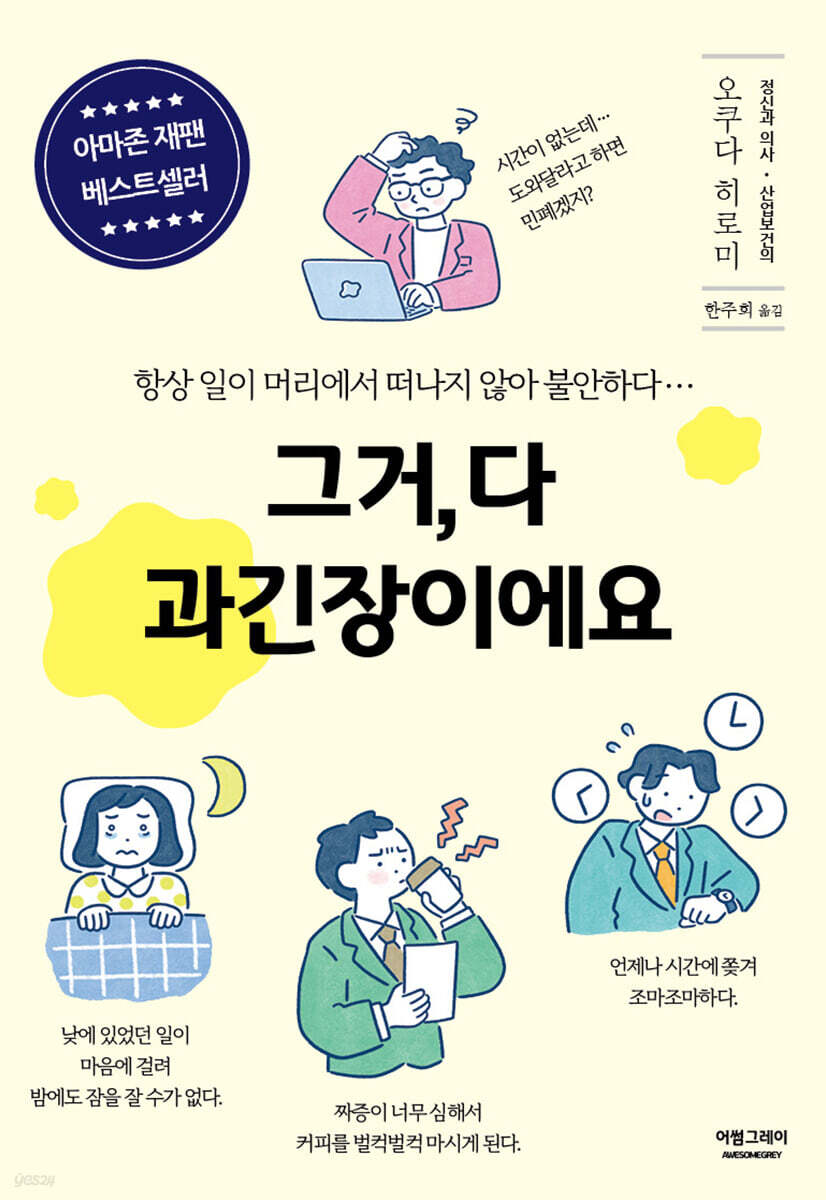
Living in a stressful society
A prescription for mental and physical recovery for everyone in this era
"That's all just overexertion" (Hiromi Okuda, psychiatrist and occupational health physician)
*#1 bestseller on Amazon Japan upon publication in 2025 (in stress management)
Many modern people live without the luxury of relieving emotional stress due to busy work, interpersonal relationships, and digital overload.
If this tension persists for a long time, it can lead to chronic mental illness beyond fatigue and stress, and can even manifest as various physical symptoms such as indigestion, lack of concentration, anxiety, insomnia, and high blood pressure.
This book diagnoses this phenomenon as “hypertension” (a state in which stress causes excessive tension in the sympathetic nervous system) and provides easy-to-follow methods for relieving and preventing hypertension.
The author, who enjoys wide support in Japan as a "doctor who connects the public and the medical field," has met numerous workers in various workplaces for a long time as a psychiatrist and occupational health physician.
And although most office workers easily fall into a state of over-tension, I have seen many cases where they neglect it with thoughts such as, "This is normal when you work," or "If you can't overcome this level of stress, you're weak," and it develops into a serious illness.
The author himself is prone to hypertension, and says that he has included all the knowledge and self-care methods about hypertension in this book “so that no one working will overlook the symptoms of hypertension.”
I hope that these methods will help you maintain good condition, stamina, and focus so that you can perform at your best.
A prescription for mental and physical recovery for everyone in this era
"That's all just overexertion" (Hiromi Okuda, psychiatrist and occupational health physician)
*#1 bestseller on Amazon Japan upon publication in 2025 (in stress management)
Many modern people live without the luxury of relieving emotional stress due to busy work, interpersonal relationships, and digital overload.
If this tension persists for a long time, it can lead to chronic mental illness beyond fatigue and stress, and can even manifest as various physical symptoms such as indigestion, lack of concentration, anxiety, insomnia, and high blood pressure.
This book diagnoses this phenomenon as “hypertension” (a state in which stress causes excessive tension in the sympathetic nervous system) and provides easy-to-follow methods for relieving and preventing hypertension.
The author, who enjoys wide support in Japan as a "doctor who connects the public and the medical field," has met numerous workers in various workplaces for a long time as a psychiatrist and occupational health physician.
And although most office workers easily fall into a state of over-tension, I have seen many cases where they neglect it with thoughts such as, "This is normal when you work," or "If you can't overcome this level of stress, you're weak," and it develops into a serious illness.
The author himself is prone to hypertension, and says that he has included all the knowledge and self-care methods about hypertension in this book “so that no one working will overlook the symptoms of hypertension.”
I hope that these methods will help you maintain good condition, stamina, and focus so that you can perform at your best.
- You can preview some of the book's contents.
Preview
index
Entering
What you must keep in mind to be happy as a professional for a long time
Chapter 1: "Overexertion" Comes to Everyone
The most common type of 'hyper-tension' people encountered in industrial settings
Symptoms that appear when hypertension is left untreated
Could it be me? Take the Hypertension Self-Diagnosis Test
Who are you, 'Over-nervous'?
Stress disrupts the balance of the autonomic nervous system.
Various factors that cause physical and mental stress
Chapter 2: People Vulnerable to Hypertension and Environments That Provoke Hypertension
5 Types of People Who Are Vulnerable to Hypertension
Modern people are bound to be susceptible to hyper-tension.
Let's identify situations that cause hyper-tension.
Chapter 3: Self-Care You Can Apply Immediately When You Feel Overly Tensioned
Before doing self-care
The keyword for hyper-tension care is 'relaxation'.
3Rs for Coping with Stress
Let's address the causes of tension.
Don't hesitate to go to the hospital when all else fails.
Chapter 4: Hypertension Prevention Habits Even Doctors Practice
Balance your autonomic nervous system
How to activate ON mode in the morning
How to stay in ON mode after lunch
Let's switch modes when the sun goes down
Chapter 5: Advice for Personality Types Vulnerable to Hypertension
Identifying your personality weaknesses can help you avoid overexertion.
Perfectionist Type: Mastering the Courage to Let Go
The Honest Model Student Type: Observe Your Surroundings Often
The Self-Sacrificing Type Who Can't Say No: Practicing Give & Take
The impatient and loser type: self-improvement at the expense of health is meaningless.
The worrisome and timid type: A self-conscious personality can be overcome with effort.
In conclusion
To all those living in a stressful society
What you must keep in mind to be happy as a professional for a long time
Chapter 1: "Overexertion" Comes to Everyone
The most common type of 'hyper-tension' people encountered in industrial settings
Symptoms that appear when hypertension is left untreated
Could it be me? Take the Hypertension Self-Diagnosis Test
Who are you, 'Over-nervous'?
Stress disrupts the balance of the autonomic nervous system.
Various factors that cause physical and mental stress
Chapter 2: People Vulnerable to Hypertension and Environments That Provoke Hypertension
5 Types of People Who Are Vulnerable to Hypertension
Modern people are bound to be susceptible to hyper-tension.
Let's identify situations that cause hyper-tension.
Chapter 3: Self-Care You Can Apply Immediately When You Feel Overly Tensioned
Before doing self-care
The keyword for hyper-tension care is 'relaxation'.
3Rs for Coping with Stress
Let's address the causes of tension.
Don't hesitate to go to the hospital when all else fails.
Chapter 4: Hypertension Prevention Habits Even Doctors Practice
Balance your autonomic nervous system
How to activate ON mode in the morning
How to stay in ON mode after lunch
Let's switch modes when the sun goes down
Chapter 5: Advice for Personality Types Vulnerable to Hypertension
Identifying your personality weaknesses can help you avoid overexertion.
Perfectionist Type: Mastering the Courage to Let Go
The Honest Model Student Type: Observe Your Surroundings Often
The Self-Sacrificing Type Who Can't Say No: Practicing Give & Take
The impatient and loser type: self-improvement at the expense of health is meaningless.
The worrisome and timid type: A self-conscious personality can be overcome with effort.
In conclusion
To all those living in a stressful society
Detailed image

Publisher's Review
If “living hard” leads to “always being tense”
Let's start hypertensive care right now.
'Even after work, work keeps on bothering me.'
'I'm worried that I may have done a poor job, so I feel uneasy even on holidays.'
'I feel anxious as I keep replaying what a customer, boss, or colleague said, and that stress is directed at my family.'
'I have trouble falling asleep because the daily work keeps on bothering me until I go to bed at night.'
If this condition repeats, it should not be left unattended.
This is because it may not be simple stress, but rather 'hypertension'.
'Hypertension' is a general term for 'symptoms that appear when excessive tension occurs in the sympathetic nerves of the autonomic nervous system due to stress', and if this pain continues for a long time, there is a high probability that it can cause problems to the body and mind.
The author diagnoses this “continuous state of tension” prevalent among modern people from a medical perspective and suggests ways to restore balance to body and mind.
In fact, anyone who works can experience stress.
If this is resolved early, there is no major problem, but if it continues for weeks or months, serious noticeable symptoms start to appear in both the body and mind.
Representative examples include physical symptoms such as headache, dizziness, abdominal pain, low-grade fever, and severe fatigue, and mental symptoms such as insomnia, decreased energy, decreased concentration, and depression.
So why does hypertension occur?
Humans have a biological rhythm that is active during the day (tension = ON mode) and resting at night (relaxation = OFF mode), and this biological rhythm must be repeated regularly to maintain a healthy life.
However, if the ON mode during the day continues into the night and you cannot rest due to excessive workload or sudden changes in environment, you will become 'over-tensioned'.
Being in a state of hyper-tension is like our body always being in a 'battle ready' state, and it is a way of overworking ourselves.
The author says, “Working hard at work may produce good results in the short term.
However, he says that this situation is detrimental to both the individual and the company, saying, “If the body and mind are damaged, it will be difficult to continuously achieve results.”
Also, based on his long-term experience treating workers, he emphasizes how important it is for professionals who have dedicated most of their lives to work to have a “steadfast career built on top performance,” and how important physical and mental health is for this to happen.
Internal and external factors of hypertension and coping methods
This book examines the factors that can lead to over-tension, broadly dividing them into 'internal (personality) factors' and 'external (environmental) factors.'
Internal factors refer to personality traits, and five types of personality that are particularly vulnerable to over-tension are presented (perfectionist type, conscientious model student type, self-sacrificing type who cannot say no, impatient and loser-phobic type, and worrisome and timid type), and coping methods for each type are also included.
External factors are external circumstances, such as changes in interpersonal relationships at work or at home, major and minor incidents, accumulated physical fatigue, lack of exercise due to remote work, illness and injury, and temperature changes due to seasonal changes.
It is important to note that stress is not necessarily limited to negative changes; it can also include positive changes such as promotions, graduations and admissions, marriage, and childbirth.
The book presents a three-step process [Rest → Relaxation → Recreation] of self-care methods that can be tried on oneself before going to the hospital when one is in a state of over-tension due to the above factors.
Additionally, you can use the 'Hypertension Checklist' to check whether you are in a state of mild or moderate hypertension (pages 29-30 of the text), and it also provides guidance on when it would be good to seek help from a medical institution.
When you become seriously ill, it's easy to think, "I was healthy, but suddenly I'm like this," but in reality, our bodies are sending signals in various ways that say, "I'm stressed and having a hard time right now," or "I want to get out of this situation."
Hypertension can also be considered one of those signals.
This book will help you quickly recognize and respond to such signals.
Let's start hypertensive care right now.
'Even after work, work keeps on bothering me.'
'I'm worried that I may have done a poor job, so I feel uneasy even on holidays.'
'I feel anxious as I keep replaying what a customer, boss, or colleague said, and that stress is directed at my family.'
'I have trouble falling asleep because the daily work keeps on bothering me until I go to bed at night.'
If this condition repeats, it should not be left unattended.
This is because it may not be simple stress, but rather 'hypertension'.
'Hypertension' is a general term for 'symptoms that appear when excessive tension occurs in the sympathetic nerves of the autonomic nervous system due to stress', and if this pain continues for a long time, there is a high probability that it can cause problems to the body and mind.
The author diagnoses this “continuous state of tension” prevalent among modern people from a medical perspective and suggests ways to restore balance to body and mind.
In fact, anyone who works can experience stress.
If this is resolved early, there is no major problem, but if it continues for weeks or months, serious noticeable symptoms start to appear in both the body and mind.
Representative examples include physical symptoms such as headache, dizziness, abdominal pain, low-grade fever, and severe fatigue, and mental symptoms such as insomnia, decreased energy, decreased concentration, and depression.
So why does hypertension occur?
Humans have a biological rhythm that is active during the day (tension = ON mode) and resting at night (relaxation = OFF mode), and this biological rhythm must be repeated regularly to maintain a healthy life.
However, if the ON mode during the day continues into the night and you cannot rest due to excessive workload or sudden changes in environment, you will become 'over-tensioned'.
Being in a state of hyper-tension is like our body always being in a 'battle ready' state, and it is a way of overworking ourselves.
The author says, “Working hard at work may produce good results in the short term.
However, he says that this situation is detrimental to both the individual and the company, saying, “If the body and mind are damaged, it will be difficult to continuously achieve results.”
Also, based on his long-term experience treating workers, he emphasizes how important it is for professionals who have dedicated most of their lives to work to have a “steadfast career built on top performance,” and how important physical and mental health is for this to happen.
Internal and external factors of hypertension and coping methods
This book examines the factors that can lead to over-tension, broadly dividing them into 'internal (personality) factors' and 'external (environmental) factors.'
Internal factors refer to personality traits, and five types of personality that are particularly vulnerable to over-tension are presented (perfectionist type, conscientious model student type, self-sacrificing type who cannot say no, impatient and loser-phobic type, and worrisome and timid type), and coping methods for each type are also included.
External factors are external circumstances, such as changes in interpersonal relationships at work or at home, major and minor incidents, accumulated physical fatigue, lack of exercise due to remote work, illness and injury, and temperature changes due to seasonal changes.
It is important to note that stress is not necessarily limited to negative changes; it can also include positive changes such as promotions, graduations and admissions, marriage, and childbirth.
The book presents a three-step process [Rest → Relaxation → Recreation] of self-care methods that can be tried on oneself before going to the hospital when one is in a state of over-tension due to the above factors.
Additionally, you can use the 'Hypertension Checklist' to check whether you are in a state of mild or moderate hypertension (pages 29-30 of the text), and it also provides guidance on when it would be good to seek help from a medical institution.
When you become seriously ill, it's easy to think, "I was healthy, but suddenly I'm like this," but in reality, our bodies are sending signals in various ways that say, "I'm stressed and having a hard time right now," or "I want to get out of this situation."
Hypertension can also be considered one of those signals.
This book will help you quickly recognize and respond to such signals.
GOODS SPECIFICS
- Date of issue: November 10, 2025
- Format: Paperback book binding method guide
- Page count, weight, size: 240 pages | 282g | 130*190*16mm
- ISBN13: 9791198895356
- ISBN10: 1198895357
You may also like
카테고리
korean


korean

![GQ KOREA Mark (Monthly): December [2025]](http://librairie.coreenne.fr/cdn/shop/files/8ef265dbbfbf186523ed75ba7319009d.jpg?v=1765340328&width=3840)


