

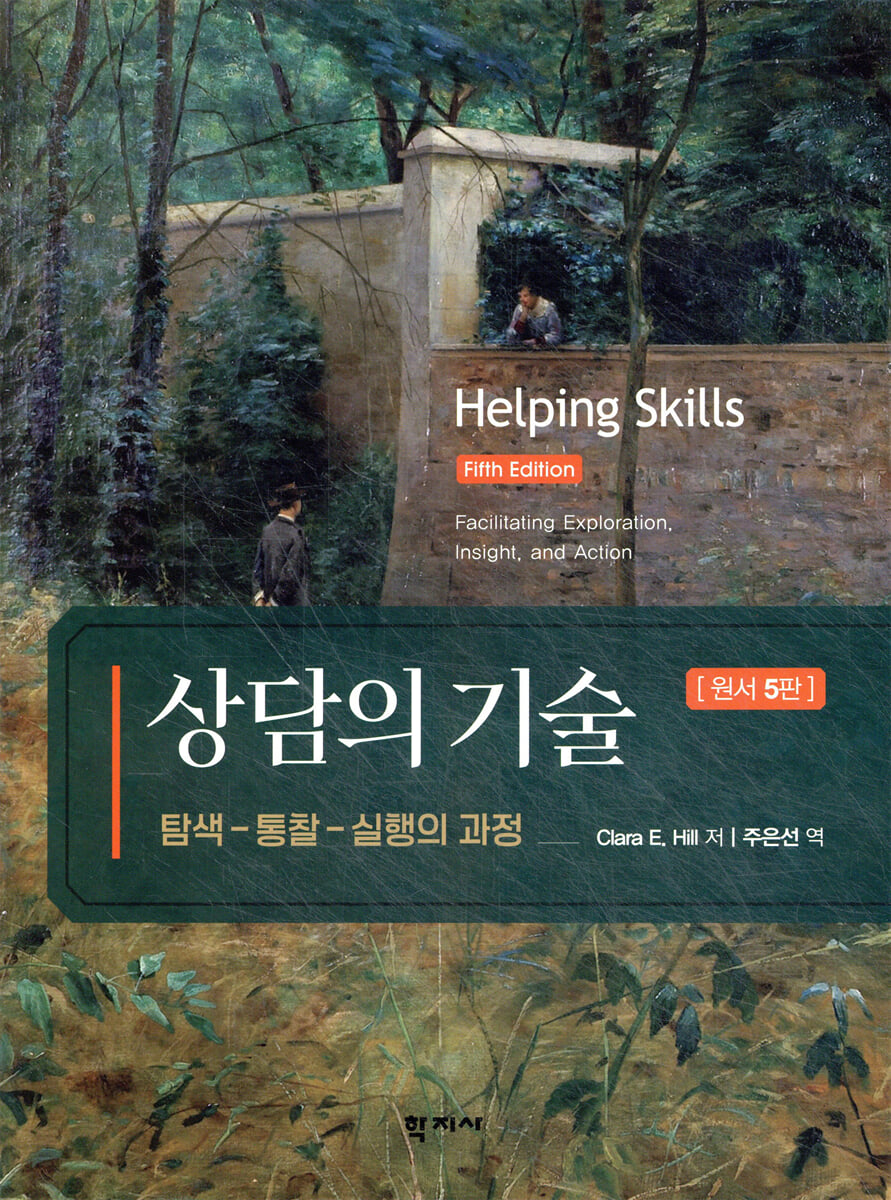
Counseling skills
 |
Description
Book Introduction
[Features of the 5th Edition]
1.
Reflecting the latest research: Each chapter cites key studies to highlight scientific evidence.
2.
Strengthening Cultural Sensitivity: Reflecting Diverse Cultural Contexts and Cases
3.
Broadly addresses power, diversity, and ethical considerations in counseling relationships.
4.
Provides abundant examples and practice tasks → Helps with practical application
[Differences in the Korean version]
In the original book, practice materials are provided online, but for Korean readers, the exercises, practice problems, and web forms have been translated and included in the book.
1.
Reflecting the latest research: Each chapter cites key studies to highlight scientific evidence.
2.
Strengthening Cultural Sensitivity: Reflecting Diverse Cultural Contexts and Cases
3.
Broadly addresses power, diversity, and ethical considerations in counseling relationships.
4.
Provides abundant examples and practice tasks → Helps with practical application
[Differences in the Korean version]
In the original book, practice materials are provided online, but for Korean readers, the exercises, practice problems, and web forms have been translated and included in the book.
index
Translator's Preface
Author's Preface
Acknowledgements
Part 1 Overview
Chapter 1: What is Counseling?
What is counseling?
Is psychotherapy effective?
Facilitative aspects of counseling
Problematic aspects of counseling
When do people seek counseling?
If you become a counselor
Learning Process to Become a Counselor
ethic
Overview of this book
conclusion
Chapter 2: Overview of Counseling
My theory of personality development
My theory on how people change
Background factors contributing to the counseling relationship
3 steps: Explore, Insight, and Execute
Moment-by-moment interaction sequence
Between counseling sessions
Results of client counseling
conclusion
Chapter 3 Self-Awareness
Self-awareness and self-insight
Strategies for Improving Self-Awareness and Self-Insight
Exercises to Increase Self-Awareness
Chapter 4 Cultural Awareness
Defining Culture
Dimensions of culture
Cultural issues that arise during the counseling process
Disclosure of minority status
Ethical behavior and counseling related to culture
Integrating multicultural knowledge, skills, and attitudes into a single counseling style
Problems Counselors Have Regarding Cultural Issues
My experience with culture
Part 2 Exploration Phase
Chapter 5: Overview of the Exploration Phase
Theoretical Background: Rogers' Client-Centered Theory
Exploration Phase Goals
Pre-exploration and education
conclusion
Chapter 6: Technologies for Providing Support
Overview of Attention and Listening
Cultural Rules for Nonverbal Communication
Nonverbal behaviors that promote attention
Paraverbal behaviors that facilitate attention
Grammatical style
Minimal verbal behavior that facilitates the client's exploration
Examples of attention and listening
Be calm and natural, but professional.
conclusion
Chapter 7: Skills for Exploring Non-Emotional Content, Thoughts, Narratives, and Stories
Why explore non-emotional content, thoughts, narratives, and stories?
Restatement and Summary
Case of re-statement
Open-ended questions and explorations about the accident
Closed questions about information or facts
Distinguishing between open-ended and closed-ended questions
Comparison of skills in exploring non-emotional content, thoughts, narratives, and stories
Chapter 8: Techniques for Exploring Emotions
Basis for exploring emotions
Cultural Considerations When Working with Emotions
Reflecting emotions
emotional openness
Open-ended questions and exploration of emotions
Comparison of techniques for exploring emotions
conclusion
Chapter 9: Technology Integration in the Exploration Phase
Case conceptualization in the exploration phase
Select goals and intentions to facilitate exploration
Choosing the right technology for your goals and intentions
Execution of exploration phase techniques
Conduct practice sessions focused on the exploration phase
Dealing with difficult clinical situations during the exploration phase
Difficulties in executing the exploration phase
Coping Strategies for Managing Challenges in the Exploration Phase
Example of the exploration phase
Is it time to move to the insight stage?
Part 3: Insight Stage
Chapter 10: Overview of the Insight Stage
What is Insight?
Why Insight is Needed
Rational Insight vs. Emotional Insight
Readiness indicator for insight
Theoretical Background: Psychoanalysis and Existential Theory
Psychodynamic theory of personality
Setting Expectations at the Insight Stage
Goals and Skills of the Insight Stage
conclusion
Chapter 11: Techniques for Promoting Awareness
Why Use Challenges
A theoretical perspective on fostering awareness through challenge
Readiness clues for awareness
Types of Challenges
General guidelines on how to challenge
Difficulties Counselors Face When Using Challenges
conclusion
Chapter 12: The Art of Interpretation
Basis for using interpretation techniques
Exploration for open-ended questions and insights
How to Ask Exploratory and Open-Ended Questions for Insight
analysis
Opening of Insight
Chapter 13: Techniques for Developing a Therapeutic Relationship
Rationale for using immediacy
Clues indicating readiness to progress in a relationship
Counselor-Related Clues for Relationship Progress
Types of Immediacy
Guidelines for Using Immediately
Examples of immediacy
Difficulties in using counselors' immediacy
Chapter 14: Technology Integration at the Insight Stage
Case conceptualization at the insight stage
Implementing Technology at the Insight Stage
Cautions on Using Insight Technologies
Difficulties counselors may experience during the insight stage
Strategies for Overcoming Challenges as You Progress Through the Insight Stage
An example of extensive interaction at the insight stage
Part 4: Execution Phase
Chapter 15: Overview of the Execution Phase
Basis for the execution phase
Obstacles to action
philosophical foundation
Clues that tell you when to take action
Theoretical Background: Behavioral and Cognitive Theories
Technologies used in the execution phase
conclusion
Chapter 16 Four Work Steps
Basis for the execution phase
Relaxation
behavior change
Action demonstration
Decision making
Chapter 17: Technology Integration in the Execution Phase
Case conceptualization in the execution phase
Try out the execution technique
Strategies to overcome difficulties?
Part 5 Integration
Chapter 18: Working with Clients in the Three-Step Model
Reception consultation
Counselor's work between counseling sessions
consecutive counseling sessions
closing
Handling Difficult Clients and Clinical Situations
3-step model case
conclusion
Appendix_ Web Form
References
Search
Author's Preface
Acknowledgements
Part 1 Overview
Chapter 1: What is Counseling?
What is counseling?
Is psychotherapy effective?
Facilitative aspects of counseling
Problematic aspects of counseling
When do people seek counseling?
If you become a counselor
Learning Process to Become a Counselor
ethic
Overview of this book
conclusion
Chapter 2: Overview of Counseling
My theory of personality development
My theory on how people change
Background factors contributing to the counseling relationship
3 steps: Explore, Insight, and Execute
Moment-by-moment interaction sequence
Between counseling sessions
Results of client counseling
conclusion
Chapter 3 Self-Awareness
Self-awareness and self-insight
Strategies for Improving Self-Awareness and Self-Insight
Exercises to Increase Self-Awareness
Chapter 4 Cultural Awareness
Defining Culture
Dimensions of culture
Cultural issues that arise during the counseling process
Disclosure of minority status
Ethical behavior and counseling related to culture
Integrating multicultural knowledge, skills, and attitudes into a single counseling style
Problems Counselors Have Regarding Cultural Issues
My experience with culture
Part 2 Exploration Phase
Chapter 5: Overview of the Exploration Phase
Theoretical Background: Rogers' Client-Centered Theory
Exploration Phase Goals
Pre-exploration and education
conclusion
Chapter 6: Technologies for Providing Support
Overview of Attention and Listening
Cultural Rules for Nonverbal Communication
Nonverbal behaviors that promote attention
Paraverbal behaviors that facilitate attention
Grammatical style
Minimal verbal behavior that facilitates the client's exploration
Examples of attention and listening
Be calm and natural, but professional.
conclusion
Chapter 7: Skills for Exploring Non-Emotional Content, Thoughts, Narratives, and Stories
Why explore non-emotional content, thoughts, narratives, and stories?
Restatement and Summary
Case of re-statement
Open-ended questions and explorations about the accident
Closed questions about information or facts
Distinguishing between open-ended and closed-ended questions
Comparison of skills in exploring non-emotional content, thoughts, narratives, and stories
Chapter 8: Techniques for Exploring Emotions
Basis for exploring emotions
Cultural Considerations When Working with Emotions
Reflecting emotions
emotional openness
Open-ended questions and exploration of emotions
Comparison of techniques for exploring emotions
conclusion
Chapter 9: Technology Integration in the Exploration Phase
Case conceptualization in the exploration phase
Select goals and intentions to facilitate exploration
Choosing the right technology for your goals and intentions
Execution of exploration phase techniques
Conduct practice sessions focused on the exploration phase
Dealing with difficult clinical situations during the exploration phase
Difficulties in executing the exploration phase
Coping Strategies for Managing Challenges in the Exploration Phase
Example of the exploration phase
Is it time to move to the insight stage?
Part 3: Insight Stage
Chapter 10: Overview of the Insight Stage
What is Insight?
Why Insight is Needed
Rational Insight vs. Emotional Insight
Readiness indicator for insight
Theoretical Background: Psychoanalysis and Existential Theory
Psychodynamic theory of personality
Setting Expectations at the Insight Stage
Goals and Skills of the Insight Stage
conclusion
Chapter 11: Techniques for Promoting Awareness
Why Use Challenges
A theoretical perspective on fostering awareness through challenge
Readiness clues for awareness
Types of Challenges
General guidelines on how to challenge
Difficulties Counselors Face When Using Challenges
conclusion
Chapter 12: The Art of Interpretation
Basis for using interpretation techniques
Exploration for open-ended questions and insights
How to Ask Exploratory and Open-Ended Questions for Insight
analysis
Opening of Insight
Chapter 13: Techniques for Developing a Therapeutic Relationship
Rationale for using immediacy
Clues indicating readiness to progress in a relationship
Counselor-Related Clues for Relationship Progress
Types of Immediacy
Guidelines for Using Immediately
Examples of immediacy
Difficulties in using counselors' immediacy
Chapter 14: Technology Integration at the Insight Stage
Case conceptualization at the insight stage
Implementing Technology at the Insight Stage
Cautions on Using Insight Technologies
Difficulties counselors may experience during the insight stage
Strategies for Overcoming Challenges as You Progress Through the Insight Stage
An example of extensive interaction at the insight stage
Part 4: Execution Phase
Chapter 15: Overview of the Execution Phase
Basis for the execution phase
Obstacles to action
philosophical foundation
Clues that tell you when to take action
Theoretical Background: Behavioral and Cognitive Theories
Technologies used in the execution phase
conclusion
Chapter 16 Four Work Steps
Basis for the execution phase
Relaxation
behavior change
Action demonstration
Decision making
Chapter 17: Technology Integration in the Execution Phase
Case conceptualization in the execution phase
Try out the execution technique
Strategies to overcome difficulties?
Part 5 Integration
Chapter 18: Working with Clients in the Three-Step Model
Reception consultation
Counselor's work between counseling sessions
consecutive counseling sessions
closing
Handling Difficult Clients and Clinical Situations
3-step model case
conclusion
Appendix_ Web Form
References
Search
GOODS SPECIFICS
- Date of issue: September 30, 2025
- Page count, weight, size: 616 pages | 188*255*25mm
- ISBN13: 9788999735349
- ISBN10: 8999735346
You may also like
카테고리
korean


korean

![ELLE 엘르 스페셜 에디션 A형 : 12월 [2025]](http://librairie.coreenne.fr/cdn/shop/files/b8e27a3de6c9538896439686c6b0e8fb.jpg?v=1766436872&width=3840)


