

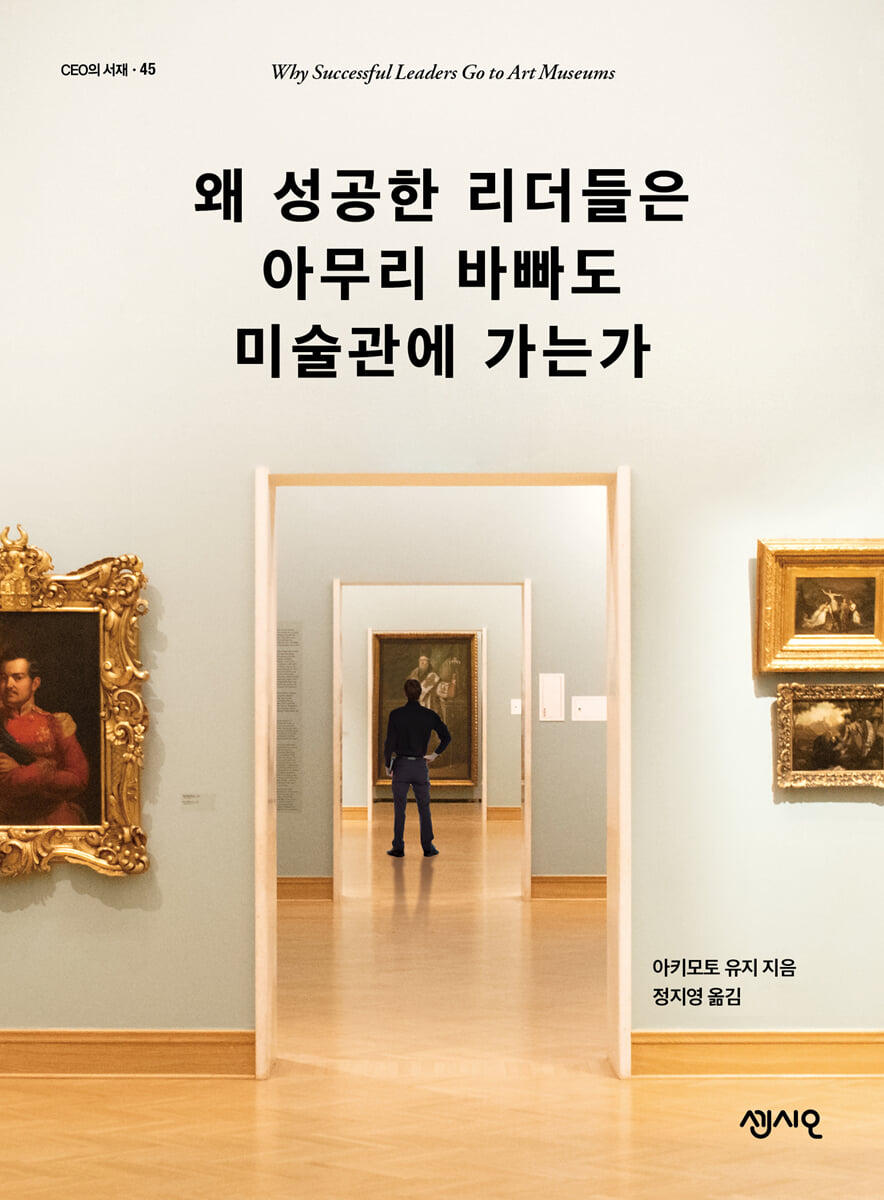
Why Successful Leaders Visit Art Museums No Matter How Busy They Are
 |
Description
Book Introduction
What Successful Leaders See in Art Museums
Facebook's Mark Zuckerberg, Amazon's Jeff Bezos, Apple's Tim Cook, Hyundai Card's Jung Tae-young, Shinsegae's Jung Yong-jin, BTS's RM...
One of the places that world leaders with busy schedules consistently visit is the 'art museum'.
It is not uncommon to see them in world-renowned art museums such as MoMA, Metropolitan Museum of Art, and Guggenheim Museum in New York.
So why do they make time to visit art museums, even in their hectic schedules? Do they gain business insights or creative inspiration through art? Or is it simply a luxurious pastime? This book, "Why Successful Leaders Visit Art Museums No Matter How Busy They Are," offers practical and essential answers.
The author of this book is a professor at Tokyo University of the Arts and director of an art museum. He is the protagonist of the 'Naoshima Art Project', which transformed a Japanese island village visited by about 30,000 people annually into a world-class art destination.
Through this project, he attracted the attention of the global art world and business leaders by attracting and planning works by world-renowned artists such as Claude Monet's [Water Lilies], Yayoi Kusama's polka-dot pumpkin, and Tadao Ando's architecture.
Afterwards, he took office as the director of the 21st Century Museum of Contemporary Art, Kanazawa, and helped develop it into a modern art museum that attracts 2.55 million visitors annually.
He has continued this activity by interacting with CEOs from all over the world, and has consistently observed and studied what they see and what questions they ask when faced with works of art.
“In this book, I will try to specifically address how businesspeople get inspiration from works of art.
In business, it's easy to focus on numbers, but when you talk to executives, they seem to feel limited by their obsession with "what's visible" in everyday management.
So, I think it might be an attempt to learn from art about the ‘invisible’ and break through its limitations.”
This book is neither a simple introduction to art nor a commentary on art.
This book is a strategy book for leaders trapped in numbers to recover their "sensory muscles" and discover opportunities there.
The more you turn the pages, the more 'why's' you'll find yourself asking.
Why do they go to art museums, no matter how busy they are? What do they see there?
Facebook's Mark Zuckerberg, Amazon's Jeff Bezos, Apple's Tim Cook, Hyundai Card's Jung Tae-young, Shinsegae's Jung Yong-jin, BTS's RM...
One of the places that world leaders with busy schedules consistently visit is the 'art museum'.
It is not uncommon to see them in world-renowned art museums such as MoMA, Metropolitan Museum of Art, and Guggenheim Museum in New York.
So why do they make time to visit art museums, even in their hectic schedules? Do they gain business insights or creative inspiration through art? Or is it simply a luxurious pastime? This book, "Why Successful Leaders Visit Art Museums No Matter How Busy They Are," offers practical and essential answers.
The author of this book is a professor at Tokyo University of the Arts and director of an art museum. He is the protagonist of the 'Naoshima Art Project', which transformed a Japanese island village visited by about 30,000 people annually into a world-class art destination.
Through this project, he attracted the attention of the global art world and business leaders by attracting and planning works by world-renowned artists such as Claude Monet's [Water Lilies], Yayoi Kusama's polka-dot pumpkin, and Tadao Ando's architecture.
Afterwards, he took office as the director of the 21st Century Museum of Contemporary Art, Kanazawa, and helped develop it into a modern art museum that attracts 2.55 million visitors annually.
He has continued this activity by interacting with CEOs from all over the world, and has consistently observed and studied what they see and what questions they ask when faced with works of art.
“In this book, I will try to specifically address how businesspeople get inspiration from works of art.
In business, it's easy to focus on numbers, but when you talk to executives, they seem to feel limited by their obsession with "what's visible" in everyday management.
So, I think it might be an attempt to learn from art about the ‘invisible’ and break through its limitations.”
This book is neither a simple introduction to art nor a commentary on art.
This book is a strategy book for leaders trapped in numbers to recover their "sensory muscles" and discover opportunities there.
The more you turn the pages, the more 'why's' you'll find yourself asking.
Why do they go to art museums, no matter how busy they are? What do they see there?
- You can preview some of the book's contents.
Preview
index
prolog.
The world's greatest leaders are seen in art galleries.
Chapter 1.
Why Successful Leaders Visit Art Museums No Matter How Busy They Are
01.
What Successful Leaders Learn from Art Museums
02.
Why Businessmen Need to Know Art
03.
'Art Thinking': Solving Customer Problems
04.
An experiment at the Art Institute of Chicago's School of the Arts
05.
Asking essential questions
06.
Mercedes-Benz F015
07.
Preempting a world no one has ever seen before
08.
What genius scientists and artists have in common
09.
Finding questions in the art museum
10.
Noguchi Gymnastics and Affordance
11.
Where do intuition and sense come from?
12.
The world seen by Giacometti
13.
There is no pattern
- Understanding Modern Art in One Line 01
- Modern Art Concepts Leaders Must Know 01
Chapter 2.
What do they see in the art museum?
01.
Think from a zero-base perspective, questioning common sense
02.
Anything is possible
03.
How to express the invisible
04.
Impact, Concept, Layer
06.
Artists who inspire leaders 1.
Marcel Duchamp
07.
Artists who inspire leaders 2.
Joseph Beuys
08.
3 Artists Who Inspire Leaders.
Andy Warhol
09.
Learning about relationships in art
10.
The Ambiguous Relationship Between Art and Business
- Understanding Modern Art in One Line 02
- Modern Art Concepts Leaders Must Know 02
Chapter 3.
How Silicon Valley Entrepreneurs Use Art
01.
Silicon Valley innovators
02.
Companies Incorporating Art into Their Organizations
03.
Canary in the coal mine
04.
Why Global Entrepreneurs Love Contemporary Art
05. Training to think for yourself
06.
Art made of words and senses
07.
It's fun because you don't know
- Understanding Modern Art in One Line 03
- Modern Art Concepts Leaders Must Know 03
Chapter 4.
They face themselves in the art museum
01.
Every experience becomes a work of art.
02.
A lonely or self-indulgent being
03.
How to Become an Artist
04.
Read the world's trends and know your own characteristics.
05.
How to get inspired
06.
Face what rises from within yourself
07.
Masterpieces are born from consistency.
08.
Re-examination of the tactile feel and appeal of objects
09.
Loewe's branding strategy
10.
Living at the top
11.
The importance of face-to-face
12.
Produce Business
- Understanding Modern Art in One Line 04
- Modern Art Concepts Leaders Must Know 04
Chapter 5.
The Relationship Between Art, Money, and Business
01.
The Relationship Between Art, Money, and Business
02.
Why is contemporary art so expensive?
03.
There are no limits to the art market.
04.
Running at the forefront of tech
05.
How to Value a Work of Art
06.
How Artists Become Famous
07.
Primary market and secondary market
08.
What Art and Real Estate Have in Common
09.
How to Invest in Art
10.
How to view avant-garde works
11.
A History of Art and Capitalists
12.
What is the intrinsic value of a work of art?
- Understanding Modern Art in One Line 05
- 6 Modern Art Concepts Leaders Must Know
The world's greatest leaders are seen in art galleries.
Chapter 1.
Why Successful Leaders Visit Art Museums No Matter How Busy They Are
01.
What Successful Leaders Learn from Art Museums
02.
Why Businessmen Need to Know Art
03.
'Art Thinking': Solving Customer Problems
04.
An experiment at the Art Institute of Chicago's School of the Arts
05.
Asking essential questions
06.
Mercedes-Benz F015
07.
Preempting a world no one has ever seen before
08.
What genius scientists and artists have in common
09.
Finding questions in the art museum
10.
Noguchi Gymnastics and Affordance
11.
Where do intuition and sense come from?
12.
The world seen by Giacometti
13.
There is no pattern
- Understanding Modern Art in One Line 01
- Modern Art Concepts Leaders Must Know 01
Chapter 2.
What do they see in the art museum?
01.
Think from a zero-base perspective, questioning common sense
02.
Anything is possible
03.
How to express the invisible
04.
Impact, Concept, Layer
06.
Artists who inspire leaders 1.
Marcel Duchamp
07.
Artists who inspire leaders 2.
Joseph Beuys
08.
3 Artists Who Inspire Leaders.
Andy Warhol
09.
Learning about relationships in art
10.
The Ambiguous Relationship Between Art and Business
- Understanding Modern Art in One Line 02
- Modern Art Concepts Leaders Must Know 02
Chapter 3.
How Silicon Valley Entrepreneurs Use Art
01.
Silicon Valley innovators
02.
Companies Incorporating Art into Their Organizations
03.
Canary in the coal mine
04.
Why Global Entrepreneurs Love Contemporary Art
05. Training to think for yourself
06.
Art made of words and senses
07.
It's fun because you don't know
- Understanding Modern Art in One Line 03
- Modern Art Concepts Leaders Must Know 03
Chapter 4.
They face themselves in the art museum
01.
Every experience becomes a work of art.
02.
A lonely or self-indulgent being
03.
How to Become an Artist
04.
Read the world's trends and know your own characteristics.
05.
How to get inspired
06.
Face what rises from within yourself
07.
Masterpieces are born from consistency.
08.
Re-examination of the tactile feel and appeal of objects
09.
Loewe's branding strategy
10.
Living at the top
11.
The importance of face-to-face
12.
Produce Business
- Understanding Modern Art in One Line 04
- Modern Art Concepts Leaders Must Know 04
Chapter 5.
The Relationship Between Art, Money, and Business
01.
The Relationship Between Art, Money, and Business
02.
Why is contemporary art so expensive?
03.
There are no limits to the art market.
04.
Running at the forefront of tech
05.
How to Value a Work of Art
06.
How Artists Become Famous
07.
Primary market and secondary market
08.
What Art and Real Estate Have in Common
09.
How to Invest in Art
10.
How to view avant-garde works
11.
A History of Art and Capitalists
12.
What is the intrinsic value of a work of art?
- Understanding Modern Art in One Line 05
- 6 Modern Art Concepts Leaders Must Know
Detailed image

Into the book
1.
In this book, I will explore specifically how art and business can be connected, and what businesspeople think and how they are inspired by works of art.
In business, it's easy to focus on numbers and data, but when you talk to managers, they seem to feel limited by their obsession with "what's visible" in everyday management.
So, I think it's about learning about the 'invisible' from art, gaining the same sensibility as an artist, and breaking through limitations.
-prolog
2.
Isn't innovation in business also created by "acts that deviate from common sense"? The very fact that the question "Is art useful for business?" is being raised at the very beginning reveals how unique the position of art in Asia is.
In contrast, in the West, art is very close to business intellectuals.
It does not remain in the realm of art as a mere cultural pursuit.
For some managers, it is a place to learn management philosophy or a place to further refine and hone their creativity.
3.
I often compare artists to 'canaries in the coal mine'.
They still see quickly what many people cannot see, hear what cannot be heard, and transform into form and image what cannot be expressed in words.
Indeed, great artists, like sensitive wild animals, feel the changing times with their own skin.
Such artists' sense of the times tends to be decades ahead of time or too fast.
But if you manage it well, you can use it for business too.
4.
Even in business, wouldn't we all experience a similar sensation when unexpected ideas spring to mind? The method we typically use when thinking about something is inductive thinking.
It is a method of analyzing and solving the problem at hand by using each experience as a clue.
However, because this thinking takes place within the limited conditions of the past, the method of understanding the problem itself becomes narrow.
So, it is important to put aside past experiences and common sense and face the problem at hand.
Doing so will reveal a clue to a solution that was previously invisible.
5.
Contemporary art, which is said to be ahead of its time, contains many hints for interpreting this ever-changing world.
If we can stay in touch with contemporary art and identify signs of change faster than anyone else, wouldn't that broaden our business opportunities? Entrepreneurs, in particular, must sense the shifts of the times that others haven't yet grasped and develop new business models.
It may be similar to the artist's attempt to portray an unknown world.
In this book, I will explore specifically how art and business can be connected, and what businesspeople think and how they are inspired by works of art.
In business, it's easy to focus on numbers and data, but when you talk to managers, they seem to feel limited by their obsession with "what's visible" in everyday management.
So, I think it's about learning about the 'invisible' from art, gaining the same sensibility as an artist, and breaking through limitations.
-prolog
2.
Isn't innovation in business also created by "acts that deviate from common sense"? The very fact that the question "Is art useful for business?" is being raised at the very beginning reveals how unique the position of art in Asia is.
In contrast, in the West, art is very close to business intellectuals.
It does not remain in the realm of art as a mere cultural pursuit.
For some managers, it is a place to learn management philosophy or a place to further refine and hone their creativity.
3.
I often compare artists to 'canaries in the coal mine'.
They still see quickly what many people cannot see, hear what cannot be heard, and transform into form and image what cannot be expressed in words.
Indeed, great artists, like sensitive wild animals, feel the changing times with their own skin.
Such artists' sense of the times tends to be decades ahead of time or too fast.
But if you manage it well, you can use it for business too.
4.
Even in business, wouldn't we all experience a similar sensation when unexpected ideas spring to mind? The method we typically use when thinking about something is inductive thinking.
It is a method of analyzing and solving the problem at hand by using each experience as a clue.
However, because this thinking takes place within the limited conditions of the past, the method of understanding the problem itself becomes narrow.
So, it is important to put aside past experiences and common sense and face the problem at hand.
Doing so will reveal a clue to a solution that was previously invisible.
5.
Contemporary art, which is said to be ahead of its time, contains many hints for interpreting this ever-changing world.
If we can stay in touch with contemporary art and identify signs of change faster than anyone else, wouldn't that broaden our business opportunities? Entrepreneurs, in particular, must sense the shifts of the times that others haven't yet grasped and develop new business models.
It may be similar to the artist's attempt to portray an unknown world.
--- From the text
Publisher's Review
Why Successful Leaders Visit Art Museums No Matter How Busy They Are
Jeff Bezos, Hyundai Card CEO Jung Tae-young, BTS's RM…
Why they, who are passionate about art, frequently visit art museums
The reason why world leaders visit art museums like MoMA, Metropolitan Museum of Art, and Guggenheim Museum in New York, Tate Modern in London, and Centre Pompidou in Paris, despite their busy schedules, is not simply for culture or hobbies.
It could be an attempt to put aside the weight of leadership and take a break in front of the artwork, or it could be an attempt to gain new ideas or inspiration by looking at the artwork.
But we, ordinary people, cannot know exactly what they are thinking in front of the work.
I can only guess.
The new book, "Why Successful Leaders Go to Art Museums No Matter How Busy They Are," provides answers to these questions.
The author of this book is a professor and director of the Tokyo University of the Arts, and he is the person who successfully led the 'Naoshima Art Project', which transformed a declining Japanese island village into a world-class art destination through art.
He has personally planned and directed works by Monet's "Water Lilies," Yayoi Kusama, and Tadao Ando, and has actively interacted with artists and business leaders from around the world.
The 'real reason leaders visit art galleries' he shares goes beyond simple curiosity and kindly informs us on how to approach art from a business perspective.
“In this book, I will try to specifically address how businesspeople get inspiration from works of art.
In business, it's easy to focus on numbers, but when you talk to executives, they seem to feel limited by their obsession with "what's visible" in everyday management.
So, I think it might be an attempt to learn from art about the ‘invisible’ and break through its limitations.”
Andy Warhol, James Turrell, Josef Beuys…
It will take your knowledge of modern art to the next level!
The book is divided into five chapters, beginning with the question, "Why do successful leaders visit art museums no matter how busy they are?" and gradually expanding the content to "What do they see in art museums, how do they think, and what actions does that lead to?"
Chapter 2 in particular covers Marcel Duchamp, Andy Warhol, and Josef Beuys, masters of modern art that today's business leaders must know.
By appreciating their works with the author, we will examine specific examples of how art can be viewed and utilized from a business perspective.
The book also details successful examples of art and business collaboration. BMW drew inspiration for its future autonomous vehicle design from the Ars Electronica festival, where art and technology merge, while luxury brand Loewe reinterpreted the sensibility of traditional craftsmanship into a brand language that resonates with modern consumers.
Mercedes-Benz has introduced the concept of 'cars talking to people' into its design through collaboration with artists.
Furthermore, it goes beyond the scope of art as an inspiration for branding and design, and broadly covers the current state of the art market, including the structure of the primary and secondary markets, staged auction systems, and blockchain-based art transactions.
Successful leaders not only have an eye for art, but also develop a "reading sense" that combines with their surrounding knowledge, and they identify business opportunities through art.
"Why Successful Leaders Go to Art Museums No Matter How Busy They Are" is neither a simple introduction to art nor a guide to art.
This book is a strategy guide for leaders trapped in numbers to recover their "sensory muscles," organize their thoughts through art, and discover opportunities there.
The more you turn the pages, the more 'why's' you will find yourself asking.
What are they looking at at the art gallery now? And why haven't I been there yet?
Jeff Bezos, Hyundai Card CEO Jung Tae-young, BTS's RM…
Why they, who are passionate about art, frequently visit art museums
The reason why world leaders visit art museums like MoMA, Metropolitan Museum of Art, and Guggenheim Museum in New York, Tate Modern in London, and Centre Pompidou in Paris, despite their busy schedules, is not simply for culture or hobbies.
It could be an attempt to put aside the weight of leadership and take a break in front of the artwork, or it could be an attempt to gain new ideas or inspiration by looking at the artwork.
But we, ordinary people, cannot know exactly what they are thinking in front of the work.
I can only guess.
The new book, "Why Successful Leaders Go to Art Museums No Matter How Busy They Are," provides answers to these questions.
The author of this book is a professor and director of the Tokyo University of the Arts, and he is the person who successfully led the 'Naoshima Art Project', which transformed a declining Japanese island village into a world-class art destination through art.
He has personally planned and directed works by Monet's "Water Lilies," Yayoi Kusama, and Tadao Ando, and has actively interacted with artists and business leaders from around the world.
The 'real reason leaders visit art galleries' he shares goes beyond simple curiosity and kindly informs us on how to approach art from a business perspective.
“In this book, I will try to specifically address how businesspeople get inspiration from works of art.
In business, it's easy to focus on numbers, but when you talk to executives, they seem to feel limited by their obsession with "what's visible" in everyday management.
So, I think it might be an attempt to learn from art about the ‘invisible’ and break through its limitations.”
Andy Warhol, James Turrell, Josef Beuys…
It will take your knowledge of modern art to the next level!
The book is divided into five chapters, beginning with the question, "Why do successful leaders visit art museums no matter how busy they are?" and gradually expanding the content to "What do they see in art museums, how do they think, and what actions does that lead to?"
Chapter 2 in particular covers Marcel Duchamp, Andy Warhol, and Josef Beuys, masters of modern art that today's business leaders must know.
By appreciating their works with the author, we will examine specific examples of how art can be viewed and utilized from a business perspective.
The book also details successful examples of art and business collaboration. BMW drew inspiration for its future autonomous vehicle design from the Ars Electronica festival, where art and technology merge, while luxury brand Loewe reinterpreted the sensibility of traditional craftsmanship into a brand language that resonates with modern consumers.
Mercedes-Benz has introduced the concept of 'cars talking to people' into its design through collaboration with artists.
Furthermore, it goes beyond the scope of art as an inspiration for branding and design, and broadly covers the current state of the art market, including the structure of the primary and secondary markets, staged auction systems, and blockchain-based art transactions.
Successful leaders not only have an eye for art, but also develop a "reading sense" that combines with their surrounding knowledge, and they identify business opportunities through art.
"Why Successful Leaders Go to Art Museums No Matter How Busy They Are" is neither a simple introduction to art nor a guide to art.
This book is a strategy guide for leaders trapped in numbers to recover their "sensory muscles," organize their thoughts through art, and discover opportunities there.
The more you turn the pages, the more 'why's' you will find yourself asking.
What are they looking at at the art gallery now? And why haven't I been there yet?
GOODS SPECIFICS
- Date of issue: August 28, 2025
- Page count, weight, size: 296 pages | 406g | 141*190*18mm
- ISBN13: 9791166572036
- ISBN10: 116657203X
You may also like
카테고리
korean


korean

![GQ KOREA Mark (Monthly): December [2025]](http://librairie.coreenne.fr/cdn/shop/files/8ef265dbbfbf186523ed75ba7319009d.jpg?v=1765340328&width=3840)


