

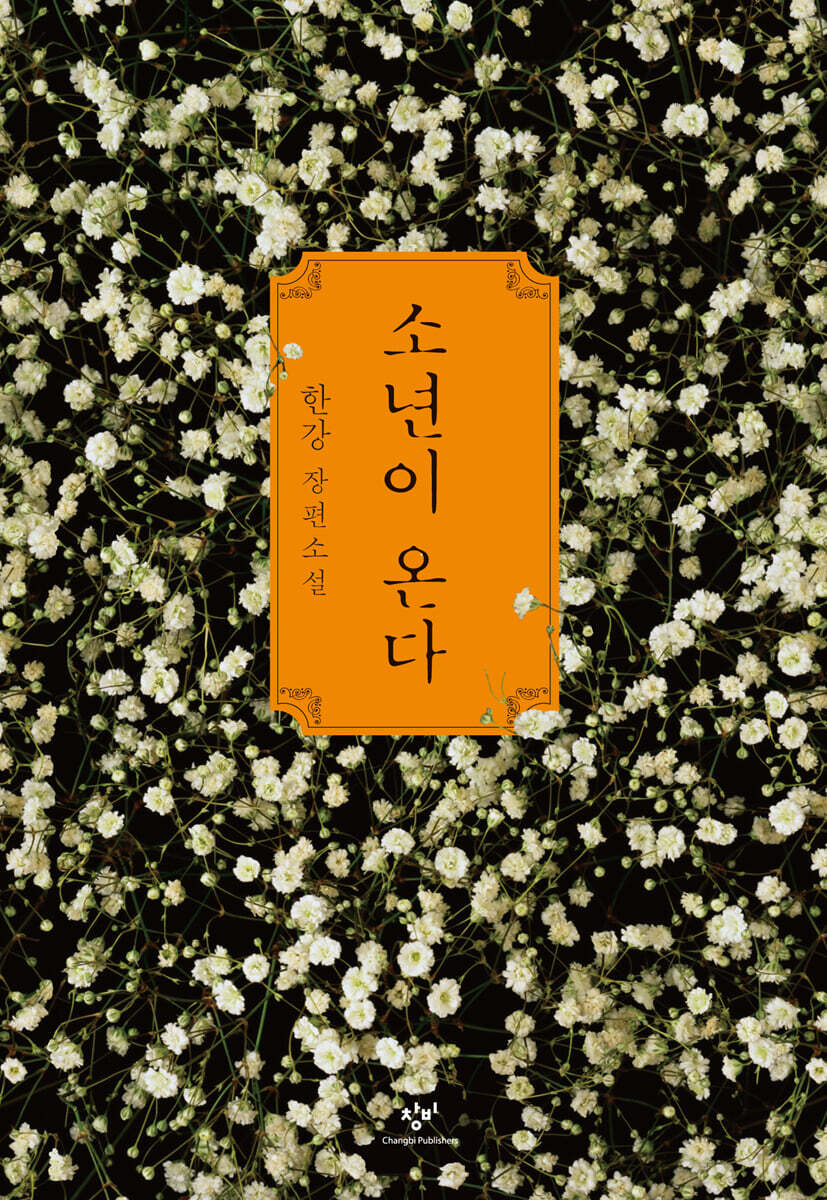
The boy comes
 |
Description
Book Introduction
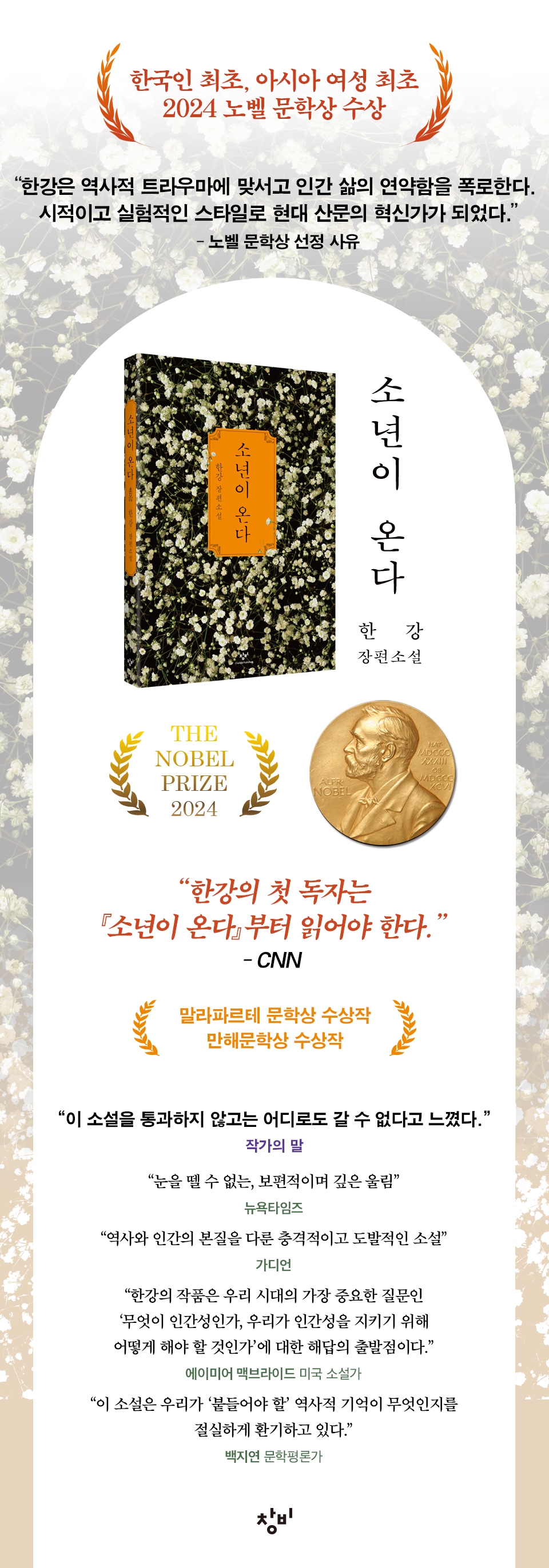
Winner of the Malaparte Literary Award and the Manhae Literary Award A Novel of Our Time: The Boy Comes The novel of our time, "The Boy Comes," won the Manhae Literary Award in 2014 and the Malaparte Literary Award in Italy in 2017, and has been translated and published in over 20 countries around the world, captivating the world. This work has been praised by Han Kang, winner of the International Booker Prize for The Vegetarian, as “a gripping, universal and profound work” (The New York Times), “a shocking and provocative novel that deals with the nature of history and humanity” (The Guardian), and “Han Kang’s novel that transcends Han Kang” (literary critic Shin Hyung-cheol). It has received great attention and praise from many readers as a literary tribute that awakens them to the wounds of Gwangju and shares their pain. "The Boy Comes" sheds new light on May 1980 in a way that only Han Kang can, through "a narrative that delves into and delves into the structure of wounds," and poses a weighty question to us living in the post-May 18 era, with heartfelt sentences that seem to convey the words of innocent souls. A work that demonstrates the direction of Han Kang's literature, which has captivated the world with its most Korean narrative. This rich narrative, which simultaneously testifies to both human cruelty and greatness, transcends the limitations of time and space, demonstrating the universality of human history and urgently restoring humanity, which must remain intact. |
- You can preview some of the book's contents.
Preview
index
Chapter 1 Young Bird
Chapter 2 Black Breath
Chapter 3 Seven Cheeks
Chapter 4 Iron and Blood
Chapter 5: Eyes of the Night
Chapter 6: Towards the Flower Bloom
Epilogue.
snow-covered lamp
Chapter 2 Black Breath
Chapter 3 Seven Cheeks
Chapter 4 Iron and Blood
Chapter 5: Eyes of the Night
Chapter 6: Towards the Flower Bloom
Epilogue.
snow-covered lamp
Detailed image
Publisher's Review
A story you'll never forget, even after closing the book.
A heartfelt song for the souls of children who cannot bloom in the endless month of May.
"The Boy Comes" depicts the situation during the Gwangju Democratization Movement that took place over ten days starting on May 18, 1980, and the stories of those left behind, using Han Kang's characteristically sophisticated and dense prose, based on thorough research and investigation.
Dong-ho, a third-year middle school student at the time of the May 18th Gwangju Democratization Movement, witnesses the death of his friend, Jeong-dae, and ends up helping manage the bodies at the city hall.
As he collects the bodies that come into the Sangmu Hall where the joint incense burner is located every day, the fifteen-year-old boy lights a candle to comfort the silent souls of the corpses that seem to have lost a "young bird," and he is tormented by the recollection of his friend Jeong-dae's gruesome death among the corpses that "seem to be protesting yet another time by emitting a foul odor."
Jeong-dae is shot and killed by martial law troops while marching with Dong-ho as a protester. Jeong-dae's older sister, Jeong-mi, who had put her dreams on hold and entered a factory before finishing middle school to support her younger sibling, also goes missing that spring, and the siblings face tragedy.
The ordinary lives of innocent people, destroyed in an instant by the merciless violence of the state, and the injustice and sorrow felt for the innocent lives of young people are expressed in Jeong-dae's voice, which seems to scream.
It is said that on May 18, soldiers were given 800,000 rounds of ammunition to suppress the 400,000 citizens of Gwangju.
Even in this harsh atmosphere, the powerful force that led even the young children to the protest site to confront the absurdity of the state was nothing but a 'clean and fearful conscience.'
In this way, the children felt the 'pulse of the world's largest and most sublime heart' and together formed the great 'vessel of conscience' created by hundreds of thousands of citizens.
The novel reveals tragic aspects of modern and contemporary Korean history through the lives of Dong-ho and his older sisters who worked at the commercial office before and after the May 18th Gwangju Democratization Movement.
The image of those who find that being alive is a shameful pain or suffer from a sense of helplessness that prevents them from returning to their daily lives continues to this day, even after decades have passed.
Kim Eun-sook, who experienced the May 18th Democratization Movement while in her third year at Sophia Girls' High School, gave up her college life, which was filled with demonstrations calling for "Overthrow Chun Doo-hwan," and worked as an editor at a small publishing company. There, she was taken to the Seodaemun Police Station and given "seven slaps" for censoring a manuscript she was assigned to.
While working at a sewing factory, Lim Seon-ju was fired for participating in union activities to protect her 'noble self'. Later, she worked at a tailor shop and joined the commercial staff. After being taken away by the police, she was subjected to horrific torture that resulted in her bleeding continuously.
Kim Jin-su, a college student who was active in the Sangmu Office, was also arrested and suffered a terrible prison life, including torture with a Monami ballpoint pen and genital torture. After being released, he suffered from trauma and eventually committed suicide.
The novel vividly portrays the ruthlessness of this nation, and raises fundamental questions about the cruelty and evil that continues to be perpetrated by humans not only in the past but also in the present, not only in our country but also around the world, with the same cruelty engraved in our genes.
“You lead me to the light, to the shining side,
I hope you will be drawn towards the flowers that bloom.
Through this work, Han Kang painstakingly unfolds the hidden stories of those who suffered in silence during the May 18th Democratization Movement, focusing on the death of the fifteen-year-old boy Dong-ho. He comforts their pain and fulfills his fateful mission of bearing witness to that era.
We reminisce about the days that people, for whom "surviving" is a disgrace, have to endure alone, and share their unhealed memories.
Author Han Kang thinks of Dongho, “walking under the street trees at the end of a hot and humid summer, surprised by the feeling of a clean, dry breeze on my face and arms.”
As the warm spring days of May pass by and we recall 'Dong-ho who could not survive that summer, Dong-ho who will never meet a morning like this again,' the author reminds us that 'everyone we meet every day is human,' and asks earnestly what kind of answer we, as humans, can give them.
So, I pray that there will be no more souls that are wronged, and that wounded souls will be able to move “toward the light, toward the shining, toward the blooming flowers” and find peace.
The small candles that author Han Kang has lit with all her heart to commemorate the boy Dong-ho, who could not bloom until the end, among the 'snow-covered graves' of the victims of the May 18th Democratization Movement, will add warmth to this sad world.
A heartfelt song for the souls of children who cannot bloom in the endless month of May.
"The Boy Comes" depicts the situation during the Gwangju Democratization Movement that took place over ten days starting on May 18, 1980, and the stories of those left behind, using Han Kang's characteristically sophisticated and dense prose, based on thorough research and investigation.
Dong-ho, a third-year middle school student at the time of the May 18th Gwangju Democratization Movement, witnesses the death of his friend, Jeong-dae, and ends up helping manage the bodies at the city hall.
As he collects the bodies that come into the Sangmu Hall where the joint incense burner is located every day, the fifteen-year-old boy lights a candle to comfort the silent souls of the corpses that seem to have lost a "young bird," and he is tormented by the recollection of his friend Jeong-dae's gruesome death among the corpses that "seem to be protesting yet another time by emitting a foul odor."
Jeong-dae is shot and killed by martial law troops while marching with Dong-ho as a protester. Jeong-dae's older sister, Jeong-mi, who had put her dreams on hold and entered a factory before finishing middle school to support her younger sibling, also goes missing that spring, and the siblings face tragedy.
The ordinary lives of innocent people, destroyed in an instant by the merciless violence of the state, and the injustice and sorrow felt for the innocent lives of young people are expressed in Jeong-dae's voice, which seems to scream.
It is said that on May 18, soldiers were given 800,000 rounds of ammunition to suppress the 400,000 citizens of Gwangju.
Even in this harsh atmosphere, the powerful force that led even the young children to the protest site to confront the absurdity of the state was nothing but a 'clean and fearful conscience.'
In this way, the children felt the 'pulse of the world's largest and most sublime heart' and together formed the great 'vessel of conscience' created by hundreds of thousands of citizens.
The novel reveals tragic aspects of modern and contemporary Korean history through the lives of Dong-ho and his older sisters who worked at the commercial office before and after the May 18th Gwangju Democratization Movement.
The image of those who find that being alive is a shameful pain or suffer from a sense of helplessness that prevents them from returning to their daily lives continues to this day, even after decades have passed.
Kim Eun-sook, who experienced the May 18th Democratization Movement while in her third year at Sophia Girls' High School, gave up her college life, which was filled with demonstrations calling for "Overthrow Chun Doo-hwan," and worked as an editor at a small publishing company. There, she was taken to the Seodaemun Police Station and given "seven slaps" for censoring a manuscript she was assigned to.
While working at a sewing factory, Lim Seon-ju was fired for participating in union activities to protect her 'noble self'. Later, she worked at a tailor shop and joined the commercial staff. After being taken away by the police, she was subjected to horrific torture that resulted in her bleeding continuously.
Kim Jin-su, a college student who was active in the Sangmu Office, was also arrested and suffered a terrible prison life, including torture with a Monami ballpoint pen and genital torture. After being released, he suffered from trauma and eventually committed suicide.
The novel vividly portrays the ruthlessness of this nation, and raises fundamental questions about the cruelty and evil that continues to be perpetrated by humans not only in the past but also in the present, not only in our country but also around the world, with the same cruelty engraved in our genes.
“You lead me to the light, to the shining side,
I hope you will be drawn towards the flowers that bloom.
Through this work, Han Kang painstakingly unfolds the hidden stories of those who suffered in silence during the May 18th Democratization Movement, focusing on the death of the fifteen-year-old boy Dong-ho. He comforts their pain and fulfills his fateful mission of bearing witness to that era.
We reminisce about the days that people, for whom "surviving" is a disgrace, have to endure alone, and share their unhealed memories.
Author Han Kang thinks of Dongho, “walking under the street trees at the end of a hot and humid summer, surprised by the feeling of a clean, dry breeze on my face and arms.”
As the warm spring days of May pass by and we recall 'Dong-ho who could not survive that summer, Dong-ho who will never meet a morning like this again,' the author reminds us that 'everyone we meet every day is human,' and asks earnestly what kind of answer we, as humans, can give them.
So, I pray that there will be no more souls that are wronged, and that wounded souls will be able to move “toward the light, toward the shining, toward the blooming flowers” and find peace.
The small candles that author Han Kang has lit with all her heart to commemorate the boy Dong-ho, who could not bloom until the end, among the 'snow-covered graves' of the victims of the May 18th Democratization Movement, will add warmth to this sad world.
GOODS SPECIFICS
- Date of publication: May 19, 2014
- Page count, weight, size: 216 pages | 301g | 153*224*20mm
- ISBN13: 9788936434120
- ISBN10: 8936434128
You may also like
카테고리
korean


korean

![GQ KOREA Mark (Monthly): December [2025]](http://librairie.coreenne.fr/cdn/shop/files/8ef265dbbfbf186523ed75ba7319009d.jpg?v=1765340328&width=3840)


