

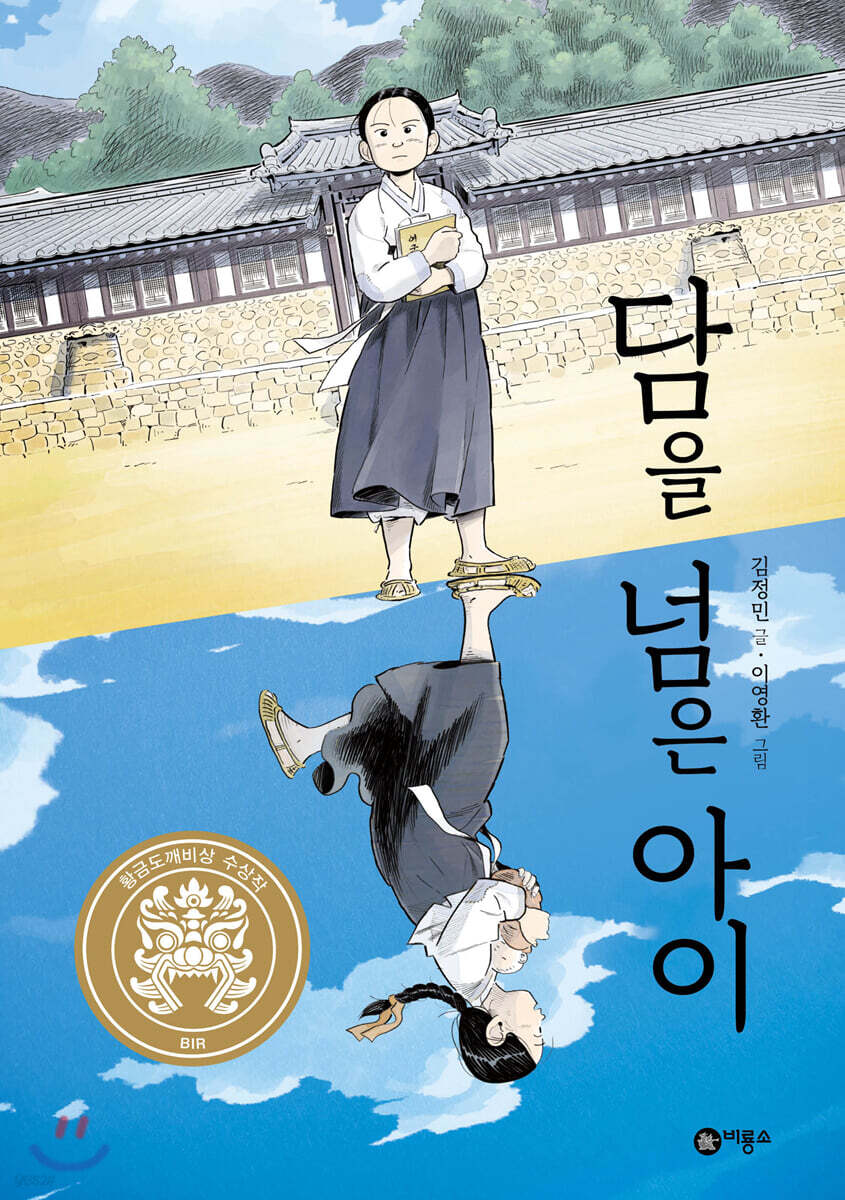
The child who climbed over the wall
 |
Description
Book Introduction
2019 25th Golden Toad Award Winner If the door is blocked, why don't you just jump over the wall? Pushil, a woman who moves forward boldly, overcoming discrimination and conventions! It is a work with a high degree of completion and a moving story. Even the character's name reveals the qualities of a unique storyteller. The characters have distinct personalities Above all, the development of the situation through description stood out and garnered high support. _Judges: Kim Kyeong-yeon (children's literature critic), Hwang Seon-mi (children's story writer), Yoo Eun-sil (children's story writer) Kim Jeong-min's full-length children's story, "The Child Who Climbed the Wall," winner of the 25th Golden Toad Award in 2019, has been published by Biryongso. This original fairy tale, which tells the story of a girl named Pusil, who learns the Korean language through a book she accidentally picks up during the famine-stricken Joseon Dynasty and tries to overcome the barriers of discrimination and custom, received praise from the judges as “a work of high perfection and touching emotion.” I wrote this in the hope that we will no longer be divided, discriminated against, or suffer. Like Pushil, Hyojin, and Seonbi, who joined forces regardless of gender, status, or age to save a baby, I hope that everyone will listen to the suffering of the world, unite their hearts, and move forward together. -Author's Note Author Kim Jeong-min, who first meets readers through 'The Child Who Climbed the Wall,' took inspiration from the story of a 'baby deprived of its mother's milk', which is located within the story of a 'nanny' in our past history. During the famine-ridden Joseon Dynasty, Pusil, born as the eldest daughter of a poor family, accidentally picks up a book called "The Story of a Lady of Military Women" and, through her meeting with Miss Hyojin, begins to learn to read and write, gradually opening her eyes to the world. However, when his mother is sold off to be a wet nurse at the lord's house, Pushil sets out to save his newborn sister who is in danger. The fictional character 'Female Gentleman' created by the author is portrayed in a touching and powerful way through the figure of Pushil, who faces discrimination based on her status, situation, gender, and other factors. This work, through its message that we should not hesitate in front of a blocked wall, but rather move forward with strength, gives us the courage and strength to face the world today. Artist Lee Young-hwan, who majored in cartoon animation, created a three-dimensional depiction of 'Pusil' through vivid and delicate drawings. Through scenes of running, energetic life, wind, and light, we can deeply share the characters' emotions. |
- You can preview some of the book's contents.
Preview
index
1.
A baby deprived of milk
2.
I will read a book
3.
A child who is okay with dying
4.
Be born again
5.
How should I live?
6.
Please give me milk
7.
Burned heart
8.
The boy who climbed the wall
9.
The identity of the crying sound
10.
A desperate name
11.
Please save the baby
12.
One step outside the wall
Author's Note
A baby deprived of milk
2.
I will read a book
3.
A child who is okay with dying
4.
Be born again
5.
How should I live?
6.
Please give me milk
7.
Burned heart
8.
The boy who climbed the wall
9.
The identity of the crying sound
10.
A desperate name
11.
Please save the baby
12.
One step outside the wall
Author's Note
Detailed image
Publisher's Review
Pushil, enlighten the writing
A child holding a book without knowing how to read
“I was happy to write for the first time in my life, and sad because I didn’t know what the letters were.” - From the text
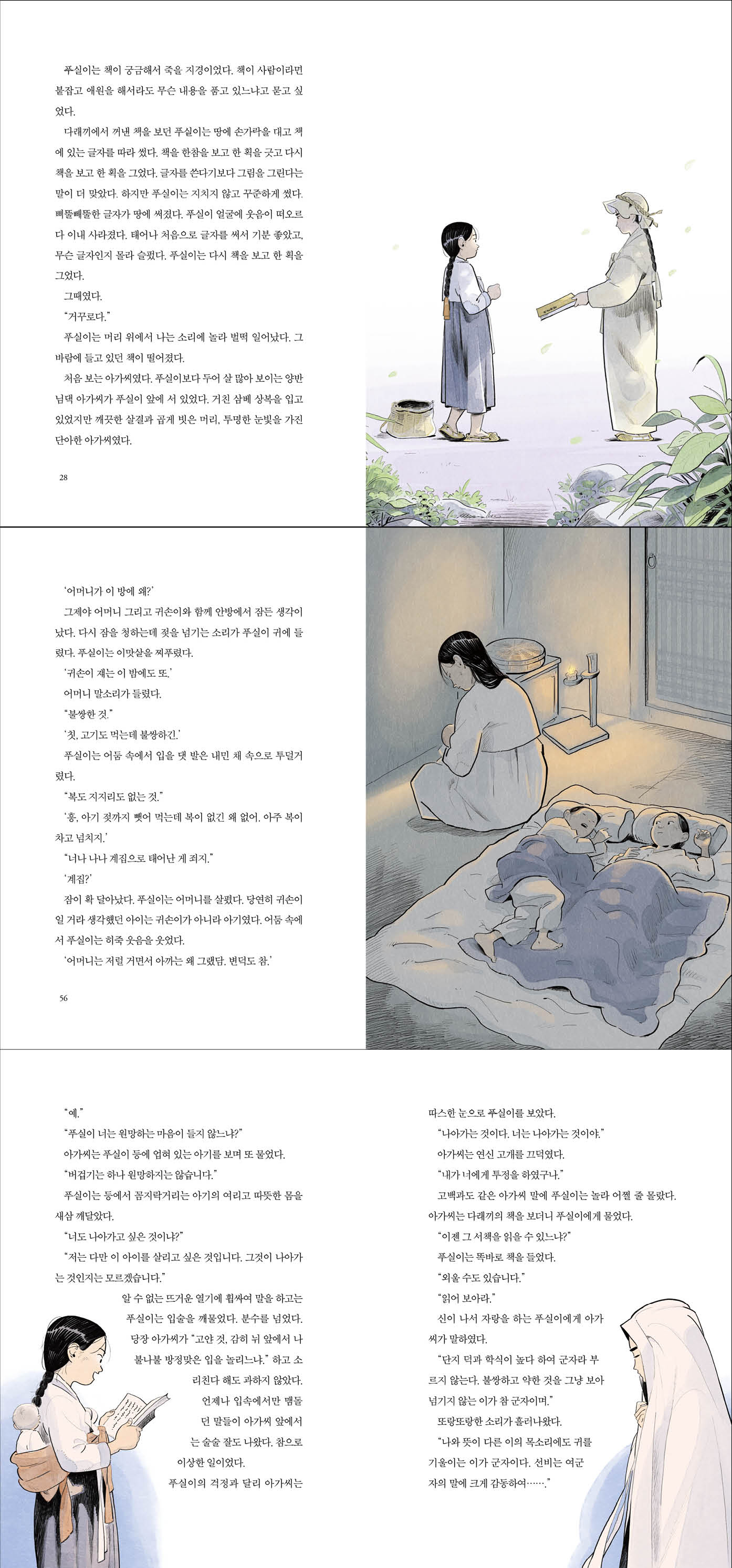
Pushil, who always carries around a book he doesn't know what it is, traces the letters in the book on the ground.
Could the surge of happiness and sadness that came from his inability to learn to read and write have been due to his situation?
Although Pushil is only twelve years old, as the eldest daughter in the family, she has always had to make sacrifices and endure.
Despite his mother and father's warning to throw away books he couldn't read, Pushil somehow felt like a treasure to him.
Pusil, who went to the mountains to find food, takes out a book as usual and while reading, he encounters Hyojin, a noblewoman dressed in mourning clothes, and her father, a scholar.
The scholar tells Pushil, who has a book but does not know how to read, to learn Korean, and at that moment, Pushil's heart is filled with the will to learn.
No one could have imagined that this meeting would shake the hearts of the scholars, including Pushil.
The beginning of change blossoms from such a chance encounter and a small word.
Pushil, enlightening the world
The world faced by a poor girl of low social standing
“Is a girl’s life worth the same as a boy’s? It’s a sin to be born a girl.” - From the text
Pusil's family survives on porridge made with grass roots and pine bark due to a famine.
Even so, there are many times when Mother and Pushil have to give in to Father and their only son, Gwison.
Although Gwison was seven years old, he monopolized his mother's milk while his six-month-old baby brother was sick.
Pushil feels sorry for her little sister who doesn't even have a name yet and is only called 'Baby'.
Moreover, when the mother leaves to become the wet nurse of a noble family to pay for the medicine for her grandson, the responsibility of protecting her baby brother falls entirely on Pusil.
The author tells the story of a wet nurse who actually existed in our history, and of a baby who was deprived of the mother and the lifeline, thereby revealing the sad and painful reality of the past.
When Miss Hyojin asks if the situation is difficult, Pushil answers like this.
“It’s hard, but I don’t resent it.” Pushil’s bold determination that resentment will keep her from moving forward is much stronger than the walls of discrimination and customs that a twelve-year-old girl faces.
Pushil, Shout to the World
If the door is blocked, why don't you just jump over the wall?
“Do you want to go forward too?”
“I just want to save this child.
I don't know if that's the way forward." - From the text
'Gunja' has long been a title used only for men who were of good conduct, kindness, and high virtue and learning.
Pushil, who has learned the Korean language, reads the story of the narrator, 'Yeogunja', in the book 'Yeogunjajeon' countless times to the point where he can recite it word for word, and before he knows it, the content has truly seeped deep into Pushil's heart.
The invisible author of 『The Story of a Female Soldier』, who broke the taboo and gave women titles that were previously reserved for men, and who went further to become a ‘true person’, encourages ‘Pusil’ to overcome the adversity that lies ahead.
“How should we live?” Pushil’s question to us reverberates like a weighty ripple, asking us how we should move forward amidst the new hatred emerging in the real world and the discrimination that still exists.
A child holding a book without knowing how to read
“I was happy to write for the first time in my life, and sad because I didn’t know what the letters were.” - From the text
Pushil, who always carries around a book he doesn't know what it is, traces the letters in the book on the ground.
Could the surge of happiness and sadness that came from his inability to learn to read and write have been due to his situation?
Although Pushil is only twelve years old, as the eldest daughter in the family, she has always had to make sacrifices and endure.
Despite his mother and father's warning to throw away books he couldn't read, Pushil somehow felt like a treasure to him.
Pusil, who went to the mountains to find food, takes out a book as usual and while reading, he encounters Hyojin, a noblewoman dressed in mourning clothes, and her father, a scholar.
The scholar tells Pushil, who has a book but does not know how to read, to learn Korean, and at that moment, Pushil's heart is filled with the will to learn.
No one could have imagined that this meeting would shake the hearts of the scholars, including Pushil.
The beginning of change blossoms from such a chance encounter and a small word.
Pushil, enlightening the world
The world faced by a poor girl of low social standing
“Is a girl’s life worth the same as a boy’s? It’s a sin to be born a girl.” - From the text
Pusil's family survives on porridge made with grass roots and pine bark due to a famine.
Even so, there are many times when Mother and Pushil have to give in to Father and their only son, Gwison.
Although Gwison was seven years old, he monopolized his mother's milk while his six-month-old baby brother was sick.
Pushil feels sorry for her little sister who doesn't even have a name yet and is only called 'Baby'.
Moreover, when the mother leaves to become the wet nurse of a noble family to pay for the medicine for her grandson, the responsibility of protecting her baby brother falls entirely on Pusil.
The author tells the story of a wet nurse who actually existed in our history, and of a baby who was deprived of the mother and the lifeline, thereby revealing the sad and painful reality of the past.
When Miss Hyojin asks if the situation is difficult, Pushil answers like this.
“It’s hard, but I don’t resent it.” Pushil’s bold determination that resentment will keep her from moving forward is much stronger than the walls of discrimination and customs that a twelve-year-old girl faces.
Pushil, Shout to the World
If the door is blocked, why don't you just jump over the wall?
“Do you want to go forward too?”
“I just want to save this child.
I don't know if that's the way forward." - From the text
'Gunja' has long been a title used only for men who were of good conduct, kindness, and high virtue and learning.
Pushil, who has learned the Korean language, reads the story of the narrator, 'Yeogunja', in the book 'Yeogunjajeon' countless times to the point where he can recite it word for word, and before he knows it, the content has truly seeped deep into Pushil's heart.
The invisible author of 『The Story of a Female Soldier』, who broke the taboo and gave women titles that were previously reserved for men, and who went further to become a ‘true person’, encourages ‘Pusil’ to overcome the adversity that lies ahead.
“How should we live?” Pushil’s question to us reverberates like a weighty ripple, asking us how we should move forward amidst the new hatred emerging in the real world and the discrimination that still exists.
GOODS SPECIFICS
- Date of issue: July 30, 2019
- Page count, weight, size: 164 pages | 284g | 148*210*20mm
- ISBN13: 9788949121857
- ISBN10: 8949121859
- KC Certification: Certification Type: Conformity Confirmation
You may also like
카테고리
korean


korean

![ELLE 엘르 스페셜 에디션 A형 : 12월 [2025]](http://librairie.coreenne.fr/cdn/shop/files/b8e27a3de6c9538896439686c6b0e8fb.jpg?v=1766436872&width=3840)


