

Kim Jong-un's hidden secret safe
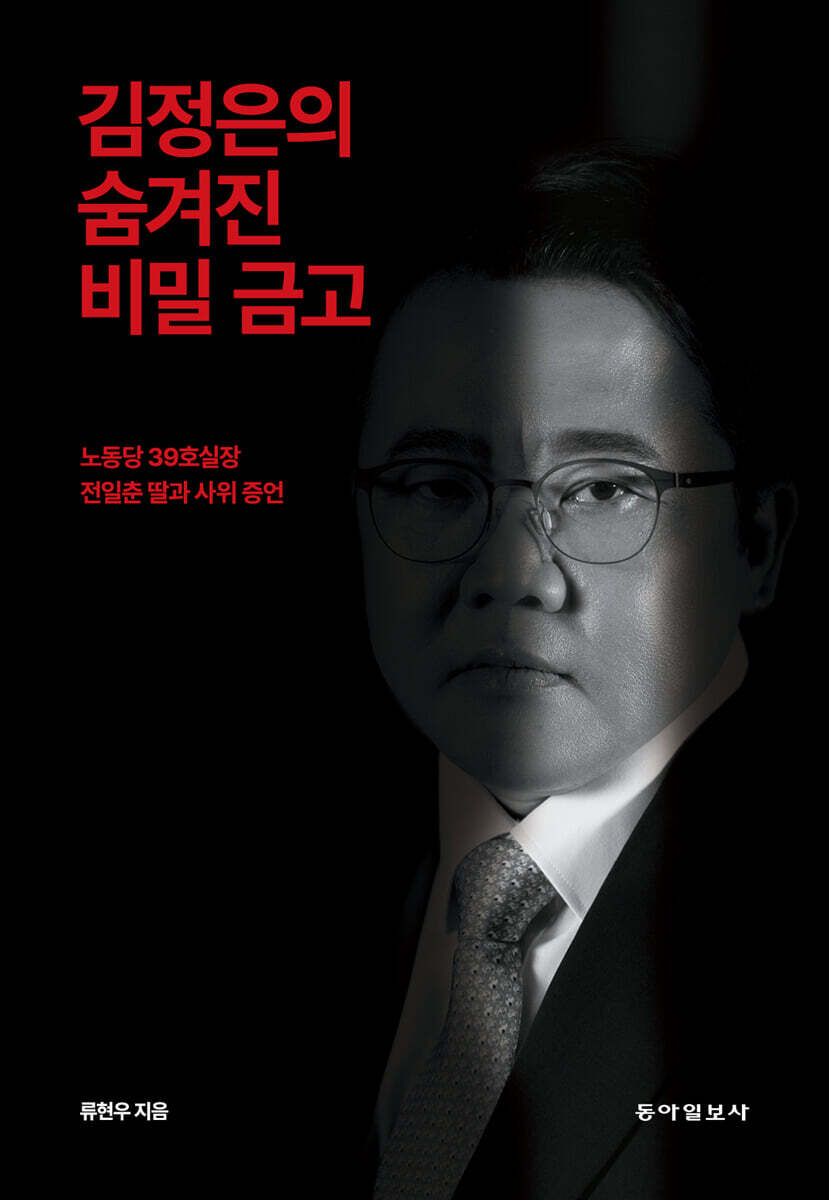 |
Description
Book Introduction
The Vault of the Leader, the Identity of the 36 Nations
Tracking the Flow of Kim Jong-un's Secret Funds
Where does Kim Jong-un's slush fund come from and where does it flow?
This book answers that age-old question.
Rather than simply regurgitating publicly available material, the author meticulously weaves together fragments of testimony, documents, and observations captured from the heart of power, revealing for the first time the full picture of how Kim Jong-un's "personal vault" operates, organized, and operated.
36 Countries: Hubs of Private Slush Funds
The core is the 36th Bureau of the State Affairs Commission (formerly the 36th Division of the Headquarters Secretariat).
The 36th Bureau is a hub of private slush funds operating outside the official budgetary control lines of the party and the state, a "secret vault" directly connected to the Kim family's living, protocol, and material procurement.
According to the diagrams captured in this book, while the widely known Workers' Party Room 39 handles 'party funds (public slush funds),' Bureau 36 manages 'revolutionary funds (private slush funds).'
Although the two wallets have different personalities and accounting, the final decision-making process converges on one person.
Because of this fundamental asymmetry and invisibility, Kim Jong-un's vault remains a "sanctuary" that is not properly audited by any agency and is inaccessible to anyone without permission.
The author explains the functions of the 36 countries as a triple structure of 'procurement-execution-defense'.
The headquarters office was originally responsible for daily support such as scheduling, protocol, and document organization, but with the 36th Division (now the 36th Bureau) as its axis, it also encompassed slush fund management and overseas material procurement, and was involved in protecting the Kim family's private life and maintaining the governing environment.
This is also why the Secretariat directly oversees even the details of security for external schedules, such as checking Kim Jong-un's movements before his visit to Russia.
In other words, it functions as a ‘personal secretary to the leader’ and a ‘shadow finance ministry’ rather than a policy advisory body.
The mechanical division of labor in Room 36 and Room 39 is also one of the internal operating principles revealed in this book.
Cash withdrawals and account operations in the 36 countries generally proceed through the office of Room 39, and dispatched personnel performing overseas assignments operate outside the party organization's control line at the embassy.
Goods and cargo they send to Pyongyang are treated with 'top priority' regardless of the means of transport.
This means that the "life support chain" is directly connected to the global supply chain, from the Kim family's bulletproof vehicles and luxury goods to certain food products, clothing, and perfumes.
The book's strength lies in its ability to connect the issue of nuclear and missile financing with the investigation of where this "black accounting" originates and how it is concealed and laundered.
The author asks, “Where does the revolutionary funding come from, where is it hidden, and how is it managed?
It leaves the reader with the question, “Where does the money for nuclear weapons and missiles come from?”
The answer is not linear.
This book persuasively demonstrates that resources move through a multilayered informal economy, roundabout transactions, external networks, and "cross-accounting" between organizations, and that tracking this entire process ultimately boils down to deciphering the internal grammar of power.
Tracking the Flow of Kim Jong-un's Secret Funds
Where does Kim Jong-un's slush fund come from and where does it flow?
This book answers that age-old question.
Rather than simply regurgitating publicly available material, the author meticulously weaves together fragments of testimony, documents, and observations captured from the heart of power, revealing for the first time the full picture of how Kim Jong-un's "personal vault" operates, organized, and operated.
36 Countries: Hubs of Private Slush Funds
The core is the 36th Bureau of the State Affairs Commission (formerly the 36th Division of the Headquarters Secretariat).
The 36th Bureau is a hub of private slush funds operating outside the official budgetary control lines of the party and the state, a "secret vault" directly connected to the Kim family's living, protocol, and material procurement.
According to the diagrams captured in this book, while the widely known Workers' Party Room 39 handles 'party funds (public slush funds),' Bureau 36 manages 'revolutionary funds (private slush funds).'
Although the two wallets have different personalities and accounting, the final decision-making process converges on one person.
Because of this fundamental asymmetry and invisibility, Kim Jong-un's vault remains a "sanctuary" that is not properly audited by any agency and is inaccessible to anyone without permission.
The author explains the functions of the 36 countries as a triple structure of 'procurement-execution-defense'.
The headquarters office was originally responsible for daily support such as scheduling, protocol, and document organization, but with the 36th Division (now the 36th Bureau) as its axis, it also encompassed slush fund management and overseas material procurement, and was involved in protecting the Kim family's private life and maintaining the governing environment.
This is also why the Secretariat directly oversees even the details of security for external schedules, such as checking Kim Jong-un's movements before his visit to Russia.
In other words, it functions as a ‘personal secretary to the leader’ and a ‘shadow finance ministry’ rather than a policy advisory body.
The mechanical division of labor in Room 36 and Room 39 is also one of the internal operating principles revealed in this book.
Cash withdrawals and account operations in the 36 countries generally proceed through the office of Room 39, and dispatched personnel performing overseas assignments operate outside the party organization's control line at the embassy.
Goods and cargo they send to Pyongyang are treated with 'top priority' regardless of the means of transport.
This means that the "life support chain" is directly connected to the global supply chain, from the Kim family's bulletproof vehicles and luxury goods to certain food products, clothing, and perfumes.
The book's strength lies in its ability to connect the issue of nuclear and missile financing with the investigation of where this "black accounting" originates and how it is concealed and laundered.
The author asks, “Where does the revolutionary funding come from, where is it hidden, and how is it managed?
It leaves the reader with the question, “Where does the money for nuclear weapons and missiles come from?”
The answer is not linear.
This book persuasively demonstrates that resources move through a multilayered informal economy, roundabout transactions, external networks, and "cross-accounting" between organizations, and that tracking this entire process ultimately boils down to deciphering the internal grammar of power.
- You can preview some of the book's contents.
Preview
index
Author's Note: If you do nothing, nothing changes.
| Prologue | Why I Chose to Defect North Korea
PART 1: The 'Dream' of a Nuclear Power
1 Nuclear Diplomacy for Survival
- North Korea will even sell out its own grandmother if the price is rightㆍMake participation in the Dubai Space Competition a successㆍ“I hope Wang Jin approves”… Saudi Arabia steps in to mediate the North Korea-US talksㆍCreate immunity in the international community against our possession of nuclear weaponsㆍKim Il-sung’s teachings on the four powers diplomacyㆍThe unfortunate fate of the participants in the Kim Jong-un-Trump summitㆍThe reason the Ministry of Foreign Affairs was excluded from the North Korea-US summitㆍThe ‘Hanoi North Korea-US summit’ disguised as an ‘official friendship visit to Vietnam’ㆍA report on the US situation placed on Kim Jong-un’s desk every morning at 9:00ㆍThe two major mountains of North Korean diplomacy, party diplomacy and state diplomacyㆍThe reaction of North Korean diplomats to Lee Myung-bak’s ‘denuclearization, openness, 3000’ㆍThe truth about the disguised peace revealed at the joint event in Kuwait on the 100th anniversary of the March 1st Movement
2 The Difficult Daily Life of a Diplomat
- Received a first-class medal for $500,000 'begging diplomacy'ㆍ200,000 tons of phosphorite donated by Syria and a personal letter from Kim Jong-ilㆍDiplomat training system changed under Kim Jong-il's instructionsㆍRi Su-yong's 'individual diplomacy' that boiled down to a 'Kuwaiti prince'ㆍPresented a 'sincere gift' to Kim Jong-un with $30,000 that he had donatedㆍKim Jong-il and Kim Jong-un love horses... Find out the price of Arab thoroughbredsㆍMiracle 3 days... North Korea wins the U-17 Women's World CupㆍTreating three meals a day: oxtail soup, braised beef feet, and seasoned tripeㆍBecomes a 'disabled person' after undergoing revolution due to 'lese majeste'ㆍUS$30 million ransom for a doctor and his wife kidnapped in Libya by ISISㆍNorth Korea's military situation where even sheep semen cannot be frozenㆍNorth Korean diplomats begging for 'congratulatory messages' to send to Kim Jong-unㆍWhy North Korean diplomats engage in illegal businessㆍTwin sisters' lives changed, rules for sending diplomats' children overseasㆍThe front of the neck should be short and the back of the neck should be longㆍDiplomats worried because of their children who drank the 'water of freedom'ㆍ300,000 euros allocated to the Ministry of Foreign Affairs by the Workers' Party's Office 39 for propaganda of the Juche ideologyㆍDubai, a 'shopping paradise' that emerged as a transit point for executive business tripsㆍNorth Korea's own developed 'Red Star 2.0' is a specialized OS for encryptionㆍSecret talks between North Korea and Israel
3. Cold-blooded disregard by the international community and international isolation
- They call me a 'hermit leader', so I should go out and make some noise.ㆍThe Egyptian president met with a South Korean minister but not the North Korean head of state.ㆍDiplomatic isolation caused by Park Geun-hye's visit to Uganda.ㆍThe Negroes are not just dark on the outside, but also dark on the inside.ㆍThe UAE withdrew approval for the opening of the North Korean embassy in Abu Dhabi.ㆍThe 60th anniversary of the war victory ceremony without a single head of state.ㆍChina's three major aid programs for North Korea.ㆍThe North Korean Foreign Ministry on edge over KOTRA's active performance.ㆍJeong Dong-hak, the faceless spokesperson for the North Korean Foreign Ministry.ㆍSpread the Juche ideology in Saudi Arabia.ㆍCongratulatory messages should go to the Marshal, not Kim Yong-nam.ㆍKim Jong-un's capricious change of title.ㆍPersonnel regulations changed due to the mass defection of Ryugyong Restaurant employees.ㆍSecurity agents breaking the legs of healthy defectors and escorting them.ㆍThe Ministry of National Security wiretapping device installed in the Foreign Ministry interview room.ㆍThe chairman of the Albader Group's rebuke, "Young "Mobilizing students for mass gymnastics is a violation of human rights"ㆍA North Korean defector's memoir, "Pyongyang's Fishbowl," is being sold in Dubai bookstores - North Korean elementary schools are handing down textbooks due to a shortage of textbooksㆍHow to put Kim Jong-un's name in booksㆍOtto Warmbier's pitiful death and 'hostage diplomacy'ㆍThe North Korean human rights resolution is Kim Jong-un's Achilles' heel
4 The Tsunami of Poverty Driven by North Korean Sanctions
- Sanctions on North Korea that have completely dried up North Korea's lifelineㆍAir Koryo's Pyongyang-Kuwait route closedㆍOverseas North Korean workers denied residency visasㆍMeetings with shouting and shouting, "The ambassador should leave Kuwait within a month"ㆍNational Day banquet with no guests, collective boycott of the diplomatic corpsㆍBuy the Masikryong Ski Resort lift and gondola!ㆍKim Kye-gwan: "Don't even mention reform and openness"ㆍHow did Egypt's Orascom invest in North Korea?ㆍKim Jong-il: "Thank you, Mr. Naguib, for covering the Ryugyong Hotel with glass"ㆍKang Sok-ju and Ri Su-yong are like dogs and cats on bad termsㆍ1 million euros disappeared from Ora BankㆍMasikryong Ski Resort is a winter entertainment center 'exclusive to Kim Jong-un'ㆍThey boasted about being an 'AIDS-free country', but...ㆍPyongyang citizens who would rather have a bowl of cold noodles than pizza
5 Weapons of the Plains Flooding the Middle East
- 21.6 million euros transported to Pyongyang in a diplomatic pouchㆍ19 hackers specializing in cryptocurrency theft in DubaiㆍChoi Jin-myeong, an agent who transported Hamas fundsㆍTransport 10,000 RPG-7 rockets to Iran!ㆍJi Seon-ho transported 24,000 rocket-propelled RPGs to EgyptㆍDispatching training instructors to Algerian special forcesㆍChange the route to avoid exposure to foreign intelligence agencies!ㆍThe reason the North Korean military called it “Libya that lays eggs”ㆍKim Jong-il, enraged by Gaddafi’s demand to give up nuclear weapons, says, “You two-headed bastard…”ㆍThe “courageous” People’s Army chief of staff who revived Libya’s foreign currency earningㆍ“Withdraw all but seven military attachés from the seven countries”
6 The Double Life of Pyongyang's Elite
- Wives of high-ranking officials: “Anything from South Korea is OK”ㆍDaughters of high-ranking officials who are ‘unpopular’ with the ‘top groom’, the bachelor of the Ministry of Foreign AffairsㆍBeer festival held on the banks of the Taedong River… The secret of North Korean ‘Taedong River Beer’ㆍNorth Koreans visiting South Korean restaurants and marts in search of ‘soul food’ㆍWhich countries do North Korean diplomats want to work in?ㆍ“Sincere goods are like tributes given to kings in the feudal era”ㆍFemale employees who were turned into labor revolutionaries for the ‘crime’ of watching South Korean moviesㆍTwo unidentified people broke into the office of First Vice Minister of Foreign Affairs Kim Kye-gwanㆍStrange radio waves flying from the building… There's a 'spy' in the Foreign Ministry. A feud over the appointment of Choi Son-hui, director of the North American Affairs Bureau. The Moranbong Band returned to Pyongyang just before its Beijing performance. A Russian art troupe paid to be brought to Pyongyang. Loyalty assessed based on donations to the Kim Il-sung and Kim Jong-un funds. Party cell secretaries are North Korea's version of the 'Red Guards.' How does Pyongyang communicate when the internet is cut off? An elevator carrying a high-ranking party official suddenly stops.
PART 2 Baekdu Bloodline
1 Uncontrolled power, Baekdu bloodline
- “Ju-ae is glucose to me” Kim Jong-un’s daughter Kim Ju-aeㆍKim Yo-jong’s wedding held at Mokrangwan “The princess’s husband is handsome”ㆍKim Yo-jong and her husband met at the grave of Kim Jong-un’s biological mother Ko Yong-huiㆍ‘Great General’ Kim Jong-chul who lit up Kim Jong-il’s birthday partyㆍKim Jong-chul whined for opiumㆍKim Ok’s family, ‘Kim Jong-il’s fourth wife’ who disappeared into a political prison campㆍKim Pyong-il returned to Pyongyang after 40 years of wanderingㆍKorean movie and drama mania is none other than the Kim familyㆍKim Jong-il’s father-in-law’s nickname ‘high-pressure rice cooker’ given to himㆍ“Director, father...” ‘Comrade General’ Kim Jong-un met at the hospitalㆍ“Thank you, dear General” Kim Jong-il and Ko Yong-hui’s wedding giftㆍNever-ending rumors of Kim Jong-un’s health problems and the medical staff at Bonghwa HospitalㆍKim Jong-un’s drunkenness puts him at the crossroads of life and deathㆍ“Comrade, did you brush your teeth today?” "You bad breath, don't show up. Why do North Korean officials kneel before Kim Jong-un?" "Why did you do that?" Han Gwang-sang, slapped by "drinker" Kim Jong-un.
2 Invisible Powers
- Why is the Workers' Party Organization and Guidance Department so powerful?ㆍThe mission of the Workers' Party Central Committee Secretariat OfficeㆍKim Jong-un's hidden secret safe, the 36th Bureau of the State Affairs CommissionㆍThe Workers' Party Document Filing Office that makes the leader an omnipotent GodㆍHow did Jo Yong-won ascend to the number two position?ㆍThe deaths of Hwang Pyong-so, Kim Yang-gon, and Ri Je-gang, the 'top contributors to the establishment of the Kim Jong-un succession system, were not assassinations but traffic accidentsㆍKim Jong-il's Yong In-sul: "Let us not change forever like gold"ㆍThe 'leadership phone' that provides a direct line to Kim Jong-unㆍKim Kye-gwan, the 'North Korean diplomatic command tower' who is respected and trustedㆍChoi Seon-hui, who lives a long and happy life and is blessed one after anotherㆍMyongya Bokya, my father-in-law who suffered from the Banco Delta Asia incident in MacauㆍI express my gratitude and respect to Mr. Choi Bul-am, the 'Korean's dining table'ㆍWho are the 'hardliners' in North Korea that Kim Jong-un mentioned?ㆍAll the veterans over 60 should be replacedㆍ'Anti-Japanese The Workers' Party's Cadre Policy Corrected by Hwang Sun-hee
2 Kim Jong-un's Reign of Terror
- The truth about the purge of Jang Song-thaek is revealed to the world!ㆍJang Song-thaek touched Kim Jong-un's 'sore spot'ㆍJang Song-thaek's 'explosive remarks' at a celebration partyㆍKim Jong-un has his eyes on his pocketbookㆍSupreme Commander's orders are not even in his sightsㆍKim Jong-un is furious, saying, "Are soldiers beaten to death by civilians?"ㆍRi Ryong-ha and Jang Su-gil foreshadow Jang Song-thaek's fateㆍAbandoned by his 'wife' Kim Kyong-huiㆍKim Jong-un confesses, "Ordered Jang Song-thaek's burning"ㆍAnti-factional struggle to liquidate the remnants... A purge of 3,000 people involvedㆍA campaign to force people to write criticism for three monthsㆍKim Jong-il's people who were 'thrown to the ground'ㆍSend the telegram for Kim Jong-nam's assassination as a 'personal telegram to the First Vice Minister'ㆍWho planned the 'Kim Jong-nam assassination'ㆍA standing order that remains in effect until executionㆍKim Jong-un who even executed the son of Hwang Sun-hee who raised Kim Jong-ilㆍThe 'Hyesan Incident' that resulted in a reshuffle in the Ministry of State SecurityㆍHwang Yong-chol, a 'foreign currency earning hero' executed out of angerㆍMinister of the People's Armed Forces Hyon Yong-chol, 'shot to death' while dozing offㆍChief of the General Staff Ri Yong-ho who lost his life in a wiretapping incidentㆍThe 'South Hwanghae Provincial Party Incident' involving sexual bribery of a female studentㆍVice Prime Minister Kim Yong-jin executed for treasonㆍThe inside story of the 'gift suspension' and the execution of the manager at the Taedong River Gizzard PlantㆍThe truth about the 'Foreign Ministry spy case' and the execution of Han Song-ryeol, an expert on the USㆍHe disappeared after being taken to the Organization and Guidance Department The Moon Sung-sul family was shattered by the "national civil servant" and "Sim Hwa-jo incidents."
PART 3 My Story
1. The difficult days of youth
- The Arduous March and starvation experienced in Chagang ProvinceㆍIn the operating room of a hospital without anesthetics or antibioticsㆍNo one would steal after starving for three daysㆍMother selling dumplings in front of the dormitory of Kim Il-sung UniversityㆍThe family was almost torn apart because of a commentary on the 'Quran'ㆍThe Republic of Korea, the 'South Korean national name' learned through leafletsㆍThe Air Force, which endures hardships when it snowsㆍThe 'Dalgi Mogaji' People's Army soldiers that 'Yeongsil' metㆍThe 'Stars and Stripes' and the 'Republic of Korea' that have permeated the military and residents
2. The agony before defecting from North Korea
- The First Vice Minister of Foreign Affairs's '100-day reign' ended with a 'sad and funny' joke from a North Korean diplomat: "What's wrong with your country?" The truth behind the attack on the North Korean embassy in Spain The illegal business of a diplomat who can't even stop 'Kim Jong-un's policy' The 'red' Korean who became a North Korean spy The people of the Kaesong Industrial Complex who met again in Seoul The trouble caused by Kim Il-sung and Kim Jong-il's 'badge' The price for a lifetime of loyalty is 2kg of potatoes for 6 months
| Epilogue | A new day will surely come
| Prologue | Why I Chose to Defect North Korea
PART 1: The 'Dream' of a Nuclear Power
1 Nuclear Diplomacy for Survival
- North Korea will even sell out its own grandmother if the price is rightㆍMake participation in the Dubai Space Competition a successㆍ“I hope Wang Jin approves”… Saudi Arabia steps in to mediate the North Korea-US talksㆍCreate immunity in the international community against our possession of nuclear weaponsㆍKim Il-sung’s teachings on the four powers diplomacyㆍThe unfortunate fate of the participants in the Kim Jong-un-Trump summitㆍThe reason the Ministry of Foreign Affairs was excluded from the North Korea-US summitㆍThe ‘Hanoi North Korea-US summit’ disguised as an ‘official friendship visit to Vietnam’ㆍA report on the US situation placed on Kim Jong-un’s desk every morning at 9:00ㆍThe two major mountains of North Korean diplomacy, party diplomacy and state diplomacyㆍThe reaction of North Korean diplomats to Lee Myung-bak’s ‘denuclearization, openness, 3000’ㆍThe truth about the disguised peace revealed at the joint event in Kuwait on the 100th anniversary of the March 1st Movement
2 The Difficult Daily Life of a Diplomat
- Received a first-class medal for $500,000 'begging diplomacy'ㆍ200,000 tons of phosphorite donated by Syria and a personal letter from Kim Jong-ilㆍDiplomat training system changed under Kim Jong-il's instructionsㆍRi Su-yong's 'individual diplomacy' that boiled down to a 'Kuwaiti prince'ㆍPresented a 'sincere gift' to Kim Jong-un with $30,000 that he had donatedㆍKim Jong-il and Kim Jong-un love horses... Find out the price of Arab thoroughbredsㆍMiracle 3 days... North Korea wins the U-17 Women's World CupㆍTreating three meals a day: oxtail soup, braised beef feet, and seasoned tripeㆍBecomes a 'disabled person' after undergoing revolution due to 'lese majeste'ㆍUS$30 million ransom for a doctor and his wife kidnapped in Libya by ISISㆍNorth Korea's military situation where even sheep semen cannot be frozenㆍNorth Korean diplomats begging for 'congratulatory messages' to send to Kim Jong-unㆍWhy North Korean diplomats engage in illegal businessㆍTwin sisters' lives changed, rules for sending diplomats' children overseasㆍThe front of the neck should be short and the back of the neck should be longㆍDiplomats worried because of their children who drank the 'water of freedom'ㆍ300,000 euros allocated to the Ministry of Foreign Affairs by the Workers' Party's Office 39 for propaganda of the Juche ideologyㆍDubai, a 'shopping paradise' that emerged as a transit point for executive business tripsㆍNorth Korea's own developed 'Red Star 2.0' is a specialized OS for encryptionㆍSecret talks between North Korea and Israel
3. Cold-blooded disregard by the international community and international isolation
- They call me a 'hermit leader', so I should go out and make some noise.ㆍThe Egyptian president met with a South Korean minister but not the North Korean head of state.ㆍDiplomatic isolation caused by Park Geun-hye's visit to Uganda.ㆍThe Negroes are not just dark on the outside, but also dark on the inside.ㆍThe UAE withdrew approval for the opening of the North Korean embassy in Abu Dhabi.ㆍThe 60th anniversary of the war victory ceremony without a single head of state.ㆍChina's three major aid programs for North Korea.ㆍThe North Korean Foreign Ministry on edge over KOTRA's active performance.ㆍJeong Dong-hak, the faceless spokesperson for the North Korean Foreign Ministry.ㆍSpread the Juche ideology in Saudi Arabia.ㆍCongratulatory messages should go to the Marshal, not Kim Yong-nam.ㆍKim Jong-un's capricious change of title.ㆍPersonnel regulations changed due to the mass defection of Ryugyong Restaurant employees.ㆍSecurity agents breaking the legs of healthy defectors and escorting them.ㆍThe Ministry of National Security wiretapping device installed in the Foreign Ministry interview room.ㆍThe chairman of the Albader Group's rebuke, "Young "Mobilizing students for mass gymnastics is a violation of human rights"ㆍA North Korean defector's memoir, "Pyongyang's Fishbowl," is being sold in Dubai bookstores - North Korean elementary schools are handing down textbooks due to a shortage of textbooksㆍHow to put Kim Jong-un's name in booksㆍOtto Warmbier's pitiful death and 'hostage diplomacy'ㆍThe North Korean human rights resolution is Kim Jong-un's Achilles' heel
4 The Tsunami of Poverty Driven by North Korean Sanctions
- Sanctions on North Korea that have completely dried up North Korea's lifelineㆍAir Koryo's Pyongyang-Kuwait route closedㆍOverseas North Korean workers denied residency visasㆍMeetings with shouting and shouting, "The ambassador should leave Kuwait within a month"ㆍNational Day banquet with no guests, collective boycott of the diplomatic corpsㆍBuy the Masikryong Ski Resort lift and gondola!ㆍKim Kye-gwan: "Don't even mention reform and openness"ㆍHow did Egypt's Orascom invest in North Korea?ㆍKim Jong-il: "Thank you, Mr. Naguib, for covering the Ryugyong Hotel with glass"ㆍKang Sok-ju and Ri Su-yong are like dogs and cats on bad termsㆍ1 million euros disappeared from Ora BankㆍMasikryong Ski Resort is a winter entertainment center 'exclusive to Kim Jong-un'ㆍThey boasted about being an 'AIDS-free country', but...ㆍPyongyang citizens who would rather have a bowl of cold noodles than pizza
5 Weapons of the Plains Flooding the Middle East
- 21.6 million euros transported to Pyongyang in a diplomatic pouchㆍ19 hackers specializing in cryptocurrency theft in DubaiㆍChoi Jin-myeong, an agent who transported Hamas fundsㆍTransport 10,000 RPG-7 rockets to Iran!ㆍJi Seon-ho transported 24,000 rocket-propelled RPGs to EgyptㆍDispatching training instructors to Algerian special forcesㆍChange the route to avoid exposure to foreign intelligence agencies!ㆍThe reason the North Korean military called it “Libya that lays eggs”ㆍKim Jong-il, enraged by Gaddafi’s demand to give up nuclear weapons, says, “You two-headed bastard…”ㆍThe “courageous” People’s Army chief of staff who revived Libya’s foreign currency earningㆍ“Withdraw all but seven military attachés from the seven countries”
6 The Double Life of Pyongyang's Elite
- Wives of high-ranking officials: “Anything from South Korea is OK”ㆍDaughters of high-ranking officials who are ‘unpopular’ with the ‘top groom’, the bachelor of the Ministry of Foreign AffairsㆍBeer festival held on the banks of the Taedong River… The secret of North Korean ‘Taedong River Beer’ㆍNorth Koreans visiting South Korean restaurants and marts in search of ‘soul food’ㆍWhich countries do North Korean diplomats want to work in?ㆍ“Sincere goods are like tributes given to kings in the feudal era”ㆍFemale employees who were turned into labor revolutionaries for the ‘crime’ of watching South Korean moviesㆍTwo unidentified people broke into the office of First Vice Minister of Foreign Affairs Kim Kye-gwanㆍStrange radio waves flying from the building… There's a 'spy' in the Foreign Ministry. A feud over the appointment of Choi Son-hui, director of the North American Affairs Bureau. The Moranbong Band returned to Pyongyang just before its Beijing performance. A Russian art troupe paid to be brought to Pyongyang. Loyalty assessed based on donations to the Kim Il-sung and Kim Jong-un funds. Party cell secretaries are North Korea's version of the 'Red Guards.' How does Pyongyang communicate when the internet is cut off? An elevator carrying a high-ranking party official suddenly stops.
PART 2 Baekdu Bloodline
1 Uncontrolled power, Baekdu bloodline
- “Ju-ae is glucose to me” Kim Jong-un’s daughter Kim Ju-aeㆍKim Yo-jong’s wedding held at Mokrangwan “The princess’s husband is handsome”ㆍKim Yo-jong and her husband met at the grave of Kim Jong-un’s biological mother Ko Yong-huiㆍ‘Great General’ Kim Jong-chul who lit up Kim Jong-il’s birthday partyㆍKim Jong-chul whined for opiumㆍKim Ok’s family, ‘Kim Jong-il’s fourth wife’ who disappeared into a political prison campㆍKim Pyong-il returned to Pyongyang after 40 years of wanderingㆍKorean movie and drama mania is none other than the Kim familyㆍKim Jong-il’s father-in-law’s nickname ‘high-pressure rice cooker’ given to himㆍ“Director, father...” ‘Comrade General’ Kim Jong-un met at the hospitalㆍ“Thank you, dear General” Kim Jong-il and Ko Yong-hui’s wedding giftㆍNever-ending rumors of Kim Jong-un’s health problems and the medical staff at Bonghwa HospitalㆍKim Jong-un’s drunkenness puts him at the crossroads of life and deathㆍ“Comrade, did you brush your teeth today?” "You bad breath, don't show up. Why do North Korean officials kneel before Kim Jong-un?" "Why did you do that?" Han Gwang-sang, slapped by "drinker" Kim Jong-un.
2 Invisible Powers
- Why is the Workers' Party Organization and Guidance Department so powerful?ㆍThe mission of the Workers' Party Central Committee Secretariat OfficeㆍKim Jong-un's hidden secret safe, the 36th Bureau of the State Affairs CommissionㆍThe Workers' Party Document Filing Office that makes the leader an omnipotent GodㆍHow did Jo Yong-won ascend to the number two position?ㆍThe deaths of Hwang Pyong-so, Kim Yang-gon, and Ri Je-gang, the 'top contributors to the establishment of the Kim Jong-un succession system, were not assassinations but traffic accidentsㆍKim Jong-il's Yong In-sul: "Let us not change forever like gold"ㆍThe 'leadership phone' that provides a direct line to Kim Jong-unㆍKim Kye-gwan, the 'North Korean diplomatic command tower' who is respected and trustedㆍChoi Seon-hui, who lives a long and happy life and is blessed one after anotherㆍMyongya Bokya, my father-in-law who suffered from the Banco Delta Asia incident in MacauㆍI express my gratitude and respect to Mr. Choi Bul-am, the 'Korean's dining table'ㆍWho are the 'hardliners' in North Korea that Kim Jong-un mentioned?ㆍAll the veterans over 60 should be replacedㆍ'Anti-Japanese The Workers' Party's Cadre Policy Corrected by Hwang Sun-hee
2 Kim Jong-un's Reign of Terror
- The truth about the purge of Jang Song-thaek is revealed to the world!ㆍJang Song-thaek touched Kim Jong-un's 'sore spot'ㆍJang Song-thaek's 'explosive remarks' at a celebration partyㆍKim Jong-un has his eyes on his pocketbookㆍSupreme Commander's orders are not even in his sightsㆍKim Jong-un is furious, saying, "Are soldiers beaten to death by civilians?"ㆍRi Ryong-ha and Jang Su-gil foreshadow Jang Song-thaek's fateㆍAbandoned by his 'wife' Kim Kyong-huiㆍKim Jong-un confesses, "Ordered Jang Song-thaek's burning"ㆍAnti-factional struggle to liquidate the remnants... A purge of 3,000 people involvedㆍA campaign to force people to write criticism for three monthsㆍKim Jong-il's people who were 'thrown to the ground'ㆍSend the telegram for Kim Jong-nam's assassination as a 'personal telegram to the First Vice Minister'ㆍWho planned the 'Kim Jong-nam assassination'ㆍA standing order that remains in effect until executionㆍKim Jong-un who even executed the son of Hwang Sun-hee who raised Kim Jong-ilㆍThe 'Hyesan Incident' that resulted in a reshuffle in the Ministry of State SecurityㆍHwang Yong-chol, a 'foreign currency earning hero' executed out of angerㆍMinister of the People's Armed Forces Hyon Yong-chol, 'shot to death' while dozing offㆍChief of the General Staff Ri Yong-ho who lost his life in a wiretapping incidentㆍThe 'South Hwanghae Provincial Party Incident' involving sexual bribery of a female studentㆍVice Prime Minister Kim Yong-jin executed for treasonㆍThe inside story of the 'gift suspension' and the execution of the manager at the Taedong River Gizzard PlantㆍThe truth about the 'Foreign Ministry spy case' and the execution of Han Song-ryeol, an expert on the USㆍHe disappeared after being taken to the Organization and Guidance Department The Moon Sung-sul family was shattered by the "national civil servant" and "Sim Hwa-jo incidents."
PART 3 My Story
1. The difficult days of youth
- The Arduous March and starvation experienced in Chagang ProvinceㆍIn the operating room of a hospital without anesthetics or antibioticsㆍNo one would steal after starving for three daysㆍMother selling dumplings in front of the dormitory of Kim Il-sung UniversityㆍThe family was almost torn apart because of a commentary on the 'Quran'ㆍThe Republic of Korea, the 'South Korean national name' learned through leafletsㆍThe Air Force, which endures hardships when it snowsㆍThe 'Dalgi Mogaji' People's Army soldiers that 'Yeongsil' metㆍThe 'Stars and Stripes' and the 'Republic of Korea' that have permeated the military and residents
2. The agony before defecting from North Korea
- The First Vice Minister of Foreign Affairs's '100-day reign' ended with a 'sad and funny' joke from a North Korean diplomat: "What's wrong with your country?" The truth behind the attack on the North Korean embassy in Spain The illegal business of a diplomat who can't even stop 'Kim Jong-un's policy' The 'red' Korean who became a North Korean spy The people of the Kaesong Industrial Complex who met again in Seoul The trouble caused by Kim Il-sung and Kim Jong-il's 'badge' The price for a lifetime of loyalty is 2kg of potatoes for 6 months
| Epilogue | A new day will surely come
Into the book
I began to strengthen my resolve while appearing on the North-South communication TV program 'Now, Let's Meet'.
Many North Korean defectors have exposed the dire human rights situation faced by North Koreans to the world through this program.
For the first time, many foreigners learned about the reality of North Korea, and the United Nations condemned the North Korean regime and demanded improvements in the human rights of its people.
I felt ashamed of myself when I saw their courage.
Yes, that's right.
If you do nothing, nothing changes.
I also wanted to do something meaningful to change North Korea and help my beloved fellow countrymen there.
--- p.8
The ambassador asked, "We are also a member of the International Astronautical Federation, so isn't not allowing us to participate in the competition going against the purpose of the Federation's founding?"
Then the vice-chairman opened his eyes wide and asked back when his country joined the International Astronautical Federation.
When the ambassador told him that his country had applied for membership at the 66th General Assembly of the League held in Jerusalem, Israel in 2015, he said he was mistaken and that his country had applied for membership but was rejected due to concerns from the UN Security Council and the international community about the continued launch of long-range missiles.
--- p.33
One day in 2009, an urgent telegram arrived at the Ministry of Foreign Affairs from the North Korean mission to the United Nations in New York.
The Saudi Arabian ambassador to the United Nations visited the North Korean mission and expressed his willingness to mediate the North Korea-US talks, expressing his hope that high-level officials would meet soon and that all matters would be conducted in utmost secrecy.
--- p.34
I was astonished to hear the news that in November 2022, a freight train carrying 30 Russian Orlov horses passed through Khasan Station in Russia and entered North Korea.
North Korea has had its borders completely closed for over three years, since March 2020, under the pretext of responding to the COVID-19 crisis.
What makes me angry is that while on one side people are suffering because their borders are closed and they cannot bring in necessities, on the other side Kim Jong-un opened the borders to import horses for him to ride.
Doesn't this mean that the suffering of the North Korean people is less important to Kim Jong-un than his own pleasures?
--- p.76
In North Korea, the only place that can be called a 'secretary's office' is the headquarters secretary's office.
Even Jo Yong-won, the secretary of the Party Organization and Guidance Department known as Kim Jong-un's right-hand man, and the director of the General Political Bureau of the Korean People's Army can only have one secretary.
The headquarters secretariat is more like Kim Jong-un's personal secretary's office than a policy support agency like the South Korean presidential office.
--- p.296
Documents submitted to Kim Jong-un from each department are classified by sector and purpose by the headquarters secretary's office and placed on his desk.
The document is divided into ‘weekly’ and ‘daily’.
The weekly report is a regular report posted every Wednesday, and on this day, all ratification documents from all departments, including the Central Party, Cabinet, Ministry of National Defense, and Ministry of Foreign Affairs, are concentrated.
The daily report is an urgent report that requires same-day approval.
Organizing these documents is also a core task of the headquarters office.
The Central Party's six departments, which are responsible for protecting Kim Jong-un, are under the Secretariat, but do not report to the Secretary General.
Because the security of Kim Jong-un's movements is directly linked to his life.
The management and security of villas across the country are also independently managed by six departments.
In addition, some departments, such as Department 36 and Department 81, are affiliated with the headquarters secretariat, but do not report their work to the secretary.
The 6th Director, the 36th Section Chief, and the 81st Section Chief are virtually at the same level as the Chief Secretary.
--- p.297
Office 39 of the Workers' Party of Korea is known as the department that manages Kim Jong-un's "ruling funds" that belong to the unofficial economy.
Separate from the national budget, the slush funds that are executed solely under Kim Jong-un's instructions are the ruling funds.
However, among these slush funds, there are public slush funds and private slush funds.
The key point I want to make clear here is that there is a separate department that manages Kim Jong-un's private slush funds.
That department is the 36th division of the headquarters office.
Normally, the funds in Room 39 are called 'party funds', and the funds in the separate headquarters office, Section 36, are called 'revolutionary funds'.
Party funds and revolutionary funds are clearly different wallets, but both are under Kim Jong-un's control.
In short, the revolutionary funds are Kim Jong-un's hidden personal slush funds.
After the establishment of the State Affairs Commission in June 2016, the 36th Division of the Secretariat was reorganized into the 36th Bureau of the State Affairs Commission.
The name of the 36th Division was changed out of concern that Kim Jong-un's authority could be undermined if its existence was exposed, but its mission remains the same as before.
The 36th Bureau is responsible for overseas purchases and imports of all items related to the Kim family, including Kim Jong-un's security equipment, bulletproof vehicles, yachts, luxury watches, clothing, and perfume, as well as food products such as swallow's nests, shark fins, Kobe beef, and southern fruits.
It is also responsible for importing all equipment and facilities necessary for facilities and equipment completed under Kim Jong-un's direction, such as the Taedong River cruise ship "Rainbow" built in 2015, the "Neungra Gopchang Fish Market" opened in July 2017, and the "Munsu Water Park" opened in October 2013.
The scale of assets executed by the 36 countries amounts to hundreds of billions of won.
--- p.298
Each high-ranking official with a leadership phone has a unique number.
In principle, it is a system that only receives calls from Kim Jong-un, but if you know the number, you can also make calls to other people who have a leadership phone.
Once, at a party, my father-in-law received the number of Foreign Minister Ri Su-yong and registered it, and then out of curiosity, I called him.
Unexpectedly, Lee Su-yong asked, “Dear Marshal, are you in good health?
“Foreign Minister Lee Su-yong is on the phone,” he replied, and his father-in-law said, “Comrade Su-yong, it’s me.
He said that when he answered, “It’s Jeon Il-chun,” the two of them laughed heartily.
--- p.311
Jang Song-thaek rose to power with Kim Jong-il's support, but he was still Jang, not Kim.
He was a being outside the ‘Baekdu bloodline’ that runs from Kim Il-sung to Kim Jong-il to Kim Jong-un.
In order for the Kim tree to grow straighter, the Jang tree next to it had to be uprooted and turned into fertilizer.
The moment his young nephew Kim Jong-un emerged as the supreme leader, Jang Song-thaek was already doomed to a difficult fate in North Korea.
His ending was practically decided as 'going to hell'.
--- p.330
Just a few years ago, the base's staff were uniformed soldiers belonging to the 54th Department of the General Political Bureau.
But now, it has been converted into a social organization under the party administration and is a civilian who has taken off his military uniform.
The verbal argument between the two sides soon escalated into a physical fight.
Base workers came out with clubs, shovels, and pickaxes, and during the clash, they struck two soldiers in the head with clubs, killing them instantly.
Because it was an incident in which two soldiers were killed by civilians, it was reported to the General Political Bureau of the Korean People's Army and the Party Administration.
--- p.336
Kim Jong-un told the accompanying officials, “Jang Song-thaek’s arrogance had gone too far and reached an unbearable level, and he had directly challenged the authority of the party and the leader, so he was killed without mercy.”
General Kim Jong Il said yes while he was still alive, and he tried to climb to the top of my head without knowing how high the sky was.
Originally, I was planning to deal with it after three years of mourning, but I had no choice but to deal with it because it was so horrific to see him playing around day after day.
He ordered that he be executed by burning, as he was not worthy of being buried in this land.
He said, “It’s a waste of bullets.”
--- p.343
From January 2014, under Kim Jong-un's instructions, an anti-factional struggle to purge the remnants of Jang Song-thaek and his associates continued throughout the party.
It is estimated that the number of people affected by the Jang Song-taek incident reached 3,000.
Many of those directly involved were executed or sent to political prison camps based on their 'guilt', and the purge was widespread, with transfers to local areas and demotions taking place.
--- p.344
I saw a video of Hyun Kwang-sung looking at the flight information board at Kuala Lumpur Airport on the day of the incident.
It appeared to be to check the assassination squad's route and departure time.
At this point, I had a gut feeling that the assassination of Kim Jong-nam was likely a work of the Reconnaissance General Bureau.
It was clear that Safety Representative Hyun Gwang-seong monitored the entire mission, from the entry of the four suspects, to providing them with lodging and securing their escape routes. There was also a history of Lee Ji-hyeon's transfer from the Ministry of Foreign Affairs to the Reconnaissance General Bureau.
I couldn't shake the feeling that the drama "Kim Jong-nam Assassination" was a work set up by the Reconnaissance General Bureau, from the scenario to the directing.
--- p.352
The surest course of action for Kim Jong-un would have been to eliminate Kim Jong-nam entirely, ensuring that no one could replace him.
So the assassination of Kim Jong-nam became a 'standing order', an order that remained in effect until it was carried out.
As the mission was carried out, the standing order came to an end.
Kim Jong-nam, like Jang Song-thaek, was already predicted to go to hell.
--- p.357
The so-called Hyesan incident was reported directly to Kim Jong-un through the Central Party Organization and Guidance Department, and anger within the Central Party toward the Ministry of State Security reached a fever pitch.
Kim Jong-un also intuitively sensed that the authority of the Ministry of State Security, which had been granted in the name of strengthening the regime after the Jang Song-thaek incident, had become excessively expanded.
If left unattended any longer, the party's authority and prestige could decline, and even trust in Kim Jong-un as an individual could be shaken.
Kim Jong-un ordered Choe Ryong-hae, then the Workers' Party's Organization Secretary and Director of the Organization and Guidance Department, to conduct a comprehensive inspection of the Ministry of State Security.
Many North Korean defectors have exposed the dire human rights situation faced by North Koreans to the world through this program.
For the first time, many foreigners learned about the reality of North Korea, and the United Nations condemned the North Korean regime and demanded improvements in the human rights of its people.
I felt ashamed of myself when I saw their courage.
Yes, that's right.
If you do nothing, nothing changes.
I also wanted to do something meaningful to change North Korea and help my beloved fellow countrymen there.
--- p.8
The ambassador asked, "We are also a member of the International Astronautical Federation, so isn't not allowing us to participate in the competition going against the purpose of the Federation's founding?"
Then the vice-chairman opened his eyes wide and asked back when his country joined the International Astronautical Federation.
When the ambassador told him that his country had applied for membership at the 66th General Assembly of the League held in Jerusalem, Israel in 2015, he said he was mistaken and that his country had applied for membership but was rejected due to concerns from the UN Security Council and the international community about the continued launch of long-range missiles.
--- p.33
One day in 2009, an urgent telegram arrived at the Ministry of Foreign Affairs from the North Korean mission to the United Nations in New York.
The Saudi Arabian ambassador to the United Nations visited the North Korean mission and expressed his willingness to mediate the North Korea-US talks, expressing his hope that high-level officials would meet soon and that all matters would be conducted in utmost secrecy.
--- p.34
I was astonished to hear the news that in November 2022, a freight train carrying 30 Russian Orlov horses passed through Khasan Station in Russia and entered North Korea.
North Korea has had its borders completely closed for over three years, since March 2020, under the pretext of responding to the COVID-19 crisis.
What makes me angry is that while on one side people are suffering because their borders are closed and they cannot bring in necessities, on the other side Kim Jong-un opened the borders to import horses for him to ride.
Doesn't this mean that the suffering of the North Korean people is less important to Kim Jong-un than his own pleasures?
--- p.76
In North Korea, the only place that can be called a 'secretary's office' is the headquarters secretary's office.
Even Jo Yong-won, the secretary of the Party Organization and Guidance Department known as Kim Jong-un's right-hand man, and the director of the General Political Bureau of the Korean People's Army can only have one secretary.
The headquarters secretariat is more like Kim Jong-un's personal secretary's office than a policy support agency like the South Korean presidential office.
--- p.296
Documents submitted to Kim Jong-un from each department are classified by sector and purpose by the headquarters secretary's office and placed on his desk.
The document is divided into ‘weekly’ and ‘daily’.
The weekly report is a regular report posted every Wednesday, and on this day, all ratification documents from all departments, including the Central Party, Cabinet, Ministry of National Defense, and Ministry of Foreign Affairs, are concentrated.
The daily report is an urgent report that requires same-day approval.
Organizing these documents is also a core task of the headquarters office.
The Central Party's six departments, which are responsible for protecting Kim Jong-un, are under the Secretariat, but do not report to the Secretary General.
Because the security of Kim Jong-un's movements is directly linked to his life.
The management and security of villas across the country are also independently managed by six departments.
In addition, some departments, such as Department 36 and Department 81, are affiliated with the headquarters secretariat, but do not report their work to the secretary.
The 6th Director, the 36th Section Chief, and the 81st Section Chief are virtually at the same level as the Chief Secretary.
--- p.297
Office 39 of the Workers' Party of Korea is known as the department that manages Kim Jong-un's "ruling funds" that belong to the unofficial economy.
Separate from the national budget, the slush funds that are executed solely under Kim Jong-un's instructions are the ruling funds.
However, among these slush funds, there are public slush funds and private slush funds.
The key point I want to make clear here is that there is a separate department that manages Kim Jong-un's private slush funds.
That department is the 36th division of the headquarters office.
Normally, the funds in Room 39 are called 'party funds', and the funds in the separate headquarters office, Section 36, are called 'revolutionary funds'.
Party funds and revolutionary funds are clearly different wallets, but both are under Kim Jong-un's control.
In short, the revolutionary funds are Kim Jong-un's hidden personal slush funds.
After the establishment of the State Affairs Commission in June 2016, the 36th Division of the Secretariat was reorganized into the 36th Bureau of the State Affairs Commission.
The name of the 36th Division was changed out of concern that Kim Jong-un's authority could be undermined if its existence was exposed, but its mission remains the same as before.
The 36th Bureau is responsible for overseas purchases and imports of all items related to the Kim family, including Kim Jong-un's security equipment, bulletproof vehicles, yachts, luxury watches, clothing, and perfume, as well as food products such as swallow's nests, shark fins, Kobe beef, and southern fruits.
It is also responsible for importing all equipment and facilities necessary for facilities and equipment completed under Kim Jong-un's direction, such as the Taedong River cruise ship "Rainbow" built in 2015, the "Neungra Gopchang Fish Market" opened in July 2017, and the "Munsu Water Park" opened in October 2013.
The scale of assets executed by the 36 countries amounts to hundreds of billions of won.
--- p.298
Each high-ranking official with a leadership phone has a unique number.
In principle, it is a system that only receives calls from Kim Jong-un, but if you know the number, you can also make calls to other people who have a leadership phone.
Once, at a party, my father-in-law received the number of Foreign Minister Ri Su-yong and registered it, and then out of curiosity, I called him.
Unexpectedly, Lee Su-yong asked, “Dear Marshal, are you in good health?
“Foreign Minister Lee Su-yong is on the phone,” he replied, and his father-in-law said, “Comrade Su-yong, it’s me.
He said that when he answered, “It’s Jeon Il-chun,” the two of them laughed heartily.
--- p.311
Jang Song-thaek rose to power with Kim Jong-il's support, but he was still Jang, not Kim.
He was a being outside the ‘Baekdu bloodline’ that runs from Kim Il-sung to Kim Jong-il to Kim Jong-un.
In order for the Kim tree to grow straighter, the Jang tree next to it had to be uprooted and turned into fertilizer.
The moment his young nephew Kim Jong-un emerged as the supreme leader, Jang Song-thaek was already doomed to a difficult fate in North Korea.
His ending was practically decided as 'going to hell'.
--- p.330
Just a few years ago, the base's staff were uniformed soldiers belonging to the 54th Department of the General Political Bureau.
But now, it has been converted into a social organization under the party administration and is a civilian who has taken off his military uniform.
The verbal argument between the two sides soon escalated into a physical fight.
Base workers came out with clubs, shovels, and pickaxes, and during the clash, they struck two soldiers in the head with clubs, killing them instantly.
Because it was an incident in which two soldiers were killed by civilians, it was reported to the General Political Bureau of the Korean People's Army and the Party Administration.
--- p.336
Kim Jong-un told the accompanying officials, “Jang Song-thaek’s arrogance had gone too far and reached an unbearable level, and he had directly challenged the authority of the party and the leader, so he was killed without mercy.”
General Kim Jong Il said yes while he was still alive, and he tried to climb to the top of my head without knowing how high the sky was.
Originally, I was planning to deal with it after three years of mourning, but I had no choice but to deal with it because it was so horrific to see him playing around day after day.
He ordered that he be executed by burning, as he was not worthy of being buried in this land.
He said, “It’s a waste of bullets.”
--- p.343
From January 2014, under Kim Jong-un's instructions, an anti-factional struggle to purge the remnants of Jang Song-thaek and his associates continued throughout the party.
It is estimated that the number of people affected by the Jang Song-taek incident reached 3,000.
Many of those directly involved were executed or sent to political prison camps based on their 'guilt', and the purge was widespread, with transfers to local areas and demotions taking place.
--- p.344
I saw a video of Hyun Kwang-sung looking at the flight information board at Kuala Lumpur Airport on the day of the incident.
It appeared to be to check the assassination squad's route and departure time.
At this point, I had a gut feeling that the assassination of Kim Jong-nam was likely a work of the Reconnaissance General Bureau.
It was clear that Safety Representative Hyun Gwang-seong monitored the entire mission, from the entry of the four suspects, to providing them with lodging and securing their escape routes. There was also a history of Lee Ji-hyeon's transfer from the Ministry of Foreign Affairs to the Reconnaissance General Bureau.
I couldn't shake the feeling that the drama "Kim Jong-nam Assassination" was a work set up by the Reconnaissance General Bureau, from the scenario to the directing.
--- p.352
The surest course of action for Kim Jong-un would have been to eliminate Kim Jong-nam entirely, ensuring that no one could replace him.
So the assassination of Kim Jong-nam became a 'standing order', an order that remained in effect until it was carried out.
As the mission was carried out, the standing order came to an end.
Kim Jong-nam, like Jang Song-thaek, was already predicted to go to hell.
--- p.357
The so-called Hyesan incident was reported directly to Kim Jong-un through the Central Party Organization and Guidance Department, and anger within the Central Party toward the Ministry of State Security reached a fever pitch.
Kim Jong-un also intuitively sensed that the authority of the Ministry of State Security, which had been granted in the name of strengthening the regime after the Jang Song-thaek incident, had become excessively expanded.
If left unattended any longer, the party's authority and prestige could decline, and even trust in Kim Jong-un as an individual could be shaken.
Kim Jong-un ordered Choe Ryong-hae, then the Workers' Party's Organization Secretary and Director of the Organization and Guidance Department, to conduct a comprehensive inspection of the Ministry of State Security.
--- p.363
Publisher's Review
Book Structure: Three-Part Structure
The structure is divided into three parts. Part 1, "The Dream of a Nuclear-Weapon State," vividly recreates the diplomatic battles and sanctions surrounding nuclear and missile development, the weapons and foreign currency networks in the Middle East and Africa, and the attempts at "diplomatic camouflage" at international organizations and scientific events. Part 2, "The Baekdu Bloodline," reconstructs the true nature of the Secretariat's lines, such as the Headquarters Secretariat, the Organization and Guidance Department, the 36th Bureau, and the 81st Division, the direct reporting system symbolized by the "Yeongdo Telephone," and the mechanisms of the reign of terror, including the purge of Jang Song-taek, through internal testimony and document flow. Part 3, "My Story," confesses the author's defection from North Korea and his resettlement in South Korea, as well as his motivation for recording this testimony now.
This triple structure allows the reader to simultaneously see how money, power, and violence justify and circulate among themselves, and how structure and human narratives are intertwined.
Part 2 in particular addresses head-on common misconceptions surrounding the Office of the Secretary.
The Headquarters Secretariat, often described as the "real power broker" in Korea, is not an organization that directly participates in actual policy decisions, but rather a "horizontal hub" that manages the entire governing environment, including the classification and approval of documents submitted to the leader, schedules, protocol, security, and "management of private life and slush funds," and this is presented with evidence.
At this time, the 36 countries and some departments have separate channels to report directly to Kim Jong-un without sharing the information even with the Secretary-General.
The core of the ruling system is 'security and concentration', and money closely supports that core.
An in-depth analysis of the closed North Korean regime!
The credibility of a narrative comes from its ‘approach’.
This book dissects the inner workings of a closed system through the testimony of the family of Jeon Il-chun, former head of Room 39 of the Workers' Party, and through observations of those closest to the life and vaults of the highest echelons.
The picture is not based on fragmentary rumors, but on accumulated work practices, the flow of calls and documents, and reporting systems between departments.
The title "Kim Jong-un's Hidden Secret Vault" is no exaggeration, as readers follow the operational questions: "Who moves the money, which doors go through, and who checks the ledgers?"
It is also definitely fun to read.
The secret code of the "Wang Jin approval wind" in the Middle East diplomatic scene, the diplomatic incident surrounding joining and participating in the International Astronautical Federation, and the detour to "earn foreign currency" arising from the sanctions situation go beyond dry internal documents and bring the story to life.
These episodes have one thing in common.
All roads eventually lead to the 'safe'.
The cold irony is that as sanctions become more stringent, the number of detours increases, and as the number of detours increases, the need and influence of the 36 countries increase.
Above all, this book targets not the 'secret' itself, but the institutions and systems created by people that make secrets possible.
The context surrounding the purge of Jang Song-taek, the "criticism" campaign and the Great Purge, the branching and direct reporting system of the security and protection lines, and the job titles, residence, and reporting practices within the Secretariat ultimately converge into a single conclusion.
North Korean rule is maintained through the triangle of 'security-direct reporting-funding', and the 36 countries are responsible for the base of that triangle.
The purge of Jang Song-thaek and the aftermath of the Great Purge
The content that was first revealed to South Korean society is also noteworthy.
By restoring the context surrounding Jang Song-taek's execution, the author shows how the reign of terror intertwined with the "channels of money" and how the entire organization underwent a series of reorganizations as a result.
After the Jang Song-taek incident, the party administration was designated as the "headquarters of a faction" and completely disbanded, and an anti-factional struggle and a "criticism writing" campaign were launched simultaneously at the party-wide and society-wide level.
In the process of clearing out the remnants that followed, executions, transfers to political prison camps, and demotions occurred on a wide scale, and the number of victims is estimated to have reached several thousand.
The anecdotes revealed in the process convey the ruthlessness of power.
The heads of organizations identified as conduits for "flattery and bribery" around Jang Song-taek were executed, and the tragic endings of a driver who committed suicide with his family at home immediately after the investigation began and a secretary who threw himself from a high-rise apartment followed.
This chain of arrests, executions, and suicides at the heart of power bears witness to the reality of a system that enforces loyalty and silence through the use of fear.
The division between foreign operations and the defense line is also a major axis of the book.
Overseas assassination, sabotage, and espionage operations have been led by the Reconnaissance General Bureau and the Cultural Exchange Bureau of the United Front Department, and the assassination of Kim Jong-nam can also be interpreted in that context.
The author demonstrates that the conclusion that "the only one with a reason to assassinate Kim Jong-nam was North Korea, or more precisely, Kim Jong-un" remained persuasive even amid the twists and turns of international investigations and trials, through the statements and personnel changes of local security officials, and the movements of the diplomatic network immediately following the incident.
The details of what happened at Kuala Lumpur Airport in Malaysia are grim.
A lethal dose of VX was detected on Kim Jong-nam's face, and a prolonged battle ensued surrounding the four North Korean suspects who fled the scene and the two women who were arrested.
While media outlets around the world covered this as top news every day, North Korean embassies in each country worked through the night to compile reports and send them to Pyongyang.
Just two days later, Pyongyang narrowed its reporting channels and centralized the flow of information, following an "ambassadorial" directive.
This 'contraction of reporting' reveals the regime's instinct to control the international repercussions of an event.
Ultimately, what moves history is 'people' and 'choices'.
Why did the author release this record to the world now?
This book, which begins with the confession that “nothing changes if you do nothing,” calmly conveys life in Korea after escaping from family and hometown, and the internal conflict between “silence” and “testimony.”
The resonance of personal narrative soon becomes the ethical basis for the entire book.
Beyond the shadows of documents and codes, logistics vouchers and budgets written in the language of power, it reminds us that ultimately, it is people and choices that move history.
'Kim Jong-un's Hidden Secret Vault' changes the way we view North Korea.
Behind the grand framework of "nuclear-diplomacy-sanctions," this narrative proves that what actually supports governance is invisible accounting and a small group of people who operate it, and that the practice, security, and life of that accounting are all one.
After closing this book, the reader will be left with questions:
How should we deal with the money that flowed into the "leader's coffers" rather than the national treasury, and the records of life and death, loyalty and betrayal surrounding that money?
For readers who seek not "immunity" but "responsibility" for the North Korean dictatorship and the horrific executions and human rights violations it perpetrates, this book offers a concrete starting point.
The structure is divided into three parts. Part 1, "The Dream of a Nuclear-Weapon State," vividly recreates the diplomatic battles and sanctions surrounding nuclear and missile development, the weapons and foreign currency networks in the Middle East and Africa, and the attempts at "diplomatic camouflage" at international organizations and scientific events. Part 2, "The Baekdu Bloodline," reconstructs the true nature of the Secretariat's lines, such as the Headquarters Secretariat, the Organization and Guidance Department, the 36th Bureau, and the 81st Division, the direct reporting system symbolized by the "Yeongdo Telephone," and the mechanisms of the reign of terror, including the purge of Jang Song-taek, through internal testimony and document flow. Part 3, "My Story," confesses the author's defection from North Korea and his resettlement in South Korea, as well as his motivation for recording this testimony now.
This triple structure allows the reader to simultaneously see how money, power, and violence justify and circulate among themselves, and how structure and human narratives are intertwined.
Part 2 in particular addresses head-on common misconceptions surrounding the Office of the Secretary.
The Headquarters Secretariat, often described as the "real power broker" in Korea, is not an organization that directly participates in actual policy decisions, but rather a "horizontal hub" that manages the entire governing environment, including the classification and approval of documents submitted to the leader, schedules, protocol, security, and "management of private life and slush funds," and this is presented with evidence.
At this time, the 36 countries and some departments have separate channels to report directly to Kim Jong-un without sharing the information even with the Secretary-General.
The core of the ruling system is 'security and concentration', and money closely supports that core.
An in-depth analysis of the closed North Korean regime!
The credibility of a narrative comes from its ‘approach’.
This book dissects the inner workings of a closed system through the testimony of the family of Jeon Il-chun, former head of Room 39 of the Workers' Party, and through observations of those closest to the life and vaults of the highest echelons.
The picture is not based on fragmentary rumors, but on accumulated work practices, the flow of calls and documents, and reporting systems between departments.
The title "Kim Jong-un's Hidden Secret Vault" is no exaggeration, as readers follow the operational questions: "Who moves the money, which doors go through, and who checks the ledgers?"
It is also definitely fun to read.
The secret code of the "Wang Jin approval wind" in the Middle East diplomatic scene, the diplomatic incident surrounding joining and participating in the International Astronautical Federation, and the detour to "earn foreign currency" arising from the sanctions situation go beyond dry internal documents and bring the story to life.
These episodes have one thing in common.
All roads eventually lead to the 'safe'.
The cold irony is that as sanctions become more stringent, the number of detours increases, and as the number of detours increases, the need and influence of the 36 countries increase.
Above all, this book targets not the 'secret' itself, but the institutions and systems created by people that make secrets possible.
The context surrounding the purge of Jang Song-taek, the "criticism" campaign and the Great Purge, the branching and direct reporting system of the security and protection lines, and the job titles, residence, and reporting practices within the Secretariat ultimately converge into a single conclusion.
North Korean rule is maintained through the triangle of 'security-direct reporting-funding', and the 36 countries are responsible for the base of that triangle.
The purge of Jang Song-thaek and the aftermath of the Great Purge
The content that was first revealed to South Korean society is also noteworthy.
By restoring the context surrounding Jang Song-taek's execution, the author shows how the reign of terror intertwined with the "channels of money" and how the entire organization underwent a series of reorganizations as a result.
After the Jang Song-taek incident, the party administration was designated as the "headquarters of a faction" and completely disbanded, and an anti-factional struggle and a "criticism writing" campaign were launched simultaneously at the party-wide and society-wide level.
In the process of clearing out the remnants that followed, executions, transfers to political prison camps, and demotions occurred on a wide scale, and the number of victims is estimated to have reached several thousand.
The anecdotes revealed in the process convey the ruthlessness of power.
The heads of organizations identified as conduits for "flattery and bribery" around Jang Song-taek were executed, and the tragic endings of a driver who committed suicide with his family at home immediately after the investigation began and a secretary who threw himself from a high-rise apartment followed.
This chain of arrests, executions, and suicides at the heart of power bears witness to the reality of a system that enforces loyalty and silence through the use of fear.
The division between foreign operations and the defense line is also a major axis of the book.
Overseas assassination, sabotage, and espionage operations have been led by the Reconnaissance General Bureau and the Cultural Exchange Bureau of the United Front Department, and the assassination of Kim Jong-nam can also be interpreted in that context.
The author demonstrates that the conclusion that "the only one with a reason to assassinate Kim Jong-nam was North Korea, or more precisely, Kim Jong-un" remained persuasive even amid the twists and turns of international investigations and trials, through the statements and personnel changes of local security officials, and the movements of the diplomatic network immediately following the incident.
The details of what happened at Kuala Lumpur Airport in Malaysia are grim.
A lethal dose of VX was detected on Kim Jong-nam's face, and a prolonged battle ensued surrounding the four North Korean suspects who fled the scene and the two women who were arrested.
While media outlets around the world covered this as top news every day, North Korean embassies in each country worked through the night to compile reports and send them to Pyongyang.
Just two days later, Pyongyang narrowed its reporting channels and centralized the flow of information, following an "ambassadorial" directive.
This 'contraction of reporting' reveals the regime's instinct to control the international repercussions of an event.
Ultimately, what moves history is 'people' and 'choices'.
Why did the author release this record to the world now?
This book, which begins with the confession that “nothing changes if you do nothing,” calmly conveys life in Korea after escaping from family and hometown, and the internal conflict between “silence” and “testimony.”
The resonance of personal narrative soon becomes the ethical basis for the entire book.
Beyond the shadows of documents and codes, logistics vouchers and budgets written in the language of power, it reminds us that ultimately, it is people and choices that move history.
'Kim Jong-un's Hidden Secret Vault' changes the way we view North Korea.
Behind the grand framework of "nuclear-diplomacy-sanctions," this narrative proves that what actually supports governance is invisible accounting and a small group of people who operate it, and that the practice, security, and life of that accounting are all one.
After closing this book, the reader will be left with questions:
How should we deal with the money that flowed into the "leader's coffers" rather than the national treasury, and the records of life and death, loyalty and betrayal surrounding that money?
For readers who seek not "immunity" but "responsibility" for the North Korean dictatorship and the horrific executions and human rights violations it perpetrates, this book offers a concrete starting point.
GOODS SPECIFICS
- Date of issue: October 25, 2025
- Page count, weight, size: 432 pages | 728g | 152*220*26mm
- ISBN13: 9791192101415
- ISBN10: 1192101413
You may also like
카테고리
korean


korean

![GQ KOREA Mark (Monthly): December [2025]](http://librairie.coreenne.fr/cdn/shop/files/8ef265dbbfbf186523ed75ba7319009d.jpg?v=1765340328&width=3840)


