

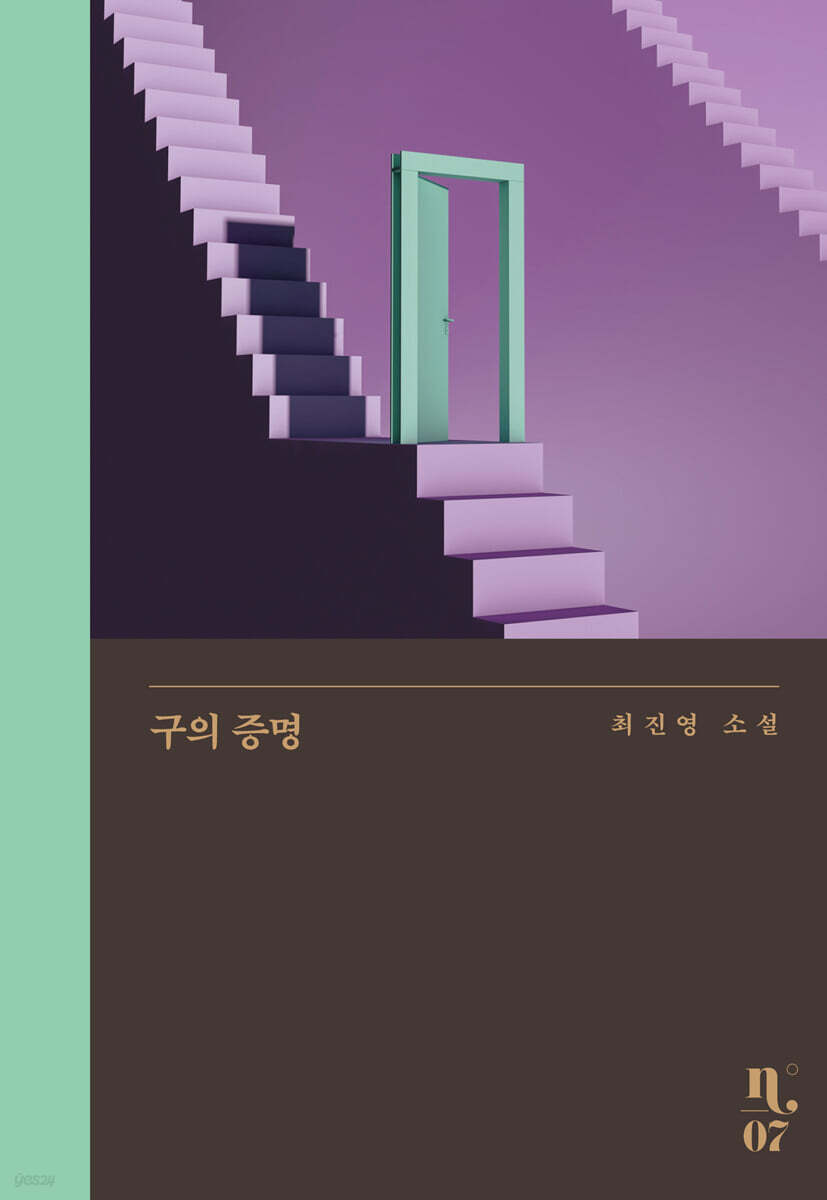
Proof of the sphere
 |
Description
Book Introduction
If you die first I will eat you. That way, I can live without you. A sublimely beautiful story about what's left behind after love. Jinyoung Choi's novel, "Proof of the Sphere," is a novel that questions the meaning of life and death through the process of loss and mourning experienced after the sudden death of a loved one. In this work, Choi Jin-young brings to the forefront the unfading value of love, and through beautiful sentences and emotional and sorrowful sensibilities, he portrays the passionate love and cold death of a young and beautiful man and woman with refined sensibility and excellent writing style. |
- You can preview some of the book's contents.
Preview
index
Proof of the sphere
Author's Note
Author's Note
Detailed image

Publisher's Review
Love that makes imagination possible
The imagination that makes such love possible
A woman and a man appear.
A relationship where the person must be the pronoun 'this' and not the adjective 'one'.
There are people like that.
You could call it fate, or you could casually call it lovers, but the two main characters in the novel, 'Gu (man)' and 'Dam (woman),' seem to deviate slightly from the scope of those words.
They are like a palindrome, bound to be together forever, circling around the circumference of a circle.
Although they experience coincidences and missteps created by others, two points on the curve of life have the same trajectory, so their fates are bound to be the same, and so they somehow meet.
Some might call such a relationship atrocious, while others might call it perfect love.
But unfortunately, tragedy strikes them suddenly at such times.
The death of a loved one, the undeniable end of life.
The novel begins on the basis of such a tragedy.
Discovering the body of a loved one, reaffirming the love that had been extinguished.
The low voice of Dam, who sits next to the dead body on the street and speaks, is filled with the empty loneliness that only the sorrowful can have.
Also, the gaze that has lost focus seems to be looking at an unrealistic landscape rather than reality.
In the meantime, she eats.
It begins to eat parts of the dead person's body little by little.
Is it a break from the norm?
Rather than focusing on the result of eating, focus on the cause of why you have to eat.
For her now, the present is death.
So, we have no choice but to focus even more on the past.
They say that the dead still have hearing for a while after their hearts stop.
She whispers to the dead man.
What is a human being? Am I a criminal, a psychopath, a devil, a savage, a cannibal? Who am I?
He whispers in the ear of the dead that he cannot completely fit himself into any category.
Just eat you, you.
The novel speaks of the present, but time has already stopped due to the death of her lover, and all that the narrator, a soliloquy, tells is the past time spent with the person she loved, all that is in her mind now.
The novel slowly returns to his and her past.
Stay in the past while eating.
To eat him would be to eat his time and swallow their past whole.
Proposal.
A courtesy that those who remain can show to the dead.
She offers him by eating him.
Tragedy is not something that can be prevented.
Tragedy is something that touches upon the essence of something.
So she has no choice but to believe this offer she is making and thinking about now.
Therefore, he completely chews him up inside his body.
Only then can he live inside her without dying.
I can only call it love.
This bitterness must also be love.
Such love is placed in the middle of someone's life.
The centrifugal force of life cannot bounce them off.
They are right in the center.
You could say it was a tragic fate.
You might call them nonsense people.
But these two people are no different from us.
Maybe it's Gu and Dam who are right next to us, loving normally and living normally.
This novel is not a story about a special love.
It is none other than the love we have seen and experienced so many times.
Imagine the expression on our faces after our loved one's life is cut short in reality.
How prepared are we?
About loss.
About being left behind.
* Ginkgo 'Novella' starts anew as Ginkgo 'Series N°'.
The Ginkgo Novella series, which launched in 2014 and published a total of 13 volumes until 2016, has been put on hold for a while and is now being republished with a new name and works by young authors representing this era.
The 'Ginkgo Tree Novella' series of medium-length novels, each 300 to 400 pages long, by Bae Myung-hoon, Choi Jin-young, Jeong Se-rang, Ahn Bo-yoon, Hwang Hyeon-jin, Yoon I-hyeong, and Moon Ji-hyeok, breathed new life into Korean literature.
Driven by that meaning, we now pass the baton to 'Series N°', a collection of full-length novels by young writers who are currently active in the Korean literature field.
We plan to simultaneously publish three new works (by Park Mun-young, Jang Jin-young, and Hwang Mo-gwa) and a section recovery (by Choi Jin-young, Yoon I-hyung, and Hwang Hyeon-jin, and sequentially recovering them from here on out) and present works filled with the individuality and imagination of each of the authors, including Seo I-je, Jang Hee-won, Han Jeong-hyeon, Jeong Yong-jun, and Jeong Ji-don.
I ask all readers to join me in completing a new map of Korean literature using the precarious and infinite coordinates discovered in literature.
The imagination that makes such love possible
A woman and a man appear.
A relationship where the person must be the pronoun 'this' and not the adjective 'one'.
There are people like that.
You could call it fate, or you could casually call it lovers, but the two main characters in the novel, 'Gu (man)' and 'Dam (woman),' seem to deviate slightly from the scope of those words.
They are like a palindrome, bound to be together forever, circling around the circumference of a circle.
Although they experience coincidences and missteps created by others, two points on the curve of life have the same trajectory, so their fates are bound to be the same, and so they somehow meet.
Some might call such a relationship atrocious, while others might call it perfect love.
But unfortunately, tragedy strikes them suddenly at such times.
The death of a loved one, the undeniable end of life.
The novel begins on the basis of such a tragedy.
Discovering the body of a loved one, reaffirming the love that had been extinguished.
The low voice of Dam, who sits next to the dead body on the street and speaks, is filled with the empty loneliness that only the sorrowful can have.
Also, the gaze that has lost focus seems to be looking at an unrealistic landscape rather than reality.
In the meantime, she eats.
It begins to eat parts of the dead person's body little by little.
Is it a break from the norm?
Rather than focusing on the result of eating, focus on the cause of why you have to eat.
For her now, the present is death.
So, we have no choice but to focus even more on the past.
They say that the dead still have hearing for a while after their hearts stop.
She whispers to the dead man.
What is a human being? Am I a criminal, a psychopath, a devil, a savage, a cannibal? Who am I?
He whispers in the ear of the dead that he cannot completely fit himself into any category.
Just eat you, you.
The novel speaks of the present, but time has already stopped due to the death of her lover, and all that the narrator, a soliloquy, tells is the past time spent with the person she loved, all that is in her mind now.
The novel slowly returns to his and her past.
Stay in the past while eating.
To eat him would be to eat his time and swallow their past whole.
Proposal.
A courtesy that those who remain can show to the dead.
She offers him by eating him.
Tragedy is not something that can be prevented.
Tragedy is something that touches upon the essence of something.
So she has no choice but to believe this offer she is making and thinking about now.
Therefore, he completely chews him up inside his body.
Only then can he live inside her without dying.
I can only call it love.
This bitterness must also be love.
Such love is placed in the middle of someone's life.
The centrifugal force of life cannot bounce them off.
They are right in the center.
You could say it was a tragic fate.
You might call them nonsense people.
But these two people are no different from us.
Maybe it's Gu and Dam who are right next to us, loving normally and living normally.
This novel is not a story about a special love.
It is none other than the love we have seen and experienced so many times.
Imagine the expression on our faces after our loved one's life is cut short in reality.
How prepared are we?
About loss.
About being left behind.
* Ginkgo 'Novella' starts anew as Ginkgo 'Series N°'.
The Ginkgo Novella series, which launched in 2014 and published a total of 13 volumes until 2016, has been put on hold for a while and is now being republished with a new name and works by young authors representing this era.
The 'Ginkgo Tree Novella' series of medium-length novels, each 300 to 400 pages long, by Bae Myung-hoon, Choi Jin-young, Jeong Se-rang, Ahn Bo-yoon, Hwang Hyeon-jin, Yoon I-hyeong, and Moon Ji-hyeok, breathed new life into Korean literature.
Driven by that meaning, we now pass the baton to 'Series N°', a collection of full-length novels by young writers who are currently active in the Korean literature field.
We plan to simultaneously publish three new works (by Park Mun-young, Jang Jin-young, and Hwang Mo-gwa) and a section recovery (by Choi Jin-young, Yoon I-hyung, and Hwang Hyeon-jin, and sequentially recovering them from here on out) and present works filled with the individuality and imagination of each of the authors, including Seo I-je, Jang Hee-won, Han Jeong-hyeon, Jeong Yong-jun, and Jeong Ji-don.
I ask all readers to join me in completing a new map of Korean literature using the precarious and infinite coordinates discovered in literature.
GOODS SPECIFICS
- Date of issue: April 26, 2023
- Format: Hardcover book binding method guide
- Page count, weight, size: 192 pages | 324g | 128*188*20mm
- ISBN13: 9791167372864
- ISBN10: 1167372867
You may also like
카테고리
korean


korean

![GQ KOREA Mark (Monthly): December [2025]](http://librairie.coreenne.fr/cdn/shop/files/8ef265dbbfbf186523ed75ba7319009d.jpg?v=1765340328&width=3840)


