

Animal Farm
 |
Description
Book Introduction
|
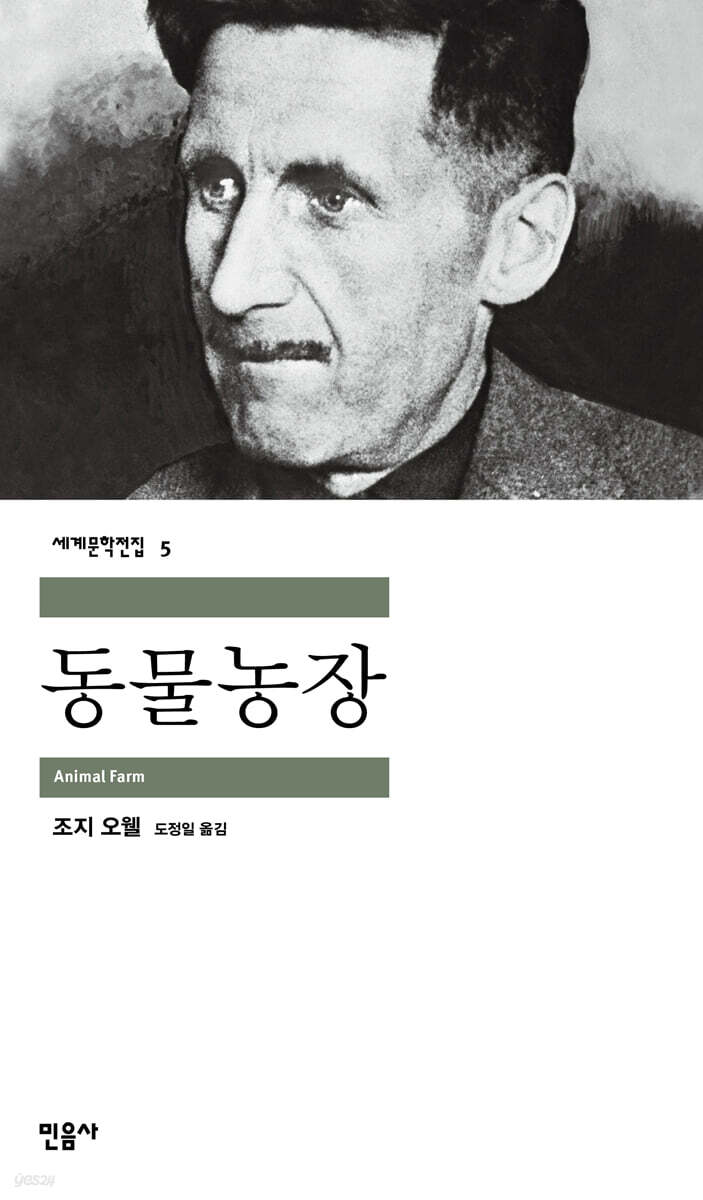
Animal Farm A monumental novel containing social criticism through satirical allegory “All animals are equal. But some animals are more equal than others.” Animal Farm, which sharply portrays the political realities of the time in the form of a fable, is one of the great fruits of British literature, along with Nineteen Eighty-Four and Homage to Catalonia, left behind by George Orwell during his short life as a writer before his sudden death at the age of 47. This work was first published in England in 1945, just after the end of World War II. In a world political climate sensitive to the Soviet Union and socialism, this work was initially so neglected that almost all publishers refused to publish it, but it was finally published thanks to the decision of Secker & Warburg, the publisher of his previous work, Homage to Catalonia. In a time when it was practically wartime, Animal Farm sold out its first 4,500 copies as soon as it was published and went through numerous reprints, becoming a bestseller in both the UK and the US. Even now, more than 70 years later, it is known that Animal Farm has sold over 10 million copies worldwide. In Animal Farm, George Orwell strongly criticizes the Stalinist dictatorship by recreating the history of the former Soviet Union through the transformation of the animal community that escaped human bondage, achieved a revolution, and built an ideal society. Among the many characters in the work, the human master Jones symbolizes Russian Emperor Nicholas II, the old Major who calls for revolution symbolizes Marx, the dictator Napoleon symbolizes Stalin, and Snowball who is ousted by Napoleon symbolizes Trotsky. Additionally, the 'animal massacre' and 'battle of the stables' that appear in the story are connected to the Great Purge of the Stalin era and the Allied invasion, respectively. This fable, which closely depicts how revolutions become corrupted after they succeed and how the leaders who seize power deceive and persecute the people, is not limited to a specific era. This work depicts the 'dictatorship' that has existed since the beginning of human society through implicit characters and events, containing satire that is still valid today, and thus, it is a work that clearly demonstrates the socially critical literary power of George Orwell. |
- You can preview some of the book's contents.
Preview
index
Animal Farm 7
Freedom and Happiness 125
Why I Write 133
Commentary on the work 145
Author's Chronology 159
Freedom and Happiness 125
Why I Write 133
Commentary on the work 145
Author's Chronology 159
Into the book
So, comrades, what is life like for animals? Let's look at it closely.
Our lives are miserable, hard, and short.
We are born and given just enough food to sustain our bodies, and those who can breathe must work until the last bit of strength remains.
Then, when we are deemed useless, we are slaughtered in a most brutal manner that day.
All the animals in Britain do not know the meaning of happiness or leisure after they are one year old.
No animal in Britain is free.
Misery and slavery, that is the life of our animals.
--- p.10
Why do we continue to live in these miserable conditions? The reason is simple.
Because humans steal everything we produce through our labor.
Comrades, the answer to our problem is right there.
In a word, the core of the problem is ‘humans’.
Humans are our true and only enemy.
If we could just drive out the humans, the root cause of our hunger and hard labor would be eliminated forever.
--- p.11
It was these three pigs who developed Major's teachings into a complete system of thought.
They gave that ideological system the name 'animalism'.
Several days a week they held secret nightly meetings in the barn, where they explained the principles of Animalism to the other animals.
At first, there were some stupid comments and indifferent reactions among the animals.
--- p.19
“Comrades,” he began in a low voice.
"Do you know who did this? Do you know who snuck in during the night and destroyed our windmill? It was Snowball, Snowball!" His voice suddenly rose like thunder.
“This is Snowball’s doing.
That wretch, out of spite, seeking to ruin our work and to avenge his shameful banishment, snuck here under the cover of night and destroyed the windmill we had painstakingly built for nearly a year.
Comrades, I hereby sentence Snowball to death.
“Whoever kills him will receive the Animal Hero Medal, Second Class, and half a bushel of apples. Whoever captures him alive will receive a bushel of apples.”
--- p.65
A few days later, when Muriel the goat was reading the Seven Commandments, she discovered that the animals had gotten one of the commandments wrong again.
They remembered that the fifth commandment was, 'No animal shall drink alcohol.'
But now I see that the animals had forgotten two words.
The fifth commandment written on the wall read:
'No animal should drink 'too much' alcohol.'
--- pp.95-96
They didn't give up any of their old dreams.
They still believed in the dream of that animal republic that old Major had prophesied, that republic that would be established after all the green fields of England had been driven free of human footsteps.
Will that Republic Day ever come? Even if it isn't immediately, and perhaps not within the lifetime of the animals now alive, that day is coming.
--- p.115
Twelve angry voices were shouting at each other, and they were all identical.
Yes, that's right, now I can see what happened to the pigs' faces.
The animals outside the window shifted their gazes from the dwarf to the human, from the human to the pig, and then from the pig to the human again.
But it was already impossible to tell who was pig and who was human, which was which.
Our lives are miserable, hard, and short.
We are born and given just enough food to sustain our bodies, and those who can breathe must work until the last bit of strength remains.
Then, when we are deemed useless, we are slaughtered in a most brutal manner that day.
All the animals in Britain do not know the meaning of happiness or leisure after they are one year old.
No animal in Britain is free.
Misery and slavery, that is the life of our animals.
--- p.10
Why do we continue to live in these miserable conditions? The reason is simple.
Because humans steal everything we produce through our labor.
Comrades, the answer to our problem is right there.
In a word, the core of the problem is ‘humans’.
Humans are our true and only enemy.
If we could just drive out the humans, the root cause of our hunger and hard labor would be eliminated forever.
--- p.11
It was these three pigs who developed Major's teachings into a complete system of thought.
They gave that ideological system the name 'animalism'.
Several days a week they held secret nightly meetings in the barn, where they explained the principles of Animalism to the other animals.
At first, there were some stupid comments and indifferent reactions among the animals.
--- p.19
“Comrades,” he began in a low voice.
"Do you know who did this? Do you know who snuck in during the night and destroyed our windmill? It was Snowball, Snowball!" His voice suddenly rose like thunder.
“This is Snowball’s doing.
That wretch, out of spite, seeking to ruin our work and to avenge his shameful banishment, snuck here under the cover of night and destroyed the windmill we had painstakingly built for nearly a year.
Comrades, I hereby sentence Snowball to death.
“Whoever kills him will receive the Animal Hero Medal, Second Class, and half a bushel of apples. Whoever captures him alive will receive a bushel of apples.”
--- p.65
A few days later, when Muriel the goat was reading the Seven Commandments, she discovered that the animals had gotten one of the commandments wrong again.
They remembered that the fifth commandment was, 'No animal shall drink alcohol.'
But now I see that the animals had forgotten two words.
The fifth commandment written on the wall read:
'No animal should drink 'too much' alcohol.'
--- pp.95-96
They didn't give up any of their old dreams.
They still believed in the dream of that animal republic that old Major had prophesied, that republic that would be established after all the green fields of England had been driven free of human footsteps.
Will that Republic Day ever come? Even if it isn't immediately, and perhaps not within the lifetime of the animals now alive, that day is coming.
--- p.115
Twelve angry voices were shouting at each other, and they were all identical.
Yes, that's right, now I can see what happened to the pigs' faces.
The animals outside the window shifted their gazes from the dwarf to the human, from the human to the pig, and then from the pig to the human again.
But it was already impossible to tell who was pig and who was human, which was which.
--- p.123
Publisher's Review
The birth of an ideal society and the process of its decay
At Manor Farm, run by Mr. Jones, a white man, various animals such as pigs, sheep, dogs, horses, cows, and chickens work like slaves and live each day.
One night, an old boar named Major gathers the animals together and begins to give a speech.
When he calls for a revolution, pointing out each and every one of the vulgarities of humanity, all the animals become enraged, and with the pigs at the forefront, they start a revolution and drive out all the humans from the farm.
After that, the animals build an ideal society of equality called "Animal Farm" under the slogan "Four legs good, two legs bad" and establish the Seventh Commandment, but the pigs begin to enjoy more and more privileges in the community because they can read and write.
Then, after the young boar Napoleon frames and ousts his rival Snowball and seizes power, the society falls into a dictatorship once again.
The pigs repeat human vices and change the Seventh Commandment to their advantage, and the animals, with their poor memories and ignorance, are deceived by their leader and begin to suffer even more severe exploitation than before.
As time passes, the animals that participated in the revolution die one by one and disappear, and the animals of Animal Farm live each day again under the tyranny of the pigs.
An allegory that transcends contemporary political satire and captivates modern readers.
From the perspective of historical political satire, Animal Farm deals with the political situation in the Soviet Union from the Bolshevik Revolution of 1917 to the Stalin era.
The Bolshevik Revolution, which overthrew the Tsarist regime of Nicholas II and seized power, is the so-called first socialist revolution in history.
The Bolsheviks set out with the goal of building a new society that was fundamentally different from the institutions of Western European countries in all levels of social organization and operation, including the realization of equality through the elimination of the exploiting class, rule by the proletariat, public ownership of the means of production, abolition of the inheritance system, and a centrally planned economy. Whether or not this was successfully realized was a matter of keen interest to Europeans in the first half of the 20th century.
These Europeans were the primary readers of Animal Farm, and when the book came out, it was not difficult to determine who the characters and events really were.
However, this work does not fail to provide a fresh shock to modern readers, especially those who have encountered the political realities of the Stalin era not through experience but only through historical records and testimonies.
This work is fundamentally a fable, and because the fable genre can utilize the rhetorical device of allegory more effectively than any other narrative genre, it does not lose its meaning in another time and space.
There can be corrupt dictators in any era, and there can be power pigs in any era.
The reason why Animal Farm retains its relevance and appeal even in the present age, after the collapse of the Soviet system, and even in the future, is because it contains an enduring allegory about the fundamental dangers and contradictions that corrupt the power reality of human political society.
A work that fully embodies George Orwell's literary goals and beliefs.
What Orwell wanted to say in Animal Farm was that a revolution that aims only at power itself would only end up changing the owners and would not bring about fundamental social change, and that a revolution would only be successful when the masses are alive and awake and can monitor, criticize, and reprimand their leaders.
What becomes clear here is that the problem he tackles throughout his work and essays is not socialist revolution per se.
His interest was in the 'betrayal of the revolution', that is, failed and corrupt revolutions.
In 『Homage to Catalonia』, he fully captured his experiences during the Spanish Civil War, and in 『Animal Farm』 and 『1984』, he delved deeper into the corruption of socialism.
Do all human revolutions necessarily betray their initial promises? Do the fruits of all revolutions end up in the hands of the ruling elite who seize power? Is the corruption of power an inevitable condition of human society? Orwell's approach, which began with these questions, goes beyond mere pessimism and also contains insights into what is needed to prevent the corruption of power.
Throughout his career as a writer, George Orwell expressed his critical perspective on society not only through novels but also through essays and essays, opening up a new dimension to the tradition of British satirical literature by grafting his perspective onto the fable format, which allows for an easy and clear style and excellent black humor, in "Animal Farm," unlike in his other works.
At Manor Farm, run by Mr. Jones, a white man, various animals such as pigs, sheep, dogs, horses, cows, and chickens work like slaves and live each day.
One night, an old boar named Major gathers the animals together and begins to give a speech.
When he calls for a revolution, pointing out each and every one of the vulgarities of humanity, all the animals become enraged, and with the pigs at the forefront, they start a revolution and drive out all the humans from the farm.
After that, the animals build an ideal society of equality called "Animal Farm" under the slogan "Four legs good, two legs bad" and establish the Seventh Commandment, but the pigs begin to enjoy more and more privileges in the community because they can read and write.
Then, after the young boar Napoleon frames and ousts his rival Snowball and seizes power, the society falls into a dictatorship once again.
The pigs repeat human vices and change the Seventh Commandment to their advantage, and the animals, with their poor memories and ignorance, are deceived by their leader and begin to suffer even more severe exploitation than before.
As time passes, the animals that participated in the revolution die one by one and disappear, and the animals of Animal Farm live each day again under the tyranny of the pigs.
An allegory that transcends contemporary political satire and captivates modern readers.
From the perspective of historical political satire, Animal Farm deals with the political situation in the Soviet Union from the Bolshevik Revolution of 1917 to the Stalin era.
The Bolshevik Revolution, which overthrew the Tsarist regime of Nicholas II and seized power, is the so-called first socialist revolution in history.
The Bolsheviks set out with the goal of building a new society that was fundamentally different from the institutions of Western European countries in all levels of social organization and operation, including the realization of equality through the elimination of the exploiting class, rule by the proletariat, public ownership of the means of production, abolition of the inheritance system, and a centrally planned economy. Whether or not this was successfully realized was a matter of keen interest to Europeans in the first half of the 20th century.
These Europeans were the primary readers of Animal Farm, and when the book came out, it was not difficult to determine who the characters and events really were.
However, this work does not fail to provide a fresh shock to modern readers, especially those who have encountered the political realities of the Stalin era not through experience but only through historical records and testimonies.
This work is fundamentally a fable, and because the fable genre can utilize the rhetorical device of allegory more effectively than any other narrative genre, it does not lose its meaning in another time and space.
There can be corrupt dictators in any era, and there can be power pigs in any era.
The reason why Animal Farm retains its relevance and appeal even in the present age, after the collapse of the Soviet system, and even in the future, is because it contains an enduring allegory about the fundamental dangers and contradictions that corrupt the power reality of human political society.
A work that fully embodies George Orwell's literary goals and beliefs.
What Orwell wanted to say in Animal Farm was that a revolution that aims only at power itself would only end up changing the owners and would not bring about fundamental social change, and that a revolution would only be successful when the masses are alive and awake and can monitor, criticize, and reprimand their leaders.
What becomes clear here is that the problem he tackles throughout his work and essays is not socialist revolution per se.
His interest was in the 'betrayal of the revolution', that is, failed and corrupt revolutions.
In 『Homage to Catalonia』, he fully captured his experiences during the Spanish Civil War, and in 『Animal Farm』 and 『1984』, he delved deeper into the corruption of socialism.
Do all human revolutions necessarily betray their initial promises? Do the fruits of all revolutions end up in the hands of the ruling elite who seize power? Is the corruption of power an inevitable condition of human society? Orwell's approach, which began with these questions, goes beyond mere pessimism and also contains insights into what is needed to prevent the corruption of power.
Throughout his career as a writer, George Orwell expressed his critical perspective on society not only through novels but also through essays and essays, opening up a new dimension to the tradition of British satirical literature by grafting his perspective onto the fable format, which allows for an easy and clear style and excellent black humor, in "Animal Farm," unlike in his other works.
GOODS SPECIFICS
- Date of issue: February 28, 2001
- Page count, weight, size: 184 pages | 290g | 132*225*20mm
- ISBN13: 9788937460050
- ISBN10: 893746005X
You may also like
카테고리
korean


korean

![GQ KOREA Mark (Monthly): December [2025]](http://librairie.coreenne.fr/cdn/shop/files/8ef265dbbfbf186523ed75ba7319009d.jpg?v=1765340328&width=3840)


