

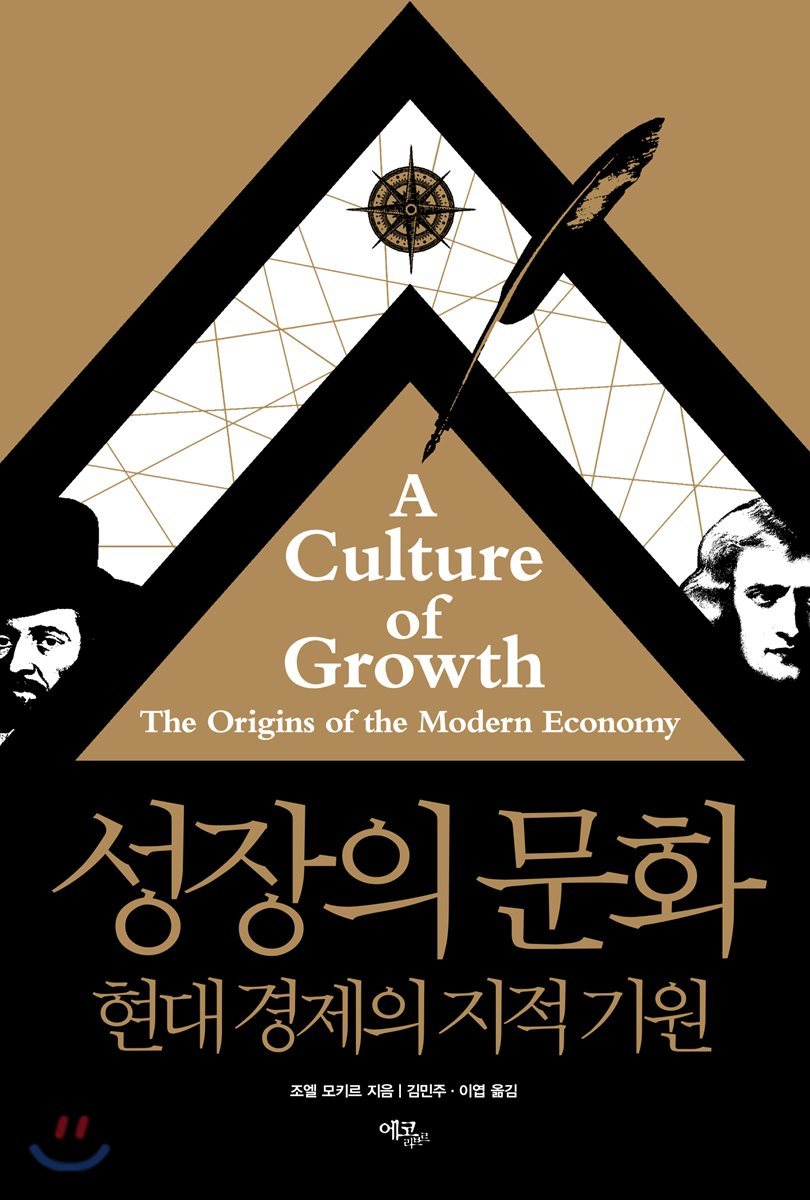
Culture of Growth
 |
Description
index
Acknowledgements
preface
Part 1: Evolution, Culture, and Economic History
01 Culture and Economy
02 Nature and Technology
03 Cultural Evolution and Economy
04 Cultural Evolution by Selection
05 Cultural Evolution and Bias
Part 2: Cultural Entrepreneurs and Economic Change in the 16th and 17th Centuries
06 Cultural Entrepreneurs and Cultural Evolution by Choice
07 Cultural Entrepreneur: Francis Bacon
08 Cultural Entrepreneur: Isaac Newton
Part 3: Innovation, Competition, and Pluralism in 16th-17th Century Europe
09 Cultural Choices: Human Capital and Religion
10 Cultural Changes and the Diffusion of Useful Knowledge in the 16th and 17th Centuries
11 Division, Competition, and Cultural Change
12 Competition and Letter Republic
Part 4: The Prelude to the Enlightenment
13 Puritanism and English Exceptionalism
14 Culture of Progress
15 Enlightenment and Economic Development
Part 5: Cultural Changes in the East and West
16 China and Europe
17 China and the Enlightenment
Conclusion: Useful Knowledge and Economic Growth
main
References
Search
preface
Part 1: Evolution, Culture, and Economic History
01 Culture and Economy
02 Nature and Technology
03 Cultural Evolution and Economy
04 Cultural Evolution by Selection
05 Cultural Evolution and Bias
Part 2: Cultural Entrepreneurs and Economic Change in the 16th and 17th Centuries
06 Cultural Entrepreneurs and Cultural Evolution by Choice
07 Cultural Entrepreneur: Francis Bacon
08 Cultural Entrepreneur: Isaac Newton
Part 3: Innovation, Competition, and Pluralism in 16th-17th Century Europe
09 Cultural Choices: Human Capital and Religion
10 Cultural Changes and the Diffusion of Useful Knowledge in the 16th and 17th Centuries
11 Division, Competition, and Cultural Change
12 Competition and Letter Republic
Part 4: The Prelude to the Enlightenment
13 Puritanism and English Exceptionalism
14 Culture of Progress
15 Enlightenment and Economic Development
Part 5: Cultural Changes in the East and West
16 China and Europe
17 China and the Enlightenment
Conclusion: Useful Knowledge and Economic Growth
main
References
Search
Into the book
In the mid-18th century, China was by no means a backward country.
Commerce was active, the monetary economy was developed, and the level of education was high.
China's bureaucracy was well-educated and professional, and after 1680 it managed to avoid the Malthusian trap and achieve significant population growth.
Given that good institutions lead to Smithian economic growth, the case of China, where excellent institutions coexisted with a stagnant economy, is certainly puzzling.
The Chinese system was certainly different from the European system, but by no means inferior.
China's central government was run by officials selected through a merit-based civil service examination, and it strictly enforced land property rights and systematically maintained law and order.
But some European thinkers, who had little contact with China beyond the writings of travelers and missionaries, began to sense that there were differences until the Industrial Revolution.
For example, David Hume, in his The Rise of Arts and Sciences, contrasted Europe's diversity and pluralism with China's homogeneity and unity, noting the differences between the two regions.
According to him, political divisions were the main reason why useful knowledge could spread in Europe.
Of course, he acknowledged China's science, technology, and sophisticated culture, which had achieved outstanding results in the past.
However, he pointed out that China's scientific development has slowed down significantly compared to Europe.
The reason was obvious.
In China, the authority of the great teacher spread easily throughout the empire, and “no one dared to resist the prevailing trend, nor were later generations brave enough to refute what their ancestors had universally handed down” [Hume, (1742) 1985, p.
122〕Because.
This idea has found sympathy among many scholars.
Wen-yuan Qian, 1985, pp.
25, 114] regarded a unified China as politically and intellectually “parochial,” while European pluralism ultimately laid the foundations for a political structure and ideology more favorable to the “emergence of modern science.”
Political divisions gave rise to “mutually restraining” political groups in Europe, giving considerable freedom to thinkers who did not conform to conventional wisdom.
The difference David Hume identified was crucial.
In short, intellectual activity in China was more centrally controlled and diffused by the government than in Europe, and consequently the market for ideas in China operated differently than in Europe.
Just how far behind was China? A groundbreaking study by Carol Shiue and Wolfgang Keller (2007) found that in terms of allocative efficiency, China was not far behind Europe even as late as 1750.
They argued that although they lagged behind the UK in terms of market integration (as measured by price co-ordination), they were on par with other European countries, thus questioning the claim that simply improving allocative efficiency (Smithian growth) would accelerate technological progress.
Instead, their research suggests that industrialization (including improvements in transportation networks) and institutional changes (including the elimination or relaxation of internal trade barriers or moves toward freer international trade) led to a higher level of integration of European markets in the first half of the nineteenth century.
In other words, many sources suggest that trade did not spur technological progress, but that technological progress and institutional change led to more efficient markets.
Moreover, in the Qing Dynasty, the 'buds of capitalism' sprouted, especially in the mining industry, which introduced advanced financing and management techniques.
In 18th-century China, large textile workshops and paper mills employing wage workers began to threaten cottage industries, a phenomenon similar to that occurring in Europe (Rowe, 2009, pp.
125-126).
Many scholars have shown that although China had different institutions for contract enforcement and dispute resolution than Europe, it was still sufficient to create a well-functioning market economy.
Moreover, the Chinese government has played a greater role in enforcing property rights than has been previously acknowledged.
Local Chinese officials resolved property disputes, such as land ownership and contracts, even in the absence of formal civil codes (Rowe, 2009, p.
58).
Although craftsmen's guilds existed in Song Dynasty China, there is no evidence that existing merchants formed cartels to seek rents by excluding others who were not members of the association, as guilds did in Europe until the 19th century (Pomeranz, 2013, pp.
106-108).
When we take the traditional meaning of 'good' institutions as the foundation for well-functioning markets and supporting their smooth operation, there is not much difference between the institutions of China and the most developed European countries.
Perhaps the most striking difference was that China had no intellectual property rights of any kind, including copyright (Alford, 1995).
But the absence of intellectual property rights is a consequence and symptom of deeper cultural differences, and is itself a secondary factor in explaining the growing gap in the development of useful knowledge between Europe and China. --- p.398-401
It has also been argued that China during the Qing Dynasty overproduced human capital.
Traditionally, Chinese education was designed to prepare students for public service, but by 1800, the pool of talented individuals was so narrow that only 1.4 million educated people were competing for 20,000 public positions.
Even the best scholars belonging to the Hanrimwon (Hanrimwon) were sometimes unable to avoid unemployment.
William Rowe argued that the Chinese imperial court's decline in demand for officials and the corrupt way in which they were distributed were mistakes (Rowe, 2009, p.
152), the more fundamental problem was that education was designed solely for the purpose of producing public officials.
Unlike Europe, China had no educational institutions to impart useful knowledge and prepare young people for commerce or industry.
Although slow, education in 18th-century Europe was moving in this direction.
On the other hand, other cultural spheres, including China, lagged far behind.
What cultural differences explain why Europe experienced such a successful Enlightenment and achieved economic modernization around the Industrial Revolution, which widened the gap with Asia by approximately two centuries? Greif and Tabellini (2014) argue that while the most basic social unit organizing cooperation among Chinese people was the extended family or clan, Europe had voluntary groups called "corporations" rather than blood-related ties.
The authors also associated these groups with a general morality that imposed greater binding power and a conventional 'parochial morality' that was mostly valid only among smaller kin.
As argued in Chapter 2, general morality is more conducive to individual and distributed efforts to generate intellectual innovation.
Indeed, the concept of general morality can be used to understand how the European republics of letters operated.
Members of the Republic of Letters had to work within a loosely connected network of strangers.
However, it can be observed that the general rules of ethics were applied, such as not manipulating the results, clearly stating the sources, and responding to various letters.
However, the differences between China and the West should not be exaggerated.
In China, too, there existed a marketplace of ideas where strangers exchanged letters and ideas and information.
Historical evidence shows that most of the useful knowledge in China during the Tang and Song dynasties was disseminated by public officials (Mokyr, 1990, pp.
209-238).
This is not to say that useful knowledge created by public officials is by no means worthless, but the useful knowledge created and disseminated in this way has difficulty in continuing to develop due to political ups and downs.
Indeed, the rise of a conservative government in China suggests that scientific and technological progress has slowed dramatically compared to a society led by the private sector.
The Greif-Tabellini theory argues that the divergence between Europe and China stemmed from deep cultural and institutional differences, not from metaphysical differences between Confucianism or Judaism-Christianity, but from fundamental social structures.
According to their theory, “endogenous social institutions and cultural characteristics were mutually reinforcing” (Greif and Tabellini, 2014, p.
21).
It is noteworthy that the momentum of technological progress began to slow after the clans' important role as the organization responsible for the Chinese economy reached its peak during the Song Dynasty.
More importantly, it was a cultural evolution driven by the choices of an intellectual elite.
This cultural evolution by choice is shaped by institutional structures, and thus contributes to the creation of these institutions.
The question we should be addressing here is not “Why did China fail?” (China did not fail) or “Why didn’t China make more technological progress?” (China did make a lot of technological progress).
Rather, the question we should be asking is why, during the period known as the early modern period (1500–1700), Europe and China were so different that they developed such a large technological and economic gap that has persisted to the present day.
Again, it is not so much that China did something wrong, but rather that a peculiar series of intellectual shifts that led to the Enlightenment occurred only in Europe.
And the unique power of the European Enlightenment influenced not only Europe but every corner of the globe.
Despite the strong arguments of revisionist scholars such as James Blaut (1993) and Jack Goody (2010), emphasizing this gap between Europe and China cannot be dismissed as mere Eurocentrism.
There are two extreme positions regarding this historical fact.
One is the deep-rooted European exceptionalism and superiority that has existed since ancient times, viewing non-European societies as 'primitive' and 'backward'.
Historians of the revisionist California School have criticized this interpretation and have presented radically opposing views.
According to them, there is no real difference between East and West, and the Great Divide is merely a counterweight (of intersecting histories) that temporarily gives one side an upper hand over the other.
Between these two extremes there is room for a third interpretation.
A third interpretation holds that at some point in early modern Europe, the cultural landscape began to shift dramatically, with various cultural entrepreneurs and their followers influencing the mindsets and beliefs of elite groups, creating an environment in which institutions could adequately accommodate these changes.
These changes were particularly favorable to innovation and technological advancement, laying the foundation for a fateful shift in the way useful knowledge is utilized in society.
As a result, these changes broke down the barriers that had prevented living standards in Europe from rising before 1800.
And this led to two centuries of European global dominance.
As non-European societies began to be exposed to Western culture, they had to undergo tectonic shifts that were previously unimaginable.
Of course, Western influence was resisted and changed, modified and mixed to suit local characteristics.
This produced different results depending on the region.
Exchange between the West and the East flowed in both directions.
The West has long adopted many Eastern technologies and inventions, from gunpowder and porcelain to umbrellas and smallpox inoculation.
Even in modern times, the West still feels no distance from Eastern culture and techniques such as acupuncture and cooking.
But the West has generally been uninterested in China's useful intellectual foundations of philosophy and institutions.
The Western brand of active Baconian philosophy, which explores and studies nature to discover usable natural laws and transform the physical world to improve material wealth, still holds the upper hand.
Commerce was active, the monetary economy was developed, and the level of education was high.
China's bureaucracy was well-educated and professional, and after 1680 it managed to avoid the Malthusian trap and achieve significant population growth.
Given that good institutions lead to Smithian economic growth, the case of China, where excellent institutions coexisted with a stagnant economy, is certainly puzzling.
The Chinese system was certainly different from the European system, but by no means inferior.
China's central government was run by officials selected through a merit-based civil service examination, and it strictly enforced land property rights and systematically maintained law and order.
But some European thinkers, who had little contact with China beyond the writings of travelers and missionaries, began to sense that there were differences until the Industrial Revolution.
For example, David Hume, in his The Rise of Arts and Sciences, contrasted Europe's diversity and pluralism with China's homogeneity and unity, noting the differences between the two regions.
According to him, political divisions were the main reason why useful knowledge could spread in Europe.
Of course, he acknowledged China's science, technology, and sophisticated culture, which had achieved outstanding results in the past.
However, he pointed out that China's scientific development has slowed down significantly compared to Europe.
The reason was obvious.
In China, the authority of the great teacher spread easily throughout the empire, and “no one dared to resist the prevailing trend, nor were later generations brave enough to refute what their ancestors had universally handed down” [Hume, (1742) 1985, p.
122〕Because.
This idea has found sympathy among many scholars.
Wen-yuan Qian, 1985, pp.
25, 114] regarded a unified China as politically and intellectually “parochial,” while European pluralism ultimately laid the foundations for a political structure and ideology more favorable to the “emergence of modern science.”
Political divisions gave rise to “mutually restraining” political groups in Europe, giving considerable freedom to thinkers who did not conform to conventional wisdom.
The difference David Hume identified was crucial.
In short, intellectual activity in China was more centrally controlled and diffused by the government than in Europe, and consequently the market for ideas in China operated differently than in Europe.
Just how far behind was China? A groundbreaking study by Carol Shiue and Wolfgang Keller (2007) found that in terms of allocative efficiency, China was not far behind Europe even as late as 1750.
They argued that although they lagged behind the UK in terms of market integration (as measured by price co-ordination), they were on par with other European countries, thus questioning the claim that simply improving allocative efficiency (Smithian growth) would accelerate technological progress.
Instead, their research suggests that industrialization (including improvements in transportation networks) and institutional changes (including the elimination or relaxation of internal trade barriers or moves toward freer international trade) led to a higher level of integration of European markets in the first half of the nineteenth century.
In other words, many sources suggest that trade did not spur technological progress, but that technological progress and institutional change led to more efficient markets.
Moreover, in the Qing Dynasty, the 'buds of capitalism' sprouted, especially in the mining industry, which introduced advanced financing and management techniques.
In 18th-century China, large textile workshops and paper mills employing wage workers began to threaten cottage industries, a phenomenon similar to that occurring in Europe (Rowe, 2009, pp.
125-126).
Many scholars have shown that although China had different institutions for contract enforcement and dispute resolution than Europe, it was still sufficient to create a well-functioning market economy.
Moreover, the Chinese government has played a greater role in enforcing property rights than has been previously acknowledged.
Local Chinese officials resolved property disputes, such as land ownership and contracts, even in the absence of formal civil codes (Rowe, 2009, p.
58).
Although craftsmen's guilds existed in Song Dynasty China, there is no evidence that existing merchants formed cartels to seek rents by excluding others who were not members of the association, as guilds did in Europe until the 19th century (Pomeranz, 2013, pp.
106-108).
When we take the traditional meaning of 'good' institutions as the foundation for well-functioning markets and supporting their smooth operation, there is not much difference between the institutions of China and the most developed European countries.
Perhaps the most striking difference was that China had no intellectual property rights of any kind, including copyright (Alford, 1995).
But the absence of intellectual property rights is a consequence and symptom of deeper cultural differences, and is itself a secondary factor in explaining the growing gap in the development of useful knowledge between Europe and China. --- p.398-401
It has also been argued that China during the Qing Dynasty overproduced human capital.
Traditionally, Chinese education was designed to prepare students for public service, but by 1800, the pool of talented individuals was so narrow that only 1.4 million educated people were competing for 20,000 public positions.
Even the best scholars belonging to the Hanrimwon (Hanrimwon) were sometimes unable to avoid unemployment.
William Rowe argued that the Chinese imperial court's decline in demand for officials and the corrupt way in which they were distributed were mistakes (Rowe, 2009, p.
152), the more fundamental problem was that education was designed solely for the purpose of producing public officials.
Unlike Europe, China had no educational institutions to impart useful knowledge and prepare young people for commerce or industry.
Although slow, education in 18th-century Europe was moving in this direction.
On the other hand, other cultural spheres, including China, lagged far behind.
What cultural differences explain why Europe experienced such a successful Enlightenment and achieved economic modernization around the Industrial Revolution, which widened the gap with Asia by approximately two centuries? Greif and Tabellini (2014) argue that while the most basic social unit organizing cooperation among Chinese people was the extended family or clan, Europe had voluntary groups called "corporations" rather than blood-related ties.
The authors also associated these groups with a general morality that imposed greater binding power and a conventional 'parochial morality' that was mostly valid only among smaller kin.
As argued in Chapter 2, general morality is more conducive to individual and distributed efforts to generate intellectual innovation.
Indeed, the concept of general morality can be used to understand how the European republics of letters operated.
Members of the Republic of Letters had to work within a loosely connected network of strangers.
However, it can be observed that the general rules of ethics were applied, such as not manipulating the results, clearly stating the sources, and responding to various letters.
However, the differences between China and the West should not be exaggerated.
In China, too, there existed a marketplace of ideas where strangers exchanged letters and ideas and information.
Historical evidence shows that most of the useful knowledge in China during the Tang and Song dynasties was disseminated by public officials (Mokyr, 1990, pp.
209-238).
This is not to say that useful knowledge created by public officials is by no means worthless, but the useful knowledge created and disseminated in this way has difficulty in continuing to develop due to political ups and downs.
Indeed, the rise of a conservative government in China suggests that scientific and technological progress has slowed dramatically compared to a society led by the private sector.
The Greif-Tabellini theory argues that the divergence between Europe and China stemmed from deep cultural and institutional differences, not from metaphysical differences between Confucianism or Judaism-Christianity, but from fundamental social structures.
According to their theory, “endogenous social institutions and cultural characteristics were mutually reinforcing” (Greif and Tabellini, 2014, p.
21).
It is noteworthy that the momentum of technological progress began to slow after the clans' important role as the organization responsible for the Chinese economy reached its peak during the Song Dynasty.
More importantly, it was a cultural evolution driven by the choices of an intellectual elite.
This cultural evolution by choice is shaped by institutional structures, and thus contributes to the creation of these institutions.
The question we should be addressing here is not “Why did China fail?” (China did not fail) or “Why didn’t China make more technological progress?” (China did make a lot of technological progress).
Rather, the question we should be asking is why, during the period known as the early modern period (1500–1700), Europe and China were so different that they developed such a large technological and economic gap that has persisted to the present day.
Again, it is not so much that China did something wrong, but rather that a peculiar series of intellectual shifts that led to the Enlightenment occurred only in Europe.
And the unique power of the European Enlightenment influenced not only Europe but every corner of the globe.
Despite the strong arguments of revisionist scholars such as James Blaut (1993) and Jack Goody (2010), emphasizing this gap between Europe and China cannot be dismissed as mere Eurocentrism.
There are two extreme positions regarding this historical fact.
One is the deep-rooted European exceptionalism and superiority that has existed since ancient times, viewing non-European societies as 'primitive' and 'backward'.
Historians of the revisionist California School have criticized this interpretation and have presented radically opposing views.
According to them, there is no real difference between East and West, and the Great Divide is merely a counterweight (of intersecting histories) that temporarily gives one side an upper hand over the other.
Between these two extremes there is room for a third interpretation.
A third interpretation holds that at some point in early modern Europe, the cultural landscape began to shift dramatically, with various cultural entrepreneurs and their followers influencing the mindsets and beliefs of elite groups, creating an environment in which institutions could adequately accommodate these changes.
These changes were particularly favorable to innovation and technological advancement, laying the foundation for a fateful shift in the way useful knowledge is utilized in society.
As a result, these changes broke down the barriers that had prevented living standards in Europe from rising before 1800.
And this led to two centuries of European global dominance.
As non-European societies began to be exposed to Western culture, they had to undergo tectonic shifts that were previously unimaginable.
Of course, Western influence was resisted and changed, modified and mixed to suit local characteristics.
This produced different results depending on the region.
Exchange between the West and the East flowed in both directions.
The West has long adopted many Eastern technologies and inventions, from gunpowder and porcelain to umbrellas and smallpox inoculation.
Even in modern times, the West still feels no distance from Eastern culture and techniques such as acupuncture and cooking.
But the West has generally been uninterested in China's useful intellectual foundations of philosophy and institutions.
The Western brand of active Baconian philosophy, which explores and studies nature to discover usable natural laws and transform the physical world to improve material wealth, still holds the upper hand.
--- p.406~409
Publisher's Review
The conditions for economic growth are a pluralistic culture and a society that allows competition.
This book, "The Culture of Growth," is another study that answers the question of how the economies of Western Europe and Asia (especially China), which had maintained similar levels, diverged so greatly after the 17th and 18th centuries.
The answer, newly discovered by renowned economic historian Joel Mokir, lies in cultural differences.
So what about the research done so far on the bifurcation of the two regions?
Let's take a quick look first.
Before the Industrial Revolution, Chinese and European technologies alternated between growth and stagnation, sometimes ahead of each other.
As of 1700, it is impossible to tell which technology was more advanced.
In some areas, China has overtaken Europe, while in others it has struggled to catch up.
While efforts to catch up with other nations were more concentrated in Europe, the Jesuits' activities in China, where they reformed the calendar and introduced European spectacles and fire pumps, demonstrate that the effort to catch up was not limited to Europe.
Whatever the historical reasons, the economic symptoms showing that the two societies had completely diverged only became apparent after 1700, when an innovation that might be called a "phase transition" occurred in Europe.
While China's technology did not completely stagnate, as some scholars claim, it did not experience the same level of technological advancement as Europe.
Therefore, Joseph Needham's question (why, although China's science and technology initially advanced far beyond Europe's, it was unable to maintain that pace) has not yet received a satisfactory answer.
However, the California School's assertion that there was no indication of a divergence between China and Europe before the Industrial Revolution and that cultural differences were unimportant in the East-West divergence is completely at odds with Needham's assertion that China's scientific and technological development slowed after the Ming Dynasty.
While the exact point of divergence is still unclear, at some point the two societies clearly began to diverge, and many theories have been put forward about the historical background under which Europe finally overtook China in technology.
Kenneth Pomeranz and Ian Morris point to geography as reasons for the Great Divergence, citing location, the presence of natural resources, and belligerent neighbors as examples.
Less clear is the argument that China's technological creativity was slowed by low wages, a mirror image of the argument that Britain's high wages spurred the development of labor-saving technologies, which in turn fueled the Industrial Revolution.
This argument is supported by economists (McCloskey, 2010, pp.
186-196; Kelly, Mokyr, and O Grada, 2014) and historical sociologists (Vries, 2013, pp.
Although it was discarded by the 184-189, many scholars could not resist the shallow charm of this theory (Rosenthal and Wong, 2011, pp.
36, 120; Slack, 2015, p.
9).
While there is ample evidence that real wages in China are lower than in Europe, the conclusion that low wages have generally stifled innovation is flawed economics.
First, if wages were low because labor productivity was low, unit labor costs may have been quite high.
But even if that weren't true, cheap labor is still a cost, and cheap labor can be used more intensively, so innovations that make labor more efficient across society would always be welcome.
Moreover, there is no evidence that technological advancements have reduced labor costs, either before, during, or after the Industrial Revolution.
Sometimes it saved labor, but sometimes it saved capital and energy.
And sometimes, we just create new or better products without cutting anything.
Justin Lin offered a more reasonable, but less notable, answer to Needham's question.
Lin argued that there are two types of technological advancement.
The first is experience-based technological change, which is purely based on learning by doing and is merely a by-product of production, and the second is knowledge-based technological change, which is the result of the conscious application of the results of scientific research and development to production.
He said that a large population would have clearly been advantageous, since the former was a typical feature of technological change before the Industrial Revolution and that progress was an unintended byproduct of productive activity.
Therefore, China, which had a much larger population than Western Europe, was technologically far ahead of Europe around the Middle Ages.
It was only when Europe began to systematically study propositional knowledge about production that the balance finally tilted in its favor.
However, strictly dividing technological development into these two types may be a bit excessive.
Needless to say, even in the 18th century, the relationship between science and technology in Europe was subtle and complex, and advances in industrial and agricultural technology were often achieved without a deep understanding of natural phenomena.
Experience-based technological change did not rely solely on numbers.
Clearly, the level of education and the will to innovate of skilled craftsmen were also important.
In a way, the 18th-century Industrial Revolution also relied on the skills of artisans, which were still tacit knowledge, and scientific breakthroughs were rare.
Although formal and codified knowledge only began to influence technology in broader areas of production after 1815, behavioral learning and serendipitous discovery, by-products of productive activity, remain important to this day.
So, while Lin's paper is certainly groundbreaking and should be considered a step in the right direction for this debate, it leaves unanswered the question of why and how differences in the way innovation emerges in Europe and China.
If Europe's success was due to its ability to create propositional knowledge, and if this ability led to significant increases in production and productivity, why hasn't the same propositional knowledge developed elsewhere?
So now let's look at the reason.
Economic growth is generally possible because nations build collective knowledge about nature and the environment and use this knowledge productively.
Almost every society that has ever existed in history has achieved some degree of technological advancement.
But only once in human history has the explosive accumulation of knowledge created its own momentum, transforming the material foundations of human society more completely and rapidly than ever before.
Such instances occurred in Western Europe during and immediately after the Industrial Revolution.
The Enlightenment, which emerged in the late 17th century, was the culmination of changes in the European intellectual elite culture that had persisted for centuries prior.
The changes that emerged in the marketplace of ideas were a phenomenon unique to Europe, different from those in other parts of the world.
The intellectual cultural shift that began around 1500 had for centuries been confined to a small group of scholars and theologians, but by 1660 an elite had dramatically transformed the way knowledge was acquired and validated.
For a time, changes in cultural beliefs could move independently of other economic variables such as commercialization, urbanization, and economic growth.
But ultimately, the shift in intellectual culture had a positive economic impact, a feedback loop that even the most enthusiastic 17th-century modernist and devout believer in the concept of progress could not have imagined.
At least in this respect, we can significantly revise our view of the Great Divergence as a temporary phenomenon caused by minor, insignificant events and geographical differences.
In other words, unlike other regions at the time, Europe was a society that combined pluralistic culture and competition of ideas.
In such a society, knowledge is spread and shared.
Therefore, existing knowledge is challenged by new knowledge and is modified and supplemented.
In the end, it was this European culture that was important.
To assess the impact of the European Enlightenment on economic development, it is important to remember that the Enlightenment encompassed two highly innovative and complementary ideas.
One is the notion that knowledge and understanding of nature can and should be used to improve the material condition of humanity.
Another is the notion that government and the privileged class should work for society as a whole, not just the rich and powerful.
The combination of these two ideas, their triumph in the marketplace of ideas, created a synergy that enabled the massive economic transformations we have seen today, from industrialization and the growth of physical and human capital to the discovery and mastery of natural phenomena and resources that were unimaginable as recently as 1750.
This book, "The Culture of Growth," is another study that answers the question of how the economies of Western Europe and Asia (especially China), which had maintained similar levels, diverged so greatly after the 17th and 18th centuries.
The answer, newly discovered by renowned economic historian Joel Mokir, lies in cultural differences.
So what about the research done so far on the bifurcation of the two regions?
Let's take a quick look first.
Before the Industrial Revolution, Chinese and European technologies alternated between growth and stagnation, sometimes ahead of each other.
As of 1700, it is impossible to tell which technology was more advanced.
In some areas, China has overtaken Europe, while in others it has struggled to catch up.
While efforts to catch up with other nations were more concentrated in Europe, the Jesuits' activities in China, where they reformed the calendar and introduced European spectacles and fire pumps, demonstrate that the effort to catch up was not limited to Europe.
Whatever the historical reasons, the economic symptoms showing that the two societies had completely diverged only became apparent after 1700, when an innovation that might be called a "phase transition" occurred in Europe.
While China's technology did not completely stagnate, as some scholars claim, it did not experience the same level of technological advancement as Europe.
Therefore, Joseph Needham's question (why, although China's science and technology initially advanced far beyond Europe's, it was unable to maintain that pace) has not yet received a satisfactory answer.
However, the California School's assertion that there was no indication of a divergence between China and Europe before the Industrial Revolution and that cultural differences were unimportant in the East-West divergence is completely at odds with Needham's assertion that China's scientific and technological development slowed after the Ming Dynasty.
While the exact point of divergence is still unclear, at some point the two societies clearly began to diverge, and many theories have been put forward about the historical background under which Europe finally overtook China in technology.
Kenneth Pomeranz and Ian Morris point to geography as reasons for the Great Divergence, citing location, the presence of natural resources, and belligerent neighbors as examples.
Less clear is the argument that China's technological creativity was slowed by low wages, a mirror image of the argument that Britain's high wages spurred the development of labor-saving technologies, which in turn fueled the Industrial Revolution.
This argument is supported by economists (McCloskey, 2010, pp.
186-196; Kelly, Mokyr, and O Grada, 2014) and historical sociologists (Vries, 2013, pp.
Although it was discarded by the 184-189, many scholars could not resist the shallow charm of this theory (Rosenthal and Wong, 2011, pp.
36, 120; Slack, 2015, p.
9).
While there is ample evidence that real wages in China are lower than in Europe, the conclusion that low wages have generally stifled innovation is flawed economics.
First, if wages were low because labor productivity was low, unit labor costs may have been quite high.
But even if that weren't true, cheap labor is still a cost, and cheap labor can be used more intensively, so innovations that make labor more efficient across society would always be welcome.
Moreover, there is no evidence that technological advancements have reduced labor costs, either before, during, or after the Industrial Revolution.
Sometimes it saved labor, but sometimes it saved capital and energy.
And sometimes, we just create new or better products without cutting anything.
Justin Lin offered a more reasonable, but less notable, answer to Needham's question.
Lin argued that there are two types of technological advancement.
The first is experience-based technological change, which is purely based on learning by doing and is merely a by-product of production, and the second is knowledge-based technological change, which is the result of the conscious application of the results of scientific research and development to production.
He said that a large population would have clearly been advantageous, since the former was a typical feature of technological change before the Industrial Revolution and that progress was an unintended byproduct of productive activity.
Therefore, China, which had a much larger population than Western Europe, was technologically far ahead of Europe around the Middle Ages.
It was only when Europe began to systematically study propositional knowledge about production that the balance finally tilted in its favor.
However, strictly dividing technological development into these two types may be a bit excessive.
Needless to say, even in the 18th century, the relationship between science and technology in Europe was subtle and complex, and advances in industrial and agricultural technology were often achieved without a deep understanding of natural phenomena.
Experience-based technological change did not rely solely on numbers.
Clearly, the level of education and the will to innovate of skilled craftsmen were also important.
In a way, the 18th-century Industrial Revolution also relied on the skills of artisans, which were still tacit knowledge, and scientific breakthroughs were rare.
Although formal and codified knowledge only began to influence technology in broader areas of production after 1815, behavioral learning and serendipitous discovery, by-products of productive activity, remain important to this day.
So, while Lin's paper is certainly groundbreaking and should be considered a step in the right direction for this debate, it leaves unanswered the question of why and how differences in the way innovation emerges in Europe and China.
If Europe's success was due to its ability to create propositional knowledge, and if this ability led to significant increases in production and productivity, why hasn't the same propositional knowledge developed elsewhere?
So now let's look at the reason.
Economic growth is generally possible because nations build collective knowledge about nature and the environment and use this knowledge productively.
Almost every society that has ever existed in history has achieved some degree of technological advancement.
But only once in human history has the explosive accumulation of knowledge created its own momentum, transforming the material foundations of human society more completely and rapidly than ever before.
Such instances occurred in Western Europe during and immediately after the Industrial Revolution.
The Enlightenment, which emerged in the late 17th century, was the culmination of changes in the European intellectual elite culture that had persisted for centuries prior.
The changes that emerged in the marketplace of ideas were a phenomenon unique to Europe, different from those in other parts of the world.
The intellectual cultural shift that began around 1500 had for centuries been confined to a small group of scholars and theologians, but by 1660 an elite had dramatically transformed the way knowledge was acquired and validated.
For a time, changes in cultural beliefs could move independently of other economic variables such as commercialization, urbanization, and economic growth.
But ultimately, the shift in intellectual culture had a positive economic impact, a feedback loop that even the most enthusiastic 17th-century modernist and devout believer in the concept of progress could not have imagined.
At least in this respect, we can significantly revise our view of the Great Divergence as a temporary phenomenon caused by minor, insignificant events and geographical differences.
In other words, unlike other regions at the time, Europe was a society that combined pluralistic culture and competition of ideas.
In such a society, knowledge is spread and shared.
Therefore, existing knowledge is challenged by new knowledge and is modified and supplemented.
In the end, it was this European culture that was important.
To assess the impact of the European Enlightenment on economic development, it is important to remember that the Enlightenment encompassed two highly innovative and complementary ideas.
One is the notion that knowledge and understanding of nature can and should be used to improve the material condition of humanity.
Another is the notion that government and the privileged class should work for society as a whole, not just the rich and powerful.
The combination of these two ideas, their triumph in the marketplace of ideas, created a synergy that enabled the massive economic transformations we have seen today, from industrialization and the growth of physical and human capital to the discovery and mastery of natural phenomena and resources that were unimaginable as recently as 1750.
GOODS SPECIFICS
- Date of publication: February 26, 2018
- Format: Hardcover book binding method guide
- Page count, weight, size: 648 pages | 988g | 148*217*35mm
- ISBN13: 9788962631715
- ISBN10: 8962631717
You may also like
카테고리
korean


korean

![GQ KOREA Mark (Monthly): December [2025]](http://librairie.coreenne.fr/cdn/shop/files/8ef265dbbfbf186523ed75ba7319009d.jpg?v=1765340328&width=3840)


