

Everything You Need to Know About Social-Emotional Learning for Teachers
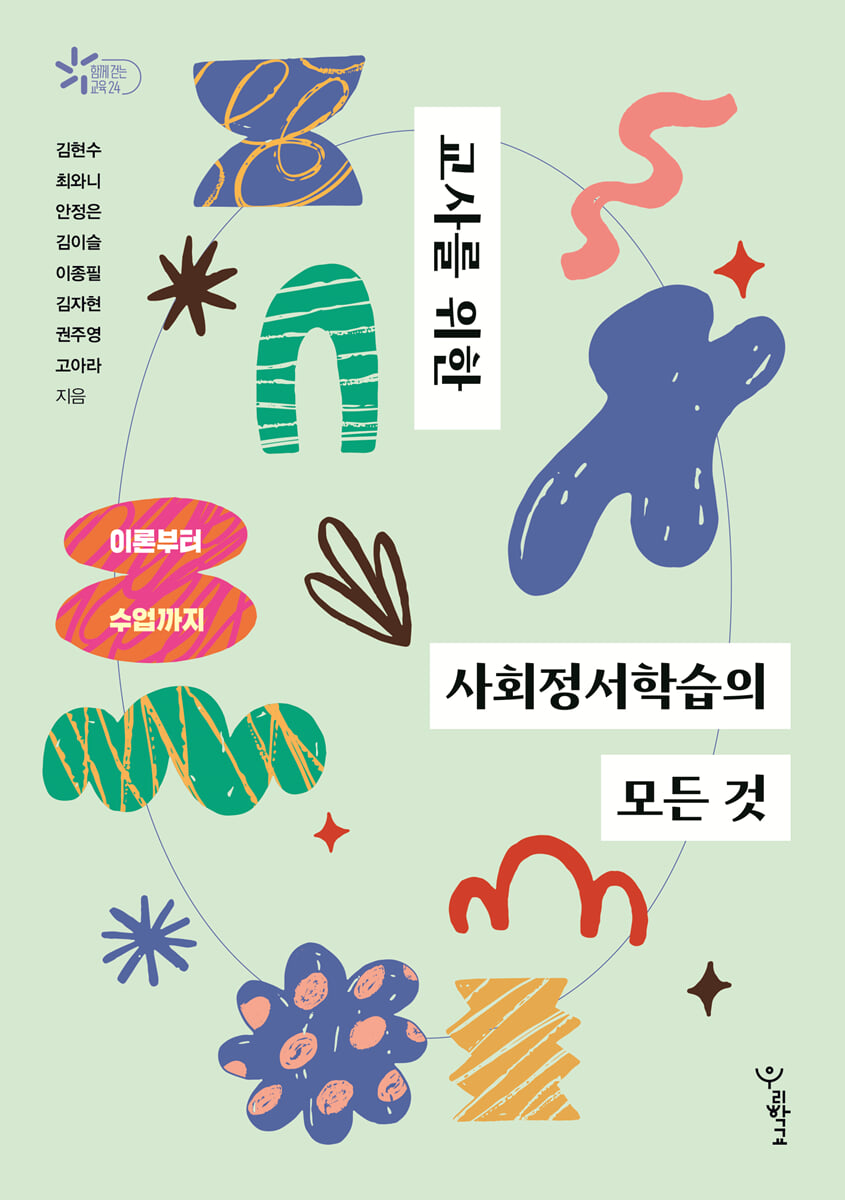 |
Description
Book Introduction
How to start social emotional learning?
From concepts to five social-emotional competencies, to actual classroom examples.
Contains everything a teacher needs
A guide for teachers interested in social-emotional learning, "Everything About Social-Emotional Learning for Teachers," has been published.
The book contains the contents that the 'Social Emotional Learning Research Group' under the 'Teachers' Group Interested in the Psychology of Relationships', which is composed of current teachers led by Dr. Kim Hyeon-su, a psychiatrist and principal of 'Seongjang School Byeol', an alternative school in Seoul, has studied and practiced for a long time.
First, in Part 1, we explain when social-emotional learning emerged and what it aims to achieve, focusing on the definition and concepts of CASEL, and specifically analyze the five social-emotional competencies defined in CASEL's framework.
And we introduce the principles that must be followed when practicing social-emotional learning in the classroom.
You can also hear stories from domestic and international educational institutions, such as the United States, the United Kingdom, and Denmark, that are actively implementing social and emotional learning.
Part 2 presents vivid examples of teachers who have implemented social and emotional learning in Korea.
Teachers who practice social-emotional learning in elementary and middle schools, special education classes, and integrated classrooms actively share lessons learned and teaching know-how.
This book serves as a friendly guide for teachers who feel the need for social and emotional learning and want to begin it.
From concepts to five social-emotional competencies, to actual classroom examples.
Contains everything a teacher needs
A guide for teachers interested in social-emotional learning, "Everything About Social-Emotional Learning for Teachers," has been published.
The book contains the contents that the 'Social Emotional Learning Research Group' under the 'Teachers' Group Interested in the Psychology of Relationships', which is composed of current teachers led by Dr. Kim Hyeon-su, a psychiatrist and principal of 'Seongjang School Byeol', an alternative school in Seoul, has studied and practiced for a long time.
First, in Part 1, we explain when social-emotional learning emerged and what it aims to achieve, focusing on the definition and concepts of CASEL, and specifically analyze the five social-emotional competencies defined in CASEL's framework.
And we introduce the principles that must be followed when practicing social-emotional learning in the classroom.
You can also hear stories from domestic and international educational institutions, such as the United States, the United Kingdom, and Denmark, that are actively implementing social and emotional learning.
Part 2 presents vivid examples of teachers who have implemented social and emotional learning in Korea.
Teachers who practice social-emotional learning in elementary and middle schools, special education classes, and integrated classrooms actively share lessons learned and teaching know-how.
This book serves as a friendly guide for teachers who feel the need for social and emotional learning and want to begin it.
- You can preview some of the book's contents.
Preview
index
preface.
To help children learn what they need for life
introduction.
Why is social emotional learning needed now?
Part 1.
Understanding Social-Emotional Learning
Chapter 1.
What is social emotional learning?
1) Definition of social emotional learning
2) Conceptual framework of social emotional learning
3) Theoretical basis of social emotional learning
Chapter 2.
Social and emotional learning sites
1) Illinois, USA, a pioneer in social and emotional learning
2) UNESCO, the Organization for the Promotion of Globalization of Social and Emotional Learning
3) Denmark's empathy education, Classence Tied
4) Relationship-centered education in the UK, PSHE
5) Healing classes at domestic growth schools
Chapter 3.
Examining Five Social-Emotional Competencies
1) Self-awareness: the ability to understand emotions, identity, and beliefs
2) Self-management: The power of self-regulation to regulate emotions and behavior.
3) Social awareness: the ability to understand others' emotions and social context
4) Relationship skills: social skills to collaborate and connect
Chapter 4.
Principles to follow when practicing social-emotional learning
1) The Four Pillars of Social-Emotional Learning: The SAFE Principles
2) Three key elements of a classroom-based approach
3) Developing teachers' social and emotional competencies: Inner growth of teachers.
4) Specific strategies for implementation
Part 2: Putting Social and Emotional Learning into Practice
Chapter 5.
What will change if we do social emotional learning?
Chapter 6.
To implement social emotional learning in the classroom:
Chapter 7.
I tried social emotional learning in elementary school.
Chapter 8.
Middle School Korean Language Classes: Social and Emotional Learning
Chapter 9.
Is civic education possible through social-emotional learning?
supplement.
Frequently Asked Questions for Teachers Beginning Social Emotional Learning
In conclusion
main
To help children learn what they need for life
introduction.
Why is social emotional learning needed now?
Part 1.
Understanding Social-Emotional Learning
Chapter 1.
What is social emotional learning?
1) Definition of social emotional learning
2) Conceptual framework of social emotional learning
3) Theoretical basis of social emotional learning
Chapter 2.
Social and emotional learning sites
1) Illinois, USA, a pioneer in social and emotional learning
2) UNESCO, the Organization for the Promotion of Globalization of Social and Emotional Learning
3) Denmark's empathy education, Classence Tied
4) Relationship-centered education in the UK, PSHE
5) Healing classes at domestic growth schools
Chapter 3.
Examining Five Social-Emotional Competencies
1) Self-awareness: the ability to understand emotions, identity, and beliefs
2) Self-management: The power of self-regulation to regulate emotions and behavior.
3) Social awareness: the ability to understand others' emotions and social context
4) Relationship skills: social skills to collaborate and connect
Chapter 4.
Principles to follow when practicing social-emotional learning
1) The Four Pillars of Social-Emotional Learning: The SAFE Principles
2) Three key elements of a classroom-based approach
3) Developing teachers' social and emotional competencies: Inner growth of teachers.
4) Specific strategies for implementation
Part 2: Putting Social and Emotional Learning into Practice
Chapter 5.
What will change if we do social emotional learning?
Chapter 6.
To implement social emotional learning in the classroom:
Chapter 7.
I tried social emotional learning in elementary school.
Chapter 8.
Middle School Korean Language Classes: Social and Emotional Learning
Chapter 9.
Is civic education possible through social-emotional learning?
supplement.
Frequently Asked Questions for Teachers Beginning Social Emotional Learning
In conclusion
main
Detailed image

Into the book
The essence of social emotional learning can be said to be a shift in social perception about what should be taught in schools.
Many parents and teachers now recognize that what schools should be teaching are life skills.
Especially in the United States, all schools are changing in this way, although to varying degrees.
The decisive factor was COVID-19.
Since 2019, the COVID-19 pandemic has led to a historic shift globally, with social-emotional learning becoming a key subject.
--- p.12
Social-emotional learning has continued to evolve in response to changes and demands in the educational environment.
It has now become a much more comprehensive concept than simply managing emotions or interpersonal skills.
The goal is to develop students' comprehensive capabilities necessary to successfully live in a complex modern society.
In recent years, values such as fairness, cultural sensitivity, and social justice have become particularly important.
The true goal of social-emotional learning is to help students grow into socially responsible and emotionally healthy citizens, not just students who excel academically.
--- p.30~31
Building on Illinois' success, other states have begun establishing social-emotional learning standards and actively incorporating them into their curricula.
As of September 2024, 83 percent of all schools in the United States are implementing social emotional learning, and most states have established educational policies that actively support social emotional learning.
--- p.52
Social and emotional learning, which Cassel initiated, has expanded beyond the United States and has become a new educational paradigm internationally.
UNESCO also stepped in.
UNESCO has actively promoted international expansion of social and emotional learning by reconceptualizing it as an essential educational element for the holistic development of learners and a sustainable future for humanity.
--- p.53
These situations teachers face are not simply 'problem behaviors'.
It's a sign that students don't know how to deal with their emotions, are confused about how to relate to others, and lack confidence in themselves.
In other words, the message is that it is time to pay attention to social and emotional growth.
--- p.73~74
Saying, “Today we will learn how to get along with each other” and “This time is about developing empathy.
It's quite different to say, "Empathy is thinking from another person's perspective."
While the former only provides students with vague directions, the latter clearly presents specific techniques and their definitions.
--- p.132
Some people are born teachers, but most people become teachers through studying, so they overcome difficulties through studying.
I studied social emotional learning to survive without running away from the classroom.
--- p.171~172
One way to systematically, continuously, and explicitly apply social-emotional learning while adhering to the minimum principles at this point in time is to utilize creative experience activity time in elementary schools.
This time can be used to naturally carry out 'explicit' educational activities and to structure programs that take into account developmental stages for each grade level.
--- p.206
In 2019, Kassel presented Transformational Social and Emotional Learning, emphasizing its contribution to social change.
Transformative social and emotional learning (SEL) refers to the application of SEL frameworks toward the goals of creating equitable environments and systems, promoting justice, and promoting civic engagement.
Many parents and teachers now recognize that what schools should be teaching are life skills.
Especially in the United States, all schools are changing in this way, although to varying degrees.
The decisive factor was COVID-19.
Since 2019, the COVID-19 pandemic has led to a historic shift globally, with social-emotional learning becoming a key subject.
--- p.12
Social-emotional learning has continued to evolve in response to changes and demands in the educational environment.
It has now become a much more comprehensive concept than simply managing emotions or interpersonal skills.
The goal is to develop students' comprehensive capabilities necessary to successfully live in a complex modern society.
In recent years, values such as fairness, cultural sensitivity, and social justice have become particularly important.
The true goal of social-emotional learning is to help students grow into socially responsible and emotionally healthy citizens, not just students who excel academically.
--- p.30~31
Building on Illinois' success, other states have begun establishing social-emotional learning standards and actively incorporating them into their curricula.
As of September 2024, 83 percent of all schools in the United States are implementing social emotional learning, and most states have established educational policies that actively support social emotional learning.
--- p.52
Social and emotional learning, which Cassel initiated, has expanded beyond the United States and has become a new educational paradigm internationally.
UNESCO also stepped in.
UNESCO has actively promoted international expansion of social and emotional learning by reconceptualizing it as an essential educational element for the holistic development of learners and a sustainable future for humanity.
--- p.53
These situations teachers face are not simply 'problem behaviors'.
It's a sign that students don't know how to deal with their emotions, are confused about how to relate to others, and lack confidence in themselves.
In other words, the message is that it is time to pay attention to social and emotional growth.
--- p.73~74
Saying, “Today we will learn how to get along with each other” and “This time is about developing empathy.
It's quite different to say, "Empathy is thinking from another person's perspective."
While the former only provides students with vague directions, the latter clearly presents specific techniques and their definitions.
--- p.132
Some people are born teachers, but most people become teachers through studying, so they overcome difficulties through studying.
I studied social emotional learning to survive without running away from the classroom.
--- p.171~172
One way to systematically, continuously, and explicitly apply social-emotional learning while adhering to the minimum principles at this point in time is to utilize creative experience activity time in elementary schools.
This time can be used to naturally carry out 'explicit' educational activities and to structure programs that take into account developmental stages for each grade level.
--- p.206
In 2019, Kassel presented Transformational Social and Emotional Learning, emphasizing its contribution to social change.
Transformative social and emotional learning (SEL) refers to the application of SEL frameworks toward the goals of creating equitable environments and systems, promoting justice, and promoting civic engagement.
--- p.263
Publisher's Review
What students need now is life skills rather than Korean, English, and math.
It refers to social and emotional learning in which teachers and students grow together.
Interest in social emotional learning is growing.
In 2024, our Ministry of Education also officially developed social and emotional learning materials in stages, six periods each, and distributed them to schools.
Although it is still in the introduction stage in Korea, many countries overseas, including the United States and the United Kingdom, are already actively practicing social-emotional learning.
UNESCO is leading the global expansion of social and emotional learning, viewing it as an essential educational element for a sustainable future for humanity.
Why is social-emotional learning receiving so much attention now? Kim Hyun-soo, a psychiatrist and principal of "Growth School Byul," says it's because it's a necessary learning tool for children's lives.
A historical shift is taking place from education focused on cognitive abilities to education that teaches life skills.
Social-emotional learning offers solutions to problems in today's classrooms, such as school violence and apathy.
What is impressive is that students in schools that implemented social-emotional learning also showed improved academic performance.
The 'Teachers Interested in the Psychology of Relationships' group, which has been studying psychology and psychiatry necessary for classrooms and schools, gathered around Kim Hyun-soo, who has been implementing social-emotional learning early on at Seongjang School, and realized the need for social-emotional learning, and established the Social-Emotional Learning Research Group under its umbrella in 2022.
The book, "Everything About Social-Emotional Learning for Teachers," was written by teachers who have studied, practiced, and disseminated social-emotional learning through this research group, with the goal of sharing their research and practice with more teachers.
How would social-emotional learning change the classroom?
A comprehensive guide from theory to practical classes
This book clearly contains the necessary information for teachers who feel the need for social emotional learning but are unsure of where to begin.
First, we will carefully examine how social-emotional learning emerged, what its framework is, and how the five social-emotional competencies are defined.
We also introduce principles that must be followed when approaching social-emotional learning in the classroom.
After explaining the concepts and theories, examples of how they are actually applied in the classroom follow.
This book is rich in practical examples from current teachers, ranging from specific know-how on how to integrate social-emotional learning with academic classes, how to secure limited time, and how to apply it in special or integrated classes, to experiences and analyses of how practicing social-emotional learning can change the classroom environment, and even research cases.
The final chapter, Chapter 9, discusses the recently emerging "transformative social-emotional learning" and explains how civic education is possible and necessary through social-emotional learning.
The stories he shares generously are filled with his humble and earnest attitude toward students and classes, his passion for education, and his warm camaraderie with fellow teachers, conveying both knowledge and inspiration.
Social-emotional learning is actually something that all teachers are already practicing to some extent in their classes.
Because there is no teacher who 'only teaches knowledge and does not care for the children's hearts.'
After gaining a deeper understanding of social-emotional learning through this book, teachers will be able to examine the issues they are already considering and practicing more systematically and meaningfully.
It refers to social and emotional learning in which teachers and students grow together.
Interest in social emotional learning is growing.
In 2024, our Ministry of Education also officially developed social and emotional learning materials in stages, six periods each, and distributed them to schools.
Although it is still in the introduction stage in Korea, many countries overseas, including the United States and the United Kingdom, are already actively practicing social-emotional learning.
UNESCO is leading the global expansion of social and emotional learning, viewing it as an essential educational element for a sustainable future for humanity.
Why is social-emotional learning receiving so much attention now? Kim Hyun-soo, a psychiatrist and principal of "Growth School Byul," says it's because it's a necessary learning tool for children's lives.
A historical shift is taking place from education focused on cognitive abilities to education that teaches life skills.
Social-emotional learning offers solutions to problems in today's classrooms, such as school violence and apathy.
What is impressive is that students in schools that implemented social-emotional learning also showed improved academic performance.
The 'Teachers Interested in the Psychology of Relationships' group, which has been studying psychology and psychiatry necessary for classrooms and schools, gathered around Kim Hyun-soo, who has been implementing social-emotional learning early on at Seongjang School, and realized the need for social-emotional learning, and established the Social-Emotional Learning Research Group under its umbrella in 2022.
The book, "Everything About Social-Emotional Learning for Teachers," was written by teachers who have studied, practiced, and disseminated social-emotional learning through this research group, with the goal of sharing their research and practice with more teachers.
How would social-emotional learning change the classroom?
A comprehensive guide from theory to practical classes
This book clearly contains the necessary information for teachers who feel the need for social emotional learning but are unsure of where to begin.
First, we will carefully examine how social-emotional learning emerged, what its framework is, and how the five social-emotional competencies are defined.
We also introduce principles that must be followed when approaching social-emotional learning in the classroom.
After explaining the concepts and theories, examples of how they are actually applied in the classroom follow.
This book is rich in practical examples from current teachers, ranging from specific know-how on how to integrate social-emotional learning with academic classes, how to secure limited time, and how to apply it in special or integrated classes, to experiences and analyses of how practicing social-emotional learning can change the classroom environment, and even research cases.
The final chapter, Chapter 9, discusses the recently emerging "transformative social-emotional learning" and explains how civic education is possible and necessary through social-emotional learning.
The stories he shares generously are filled with his humble and earnest attitude toward students and classes, his passion for education, and his warm camaraderie with fellow teachers, conveying both knowledge and inspiration.
Social-emotional learning is actually something that all teachers are already practicing to some extent in their classes.
Because there is no teacher who 'only teaches knowledge and does not care for the children's hearts.'
After gaining a deeper understanding of social-emotional learning through this book, teachers will be able to examine the issues they are already considering and practicing more systematically and meaningfully.
GOODS SPECIFICS
- Date of issue: July 28, 2025
- Page count, weight, size: 304 pages | 484g | 148*210*21mm
- ISBN13: 9791167553515
- ISBN10: 1167553519
You may also like
카테고리
korean


korean

![GQ KOREA Mark (Monthly): December [2025]](http://librairie.coreenne.fr/cdn/shop/files/8ef265dbbfbf186523ed75ba7319009d.jpg?v=1765340328&width=3840)


