

The Moon and Sixpence
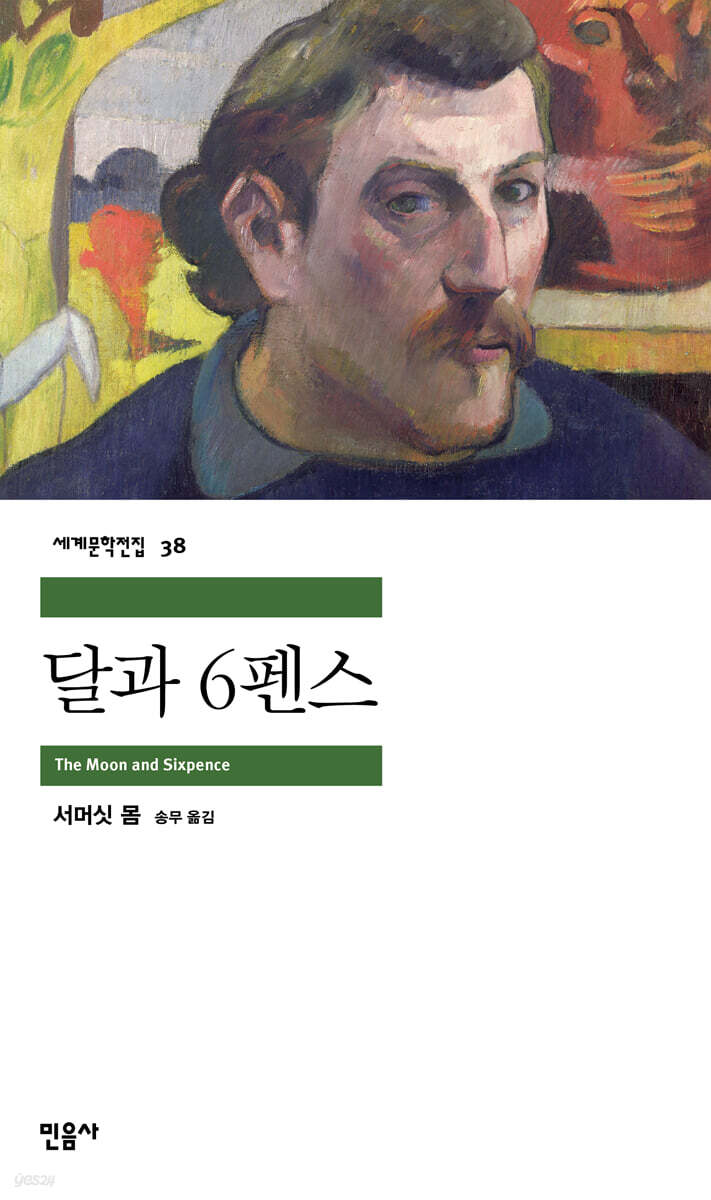 |
Description
Book Introduction
|
The utter selfishness and mad genius of a man obsessed with artistic impulses. Somerset Maugham's masterpiece, inspired by the life of the painter Paul Gauguin. A novel that became a spiritual liberation for young people who were fed up with human civilization after World War II. “Isn’t it precisely this feeling of being in a strange place that drives them to wander far and wide in search of something eternal, something they can love?” The Moon and Sixpence Reborn as "Proper Korean Literature" "The Moon and Sixpence" is a work that has been greatly welcomed in Korea, with nearly 15 translated versions already available. Minumsa has signed an exclusive contract with The Royal Literary Fund and is presenting The Moon and Sixpence, translated by Professor Song Mu, who is highly regarded for his meticulous and natural translations. Professor Song Moo is an English literature scholar who, through his work “Reflections on English Literature,” critically examined existing English literature canons and presented a vision for English literature in Korea. He also showed outstanding talent in translation, and translated The Moon and Sixpence based on a strict self-consciousness about our language and sensibilities. Professor Song Mu's outstanding prose writing skills and literary sensibility, which have reached the level of a writer, have already been proven through his translation of 『In the Shackles of Humanity』 (World Literature Collection 11, 12). This edition of "The Moon and Sixpence," which has completely overcome the awkward translation style and irresponsible machine interpretation, is more than just a simple translated work of literature; it can be read as "our own literature." The translator's special efforts to delicately consider the sensibilities of Korean readers stand out, including careful vocabulary selection, meticulous and accurate interpretation, and kind and detailed footnotes. |
- You can preview some of the book's contents.
Preview
index
1.
The Moon and Sixpence
2.
Commentary on the work / Songmu
3.
Author's chronology
The Moon and Sixpence
2.
Commentary on the work / Songmu
3.
Author's chronology
Into the book
I think this way.
Some people are born in places where they are not meant to be born.
Such people, even though they were thrown into an odd environment by chance, always live with a longing for their hometown, which is unknown.
Even in the place of my birth, I live as if I have come to a strange place, and the tree-lined paths I have always walked since childhood and the bustling streets where I played as a child are nothing more than places I pass through.
Perhaps, even among family members, you may live your entire life as a stranger, always feeling awkward even in the only surrounding scenery you have ever seen.
Perhaps it is precisely this feeling of being in an unfamiliar place that drives them to wander far and wide in search of something eternal, something they can love.
Or is it some deep-rooted instinct, handed down through the ages, that keeps urging this wanderer back to the land his ancestors left in the dim dawn of history?
Then he settles down among landscapes he has never seen before, among people he has never seen before, as if they were landscapes and people he had been familiar with since birth.
Finally, he finds rest here.
--- p.253
Strangely enough, it seemed as if life was breathing there.
As if all things in this world were created in the dark age of creation, before their forms were fixed forever.
It was incredibly luxurious.
The scent of the tropics vibrated.
They seemed to have their own dark passions.
.........
It seemed that eating them would turn a person into a beast or a god.
All things healthy and natural.
All that was obsessed with happy human relationships and the simple joys of life seemed to cower in horror before him.
But they also had a terrifyingly attractive power.
They evoked fear, as if they might reveal something unknown, like the tree of the knowledge of good and evil.
After a while I turned around.
Strickland buried his secret in his grave.
Some people are born in places where they are not meant to be born.
Such people, even though they were thrown into an odd environment by chance, always live with a longing for their hometown, which is unknown.
Even in the place of my birth, I live as if I have come to a strange place, and the tree-lined paths I have always walked since childhood and the bustling streets where I played as a child are nothing more than places I pass through.
Perhaps, even among family members, you may live your entire life as a stranger, always feeling awkward even in the only surrounding scenery you have ever seen.
Perhaps it is precisely this feeling of being in an unfamiliar place that drives them to wander far and wide in search of something eternal, something they can love.
Or is it some deep-rooted instinct, handed down through the ages, that keeps urging this wanderer back to the land his ancestors left in the dim dawn of history?
Then he settles down among landscapes he has never seen before, among people he has never seen before, as if they were landscapes and people he had been familiar with since birth.
Finally, he finds rest here.
--- p.253
Strangely enough, it seemed as if life was breathing there.
As if all things in this world were created in the dark age of creation, before their forms were fixed forever.
It was incredibly luxurious.
The scent of the tropics vibrated.
They seemed to have their own dark passions.
.........
It seemed that eating them would turn a person into a beast or a god.
All things healthy and natural.
All that was obsessed with happy human relationships and the simple joys of life seemed to cower in horror before him.
But they also had a terrifyingly attractive power.
They evoked fear, as if they might reveal something unknown, like the tree of the knowledge of good and evil.
After a while I turned around.
Strickland buried his secret in his grave.
--- pp.300~301
Publisher's Review
Somerset Maugham's greatest masterpiece, reviving the legend of Paul Gauguin.
The Moon and Sixpence is the defining work that made the author Somerset Maugham known to the world.
This work, which depicts the mad artistic journey of a soul obsessed with art, was published in 1919, the year after the end of World War I, and became extremely popular.
It was soon translated into several European languages and became a bestseller, and its popularity led to a reevaluation of 『In the Human Bondage』, which had been published four years earlier but received little attention.
The body's position as an author was solidified by this work.
Within a decade of its publication, The Moon and Sixpence was hailed as a "classic" by a number of critics, and by the 1940s it was recognized as one of the most popular books of its time.
The Moon and Sixpence is evaluated as the work that left the strongest impression on the 20th century world literature, as the main character's personality is strongly revealed.
Charles Strickland's eccentric escapades, his willingness to forsake commonplace recognition and normal humanity for the sake of art, are portrayed as almost demonic.
“I think the most interesting part of art is the artist’s personality.
“If you have a unique personality, I am willing to forgive you a thousand flaws,” the narrator says at the beginning of the work, and Strickland’s devilish artistic spirit and extraordinary genius strongly and boldly permeate the entire work.
This intense character portrayal, which overwhelms other sub-themes, is also the result of the author's own character research, honed through dozens of short stories.
Somerset Maugham, who is called the 'British Maupassant', meticulously and candidly explores human character and psychology.
As is well known, The Moon and Sixpence is based on the life of the famous French painter Paul Gauguin.
Maugham once lived a bohemian life, hanging out with Parisian painters, and was deeply impressed by the tragic death of Gauguin in Tahiti.
In 『The Human Bondage』, which was published before 『The Moon and Sixpence』, there is also a mention of a painter who is clearly presumed to be Gauguin.
It was during the World War that Maugham began to collect specific information about Gauguin.
As the war broke out, he was working in Switzerland on a secret order from the intelligence agency, but fell ill and had to recuperate in the United States, where he traveled to islands in the South Pacific, including Tahiti.
The body even visited Tahiti in person to write a novel based on Gauguin.
There he visited Gauguin's house, interviewed a woman who had lived with Gauguin, and purchased a painting left by Gauguin.
In 1917, he was again dispatched to Russia as an intelligence agent, but his illness worsened due to overwork and he was treated at the North of Scotland Hospital.
"The Moon and Sixpence" was written during this period of convalescence.
The body maximizes the romantic elements of Gauguin's life and creates a powerful and dramatic story called 'The Moon and Sixpence'.
As the title of the book suggests, Gauguin rejected the superficial civilization (selfish worldliness) represented by the 'sixpence' and devoted himself to the world of the 'moon', which symbolizes rich imagination and mad passion.
Like Strickland, Gauguin was a stockbroker and began painting in his twenties while working in the stock market.
He began exhibiting his paintings in his early 30s, and at the age of 35, he lost his job due to the stock market crash and decided to become a full-time artist.
As their lives became more difficult and the conflict between the couple intensified, the wife left him with the children, which was somewhat different from Strickland's case, where he abandoned his wife and children.
Gauguin, who also worked as a construction worker on the Panama Canal, eventually left France and settled in Tahiti.
He lives with and paints a 13-year-old mixed-race prostitute who reminds him of Ata from The Moon and Sixpence.
After that, his health deteriorated due to heart disease, syphilis, and other illnesses, and he even attempted suicide by taking drugs out of despair.
Although he continued to paint prolifically during this time, his health continued to deteriorate, and he eventually became unable to walk.
In 1903, Gauguin died of a heart attack at the age of 55.
On the other hand, The Moon and Sixpence cannot be seen only as a story about an exceptional person obsessed with an abnormal artistic impulse.
In fact, much of this novel deals with worldly life and human beings.
The body sharply satirizes the snobbery of London's literary and social circles; the painter Strobe, who is innocent at heart but lacks the agonizing spirit of art and only paints paintings that sell well; Blanche, who pursues only physical sensuality; and Mrs. Strickland, who boasts about being the wife of her husband, whom she cursed when he left home, when he became known as a genius.
Somerset Maugham, considered one of the most satirical novelists in 20th-century British literature, uses a cold and ruthless style to expose the vulgarity and hypocrisy that British people tend to fall into.
A Modern Shakespeare—The Noble Canon of the 20th Century
"The Moon and Sixpence" is the work that best embodies the author's own belief that "novels should be entertaining."
The reason why "The Moon and Sixpence" is an interesting and easy read also lies in his writing style.
His writing style, which is mainly conversational, is clear, concise, and logical, making it extremely natural to read and understand.
The simple and witty sentences follow a smooth sequence of ordinary words, and pierce the human heart with breathtaking skill.
Somerset Maugham has been writing for over half a century, and has written in almost every literary genre other than poetry.
But his greatness lies not only in his mastery of a wide range of literary forms, but also in the fact that his works consistently capture the interest of readers.
By publishing novels that were enjoyable for the general public to read, he attracted readers from all over the world and raised their literary standards.
In that sense, he played the role of a 'valuable disseminator of literature' and can be compared to a modern Shakespeare.
Just because he claims to be a storyteller for the general public, we cannot dismiss him as a mere popular writer.
His writings have at least satisfied the minds of many educated people.
In particular, 『The Moon and Sixpence』 aroused a longing for the world of the soul and the world of purity among the younger generation who felt a deep sense of disgust with humanity and human civilization through the World War.
It remains a powerful work that, regardless of the immediate realities of life, stimulates a universal desire inherent in all of us: to escape the oppressive reality and live freely as our hearts desire.
Critic Gore Vidal's remarks aptly capture Somerset Maugham's position as a writer.
“It would be difficult to ignore Somerset Maugham among the writers of the 20th century.
The body is a gateway that those who study literature must pass through.
“I read all the great Shakespeare and Maugham without fail until I was seventeen.” Few scholars have taken him up on serious study, but it is true that he has now become a canonical writer for the 20th century.
The Moon and Sixpence is the defining work that made the author Somerset Maugham known to the world.
This work, which depicts the mad artistic journey of a soul obsessed with art, was published in 1919, the year after the end of World War I, and became extremely popular.
It was soon translated into several European languages and became a bestseller, and its popularity led to a reevaluation of 『In the Human Bondage』, which had been published four years earlier but received little attention.
The body's position as an author was solidified by this work.
Within a decade of its publication, The Moon and Sixpence was hailed as a "classic" by a number of critics, and by the 1940s it was recognized as one of the most popular books of its time.
The Moon and Sixpence is evaluated as the work that left the strongest impression on the 20th century world literature, as the main character's personality is strongly revealed.
Charles Strickland's eccentric escapades, his willingness to forsake commonplace recognition and normal humanity for the sake of art, are portrayed as almost demonic.
“I think the most interesting part of art is the artist’s personality.
“If you have a unique personality, I am willing to forgive you a thousand flaws,” the narrator says at the beginning of the work, and Strickland’s devilish artistic spirit and extraordinary genius strongly and boldly permeate the entire work.
This intense character portrayal, which overwhelms other sub-themes, is also the result of the author's own character research, honed through dozens of short stories.
Somerset Maugham, who is called the 'British Maupassant', meticulously and candidly explores human character and psychology.
As is well known, The Moon and Sixpence is based on the life of the famous French painter Paul Gauguin.
Maugham once lived a bohemian life, hanging out with Parisian painters, and was deeply impressed by the tragic death of Gauguin in Tahiti.
In 『The Human Bondage』, which was published before 『The Moon and Sixpence』, there is also a mention of a painter who is clearly presumed to be Gauguin.
It was during the World War that Maugham began to collect specific information about Gauguin.
As the war broke out, he was working in Switzerland on a secret order from the intelligence agency, but fell ill and had to recuperate in the United States, where he traveled to islands in the South Pacific, including Tahiti.
The body even visited Tahiti in person to write a novel based on Gauguin.
There he visited Gauguin's house, interviewed a woman who had lived with Gauguin, and purchased a painting left by Gauguin.
In 1917, he was again dispatched to Russia as an intelligence agent, but his illness worsened due to overwork and he was treated at the North of Scotland Hospital.
"The Moon and Sixpence" was written during this period of convalescence.
The body maximizes the romantic elements of Gauguin's life and creates a powerful and dramatic story called 'The Moon and Sixpence'.
As the title of the book suggests, Gauguin rejected the superficial civilization (selfish worldliness) represented by the 'sixpence' and devoted himself to the world of the 'moon', which symbolizes rich imagination and mad passion.
Like Strickland, Gauguin was a stockbroker and began painting in his twenties while working in the stock market.
He began exhibiting his paintings in his early 30s, and at the age of 35, he lost his job due to the stock market crash and decided to become a full-time artist.
As their lives became more difficult and the conflict between the couple intensified, the wife left him with the children, which was somewhat different from Strickland's case, where he abandoned his wife and children.
Gauguin, who also worked as a construction worker on the Panama Canal, eventually left France and settled in Tahiti.
He lives with and paints a 13-year-old mixed-race prostitute who reminds him of Ata from The Moon and Sixpence.
After that, his health deteriorated due to heart disease, syphilis, and other illnesses, and he even attempted suicide by taking drugs out of despair.
Although he continued to paint prolifically during this time, his health continued to deteriorate, and he eventually became unable to walk.
In 1903, Gauguin died of a heart attack at the age of 55.
On the other hand, The Moon and Sixpence cannot be seen only as a story about an exceptional person obsessed with an abnormal artistic impulse.
In fact, much of this novel deals with worldly life and human beings.
The body sharply satirizes the snobbery of London's literary and social circles; the painter Strobe, who is innocent at heart but lacks the agonizing spirit of art and only paints paintings that sell well; Blanche, who pursues only physical sensuality; and Mrs. Strickland, who boasts about being the wife of her husband, whom she cursed when he left home, when he became known as a genius.
Somerset Maugham, considered one of the most satirical novelists in 20th-century British literature, uses a cold and ruthless style to expose the vulgarity and hypocrisy that British people tend to fall into.
A Modern Shakespeare—The Noble Canon of the 20th Century
"The Moon and Sixpence" is the work that best embodies the author's own belief that "novels should be entertaining."
The reason why "The Moon and Sixpence" is an interesting and easy read also lies in his writing style.
His writing style, which is mainly conversational, is clear, concise, and logical, making it extremely natural to read and understand.
The simple and witty sentences follow a smooth sequence of ordinary words, and pierce the human heart with breathtaking skill.
Somerset Maugham has been writing for over half a century, and has written in almost every literary genre other than poetry.
But his greatness lies not only in his mastery of a wide range of literary forms, but also in the fact that his works consistently capture the interest of readers.
By publishing novels that were enjoyable for the general public to read, he attracted readers from all over the world and raised their literary standards.
In that sense, he played the role of a 'valuable disseminator of literature' and can be compared to a modern Shakespeare.
Just because he claims to be a storyteller for the general public, we cannot dismiss him as a mere popular writer.
His writings have at least satisfied the minds of many educated people.
In particular, 『The Moon and Sixpence』 aroused a longing for the world of the soul and the world of purity among the younger generation who felt a deep sense of disgust with humanity and human civilization through the World War.
It remains a powerful work that, regardless of the immediate realities of life, stimulates a universal desire inherent in all of us: to escape the oppressive reality and live freely as our hearts desire.
Critic Gore Vidal's remarks aptly capture Somerset Maugham's position as a writer.
“It would be difficult to ignore Somerset Maugham among the writers of the 20th century.
The body is a gateway that those who study literature must pass through.
“I read all the great Shakespeare and Maugham without fail until I was seventeen.” Few scholars have taken him up on serious study, but it is true that he has now become a canonical writer for the 20th century.
GOODS SPECIFICS
- Date of issue: June 30, 2000
- Page count, weight, size: 327 pages | 444g | 132*225*30mm
- ISBN13: 9788937460388
- ISBN10: 8937460386
You may also like
카테고리
korean


korean

![GQ KOREA Mark (Monthly): December [2025]](http://librairie.coreenne.fr/cdn/shop/files/8ef265dbbfbf186523ed75ba7319009d.jpg?v=1765340328&width=3840)


