

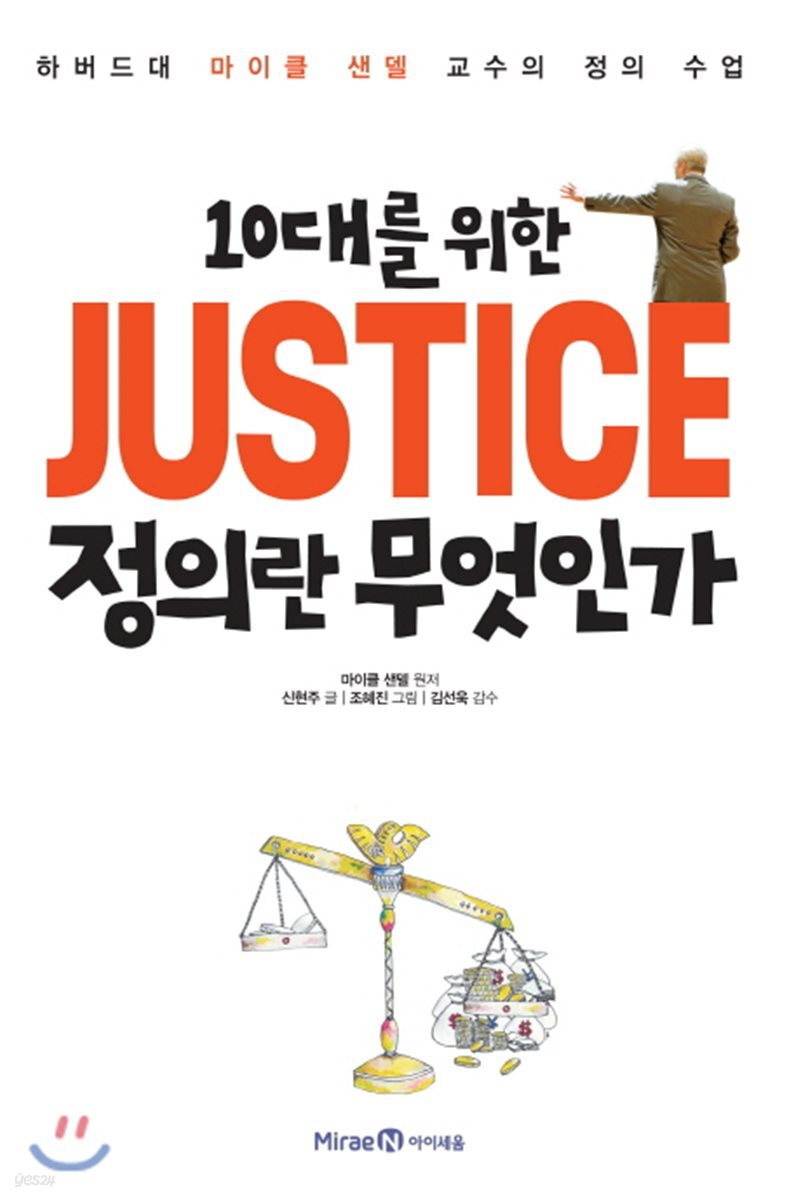
What is Justice for Teens?
 |
Description
Book Introduction
Teenagers need justice too. Easy to access and powerful to resonate with vivid images and short texts! There are many problems in the world that cannot be solved with a single answer. So it's important to talk to each other, listen to each other's positions, and reach an agreement. When faced with various situations, it is important to consider the problem from multiple perspectives and make the right decision. As we live, we often encounter questions of judgment: What is right? How should we live a good life? These are not just concerns for adults. Only through repeated training from childhood can we make the right decisions when faced with such problems as adults. Just as "What is Justice?" raised awareness of the issue of justice in Korean society, I hope this will also provide an opportunity for teenagers to ponder the question, "What is justice?" This book provides images of situations where judgment is needed, or dilemmas, that appear in the text to help readers intuitively understand the content of "What is Justice?", and organizes them into short sentences to create a resonant and memorable experience. Because for the video generation, strong images and short texts will have a greater impact than long texts. After conveying each dilemma situation through images, Michael Sandel's explanation of each dilemma is briefly summarized to help you clearly understand the content. |
- You can preview some of the book's contents.
Preview
index
Original author's note
Author's Note
Reviewer's Note
01 Before reading this book
02 Who should we save?
03 The Mignonette's Survival Story
04 How much is a life worth?
05 Is happiness the same for everyone?
06 Justice for the Rich and the Poor
07 More taxes on the rich?
08 Looking for a soldier?
09 Who should raise this child?
10 True Heroes
11 On Kant
12 Mrs. Rose's Bathroom
13 Is life inherently unfair?
14 You're saying I'm disqualified because I'm white?
15 Qualifications of the cheerleading squad
16 Can you be a good person without participating in politics?
17 Should I say 'I'm sorry'?
18 Brother's Choice
19 On maintaining neutrality
20 Justice and the Good Life
Search
Author's Note
Reviewer's Note
01 Before reading this book
02 Who should we save?
03 The Mignonette's Survival Story
04 How much is a life worth?
05 Is happiness the same for everyone?
06 Justice for the Rich and the Poor
07 More taxes on the rich?
08 Looking for a soldier?
09 Who should raise this child?
10 True Heroes
11 On Kant
12 Mrs. Rose's Bathroom
13 Is life inherently unfair?
14 You're saying I'm disqualified because I'm white?
15 Qualifications of the cheerleading squad
16 Can you be a good person without participating in politics?
17 Should I say 'I'm sorry'?
18 Brother's Choice
19 On maintaining neutrality
20 Justice and the Good Life
Search
Detailed image
Publisher's Review
① 'Justice,' 'morality,' and the 'power of reflection' are taught from the teenage years.
People in modern society are struggling with confusion about identity and values.
As material things and power are considered the highest values, the values of justice, morality, and life are falling to the ground.
The craze that erupted when “What is Justice?” was first published in 2010 showed how our society was steeped in absurdity and thirsty for justice.
The Sewol ferry disaster, the tyranny of the wealthy, and the prevalence of various unspeakable crimes against humanity demonstrate how serious our society's growth-focused policies and materialism are, and how deeply the values of justice and morality have fallen in this era.
You might be thinking, "What justice do teenagers need? Do teenagers even know what justice is?"
However, as we go through life, we sometimes encounter moral dilemmas, and it is often difficult to judge what is right and what is just.
This book makes us ponder the questions, "What basis should we have for judgment in such dilemmas?" and "How can we resolve them in a way that is beneficial not only to me but to everyone?"
So, thinking about and reflecting on justice is something that should start not only among adults but also among teenagers, and it is something that teenagers can also fully do.
② Easy to approach and powerful resonance with vivid images and short text!
"What is Justice?" is a good book that provides an opportunity to think about justice and practice it, but it is a bit difficult for teenagers to read right away.
It presents the theories of various philosophers and provides abundant examples, but it is not structured to give the right answer right away, but rather to make teenagers think for themselves through questions that cross over the theories of various philosophers, making it difficult for them to grasp, organize, and understand.
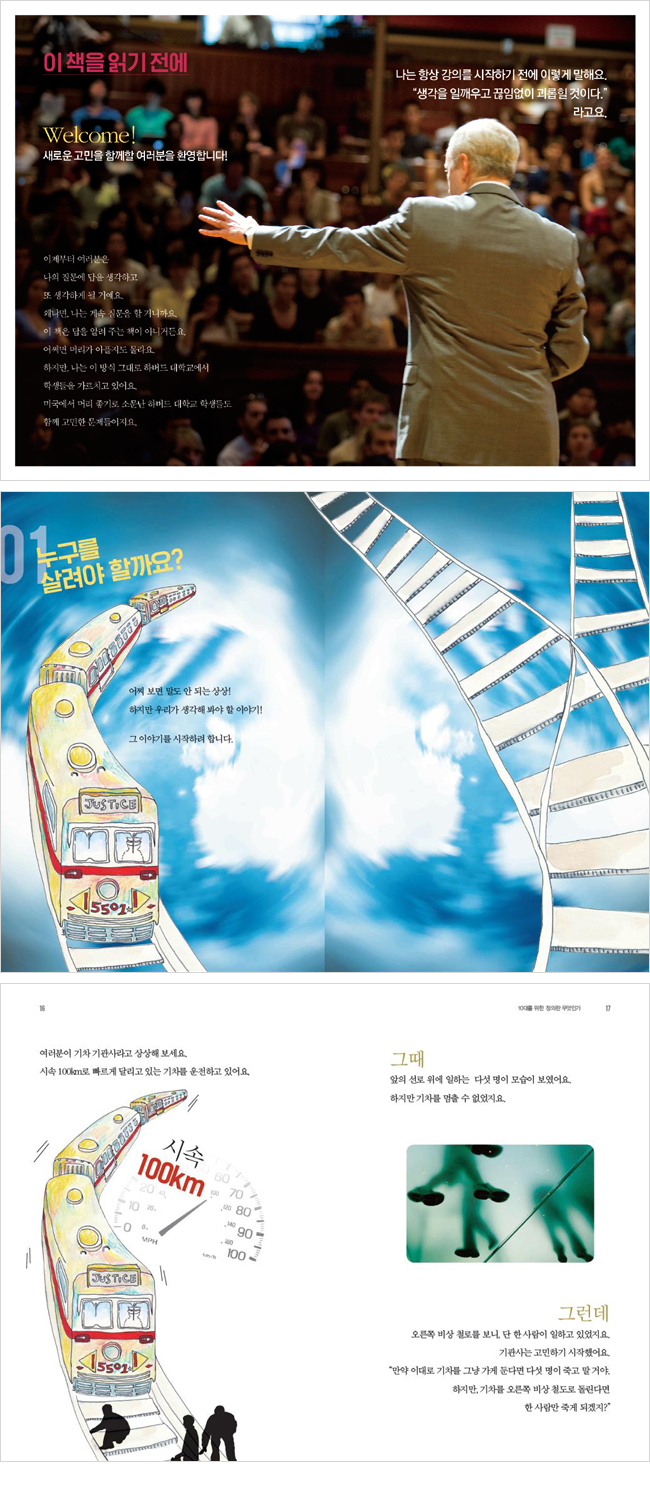
Therefore, this book provides images of situations of judgment that appear in the text, that is, situations that lead to dilemmas, to enable an intuitive understanding of the content of "What is Justice?", and organizes them into short sentences to create a resonant and deeply memorable experience.
Because for the video generation, strong images and short texts will have a greater impact than long texts.
After conveying each dilemma situation through images, Michael Sandel's explanation of each dilemma is briefly summarized to help readers clearly understand the content.
Therefore, it can be said that this is an introductory book that allows readers to understand the general content of the original text and think about it before reading the original text of "What is Justice?" later, and at the same time, it is a book that helps readers develop the ability to think about "justice" and "a good life" on their own.
③ Clear and easy to understand background thoughts and philosophy for each episode
"Justice: What's the Right Thing to Do?" has been misunderstood by many as a book that provides the right answer to the question of "justice," but in fact, it is a book that makes readers think about "justice" for themselves by following Michael Sandel's questions and answers.
Therefore, it is not easy for adults to read and understand.
Sandel himself even declared in the book that “...it will awaken thoughts and constantly torment them.”
However, since the content contained within it is truly 'how to live a good life' and 'what is the most correct judgment in a given problem situation', it is something that even teenagers can fully relate to and practice.
Although various philosophers and theories appear in this book, they are not intended to torment us, but rather to show us how complex and diverse our lives are.
When reading this book, it's important to carefully consider the situations in which the theory applies and the lives of the people involved in those situations, because we need to examine many things to make the right decision.
While reading "What is Justice?" you might easily get lost and wander, but this book helps you intuitively understand the original work by summarizing the dilemma with images and short sentences, like a book trailer.
Anyway, looking into other people's lives and wondering what's right can be annoying and burdensome.
But if we don't think about these issues and make decisions ourselves, we will be forced to live in a world that others have created for us.
Therefore, if we are to make our world a place worth living in, we must ponder these questions and come up with answers.
This book is a good book that will help us in this way.
Of course, Professor Sandel's book is not about the situation in Korea, but it is our task to ponder and answer precisely these questions.
Because this is not something that someone else can think about for you.
So, why not start reading this book in your teens and embark on the path of thought that Professor Sandel explored? Our country's future will be as bright as the depth of our teenagers' thinking.
People in modern society are struggling with confusion about identity and values.
As material things and power are considered the highest values, the values of justice, morality, and life are falling to the ground.
The craze that erupted when “What is Justice?” was first published in 2010 showed how our society was steeped in absurdity and thirsty for justice.
The Sewol ferry disaster, the tyranny of the wealthy, and the prevalence of various unspeakable crimes against humanity demonstrate how serious our society's growth-focused policies and materialism are, and how deeply the values of justice and morality have fallen in this era.
You might be thinking, "What justice do teenagers need? Do teenagers even know what justice is?"
However, as we go through life, we sometimes encounter moral dilemmas, and it is often difficult to judge what is right and what is just.
This book makes us ponder the questions, "What basis should we have for judgment in such dilemmas?" and "How can we resolve them in a way that is beneficial not only to me but to everyone?"
So, thinking about and reflecting on justice is something that should start not only among adults but also among teenagers, and it is something that teenagers can also fully do.
② Easy to approach and powerful resonance with vivid images and short text!
"What is Justice?" is a good book that provides an opportunity to think about justice and practice it, but it is a bit difficult for teenagers to read right away.
It presents the theories of various philosophers and provides abundant examples, but it is not structured to give the right answer right away, but rather to make teenagers think for themselves through questions that cross over the theories of various philosophers, making it difficult for them to grasp, organize, and understand.
Therefore, this book provides images of situations of judgment that appear in the text, that is, situations that lead to dilemmas, to enable an intuitive understanding of the content of "What is Justice?", and organizes them into short sentences to create a resonant and deeply memorable experience.
Because for the video generation, strong images and short texts will have a greater impact than long texts.
After conveying each dilemma situation through images, Michael Sandel's explanation of each dilemma is briefly summarized to help readers clearly understand the content.
Therefore, it can be said that this is an introductory book that allows readers to understand the general content of the original text and think about it before reading the original text of "What is Justice?" later, and at the same time, it is a book that helps readers develop the ability to think about "justice" and "a good life" on their own.
③ Clear and easy to understand background thoughts and philosophy for each episode
"Justice: What's the Right Thing to Do?" has been misunderstood by many as a book that provides the right answer to the question of "justice," but in fact, it is a book that makes readers think about "justice" for themselves by following Michael Sandel's questions and answers.
Therefore, it is not easy for adults to read and understand.
Sandel himself even declared in the book that “...it will awaken thoughts and constantly torment them.”
However, since the content contained within it is truly 'how to live a good life' and 'what is the most correct judgment in a given problem situation', it is something that even teenagers can fully relate to and practice.
Although various philosophers and theories appear in this book, they are not intended to torment us, but rather to show us how complex and diverse our lives are.
When reading this book, it's important to carefully consider the situations in which the theory applies and the lives of the people involved in those situations, because we need to examine many things to make the right decision.
While reading "What is Justice?" you might easily get lost and wander, but this book helps you intuitively understand the original work by summarizing the dilemma with images and short sentences, like a book trailer.
Anyway, looking into other people's lives and wondering what's right can be annoying and burdensome.
But if we don't think about these issues and make decisions ourselves, we will be forced to live in a world that others have created for us.
Therefore, if we are to make our world a place worth living in, we must ponder these questions and come up with answers.
This book is a good book that will help us in this way.
Of course, Professor Sandel's book is not about the situation in Korea, but it is our task to ponder and answer precisely these questions.
Because this is not something that someone else can think about for you.
So, why not start reading this book in your teens and embark on the path of thought that Professor Sandel explored? Our country's future will be as bright as the depth of our teenagers' thinking.
GOODS SPECIFICS
- Date of issue: November 30, 2014
- Page count, weight, size: 215 pages | 414g | 254*374*13mm
- ISBN13: 9788937886966
- ISBN10: 8937886960
You may also like
카테고리
korean


korean

![GQ KOREA Mark (Monthly): December [2025]](http://librairie.coreenne.fr/cdn/shop/files/8ef265dbbfbf186523ed75ba7319009d.jpg?v=1765340328&width=3840)


