

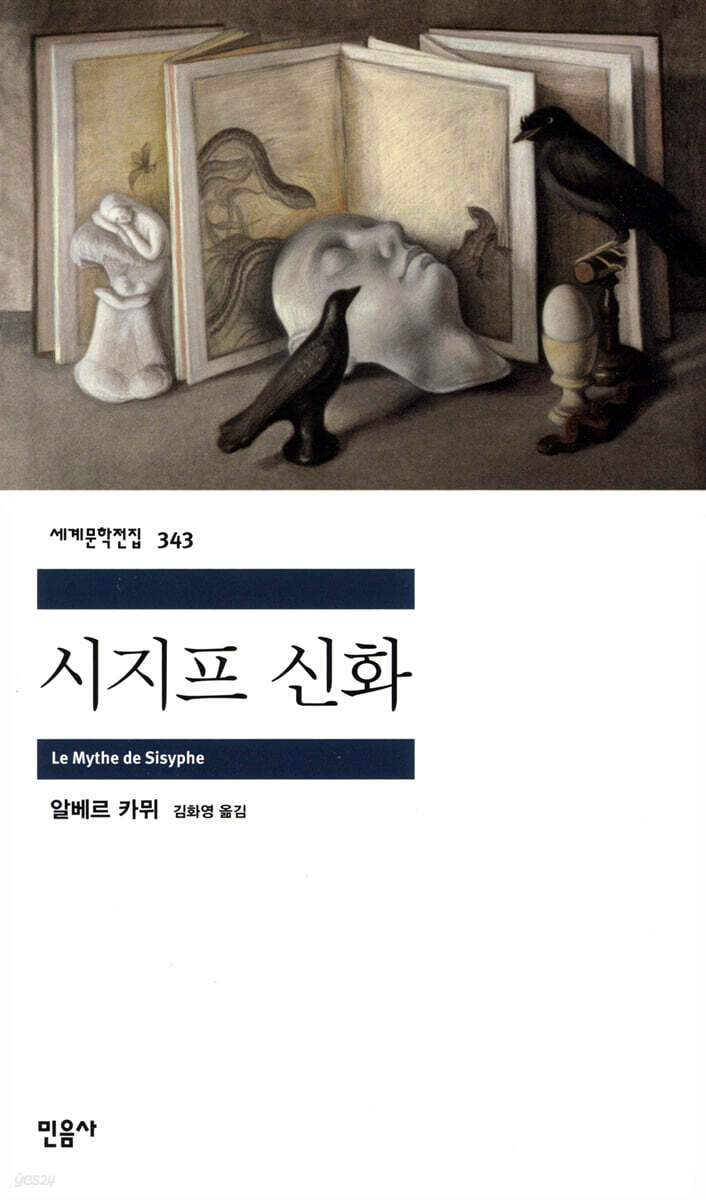
The Myth of Sisyphus
 |
Description
Book Introduction
The Myth of Sisyphus, which provided the philosophical basis for The Stranger
A work that forms the 'Absurd Trilogy' along with 'The Stranger' and 'Caligula'
Albert Camus, who published his first work, The Stranger, in 1942, which depicted the alienation and rebellion of humans thrown into an absurd world, caused a literary incident not only in France but also around the world.
After that, he actively participated in social issues and made significant achievements among French intellectuals with works that represented the emptiness of modern people. Then, in 1947, he published his masterpiece, The Plague, which delivered a message of solidarity and hope to modern people who had fallen into nihilism, and received great sympathy from numerous readers.
In 1957, he achieved international recognition by winning the Nobel Prize in Literature, with the Academy of Arts praising him as “a writer who has illuminated the human condition of our time with remarkable insight and sincerity.”
『The Myth of Sisyphus』, newly published as volume 343 in Minumsa World Literature Collection, was published in the same year as Camus's first work, 『The Stranger』, and he began writing it before 『The Stranger』.
This work is a philosophical essay that uses the story of Sisyphus from Greek mythology as a starting point for his literary foundation, and together with the novel The Stranger and the play Caligula, it forms the 'Absurd Trilogy'.
He likens the fate of Sisyphus, who was condemned by God to live an eternity of pushing a rock up a mountain, to the life of a human being thrown into an absurd world, and reveals that the best rebellion a human can do is not suicide, but to face life squarely and continue on to the end.
A work that forms the 'Absurd Trilogy' along with 'The Stranger' and 'Caligula'
Albert Camus, who published his first work, The Stranger, in 1942, which depicted the alienation and rebellion of humans thrown into an absurd world, caused a literary incident not only in France but also around the world.
After that, he actively participated in social issues and made significant achievements among French intellectuals with works that represented the emptiness of modern people. Then, in 1947, he published his masterpiece, The Plague, which delivered a message of solidarity and hope to modern people who had fallen into nihilism, and received great sympathy from numerous readers.
In 1957, he achieved international recognition by winning the Nobel Prize in Literature, with the Academy of Arts praising him as “a writer who has illuminated the human condition of our time with remarkable insight and sincerity.”
『The Myth of Sisyphus』, newly published as volume 343 in Minumsa World Literature Collection, was published in the same year as Camus's first work, 『The Stranger』, and he began writing it before 『The Stranger』.
This work is a philosophical essay that uses the story of Sisyphus from Greek mythology as a starting point for his literary foundation, and together with the novel The Stranger and the play Caligula, it forms the 'Absurd Trilogy'.
He likens the fate of Sisyphus, who was condemned by God to live an eternity of pushing a rock up a mountain, to the life of a human being thrown into an absurd world, and reveals that the best rebellion a human can do is not suicide, but to face life squarely and continue on to the end.
- You can preview some of the book's contents.
Preview
index
The inference of absurdity
Absurd human
Absurd Creation
The Myth of Sisyphus
Appendix ─ Hope and Absurdity in Franz Kafka's Works
Commentary on the work
References
Author's chronology
Absurd human
Absurd Creation
The Myth of Sisyphus
Appendix ─ Hope and Absurdity in Franz Kafka's Works
Commentary on the work
References
Author's chronology
Into the book
There is only one truly serious philosophical problem.
That is suicide.
Judging whether life is worth living or not is the answer to the fundamental question of philosophy.
--- p.15
If you can explain it, even if it's for a vague reason, then that world is a familiar world.
But on the contrary, in a world suddenly deprived of illusion and light, man feels like a stranger.
--- p.19
There are times when the stage sets suddenly collapse.
Waking up in the morning, taking the train to work, spending four hours in the office or factory, eating, taking the train, four hours of work, eating, sleeping, and repeating the same rhythm of Monday, Tuesday, Wednesday, Thursday, Friday, and Saturday, this routine is usually not difficult to follow.
But then one day, suddenly, the question “why” arises and everything begins in a feeling of boredom mixed with surprise.
--- p.29
Absurdity is essentially a divorce, a separation.
--- p.52
This rebellion gives value to life.
Rebellion that spans the entirety of a life restores the greatness of that life.
--- p.85
Rebellion means that man is constantly present to himself.
--- p.84
Consciousness and rebellion, this act of refusal is the exact opposite of giving up.
The irreducible and passionate essence that resides in the human heart
All things cold together encourage rejection against his life.
--- p.85
Death stands here, as the only reality.
After death, the bet is already over.
--- p.88
To feel your own life, your own rebellion, your own freedom, to feel it as much as possible, that is living, that is living as much as possible.
--- p.95
Thus I draw three conclusions from the absurdity.
That is my rebellion, my self
You are my passion.
Only through the activity of consciousness do I transform what was an invitation to death into a law of life.
So I refuse to commit suicide.
--- p.97
If love were enough, everything would be so simple.
The more you love, the more solid the absurdity becomes.
--- p.108
Sisyphus watches the stone roll down in an instant into the world below.
From there, we must now push the stone back up towards the top.
He goes down to the field again.
What catches my attention about Sisyphus is the brief moment of respite when he returns from the top of the mountain.
The face, so pained by the stone, pressed so close to it, is already like stone itself! I watch this man, with a heavy yet steady gait, walk back down, toward an agony that seems insurmountable no matter what.
This time, which is like breathing, and this time, which comes back without fail like misfortune, is the time of consciousness.
At every moment that he leaves the mountaintop and descends deeper and deeper toward the lair of the gods, Sisyphus is superior to his fate.
He is stronger than his rock.
That is suicide.
Judging whether life is worth living or not is the answer to the fundamental question of philosophy.
--- p.15
If you can explain it, even if it's for a vague reason, then that world is a familiar world.
But on the contrary, in a world suddenly deprived of illusion and light, man feels like a stranger.
--- p.19
There are times when the stage sets suddenly collapse.
Waking up in the morning, taking the train to work, spending four hours in the office or factory, eating, taking the train, four hours of work, eating, sleeping, and repeating the same rhythm of Monday, Tuesday, Wednesday, Thursday, Friday, and Saturday, this routine is usually not difficult to follow.
But then one day, suddenly, the question “why” arises and everything begins in a feeling of boredom mixed with surprise.
--- p.29
Absurdity is essentially a divorce, a separation.
--- p.52
This rebellion gives value to life.
Rebellion that spans the entirety of a life restores the greatness of that life.
--- p.85
Rebellion means that man is constantly present to himself.
--- p.84
Consciousness and rebellion, this act of refusal is the exact opposite of giving up.
The irreducible and passionate essence that resides in the human heart
All things cold together encourage rejection against his life.
--- p.85
Death stands here, as the only reality.
After death, the bet is already over.
--- p.88
To feel your own life, your own rebellion, your own freedom, to feel it as much as possible, that is living, that is living as much as possible.
--- p.95
Thus I draw three conclusions from the absurdity.
That is my rebellion, my self
You are my passion.
Only through the activity of consciousness do I transform what was an invitation to death into a law of life.
So I refuse to commit suicide.
--- p.97
If love were enough, everything would be so simple.
The more you love, the more solid the absurdity becomes.
--- p.108
Sisyphus watches the stone roll down in an instant into the world below.
From there, we must now push the stone back up towards the top.
He goes down to the field again.
What catches my attention about Sisyphus is the brief moment of respite when he returns from the top of the mountain.
The face, so pained by the stone, pressed so close to it, is already like stone itself! I watch this man, with a heavy yet steady gait, walk back down, toward an agony that seems insurmountable no matter what.
This time, which is like breathing, and this time, which comes back without fail like misfortune, is the time of consciousness.
At every moment that he leaves the mountaintop and descends deeper and deeper toward the lair of the gods, Sisyphus is superior to his fate.
He is stronger than his rock.
--- pp.181-182
Publisher's Review
Park Kal-lin and Seo Taiji meet, and Albert Camus, the original author of the musical "The Plague"
News of the musical [Pest], scheduled to be released in July, is stirring up not only the performing arts world but also the music and publishing world.
This is thanks to the famous musical director Park Kal-lin and the legend of the Korean music world Seo Taiji presenting the masterpiece 'The Plague' by Albert Camus, a writer who is called a legend in the French literary world, as a musical.
Albert Camus was a French novelist and playwright who was the youngest person ever to win the Nobel Prize in Literature and is considered a pioneer of existentialist literature along with Sartre.
『The Plague』, a monumental work of 20th-century literature, was published in 1947 and sold 20,000 copies of the first edition in one month. It was also recognized for its literary value, winning the Critics' Award that year. The French edition alone sold over 5 million copies, making it a steady seller of the century and considered one of the most significant literary works published since the 20th century.
The Myth of Sisyphus, which provided the philosophical basis for The Stranger
A work that forms the 'Absurd Trilogy' along with 'The Stranger' and 'Caligula'
Albert Camus, who published his first work, The Stranger, in 1942, which depicted the alienation and rebellion of humans thrown into an absurd world, caused a literary incident not only in France but also around the world.
After that, he actively participated in social issues and made significant achievements among French intellectuals with works that represented the emptiness of modern people. Then, in 1947, he published his masterpiece, The Plague, which delivered a message of solidarity and hope to modern people who had fallen into nihilism, and received great sympathy from numerous readers.
In 1957, he achieved international recognition by winning the Nobel Prize in Literature, with the Academy of Arts praising him as “a writer who has illuminated the human condition of our time with remarkable insight and sincerity.”
『The Myth of Sisyphus』, newly published as volume 343 in Minumsa World Literature Collection, was published in the same year as Camus's first work, 『The Stranger』, and he began writing it before 『The Stranger』.
This work is a philosophical essay that uses the story of Sisyphus from Greek mythology as a starting point for his literary foundation, and together with the novel The Stranger and the play Caligula, it forms the 'Absurd Trilogy'.
He likens the fate of Sisyphus, who was condemned by God to live an eternity of pushing a rock up a mountain, to the life of a human being thrown into an absurd world, and reveals that the best rebellion a human can do is not suicide, but to face life squarely and continue on to the end.
Today's workers spend every day of their lives doing the same work, and their fate is no less absurd than that of Sisyphus.
But fate is absurd only in those rare moments when we are conscious.
Even among the gods, the proletarian, the helpless and rebellious Sisyphus knows the extent of his miserable condition.
This is the condition he thinks about when he comes down from the mountain.
Perhaps the insight that brings him agony will also complete his victory.
There is no fate that cannot be overcome by responding with contempt.
--- Main text, pages 182-183
What Camus consistently emphasizes is the clear consciousness of being alive and the passion for rebellion.
The Myth of Sisyphus will remain deeply in the reader's mind as an ethics of 'eternal revolution' in response to existential tragedy.
Humans face an absurd world with three choices: suicide, hope, and rebellion.
Sisyphus, or Happiness in Hell
The Myth of Sisyphus states, “There is only one truly serious philosophical problem.
It begins with the shocking yet relatable phrase, “That is suicide.”
If we were to paraphrase the theme of the book, which Camus makes clear from the beginning, it would be “the relationship between absurdity and suicide.”
As a self 'thrown' into the world, modern people search for a reason and value to live in this world, but it is not easy to find it in a world filled with absurdity.
Suicide is often the easy answer humans find for the void.
Camus did not view suicide as a choice born of simple personal pessimism or social isolation.
Newspapers often talk about 'heartbreak' and 'incurable disease'.
This explanation seems plausible.
But on that very day, one should find out whether one of the despairing man's friends had ever responded to him in an indifferent tone.
That person is the sinner.
Because that one thing alone is enough to make all the resentment and all the weariness that had been in abeyance until then rush in at once.
--- Page 18 of the text
For Camus, suicide is the first option available to humans facing an empty and absurd world.
But Camus says that is not the right answer.
It is nothing more than “this fatal game that leads from the clear consciousness that faces life to an escape from the world of light.”
The second solution Camus suggests is ‘hope.’
But hope, too, is merely “a deception of those who live not for life itself, but for some grand idea, some grand idea that transcends life, sublimates it, gives it meaning, and ultimately betrays it.”
Because living with the hope of an afterlife is nothing less than a deception of this world.
Thus I draw three conclusions from the absurdity.
It is my rebellion, my freedom and my passion.
Only through the activity of consciousness do I transform what was an invitation to death into a law of life.
So I refuse to commit suicide.
--- Page 97 of the text
Finally, the third option is 'rebellion' and the accompanying sense of 'freedom' and 'passion'.
Camus limits the two options mentioned above, 'suicide' and 'hope', by saying that they are both ways of escaping into oblivion and nothingness without facing life.
So then, how should humans respond to this world?
It is 'rebellion'.
What humans need most is a rebellious will to live despite the curse and a passion for life that allows them to smile even while accepting and enduring the curse, like Sisyphus in Greek mythology, who is cursed to roll a boulder up a mountain for eternity.
I see this man walking back down, with a heavy but steady gait, toward an agony that he cannot seem to end no matter what he does.
This time, which is like breathing, and this time, which comes back without fail like misfortune, is the time of consciousness.
At every moment that he leaves the mountaintop and descends deeper and deeper toward the lair of the gods, Sisyphus is superior to his fate.
He is stronger than his rock.
--- Pages 181-182 of the text
Professor Kim Hwa-young, the greatest French literature scholar of our time
A new translation of The Myth of Sisyphus
Professor Kim Hwa-young was not only selected as Korea's best French literature translator in 1999, but is also considered one of the most authoritative French literature scholars of our time, with over 100 French literature translations and research papers.
In particular, Professor Kim Hwa-young, who has dedicated her life to studying Albert Camus, published The Myth of Sisyphus in Minumsa's World Literature Collection, following The Stranger and The Plague, and revised the existing translation to present a more perfect translation to readers.
In his commentary on the work, he evaluated 『The Myth of Sisyphus』 as follows: “The content experienced and conscious directly in the midst of turbulent history or through the complicated contradictions of life gives human passion and density of voice to this book, which can easily become an abstract theory.” He also explained in detail the relationship between Camus’ personal experience and the work as well as the philosophical significance of the work.
"The Myth of Sisyphus" is a great text that allows us to delve into the ideological roots of the world of works created by Albert Camus. It also contains Camus's unique philosophy, which stands tall at the heart of existentialism in the history of philosophy. It will broaden the intellectual horizons of Camus' readers.
News of the musical [Pest], scheduled to be released in July, is stirring up not only the performing arts world but also the music and publishing world.
This is thanks to the famous musical director Park Kal-lin and the legend of the Korean music world Seo Taiji presenting the masterpiece 'The Plague' by Albert Camus, a writer who is called a legend in the French literary world, as a musical.
Albert Camus was a French novelist and playwright who was the youngest person ever to win the Nobel Prize in Literature and is considered a pioneer of existentialist literature along with Sartre.
『The Plague』, a monumental work of 20th-century literature, was published in 1947 and sold 20,000 copies of the first edition in one month. It was also recognized for its literary value, winning the Critics' Award that year. The French edition alone sold over 5 million copies, making it a steady seller of the century and considered one of the most significant literary works published since the 20th century.
The Myth of Sisyphus, which provided the philosophical basis for The Stranger
A work that forms the 'Absurd Trilogy' along with 'The Stranger' and 'Caligula'
Albert Camus, who published his first work, The Stranger, in 1942, which depicted the alienation and rebellion of humans thrown into an absurd world, caused a literary incident not only in France but also around the world.
After that, he actively participated in social issues and made significant achievements among French intellectuals with works that represented the emptiness of modern people. Then, in 1947, he published his masterpiece, The Plague, which delivered a message of solidarity and hope to modern people who had fallen into nihilism, and received great sympathy from numerous readers.
In 1957, he achieved international recognition by winning the Nobel Prize in Literature, with the Academy of Arts praising him as “a writer who has illuminated the human condition of our time with remarkable insight and sincerity.”
『The Myth of Sisyphus』, newly published as volume 343 in Minumsa World Literature Collection, was published in the same year as Camus's first work, 『The Stranger』, and he began writing it before 『The Stranger』.
This work is a philosophical essay that uses the story of Sisyphus from Greek mythology as a starting point for his literary foundation, and together with the novel The Stranger and the play Caligula, it forms the 'Absurd Trilogy'.
He likens the fate of Sisyphus, who was condemned by God to live an eternity of pushing a rock up a mountain, to the life of a human being thrown into an absurd world, and reveals that the best rebellion a human can do is not suicide, but to face life squarely and continue on to the end.
Today's workers spend every day of their lives doing the same work, and their fate is no less absurd than that of Sisyphus.
But fate is absurd only in those rare moments when we are conscious.
Even among the gods, the proletarian, the helpless and rebellious Sisyphus knows the extent of his miserable condition.
This is the condition he thinks about when he comes down from the mountain.
Perhaps the insight that brings him agony will also complete his victory.
There is no fate that cannot be overcome by responding with contempt.
--- Main text, pages 182-183
What Camus consistently emphasizes is the clear consciousness of being alive and the passion for rebellion.
The Myth of Sisyphus will remain deeply in the reader's mind as an ethics of 'eternal revolution' in response to existential tragedy.
Humans face an absurd world with three choices: suicide, hope, and rebellion.
Sisyphus, or Happiness in Hell
The Myth of Sisyphus states, “There is only one truly serious philosophical problem.
It begins with the shocking yet relatable phrase, “That is suicide.”
If we were to paraphrase the theme of the book, which Camus makes clear from the beginning, it would be “the relationship between absurdity and suicide.”
As a self 'thrown' into the world, modern people search for a reason and value to live in this world, but it is not easy to find it in a world filled with absurdity.
Suicide is often the easy answer humans find for the void.
Camus did not view suicide as a choice born of simple personal pessimism or social isolation.
Newspapers often talk about 'heartbreak' and 'incurable disease'.
This explanation seems plausible.
But on that very day, one should find out whether one of the despairing man's friends had ever responded to him in an indifferent tone.
That person is the sinner.
Because that one thing alone is enough to make all the resentment and all the weariness that had been in abeyance until then rush in at once.
--- Page 18 of the text
For Camus, suicide is the first option available to humans facing an empty and absurd world.
But Camus says that is not the right answer.
It is nothing more than “this fatal game that leads from the clear consciousness that faces life to an escape from the world of light.”
The second solution Camus suggests is ‘hope.’
But hope, too, is merely “a deception of those who live not for life itself, but for some grand idea, some grand idea that transcends life, sublimates it, gives it meaning, and ultimately betrays it.”
Because living with the hope of an afterlife is nothing less than a deception of this world.
Thus I draw three conclusions from the absurdity.
It is my rebellion, my freedom and my passion.
Only through the activity of consciousness do I transform what was an invitation to death into a law of life.
So I refuse to commit suicide.
--- Page 97 of the text
Finally, the third option is 'rebellion' and the accompanying sense of 'freedom' and 'passion'.
Camus limits the two options mentioned above, 'suicide' and 'hope', by saying that they are both ways of escaping into oblivion and nothingness without facing life.
So then, how should humans respond to this world?
It is 'rebellion'.
What humans need most is a rebellious will to live despite the curse and a passion for life that allows them to smile even while accepting and enduring the curse, like Sisyphus in Greek mythology, who is cursed to roll a boulder up a mountain for eternity.
I see this man walking back down, with a heavy but steady gait, toward an agony that he cannot seem to end no matter what he does.
This time, which is like breathing, and this time, which comes back without fail like misfortune, is the time of consciousness.
At every moment that he leaves the mountaintop and descends deeper and deeper toward the lair of the gods, Sisyphus is superior to his fate.
He is stronger than his rock.
--- Pages 181-182 of the text
Professor Kim Hwa-young, the greatest French literature scholar of our time
A new translation of The Myth of Sisyphus
Professor Kim Hwa-young was not only selected as Korea's best French literature translator in 1999, but is also considered one of the most authoritative French literature scholars of our time, with over 100 French literature translations and research papers.
In particular, Professor Kim Hwa-young, who has dedicated her life to studying Albert Camus, published The Myth of Sisyphus in Minumsa's World Literature Collection, following The Stranger and The Plague, and revised the existing translation to present a more perfect translation to readers.
In his commentary on the work, he evaluated 『The Myth of Sisyphus』 as follows: “The content experienced and conscious directly in the midst of turbulent history or through the complicated contradictions of life gives human passion and density of voice to this book, which can easily become an abstract theory.” He also explained in detail the relationship between Camus’ personal experience and the work as well as the philosophical significance of the work.
"The Myth of Sisyphus" is a great text that allows us to delve into the ideological roots of the world of works created by Albert Camus. It also contains Camus's unique philosophy, which stands tall at the heart of existentialism in the history of philosophy. It will broaden the intellectual horizons of Camus' readers.
GOODS SPECIFICS
- Date of publication: June 17, 2016
- Page count, weight, size: 332 pages | 386g | 132*225*15mm
- ISBN13: 9788937463433
- ISBN10: 8937463431
You may also like
카테고리
korean


korean

![ELLE 엘르 스페셜 에디션 A형 : 12월 [2025]](http://librairie.coreenne.fr/cdn/shop/files/b8e27a3de6c9538896439686c6b0e8fb.jpg?v=1766436872&width=3840)


