

That's how this place name came to be.
 |
Description
Book Introduction
Knowing place names reveals history and geography!
Immerse yourself in the fascinating stories hidden in place names.
Did you know that even place names we've casually overlooked until now actually have their origins? "Seoul," with its hidden meaning of "new land," "Maljukgeori," where the king ate porridge on horseback during his exile, "Philippines," named for a Spanish crown prince, and the "Silk Road," the route that sold Chinese silk to the West—these well-known place names embody the history, geography, and culture of their respective regions.
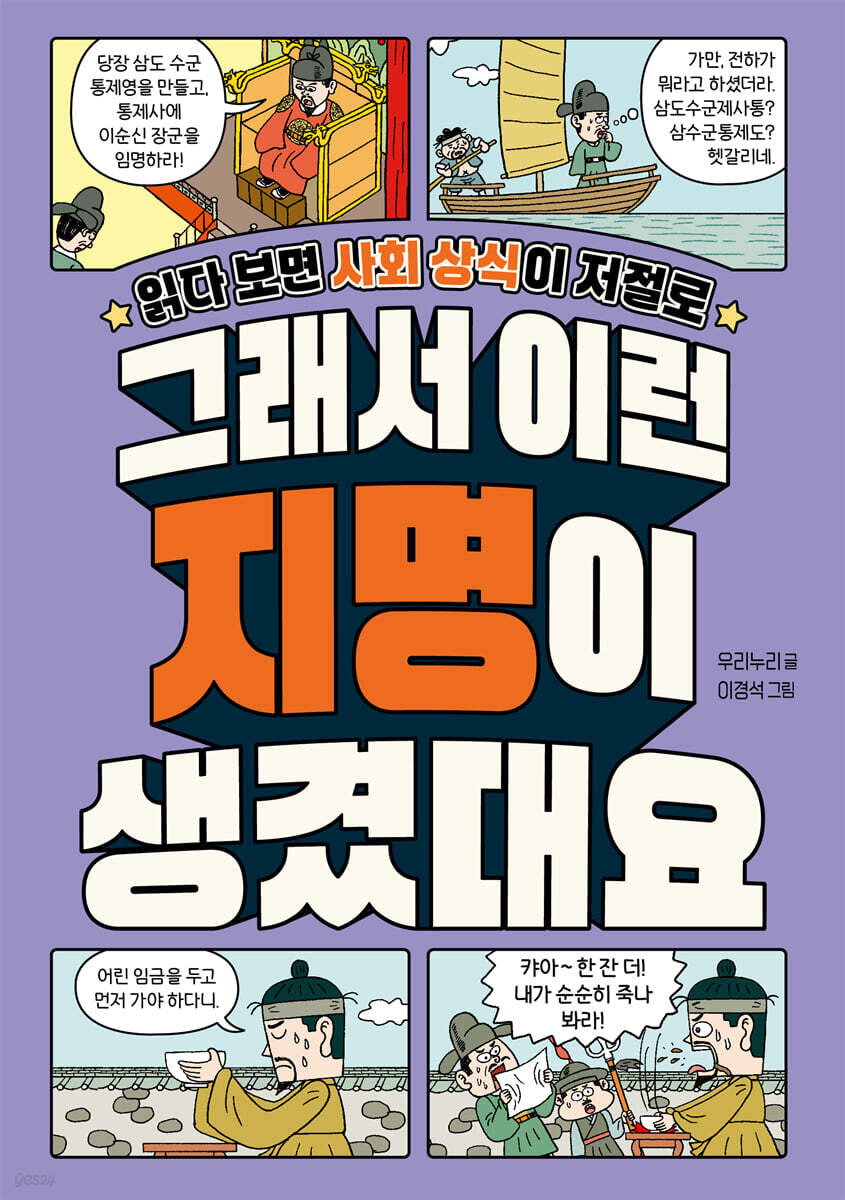
"So That's How These Place Names Came About" tells the story of how 68 place names from Korea and abroad came about through four-panel cartoons and interesting stories.
If you've ever looked at a map and still can't figure out where something is, or if unfamiliar place names feel difficult and stiff, read this book.
Studying history and geography, which used to feel distant and boring, will now feel easier and more fun.
Immerse yourself in the fascinating stories hidden in place names.
Did you know that even place names we've casually overlooked until now actually have their origins? "Seoul," with its hidden meaning of "new land," "Maljukgeori," where the king ate porridge on horseback during his exile, "Philippines," named for a Spanish crown prince, and the "Silk Road," the route that sold Chinese silk to the West—these well-known place names embody the history, geography, and culture of their respective regions.
"So That's How These Place Names Came About" tells the story of how 68 place names from Korea and abroad came about through four-panel cartoons and interesting stories.
If you've ever looked at a map and still can't figure out where something is, or if unfamiliar place names feel difficult and stiff, read this book.
Studying history and geography, which used to feel distant and boring, will now feel easier and more fun.
- You can preview some of the book's contents.
Preview
index
Chapter 1 Place names in Seoul
Seoul - meaning 'new land' 10
Wangsimni - The place where Master Muhak decided to go ten li further to decide on the site of the palace.
Jongno - The place where the bell was rung to announce the curfew 14
Jamsil - A village where silkworms were raised during the Joseon Dynasty 16
Seobinggo-dong - Joseon's Ice Warehouse 18
Apgujeong - Where Han Myeong-hoe's pavilion was located 20
Naksungdae - The place where a star fell when General Gang Gam-chan was born 22
Itaewon - A neighborhood where foreigners lived during the Joseon Dynasty 24
Hoegi - The tomb of Yeonsangun's mother, deposed queen Yun, is located at 26.
Bangbae-dong - The place where Prince Yangnyeong, who had yielded the throne to King Sejong, turned away and left.
Jangseungbaegi - A place where a jangseung was erected on the way to pay respects at the tomb of Crown Prince Sado. 30
Maljukgeori - The place where King Injo, on his way to exile, ate porridge. 32
Pimatgol - Alley 34 where people avoided the carriages of government officials
Jeoldusan Mountain - The mountain where Heungseon Daewongun beheaded a Catholic believer.
Jegi-dong - where the king personally performed ancestral rites 38
Hongje-dong - Where the National Inn Hongjewon used to be 40
Gyedong - The site of Jesaengwon, a hospital during the Joseon Dynasty. 42
Jaedong - The place where the bloody smell of the Gyeyujeongnan was covered with ashes 44
Jinkwan-dong - A neighborhood named after Master Jinkwan, who saved the life of King Hyeonjong of Goryeo.
Donam-dong - Doenemi Pass 48, where barbarians crossed during the Manchu invasion of Korea.
Mount Acha - The place where King Myeongjong killed the fortuneteller Hong Gye-gwan and exclaimed, "Acha!"
Haebangchon - A neighborhood where displaced people settled immediately after liberation.
Ttukseom - A place where the most important flagpole, the embankment, was built 54
Dangin-dong - The neighborhood where a Ming soldier who loved a Joseon woman lived 56
Gomdallae-gil - A sad love story entangled in bright, beautiful moonlight 58
Chapter 2 Place names of Incheon, Gyeonggi-do, Gangwon-do, and Chungcheong-do
Jemulpo - The Port That Urged Joseon's Opening to Foreign Trade 62
Baeknyeongdo Island - Love Ties Made by Cranes 64
Uijeongbu - Where Taejo, who hated Taejong, stayed 66
Tancheon - The place where Dongbangsak was deceived in Samcheon Gapja 68
Imjin River - Where the Battle of the Three Kingdoms Fiercely Happened 70
Deokneung Pass - the tomb of King Seonjo's father, Prince Deokheung Daewongun, is located here.
Jaein Falls - Where the Clown Jaein Falls to His Death 74
Murder Hill - Hill 76 where King Gongyang stayed and was killed
Hantangang River - A River Filled with Gung Ye's Laments 78
White Horse Hill - 9th Division, defend it to the end! 80
Seosan - A place where auspicious people lived 82
Park Dal-jae - Park Dal-young's Unfulfilled Love 84
Wiryesan Mountain - The Mountain Where Baekje Shed Tears After Its Defeat to Goguryeo 86
Chapter 3 Place names of Busan, Daegu, Gyeongsang-do, Jeolla-do, and Jeju-do
Haeundae - The childhood name of Choi Chi-won, a prominent scholar of Unified Silla.
Igi-dae - The place where the souls of two gisaengs who embraced the Japanese general and threw themselves upon him dwell 92
Gwangbok-dong - The place where people shouted "Long Live Korean Independence" 94
Palgongsan Mountain - Where eight subordinates died protecting King Wang Geon.
Ansim-dong - The place where Wang Geon finally felt at ease 98
Tongyeong - The site of the Samdo Naval Command Headquarters commanded by Yi Sun-sin.
Bloody Village - The Village Where Prince Geumseong's Blood Flowed, Who Tried to Restore King Danjong to the Throne 102
Seomjin River - The River Where the Golden Toad Defeated the Japanese Pirates 104
Chagyido - The place where Song Dynasty geomancer Hojongdan could not return 106
Jeju - Island 108 Created by Seolmundae Halmang
Baekrokdam - A lake where a white deer, captivated by a fairy, weeps sadly. 110
Chapter 4 Foreign Place Names
Europe - Named after Europa, beloved by Zeus. 114
America - Places Named After New World Explorers 116
Atlantic Ocean - The Sea Derived from Atlas the Stone 118
Pacific Ocean - A Calm and Peaceful Sea 120
London - A Roman Fortress 122
Rome - the city named after Romulus, who was suckled by a wolf 124
Madrid - The City with Lots of Bears 126
Athens - a city named after Athena, the goddess of wisdom 128
New York - A Land with a History of Taking and Being Taken 130
Los Angeles - City of Angels 132
Washington DC
- Capital 134, commemorating the first president of the United States, George Washington
Greenland - A Land of Hope 136
Amazon River - A River Originating from the Amazons, a Tribe of Warrior Women 138
Everest - The Highest Mountain 140
Ha Long Bay - The City Guarded by a Dragon from Heaven 142
Philippines - Named after the Spanish Crown Prince 144
Singapore - A name created by mistaking a tiger for a lion 146
Macau - Temple of the Goddess A-Ma 148
The Silk Road - The Road Used to Sell Chinese Silk to the West 150
supplement
The appearance of the land in place names 152
Our Country on a Map 155
Seoul - meaning 'new land' 10
Wangsimni - The place where Master Muhak decided to go ten li further to decide on the site of the palace.
Jongno - The place where the bell was rung to announce the curfew 14
Jamsil - A village where silkworms were raised during the Joseon Dynasty 16
Seobinggo-dong - Joseon's Ice Warehouse 18
Apgujeong - Where Han Myeong-hoe's pavilion was located 20
Naksungdae - The place where a star fell when General Gang Gam-chan was born 22
Itaewon - A neighborhood where foreigners lived during the Joseon Dynasty 24
Hoegi - The tomb of Yeonsangun's mother, deposed queen Yun, is located at 26.
Bangbae-dong - The place where Prince Yangnyeong, who had yielded the throne to King Sejong, turned away and left.
Jangseungbaegi - A place where a jangseung was erected on the way to pay respects at the tomb of Crown Prince Sado. 30
Maljukgeori - The place where King Injo, on his way to exile, ate porridge. 32
Pimatgol - Alley 34 where people avoided the carriages of government officials
Jeoldusan Mountain - The mountain where Heungseon Daewongun beheaded a Catholic believer.
Jegi-dong - where the king personally performed ancestral rites 38
Hongje-dong - Where the National Inn Hongjewon used to be 40
Gyedong - The site of Jesaengwon, a hospital during the Joseon Dynasty. 42
Jaedong - The place where the bloody smell of the Gyeyujeongnan was covered with ashes 44
Jinkwan-dong - A neighborhood named after Master Jinkwan, who saved the life of King Hyeonjong of Goryeo.
Donam-dong - Doenemi Pass 48, where barbarians crossed during the Manchu invasion of Korea.
Mount Acha - The place where King Myeongjong killed the fortuneteller Hong Gye-gwan and exclaimed, "Acha!"
Haebangchon - A neighborhood where displaced people settled immediately after liberation.
Ttukseom - A place where the most important flagpole, the embankment, was built 54
Dangin-dong - The neighborhood where a Ming soldier who loved a Joseon woman lived 56
Gomdallae-gil - A sad love story entangled in bright, beautiful moonlight 58
Chapter 2 Place names of Incheon, Gyeonggi-do, Gangwon-do, and Chungcheong-do
Jemulpo - The Port That Urged Joseon's Opening to Foreign Trade 62
Baeknyeongdo Island - Love Ties Made by Cranes 64
Uijeongbu - Where Taejo, who hated Taejong, stayed 66
Tancheon - The place where Dongbangsak was deceived in Samcheon Gapja 68
Imjin River - Where the Battle of the Three Kingdoms Fiercely Happened 70
Deokneung Pass - the tomb of King Seonjo's father, Prince Deokheung Daewongun, is located here.
Jaein Falls - Where the Clown Jaein Falls to His Death 74
Murder Hill - Hill 76 where King Gongyang stayed and was killed
Hantangang River - A River Filled with Gung Ye's Laments 78
White Horse Hill - 9th Division, defend it to the end! 80
Seosan - A place where auspicious people lived 82
Park Dal-jae - Park Dal-young's Unfulfilled Love 84
Wiryesan Mountain - The Mountain Where Baekje Shed Tears After Its Defeat to Goguryeo 86
Chapter 3 Place names of Busan, Daegu, Gyeongsang-do, Jeolla-do, and Jeju-do
Haeundae - The childhood name of Choi Chi-won, a prominent scholar of Unified Silla.
Igi-dae - The place where the souls of two gisaengs who embraced the Japanese general and threw themselves upon him dwell 92
Gwangbok-dong - The place where people shouted "Long Live Korean Independence" 94
Palgongsan Mountain - Where eight subordinates died protecting King Wang Geon.
Ansim-dong - The place where Wang Geon finally felt at ease 98
Tongyeong - The site of the Samdo Naval Command Headquarters commanded by Yi Sun-sin.
Bloody Village - The Village Where Prince Geumseong's Blood Flowed, Who Tried to Restore King Danjong to the Throne 102
Seomjin River - The River Where the Golden Toad Defeated the Japanese Pirates 104
Chagyido - The place where Song Dynasty geomancer Hojongdan could not return 106
Jeju - Island 108 Created by Seolmundae Halmang
Baekrokdam - A lake where a white deer, captivated by a fairy, weeps sadly. 110
Chapter 4 Foreign Place Names
Europe - Named after Europa, beloved by Zeus. 114
America - Places Named After New World Explorers 116
Atlantic Ocean - The Sea Derived from Atlas the Stone 118
Pacific Ocean - A Calm and Peaceful Sea 120
London - A Roman Fortress 122
Rome - the city named after Romulus, who was suckled by a wolf 124
Madrid - The City with Lots of Bears 126
Athens - a city named after Athena, the goddess of wisdom 128
New York - A Land with a History of Taking and Being Taken 130
Los Angeles - City of Angels 132
Washington DC
- Capital 134, commemorating the first president of the United States, George Washington
Greenland - A Land of Hope 136
Amazon River - A River Originating from the Amazons, a Tribe of Warrior Women 138
Everest - The Highest Mountain 140
Ha Long Bay - The City Guarded by a Dragon from Heaven 142
Philippines - Named after the Spanish Crown Prince 144
Singapore - A name created by mistaking a tiger for a lion 146
Macau - Temple of the Goddess A-Ma 148
The Silk Road - The Road Used to Sell Chinese Silk to the West 150
supplement
The appearance of the land in place names 152
Our Country on a Map 155
Detailed image

Into the book
Ambassador Muhak went ten more miles as Ambassador Doseon had instructed, built a palace, and named it Gyeongbokgung Palace.
And the place where he met Ambassador Doseon was called ‘Wangsimni’ by writing the characters for ‘toward’ (往), ‘ten’ (十), and ‘village’ (里).
The name of the current Wangsimni in Seoul comes from the story that Master Muhak went ten li further from there and established a palace site.
--- p.13
People built two graves near the sea off Busan to commemorate the two gisaengs who threw themselves into the sea while embracing the general.
And since the two gisaengs fell into the sea with the general, this place was called 'Igi-dae' by using the characters for two (二), gisaeng (妓), and platform (臺).
--- p.93
The Samdo Naval Command was a military headquarters that managed the navies of Gyeongsang-do, Jeolla-do, and Chungcheong-do.
It was abbreviated as ‘Tongjeyeong’ or ‘Tongyeong’.
It was created for the purpose of commanding the navy when the Imjin War broke out.
The name 'Tongyeong' in Gyeongsangnam-do is derived from the place where the control tower was built.
--- p.101
As the prince was thinking about what to name his country, he remembered the lion he had seen when he first arrived in the village.
So, they combined 'Singa', which means lion, and 'Pura', which means village, to create 'Singapura'.
It means 'Lion's Village'.
As time passed, the pronunciation of Singapore changed and it became known as 'Singapore' today.
And the place where he met Ambassador Doseon was called ‘Wangsimni’ by writing the characters for ‘toward’ (往), ‘ten’ (十), and ‘village’ (里).
The name of the current Wangsimni in Seoul comes from the story that Master Muhak went ten li further from there and established a palace site.
--- p.13
People built two graves near the sea off Busan to commemorate the two gisaengs who threw themselves into the sea while embracing the general.
And since the two gisaengs fell into the sea with the general, this place was called 'Igi-dae' by using the characters for two (二), gisaeng (妓), and platform (臺).
--- p.93
The Samdo Naval Command was a military headquarters that managed the navies of Gyeongsang-do, Jeolla-do, and Chungcheong-do.
It was abbreviated as ‘Tongjeyeong’ or ‘Tongyeong’.
It was created for the purpose of commanding the navy when the Imjin War broke out.
The name 'Tongyeong' in Gyeongsangnam-do is derived from the place where the control tower was built.
--- p.101
As the prince was thinking about what to name his country, he remembered the lion he had seen when he first arrived in the village.
So, they combined 'Singa', which means lion, and 'Pura', which means village, to create 'Singapura'.
It means 'Lion's Village'.
As time passed, the pronunciation of Singapore changed and it became known as 'Singapore' today.
--- p.147
Publisher's Review
From Seoul to Jeju, we've gathered all the interesting stories related to our place names.
Jongno in Seoul was the place where the bell was rung to announce the curfew.
Busan's beach, Haeundae, is named after the childhood name of Choi Ji-won, a genius scholar of the Unified Silla Dynasty.
The name 'Seomjin River', which uses the character for toad (蟾), originated from the legend that toads appeared during the Imjin War and stopped the Japanese invaders.
As you read about the origins of these various place names, you can naturally glimpse not only the history behind them but also the wisdom and lifestyles of our ancestors.
Expand your horizons by exploring place names around the world.
So what about place names around the world? The names of countries, continents, and oceans all have their own stories.
There are many interesting stories, such as Europe, which was named after Europa, a woman loved by the Greek god Zeus; New York, which was named after a member of the British royal family; and Greenland, which was named in the hope that it would grow green despite being covered in ice.
It will also be of great help in learning about the history, culture, mythology, and geography of various countries.
A four-panel comic strip with a hilarious origin story adds to the fun of reading.
On each left-hand page where the story begins, there is a fun four-panel cartoon related to place names.
The characters' humorous expressions and interesting lines add to the enjoyment of reading the book.
The right page contains the actual history of the place name and the legends that have been handed down, adapted to children's level.
Even children who are only familiar with educational comics or have difficulty reading long texts can enjoy reading it.
Fill your head with historical and geographical information with useful tips and appendices!
Why are only Yeonsangun and Gwanghaegun among the Joseon kings called "gun" instead of "jo" or "jong"? Why did the Imjin and Byeongja Wars occur? Why did the extraordinary Gung Ye become a tyrant? For each place name, I've included brief synopses of historical events and personal stories that are helpful when read alongside them.
Additionally, the book is divided into Seoul, the central region, and the southern region according to the location of the place names, and an appendix at the back of the book includes a map of the entire country to help readers learn the geography of Korea more easily.
Jongno in Seoul was the place where the bell was rung to announce the curfew.
Busan's beach, Haeundae, is named after the childhood name of Choi Ji-won, a genius scholar of the Unified Silla Dynasty.
The name 'Seomjin River', which uses the character for toad (蟾), originated from the legend that toads appeared during the Imjin War and stopped the Japanese invaders.
As you read about the origins of these various place names, you can naturally glimpse not only the history behind them but also the wisdom and lifestyles of our ancestors.
Expand your horizons by exploring place names around the world.
So what about place names around the world? The names of countries, continents, and oceans all have their own stories.
There are many interesting stories, such as Europe, which was named after Europa, a woman loved by the Greek god Zeus; New York, which was named after a member of the British royal family; and Greenland, which was named in the hope that it would grow green despite being covered in ice.
It will also be of great help in learning about the history, culture, mythology, and geography of various countries.
A four-panel comic strip with a hilarious origin story adds to the fun of reading.
On each left-hand page where the story begins, there is a fun four-panel cartoon related to place names.
The characters' humorous expressions and interesting lines add to the enjoyment of reading the book.
The right page contains the actual history of the place name and the legends that have been handed down, adapted to children's level.
Even children who are only familiar with educational comics or have difficulty reading long texts can enjoy reading it.
Fill your head with historical and geographical information with useful tips and appendices!
Why are only Yeonsangun and Gwanghaegun among the Joseon kings called "gun" instead of "jo" or "jong"? Why did the Imjin and Byeongja Wars occur? Why did the extraordinary Gung Ye become a tyrant? For each place name, I've included brief synopses of historical events and personal stories that are helpful when read alongside them.
Additionally, the book is divided into Seoul, the central region, and the southern region according to the location of the place names, and an appendix at the back of the book includes a map of the entire country to help readers learn the geography of Korea more easily.
GOODS SPECIFICS
- Date of issue: September 30, 2025
- Page count, weight, size: 156 pages | 334g | 148*210*11mm
- ISBN13: 9791174670403
- KC Certification: Certification Type: Conformity Confirmation
You may also like
카테고리
korean


korean

![GQ KOREA Mark (Monthly): December [2025]](http://librairie.coreenne.fr/cdn/shop/files/8ef265dbbfbf186523ed75ba7319009d.jpg?v=1765340328&width=3840)


