

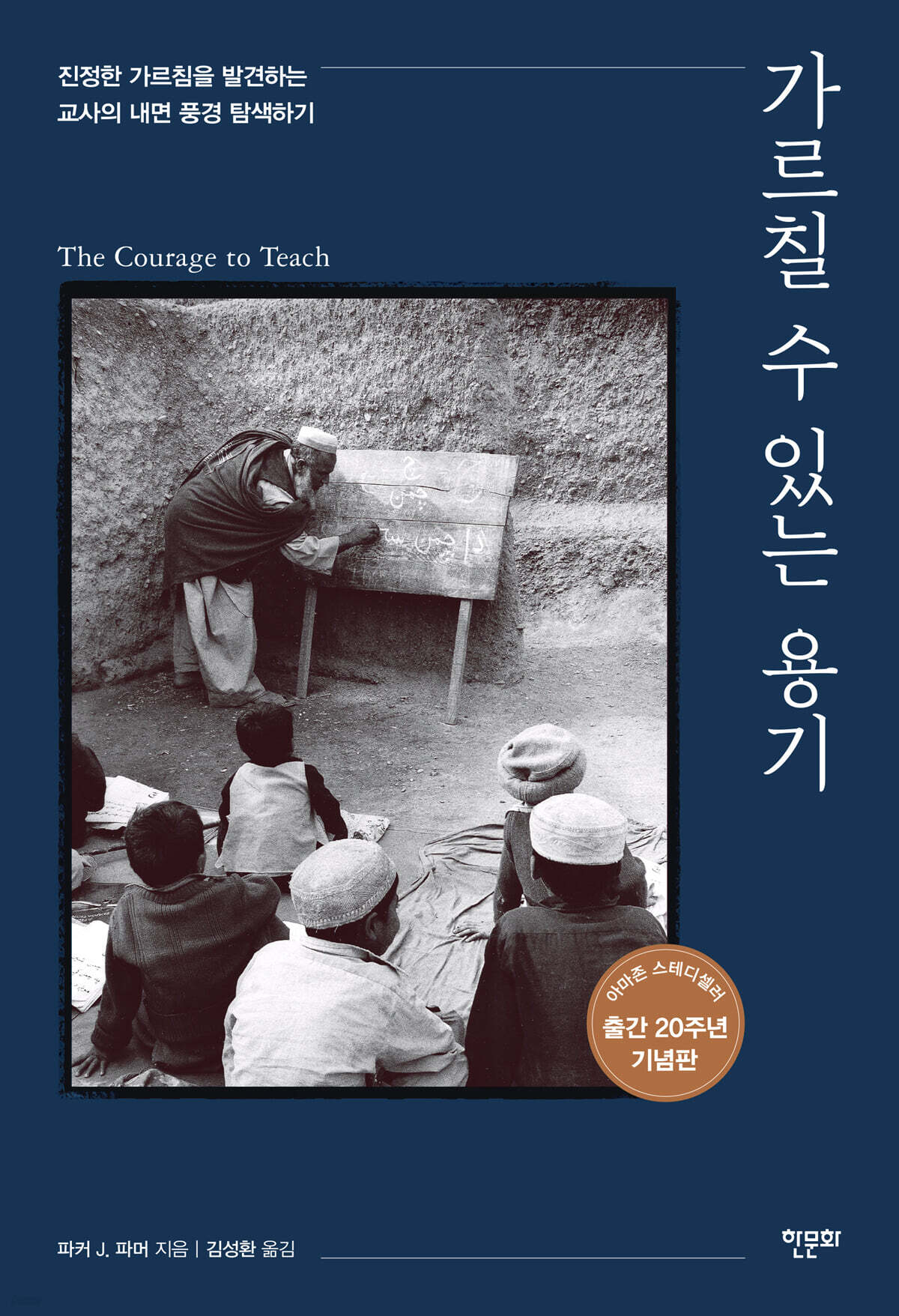
The courage to teach
 |
Description
Book Introduction
Celebrating the 20th anniversary of Parker Palmer's educational essays!
Living while teaching,
For those who feel the pain and joy together
Parker J. was named one of the "most influential people in American higher education" in a survey of over 10,000 educational institution officials and professors across the United States.
Palmer's famous educational essay, "The Courage to Teach," celebrates its 20th anniversary.
Emphasizing an education that integrates intellect, emotion, and spirituality with teachers, students, and subjects, this book combines insightful insights into the essence of perceiving, teaching, and learning, vivid case studies from the educational field, and heart-wrenching self-reflection and humor to inspire hope, courage, and passion for teaching in a delightful and moving way.
There are many thinkers who have set new milestones in the field of education with their excellent educational philosophies, but few have appealed to the heart as directly as Palmer.
Parker is a thinker and practitioner who has consistently worked to look into the 'heart of a teacher'.
The educational philosophy he expresses is strict yet warm, passionate yet clear.
This book begins with a personal question about a teacher's self-identity and expands its perspective to the large-scale project of educational reform, raising various questions.
How can we deepen our ability to teach and learn? How can we rediscover and cultivate the joy and love of teaching? How can we grow as true teachers? How can we fulfill our deep-seated yearning for interconnectedness and build a community that supports teaching and learning? Palmer answers these questions through a model of education that organically connects intellect, emotion, and spirituality, and teachers, students, and the subject.
This book offers a broad perspective and profound reflection not only to those who love teaching and learning, such as step-by-step school teachers, counselors, and cultural planners, but also to leaders and professionals in all fields.
Living while teaching,
For those who feel the pain and joy together
Parker J. was named one of the "most influential people in American higher education" in a survey of over 10,000 educational institution officials and professors across the United States.
Palmer's famous educational essay, "The Courage to Teach," celebrates its 20th anniversary.
Emphasizing an education that integrates intellect, emotion, and spirituality with teachers, students, and subjects, this book combines insightful insights into the essence of perceiving, teaching, and learning, vivid case studies from the educational field, and heart-wrenching self-reflection and humor to inspire hope, courage, and passion for teaching in a delightful and moving way.
There are many thinkers who have set new milestones in the field of education with their excellent educational philosophies, but few have appealed to the heart as directly as Palmer.
Parker is a thinker and practitioner who has consistently worked to look into the 'heart of a teacher'.
The educational philosophy he expresses is strict yet warm, passionate yet clear.
This book begins with a personal question about a teacher's self-identity and expands its perspective to the large-scale project of educational reform, raising various questions.
How can we deepen our ability to teach and learn? How can we rediscover and cultivate the joy and love of teaching? How can we grow as true teachers? How can we fulfill our deep-seated yearning for interconnectedness and build a community that supports teaching and learning? Palmer answers these questions through a model of education that organically connects intellect, emotion, and spirituality, and teachers, students, and the subject.
This book offers a broad perspective and profound reflection not only to those who love teaching and learning, such as step-by-step school teachers, counselors, and cultural planners, but also to leaders and professionals in all fields.
- You can preview some of the book's contents.
Preview
index
Praise for this book
Celebrating the 20th Anniversary Edition / Diana Chapman Walsh
Publishing the 10th anniversary edition
Introduction: Teachings from the Inside
Chapter 1: The Teacher's Mind│Identity and Authenticity in Education
Chapter 2: The Culture of Fear | A Life Disconnected from Education
Chapter 3: Hidden Wholeness│The Paradox of Teaching and Learning
Chapter 4: Recognizing in Community│The Grace of Great Things
Chapter 5: Teaching in Community│Theme-Centered Education
Chapter 6: Learning in Community│Conversations with Fellow Teachers
Chapter 7: No More Division│Teaching with a Heart of Hope
Addendum to the 10th Anniversary Edition: New Professionals│Education for Change
Acknowledgements
Note
Celebrating the 20th Anniversary Edition / Diana Chapman Walsh
Publishing the 10th anniversary edition
Introduction: Teachings from the Inside
Chapter 1: The Teacher's Mind│Identity and Authenticity in Education
Chapter 2: The Culture of Fear | A Life Disconnected from Education
Chapter 3: Hidden Wholeness│The Paradox of Teaching and Learning
Chapter 4: Recognizing in Community│The Grace of Great Things
Chapter 5: Teaching in Community│Theme-Centered Education
Chapter 6: Learning in Community│Conversations with Fellow Teachers
Chapter 7: No More Division│Teaching with a Heart of Hope
Addendum to the 10th Anniversary Edition: New Professionals│Education for Change
Acknowledgements
Note
Into the book
“This book is the first event that, like a single spark, launched and spread an educational reform movement on which the future of humanity depends.
...Parker Palmer looks at the world with bright eyes, evaluates it analytically, sees through its inherent paradoxes, recognizes the darkness beneath and is brilliant at perceiving the shadows that lie beneath.
But he, a born teacher, insists that knowledge sets us free, and that any special knowledge that sustains connection and affirms life is more than enough to liberate us.”
---From "Congratulations on the publication of the 20th anniversary edition"
“Exploring the inner landscape of our lives as teachers allows us to return to the outer landscape of our lives, renewed and rooted within.
Once we gain courage from what we have accepted as our calling, we can love our students, our colleagues, our school, and the world again.
Then the cruelty of this world will give way to the gifts and graces that come from within.”
---From “Publishing the 10th Anniversary Edition”
“Teaching comes from within ourselves, whether we like it or not.
While teaching, I project the state of my soul onto the students, the subject matter, and my relationship with the students.
The challenges I experience in the classroom often mirror my inner struggles.
From this perspective, teaching is like holding a mirror up to one's own soul.
“If you are willing to look into that mirror and not run away, you will have the opportunity to know yourself, and knowing yourself is as essential to good teaching as knowing your students and your subject.”
---From "Introductory Notes - Teachings from Within"
“A good teacher has the ability to build a bond.
Because they can weave a complex web of relationships between themselves, their subjects, and their students, students, too, can learn from good teachers how to weave a world of their own.
There are countless ways these craftsmen utilize it.
Lectures, Socratic dialectics, laboratory exercises, collaborative problem solving, and brainstorming.
But the connections that good teachers create come from their hearts, not their techniques.”
---From "Chapter 1: The Teacher's Heart"
“Every time I enter the classroom, fear rears its head in a corner of my heart.
...That's when a student asks a question I never imagined, or when they have an absurd conflict, or when I give a lecture that leaves the students lost because I'm confused.
Even when I'm lucky enough to finish a bad lecture, I'm still gripped by fear for a long time.
I am afraid that I may lack not only my teaching ability but also my humanity.
My self-consciousness and my work are that closely intertwined.
My fears resonate with the fears within my students.
They are afraid of failing the grade, of not understanding the lecture material, of getting involved in a problem they want to avoid, of having their ignorance exposed or their prejudices pointed out, of looking foolish in front of their friends.
“When my fears and those of my students are mixed together, the fears multiply exponentially, and education becomes completely paralyzed.”
---From "Chapter 2: The Culture of Fear"
“Bohr defined, with just a few carefully chosen words, a concept that is essential for viewing the world as a whole.
This is the concept of 'paradox'.
Truth is not found by splitting the world into either-or pieces, but by accepting both as aspects of the truth.
In other cases, the truth appears as a paradoxical fusion of seemingly opposite things.
Therefore, if we want to know the truth, we must first learn to embrace opposite poles as one.”
---From "Chapter 3: Hidden Wholeness"
“Community enables interconnectedness, which is essential to teaching and learning and is the core of true education.
If we previously discussed cultivating the inner soil that can enable a community to grow, we will now address the issue of expanding that inner soil into the larger world, such as the classroom or local community.
···Community must be inherent as a seed within the undivided self long before it takes on external shape and form.
If we do not connect with ourselves, we cannot form a community with others.
Community can be likened to a visible manifestation of inner grace, a personal identity and authenticity flowing into the world of relationships.
“It is the result of the interconnectedness I have been exploring so far extending into the outside world.”
---From "Chapter 4: Recognizing in the Community"
“A classroom where the subject is central is a ‘third thing’ that is so real, so vivid, so distinctly present.
So both teachers and students feel responsible for their words and actions.
There is no such thing as helpless reality in a classroom like this.
Because the great thing (subject) is so vividly alive, the teacher is conscious of the students and the students are conscious of the teacher, and they respect each other's opinions in the name of the great thing.
In such classrooms, teachers and students possess a power that transcends themselves.
“It is the power of the subject that transcends our narcissism and refuses to be reduced to our own claims.”
---From “Chapter 5 Teaching in Community”
“The teacher walks into the classroom, his workplace, and closes the door on his colleagues.
And once they leave the classroom, they rarely talk about what happened in the classroom or what they plan to do next.
Because there is absolutely no common experience to talk about.
Instead of seeing this as alienation and overcoming it, we call it “academic freedom” and elevate it to a virtue.
It's like saying, 'My classroom is my castle, so lords of other territories are not allowed to enter.'
We pay a high price for this individualization.
If you want to teach well, you must explore your inner self, but you may get lost there and fall into self-deception, going around in circles without taking a single step forward.
So we need to be guided by the community of our peers.
We also need the support of the community and the experiential, collective wisdom found in all teachers, which gives us the strength to overcome the challenges of teaching.”
---From "Chapter 6: Learning in Community"
“We are publicly declaring that we choose to live undivided.
Because I refused to conform to the establishment, it no longer exerts its influence over me! The problem I face is no longer "those people" or "that place."
The problem is that I myself have silently colluded with the establishment without resisting, and have allowed it to rule my life.
Choosing to live undivided is to put into practice the principle of the proclamation: "Our true enemy is ourselves!"
“The moment we decide not to be our own enemies, we free ourselves from institutional constraints and gain the power to challenge the established system.”
---From "Chapter 7: No More Division"
How can we educate professionals to remain motivated in an environment where people are too often discouraged? (1) We must help students dispel the myth that institutions have absolute, even definitive, power over our lives.
(2) We must value not only students' intellect but also their emotions.
(3) We must teach students how to 'examine' their emotions in order to gain knowledge.
(4) We must teach students how to build a community of both awareness and action.
(5) We must teach our students what it means to live an ‘undivided life’ and model such a life ourselves.”
...Parker Palmer looks at the world with bright eyes, evaluates it analytically, sees through its inherent paradoxes, recognizes the darkness beneath and is brilliant at perceiving the shadows that lie beneath.
But he, a born teacher, insists that knowledge sets us free, and that any special knowledge that sustains connection and affirms life is more than enough to liberate us.”
---From "Congratulations on the publication of the 20th anniversary edition"
“Exploring the inner landscape of our lives as teachers allows us to return to the outer landscape of our lives, renewed and rooted within.
Once we gain courage from what we have accepted as our calling, we can love our students, our colleagues, our school, and the world again.
Then the cruelty of this world will give way to the gifts and graces that come from within.”
---From “Publishing the 10th Anniversary Edition”
“Teaching comes from within ourselves, whether we like it or not.
While teaching, I project the state of my soul onto the students, the subject matter, and my relationship with the students.
The challenges I experience in the classroom often mirror my inner struggles.
From this perspective, teaching is like holding a mirror up to one's own soul.
“If you are willing to look into that mirror and not run away, you will have the opportunity to know yourself, and knowing yourself is as essential to good teaching as knowing your students and your subject.”
---From "Introductory Notes - Teachings from Within"
“A good teacher has the ability to build a bond.
Because they can weave a complex web of relationships between themselves, their subjects, and their students, students, too, can learn from good teachers how to weave a world of their own.
There are countless ways these craftsmen utilize it.
Lectures, Socratic dialectics, laboratory exercises, collaborative problem solving, and brainstorming.
But the connections that good teachers create come from their hearts, not their techniques.”
---From "Chapter 1: The Teacher's Heart"
“Every time I enter the classroom, fear rears its head in a corner of my heart.
...That's when a student asks a question I never imagined, or when they have an absurd conflict, or when I give a lecture that leaves the students lost because I'm confused.
Even when I'm lucky enough to finish a bad lecture, I'm still gripped by fear for a long time.
I am afraid that I may lack not only my teaching ability but also my humanity.
My self-consciousness and my work are that closely intertwined.
My fears resonate with the fears within my students.
They are afraid of failing the grade, of not understanding the lecture material, of getting involved in a problem they want to avoid, of having their ignorance exposed or their prejudices pointed out, of looking foolish in front of their friends.
“When my fears and those of my students are mixed together, the fears multiply exponentially, and education becomes completely paralyzed.”
---From "Chapter 2: The Culture of Fear"
“Bohr defined, with just a few carefully chosen words, a concept that is essential for viewing the world as a whole.
This is the concept of 'paradox'.
Truth is not found by splitting the world into either-or pieces, but by accepting both as aspects of the truth.
In other cases, the truth appears as a paradoxical fusion of seemingly opposite things.
Therefore, if we want to know the truth, we must first learn to embrace opposite poles as one.”
---From "Chapter 3: Hidden Wholeness"
“Community enables interconnectedness, which is essential to teaching and learning and is the core of true education.
If we previously discussed cultivating the inner soil that can enable a community to grow, we will now address the issue of expanding that inner soil into the larger world, such as the classroom or local community.
···Community must be inherent as a seed within the undivided self long before it takes on external shape and form.
If we do not connect with ourselves, we cannot form a community with others.
Community can be likened to a visible manifestation of inner grace, a personal identity and authenticity flowing into the world of relationships.
“It is the result of the interconnectedness I have been exploring so far extending into the outside world.”
---From "Chapter 4: Recognizing in the Community"
“A classroom where the subject is central is a ‘third thing’ that is so real, so vivid, so distinctly present.
So both teachers and students feel responsible for their words and actions.
There is no such thing as helpless reality in a classroom like this.
Because the great thing (subject) is so vividly alive, the teacher is conscious of the students and the students are conscious of the teacher, and they respect each other's opinions in the name of the great thing.
In such classrooms, teachers and students possess a power that transcends themselves.
“It is the power of the subject that transcends our narcissism and refuses to be reduced to our own claims.”
---From “Chapter 5 Teaching in Community”
“The teacher walks into the classroom, his workplace, and closes the door on his colleagues.
And once they leave the classroom, they rarely talk about what happened in the classroom or what they plan to do next.
Because there is absolutely no common experience to talk about.
Instead of seeing this as alienation and overcoming it, we call it “academic freedom” and elevate it to a virtue.
It's like saying, 'My classroom is my castle, so lords of other territories are not allowed to enter.'
We pay a high price for this individualization.
If you want to teach well, you must explore your inner self, but you may get lost there and fall into self-deception, going around in circles without taking a single step forward.
So we need to be guided by the community of our peers.
We also need the support of the community and the experiential, collective wisdom found in all teachers, which gives us the strength to overcome the challenges of teaching.”
---From "Chapter 6: Learning in Community"
“We are publicly declaring that we choose to live undivided.
Because I refused to conform to the establishment, it no longer exerts its influence over me! The problem I face is no longer "those people" or "that place."
The problem is that I myself have silently colluded with the establishment without resisting, and have allowed it to rule my life.
Choosing to live undivided is to put into practice the principle of the proclamation: "Our true enemy is ourselves!"
“The moment we decide not to be our own enemies, we free ourselves from institutional constraints and gain the power to challenge the established system.”
---From "Chapter 7: No More Division"
How can we educate professionals to remain motivated in an environment where people are too often discouraged? (1) We must help students dispel the myth that institutions have absolute, even definitive, power over our lives.
(2) We must value not only students' intellect but also their emotions.
(3) We must teach students how to 'examine' their emotions in order to gain knowledge.
(4) We must teach students how to build a community of both awareness and action.
(5) We must teach our students what it means to live an ‘undivided life’ and model such a life ourselves.”
---From "Additional Notes to the 10th Anniversary Edition - New Professionals"
Publisher's Review
Who is the teacher?
In these times, when many teachers are struggling to survive, the author's attempt to delve into the inner world of teachers may seem odd and inappropriate.
Wouldn't it be more practical to offer tips and techniques for surviving in the classroom? But like any truly human behavior, teaching is something that flows from within.
So far, we have only talked about 'what', 'how', and 'why' to teach, without touching 'who' will teach it.
Now it's time to talk about that 'who'.
The author confesses that while writing this book over the course of five years, he felt how strong the temptation is to settle for the questions of 'what,' 'how,' and 'why.'
However, Palmer persistently delved into the question, 'What is a teacher's self-consciousness?'
Because that is the most fundamental question that can be asked of education and educators.
Great teaching comes from the teacher's self-identity.
Great teaching is never a technique.
It flows from the teacher's self-identity and truthfulness.
It is difficult to say in general terms what makes a good teacher, but when it comes to bad teachers, we can say one thing in one word.
To borrow a phrase from students, "A bad teacher's words float in front of their faces like speech bubbles in a cartoon." They isolate themselves from the subject they teach, and as a result, they alienate their students.
On the other hand, a good teacher weaves his or her self, his or her subject matter, and his or her students into a web of life.
A teacher who is firmly connected to his or her own self never loses the desire to teach, and creates true teaching by opening the hearts of students.
Free yourself from the fears hidden behind the facade of objectivity.
The key to great teaching is interconnectedness.
But the fear in our hearts of confronting others head-on holds us back.
The others that teachers encounter in the educational field include students, fellow teachers, the subjects they teach, and various conflicting thoughts within themselves.
Students fear their teachers and hide behind notes and silence, and teachers fear their students and hide behind their pedagogy, career, and authority.
Also, fearing meeting fellow teachers, they hide behind their own fields of expertise, and, under the guise of objectivity, they only parrot unembodied, dead knowledge or facts.
The author examines how our education system, too, is steeped in fear in a culture built on fear, and emphasizes the importance of education that overcomes fear and restores interconnectedness.
He emphasizes that we must teach students a holistic view of the world, moving beyond the dichotomous education that separates head and heart, facts and feelings, theory and practice, and teaching and learning.
Teach with a focus on the topic
Traditional education favors teacher-centered classrooms that emphasize strict discipline.
In this kind of classroom, the teacher gives and the students receive; the teacher sets the standards and the students simply follow them.
On the other hand, student-centered classrooms frame teachers as facilitators, co-learners, and even necessary evils, trapping students into relativism and majority rule, where everyone is right.
Palmer proposes a new classroom model centered around "great things."
Great things speak to timeless themes, and a classroom centered on themes exposes students to a world larger than their own experiences and selves, fosters a sense of community, and exposes them to otherness that awakens them to the truths of life.
Additionally, teachers regain their connection with their students, subjects, and themselves, and emerge as complete teachers.
Talk to your fellow teachers
Modern educational culture erects a wall between teachers that is higher than the wall between teachers and students.
Teaching is the most individualized of all public professions.
Teachers teach alone, out of sight of their colleagues.
The moment they enter the classroom, they close the door to their classmates, and once they leave the classroom, they keep their mouths shut about what happened there and do not talk about their experiences.
And rather than calling this phenomenon alienation that must be overcome, they praise it as academic freedom.
My classroom is my castle, and I take the attitude that lords of other castles are not welcome here.
The author points out that teachers pay a high price for this individualistic tendency.
Because teachers do not observe and evaluate each other's classes, they are evaluated solely on questionnaires filled out by students. Compared to other professional occupations, they are insensitive to change, and therefore, their growth is slow and their overall teaching ability is low.
Starting from this awareness of the problem, the author describes in detail what and how to talk with fellow teachers.
Decide not to live a divided life any longer.
Palmer does not limit education to the individual teacher's problem.
Starting from the issue of teachers' self-awareness, the focus expands to the large-scale project of educational reform.
No matter how hard teachers try, true education is impossible unless structural problems are resolved, such as deans and principals who are more interested in business than education, the quality of learning that is difficult to guarantee with too many lectures, an award system that emphasizes lectures but only evaluates professors with many publications, and a budget that spends more on administration, research, and building construction than on lecture time.
In this book, Palmer explains the four stages that an individual takes to participate in the education reform movement and achieve tangible results.
Palmer emphasizes that the most important thing in the educational reform movement is the individual courage of teachers to no longer live a divided life, that is, the determination not to give up true teaching, returning to the initial question of teachers' self-identity.
In these times, when many teachers are struggling to survive, the author's attempt to delve into the inner world of teachers may seem odd and inappropriate.
Wouldn't it be more practical to offer tips and techniques for surviving in the classroom? But like any truly human behavior, teaching is something that flows from within.
So far, we have only talked about 'what', 'how', and 'why' to teach, without touching 'who' will teach it.
Now it's time to talk about that 'who'.
The author confesses that while writing this book over the course of five years, he felt how strong the temptation is to settle for the questions of 'what,' 'how,' and 'why.'
However, Palmer persistently delved into the question, 'What is a teacher's self-consciousness?'
Because that is the most fundamental question that can be asked of education and educators.
Great teaching comes from the teacher's self-identity.
Great teaching is never a technique.
It flows from the teacher's self-identity and truthfulness.
It is difficult to say in general terms what makes a good teacher, but when it comes to bad teachers, we can say one thing in one word.
To borrow a phrase from students, "A bad teacher's words float in front of their faces like speech bubbles in a cartoon." They isolate themselves from the subject they teach, and as a result, they alienate their students.
On the other hand, a good teacher weaves his or her self, his or her subject matter, and his or her students into a web of life.
A teacher who is firmly connected to his or her own self never loses the desire to teach, and creates true teaching by opening the hearts of students.
Free yourself from the fears hidden behind the facade of objectivity.
The key to great teaching is interconnectedness.
But the fear in our hearts of confronting others head-on holds us back.
The others that teachers encounter in the educational field include students, fellow teachers, the subjects they teach, and various conflicting thoughts within themselves.
Students fear their teachers and hide behind notes and silence, and teachers fear their students and hide behind their pedagogy, career, and authority.
Also, fearing meeting fellow teachers, they hide behind their own fields of expertise, and, under the guise of objectivity, they only parrot unembodied, dead knowledge or facts.
The author examines how our education system, too, is steeped in fear in a culture built on fear, and emphasizes the importance of education that overcomes fear and restores interconnectedness.
He emphasizes that we must teach students a holistic view of the world, moving beyond the dichotomous education that separates head and heart, facts and feelings, theory and practice, and teaching and learning.
Teach with a focus on the topic
Traditional education favors teacher-centered classrooms that emphasize strict discipline.
In this kind of classroom, the teacher gives and the students receive; the teacher sets the standards and the students simply follow them.
On the other hand, student-centered classrooms frame teachers as facilitators, co-learners, and even necessary evils, trapping students into relativism and majority rule, where everyone is right.
Palmer proposes a new classroom model centered around "great things."
Great things speak to timeless themes, and a classroom centered on themes exposes students to a world larger than their own experiences and selves, fosters a sense of community, and exposes them to otherness that awakens them to the truths of life.
Additionally, teachers regain their connection with their students, subjects, and themselves, and emerge as complete teachers.
Talk to your fellow teachers
Modern educational culture erects a wall between teachers that is higher than the wall between teachers and students.
Teaching is the most individualized of all public professions.
Teachers teach alone, out of sight of their colleagues.
The moment they enter the classroom, they close the door to their classmates, and once they leave the classroom, they keep their mouths shut about what happened there and do not talk about their experiences.
And rather than calling this phenomenon alienation that must be overcome, they praise it as academic freedom.
My classroom is my castle, and I take the attitude that lords of other castles are not welcome here.
The author points out that teachers pay a high price for this individualistic tendency.
Because teachers do not observe and evaluate each other's classes, they are evaluated solely on questionnaires filled out by students. Compared to other professional occupations, they are insensitive to change, and therefore, their growth is slow and their overall teaching ability is low.
Starting from this awareness of the problem, the author describes in detail what and how to talk with fellow teachers.
Decide not to live a divided life any longer.
Palmer does not limit education to the individual teacher's problem.
Starting from the issue of teachers' self-awareness, the focus expands to the large-scale project of educational reform.
No matter how hard teachers try, true education is impossible unless structural problems are resolved, such as deans and principals who are more interested in business than education, the quality of learning that is difficult to guarantee with too many lectures, an award system that emphasizes lectures but only evaluates professors with many publications, and a budget that spends more on administration, research, and building construction than on lecture time.
In this book, Palmer explains the four stages that an individual takes to participate in the education reform movement and achieve tangible results.
Palmer emphasizes that the most important thing in the educational reform movement is the individual courage of teachers to no longer live a divided life, that is, the determination not to give up true teaching, returning to the initial question of teachers' self-identity.
GOODS SPECIFICS
- Date of issue: April 25, 2024
- Page count, weight, size: 336 pages | 152*210*20mm
- ISBN13: 9788956994703
- ISBN10: 8956994706
You may also like
카테고리
korean


korean

![GQ KOREA Mark (Monthly): December [2025]](http://librairie.coreenne.fr/cdn/shop/files/8ef265dbbfbf186523ed75ba7319009d.jpg?v=1765340328&width=3840)


