

The Old Man and the Sea
 |
Description
Book Introduction
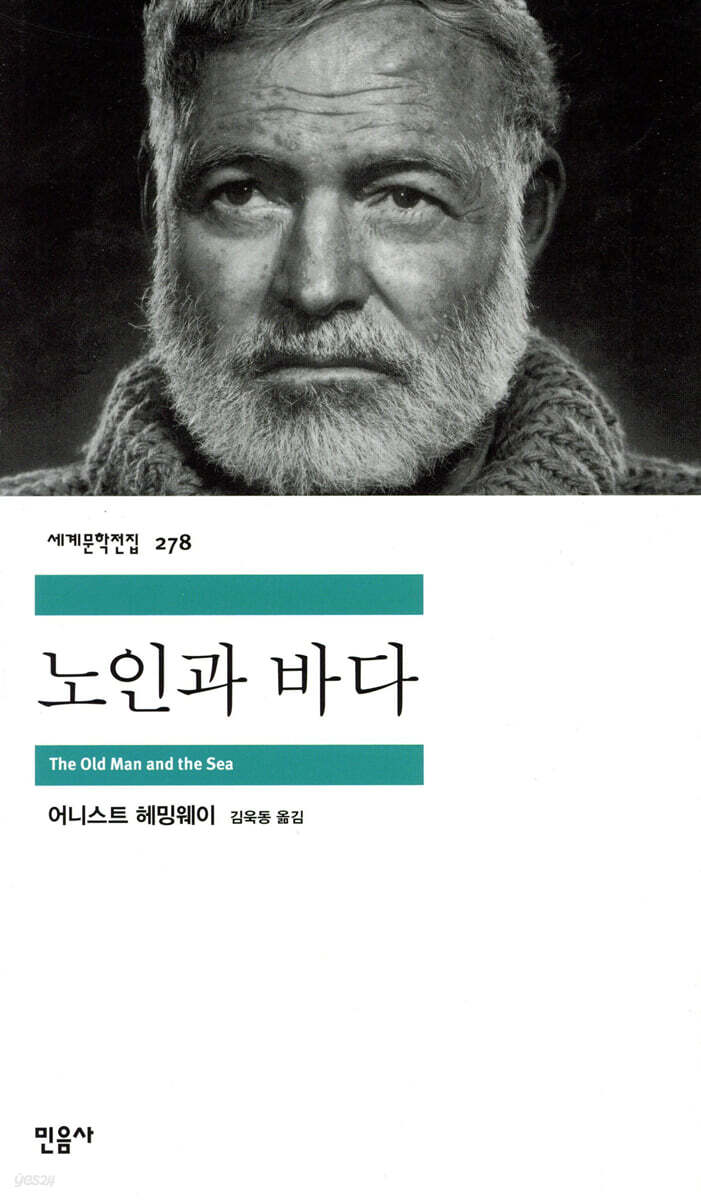
Hemingway, who is called a pioneer of modern American literature, is a writer representing the 'lost generation' who lost their bearings in life after World War I. However, due to difficulties in obtaining copyright contracts, the works were not properly introduced in Korea. This time, three of the representative works are being introduced simultaneously. Hemingway's last novel, "The Old Man and the Sea," which condenses the author's unique novelistic techniques and existential philosophy into a short volume; "A Farewell to Arms," a romance novel that he himself described as "my own Romeo and Juliet" and a deep existential reflection; and "The Sun Also Rises," his first full-length novel depicting people who have lost their direction in life after World War II. "The Old Man and the Sea" is the culmination of Hemingway's literary legacy, built on a restrained, robust style and realistic techniques, while also utilizing a variety of symbols and a unique omniscient narrative style that rivals lyric poetry to add depth to the work. The following year, Hemingway won the Pulitzer Prize for this work, and The Old Man and the Sea also played a significant role in his winning the Nobel Prize for Literature in 1954. |
- You can preview some of the book's contents.
Preview
index
The Old Man and the Sea
Commentary on the work
Author's chronology
Commentary on the work
Author's chronology
Publisher's Review
Nobel Prize in Literature and Pulitzer Prize-winning author
Ernest Hemingway, a pioneer of 20th-century American literature
▶ His mastery of narrative techniques and his influence on modern style are remarkable. - The Swedish Academy, Reasons for Selecting for the Nobel Prize in Literature
▶ Hemingway is the real writer. - F.
Scott Fitzgerald
The Old Man and the Sea will be recognized as one of the greatest works by any writer of our time. - William Faulkner
Ernest Hemingway, the American novelist who won the Nobel Prize in Literature (1954), has published his representative works, The Old Man and the Sea, A Farewell to Arms, and The Sun Also Rises, in Minumsa's World Literature Collection.
Hemingway, who is called the pioneer of modern American literature, is a writer representing the 'lost generation' (une g?n?ration perdue, lost generation) who lost their way in life after World War I.
However, due to difficulties in obtaining copyright contracts, the works were not properly introduced in Korea. This time, three of the representative works are being introduced simultaneously.
Hemingway's last novel, "The Old Man and the Sea," which condenses the author's unique novelistic techniques and existential philosophy into a short volume; "A Farewell to Arms," a romance novel that he himself described as "my own Romeo and Juliet" and a deep existential reflection; and "The Sun Also Rises," his first full-length novel depicting people who have lost their direction in life after World War II.
This is also the result of three years of preparation by Professor Kim Wook-dong (Department of English Interpretation and Translation, Hankuk University of Foreign Studies), an English literature scholar and translator.
Hemingway once said that his work was “like an iceberg floating on the sea, with only one-eighth above the water and the remaining seven-eighths submerged.” Professor Kim Wook-dong has focused on preserving these stylistic characteristics since beginning his translations in 2009.
I tried to translate each of Hemingway's sentences, which hide a variety of meanings within the concise expressions called 'hard-boiled style', by considering them from various angles and preserving their nuance as much as possible while making them easily understandable to Korean readers.
We also tried to keep the original text intact by exposing French and Spanish to reveal regional characteristics, while maintaining the original intent and feeling.
Place names in Cuba, Italy, Spain, and other countries, as well as terms used in fishing, war, bullfighting, etc. were also researched and included one by one.
Professor Kim Wook-dong said, “In these translations, I wanted to bring back to life not only Hemingway’s body but also his soul.
We paid attention not only to conveying the directive meaning but also to conveying the implied meaning.
In other words, he also revealed his mindset during the Hemingway translation process, saying, “I tried not to miss the hidden meaning between the lines.”
■ The Old Man and the Sea
An old man's existential struggle and indomitable will, powerfully portrayed in restrained sentences.
A masterpiece that overcomes individualism and nihilism, affirms humanity and nature, and emphasizes the value of true solidarity.
Santiago, an old man who fishes alone in the Gulf Stream, has not caught anything for 84 days.
Manolin, a boy living in the same village, usually liked Santiago and helped him with his work, but this time he cannot go on the boat with him because his parents dissuade him from boarding, saying that the old man's luck is running out.
Santiago takes his boat out to sea alone and casts his fishing line.
When a marlin, much larger and stronger than his boat, gets hooked, Santiago struggles with the fish for two days and nights.
He feels like giving up when his hands get cramps, he gets hurt by the fishing line, and he runs out of water to drink, but he pulls himself together and fights with all his might, and eventually catches a marlin.
But the joy is short-lived, as a school of sharks chase Santiago's boat, having smelled the blood of the fish tied to a rope on the side of the boat.
He musters all his remaining strength to fight the school of sharks, but when he finally gets back to shore, he sees that only the head and spine of the marlin are left.
The fishermen marvel at the huge bone hanging from Santiago's boat, and Manolin, shedding tears of pity, packs food and goes to Santiago's house.
After a brief conversation with Manolin, Santiago falls into a peaceful sleep under the boy's watch.
Santiago, like the typical protagonist in Hemingway's works, is more loyal to his nature than to ideology and is more accustomed to acting than thinking.
However, he is a seventy-year-old man who has gained a lot of experience over the years and is more generous and has a better perspective on life.
Even when the young fishermen laugh at his misfortune, he laughs along and does not blame others.
Moreover, while Hemingway's other protagonists are somewhat tinged with nihilism, Santiago achieves a spiritual victory by not yielding to the powerful marlin, symbolizing youth, or the tough sharks, symbolizing trials, and by not giving up in the face of material loss and physical pain.
Good things never last, he thought.
How I wish this were just a dream.
I've never caught this fish before, and I wish I were lying alone in bed right now with a newspaper spread out on the floor.
“But man was not created to be defeated,” he said.
“Man may be destroyed, but he cannot be defeated.” (From “The Old Man and the Sea”)
Santiago's situation and the indomitable will he displays are deeply connected to Hemingway himself at the time he wrote this work.
After more than a decade of notable work since “For Whom the Bell Tolls,” Hemingway, who was practically sentenced to death as a writer, reaffirmed his vitality as a writer and displayed a mature attitude that affirmed life through “The Old Man and the Sea.”
The old man's seemingly futile struggle becomes a meaningful paradox of true solidarity and cooperation as he misses Manolin on the vast ocean, thinks of the townspeople who care about him, realizes that people should not be alone, and returns to be grateful for the opportunity to talk to someone.
Moreover, although this work appears at first glance to be a novel depicting the 'battle between man and nature,' the old man's fight with the marlin and the shark is actually a very natural process of the food chain and the providence of nature.
In Santiago's view of the sea as his mother, his brotherly love for the fish he catches, and his acceptance of himself as a part of nature, we can see a nature-friendly, ecological worldview that was ahead of Hemingway's time.
"The Old Man and the Sea" is the culmination of Hemingway's literary legacy, built on a restrained, robust style and realistic techniques, while also utilizing a variety of symbols and a unique omniscient narrative style that rivals lyric poetry to add depth to the work.
The following year, Hemingway won the Pulitzer Prize for this work, and The Old Man and the Sea also played a significant role in his winning the Nobel Prize for Literature in 1954.
In Minumsa's World Literature Collection, we focused on faithfully translating Hemingway's stylistic characteristics and even the hidden meanings between the lines.
▶ A work that deals with the natural respect for all individuals who fight the good fight in a real world darkly shadowed by violence and death.
- The Swedish Academy's reasons for selecting the Nobel Prize in Literature
▶ The single best work that most effectively says what Hemingway had to say.
- Philip Young (Hemingway scholar)
Ernest Hemingway, a pioneer of 20th-century American literature
▶ His mastery of narrative techniques and his influence on modern style are remarkable. - The Swedish Academy, Reasons for Selecting for the Nobel Prize in Literature
▶ Hemingway is the real writer. - F.
Scott Fitzgerald
The Old Man and the Sea will be recognized as one of the greatest works by any writer of our time. - William Faulkner
Ernest Hemingway, the American novelist who won the Nobel Prize in Literature (1954), has published his representative works, The Old Man and the Sea, A Farewell to Arms, and The Sun Also Rises, in Minumsa's World Literature Collection.
Hemingway, who is called the pioneer of modern American literature, is a writer representing the 'lost generation' (une g?n?ration perdue, lost generation) who lost their way in life after World War I.
However, due to difficulties in obtaining copyright contracts, the works were not properly introduced in Korea. This time, three of the representative works are being introduced simultaneously.
Hemingway's last novel, "The Old Man and the Sea," which condenses the author's unique novelistic techniques and existential philosophy into a short volume; "A Farewell to Arms," a romance novel that he himself described as "my own Romeo and Juliet" and a deep existential reflection; and "The Sun Also Rises," his first full-length novel depicting people who have lost their direction in life after World War II.
This is also the result of three years of preparation by Professor Kim Wook-dong (Department of English Interpretation and Translation, Hankuk University of Foreign Studies), an English literature scholar and translator.
Hemingway once said that his work was “like an iceberg floating on the sea, with only one-eighth above the water and the remaining seven-eighths submerged.” Professor Kim Wook-dong has focused on preserving these stylistic characteristics since beginning his translations in 2009.
I tried to translate each of Hemingway's sentences, which hide a variety of meanings within the concise expressions called 'hard-boiled style', by considering them from various angles and preserving their nuance as much as possible while making them easily understandable to Korean readers.
We also tried to keep the original text intact by exposing French and Spanish to reveal regional characteristics, while maintaining the original intent and feeling.
Place names in Cuba, Italy, Spain, and other countries, as well as terms used in fishing, war, bullfighting, etc. were also researched and included one by one.
Professor Kim Wook-dong said, “In these translations, I wanted to bring back to life not only Hemingway’s body but also his soul.
We paid attention not only to conveying the directive meaning but also to conveying the implied meaning.
In other words, he also revealed his mindset during the Hemingway translation process, saying, “I tried not to miss the hidden meaning between the lines.”
■ The Old Man and the Sea
An old man's existential struggle and indomitable will, powerfully portrayed in restrained sentences.
A masterpiece that overcomes individualism and nihilism, affirms humanity and nature, and emphasizes the value of true solidarity.
Santiago, an old man who fishes alone in the Gulf Stream, has not caught anything for 84 days.
Manolin, a boy living in the same village, usually liked Santiago and helped him with his work, but this time he cannot go on the boat with him because his parents dissuade him from boarding, saying that the old man's luck is running out.
Santiago takes his boat out to sea alone and casts his fishing line.
When a marlin, much larger and stronger than his boat, gets hooked, Santiago struggles with the fish for two days and nights.
He feels like giving up when his hands get cramps, he gets hurt by the fishing line, and he runs out of water to drink, but he pulls himself together and fights with all his might, and eventually catches a marlin.
But the joy is short-lived, as a school of sharks chase Santiago's boat, having smelled the blood of the fish tied to a rope on the side of the boat.
He musters all his remaining strength to fight the school of sharks, but when he finally gets back to shore, he sees that only the head and spine of the marlin are left.
The fishermen marvel at the huge bone hanging from Santiago's boat, and Manolin, shedding tears of pity, packs food and goes to Santiago's house.
After a brief conversation with Manolin, Santiago falls into a peaceful sleep under the boy's watch.
Santiago, like the typical protagonist in Hemingway's works, is more loyal to his nature than to ideology and is more accustomed to acting than thinking.
However, he is a seventy-year-old man who has gained a lot of experience over the years and is more generous and has a better perspective on life.
Even when the young fishermen laugh at his misfortune, he laughs along and does not blame others.
Moreover, while Hemingway's other protagonists are somewhat tinged with nihilism, Santiago achieves a spiritual victory by not yielding to the powerful marlin, symbolizing youth, or the tough sharks, symbolizing trials, and by not giving up in the face of material loss and physical pain.
Good things never last, he thought.
How I wish this were just a dream.
I've never caught this fish before, and I wish I were lying alone in bed right now with a newspaper spread out on the floor.
“But man was not created to be defeated,” he said.
“Man may be destroyed, but he cannot be defeated.” (From “The Old Man and the Sea”)
Santiago's situation and the indomitable will he displays are deeply connected to Hemingway himself at the time he wrote this work.
After more than a decade of notable work since “For Whom the Bell Tolls,” Hemingway, who was practically sentenced to death as a writer, reaffirmed his vitality as a writer and displayed a mature attitude that affirmed life through “The Old Man and the Sea.”
The old man's seemingly futile struggle becomes a meaningful paradox of true solidarity and cooperation as he misses Manolin on the vast ocean, thinks of the townspeople who care about him, realizes that people should not be alone, and returns to be grateful for the opportunity to talk to someone.
Moreover, although this work appears at first glance to be a novel depicting the 'battle between man and nature,' the old man's fight with the marlin and the shark is actually a very natural process of the food chain and the providence of nature.
In Santiago's view of the sea as his mother, his brotherly love for the fish he catches, and his acceptance of himself as a part of nature, we can see a nature-friendly, ecological worldview that was ahead of Hemingway's time.
"The Old Man and the Sea" is the culmination of Hemingway's literary legacy, built on a restrained, robust style and realistic techniques, while also utilizing a variety of symbols and a unique omniscient narrative style that rivals lyric poetry to add depth to the work.
The following year, Hemingway won the Pulitzer Prize for this work, and The Old Man and the Sea also played a significant role in his winning the Nobel Prize for Literature in 1954.
In Minumsa's World Literature Collection, we focused on faithfully translating Hemingway's stylistic characteristics and even the hidden meanings between the lines.
▶ A work that deals with the natural respect for all individuals who fight the good fight in a real world darkly shadowed by violence and death.
- The Swedish Academy's reasons for selecting the Nobel Prize in Literature
▶ The single best work that most effectively says what Hemingway had to say.
- Philip Young (Hemingway scholar)
GOODS SPECIFICS
- Date of issue: January 2, 2012
- Page count, weight, size: 193 pages | 288g | 153*224*20mm
- ISBN13: 9788937462788
- ISBN10: 8937462788
You may also like
카테고리
korean


korean

![ELLE 엘르 스페셜 에디션 A형 : 12월 [2025]](http://librairie.coreenne.fr/cdn/shop/files/b8e27a3de6c9538896439686c6b0e8fb.jpg?v=1766436872&width=3840)


