

How to communicate with teenagers and the story of the trial
 |
Description
Book Introduction
A story about loving peace and protecting the weak
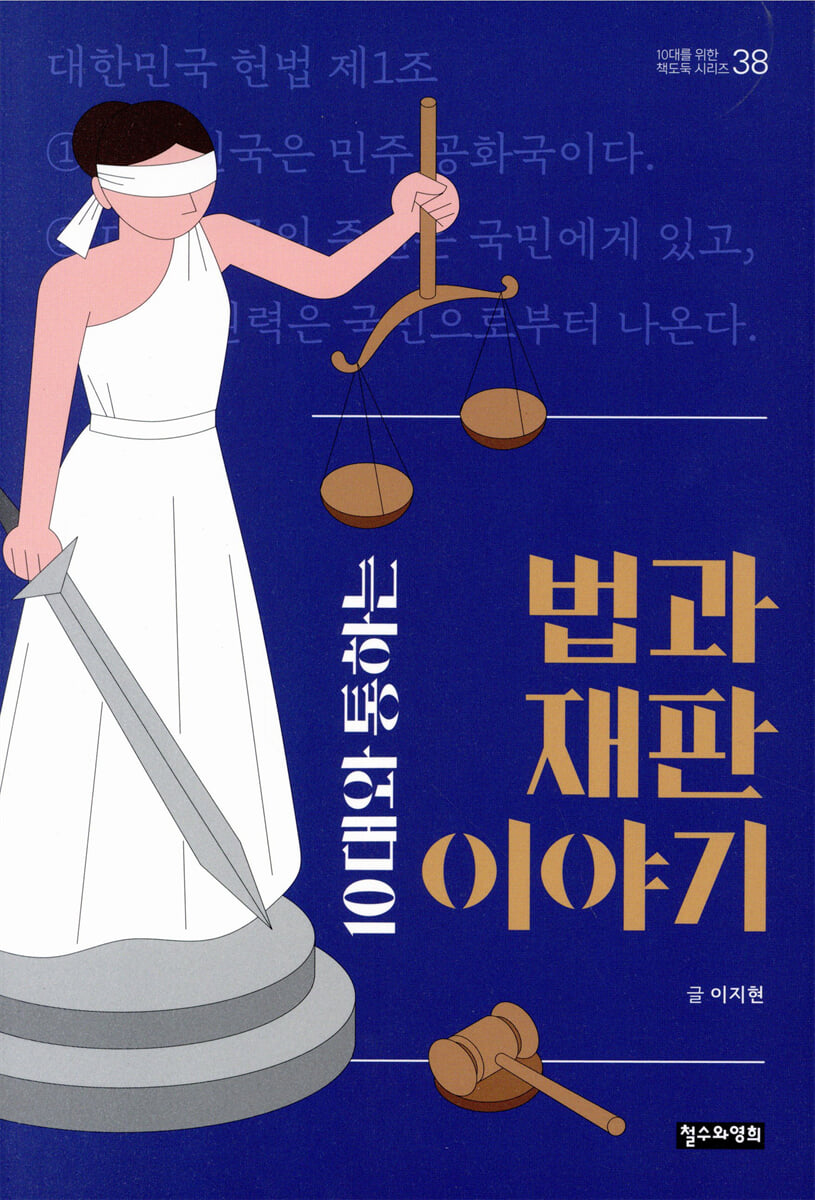
The 38th book in the Book Thieves for Teens series, "Law and Trial Stories for Teens," provides an easy-to-understand introduction to the law, which teenagers often find difficult and distant, with abundant examples covering topics such as the purpose and types of law, crime and punishment, types and procedures of trials, the Constitution, and the Constitutional Court.
It is structured so that you can learn in detail what the proper role of law is, why we must follow the law, and how the law is related to our daily lives through stories about law contained in world-famous works such as 『The Merchant of Venice』 and 『Crime and Punishment』, as well as the 'Inquisition against Galileo' that was caused by his assertion of the heliocentric theory, and the 'Trial of Miranda' that led to the guarantee of human rights for criminals.
The 38th book in the Book Thieves for Teens series, "Law and Trial Stories for Teens," provides an easy-to-understand introduction to the law, which teenagers often find difficult and distant, with abundant examples covering topics such as the purpose and types of law, crime and punishment, types and procedures of trials, the Constitution, and the Constitutional Court.
It is structured so that you can learn in detail what the proper role of law is, why we must follow the law, and how the law is related to our daily lives through stories about law contained in world-famous works such as 『The Merchant of Venice』 and 『Crime and Punishment』, as well as the 'Inquisition against Galileo' that was caused by his assertion of the heliocentric theory, and the 'Trial of Miranda' that led to the guarantee of human rights for criminals.
- You can preview some of the book's contents.
Preview
index
Preface | A Story of Loving Peace and Protecting the Weak
Chapter 1.
What is law?
1.
The law is our friend
2.
Justice is the core value of law
3.
How to protect human dignity
4.
The emergence of social law
5.
How to adapt to change
■ Why is the Goddess of Justice blindfolded?
Chapter 2.
Crime and Punishment Story
1.
What wrongdoing is a crime?
2.
How does the investigation proceed?
3.
Even criminals have their human rights protected.
4.
Do we need a 'Good Samaritan Law'?
■ If there is no punishment provision in the criminal law, is it not a crime?
Chapter 3.
Let's learn about the trial
1.
Civil and criminal trials
2.
The trial must be fair
3.
Retrial: Redressing Unjust Trials
4.
How to judge a trial
■ How should we conduct a citizen participation trial?
■ Can an AI judge conduct fairer trials?
Chapter 4.
World Masterpieces Read Through the Law
1.
Shakespeare's The Merchant of Venice - The Power of a Bad Contract
2.
Dostoevsky's Crime and Punishment - Reflections on Law and Justice
3.
The Fairy and the Woodcutter - What crime did the woodcutter and the deer commit?
4.
Sleeping Beauty - Gender Sensitivity for Gender Equality
■ Should the death penalty be maintained?
Chapter 5.
The world's trials that will be remembered in history
1.
The Trial of Galileo Galilei, Who Denied the Truth of Heaven
2.
The trial of Nazi war criminal Eichmann, held accountable for the Holocaust
3.
The Miranda Trial, which guaranteed the human rights of criminals
4.
The Susan Anthony Trial: A Spark for Women's Suffrage
5.
The Salem Witch Trials: A Violation of Human Rights
6.
The Dreyfus Trial: A Journey to the Truth
■ Should we obey even bad laws because they are still laws?
Chapter 6.
Precious rights protected by the Constitution
1.
The basic principles of our Constitution
2.
The right to dignity, happiness and freedom
3.
The right to equality, political participation, and human life
4.
The right to decide for oneself about love and death
5.
The Constitutional Court that protects the Constitution
■ Are the human rights of our neighbors being properly realized?
■ What should I do if my human rights are violated?
supplement.
Article 1 of the Constitutions of Each Country
1.
Article 1 of the Constitution of the Republic of Korea, which states that it is a democratic republic
2.
Article 1 of the Constitution of the Republic of South Africa, which overcame racial discrimination
3.
Article 1 of the French Constitution, amended to ensure gender equality
4.
Article 1 of the Japanese Constitution, which maintains the imperial system
5.
Article 1 of the Basic Law of the Federal Republic of Germany (Constitution of a Unified Germany), which emphasizes human rights and peace
Conclusion
Chapter 1.
What is law?
1.
The law is our friend
2.
Justice is the core value of law
3.
How to protect human dignity
4.
The emergence of social law
5.
How to adapt to change
■ Why is the Goddess of Justice blindfolded?
Chapter 2.
Crime and Punishment Story
1.
What wrongdoing is a crime?
2.
How does the investigation proceed?
3.
Even criminals have their human rights protected.
4.
Do we need a 'Good Samaritan Law'?
■ If there is no punishment provision in the criminal law, is it not a crime?
Chapter 3.
Let's learn about the trial
1.
Civil and criminal trials
2.
The trial must be fair
3.
Retrial: Redressing Unjust Trials
4.
How to judge a trial
■ How should we conduct a citizen participation trial?
■ Can an AI judge conduct fairer trials?
Chapter 4.
World Masterpieces Read Through the Law
1.
Shakespeare's The Merchant of Venice - The Power of a Bad Contract
2.
Dostoevsky's Crime and Punishment - Reflections on Law and Justice
3.
The Fairy and the Woodcutter - What crime did the woodcutter and the deer commit?
4.
Sleeping Beauty - Gender Sensitivity for Gender Equality
■ Should the death penalty be maintained?
Chapter 5.
The world's trials that will be remembered in history
1.
The Trial of Galileo Galilei, Who Denied the Truth of Heaven
2.
The trial of Nazi war criminal Eichmann, held accountable for the Holocaust
3.
The Miranda Trial, which guaranteed the human rights of criminals
4.
The Susan Anthony Trial: A Spark for Women's Suffrage
5.
The Salem Witch Trials: A Violation of Human Rights
6.
The Dreyfus Trial: A Journey to the Truth
■ Should we obey even bad laws because they are still laws?
Chapter 6.
Precious rights protected by the Constitution
1.
The basic principles of our Constitution
2.
The right to dignity, happiness and freedom
3.
The right to equality, political participation, and human life
4.
The right to decide for oneself about love and death
5.
The Constitutional Court that protects the Constitution
■ Are the human rights of our neighbors being properly realized?
■ What should I do if my human rights are violated?
supplement.
Article 1 of the Constitutions of Each Country
1.
Article 1 of the Constitution of the Republic of Korea, which states that it is a democratic republic
2.
Article 1 of the Constitution of the Republic of South Africa, which overcame racial discrimination
3.
Article 1 of the French Constitution, amended to ensure gender equality
4.
Article 1 of the Japanese Constitution, which maintains the imperial system
5.
Article 1 of the Basic Law of the Federal Republic of Germany (Constitution of a Unified Germany), which emphasizes human rights and peace
Conclusion
Into the book
▷The law is an important system that protects our lives and property and preserves peace in society and the country.
But even such an important law is not fixed and unchanging.
It is bound to change with the times and changes in society.
Just as food and clothing change with trends, as thoughts and customs change, so too do laws.
Rather, if things remain the same without change, the side effects of oppressing us and delaying social development will appear.
▷The law must be fair and just for everyone.
If we are influenced by any force, power, or money, our society will not be able to escape suffering.
During the past dictatorship, the state used its omnipotent power to commit violence and crime.
Even at this time, the law failed to function properly.
In the end, the people overthrew the dictatorship and restored judicial justice.
But the law is still far away.
There's a lot to do.
▷Our constitution adopts the principle of prerogative.
Arrest and detention can only be made if a warrant is issued.
This means that investigations should not ignore human rights just because a crime is suspected.
Because confinement of the body is a serious matter that suppresses personal freedom, it must be carried out strictly according to legal procedures.
▷The Constitution stipulates that trials are conducted independently according to the judge's conscience and the law.
This was created to ensure the fairness of trials and to instill trust in the judiciary.
However, if trials are left solely to judges, fairness cannot be guaranteed.
Since trials are conducted by people, they are greatly influenced by the judge's tendencies and judgment.
If the judge is conservative, the results of the trial will also tend to be conservative.
▷In our country, judges are not punished for making a wrong decision.
However, some European countries have a criminal code that includes the crime of perverting the law and hold people accountable for wrongful trials.
In Germany in particular, perverting the law is a serious crime.
If judges and prosecutors turn a blind eye to the substantive truth and pervert judicial justice, this undermines the rule of law and is an arrogant attempt to reign over the people.
The prosecution and judiciary, which are responsible for indictment and trial, must become institutions that the people trust.
▷We must amend or abolish bad laws with our own power.
Just because it's the law doesn't mean you should blindly follow it.
We need to examine its legitimacy and see if it is a law for the people.
It is also important to prevent bad laws.
We need to create good laws so that our social community can all be happy together.
▷The starting point of the spirit of the Constitution is the people.
It was the people who overthrew the dictatorship and achieved democracy.
Whenever our country faced a crisis, our people took to the streets and squares to create new hope.
And this is fully enshrined in our Constitution.
The most recent constitutional amendment took place in 1987.
But even such an important law is not fixed and unchanging.
It is bound to change with the times and changes in society.
Just as food and clothing change with trends, as thoughts and customs change, so too do laws.
Rather, if things remain the same without change, the side effects of oppressing us and delaying social development will appear.
▷The law must be fair and just for everyone.
If we are influenced by any force, power, or money, our society will not be able to escape suffering.
During the past dictatorship, the state used its omnipotent power to commit violence and crime.
Even at this time, the law failed to function properly.
In the end, the people overthrew the dictatorship and restored judicial justice.
But the law is still far away.
There's a lot to do.
▷Our constitution adopts the principle of prerogative.
Arrest and detention can only be made if a warrant is issued.
This means that investigations should not ignore human rights just because a crime is suspected.
Because confinement of the body is a serious matter that suppresses personal freedom, it must be carried out strictly according to legal procedures.
▷The Constitution stipulates that trials are conducted independently according to the judge's conscience and the law.
This was created to ensure the fairness of trials and to instill trust in the judiciary.
However, if trials are left solely to judges, fairness cannot be guaranteed.
Since trials are conducted by people, they are greatly influenced by the judge's tendencies and judgment.
If the judge is conservative, the results of the trial will also tend to be conservative.
▷In our country, judges are not punished for making a wrong decision.
However, some European countries have a criminal code that includes the crime of perverting the law and hold people accountable for wrongful trials.
In Germany in particular, perverting the law is a serious crime.
If judges and prosecutors turn a blind eye to the substantive truth and pervert judicial justice, this undermines the rule of law and is an arrogant attempt to reign over the people.
The prosecution and judiciary, which are responsible for indictment and trial, must become institutions that the people trust.
▷We must amend or abolish bad laws with our own power.
Just because it's the law doesn't mean you should blindly follow it.
We need to examine its legitimacy and see if it is a law for the people.
It is also important to prevent bad laws.
We need to create good laws so that our social community can all be happy together.
▷The starting point of the spirit of the Constitution is the people.
It was the people who overthrew the dictatorship and achieved democracy.
Whenever our country faced a crisis, our people took to the streets and squares to create new hope.
And this is fully enshrined in our Constitution.
The most recent constitutional amendment took place in 1987.
--- From the text
Publisher's Review
Why is the goddess of justice blindfolded?
If there is no punishment provision in the criminal law, is it not a crime?
How about a citizen participation trial?
Could an AI judge deliver fairer trials?
Should the death penalty be maintained?
Should we obey even bad laws because they are still laws?
The author says that the purpose of law is to protect our lives and property and to realize justice that preserves the peace of society and the country, and therefore, we must love peace and protect the weak.
So, it says that the law must be fair and just for everyone, and trials must be independent and based on the judge's conscience and the law.
However, it is pointed out that public oversight is necessary because fairness can be undermined depending on the judge's personal inclinations or judgment.
Furthermore, he says that we should not blindly follow the law, but rather examine its legitimacy and see if it is a law for the people.
Through this, it is emphasized that we must amend or abolish bad laws with our own power and create good laws that can make all members of our society happy.
At the end of each chapter, the book provides an interesting overview of the main contents of law and trials through answers to questions that young people often ask about the law, such as why the goddess of justice, the symbol of law, is blindfolded, whether a crime is not really a crime if there is no punishment clause in the criminal law, how citizen participation trials are conducted, and whether even bad laws are still laws and should be obeyed.
As an appendix to the book, the main contents and commentary of Article 1 of the Constitution of the Republic of Korea, along with Article 1 of the Constitutions of the Republic of South Africa, France, Japan, and Germany, are included.
If there is no punishment provision in the criminal law, is it not a crime?
How about a citizen participation trial?
Could an AI judge deliver fairer trials?
Should the death penalty be maintained?
Should we obey even bad laws because they are still laws?
The author says that the purpose of law is to protect our lives and property and to realize justice that preserves the peace of society and the country, and therefore, we must love peace and protect the weak.
So, it says that the law must be fair and just for everyone, and trials must be independent and based on the judge's conscience and the law.
However, it is pointed out that public oversight is necessary because fairness can be undermined depending on the judge's personal inclinations or judgment.
Furthermore, he says that we should not blindly follow the law, but rather examine its legitimacy and see if it is a law for the people.
Through this, it is emphasized that we must amend or abolish bad laws with our own power and create good laws that can make all members of our society happy.
At the end of each chapter, the book provides an interesting overview of the main contents of law and trials through answers to questions that young people often ask about the law, such as why the goddess of justice, the symbol of law, is blindfolded, whether a crime is not really a crime if there is no punishment clause in the criminal law, how citizen participation trials are conducted, and whether even bad laws are still laws and should be obeyed.
As an appendix to the book, the main contents and commentary of Article 1 of the Constitution of the Republic of Korea, along with Article 1 of the Constitutions of the Republic of South Africa, France, Japan, and Germany, are included.
GOODS SPECIFICS
- Publication date: March 20, 2021
- Page count, weight, size: 204 pages | 358g | 152*221*12mm
- ISBN13: 9791188215577
- ISBN10: 1188215574
You may also like
카테고리
korean


korean

![GQ KOREA Mark (Monthly): December [2025]](http://librairie.coreenne.fr/cdn/shop/files/8ef265dbbfbf186523ed75ba7319009d.jpg?v=1765340328&width=3840)


