

Jeon Tae-il biography
 |
Description
Book Introduction
Revised edition of "Chun Tae-il Biography" published to commemorate the 50th anniversary of his death.
Editing to improve readability, adding annotations and chronology
With today's Jeon Tae-ils
2020 marks the 50th anniversary of Jeon Tae-il's death.
On November 13, 1970, Jeon Tae-il, at the age of 22, set fire to his body in front of the Peace Market in Cheonggyecheon, shouting, “We are not machines!”
He kept a diary.
Jeon Tae-il, who experienced the horrors of the workplace from the age of eighteen while working as a tailor at the Peace Market, and struggled to resolve the social contradictions behind those horrors.
The seven-volume 'Jeon Tae-il Diary', written in tiny notebooks to convey his struggles to the world, became the basis for the 'Biography of Jeon Tae-il' written by attorney Cho Young-rae.
It has been 50 years since Jeon Tae-il passed away, 44 years since attorney Cho Young-rae completed the manuscript, and 37 years since the first edition of “Jeon Tae-il Biography” was published.
The miserable scenes of the Peace Market in this book, which today's readers cannot even imagine, were a self-portrait of our society at that time.
Can we forget that memory now? In the shadow of a national income of $30,000, irregular workers, unemployed youth, and small business owners are weeping.
If yesterday's Jeon Tae-il was pushed out of school, today's Jeon Tae-il is being pushed out of the workplace.
When we recall the era of Jeon Tae-il, we often hear from the older generation that we have already overcome the difficult times.
Will that make all that has happened understandable? Growth hasn't saved society.
Humans cannot live without food, but this age-old truth does not teach humans to become slaves to food.
What Jeon Tae-il was trying to achieve by setting his young body on fire at the age of 22.
It was the human country.
This is why we must listen to Jeon Tae-il's cries.
Editing to improve readability, adding annotations and chronology
With today's Jeon Tae-ils
2020 marks the 50th anniversary of Jeon Tae-il's death.
On November 13, 1970, Jeon Tae-il, at the age of 22, set fire to his body in front of the Peace Market in Cheonggyecheon, shouting, “We are not machines!”
He kept a diary.
Jeon Tae-il, who experienced the horrors of the workplace from the age of eighteen while working as a tailor at the Peace Market, and struggled to resolve the social contradictions behind those horrors.
The seven-volume 'Jeon Tae-il Diary', written in tiny notebooks to convey his struggles to the world, became the basis for the 'Biography of Jeon Tae-il' written by attorney Cho Young-rae.
It has been 50 years since Jeon Tae-il passed away, 44 years since attorney Cho Young-rae completed the manuscript, and 37 years since the first edition of “Jeon Tae-il Biography” was published.
The miserable scenes of the Peace Market in this book, which today's readers cannot even imagine, were a self-portrait of our society at that time.
Can we forget that memory now? In the shadow of a national income of $30,000, irregular workers, unemployed youth, and small business owners are weeping.
If yesterday's Jeon Tae-il was pushed out of school, today's Jeon Tae-il is being pushed out of the workplace.
When we recall the era of Jeon Tae-il, we often hear from the older generation that we have already overcome the difficult times.
Will that make all that has happened understandable? Growth hasn't saved society.
Humans cannot live without food, but this age-old truth does not teach humans to become slaves to food.
What Jeon Tae-il was trying to achieve by setting his young body on fire at the age of 22.
It was the human country.
This is why we must listen to Jeon Tae-il's cries.
- You can preview some of the book's contents.
Preview
index
Publishing a revised edition of 『Jeon Tae-il Biography』 on the 50th anniversary of Jeon Tae-il's death
Preface
Part 1 Childhood
From the bottom
Running away from home, working, wandering
Jump over the barbed wire
Cheongok era
Broken dream of learning
Defeat in Seoul
In search of my mother who left her job as a maid
Abandon your younger sibling on the street
I have a job
reunion
Part 2: Into the Suffering of the Peace Market
From 'Angel of the Street' to a worker at the Peace Market
A Day in the Attic
Human Conditions in the Peace Market
Feeling wronged
For young female workers
The agony of tailor Jeon Tae-il
impact
Part 3: Organization of the Fool's Association
Discovery of the Labor Standards Act
Tailor Friends
Fool's Society ideology
Father's death and the start of the Fool's Society
effort
In frustration
Part 4 Jeon Tae-il's Thought
What I saw on the day labor board
Letter to Wonseop
Follow me
human tasks
Why should I become a slave?
Human, minimum needs
Between the dream of establishing a model company and the premonition of death
Worries
resolve
Part 5 November 13, 1970
Samdong Friendship Association
Petition for Improvement of Working Conditions for Employees of the Pyeonghwa Market Clothing Store
The day the 'Peace Market Special Report' came out
demonstration
flame
Eve
Don't let my death be in vain
supplement
Jeon Tae-il's Struggle Never Ends · 1976
This Pain, This Truth, This Love · 1983
The truth about Taeil is revealed · 1983
Revised Edition · 1990
The Most Extraordinary Lives of the Most Human People · 1995
Chronology
Preface
Part 1 Childhood
From the bottom
Running away from home, working, wandering
Jump over the barbed wire
Cheongok era
Broken dream of learning
Defeat in Seoul
In search of my mother who left her job as a maid
Abandon your younger sibling on the street
I have a job
reunion
Part 2: Into the Suffering of the Peace Market
From 'Angel of the Street' to a worker at the Peace Market
A Day in the Attic
Human Conditions in the Peace Market
Feeling wronged
For young female workers
The agony of tailor Jeon Tae-il
impact
Part 3: Organization of the Fool's Association
Discovery of the Labor Standards Act
Tailor Friends
Fool's Society ideology
Father's death and the start of the Fool's Society
effort
In frustration
Part 4 Jeon Tae-il's Thought
What I saw on the day labor board
Letter to Wonseop
Follow me
human tasks
Why should I become a slave?
Human, minimum needs
Between the dream of establishing a model company and the premonition of death
Worries
resolve
Part 5 November 13, 1970
Samdong Friendship Association
Petition for Improvement of Working Conditions for Employees of the Pyeonghwa Market Clothing Store
The day the 'Peace Market Special Report' came out
demonstration
flame
Eve
Don't let my death be in vain
supplement
Jeon Tae-il's Struggle Never Ends · 1976
This Pain, This Truth, This Love · 1983
The truth about Taeil is revealed · 1983
Revised Edition · 1990
The Most Extraordinary Lives of the Most Human People · 1995
Chronology
Into the book
Jeon Tae-il gritted his teeth.
We must never kneel before this cursed reality.
You must not give up.
I must not collapse under the weight of the 'wealthy environment' that rejects me...
The goblin-like appearance of a sixteen-year-old boy who keeps shouting “Newspaper! Newspaper!” to push away the feeling of weakness, the sense of defeat and ‘dark despair’ that is creeping up on him.
It was the desperate struggle of a weak, bottom-of-the-table human being, challenging the cruel power of social reality that seeks to suppress, reject, bind, and take everything from him, getting up again even after falling, fighting with his whole body to regain his humanity and the right to a human life.
---From "Part 1: Childhood"
Although the word 'shida' is used to refer to an apprentice, in reality, he is a worker in charge of an independent task. It is said that he can work without an assistant, but not without a shida.
The position of a sida is not necessarily fixed depending on the workplace or type of work.
The job of a sida is to assist the sewing machine operator (or tailor) in his work, and he does very hard work all day long, including ironing, pulling thread, carrying thread and buttons, and even doing personal errands for the owner, sewing machine operator, or tailor.
Most of the girls who enter Sida are 12 to 15-year-olds from poor families who cannot attend middle school and want to learn a skill to help support their families.
During the busy season, there are so many jobs that you can see job advertisements for workers posted in front of every factory in the Pyeonghwa Market area.
---From "Part 2: Into the Suffering of the Peace Market"
Jeon Tae-il's explanation was as follows.
We have the right to live with dignity and humane treatment, but we have been treated like machines and have been unfairly abused by our employers, living like fools without even complaining.
So our tailors' club is a gathering of fools.
We must thoroughly realize this, so that we too can one day avoid being fools.
… … He also said this.
When he started a tailor's club, he went around to older tailors and asked for their cooperation, but they all said, "That's impossible.
He said, “What do you know that you are trying to do such a great thing?” and stopped them, saying that anyone who tried to set up a labor movement was an idiot.
If so, that's good.
Let's just go ahead and see if we can make a fool of ourselves or not.
This was the content of his proposal.
---From "Part 3: Organization of the Fool's Society"
To the labor inspector
Dear friends, which group do you think has the greatest contribution to the economic prosperity you have achieved today, based on a stable foundation? … … You must keep in mind that there are also hidden sacrifices here.
Your growing children have been the foundation of the production chain for economic development, working 15 hours a day.
… … To these innocent and lovely children, the grand stage of society shows only its driest and most miserable sides.
… … They have had the human element obliterated from all aspects of life, and are being dragged around like beasts of burden, only to fill their hungry stomachs.
… … Business owners do not feel the slightest pang of conscience no matter how much profit they make.
They exploit the blood and sweat of production workers through illegal means.
But, in my narrow opinion, I don't know why the current society knows this but tolerates it.
---From "Part 4 Jeon Tae-il's Thought"
Jeon Tae-il, with a very serious expression on his face, proposed a 'Labor Standards Act burning ceremony' and said that everyone should fight with the determination to make sacrifices.
The set date for the event is November 13th.
The time is still 1 PM.
Three members, including Jeon Tae-il, were responsible for making placards with slogans such as “We are not machines!”, “Sunshine at least once a week!”, and “What do you mean by 16-hour work days?”
For the speech, a table was prepared and placed there when the workers gathered. Jeon Tae-il climbed on top of it holding a copy of the Labor Standards Act and read out loud the key provisions of the Labor Standards Act. He then gave an inflammatory speech along the lines of, “What’s the use of these provisions? Let’s burn these empty laws that aren’t even followed!” and held a “Labor Standards Act Burning Ceremony.” After that, Jeon Tae-il led the chanting of slogans and the members and those gathered would repeat them back, and they would immediately begin the demonstration.
We must never kneel before this cursed reality.
You must not give up.
I must not collapse under the weight of the 'wealthy environment' that rejects me...
The goblin-like appearance of a sixteen-year-old boy who keeps shouting “Newspaper! Newspaper!” to push away the feeling of weakness, the sense of defeat and ‘dark despair’ that is creeping up on him.
It was the desperate struggle of a weak, bottom-of-the-table human being, challenging the cruel power of social reality that seeks to suppress, reject, bind, and take everything from him, getting up again even after falling, fighting with his whole body to regain his humanity and the right to a human life.
---From "Part 1: Childhood"
Although the word 'shida' is used to refer to an apprentice, in reality, he is a worker in charge of an independent task. It is said that he can work without an assistant, but not without a shida.
The position of a sida is not necessarily fixed depending on the workplace or type of work.
The job of a sida is to assist the sewing machine operator (or tailor) in his work, and he does very hard work all day long, including ironing, pulling thread, carrying thread and buttons, and even doing personal errands for the owner, sewing machine operator, or tailor.
Most of the girls who enter Sida are 12 to 15-year-olds from poor families who cannot attend middle school and want to learn a skill to help support their families.
During the busy season, there are so many jobs that you can see job advertisements for workers posted in front of every factory in the Pyeonghwa Market area.
---From "Part 2: Into the Suffering of the Peace Market"
Jeon Tae-il's explanation was as follows.
We have the right to live with dignity and humane treatment, but we have been treated like machines and have been unfairly abused by our employers, living like fools without even complaining.
So our tailors' club is a gathering of fools.
We must thoroughly realize this, so that we too can one day avoid being fools.
… … He also said this.
When he started a tailor's club, he went around to older tailors and asked for their cooperation, but they all said, "That's impossible.
He said, “What do you know that you are trying to do such a great thing?” and stopped them, saying that anyone who tried to set up a labor movement was an idiot.
If so, that's good.
Let's just go ahead and see if we can make a fool of ourselves or not.
This was the content of his proposal.
---From "Part 3: Organization of the Fool's Society"
To the labor inspector
Dear friends, which group do you think has the greatest contribution to the economic prosperity you have achieved today, based on a stable foundation? … … You must keep in mind that there are also hidden sacrifices here.
Your growing children have been the foundation of the production chain for economic development, working 15 hours a day.
… … To these innocent and lovely children, the grand stage of society shows only its driest and most miserable sides.
… … They have had the human element obliterated from all aspects of life, and are being dragged around like beasts of burden, only to fill their hungry stomachs.
… … Business owners do not feel the slightest pang of conscience no matter how much profit they make.
They exploit the blood and sweat of production workers through illegal means.
But, in my narrow opinion, I don't know why the current society knows this but tolerates it.
---From "Part 4 Jeon Tae-il's Thought"
Jeon Tae-il, with a very serious expression on his face, proposed a 'Labor Standards Act burning ceremony' and said that everyone should fight with the determination to make sacrifices.
The set date for the event is November 13th.
The time is still 1 PM.
Three members, including Jeon Tae-il, were responsible for making placards with slogans such as “We are not machines!”, “Sunshine at least once a week!”, and “What do you mean by 16-hour work days?”
For the speech, a table was prepared and placed there when the workers gathered. Jeon Tae-il climbed on top of it holding a copy of the Labor Standards Act and read out loud the key provisions of the Labor Standards Act. He then gave an inflammatory speech along the lines of, “What’s the use of these provisions? Let’s burn these empty laws that aren’t even followed!” and held a “Labor Standards Act Burning Ceremony.” After that, Jeon Tae-il led the chanting of slogans and the members and those gathered would repeat them back, and they would immediately begin the demonstration.
---From "Part 5, November 13, 1970"
Publisher's Review
Editing to improve readability, adding annotations and chronology
The revised edition commemorating the 50th anniversary of Jeon Tae-il's death focuses on improving readability.
The text follows the third revised edition of 2009, featuring Jeon Tae-il's diary and memoirs in bold, and notes on words that are rarely used these days (especially Japanese loanwords used in the garment industry) and events unfamiliar to the younger generation.
In addition, to provide a broader understanding of the context of Jeon Tae-il's life, the chronology has been supplemented with historical background events and details related to the activities of Lee So-seon's mother and colleagues after his death.
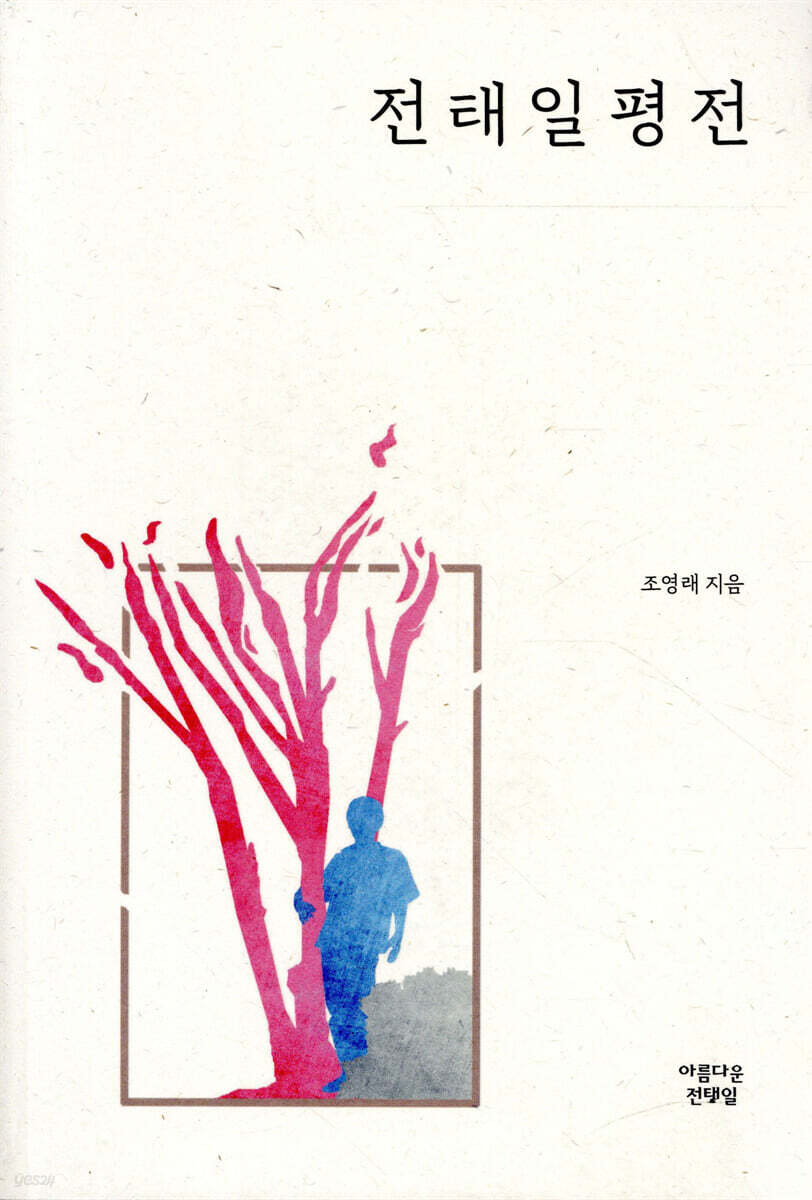
The design was done by Oh Pil-min.
Since its first edition, 『Biography of Jeon Tae-il』 has been revised three times.
The first revised edition was published by Dolbegae Publishing in January 1991.
We restored parts that were missing from the original manuscript when it was first published, and corrected passages that had been changed due to censorship.
The second revised edition was published in September 2001.
Starting with the third revised edition in April 2009, the Jeon Tae-il Memorial Society, the predecessor of the Jeon Tae-il Foundation, published 『Jeon Tae-il Biography』.
As time passed and Korean spelling and spacing changed, the writing style was refined to more accurately convey the original text and the author's intentions.
The revised edition commemorating the 50th anniversary of Jeon Tae-il's death focuses on improving readability.
The text follows the third revised edition of 2009, featuring Jeon Tae-il's diary and memoirs in bold, and notes on words that are rarely used these days (especially Japanese loanwords used in the garment industry) and events unfamiliar to the younger generation.
In addition, to provide a broader understanding of the context of Jeon Tae-il's life, the chronology has been supplemented with historical background events and details related to the activities of Lee So-seon's mother and colleagues after his death.
The design was done by Oh Pil-min.
Since its first edition, 『Biography of Jeon Tae-il』 has been revised three times.
The first revised edition was published by Dolbegae Publishing in January 1991.
We restored parts that were missing from the original manuscript when it was first published, and corrected passages that had been changed due to censorship.
The second revised edition was published in September 2001.
Starting with the third revised edition in April 2009, the Jeon Tae-il Memorial Society, the predecessor of the Jeon Tae-il Foundation, published 『Jeon Tae-il Biography』.
As time passed and Korean spelling and spacing changed, the writing style was refined to more accurately convey the original text and the author's intentions.
GOODS SPECIFICS
- Date of issue: September 7, 2020
- Page count, weight, size: 380 pages | 436g | 142*210*30mm
- ISBN13: 9788996187455
- ISBN10: 8996187453
You may also like
카테고리
korean


korean

![GQ KOREA Mark (Monthly): December [2025]](http://librairie.coreenne.fr/cdn/shop/files/8ef265dbbfbf186523ed75ba7319009d.jpg?v=1765340328&width=3840)


