

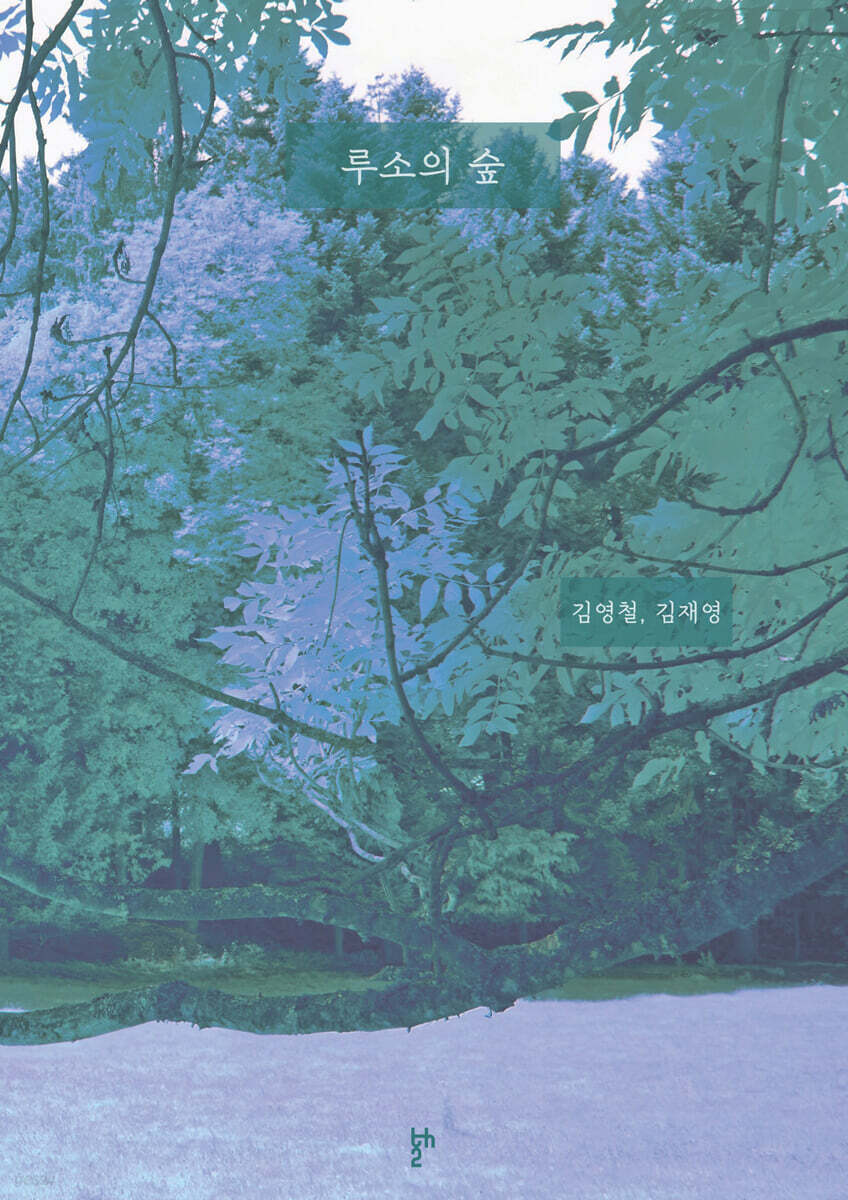
Rousseau's Forest
 |
Description
Book Introduction
Through Rousseau, the writing of walks and self-examination was extended.
The Path of Education and Infinite Possibilities
《Rousseau's Forest》 is an introductory book and educational essay on Rousseau's philosophy that delicately extracts the core of Rousseau's ideas from his works and shares them with readers, based on a long-term study of Rousseau conducted by a professor and a lecturer who teach education at a university.
The two authors do not introduce Rousseau simply as a classical educational thinker.
By focusing on Rousseau's self-confession and self-examination, as well as his writing through these, along with his aspect as a human being with contradictions, this book unfolds to readers Rousseau's educational ideas, which have been forgotten in modern times.
Rousseau, observing people living in inequality, having lost their freedom, explored the origins of humanity and society to overcome this, and presented the meaning of education that cultivates true humanity based on insight into humanity.
The authors suggest that we consider together what Rousseau's words, "the restoration of the infinite forest," mean to us.
The Path of Education and Infinite Possibilities
《Rousseau's Forest》 is an introductory book and educational essay on Rousseau's philosophy that delicately extracts the core of Rousseau's ideas from his works and shares them with readers, based on a long-term study of Rousseau conducted by a professor and a lecturer who teach education at a university.
The two authors do not introduce Rousseau simply as a classical educational thinker.
By focusing on Rousseau's self-confession and self-examination, as well as his writing through these, along with his aspect as a human being with contradictions, this book unfolds to readers Rousseau's educational ideas, which have been forgotten in modern times.
Rousseau, observing people living in inequality, having lost their freedom, explored the origins of humanity and society to overcome this, and presented the meaning of education that cultivates true humanity based on insight into humanity.
The authors suggest that we consider together what Rousseau's words, "the restoration of the infinite forest," mean to us.
- You can preview some of the book's contents.
Preview
index
Introduction - Reading and Writing Rousseau 9
Introduction - The Infinite Forest and the Single Cave 15
Ⅰ.
The emergence of society
1.
Infinite Forest 26
2.
The First Passions 29
3.
The Origins of Language and Social Inequality 32
4.
Forest of Seasons 38
5.
Power Difference and Complete Transfer 44
6.
General Will 52
7.
Legislator 59
8.
The Iron King's Lies and the Lawgiver's Religion 66
9.
From Politics to Education 70
10.
The Impossibility of Citizenship and the Possibility of Humanity 82
The Way In - The Links of Natural Development 87
Ⅱ.
human education
11.
Educational Relationships 94
12.
Educator 100
13.
Imagination of the Infinite Forest 106
14.
Imagination and Reason 111
15.
Possessiveness 115
16.
Friendship 120
17.
Human Religion 125
18.
Restoration of the Infinite Forest 132
19.
From Education to Politics 139
20.
When I'm among the trees 148
The Way Forward - The Integrity of Family Education 153
Ⅲ.
The Life and Death of an Educator
21.
The Problem of Gender Difference 166
22.
Women's Education 173
23.
Emile and Sophie 180
24.
Julie and Volmar 187
25.
Educator Julie 195
26.
The Eternity of Educational Life 202
27.
Self-Education 211
28.
Writing about Walking and Self-Reflection 221
29.
Friendship Education 233
30.
He was a man who smelled like an extinct plant. 243
The Way Back - Ghosts of the Infinite Forest 251
Conclusion - Complementing Rousseau 259
Boron - Politics and Education in Primitive Society 266
Reference 279
Search 289
Introduction - The Infinite Forest and the Single Cave 15
Ⅰ.
The emergence of society
1.
Infinite Forest 26
2.
The First Passions 29
3.
The Origins of Language and Social Inequality 32
4.
Forest of Seasons 38
5.
Power Difference and Complete Transfer 44
6.
General Will 52
7.
Legislator 59
8.
The Iron King's Lies and the Lawgiver's Religion 66
9.
From Politics to Education 70
10.
The Impossibility of Citizenship and the Possibility of Humanity 82
The Way In - The Links of Natural Development 87
Ⅱ.
human education
11.
Educational Relationships 94
12.
Educator 100
13.
Imagination of the Infinite Forest 106
14.
Imagination and Reason 111
15.
Possessiveness 115
16.
Friendship 120
17.
Human Religion 125
18.
Restoration of the Infinite Forest 132
19.
From Education to Politics 139
20.
When I'm among the trees 148
The Way Forward - The Integrity of Family Education 153
Ⅲ.
The Life and Death of an Educator
21.
The Problem of Gender Difference 166
22.
Women's Education 173
23.
Emile and Sophie 180
24.
Julie and Volmar 187
25.
Educator Julie 195
26.
The Eternity of Educational Life 202
27.
Self-Education 211
28.
Writing about Walking and Self-Reflection 221
29.
Friendship Education 233
30.
He was a man who smelled like an extinct plant. 243
The Way Back - Ghosts of the Infinite Forest 251
Conclusion - Complementing Rousseau 259
Boron - Politics and Education in Primitive Society 266
Reference 279
Search 289
Into the book
Any human being can live a life of virtue, believing in oneself according to one's conscience.
The Infinite Forest helps us realize that all beings are incomparable beings with unique value, by breaking down the arrogant feelings that belittle our own abilities, thereby breaking the chains that bind us and allowing us to freely express ourselves.
…Educators, as the infinite forest itself, must be able to wait until the end so that those with whom they have an educational relationship can believe in themselves, exercise their will, and live according to their conscience.
--- p.151
Continuing to write self-reflection along with walking is a self-educational practice that cultivates one's inner self into an infinite forest where the voice of conscience flows.
…But when we repeat the process of walking and writing about self-examination as a self-educational practice, we simultaneously cultivate ourselves as better educators and, as a secondary result, create a piece of unformal writing.
--- p.232
Educators live a life where they never stop educating themselves for even a moment.
For example, in writing about walking and self-examination, the educator is sensitive to the inevitability of nature, but does not miss the rich expression of imagination that encourages greater use of the body.
The quiet voice of conscience heard in this process allows us to naturally lose sight of social desires and the temptations of reason.
Self-educational practice does not require a special time or place, and can begin right here, right now.
The Infinite Forest helps us realize that all beings are incomparable beings with unique value, by breaking down the arrogant feelings that belittle our own abilities, thereby breaking the chains that bind us and allowing us to freely express ourselves.
…Educators, as the infinite forest itself, must be able to wait until the end so that those with whom they have an educational relationship can believe in themselves, exercise their will, and live according to their conscience.
--- p.151
Continuing to write self-reflection along with walking is a self-educational practice that cultivates one's inner self into an infinite forest where the voice of conscience flows.
…But when we repeat the process of walking and writing about self-examination as a self-educational practice, we simultaneously cultivate ourselves as better educators and, as a secondary result, create a piece of unformal writing.
--- p.232
Educators live a life where they never stop educating themselves for even a moment.
For example, in writing about walking and self-examination, the educator is sensitive to the inevitability of nature, but does not miss the rich expression of imagination that encourages greater use of the body.
The quiet voice of conscience heard in this process allows us to naturally lose sight of social desires and the temptations of reason.
Self-educational practice does not require a special time or place, and can begin right here, right now.
--- p.264
Publisher's Review
This book consists of three parts and a supplement.
Part 1 begins with a discussion of the origins of society, which Rousseau expanded upon through his study of the origins of language, and then discusses the human condition and society that have deviated from the state of nature, followed by a discussion of inequality and human development.
In Part 2, we will continue the discussion by reading the original texts of “Emile” and “Discourse on the Origin of Inequality among Men” to understand what education is in the context of human conditions.
The final third part presents the authors' thoughts on a true teacher, along with the content of Rousseau's "New Heloise" and other works.
It points out the limitations of Rousseau's time, which showed a discriminatory attitude in the content on women's education, and suggests things that we should think about through Rousseau in reality.
Here, the stories of Emile, Sophie, Julie, and Volmar in Rousseau's works allow readers to think about the role of parents as educators.
By addressing self-education and the honest revelation of Rousseau's walks and self-examination writings amidst contradictions and paradoxes, we can encounter the true nature of Rousseau's thought, which is reflective and full of friendship for others.
In this book, we discuss education in primitive society and present a perspective that allows us to think again about humanity.
In conclusion, we conclude by suggesting to readers the wisdom of supplementary teaching as a clue to better educational practices.
At the end of each section, we have organized points to ponder while reading the text under the titles “The Way In,” “The Way Out,” and “The Way Back.”
Here the authors summarize Rousseau's contacts with other thinkers and provide food for thought.
《Rousseau's Forest》 invites readers into Rousseau's thoughts with the delicate sensibility of an essayist, breaking away from the rigid academic format.
The reflection on education fostered by Rousseau does not reduce educational theory to a simple rational system, but rather reexamines it from the perspective of emotion, conscience, and practice, emphasizing its urgency and ethical responsibility, particularly through the metaphor of children suffering in an unequal society.
Rousseau was an educator who chose empathy and action over explanation in front of a child who was being hit.
This is the starting point of education that has not changed even after hundreds of years.
Rousseau's educational philosophy is not an ideal theory, but rather provides an attitude toward life that must be practiced here and now.
Through this book, readers will be able to gain a fundamental perspective on self-reflection writing and education while walking through the forest with Rousseau or alone.
This will also give us the opportunity to reflect on the limitless possibilities that students can discover.
True education is nothing more than the practice of nurturing oneself and others as 'human beings'.
Education, as a process of nurturing individuals who can transform an unequal society, what kind of attitude should educators possess? Through self-reflection and writing, where educators walk through the forest, reflecting and contemplating, without fear of failure, with courage, educators will be renewed and awaken to new educational practices.
Part 1 begins with a discussion of the origins of society, which Rousseau expanded upon through his study of the origins of language, and then discusses the human condition and society that have deviated from the state of nature, followed by a discussion of inequality and human development.
In Part 2, we will continue the discussion by reading the original texts of “Emile” and “Discourse on the Origin of Inequality among Men” to understand what education is in the context of human conditions.
The final third part presents the authors' thoughts on a true teacher, along with the content of Rousseau's "New Heloise" and other works.
It points out the limitations of Rousseau's time, which showed a discriminatory attitude in the content on women's education, and suggests things that we should think about through Rousseau in reality.
Here, the stories of Emile, Sophie, Julie, and Volmar in Rousseau's works allow readers to think about the role of parents as educators.
By addressing self-education and the honest revelation of Rousseau's walks and self-examination writings amidst contradictions and paradoxes, we can encounter the true nature of Rousseau's thought, which is reflective and full of friendship for others.
In this book, we discuss education in primitive society and present a perspective that allows us to think again about humanity.
In conclusion, we conclude by suggesting to readers the wisdom of supplementary teaching as a clue to better educational practices.
At the end of each section, we have organized points to ponder while reading the text under the titles “The Way In,” “The Way Out,” and “The Way Back.”
Here the authors summarize Rousseau's contacts with other thinkers and provide food for thought.
《Rousseau's Forest》 invites readers into Rousseau's thoughts with the delicate sensibility of an essayist, breaking away from the rigid academic format.
The reflection on education fostered by Rousseau does not reduce educational theory to a simple rational system, but rather reexamines it from the perspective of emotion, conscience, and practice, emphasizing its urgency and ethical responsibility, particularly through the metaphor of children suffering in an unequal society.
Rousseau was an educator who chose empathy and action over explanation in front of a child who was being hit.
This is the starting point of education that has not changed even after hundreds of years.
Rousseau's educational philosophy is not an ideal theory, but rather provides an attitude toward life that must be practiced here and now.
Through this book, readers will be able to gain a fundamental perspective on self-reflection writing and education while walking through the forest with Rousseau or alone.
This will also give us the opportunity to reflect on the limitless possibilities that students can discover.
True education is nothing more than the practice of nurturing oneself and others as 'human beings'.
Education, as a process of nurturing individuals who can transform an unequal society, what kind of attitude should educators possess? Through self-reflection and writing, where educators walk through the forest, reflecting and contemplating, without fear of failure, with courage, educators will be renewed and awaken to new educational practices.
GOODS SPECIFICS
- Date of issue: October 20, 2025
- Page count, weight, size: 292 pages | 148*210*20mm
- ISBN13: 9791190186506
- ISBN10: 1190186500
You may also like
카테고리
korean


korean

![GQ KOREA Mark (Monthly): December [2025]](http://librairie.coreenne.fr/cdn/shop/files/8ef265dbbfbf186523ed75ba7319009d.jpg?v=1765340328&width=3840)


