

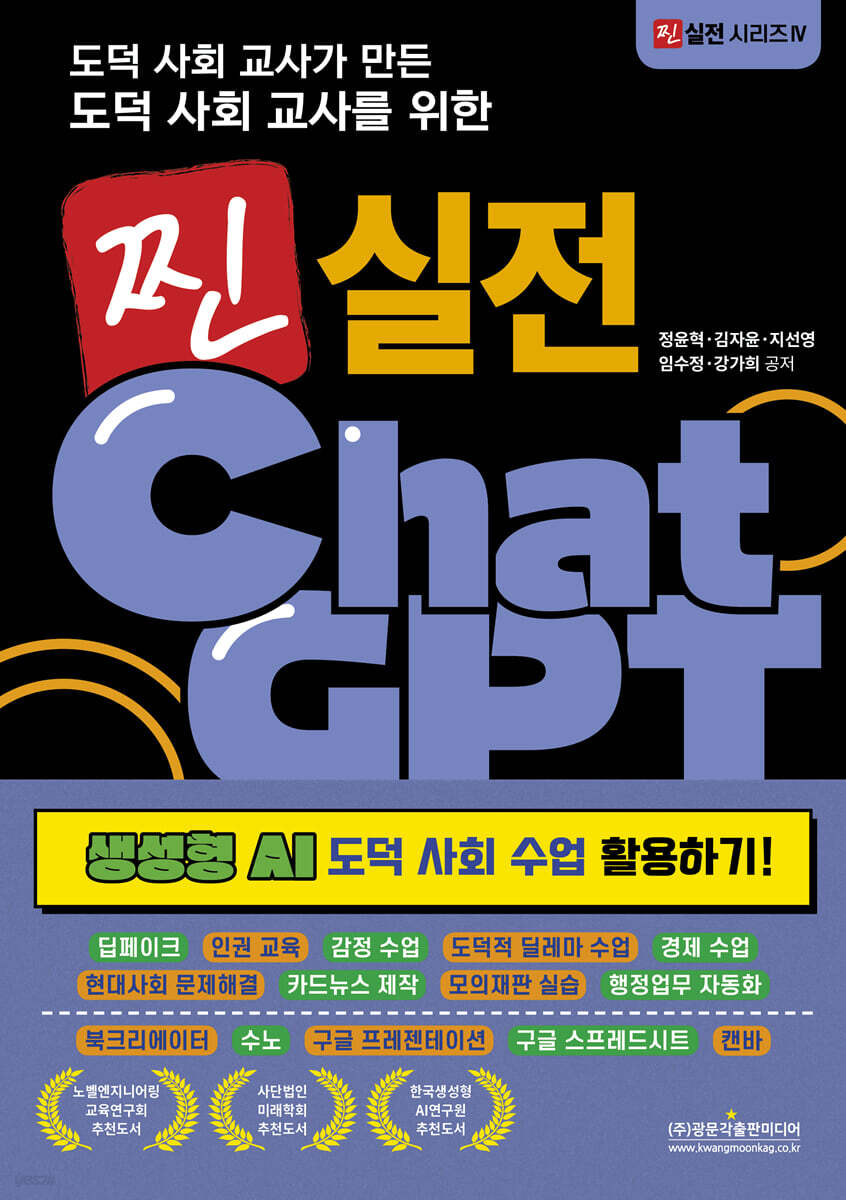
Real-World Chat GPT for Moral Social Studies Teachers, Created by Moral Social Studies Teachers (Using Generative AI in Moral Social Studies Classes!)
 |
Description
Book Introduction
New Moral and Social Education with Artificial Intelligence
We live in an age where the pace of change feels rapid.
Our education must also evolve along with these changes.
In particular, moral and social education plays an important role in helping students develop the right values and grow into healthy members of society.
However, it is difficult to sufficiently prepare students for the complex problems they will face in a rapidly changing society using only existing educational methods.
This is where artificial intelligence, especially generative AI tools like ChatGPT, can play a key role.
ChatGPT is a conversational AI that goes beyond simply providing information to help people explore and solve problems on their own and generate new ideas.
Based on these capabilities and characteristics, ChatGPT can be an excellent assistant in moral and social education, helping students think creatively and critically, develop problem-solving skills based on diverse perspectives, and develop their own values and social awareness.
We live in an age where the pace of change feels rapid.
Our education must also evolve along with these changes.
In particular, moral and social education plays an important role in helping students develop the right values and grow into healthy members of society.
However, it is difficult to sufficiently prepare students for the complex problems they will face in a rapidly changing society using only existing educational methods.
This is where artificial intelligence, especially generative AI tools like ChatGPT, can play a key role.
ChatGPT is a conversational AI that goes beyond simply providing information to help people explore and solve problems on their own and generate new ideas.
Based on these capabilities and characteristics, ChatGPT can be an excellent assistant in moral and social education, helping students think creatively and critically, develop problem-solving skills based on diverse perspectives, and develop their own values and social awareness.
- You can preview some of the book's contents.
Preview
index
preface
Part 1: Understanding ChatGPT
Chapter 1 - Artificial Intelligence and Modern Education
1) What is AI (Artificial Intelligence)?
2) The impact of AI on education
3) AI Threatening Schools - The Deepfake Incident
4) Future Direction of Education - Learning with AI
Chapter 2 - What is ChatGPT?
1) What is Chat GPT?
2) How to use ChatGPT
3) ChatGPT usage tips
4) Generative AI that is good to use together
Part 2: Getting the most out of ChatGPT classes
Chapter 1 - Creating a Human Rights Fairy Tale with ChatGPT
1) Select a personal story that reflects human rights.
2) Create a story that fits the topic
3) Create illustrations that bring the story to life
4) Create your own fairy tale book (with Book Creator)
Chapter 2 - Teaching Emotions with ChatGPT
1) Emotion Analysis “What were Harry’s feelings when he received the invitation to Hogwarts?”
2) Create a creative script with ChatGPT
3) Creating emotional songs using AI (with Suno)
4) Emotional Coaching “What is Socrates’ MBTI?”
5) MBTI Counseling Center with ChatGPT
Chapter 3 - Teaching Moral Dilemmas with ChatGPT
1) Choose a group
2) Choose a topic
3) Creating a moral dilemma
4) Present (with Google Presentation)
5) Deepening discussion and debate
Chapter 4 - Teaching Economics with ChatGPT
1) The 200,000 Won Choice: Exploring My Financial Habits (with Google Spreadsheets)
2) My Dream Calculator with ChatGPT
3) Create your own financial plan
4) Money Management, the Power to Change Your Future!
Chapter 5 - Solving Modern Society's Problems Through Conversations with Thinkers Using ChatGPT
1) What if you could have a conversation with an ethical thinker?
2) Ask Kant!
3) Mill vs. Kant Debate Battle
4) Writing using ChatGPT
5) Feedback and writing a life log using ChatGPT
Chapter 6: Exploring Social Phenomena from an Ethical Perspective and Creating Card News Using ChatGPT
1) Why should we explore social phenomena from an ethical perspective?
2) Create card news using ChatGPT
3) Creating card news (with Canva)
Chapter 7 - Practicing Mock Trials with ChatGPT
1) Difficulties in mock trial classes
2) Investigating cases of violation of fundamental rights
3) Understanding the trial process
4) Create a mock trial scenario
Part 3: ChatGPT Teacher Work Automation
Chapter 1 - Automating Administrative Tasks with ChatGPT
1) Drafting a life record book
2) Communicating with parents and students
3) Automated performance evaluation
〈Appendix〉 Parental Consent Letter for Classes Utilizing ChatGPT
Part 1: Understanding ChatGPT
Chapter 1 - Artificial Intelligence and Modern Education
1) What is AI (Artificial Intelligence)?
2) The impact of AI on education
3) AI Threatening Schools - The Deepfake Incident
4) Future Direction of Education - Learning with AI
Chapter 2 - What is ChatGPT?
1) What is Chat GPT?
2) How to use ChatGPT
3) ChatGPT usage tips
4) Generative AI that is good to use together
Part 2: Getting the most out of ChatGPT classes
Chapter 1 - Creating a Human Rights Fairy Tale with ChatGPT
1) Select a personal story that reflects human rights.
2) Create a story that fits the topic
3) Create illustrations that bring the story to life
4) Create your own fairy tale book (with Book Creator)
Chapter 2 - Teaching Emotions with ChatGPT
1) Emotion Analysis “What were Harry’s feelings when he received the invitation to Hogwarts?”
2) Create a creative script with ChatGPT
3) Creating emotional songs using AI (with Suno)
4) Emotional Coaching “What is Socrates’ MBTI?”
5) MBTI Counseling Center with ChatGPT
Chapter 3 - Teaching Moral Dilemmas with ChatGPT
1) Choose a group
2) Choose a topic
3) Creating a moral dilemma
4) Present (with Google Presentation)
5) Deepening discussion and debate
Chapter 4 - Teaching Economics with ChatGPT
1) The 200,000 Won Choice: Exploring My Financial Habits (with Google Spreadsheets)
2) My Dream Calculator with ChatGPT
3) Create your own financial plan
4) Money Management, the Power to Change Your Future!
Chapter 5 - Solving Modern Society's Problems Through Conversations with Thinkers Using ChatGPT
1) What if you could have a conversation with an ethical thinker?
2) Ask Kant!
3) Mill vs. Kant Debate Battle
4) Writing using ChatGPT
5) Feedback and writing a life log using ChatGPT
Chapter 6: Exploring Social Phenomena from an Ethical Perspective and Creating Card News Using ChatGPT
1) Why should we explore social phenomena from an ethical perspective?
2) Create card news using ChatGPT
3) Creating card news (with Canva)
Chapter 7 - Practicing Mock Trials with ChatGPT
1) Difficulties in mock trial classes
2) Investigating cases of violation of fundamental rights
3) Understanding the trial process
4) Create a mock trial scenario
Part 3: ChatGPT Teacher Work Automation
Chapter 1 - Automating Administrative Tasks with ChatGPT
1) Drafting a life record book
2) Communicating with parents and students
3) Automated performance evaluation
〈Appendix〉 Parental Consent Letter for Classes Utilizing ChatGPT
Detailed image

Publisher's Review
Character Education, Civic Education, and Chat GPT
Moral education and social studies are core subjects that are responsible for two inseparable educations: character education and citizenship education.
ChatGPT can also be actively utilized for character education and civic education.
Character education focuses on developing students' basic human qualities, moral capacities, and social responsibility.
In other words, it is a process that helps students learn the right values and behaviors and put them into practice in real life.
ChatGPT can be helpful in this character education.
For example, ChatGPT can help students explore various options by simulating ethical dilemmas they might face in real life.
By doing this, students can anticipate the consequences of their choices and practice making moral and responsible decisions.
Additionally, ChatGPT can contribute to fostering the 'citizen qualities' emphasized in the social studies curriculum.
In other words, ChatGPT can be used as a useful tool for analyzing social phenomena and issues, thereby helping to develop critical and creative thinking, problem-solving, and decision-making skills.
For example, when students explore a topic like the causes of climate change, ChatGPT can present relevant materials and provide a scaffolding for students to analyze the issue from various perspectives based on their questions.
The process of recognizing the precautions for using ChatGPT and interpreting and utilizing it appropriately is itself a process of developing information utilization skills.
On the one hand, ChatGPT provides the ability to rapidly collect and interpret data based on vast amounts of data, helping students of all levels develop a comprehensive understanding of geographic, historical, and social issues and actively participate in democratic decision-making processes.
The Role of ChatGPT in Future Moral and Social Studies Classes
Moral and social studies classes utilizing ChatGPT open up the possibility of moving beyond the traditional lecture-centered teaching method to an inquiry-based learning approach where students actively participate.
Through conversations with ChatGPT, students can organize their thoughts, encounter diverse perspectives on complex issues, and discover new perspectives in the process.
This process greatly helps students develop creative and critical thinking skills and problem-solving skills for real-life situations.
ChatGPT offers new opportunities for teachers.
ChatGPT saves teachers time preparing lessons, provides personalized instruction tailored to each student's needs, and allows for creative lesson design, enabling teachers to better understand and support their students' growth.
Soon, through ChatGPT, moral and social education can advance in a richer and more progressive direction.
Purpose and structure of the book
This book proposes ways to utilize ChatGPT to make moral and social education more effective and meaningful.
It includes basic usage instructions and various examples and ideas that can be applied to actual classes, so that even teachers who are new to ChatGPT can easily follow along.
For example, we will help you easily start classes using ChatGPT through specific class scenarios such as “Creating a Storybook,” “Emotions Class,” and “Resolving an Ethical Dilemma.”
Additionally, we introduce ways to efficiently handle various burdensome routine tasks for teachers using ChatGPT.
On the one hand, I would like to share my thoughts on how moral and social education will change in the future, and what roles teachers and students should play in this change.
I hope this book will be a warm help to all teachers who are exploring new possibilities in moral and social education, and character education.
I also hope that this book will be of some help in helping students develop sound values and create a better society.
- All authors
Moral education and social studies are core subjects that are responsible for two inseparable educations: character education and citizenship education.
ChatGPT can also be actively utilized for character education and civic education.
Character education focuses on developing students' basic human qualities, moral capacities, and social responsibility.
In other words, it is a process that helps students learn the right values and behaviors and put them into practice in real life.
ChatGPT can be helpful in this character education.
For example, ChatGPT can help students explore various options by simulating ethical dilemmas they might face in real life.
By doing this, students can anticipate the consequences of their choices and practice making moral and responsible decisions.
Additionally, ChatGPT can contribute to fostering the 'citizen qualities' emphasized in the social studies curriculum.
In other words, ChatGPT can be used as a useful tool for analyzing social phenomena and issues, thereby helping to develop critical and creative thinking, problem-solving, and decision-making skills.
For example, when students explore a topic like the causes of climate change, ChatGPT can present relevant materials and provide a scaffolding for students to analyze the issue from various perspectives based on their questions.
The process of recognizing the precautions for using ChatGPT and interpreting and utilizing it appropriately is itself a process of developing information utilization skills.
On the one hand, ChatGPT provides the ability to rapidly collect and interpret data based on vast amounts of data, helping students of all levels develop a comprehensive understanding of geographic, historical, and social issues and actively participate in democratic decision-making processes.
The Role of ChatGPT in Future Moral and Social Studies Classes
Moral and social studies classes utilizing ChatGPT open up the possibility of moving beyond the traditional lecture-centered teaching method to an inquiry-based learning approach where students actively participate.
Through conversations with ChatGPT, students can organize their thoughts, encounter diverse perspectives on complex issues, and discover new perspectives in the process.
This process greatly helps students develop creative and critical thinking skills and problem-solving skills for real-life situations.
ChatGPT offers new opportunities for teachers.
ChatGPT saves teachers time preparing lessons, provides personalized instruction tailored to each student's needs, and allows for creative lesson design, enabling teachers to better understand and support their students' growth.
Soon, through ChatGPT, moral and social education can advance in a richer and more progressive direction.
Purpose and structure of the book
This book proposes ways to utilize ChatGPT to make moral and social education more effective and meaningful.
It includes basic usage instructions and various examples and ideas that can be applied to actual classes, so that even teachers who are new to ChatGPT can easily follow along.
For example, we will help you easily start classes using ChatGPT through specific class scenarios such as “Creating a Storybook,” “Emotions Class,” and “Resolving an Ethical Dilemma.”
Additionally, we introduce ways to efficiently handle various burdensome routine tasks for teachers using ChatGPT.
On the one hand, I would like to share my thoughts on how moral and social education will change in the future, and what roles teachers and students should play in this change.
I hope this book will be a warm help to all teachers who are exploring new possibilities in moral and social education, and character education.
I also hope that this book will be of some help in helping students develop sound values and create a better society.
- All authors
GOODS SPECIFICS
- Date of issue: February 28, 2025
- Page count, weight, size: 200 pages | 488g | 174*246*11mm
- ISBN13: 9791193205488
- ISBN10: 1193205484
You may also like
카테고리
korean


korean

![GQ KOREA Mark (Monthly): December [2025]](http://librairie.coreenne.fr/cdn/shop/files/8ef265dbbfbf186523ed75ba7319009d.jpg?v=1765340328&width=3840)


