

bittersweet chocolate
 |
Description
Book Introduction
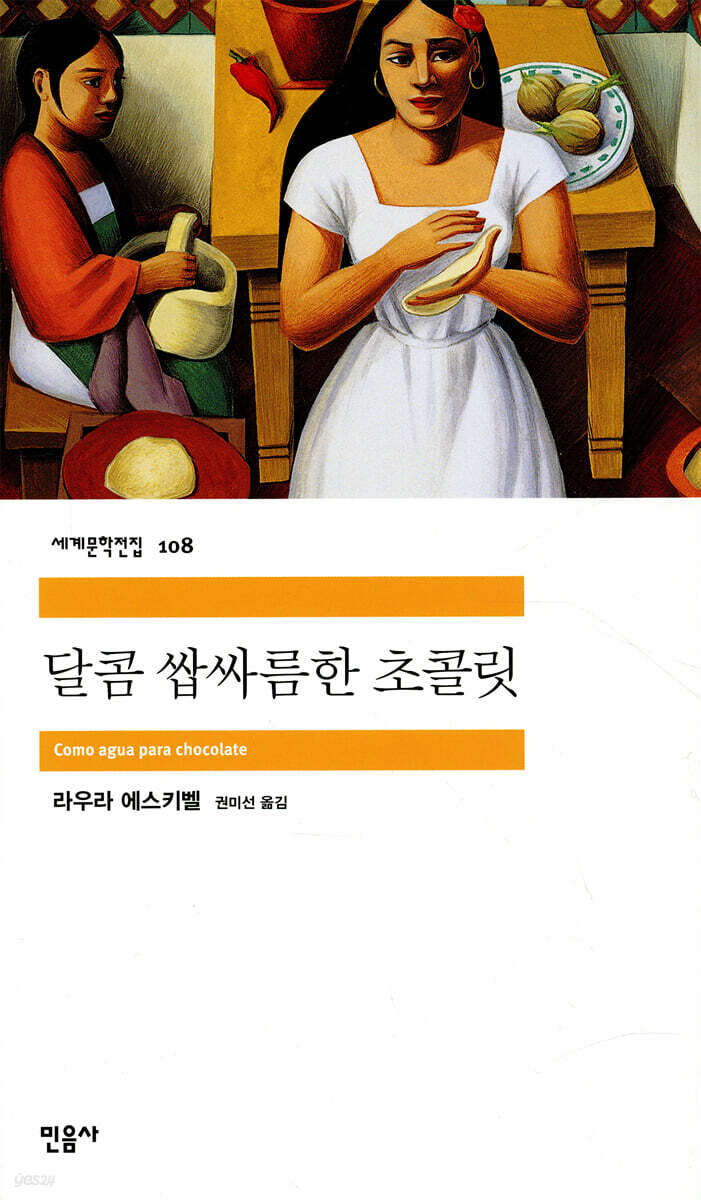
The original novel of the movie 'Bittersweet Chocolate'. This work lightheartedly explores love and sex through the medium of cooking, and the vibrant colors and sweet smells of Mexican cuisine consistently stimulate the reader's five senses. A bright, vibrant novel that compares human desires to a well-prepared meal. A rural Mexican village from 1910 to 1933. The protagonist, Tita, is the youngest of three daughters of her strict and domineering mother, Mama Elena. According to the tradition of the De la Garza family, she cannot marry because she must care for her mother until her death. However, Tita first sees Pedro at a Christmas party and falls in love with him. The author uses the unique format of a cookbook to portray the two main characters' passionate love in an erotic yet humorous way. Each of the twelve chapters, representing the twelve months of the year, features a specific dish, such as 'Quail with Rose Petals' or 'Chabela Wedding Cake', and the story unfolds by exquisitely mixing the cooking methods with Tita's love story. |
- You can preview some of the book's contents.
Preview
index
January Christmas Pie
February Chabella Wedding Cake
March Quail with Rose Petals
Turkey Mole with Almonds and Sesame Seeds in April
May Northern Style Chorizo
June Match Dough
July Oxtail Soup
August Champandonggo
September Chocolate and Epiphany Bread
October Cream Fritters
Tezcuco-style thick kidney beans with chile peppers in November
December Chili Peppers with Walnut Sauce
Commentary on the work
Author's chronology
February Chabella Wedding Cake
March Quail with Rose Petals
Turkey Mole with Almonds and Sesame Seeds in April
May Northern Style Chorizo
June Match Dough
July Oxtail Soup
August Champandonggo
September Chocolate and Epiphany Bread
October Cream Fritters
Tezcuco-style thick kidney beans with chile peppers in November
December Chili Peppers with Walnut Sauce
Commentary on the work
Author's chronology
Publisher's Review
Mama Elena refuses to marry Tita, citing family tradition, and urges Pedro to marry her eldest daughter, Rosaura.
Pedro agrees to marry Rosaura only to be close to Tita, and Tita, unaware of Pedro's true feelings, sheds tears and makes a wedding cake for the two.
The guests who ate this cake felt the same uncontrollable longing and sadness that Tita felt, and they vomited, and the wedding was ultimately ruined.
Pedro's confession makes Tita aware of his true feelings, but the two cannot even whisper sweet nothings of love due to the watchful eyes of Mama Elena, who has sharp eyes like an eagle.
Tita, who has become the family's cook, can only be free and express her true feelings when she cooks.
So Tita makes 'quail with rose petals', filled with her passionate love for Pedro.
Hertrudis, the second oldest sister, who ate the food, uses this as an opportunity to release the sexual desires she had been suppressing and runs outside.
For Hertrudis, the food seemed to have an aphrodisiac effect.
A hot sensation rose from my legs, and the middle of my body tingled so much that I couldn't even sit properly in the chair.
… …Unfortunately, Hertrudis was unable to enjoy her shower.
The heat emanating from her body was so strong that it warped the wooden planks and set them on fire.
Hertrudis was so afraid that she would be engulfed in flames and burn to death that she ran out of the shower completely naked.
… … Juan, not wanting to waste time, leaned down without stopping talking, grabbed Hertrudis by the waist, and made her sit in front of him.
But he rode with me, making me sit facing him.
… … When they finally managed to make the first connection while running at full speed, the horse’s movements and theirs became one and indistinguishable.
After even her older sister Gertrudis leaves home, Tita seeks to find her own happiness by pouring her love into her nephew Roberto.
Tita's desire to feed her nephew was so strong that her breasts began to produce milk, and she came to cherish her nephew even more as if he were her own child.
However, Mama Elena, sensing a strange atmosphere, sends Pedro's family away to America, and soon after, news arrives that Roberto has died from not being able to eat anything.
Tita is almost in a state of shock.
John Brown, the family physician, heals her with love.
Just as Tita, who John believed was his true love, was about to marry, Mama Elena's death brought Pedro's family back, and Tita fell in love with Pedro again.
As time passed and even her older sister Rosaura passed away from indigestion, Tita and Pedro finally decided to live a happy married life together.
However, Pedro dies of a heart attack at the climax.
Left alone, Tita begins chewing and swallowing the matches one by one, thinking of the saying, "Everyone is born with a matchbox inside them." Eventually, both their bodies are engulfed in flames.
Laura Esquivel, author of Bittersweet Chocolate, uses cooking as a medium to tell the story of Tita and Pedro's love.
Not only do the two whisper their love through the medium of cooking, but the description of their love also resembles the process of making the dish.
This narrative style, centered around cooking, helps to create a lighthearted atmosphere throughout the work.
This is because the subject of cooking has a sensory quality that stimulates all five senses of the reader.
The vibrant colors of Mexican cuisine and Tita's dancing movements on the grindstone delight the reader's eyes, the savory and sweet smell of food delight the reader's nose, the clatter of dishes or the sizzling sound of food delight the reader's ears, the sometimes spicy and sometimes sour flavors delight the reader's tongue, and the descriptions of the tangible kneading of dough or the beads of sweat running down Tita's forehead stimulate the reader's sense of touch.
A new genre of feminist literature called 'culinary literature'
In existing literature, the subject of 'cooking' was simply a duty imposed on women, and therefore the kitchen was also limited to the meaning of a space for housework.
However, in "Bittersweet Chocolate," cooking is reborn with a new meaning as a means of women's self-expression.
Tita loves Pedro, but the two have an impassable wall between them as brother-in-law and sister-in-law.
So, Tita puts her inexpressible love for Pedro, her sexual desires, and the sadness of unrequited love into the dishes she makes.
And that feeling is conveyed intact to those who eat Tita's cooking.
For Tita, cooking was rather a means of liberating her from the family traditions and domineering mother that bound her.
The original title of the work, 'Como agua para chocolate', also refers to the state of the (drinking) chocolate bubbling up, and expresses Tita's psychological state.
This new approach to cooking was welcomed by feminists and established itself as a literary genre called 'culinary literature'.
Pedro agrees to marry Rosaura only to be close to Tita, and Tita, unaware of Pedro's true feelings, sheds tears and makes a wedding cake for the two.
The guests who ate this cake felt the same uncontrollable longing and sadness that Tita felt, and they vomited, and the wedding was ultimately ruined.
Pedro's confession makes Tita aware of his true feelings, but the two cannot even whisper sweet nothings of love due to the watchful eyes of Mama Elena, who has sharp eyes like an eagle.
Tita, who has become the family's cook, can only be free and express her true feelings when she cooks.
So Tita makes 'quail with rose petals', filled with her passionate love for Pedro.
Hertrudis, the second oldest sister, who ate the food, uses this as an opportunity to release the sexual desires she had been suppressing and runs outside.
For Hertrudis, the food seemed to have an aphrodisiac effect.
A hot sensation rose from my legs, and the middle of my body tingled so much that I couldn't even sit properly in the chair.
… …Unfortunately, Hertrudis was unable to enjoy her shower.
The heat emanating from her body was so strong that it warped the wooden planks and set them on fire.
Hertrudis was so afraid that she would be engulfed in flames and burn to death that she ran out of the shower completely naked.
… … Juan, not wanting to waste time, leaned down without stopping talking, grabbed Hertrudis by the waist, and made her sit in front of him.
But he rode with me, making me sit facing him.
… … When they finally managed to make the first connection while running at full speed, the horse’s movements and theirs became one and indistinguishable.
After even her older sister Gertrudis leaves home, Tita seeks to find her own happiness by pouring her love into her nephew Roberto.
Tita's desire to feed her nephew was so strong that her breasts began to produce milk, and she came to cherish her nephew even more as if he were her own child.
However, Mama Elena, sensing a strange atmosphere, sends Pedro's family away to America, and soon after, news arrives that Roberto has died from not being able to eat anything.
Tita is almost in a state of shock.
John Brown, the family physician, heals her with love.
Just as Tita, who John believed was his true love, was about to marry, Mama Elena's death brought Pedro's family back, and Tita fell in love with Pedro again.
As time passed and even her older sister Rosaura passed away from indigestion, Tita and Pedro finally decided to live a happy married life together.
However, Pedro dies of a heart attack at the climax.
Left alone, Tita begins chewing and swallowing the matches one by one, thinking of the saying, "Everyone is born with a matchbox inside them." Eventually, both their bodies are engulfed in flames.
Laura Esquivel, author of Bittersweet Chocolate, uses cooking as a medium to tell the story of Tita and Pedro's love.
Not only do the two whisper their love through the medium of cooking, but the description of their love also resembles the process of making the dish.
This narrative style, centered around cooking, helps to create a lighthearted atmosphere throughout the work.
This is because the subject of cooking has a sensory quality that stimulates all five senses of the reader.
The vibrant colors of Mexican cuisine and Tita's dancing movements on the grindstone delight the reader's eyes, the savory and sweet smell of food delight the reader's nose, the clatter of dishes or the sizzling sound of food delight the reader's ears, the sometimes spicy and sometimes sour flavors delight the reader's tongue, and the descriptions of the tangible kneading of dough or the beads of sweat running down Tita's forehead stimulate the reader's sense of touch.
A new genre of feminist literature called 'culinary literature'
In existing literature, the subject of 'cooking' was simply a duty imposed on women, and therefore the kitchen was also limited to the meaning of a space for housework.
However, in "Bittersweet Chocolate," cooking is reborn with a new meaning as a means of women's self-expression.
Tita loves Pedro, but the two have an impassable wall between them as brother-in-law and sister-in-law.
So, Tita puts her inexpressible love for Pedro, her sexual desires, and the sadness of unrequited love into the dishes she makes.
And that feeling is conveyed intact to those who eat Tita's cooking.
For Tita, cooking was rather a means of liberating her from the family traditions and domineering mother that bound her.
The original title of the work, 'Como agua para chocolate', also refers to the state of the (drinking) chocolate bubbling up, and expresses Tita's psychological state.
This new approach to cooking was welcomed by feminists and established itself as a literary genre called 'culinary literature'.
GOODS SPECIFICS
- Date of issue: October 20, 2004
- Page count, weight, size: 272 pages | 368g | 132*224*20mm
- ISBN13: 9788937461088
- ISBN10: 8937461080
You may also like
카테고리
korean


korean

![ELLE 엘르 스페셜 에디션 A형 : 12월 [2025]](http://librairie.coreenne.fr/cdn/shop/files/b8e27a3de6c9538896439686c6b0e8fb.jpg?v=1766436872&width=3840)


