

First edition A Room of One's Own
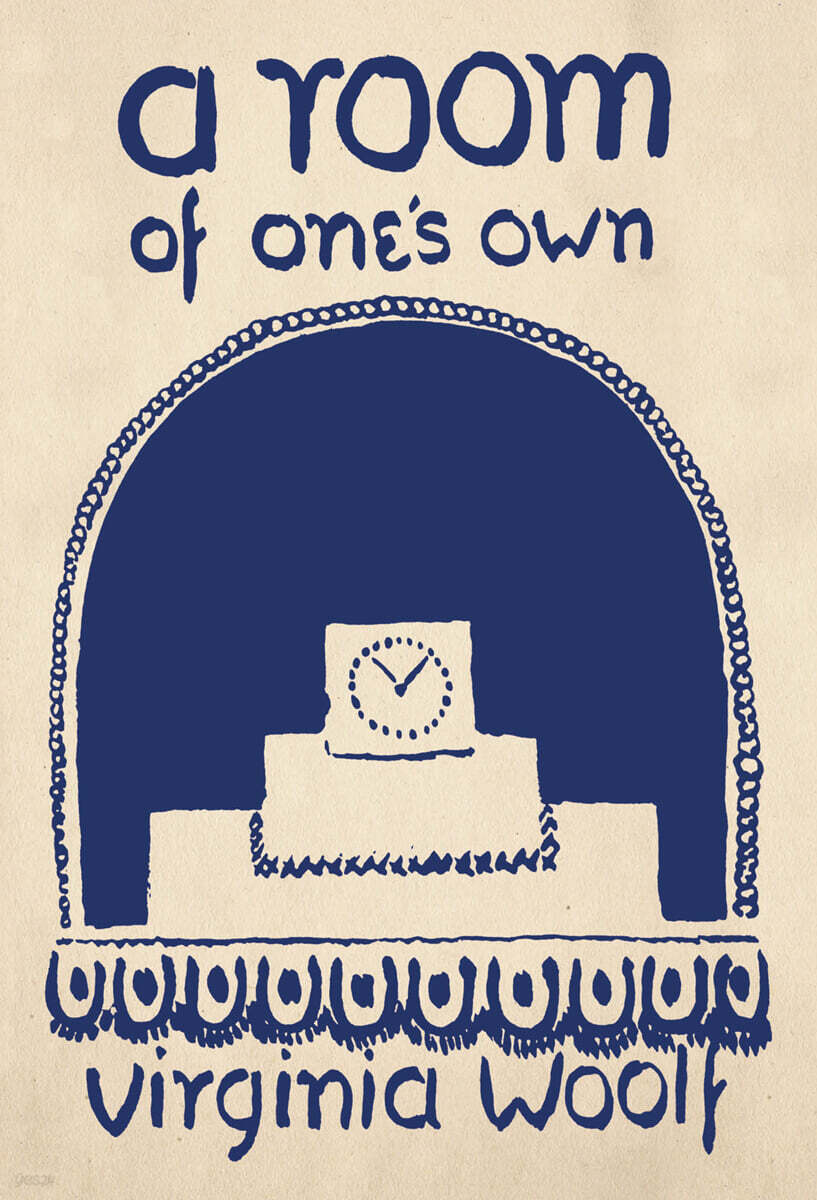 |
Description
Book Introduction
A collection of essays that opened the door to 20th-century feminist criticism!
Against patriarchy and gender inequality
Discursing women
A collection of essays that opened the door to 20th-century feminist criticism!
Confronting patriarchy and gender inequality to bring women into the discourse.
“Throughout history, women have been anonymous.” _Virginia Woolf
This book is a collection of essays by Virginia Woolf, a representative writer of feminist literature, and it examines the works of female writers such as Jane Austen and Emily Brontë, bringing female writers into the field of literary criticism for the first time.
She is evaluated as having boldly brought women into the discourse against patriarchy and gender inequality, and opened the field of feminist literary criticism.
Virginia Woolf argued that women writers had to have literary limitations due to social conventions and controls, and that women needed 'money' and 'a room of their own' to write novels.
He also emphasizes that women must be materially and mentally independent, and that if they find 'money' and 'a room of one's own', which are the keys to freedom, a female Shakespeare will emerge in the future.
Against patriarchy and gender inequality
Discursing women
A collection of essays that opened the door to 20th-century feminist criticism!
Confronting patriarchy and gender inequality to bring women into the discourse.
“Throughout history, women have been anonymous.” _Virginia Woolf
This book is a collection of essays by Virginia Woolf, a representative writer of feminist literature, and it examines the works of female writers such as Jane Austen and Emily Brontë, bringing female writers into the field of literary criticism for the first time.
She is evaluated as having boldly brought women into the discourse against patriarchy and gender inequality, and opened the field of feminist literary criticism.
Virginia Woolf argued that women writers had to have literary limitations due to social conventions and controls, and that women needed 'money' and 'a room of their own' to write novels.
He also emphasizes that women must be materially and mentally independent, and that if they find 'money' and 'a room of one's own', which are the keys to freedom, a female Shakespeare will emerge in the future.
index
Chapter 1
Chapter 2
Chapter 3
Chapter 4
Chapter 5
Chapter 6
Commentary on the work
Author's chronology
Chapter 2
Chapter 3
Chapter 4
Chapter 5
Chapter 6
Commentary on the work
Author's chronology
Publisher's Review
Writing that transcends convention and authority
"A Room of One's Own" is a revised and supplemented version of a lecture given at Girton College and Newnham College, women's educational institutions at Cambridge University, under the title "Women and the Novel."
The narrative style that follows the trajectory of thought in the form of a lecture is the most distinctive feature of this work, along with the setting of an unspecified narrator, 'I', who leads the entire story.
This narrative style breaks the dichotomous framework of author and reader in male-centered literature, allowing readers and author to generalize and empathize with the narrator's experiences from the same perspective.
Here, the process of asking questions and finding answers, breaking away from conventional and authoritative writing styles, encourages readers to think for themselves.
In particular, the opening sentence, “What we wanted to hear was about women and novels, and you may ask what a room of one’s own has to do with that,” suggests that the lecture will be presented from a different perspective than the general and dominant expectations on the topic of “women and novels,” that is, from a woman’s perspective.
Sexuality as a gender ahead of its time
Virginia Woolf, a pioneer of modernism and feminist in the early 20th century, was an icon of her time.
But Wolf never considered herself a feminist.
It is difficult to say that she existed within the wave of the radical feminist movement of the time, represented by the suffrage movement.
Wolfe did not argue that women should regain the same rights as men and rise to equal status.
Rather than demanding gender equality, attention was paid to the differences between men and women.
In the passage where she says that if women, as marginalized beings in society, feel the “unpleasantness of standing outside a firmly locked door,” men, trapped inside a firmly locked door, may have an even more unpleasant experience, we can glimpse Woolf’s pioneering perspective on recognizing the socially fixed differences between the sexes, that is, sex as gender.
"A Room of One's Own" is a revised and supplemented version of a lecture given at Girton College and Newnham College, women's educational institutions at Cambridge University, under the title "Women and the Novel."
The narrative style that follows the trajectory of thought in the form of a lecture is the most distinctive feature of this work, along with the setting of an unspecified narrator, 'I', who leads the entire story.
This narrative style breaks the dichotomous framework of author and reader in male-centered literature, allowing readers and author to generalize and empathize with the narrator's experiences from the same perspective.
Here, the process of asking questions and finding answers, breaking away from conventional and authoritative writing styles, encourages readers to think for themselves.
In particular, the opening sentence, “What we wanted to hear was about women and novels, and you may ask what a room of one’s own has to do with that,” suggests that the lecture will be presented from a different perspective than the general and dominant expectations on the topic of “women and novels,” that is, from a woman’s perspective.
Sexuality as a gender ahead of its time
Virginia Woolf, a pioneer of modernism and feminist in the early 20th century, was an icon of her time.
But Wolf never considered herself a feminist.
It is difficult to say that she existed within the wave of the radical feminist movement of the time, represented by the suffrage movement.
Wolfe did not argue that women should regain the same rights as men and rise to equal status.
Rather than demanding gender equality, attention was paid to the differences between men and women.
In the passage where she says that if women, as marginalized beings in society, feel the “unpleasantness of standing outside a firmly locked door,” men, trapped inside a firmly locked door, may have an even more unpleasant experience, we can glimpse Woolf’s pioneering perspective on recognizing the socially fixed differences between the sexes, that is, sex as gender.
GOODS SPECIFICS
- Date of issue: March 28, 2025
- Page count, weight, size: 200 pages | 128*188*20mm
- ISBN13: 9791194280811
- ISBN10: 1194280811
You may also like
카테고리
korean


korean

![ELLE 엘르 스페셜 에디션 A형 : 12월 [2025]](http://librairie.coreenne.fr/cdn/shop/files/b8e27a3de6c9538896439686c6b0e8fb.jpg?v=1766436872&width=3840)


