

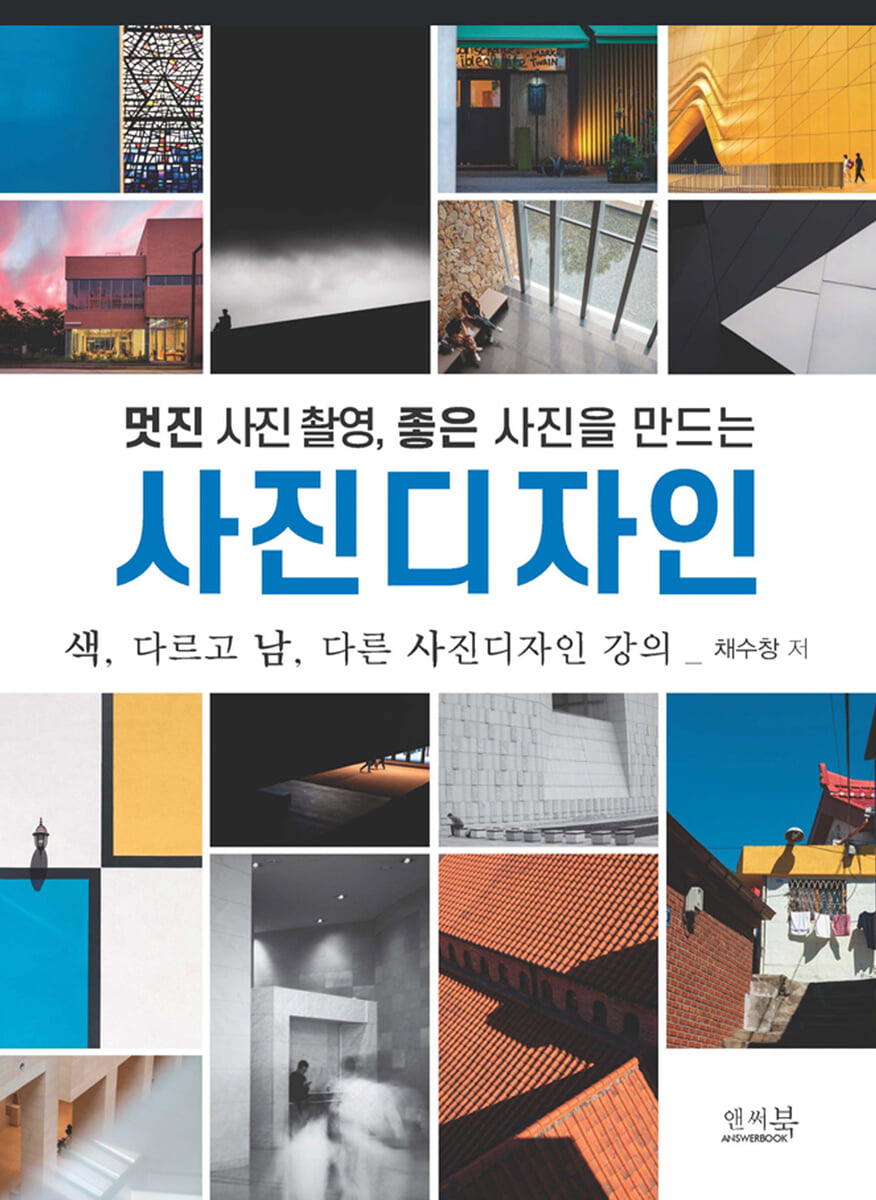
Photo design that creates great photos and great photography
 |
Description
Book Introduction
If you want a photo that really grabs attention, a unique and distinctive photo, photo design is the answer!
"Taking Great Photos, Photo Design That Makes Great Photos" is a book for those who want to build a solid foundation in photography, not just the mechanics.
Through the theory and practice of this book, you can improve the perfection of your photographs and develop the ability to discover artistic perspectives.
I highly recommend this book to these people:
- People who want to take unique photos that are different from others
- Those who feel mannerism in the same photo
- Those who feel like their photography skills are hitting a wall
Author Chae Su-chang emphasizes in his book that “photography is not about capturing a subject, but capturing a feeling.”
The core of the book, "Taking Great Photos, Photo Design That Makes Good Photos," is to understand the concepts and principles of "formation" in art, and learn how form is expressed in photography and how to develop the ability to compose my own photographs.
You can ask questions and receive answers while reading the book at the academy and blog run by author Chae Su-chang.
You can also find information on various photography classes, photography aesthetics classes, and photography design materials.
"Taking Great Photos, Photo Design That Makes Great Photos" is a book for those who want to build a solid foundation in photography, not just the mechanics.
Through the theory and practice of this book, you can improve the perfection of your photographs and develop the ability to discover artistic perspectives.
I highly recommend this book to these people:
- People who want to take unique photos that are different from others
- Those who feel mannerism in the same photo
- Those who feel like their photography skills are hitting a wall
Author Chae Su-chang emphasizes in his book that “photography is not about capturing a subject, but capturing a feeling.”
The core of the book, "Taking Great Photos, Photo Design That Makes Good Photos," is to understand the concepts and principles of "formation" in art, and learn how form is expressed in photography and how to develop the ability to compose my own photographs.
You can ask questions and receive answers while reading the book at the academy and blog run by author Chae Su-chang.
You can also find information on various photography classes, photography aesthetics classes, and photography design materials.
index
PART 01 Basic Photographic Design: The Basics of Photographic Design
01 What is the difference between composition and photo design?
01_1 Why do we take pictures?
01_2 Differences between composition and photo design
(1) Photographic composition is a way to show the subject.
(2) So what is photo design?
02 Perceptual method of recognizing shapes, Gestalt theory
02_1 What is Gestalt Theory?
02_2 The Four Classification Laws of Gestalt Theory
(1) The law of similarity
(2) The law of proximity
(3) The law of continuance
(4) The law of common fate
02_3 4 classification rules and other photography-related rules
(1) Symmetry
(2) Figure to ground
(3) Law of Closure
(4) The Law of Simplicity
02_4 How to Use Gestalt Theory in Photography
(1) Visual appeal utilizes the law of similarity.
(2) Intimacy between subjects utilizes the law of proximity.
(3) Use the law of continuity to encourage audience participation in the photo.
(4) The stimulation of imagination utilizes the law of closure.
(5) Create a juxtaposition photo using the law of common fate.
[Special Page] What is the vineering effect?
03 Why Photographic Design is Necessary: Theory of Formative Art in Photography
03_1 Meaning of Form
03_2 Design elements and principles
03_3 Why do photos need design?
[Special Page] What is storytelling in photography?
PART 02 The Elements of Photographic Design
01 The smallest unit for recognizing shape, point
01_1 Meaning and characteristics of points
01_2 point effect
01_3 How to use dots in photos
02 The trace of the point moving, line
02_1 Meaning and characteristics of lines
02 _ 2 Line Effect
02_3 Types of lines and how to use them in photos
(1) Horizontal Line
(2) Vertical Line
(3) Diagonal Line
(4) Curves
(5) Leading Line
(6) Implicit (tacit) line
03 Shapes expressed by lines
03 _ 1 Meaning and characteristics of shape
03 _ 2 Shape Effect
03_3 Types of shapes and how to use them in photos
(1) Rectangle
(2) Triangle
(3) Circle
(4) Polygon
(5) Helix
03_4 Rules for using shapes in photos
03_5 Why do we need geometry in photography?
(1) What is geometry?
(2) Why should I learn geometry? Is geometry necessary for photography?
(3) Geometric elements in the photo
(4) Using geometry for storytelling
04 Texture, creating atmosphere and emotion
04_1 The Importance of Texture in Photography
(1) Texture adds depth to a photo.
(2) Texture stimulates the sense of touch
04_2 How to use texture in photos
(1) Deep texture
(2) Depth of field
(3) Texture for integration or division
(4) Moving texture
(5) Texture as contrast
(6) Texture as a subject
05 Space, creating depth in the photo
05_1 The meaning of space
05_2 Types and characteristics of space
05_3 How to use space in photos
(1) Movement
(2) Direction of gaze
(3) Perspective
05 _ 4 Visual weight in space (frame)
(1) What is visual weight?
(2) How to express visual weight in a photograph
[Special Page] Photo Critique: A Time to Experience Different Perspectives
06 Color that creates beauty
06 _ 1 The meaning and importance of color in photography
06_2 Using the color wheel
06_3 Color contrast and use in photos
(1) Hue Contrast
(2) Complementary Color Contrast
(3) Lightness Contrast
(4) Saturation Contrast
06 _ How to create unique photos using 4 colors
(1) Use of single color
(2) Use of similar colors
(3) Use of complementary colors
(4) Use of adjacent complementary colors
(5) Use of 3 colors
(6) Use of 4 colors
(7) Use of highly saturated colors
06_5 How to use color in photos
(1) Use colors to express various emotions.
(2) Use a color that serves as a focal point to enhance the visual effect.
(3) Lower the saturation slightly to create a vintage feel.
(4) Fill the frame with color to emphasize the color.
(5) Examine how light affects color.
07 Tone, creating the mood in the photo
07_1 The meaning and characteristics of tone
07_2 Making a difference in tone in a photo
(1) Quality and quantity of light
(2) Directionality of light
(3) Accurate exposure
07_3 Characteristics of each tone and how to use them in photos
(1) Darkest tone range
(2) Mid-range of tones
(3) Brightest tone range
[Special Page] Is a black-and-white zone system necessary for digital photography?
08 The Basics of Photography, Light
08_1 White balance to bring out the colors in the photo
08_2 Classification by nature of light
(1) Direct sunlight
(2) Diffused light (indirect light)
(3) Dark light and bright light
(4) High contrast and low contrast
08_3 Classification of light according to direction
(1) Front light (sun light)
(2) Light
(3) Side light
(4) Backlight
(5) History buff
(6) Broad lighting and short lighting
(7) Roof Lighting & Rembrandt Lighting vs. Butterfly Lighting
08_4 Classification of light by role
(1) Main Light
(2) Fill Light
(3) Back Light
(4) Background Light
(5) Top Light (Head Light)
08_5 How to use light well in photos?
08_6 Balance of light and shadow
(1) Light and shadow in the photo
(2) How to use light and shadow in photography
09 Focusing attention, Frame
09_1 Meaning of Frame
09_2 Why frames are important and what types they are
(1) Why frames are important
(2) Types of frames and how to use them in photos
PART 03 The Principle of Photographic Design
01 Balance, which affects visual weight
01_1 What is balance in a photograph?
01_2 Types of balance and how to use them in photography
(1) Symmetrical and asymmetrical balance
(2) Color and tone balance
(3) Conceptual balance
(4) Balance according to size difference
(5) Balance by texture
(6) Spatial balance
[Special Page] Juxtaposition
02 Emphasis: A Point That Captures Attention
02_1 Meaning and characteristics of emphasis
02_2 How to highlight a subject in a photo
(1) Shallow depth of field
(2) Utilization of negative space
(3) Guiding the gaze using the leading line
(4) Contrast
(5) Increased sense of weight using texture
(6) Color
(7) Close Up
03 Visual Stability, Unity & Harmony
03_1 The meaning and characteristics of unification and harmony
03_2 How to create unity in photos
(1) Using Gestalt laws
(2) Unifying by color
(3) Creating unity using shape
03_3 Harmony that breaks free from the boredom of unification
04 Different Views on Form, Contrast
04_1 Meaning of contrast
04_2 Types of contrast and how to use them in photos
(1) General contrast
(2) Color contrast
04_3 Storytelling through concept contrast
05 Pattern & Repetition, Rhythm of the same or similar elements
05_1 Repetition and Pattern, Rhythm and Movement
(1) How to use repetition and patterns in photos
(2) Types of movement and how to use them in photos
(3) How to use rhythm in photos
06 The Aesthetics of Sharing, Proportion and Scale
06_1 Meaning and characteristics of ratio and scale
06_2 Characteristics of the ratio
(1) How to use ratios in photos
06_3 Size Features
(1) How to use scale in photos
[Special Page] The Meaning of Abstract Photography and How to Use It in Photography
PART 04 Actual Case of Photographic Design: Practical Cases of Photographic Design
01 23 Practical Photo Design Case Studies
01 What is the difference between composition and photo design?
01_1 Why do we take pictures?
01_2 Differences between composition and photo design
(1) Photographic composition is a way to show the subject.
(2) So what is photo design?
02 Perceptual method of recognizing shapes, Gestalt theory
02_1 What is Gestalt Theory?
02_2 The Four Classification Laws of Gestalt Theory
(1) The law of similarity
(2) The law of proximity
(3) The law of continuance
(4) The law of common fate
02_3 4 classification rules and other photography-related rules
(1) Symmetry
(2) Figure to ground
(3) Law of Closure
(4) The Law of Simplicity
02_4 How to Use Gestalt Theory in Photography
(1) Visual appeal utilizes the law of similarity.
(2) Intimacy between subjects utilizes the law of proximity.
(3) Use the law of continuity to encourage audience participation in the photo.
(4) The stimulation of imagination utilizes the law of closure.
(5) Create a juxtaposition photo using the law of common fate.
[Special Page] What is the vineering effect?
03 Why Photographic Design is Necessary: Theory of Formative Art in Photography
03_1 Meaning of Form
03_2 Design elements and principles
03_3 Why do photos need design?
[Special Page] What is storytelling in photography?
PART 02 The Elements of Photographic Design
01 The smallest unit for recognizing shape, point
01_1 Meaning and characteristics of points
01_2 point effect
01_3 How to use dots in photos
02 The trace of the point moving, line
02_1 Meaning and characteristics of lines
02 _ 2 Line Effect
02_3 Types of lines and how to use them in photos
(1) Horizontal Line
(2) Vertical Line
(3) Diagonal Line
(4) Curves
(5) Leading Line
(6) Implicit (tacit) line
03 Shapes expressed by lines
03 _ 1 Meaning and characteristics of shape
03 _ 2 Shape Effect
03_3 Types of shapes and how to use them in photos
(1) Rectangle
(2) Triangle
(3) Circle
(4) Polygon
(5) Helix
03_4 Rules for using shapes in photos
03_5 Why do we need geometry in photography?
(1) What is geometry?
(2) Why should I learn geometry? Is geometry necessary for photography?
(3) Geometric elements in the photo
(4) Using geometry for storytelling
04 Texture, creating atmosphere and emotion
04_1 The Importance of Texture in Photography
(1) Texture adds depth to a photo.
(2) Texture stimulates the sense of touch
04_2 How to use texture in photos
(1) Deep texture
(2) Depth of field
(3) Texture for integration or division
(4) Moving texture
(5) Texture as contrast
(6) Texture as a subject
05 Space, creating depth in the photo
05_1 The meaning of space
05_2 Types and characteristics of space
05_3 How to use space in photos
(1) Movement
(2) Direction of gaze
(3) Perspective
05 _ 4 Visual weight in space (frame)
(1) What is visual weight?
(2) How to express visual weight in a photograph
[Special Page] Photo Critique: A Time to Experience Different Perspectives
06 Color that creates beauty
06 _ 1 The meaning and importance of color in photography
06_2 Using the color wheel
06_3 Color contrast and use in photos
(1) Hue Contrast
(2) Complementary Color Contrast
(3) Lightness Contrast
(4) Saturation Contrast
06 _ How to create unique photos using 4 colors
(1) Use of single color
(2) Use of similar colors
(3) Use of complementary colors
(4) Use of adjacent complementary colors
(5) Use of 3 colors
(6) Use of 4 colors
(7) Use of highly saturated colors
06_5 How to use color in photos
(1) Use colors to express various emotions.
(2) Use a color that serves as a focal point to enhance the visual effect.
(3) Lower the saturation slightly to create a vintage feel.
(4) Fill the frame with color to emphasize the color.
(5) Examine how light affects color.
07 Tone, creating the mood in the photo
07_1 The meaning and characteristics of tone
07_2 Making a difference in tone in a photo
(1) Quality and quantity of light
(2) Directionality of light
(3) Accurate exposure
07_3 Characteristics of each tone and how to use them in photos
(1) Darkest tone range
(2) Mid-range of tones
(3) Brightest tone range
[Special Page] Is a black-and-white zone system necessary for digital photography?
08 The Basics of Photography, Light
08_1 White balance to bring out the colors in the photo
08_2 Classification by nature of light
(1) Direct sunlight
(2) Diffused light (indirect light)
(3) Dark light and bright light
(4) High contrast and low contrast
08_3 Classification of light according to direction
(1) Front light (sun light)
(2) Light
(3) Side light
(4) Backlight
(5) History buff
(6) Broad lighting and short lighting
(7) Roof Lighting & Rembrandt Lighting vs. Butterfly Lighting
08_4 Classification of light by role
(1) Main Light
(2) Fill Light
(3) Back Light
(4) Background Light
(5) Top Light (Head Light)
08_5 How to use light well in photos?
08_6 Balance of light and shadow
(1) Light and shadow in the photo
(2) How to use light and shadow in photography
09 Focusing attention, Frame
09_1 Meaning of Frame
09_2 Why frames are important and what types they are
(1) Why frames are important
(2) Types of frames and how to use them in photos
PART 03 The Principle of Photographic Design
01 Balance, which affects visual weight
01_1 What is balance in a photograph?
01_2 Types of balance and how to use them in photography
(1) Symmetrical and asymmetrical balance
(2) Color and tone balance
(3) Conceptual balance
(4) Balance according to size difference
(5) Balance by texture
(6) Spatial balance
[Special Page] Juxtaposition
02 Emphasis: A Point That Captures Attention
02_1 Meaning and characteristics of emphasis
02_2 How to highlight a subject in a photo
(1) Shallow depth of field
(2) Utilization of negative space
(3) Guiding the gaze using the leading line
(4) Contrast
(5) Increased sense of weight using texture
(6) Color
(7) Close Up
03 Visual Stability, Unity & Harmony
03_1 The meaning and characteristics of unification and harmony
03_2 How to create unity in photos
(1) Using Gestalt laws
(2) Unifying by color
(3) Creating unity using shape
03_3 Harmony that breaks free from the boredom of unification
04 Different Views on Form, Contrast
04_1 Meaning of contrast
04_2 Types of contrast and how to use them in photos
(1) General contrast
(2) Color contrast
04_3 Storytelling through concept contrast
05 Pattern & Repetition, Rhythm of the same or similar elements
05_1 Repetition and Pattern, Rhythm and Movement
(1) How to use repetition and patterns in photos
(2) Types of movement and how to use them in photos
(3) How to use rhythm in photos
06 The Aesthetics of Sharing, Proportion and Scale
06_1 Meaning and characteristics of ratio and scale
06_2 Characteristics of the ratio
(1) How to use ratios in photos
06_3 Size Features
(1) How to use scale in photos
[Special Page] The Meaning of Abstract Photography and How to Use It in Photography
PART 04 Actual Case of Photographic Design: Practical Cases of Photographic Design
01 23 Practical Photo Design Case Studies
Detailed image
.jpg)
GOODS SPECIFICS
- Date of issue: December 30, 2023
- Page count, weight, size: 276 pages | 604g | 190*257*11mm
- ISBN13: 9791193059142
- ISBN10: 1193059143
You may also like
카테고리
korean


korean

![GQ KOREA Mark (Monthly): December [2025]](http://librairie.coreenne.fr/cdn/shop/files/8ef265dbbfbf186523ed75ba7319009d.jpg?v=1765340328&width=3840)


