

A World History Through 100 Plants
 |
Description
Book Introduction
The hidden protagonist of world history that we didn't know about until now,
How Plants Made History Alongside Humans
“If you’re looking for a book about plants, this one is enough.”
Choi Jae-cheon (Professor Emeritus, Department of Eco-Science, Ewha Womans University)
"Fun and informative! After reading it, you'll see the world differently."
Lee Jeong-mo (author of "Splendid Extinction," former director of the National Science Museum in Gwacheon)
*** A unique encyclopedia of plant world history encompassing history, art, and science.
*** Includes 160 detailed plant illustrations, classic paintings, and high-quality color photographs.
*** Highly recommended by Professor Choi Jae-cheon, Director Lee Jeong-mo, and Author Lee So-young!
Simon Barnes, who told us an interesting story about the world of animals in “A History of the World in 100 Animals,” is back with a story about plants.
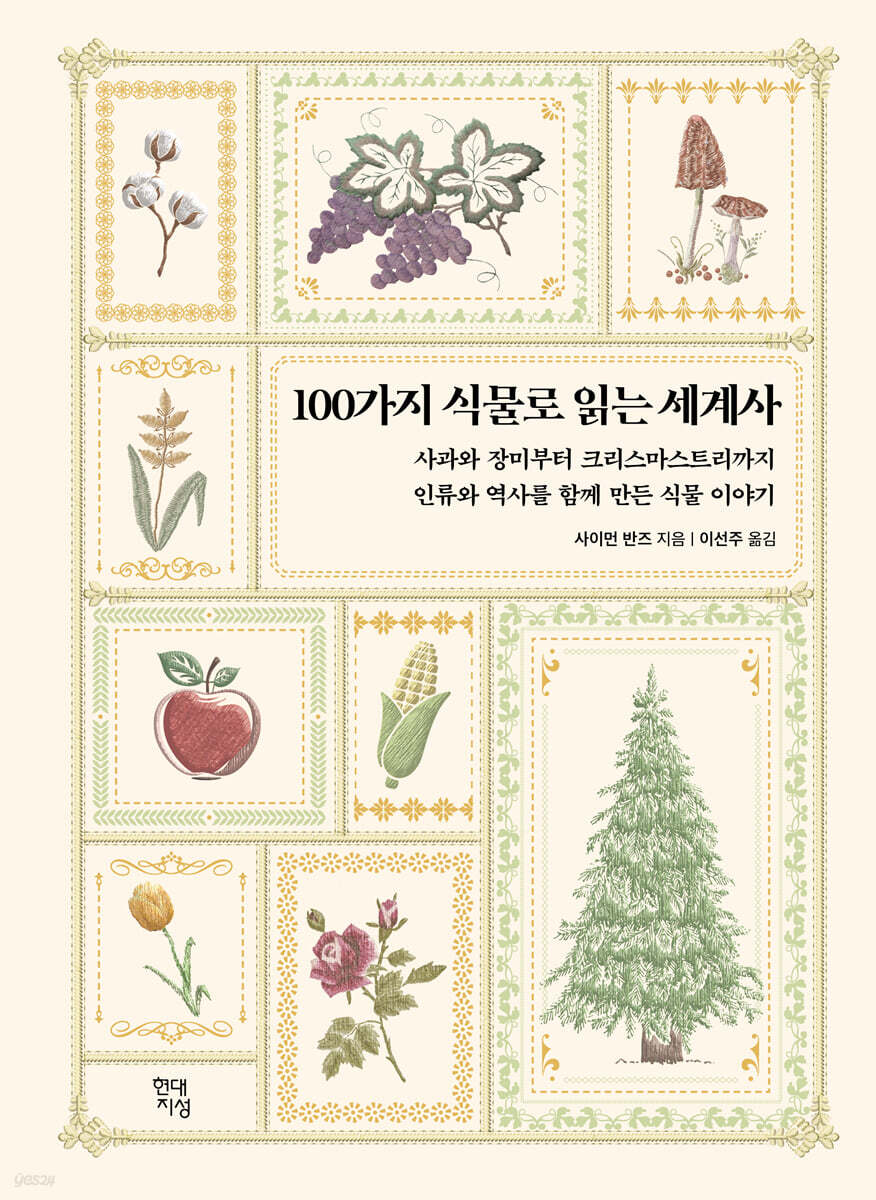
"A World History Through 100 Plants" looks back on world history through the lens of plants, which have played a diverse role throughout human history.
As a veteran reporter with 30 years of experience, he has filled 100 plant stories with his extensive knowledge and vivid sense of the field.
It freely crosses history, art, and science, telling a colorful story you've never heard before.
A total of 160 detailed plant illustrations, classic paintings, and high-quality color photographs also add to the visual pleasure.
From the strangler fig tree that provided shade to the early humans to the endangered rainforests of today, it contains a vast story spanning the past, present, and future.
It covers not only familiar plants like apples, roses, and bamboo, but also rare and unusual plants like Venus flytraps, magic mushrooms, and Christmas trees.
The lush story of plants unfolds, always with us, creating history as we know it: sometimes as our daily bread, sometimes as gifts conveying gratitude and love, and sometimes as materials for building civilization.
After reading this book, you will see the world differently.
How Plants Made History Alongside Humans
“If you’re looking for a book about plants, this one is enough.”
Choi Jae-cheon (Professor Emeritus, Department of Eco-Science, Ewha Womans University)
"Fun and informative! After reading it, you'll see the world differently."
Lee Jeong-mo (author of "Splendid Extinction," former director of the National Science Museum in Gwacheon)
*** A unique encyclopedia of plant world history encompassing history, art, and science.
*** Includes 160 detailed plant illustrations, classic paintings, and high-quality color photographs.
*** Highly recommended by Professor Choi Jae-cheon, Director Lee Jeong-mo, and Author Lee So-young!
Simon Barnes, who told us an interesting story about the world of animals in “A History of the World in 100 Animals,” is back with a story about plants.
"A World History Through 100 Plants" looks back on world history through the lens of plants, which have played a diverse role throughout human history.
As a veteran reporter with 30 years of experience, he has filled 100 plant stories with his extensive knowledge and vivid sense of the field.
It freely crosses history, art, and science, telling a colorful story you've never heard before.
A total of 160 detailed plant illustrations, classic paintings, and high-quality color photographs also add to the visual pleasure.
From the strangler fig tree that provided shade to the early humans to the endangered rainforests of today, it contains a vast story spanning the past, present, and future.
It covers not only familiar plants like apples, roses, and bamboo, but also rare and unusual plants like Venus flytraps, magic mushrooms, and Christmas trees.
The lush story of plants unfolds, always with us, creating history as we know it: sometimes as our daily bread, sometimes as gifts conveying gratitude and love, and sometimes as materials for building civilization.
After reading this book, you will see the world differently.
- You can preview some of the book's contents.
Preview
index
Entering
001 Strangler Fig Tree
002 wheat
003 Rose
004 Peas
005 Willow
006 Pool
007 Cinnamon
008 Sunflower
009 Oak
010 Daisy
011 Yeast
012 Cannabis
013 Orchid
014 Brazil nut tree
015 Oil Palm
016 Old tree
017 Rice
018 Western Meadowflower
019 Poppy
020 Papyrus
021 Blue Mold
022 Kigelia tree
023 Daffodils
024 Apple
025 American Redwood
026 Christmas Tree
027 Paris Hell
028 Attention
029 Barley
030 Barley tree
031 Magic Mushrooms
032 Potato
033 Haeran Elementary School
034 Camphor tree
035 Kudzu
036 American Pool
037 Cigarettes
038 Lotus
039 Marigold
040 pepper
041 Truffle
042 Marula tree
043 Cherry Tree
044 Maybe
045 Indigo
046 Ginseng
047 Rubber Tree
048 Garlic
049 Digitalis
050 Grapes
051 Edible mushrooms
052 Hojanggeun
053 Bamboo
054 Tea Tree
055 Gourd
056 American ivy
057 Opium Poppy
058 Banana
059 Orchid
060 beans
061 Poisonous mushrooms
062 Teak
063 Pine tree
064 Mulberry
065 Lily
066 Training
067 Orange
068 Saffron Crocus
069 Cucumber
070 Nettle
071 Candida albicans
072 Cacao tree
073 Strawberry
074 Cotton
075 Soybeans
076 Arabidopsis thaliana
077 Tulip
078 Coffee Tree
079 Sugarcane
080 Tiger Thorn Tree
081 Dry rot fungus
082 Olive Tree
083 Rafflesia
084 Tomato
085 Almond Tree
086 Dokminari
087 Cabbage
088 Cassava
089 The Tree of Atonement
090 Chrysanthemum
091 Mycorrhizal fungi
092 Eucalyptus
093 Coca tree
094 Corn
095 Rapeseed
096 Birds
097 Phytoplankton
098 Baobab tree
099 Daily Cho
100 Dipterocarp trees
Going out
Acknowledgements
Search
Image copyright
001 Strangler Fig Tree
002 wheat
003 Rose
004 Peas
005 Willow
006 Pool
007 Cinnamon
008 Sunflower
009 Oak
010 Daisy
011 Yeast
012 Cannabis
013 Orchid
014 Brazil nut tree
015 Oil Palm
016 Old tree
017 Rice
018 Western Meadowflower
019 Poppy
020 Papyrus
021 Blue Mold
022 Kigelia tree
023 Daffodils
024 Apple
025 American Redwood
026 Christmas Tree
027 Paris Hell
028 Attention
029 Barley
030 Barley tree
031 Magic Mushrooms
032 Potato
033 Haeran Elementary School
034 Camphor tree
035 Kudzu
036 American Pool
037 Cigarettes
038 Lotus
039 Marigold
040 pepper
041 Truffle
042 Marula tree
043 Cherry Tree
044 Maybe
045 Indigo
046 Ginseng
047 Rubber Tree
048 Garlic
049 Digitalis
050 Grapes
051 Edible mushrooms
052 Hojanggeun
053 Bamboo
054 Tea Tree
055 Gourd
056 American ivy
057 Opium Poppy
058 Banana
059 Orchid
060 beans
061 Poisonous mushrooms
062 Teak
063 Pine tree
064 Mulberry
065 Lily
066 Training
067 Orange
068 Saffron Crocus
069 Cucumber
070 Nettle
071 Candida albicans
072 Cacao tree
073 Strawberry
074 Cotton
075 Soybeans
076 Arabidopsis thaliana
077 Tulip
078 Coffee Tree
079 Sugarcane
080 Tiger Thorn Tree
081 Dry rot fungus
082 Olive Tree
083 Rafflesia
084 Tomato
085 Almond Tree
086 Dokminari
087 Cabbage
088 Cassava
089 The Tree of Atonement
090 Chrysanthemum
091 Mycorrhizal fungi
092 Eucalyptus
093 Coca tree
094 Corn
095 Rapeseed
096 Birds
097 Phytoplankton
098 Baobab tree
099 Daily Cho
100 Dipterocarp trees
Going out
Acknowledgements
Search
Image copyright
Detailed image

Into the book
We humans think of ourselves as noble beings, possessing reason and transcending nature, possessing infinite abilities and acting like angels.
We have become god-like beings, and we are shaping the world as we wish.
But we humans still cannot live a single day without plants.
Our past is all related to plants.
Our present is also all related to plants.
Without plants, we have no future.
Here are the 100 reasons why.
---From "Entering"
The shade of this tree is incredibly extensive.
The shade cast by the branches extending from the trunk of a fully grown fig tree can reach a radius of 20 meters.
Dozens of people can rest under these branches.
Families and other groups can gather and rest in the shade without interfering with each other.
You can spend hours dozing off under the shade of a tree, eating, drinking, singing, socializing, flirting, talking, or making plans.
Human civilization began in the shade of trees, and especially enjoyed the shade of the strangler fig tree.
---From "001 The Strangled Fig Tree: All history begins in the shade of a tree"
Van Gogh's sunflower paintings from Arles are as famous as the Mona Lisa.
Each painting has been reproduced countless times in all sorts of forms, from t-shirts and towels to refrigerator magnets, and has become so commonplace that it's easy to overlook the sunflower itself.
But what's important is not the mythical life of the artist, which was painful.
The sunflower painting shows how overwhelming joy can be, and how terribly fragile such a heightened experience can be.
---From "008 Sunflower: Flowers Painted with Passion by Van Gogh"
Orchids are famous for their flowers.
As a reproductive organ of a plant, it has a distinct and flashy sexual appeal.
It is also praised for its exotic appearance, and evokes desire and obsession.
There is something excessive and dangerous about that yearning and obsession.
In the 19th century, the obsession with orchids that gripped many people was called orchidelirium.
There are hundreds of associations around the world devoted to orchid cultivation.
Charles Darwin wrote in a letter to his close friend, botanist Joseph Hooker, “The subject that has interested me most in my life is the orchid.”
---From "013 Orchid: A Plant Embraced by Desire and Obsession"
The large-scale destruction of rainforests is based on the idea that the reason they are so dense is because they provide extremely fertile land.
This is a wrong idea.
Tropical rainforests are clearly very hot and humid, and have maintained that environment for over 50 million years.
Constant temperature and humidity, along with dense forests, intertwine to form a surprisingly complex interdependent system.
The reason rainforests are so dense is not because of the soil, but because of the forest itself.
The seeds fall to the forest floor and sprout again.
Yet, humans are still destroying the forests, making them uninhabitable.
As you eat Brazil nuts, let's briefly experience, not just in your head but in your stomach, the immense benefits that the rainforest provides us with that we can't even expect anywhere else.
---From "014 Brazil Nut Tree: A Gift from the Rainforest"
Charles Darwin said that the Venus flytrap was one of the most wonderful plants in the world.
He fed the flytrap roast beef and boiled eggs to see how it would react.
Since its widespread popularity, the Parisian hell has continuously captured the human imagination.
There have also been stories of carnivorous plants that further expand on the characteristics of those plants that eat meat.
Not many people have read John Wyndham's 1951 novel The Day of the Triffid or seen the 1962 film of the same name, but a plant that has a vaguely threatening and frightening appearance is commonly called a triffid.
---From "027 Paris Hell: Carnivorous Plants That Threaten Our Cognition"
The tulip mania of enormous scale gave rise to countless stories and legends of luxury.
There were stories of land over 48,560 square meters being used to buy a single bulb, a single bulb being sold for ten times the annual salary of a skilled craftsman, a single bulb changing hands ten times a day, and the only purpose being to buy and sell bulbs without planting them.
There is even a story that a sailor stole the bulbs and roasted them for breakfast, not knowing how much they cost.
It's a hard story to believe, because tulip bulbs are so nasty.
The various varieties of tulips were given increasingly fanciful names, such as General and Admiral.
The most expensive of these is the Semper Augustus, described as “white in color, with a dark red pattern at the top that has an unquenchable flame.”
Who could resist a tulip like this?
---From "077 Tulip: A Beauty That Doesn't Exist in the Wild"
Every year, huge trucks from across the United States transport buzzing hives of bees to the Central Valley.
Once there, the bees pollinate the flowers.
It is the largest artificial pollination event in the world.
At this time, about 1.4 million beehives gather there.
Two hives are required per 4,050 square meters of area, and each hive costs $200.
In recent years, prices have skyrocketed due to colony collapse (a phenomenon in which queen bees and larvae die en masse when worker bees go out to collect honey and do not return - translator's note).
The cause of this phenomenon, which adversely affects beehives, is not clearly known, and there is no simple solution.
When you leave the Central Valley after an event, it's common to lose about a third of the hives you brought with you.
It is difficult to restore the number of lost hives.
We have become god-like beings, and we are shaping the world as we wish.
But we humans still cannot live a single day without plants.
Our past is all related to plants.
Our present is also all related to plants.
Without plants, we have no future.
Here are the 100 reasons why.
---From "Entering"
The shade of this tree is incredibly extensive.
The shade cast by the branches extending from the trunk of a fully grown fig tree can reach a radius of 20 meters.
Dozens of people can rest under these branches.
Families and other groups can gather and rest in the shade without interfering with each other.
You can spend hours dozing off under the shade of a tree, eating, drinking, singing, socializing, flirting, talking, or making plans.
Human civilization began in the shade of trees, and especially enjoyed the shade of the strangler fig tree.
---From "001 The Strangled Fig Tree: All history begins in the shade of a tree"
Van Gogh's sunflower paintings from Arles are as famous as the Mona Lisa.
Each painting has been reproduced countless times in all sorts of forms, from t-shirts and towels to refrigerator magnets, and has become so commonplace that it's easy to overlook the sunflower itself.
But what's important is not the mythical life of the artist, which was painful.
The sunflower painting shows how overwhelming joy can be, and how terribly fragile such a heightened experience can be.
---From "008 Sunflower: Flowers Painted with Passion by Van Gogh"
Orchids are famous for their flowers.
As a reproductive organ of a plant, it has a distinct and flashy sexual appeal.
It is also praised for its exotic appearance, and evokes desire and obsession.
There is something excessive and dangerous about that yearning and obsession.
In the 19th century, the obsession with orchids that gripped many people was called orchidelirium.
There are hundreds of associations around the world devoted to orchid cultivation.
Charles Darwin wrote in a letter to his close friend, botanist Joseph Hooker, “The subject that has interested me most in my life is the orchid.”
---From "013 Orchid: A Plant Embraced by Desire and Obsession"
The large-scale destruction of rainforests is based on the idea that the reason they are so dense is because they provide extremely fertile land.
This is a wrong idea.
Tropical rainforests are clearly very hot and humid, and have maintained that environment for over 50 million years.
Constant temperature and humidity, along with dense forests, intertwine to form a surprisingly complex interdependent system.
The reason rainforests are so dense is not because of the soil, but because of the forest itself.
The seeds fall to the forest floor and sprout again.
Yet, humans are still destroying the forests, making them uninhabitable.
As you eat Brazil nuts, let's briefly experience, not just in your head but in your stomach, the immense benefits that the rainforest provides us with that we can't even expect anywhere else.
---From "014 Brazil Nut Tree: A Gift from the Rainforest"
Charles Darwin said that the Venus flytrap was one of the most wonderful plants in the world.
He fed the flytrap roast beef and boiled eggs to see how it would react.
Since its widespread popularity, the Parisian hell has continuously captured the human imagination.
There have also been stories of carnivorous plants that further expand on the characteristics of those plants that eat meat.
Not many people have read John Wyndham's 1951 novel The Day of the Triffid or seen the 1962 film of the same name, but a plant that has a vaguely threatening and frightening appearance is commonly called a triffid.
---From "027 Paris Hell: Carnivorous Plants That Threaten Our Cognition"
The tulip mania of enormous scale gave rise to countless stories and legends of luxury.
There were stories of land over 48,560 square meters being used to buy a single bulb, a single bulb being sold for ten times the annual salary of a skilled craftsman, a single bulb changing hands ten times a day, and the only purpose being to buy and sell bulbs without planting them.
There is even a story that a sailor stole the bulbs and roasted them for breakfast, not knowing how much they cost.
It's a hard story to believe, because tulip bulbs are so nasty.
The various varieties of tulips were given increasingly fanciful names, such as General and Admiral.
The most expensive of these is the Semper Augustus, described as “white in color, with a dark red pattern at the top that has an unquenchable flame.”
Who could resist a tulip like this?
---From "077 Tulip: A Beauty That Doesn't Exist in the Wild"
Every year, huge trucks from across the United States transport buzzing hives of bees to the Central Valley.
Once there, the bees pollinate the flowers.
It is the largest artificial pollination event in the world.
At this time, about 1.4 million beehives gather there.
Two hives are required per 4,050 square meters of area, and each hive costs $200.
In recent years, prices have skyrocketed due to colony collapse (a phenomenon in which queen bees and larvae die en masse when worker bees go out to collect honey and do not return - translator's note).
The cause of this phenomenon, which adversely affects beehives, is not clearly known, and there is no simple solution.
When you leave the Central Valley after an event, it's common to lose about a third of the hives you brought with you.
It is difficult to restore the number of lost hives.
---From "085 Almond Tree: The Dilemma Facing the Almond Industry"
Publisher's Review
that has supported human history
About the most lush world
If you've had a cup of coffee today, you've spent your day with a helping hand from plants.
It's the same even if you just eat a meal.
Even city dwellers who see nothing but gray buildings and asphalt roads all day can't get through a day without the help of plants.
From coffee and rice to paper and clothes, and even the air we breathe, we rely on plants every day to help us survive.
This has been the case since the beginning of human history, and will continue to be the case in the future.
"A World History Through 100 Plants" invites plants, which have provided countless benefits to humanity, to become the protagonists of world history.
The African strangler fig tree casts a huge shade, providing early humans with a place to rest from the scorching sun.
People gathered under the shade, interacted with each other, formed a community, and that is how history began (Chapter 1: The Strangling Fig Tree).
Although easily overlooked due to the lack of archaeological evidence for stone tools, plants were among the most important tools for early humans.
Early humans spread across the world by crossing rivers and seas with canoes made of wood (Chapter 42: Marula Tree), and made containers out of gourds to transport and store what they needed (Chapter 55: Gourds).
Above all, the invention of fire by rubbing wood (Chapter 22 Kigelia Tree) allowed mankind to plant the seeds of civilization.
Humans, who lived by hunting and gathering wild animals and plants, settled in one place and began to cultivate plants through farming (Chapter 2 Wheat, Chapter 17 Rice, Chapter 29 Barley).
Food became abundant thanks to cultivated grains, and as civilization developed, mankind's splendid culture blossomed.
From food, clothing, shelter, weapons, medicine, wood, and spices, there was no place where plants were not used, and the industrial revolution that occurred over time also used coal, a resource prepared by plants, as its power source (Chapter 16, Old Trees).
So, up until today, plants have made all of history together with mankind.
All of this history can be found in this one massive book.
It is an encyclopedia of 100 plants, yet it offers a captivating reading experience, like reading a grand epic poem that follows world history.
Plants are the history of humanity itself.
Rereading World History: What We Need Now
Human civilization began under the shade of a primordial tree, and will end with a destroyed rainforest.
If you read this book, you will see that this is not such an exaggeration.
As shown in my previous work, “World History Through 100 Animals,” if animals are the protagonists of half of world history, then plants can be said to be the history of mankind itself.
Because without plants, world history would not have been possible.
Yet plants do not move, and their existence is so natural and quiet that it is difficult to notice their importance.
If we pay close attention to each plant, as in this book, we can clearly realize how many plants exist on the ground we stand on, how dynamically they exist, and how greatly they influence us.
Following the author's previous work, "A History of the World Through 100 Animals," "A History of the World Through 100 Plants" is an ambitious project that proposes a new perspective and sensibility for viewing the natural world and human history.
Breaking away from the human-centered perception of history, we invite plants, animals, and nature to become the protagonists of world history as coexisting beings on Earth.
It allows us to abandon the arrogant belief that only humans have created history, and to view world history as a time of coexistence with life forms on Earth.
In today's world, where humanity's very existence is threatened by various disasters caused by the climate crisis, the spread of global infectious diseases, and even a food crisis due to population growth, the author's story may be the world history we need most right now.
A must-have for your bookshelf
A Single Encyclopedia of Plant World History
This book is a treasure trove of knowledge, compiled through extensive and sincere reporting across the humanities and natural sciences, befitting a senior reporter for The Times with 30 years of experience.
The vast amount of knowledge and information contained in the 624 pages can be called an unrivaled 'encyclopedia of plant world history.'
That doesn't mean you have to be overwhelmed by the numbers.
The excellent writing style, which combines humor and sensibility, leaves no room for boredom.
It touches the hearts of readers with its passionate love for nature and heartfelt concern.
Rare botanical illustrations, classic masterpieces, and high-quality color photographs that are difficult to come by are a feast for the eyes.
In addition, the high-quality hardcover binding and gold leaf processing enhance durability and aesthetics, increasing its collection value.
If you love plants, or are interested in history, the environment, or biology, this book will occupy a shelf for a long time.
About the most lush world
If you've had a cup of coffee today, you've spent your day with a helping hand from plants.
It's the same even if you just eat a meal.
Even city dwellers who see nothing but gray buildings and asphalt roads all day can't get through a day without the help of plants.
From coffee and rice to paper and clothes, and even the air we breathe, we rely on plants every day to help us survive.
This has been the case since the beginning of human history, and will continue to be the case in the future.
"A World History Through 100 Plants" invites plants, which have provided countless benefits to humanity, to become the protagonists of world history.
The African strangler fig tree casts a huge shade, providing early humans with a place to rest from the scorching sun.
People gathered under the shade, interacted with each other, formed a community, and that is how history began (Chapter 1: The Strangling Fig Tree).
Although easily overlooked due to the lack of archaeological evidence for stone tools, plants were among the most important tools for early humans.
Early humans spread across the world by crossing rivers and seas with canoes made of wood (Chapter 42: Marula Tree), and made containers out of gourds to transport and store what they needed (Chapter 55: Gourds).
Above all, the invention of fire by rubbing wood (Chapter 22 Kigelia Tree) allowed mankind to plant the seeds of civilization.
Humans, who lived by hunting and gathering wild animals and plants, settled in one place and began to cultivate plants through farming (Chapter 2 Wheat, Chapter 17 Rice, Chapter 29 Barley).
Food became abundant thanks to cultivated grains, and as civilization developed, mankind's splendid culture blossomed.
From food, clothing, shelter, weapons, medicine, wood, and spices, there was no place where plants were not used, and the industrial revolution that occurred over time also used coal, a resource prepared by plants, as its power source (Chapter 16, Old Trees).
So, up until today, plants have made all of history together with mankind.
All of this history can be found in this one massive book.
It is an encyclopedia of 100 plants, yet it offers a captivating reading experience, like reading a grand epic poem that follows world history.
Plants are the history of humanity itself.
Rereading World History: What We Need Now
Human civilization began under the shade of a primordial tree, and will end with a destroyed rainforest.
If you read this book, you will see that this is not such an exaggeration.
As shown in my previous work, “World History Through 100 Animals,” if animals are the protagonists of half of world history, then plants can be said to be the history of mankind itself.
Because without plants, world history would not have been possible.
Yet plants do not move, and their existence is so natural and quiet that it is difficult to notice their importance.
If we pay close attention to each plant, as in this book, we can clearly realize how many plants exist on the ground we stand on, how dynamically they exist, and how greatly they influence us.
Following the author's previous work, "A History of the World Through 100 Animals," "A History of the World Through 100 Plants" is an ambitious project that proposes a new perspective and sensibility for viewing the natural world and human history.
Breaking away from the human-centered perception of history, we invite plants, animals, and nature to become the protagonists of world history as coexisting beings on Earth.
It allows us to abandon the arrogant belief that only humans have created history, and to view world history as a time of coexistence with life forms on Earth.
In today's world, where humanity's very existence is threatened by various disasters caused by the climate crisis, the spread of global infectious diseases, and even a food crisis due to population growth, the author's story may be the world history we need most right now.
A must-have for your bookshelf
A Single Encyclopedia of Plant World History
This book is a treasure trove of knowledge, compiled through extensive and sincere reporting across the humanities and natural sciences, befitting a senior reporter for The Times with 30 years of experience.
The vast amount of knowledge and information contained in the 624 pages can be called an unrivaled 'encyclopedia of plant world history.'
That doesn't mean you have to be overwhelmed by the numbers.
The excellent writing style, which combines humor and sensibility, leaves no room for boredom.
It touches the hearts of readers with its passionate love for nature and heartfelt concern.
Rare botanical illustrations, classic masterpieces, and high-quality color photographs that are difficult to come by are a feast for the eyes.
In addition, the high-quality hardcover binding and gold leaf processing enhance durability and aesthetics, increasing its collection value.
If you love plants, or are interested in history, the environment, or biology, this book will occupy a shelf for a long time.
GOODS SPECIFICS
- Date of issue: December 3, 2024
- Format: Hardcover book binding method guide
- Page count, weight, size: 624 pages | 1,228g | 177*243*43mm
- ISBN13: 9791139718607
- ISBN10: 1139718606
You may also like
카테고리
korean


korean

![GQ KOREA Mark (Monthly): December [2025]](http://librairie.coreenne.fr/cdn/shop/files/8ef265dbbfbf186523ed75ba7319009d.jpg?v=1765340328&width=3840)


