

Wasted time
 |
Description
Book Introduction
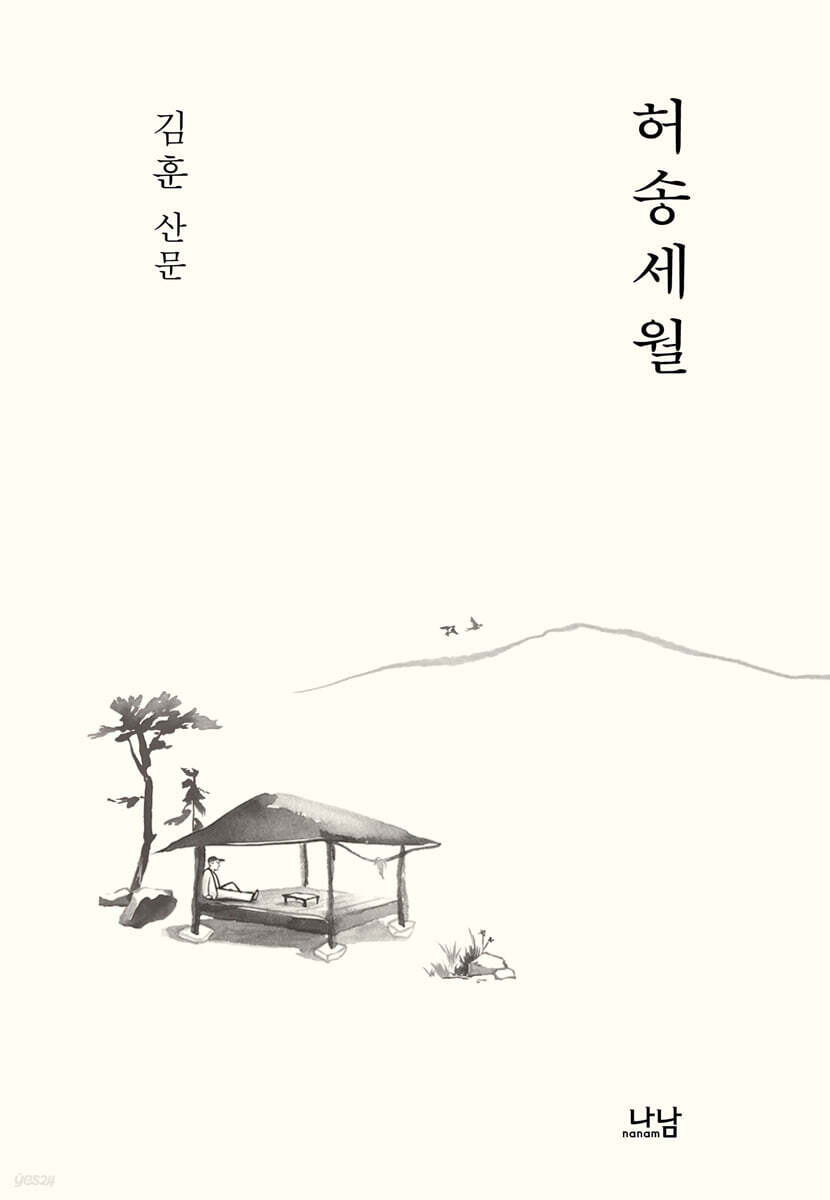
“The foolishness of living beings is limitless, “I want to be comfortable with this foolishness.” Kim Hoon's prose aesthetics delve into the "emotions of life." Kim Hoon, a contemporary writer who understands better than anyone the inevitable sorrow and beauty of life. He has returned with a new prose piece written “as I have experienced it,” which he says captures the stages of life that are lost in time and space. The book contains 45 essays that capture his intense "wasted time," including his experiences wandering the border between life and death, memories of tools that sublimated the brutality of war into humor in everyday life, the youth of history who shone brightly even during turbulent times, and all the smells that accumulate at the bottom of human emotions. As someone who knows the principles of a world that is 'originally like that', "Heosongseol" delves into the emotions of life with a clearer and more delicate writing style than ever before, and is a new horizon for Kim Hoon's prose. |
- You can preview some of the book's contents.
Preview
index
The Joys of Growing Old 7
Part 1: Waiting for the Bird
Seollal 31 at Ilsan Lake Park
34 years old
Wasted Time 43
The Lightness of Ashes 49
Send and Go 55
Bird 1 - The Bird Came 63
Bird 2 - The Bird Gone 69
Travel Story 75
Flowers and Fruits 83
Take your eyes off me 89
Time and the River 91
96 at the typhoon observatory
Hostile Languages 104
The Sewol Ferry is still tilting 111
Part 2: Writing and Food
Summer Letter 127
Praise of Walking 130
Reading the particle 'e' 134
Thinking about adjectives and adverbs 142
The song permeates the mountains and rivers 149
Reading Books in Troubled Times 153
The Pain of Eating 159
Eating and drinking alone 166
Fist Axe 172
Museum shit bucket 177
Hole 187
Sujebi and Bibimbap 195
Equality of Bodies 201
Discussing Kisses 205
Listening to the sound of birds flapping their wings 211
Light on the Highway - Winter Warmth 215
Part 3 Blue Days
Ode to Youth 221
An Jung-geun's Silence 239
Children, look at the rising and setting sun. 1 246
Children, look at the rising and setting sun. 2 253
Park Kyung-ni, Shin Kyeong-rim, Baek Nak-cheong, and Kang Woon-gu - Looking at Kang Woon-gu's photo exhibition [People at That Time] 257
The Bishop's Laughter 267
Analog is Forever 273
Thinking of Eight Children 280
Difficulty in Speaking, Pain in Listening 288
Thinking about individual suffering 300
Spring at Lake Park 1 307
Spring at Lake Park 2 313
The Smell of Life 319
Bird and helmet 329 behind
Part 1: Waiting for the Bird
Seollal 31 at Ilsan Lake Park
34 years old
Wasted Time 43
The Lightness of Ashes 49
Send and Go 55
Bird 1 - The Bird Came 63
Bird 2 - The Bird Gone 69
Travel Story 75
Flowers and Fruits 83
Take your eyes off me 89
Time and the River 91
96 at the typhoon observatory
Hostile Languages 104
The Sewol Ferry is still tilting 111
Part 2: Writing and Food
Summer Letter 127
Praise of Walking 130
Reading the particle 'e' 134
Thinking about adjectives and adverbs 142
The song permeates the mountains and rivers 149
Reading Books in Troubled Times 153
The Pain of Eating 159
Eating and drinking alone 166
Fist Axe 172
Museum shit bucket 177
Hole 187
Sujebi and Bibimbap 195
Equality of Bodies 201
Discussing Kisses 205
Listening to the sound of birds flapping their wings 211
Light on the Highway - Winter Warmth 215
Part 3 Blue Days
Ode to Youth 221
An Jung-geun's Silence 239
Children, look at the rising and setting sun. 1 246
Children, look at the rising and setting sun. 2 253
Park Kyung-ni, Shin Kyeong-rim, Baek Nak-cheong, and Kang Woon-gu - Looking at Kang Woon-gu's photo exhibition [People at That Time] 257
The Bishop's Laughter 267
Analog is Forever 273
Thinking of Eight Children 280
Difficulty in Speaking, Pain in Listening 288
Thinking about individual suffering 300
Spring at Lake Park 1 307
Spring at Lake Park 2 313
The Smell of Life 319
Bird and helmet 329 behind
Into the book
I spend my days basking in the sun for a couple of hours in the afternoon.
The sun is the counterpart of my old age.
When I was young, I didn't know what it meant to be in the sun, and I couldn't look into the space between me and the sun.
The sunlight of the past cannot be brought back, and the sunlight of tomorrow cannot be pulled back, so I have no choice but to bask in the sunlight of the present. However, sunlight has neither passing nor approaching, so the sunlight always comes to where I am now.
Sunlight is the light of the new present and the sunlight of this very place.
Looking back, the years I worked so hard that my tongue fell off seem like a waste, but when I waste my time basking in the sun, my body and mind are filled with light and sunshine.
I'm busy wasting time.
--- p.43 From "Waste of Time"
Words are not stepping stones to cross the sea of confession.
When there is a gap between the subject and the predicate, the sentence becomes shaky and falls apart along with the stepping stones.
The downfall is not regrettable, as the branches are supposed to go their own way.
Goodbye, horses.
--- p.39 From "The Last Years"
The brooding bird was silent and focused, full of itself.
The bird endured the darkness, rain, and cold all by itself.
The male diligently carried small prey and occasionally took turns with the female.
I thought about the action of temperature crossing between life and life, and the reverence of the Korean verb 'to embrace'.
Just as a bird hatches an egg and hatches its chicks, or as it brings life, flickering like a distant lantern, closer and gives it form, have I ever embraced words and objects, breathing in my body heat?
You and I have been living wrongly for a long time.
--- p.70 From “Bird 2 - The Bird Gone”
I don't know if the time in space where the stars move, the time in the pottery kiln that ripens the soil on the ground to reveal the primordial colors that had been dormant in the soil, the time in the womb of mammals that grow their bodies inside their bodies, the time of plants that bloom from seeds, and the time in the kimchi crock that ferments kimchi all have the same texture and function, but even if all of that time cannot be brought into the realm of human language, those various times are beautiful in their own way, across the cliff where words have ceased to exist.
--- pp.69-70 From "Time and the River"
A place where crowds gather in sub-zero weather, waving flags and jumping up and down at a dictator and a line of weapons is not a people's square.
The space where isolated individuals each establish their own closed and exclusive fences and develop and practice the logic of egoism within them is not the secret room that Lee Myeong-jun envisioned.
It may not be true that human existence and the political and social environment are divided into closed rooms and public squares, but there were no closed rooms or public squares in either the North or the South.
--- p.109 From “Hostile Languages”
The Korean particle 'e' forms the logical pillar of a sentence while maintaining a space of freedom within the sentence.
The single-syllable sound is low and small, making it difficult to hear, but it loosens the rigidity of logic and broadens the world of writing.
When we write in Korean, 'The fields are awakened by the rain,' 'The flowers fall in the wind,' and 'The old man's body dries in the spring sun,' '에' not only indicates causality, but also opens up a new world of language that integrates logic and emotion.
The particle 'e' is loose, loose, and free, and is a blessing in Korean.
--- p.141 From “Reading the Investigative ‘E’”
Looking into the hole of the Gaya pottery, I feel the hole in my heart clogged when I think about making a hole in this iron-clad reality where I am gasping for breath, tied to the short leash of inherited evil deeds and ideology.
It would be impossible to poke a hole in the iron wall of reality with the careless and light movements of a potter from Gaya.
Yet, the holes in Gaya tell us that the dim, intangible, and empty things inside the holes are not ultimately powerless in human history.
--- p.194 From "The Hole"
When we hear this cry from young Bang Jeong-hwan, we all realize how regressive Children's Day is these days.
Nowadays, no child gets inspiration about life and the future by watching 'The Rising Sun and the Setting Sun'.
The child is tied to a short leash made by an adult.
Children are just 'my babies'.
The day when every household shouts, “Oh my, my child!” is not the Children’s Day designed by the young Bang Jeong-hwan.
Children's Day today is 'My Child's Day'.
If everyone only embraces their own children, all the children in this country will become ‘other people’s children.’
--- p.256 From “Children, Look at the Rising and Setting Sun 2”
The world cannot be constructed using only the first person, whether in writing or in photographs.
The third person is barely revealed because 'I' steps back.
Humans are blessed by the presence of 'you' between the first and third person.
It's embarrassing to say that the action of the body and mind that attracts by changing the third person to the second person 'you' is 'love'.
The well-expressed third person maintains a distance as an object, but also approaches me as 'you'.
--- p.259 From “Park Kyung-ni, Shin Kyeong-rim, Baek Nak-cheong, and Kang Un-gu”
Digital technology has revolutionized civilization by transforming all information and data into symbols, but the foundation of life and language cannot be symbolized.
Mr. Hwang's business, which collapsed one after another, and the work tools he left behind are imprinted on the muscles of humanity as immortal memories.
Gyodongdo Daeryong Market is an analog market.
Market vendors are waiting for the new swallows to fly in.
Waiting and longing are both analog businesses, and swallows do not return to the digital space.
--- p.279 From “Analog is Eternal”
Speech that mixes opinions and facts is difficult to understand.
This is where the confusion in listening begins.
Perhaps the impulse to state facts as opinions and opinions as facts is a latent desire underlying human language consciousness.
This is the difficulty of speaking.
(…) The Chinese characters for groundless and useless nonsense are written as hwa譁.
The world is a place where the garbage of words boils like boiling water, and the name of that world is Hwase.
--- p.297 From “The Difficulty of Speaking, the Pain of Listening”
As I approached Darling Noona, an indescribably strange smell emanated from her body and the hem of her clothes, a smell unlike anything in this world. Above the stench of DDT and excrement, Darling Noona's scent rose like a clear melody.
The smell was intense, piercing, rushing into my senses, an ungraspable smell, the smell of something illusive that could not be pinned to the ground, the more illusive it was, the more intense it was, and it stirred my young soul in a violent dissonance with the smell of DDT and shit.
(…) Old age, when memories of all kinds of smells come back under a tree in bloom, struggles to grow old, but waits for all the babies in this world to be born.
I wait for babies to be born in this fine dust and give off the smell of milk vomit.
I have come too far back to write this last sentence.
The sun is the counterpart of my old age.
When I was young, I didn't know what it meant to be in the sun, and I couldn't look into the space between me and the sun.
The sunlight of the past cannot be brought back, and the sunlight of tomorrow cannot be pulled back, so I have no choice but to bask in the sunlight of the present. However, sunlight has neither passing nor approaching, so the sunlight always comes to where I am now.
Sunlight is the light of the new present and the sunlight of this very place.
Looking back, the years I worked so hard that my tongue fell off seem like a waste, but when I waste my time basking in the sun, my body and mind are filled with light and sunshine.
I'm busy wasting time.
--- p.43 From "Waste of Time"
Words are not stepping stones to cross the sea of confession.
When there is a gap between the subject and the predicate, the sentence becomes shaky and falls apart along with the stepping stones.
The downfall is not regrettable, as the branches are supposed to go their own way.
Goodbye, horses.
--- p.39 From "The Last Years"
The brooding bird was silent and focused, full of itself.
The bird endured the darkness, rain, and cold all by itself.
The male diligently carried small prey and occasionally took turns with the female.
I thought about the action of temperature crossing between life and life, and the reverence of the Korean verb 'to embrace'.
Just as a bird hatches an egg and hatches its chicks, or as it brings life, flickering like a distant lantern, closer and gives it form, have I ever embraced words and objects, breathing in my body heat?
You and I have been living wrongly for a long time.
--- p.70 From “Bird 2 - The Bird Gone”
I don't know if the time in space where the stars move, the time in the pottery kiln that ripens the soil on the ground to reveal the primordial colors that had been dormant in the soil, the time in the womb of mammals that grow their bodies inside their bodies, the time of plants that bloom from seeds, and the time in the kimchi crock that ferments kimchi all have the same texture and function, but even if all of that time cannot be brought into the realm of human language, those various times are beautiful in their own way, across the cliff where words have ceased to exist.
--- pp.69-70 From "Time and the River"
A place where crowds gather in sub-zero weather, waving flags and jumping up and down at a dictator and a line of weapons is not a people's square.
The space where isolated individuals each establish their own closed and exclusive fences and develop and practice the logic of egoism within them is not the secret room that Lee Myeong-jun envisioned.
It may not be true that human existence and the political and social environment are divided into closed rooms and public squares, but there were no closed rooms or public squares in either the North or the South.
--- p.109 From “Hostile Languages”
The Korean particle 'e' forms the logical pillar of a sentence while maintaining a space of freedom within the sentence.
The single-syllable sound is low and small, making it difficult to hear, but it loosens the rigidity of logic and broadens the world of writing.
When we write in Korean, 'The fields are awakened by the rain,' 'The flowers fall in the wind,' and 'The old man's body dries in the spring sun,' '에' not only indicates causality, but also opens up a new world of language that integrates logic and emotion.
The particle 'e' is loose, loose, and free, and is a blessing in Korean.
--- p.141 From “Reading the Investigative ‘E’”
Looking into the hole of the Gaya pottery, I feel the hole in my heart clogged when I think about making a hole in this iron-clad reality where I am gasping for breath, tied to the short leash of inherited evil deeds and ideology.
It would be impossible to poke a hole in the iron wall of reality with the careless and light movements of a potter from Gaya.
Yet, the holes in Gaya tell us that the dim, intangible, and empty things inside the holes are not ultimately powerless in human history.
--- p.194 From "The Hole"
When we hear this cry from young Bang Jeong-hwan, we all realize how regressive Children's Day is these days.
Nowadays, no child gets inspiration about life and the future by watching 'The Rising Sun and the Setting Sun'.
The child is tied to a short leash made by an adult.
Children are just 'my babies'.
The day when every household shouts, “Oh my, my child!” is not the Children’s Day designed by the young Bang Jeong-hwan.
Children's Day today is 'My Child's Day'.
If everyone only embraces their own children, all the children in this country will become ‘other people’s children.’
--- p.256 From “Children, Look at the Rising and Setting Sun 2”
The world cannot be constructed using only the first person, whether in writing or in photographs.
The third person is barely revealed because 'I' steps back.
Humans are blessed by the presence of 'you' between the first and third person.
It's embarrassing to say that the action of the body and mind that attracts by changing the third person to the second person 'you' is 'love'.
The well-expressed third person maintains a distance as an object, but also approaches me as 'you'.
--- p.259 From “Park Kyung-ni, Shin Kyeong-rim, Baek Nak-cheong, and Kang Un-gu”
Digital technology has revolutionized civilization by transforming all information and data into symbols, but the foundation of life and language cannot be symbolized.
Mr. Hwang's business, which collapsed one after another, and the work tools he left behind are imprinted on the muscles of humanity as immortal memories.
Gyodongdo Daeryong Market is an analog market.
Market vendors are waiting for the new swallows to fly in.
Waiting and longing are both analog businesses, and swallows do not return to the digital space.
--- p.279 From “Analog is Eternal”
Speech that mixes opinions and facts is difficult to understand.
This is where the confusion in listening begins.
Perhaps the impulse to state facts as opinions and opinions as facts is a latent desire underlying human language consciousness.
This is the difficulty of speaking.
(…) The Chinese characters for groundless and useless nonsense are written as hwa譁.
The world is a place where the garbage of words boils like boiling water, and the name of that world is Hwase.
--- p.297 From “The Difficulty of Speaking, the Pain of Listening”
As I approached Darling Noona, an indescribably strange smell emanated from her body and the hem of her clothes, a smell unlike anything in this world. Above the stench of DDT and excrement, Darling Noona's scent rose like a clear melody.
The smell was intense, piercing, rushing into my senses, an ungraspable smell, the smell of something illusive that could not be pinned to the ground, the more illusive it was, the more intense it was, and it stirred my young soul in a violent dissonance with the smell of DDT and shit.
(…) Old age, when memories of all kinds of smells come back under a tree in bloom, struggles to grow old, but waits for all the babies in this world to be born.
I wait for babies to be born in this fine dust and give off the smell of milk vomit.
I have come too far back to write this last sentence.
--- pp.314-318 From "Spring in Lake Park 2"
Publisher's Review
The weight of birth, aging, illness, and death endured with the lightness of wasted time
Honest writing that captures the tears and laughter of the times
“When an obituary appears on your phone, death is right before your eyes, like a delivery.” _The Joys of Aging, p. 7
Novelist Kim Hoon has returned with his prose work, “Waste of Time.”
As can be sensed from the first sentence clearly printed on the paper, he is a 'practical worker who writes' who even considers death to be part of his daily routine.
Although he is now approaching eighty, he looks, thinks, and writes more diligently than ever.
The traces of that long and diligent labor are clearly evident in this book.
“Let us die lightly and send off the departing person coolly.
Even simple funeral procedures can provide respectful condolences.
Let's return to lightness, both for those who go and those who send, and for medical practice.
You can tell everything by looking at the bone powder.
This lightness can help us bear the heaviness of life.
“It’s light in the end.”
_The Lightness of Ashes, p. 54
If you pass the introduction, "The Joy of Growing Old," which reveals the love-hate feelings toward alcohol and cigarettes that Kim Hoon developed in his later years, and open Part 1, "Waiting for the Bird," you will find 14 essays that provide a glimpse into Kim Hoon's present.
Confessing to having been seriously ill with cardiovascular disease, he mocks what it is like to live each day with a body literally “sick in every part of my body and every organ,” and ponders what his final words will be before his body completely withers away and he finally becomes nothing more than ashes.
The sorrow of having to lie in a hospital room and watch urine collect in a urinal naturally leads to reflection on the hardships of living beings who must endure the weight of birth, aging, illness, and death with the lightness of wasted time.
He spends his old age sitting in Ilsan Lake Park, basking in the sun, and dreams that his words will escape this hardship and touch the bare face of life.
He is “busy wasting time.”
He, who is busy wasting time, turns his attention in Part 2, “Writing and Food,” once again to “the daily life of earning a living, fighting, loving, hating, supporting, and nagging.”
For him, who once lamented the “boredom of earning a living,” writing that accurately captures the sorrow of making a living must be a lifelong task.
He wants to bring language closer to the center of life by discarding “words that are too simplistic and too exaggerated” and using only the necessary words.
The goal is to boldly eliminate the weak parts of speech that further widen the gap between the writer and his or her native language, and to “run straight toward things instead of going around in circles.”
“On days when things are bubbling up inside you that you want to write about and things that you think are worth saying, you have to hold on to the reins of your sentences even tighter.
On days like these, adjectives and adverbs get involved, characters' speech becomes more animated, and assertive endings rush in to overpower the writer.
The day when the writing is good and the number of manuscripts increases and the manuscript fee increases is dangerous.
“On days like this, when I finish my work and go out to the park to play, I’m afraid that others will see me picking out the words that have come up in my writing and skimming off the grease.”
_「Thinking about adjectives and adverbs」, p. 143.
The effort to use only the necessary words accurately is also revealed in the affection shown for simple objects that fully reveal the texture of life.
Looking into the “dark and cool” holes of Gaya pottery at the museum, he thinks of the sorrow of the Gaya potters who fell to Silla’s iron weapons.
On the other hand, when I see the trash in my daily life that has become an extension of my daily life, I feel a surge of excitement at the sight of “living things that were once vibrant.”
The simple, “pure and unexaggerated” words that seem to come from these objects that “have placed themselves in a low position” are a passage that suggests the direction of his prose language.
“I am a person who values food, so I first looked into artifacts related to eating food, but there were so many that I couldn’t see them all.
There were endless mortars, grindstones, jars, pickled vegetables, kimchi jars, soy sauce jars, wine jars, rice bowls, soup bowls, kettles, plates, trays, pots, earthenware pots, bowls, and soup bowls.
“The infinite objects had their own unique expressions, and the consistent texture of these expressions was the simplicity and realism of the things that are indispensable to people’s daily lives.”
_「Museum Shithole」, p. 179
When we reach Part 3, “Blue Days,” the author shifts his gaze further and focuses on those who lived or are living in troubled times.
The youth of Darwin and Fitzroy, the brothers Jeong Yak-yong and Jeong Yak-jeon, and Ahn Jung-geun intersect and come to mind in his sentences.
This roll call continues with Bang Jeong-hwan, Im Hwa, Choi In-hun, Park Kyung-ri, Baek Nak-cheong, Shin Kyeong-rim…
“Despite the pain of resentment and alienation shown in ‘Farming’, Shin Kyeong-rim’s expression is clear and kind.
His face, facing the snow, shows the basis of innocence.
This moment shows the essence that rises from within.
There is no intention to necessarily see anything.
The backed-off camera caught that moment.
That moment was visible.
The snowflakes were thick that day.
“In the photo, Shin Kyung-rim is probably smiling because he likes the snow falling.”
_「Park Kyung-ni, Shin Kyeong-rim, Baek Nak-cheong, and Kang Un-gu」, p. 264
He diligently traces the places where the worries and hopes of those who lived in cold times and tried to create blue days remain, and he hurries his steps toward the suffering of rebirth 'here and now.'
It is to commemorate the deaths of countless neighbors who were “squeezed to death, trampled to death” in the harsh reality.
He does not provide clear answers to real-world problems.
I just think about “what tone of voice should I use to speak to this world.”
In a world seething with words of abuse, a world where it is difficult to speak and painful to hear, his sentences move forward steadfastly.
“It is difficult to understand speech that mixes opinions and facts.
This is where the confusion in listening begins.
Perhaps the impulse to state facts as opinions and opinions as facts is a latent desire underlying human language consciousness.
This is the difficulty of speaking. (Omitted) The Chinese characters for groundless and useless nonsense are written as hwa譁.
“The whole world is a place where the garbage of words boils like boiling water, and the name of that world is Hwase.”
_The Difficulty of Speaking, the Pain of Listening, p. 289
Beginning with a poem discussing the joys of growing old, the 45 prose pieces close with a tribute to birds that die crashing into transparent walls on the roadside and to old soldiers who leave behind their helmets, this volume is an ode to the pitiful lives of those who are "bound by their own destiny."
The linguistic structure that depicts the joys and sorrows of this era, intertwined with flowers, birds, food, and dreams, with a wistful yet sometimes humorous, clear yet delicate touch, is dazzling.
Honest writing that captures the tears and laughter of the times
“When an obituary appears on your phone, death is right before your eyes, like a delivery.” _The Joys of Aging, p. 7
Novelist Kim Hoon has returned with his prose work, “Waste of Time.”
As can be sensed from the first sentence clearly printed on the paper, he is a 'practical worker who writes' who even considers death to be part of his daily routine.
Although he is now approaching eighty, he looks, thinks, and writes more diligently than ever.
The traces of that long and diligent labor are clearly evident in this book.
“Let us die lightly and send off the departing person coolly.
Even simple funeral procedures can provide respectful condolences.
Let's return to lightness, both for those who go and those who send, and for medical practice.
You can tell everything by looking at the bone powder.
This lightness can help us bear the heaviness of life.
“It’s light in the end.”
_The Lightness of Ashes, p. 54
If you pass the introduction, "The Joy of Growing Old," which reveals the love-hate feelings toward alcohol and cigarettes that Kim Hoon developed in his later years, and open Part 1, "Waiting for the Bird," you will find 14 essays that provide a glimpse into Kim Hoon's present.
Confessing to having been seriously ill with cardiovascular disease, he mocks what it is like to live each day with a body literally “sick in every part of my body and every organ,” and ponders what his final words will be before his body completely withers away and he finally becomes nothing more than ashes.
The sorrow of having to lie in a hospital room and watch urine collect in a urinal naturally leads to reflection on the hardships of living beings who must endure the weight of birth, aging, illness, and death with the lightness of wasted time.
He spends his old age sitting in Ilsan Lake Park, basking in the sun, and dreams that his words will escape this hardship and touch the bare face of life.
He is “busy wasting time.”
He, who is busy wasting time, turns his attention in Part 2, “Writing and Food,” once again to “the daily life of earning a living, fighting, loving, hating, supporting, and nagging.”
For him, who once lamented the “boredom of earning a living,” writing that accurately captures the sorrow of making a living must be a lifelong task.
He wants to bring language closer to the center of life by discarding “words that are too simplistic and too exaggerated” and using only the necessary words.
The goal is to boldly eliminate the weak parts of speech that further widen the gap between the writer and his or her native language, and to “run straight toward things instead of going around in circles.”
“On days when things are bubbling up inside you that you want to write about and things that you think are worth saying, you have to hold on to the reins of your sentences even tighter.
On days like these, adjectives and adverbs get involved, characters' speech becomes more animated, and assertive endings rush in to overpower the writer.
The day when the writing is good and the number of manuscripts increases and the manuscript fee increases is dangerous.
“On days like this, when I finish my work and go out to the park to play, I’m afraid that others will see me picking out the words that have come up in my writing and skimming off the grease.”
_「Thinking about adjectives and adverbs」, p. 143.
The effort to use only the necessary words accurately is also revealed in the affection shown for simple objects that fully reveal the texture of life.
Looking into the “dark and cool” holes of Gaya pottery at the museum, he thinks of the sorrow of the Gaya potters who fell to Silla’s iron weapons.
On the other hand, when I see the trash in my daily life that has become an extension of my daily life, I feel a surge of excitement at the sight of “living things that were once vibrant.”
The simple, “pure and unexaggerated” words that seem to come from these objects that “have placed themselves in a low position” are a passage that suggests the direction of his prose language.
“I am a person who values food, so I first looked into artifacts related to eating food, but there were so many that I couldn’t see them all.
There were endless mortars, grindstones, jars, pickled vegetables, kimchi jars, soy sauce jars, wine jars, rice bowls, soup bowls, kettles, plates, trays, pots, earthenware pots, bowls, and soup bowls.
“The infinite objects had their own unique expressions, and the consistent texture of these expressions was the simplicity and realism of the things that are indispensable to people’s daily lives.”
_「Museum Shithole」, p. 179
When we reach Part 3, “Blue Days,” the author shifts his gaze further and focuses on those who lived or are living in troubled times.
The youth of Darwin and Fitzroy, the brothers Jeong Yak-yong and Jeong Yak-jeon, and Ahn Jung-geun intersect and come to mind in his sentences.
This roll call continues with Bang Jeong-hwan, Im Hwa, Choi In-hun, Park Kyung-ri, Baek Nak-cheong, Shin Kyeong-rim…
“Despite the pain of resentment and alienation shown in ‘Farming’, Shin Kyeong-rim’s expression is clear and kind.
His face, facing the snow, shows the basis of innocence.
This moment shows the essence that rises from within.
There is no intention to necessarily see anything.
The backed-off camera caught that moment.
That moment was visible.
The snowflakes were thick that day.
“In the photo, Shin Kyung-rim is probably smiling because he likes the snow falling.”
_「Park Kyung-ni, Shin Kyeong-rim, Baek Nak-cheong, and Kang Un-gu」, p. 264
He diligently traces the places where the worries and hopes of those who lived in cold times and tried to create blue days remain, and he hurries his steps toward the suffering of rebirth 'here and now.'
It is to commemorate the deaths of countless neighbors who were “squeezed to death, trampled to death” in the harsh reality.
He does not provide clear answers to real-world problems.
I just think about “what tone of voice should I use to speak to this world.”
In a world seething with words of abuse, a world where it is difficult to speak and painful to hear, his sentences move forward steadfastly.
“It is difficult to understand speech that mixes opinions and facts.
This is where the confusion in listening begins.
Perhaps the impulse to state facts as opinions and opinions as facts is a latent desire underlying human language consciousness.
This is the difficulty of speaking. (Omitted) The Chinese characters for groundless and useless nonsense are written as hwa譁.
“The whole world is a place where the garbage of words boils like boiling water, and the name of that world is Hwase.”
_The Difficulty of Speaking, the Pain of Listening, p. 289
Beginning with a poem discussing the joys of growing old, the 45 prose pieces close with a tribute to birds that die crashing into transparent walls on the roadside and to old soldiers who leave behind their helmets, this volume is an ode to the pitiful lives of those who are "bound by their own destiny."
The linguistic structure that depicts the joys and sorrows of this era, intertwined with flowers, birds, food, and dreams, with a wistful yet sometimes humorous, clear yet delicate touch, is dazzling.
GOODS SPECIFICS
- Date of issue: June 20, 2024
- Page count, weight, size: 336 pages | 384g | 135*195*22mm
- ISBN13: 9788930041683
- ISBN10: 893004168X
You may also like
카테고리
korean


korean

![GQ KOREA Mark (Monthly): December [2025]](http://librairie.coreenne.fr/cdn/shop/files/8ef265dbbfbf186523ed75ba7319009d.jpg?v=1765340328&width=3840)


