

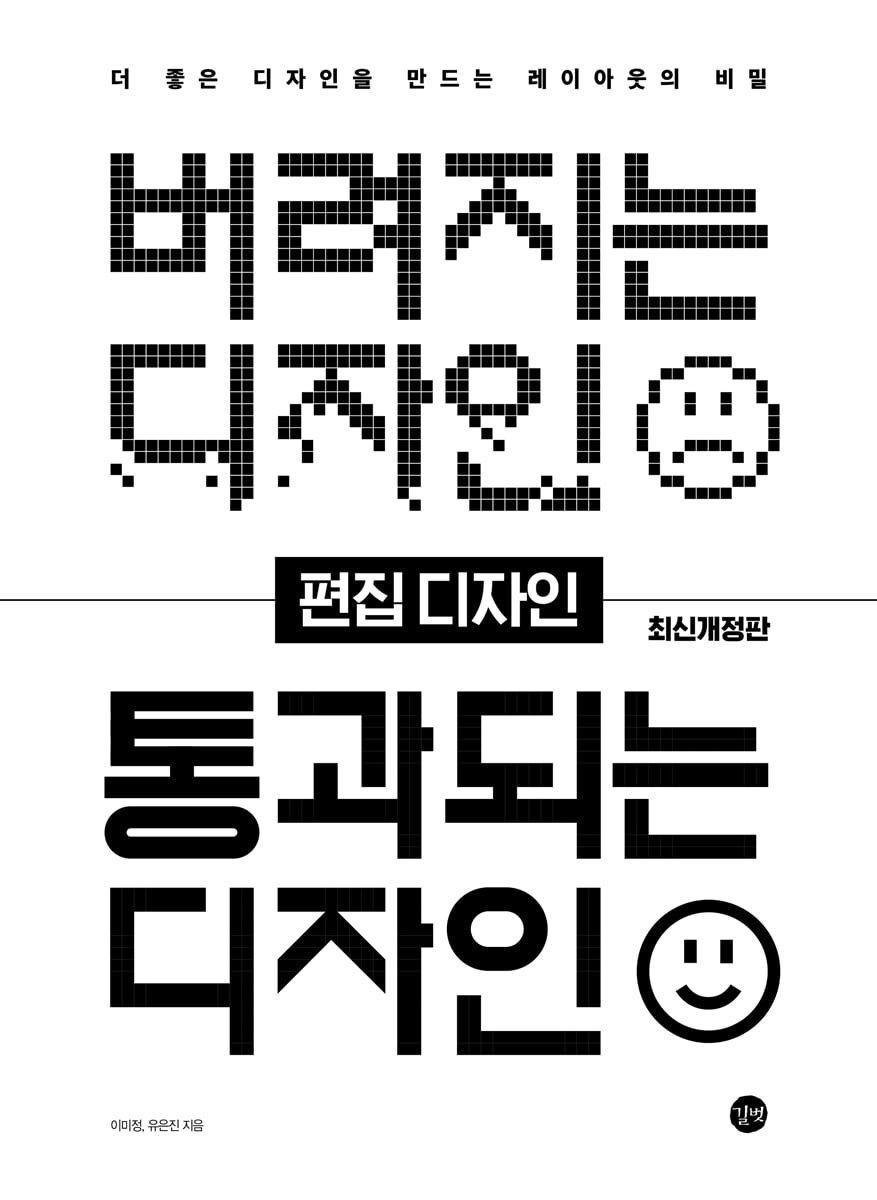
Designs that are discarded, designs that pass - Editorial Design
 |
Description
Book Introduction
Why wasn't my design chosen?
From the pitfalls of discarded designs to the core principles of successful designs.
〉 Design Theory: Understand the concept clearly through various editorial design cases.
〉 Design Commentary: Presenting the strategy and formula of editorial design with clear standards and principles.
〉 AI Practical Design: A Guide to AI Utilization Applicable in Real-World Practices
What is the difference between a design that is chosen from among countless drafts and a design that is discarded after each revision?
This book closely dissects the client selection criteria that cannot be resolved solely through a designer's intuition, and presents strategies and formulas for editorial design to survive in the real world.
If you're a designer who wants to supplement what your senses alone lack with strategy, this book will offer you a new direction.
Through this book, readers will gain a concrete and intuitive understanding of what makes clients "like" a design, what designers should persuade and what they should avoid, and what core elements are commonly hidden in designs that pass despite repeated rejections.
This book is especially recommended for editorial designers who have difficulty communicating with clients in practice, designers who have experienced repeating drafts that were not selected despite repeated feedback, designers who want to systematically learn design strategies that are more persuasive than the senses, and all designers who are tired of hearing, “That’s great, but can I see another one?” every time.
Design theory
Visually learn the principles of grids, colors, fonts, and layout through various editing examples, and organize them so that they can be flexibly applied to actual work.
Design Commentary
Identify common issues with rejected designs and strategically organize compelling layout flow and visual logic to achieve success.
AI Practical Design
We introduce the application of AI design tools that can be used in real-world settings, providing an efficient method to reduce repetitive work and improve the completeness of design plans.
Designs that are discarded (NO) / Designs that are accepted (YES)
It is designed to clearly compare the differences before and after the design, and to provide a quick overview of the client's selection criteria and passing factors, focusing on the points of modification.
From the pitfalls of discarded designs to the core principles of successful designs.
〉 Design Theory: Understand the concept clearly through various editorial design cases.
〉 Design Commentary: Presenting the strategy and formula of editorial design with clear standards and principles.
〉 AI Practical Design: A Guide to AI Utilization Applicable in Real-World Practices
What is the difference between a design that is chosen from among countless drafts and a design that is discarded after each revision?
This book closely dissects the client selection criteria that cannot be resolved solely through a designer's intuition, and presents strategies and formulas for editorial design to survive in the real world.
If you're a designer who wants to supplement what your senses alone lack with strategy, this book will offer you a new direction.
Through this book, readers will gain a concrete and intuitive understanding of what makes clients "like" a design, what designers should persuade and what they should avoid, and what core elements are commonly hidden in designs that pass despite repeated rejections.
This book is especially recommended for editorial designers who have difficulty communicating with clients in practice, designers who have experienced repeating drafts that were not selected despite repeated feedback, designers who want to systematically learn design strategies that are more persuasive than the senses, and all designers who are tired of hearing, “That’s great, but can I see another one?” every time.
Design theory
Visually learn the principles of grids, colors, fonts, and layout through various editing examples, and organize them so that they can be flexibly applied to actual work.
Design Commentary
Identify common issues with rejected designs and strategically organize compelling layout flow and visual logic to achieve success.
AI Practical Design
We introduce the application of AI design tools that can be used in real-world settings, providing an efficient method to reduce repetitive work and improve the completeness of design plans.
Designs that are discarded (NO) / Designs that are accepted (YES)
It is designed to clearly compare the differences before and after the design, and to provide a quick overview of the client's selection criteria and passing factors, focusing on the points of modification.
- You can preview some of the book's contents.
Preview
index
Part 1 Color
Design Theory | Create the Flow of the Surface with Color
How to Improve Perfection | Let the Color Flow
01 Design that brings the message to life with a specific color
02 Design that conveys a message in one color
03 Design that reinforces visual features with consistent colors
04 A design that embodies simplicity with essential colors
05 Design that attracts attention with point colors
06 Standout design with color combinations
07 Design with layers created with separate colors
08 Unique design with gradation
09 Design with consistent flow in the same color
A design that grabs attention with 10 extracted colors
11 Intense color contrast design
12 Vivid Designs with AI Neural Filters
A design with a gradual flow in 13 color tones
Design that maximizes visual effects with 14 color reductions
Design with a high degree of completion using a 15-color palette
Part 2 Grid and Layout
Design Theory | Design Flow with the Structure of the Ground
How to Improve Completeness | Make the Structure Invisible, But Readable
01 Highly readable design with basic grid
02 Body design divided into column grids
03 Design that increases space efficiency with a 3-tier grid
04 Section design divided into module grids
05 Front design using block grid
06 Title design applied to the module grid
07 Dynamic design with module grid destruction
08 Gorgeous design through diagonal grid
09 Repeating graphic pattern grid design
10 Design that adds consistency to the application grid
11 Design with empty grid and margins
A design that creates rhythm with 12 grids
13 Design with added formative variation to the grid
A design that gives a sense of diagonal movement to the 14 grid
15 Designs using a center-aligned grid
Part 3 Typography
Design Theory | Designing Emotions with Type
How to Improve Perfection | Fonts Should Be Invisible, But They Must Be Felt
01 Free-spacing title design
02 Narrow, naturally connected character design
03 A design that changes the feel of a long font
04 Dynamic design with added movement to the font
05 Design through decomposition of Korean letters and vowels
06 Design with added sense of movement in upper and lower case letters
07 Image and Text Layering Design
08 Eye-catching design with images in letters
09 Ming and Gothic font designs tailored to the theme
A gorgeous design combining 10 characters and graphics.
11 Design using texture in the title
12 Eye-Catching 3D Letter Designs
13 Designs using letters and shapes
14 Designs Using Calligraphy
15 Design with changes in naming
16 Design with large text and body text connected
Design with some of the 17 characters cut off or hidden
18 Design text placement around photos
19 Designs that reflect the concept for each medium
20 Brand Name 3D Designs
Part 4 Graphic Elements
Design Theory | Embody Your Message with Visuals
How to Improve Perfection | Images are the Voice of Your Message
01 Photo contrast design highlighted with illustrations
02 Colorful geometric artwork design
03 Design that improves grounding efficiency through user experience
04 Design using photos outside the frame
05 Design that creatively expresses the theme
06 Design composed of geometric patterns
07 Rhythmic image placement design
08 Design with a modified photo frame
09 Design with enhanced visual efficiency using graphic elements
10 Designs that take advantage of dynamic diagonal compositions
11 Creative design with a sense of unity
12 Themed design with photo trimming
13 Designs separated by illustrations and colors
14 Design that takes advantage of the spread surface through simplification
15 Design with adjusted illustration placement
16 Sensational design using textured backgrounds
17 Organically arranged, unique designs
18 Classic Designs Using Vintage Illustrations
19 Designs that take into account the mood of the subject
20 Movie Designs Done in Pixel Art
Colorful design completed with 21 photo collages
Part 5 AI Graphics
Design Theory | Boost Your Implementation Power with AI Tools
How to Improve Perfection | AI Suggests Possibilities, but the Designer Makes the Decisions
01 Clean background design with no wires
02 Design with a person erased from a complex background
03 Series design composed of similar tones
04 Design extended with background fill function
05 Design that converts text into images
06 Hand-drawn design with text converted to vector
07 Design blueprint created with AI mockup images
Design Theory | Create the Flow of the Surface with Color
How to Improve Perfection | Let the Color Flow
01 Design that brings the message to life with a specific color
02 Design that conveys a message in one color
03 Design that reinforces visual features with consistent colors
04 A design that embodies simplicity with essential colors
05 Design that attracts attention with point colors
06 Standout design with color combinations
07 Design with layers created with separate colors
08 Unique design with gradation
09 Design with consistent flow in the same color
A design that grabs attention with 10 extracted colors
11 Intense color contrast design
12 Vivid Designs with AI Neural Filters
A design with a gradual flow in 13 color tones
Design that maximizes visual effects with 14 color reductions
Design with a high degree of completion using a 15-color palette
Part 2 Grid and Layout
Design Theory | Design Flow with the Structure of the Ground
How to Improve Completeness | Make the Structure Invisible, But Readable
01 Highly readable design with basic grid
02 Body design divided into column grids
03 Design that increases space efficiency with a 3-tier grid
04 Section design divided into module grids
05 Front design using block grid
06 Title design applied to the module grid
07 Dynamic design with module grid destruction
08 Gorgeous design through diagonal grid
09 Repeating graphic pattern grid design
10 Design that adds consistency to the application grid
11 Design with empty grid and margins
A design that creates rhythm with 12 grids
13 Design with added formative variation to the grid
A design that gives a sense of diagonal movement to the 14 grid
15 Designs using a center-aligned grid
Part 3 Typography
Design Theory | Designing Emotions with Type
How to Improve Perfection | Fonts Should Be Invisible, But They Must Be Felt
01 Free-spacing title design
02 Narrow, naturally connected character design
03 A design that changes the feel of a long font
04 Dynamic design with added movement to the font
05 Design through decomposition of Korean letters and vowels
06 Design with added sense of movement in upper and lower case letters
07 Image and Text Layering Design
08 Eye-catching design with images in letters
09 Ming and Gothic font designs tailored to the theme
A gorgeous design combining 10 characters and graphics.
11 Design using texture in the title
12 Eye-Catching 3D Letter Designs
13 Designs using letters and shapes
14 Designs Using Calligraphy
15 Design with changes in naming
16 Design with large text and body text connected
Design with some of the 17 characters cut off or hidden
18 Design text placement around photos
19 Designs that reflect the concept for each medium
20 Brand Name 3D Designs
Part 4 Graphic Elements
Design Theory | Embody Your Message with Visuals
How to Improve Perfection | Images are the Voice of Your Message
01 Photo contrast design highlighted with illustrations
02 Colorful geometric artwork design
03 Design that improves grounding efficiency through user experience
04 Design using photos outside the frame
05 Design that creatively expresses the theme
06 Design composed of geometric patterns
07 Rhythmic image placement design
08 Design with a modified photo frame
09 Design with enhanced visual efficiency using graphic elements
10 Designs that take advantage of dynamic diagonal compositions
11 Creative design with a sense of unity
12 Themed design with photo trimming
13 Designs separated by illustrations and colors
14 Design that takes advantage of the spread surface through simplification
15 Design with adjusted illustration placement
16 Sensational design using textured backgrounds
17 Organically arranged, unique designs
18 Classic Designs Using Vintage Illustrations
19 Designs that take into account the mood of the subject
20 Movie Designs Done in Pixel Art
Colorful design completed with 21 photo collages
Part 5 AI Graphics
Design Theory | Boost Your Implementation Power with AI Tools
How to Improve Perfection | AI Suggests Possibilities, but the Designer Makes the Decisions
01 Clean background design with no wires
02 Design with a person erased from a complex background
03 Series design composed of similar tones
04 Design extended with background fill function
05 Design that converts text into images
06 Hand-drawn design with text converted to vector
07 Design blueprint created with AI mockup images
Detailed image

Publisher's Review
The Secret to Layout for Better Design
Designs that are discarded, designs that are passed through_Edit Design
Why wasn't my design chosen?
From the pitfalls of discarded designs to the core principles of successful designs.
What's the difference between a design that's chosen from countless drafts and one that's discarded after each revision? This book meticulously dissects client selection criteria, which designers alone can't address, and presents strategies and formulas for editorial design that will help you survive in the real world.
If you're a designer who wants to supplement what your senses alone lack with strategy, this book will offer you a new direction.
Through this book, readers will gain a concrete and intuitive understanding of what makes clients "like" a design, what designers should persuade and what they should avoid, and what core elements are commonly hidden in designs that pass despite repeated rejections.
This book is especially recommended for editorial designers who struggle with communicating with clients in practice, designers who have repeatedly submitted designs that were not selected despite repeated feedback, designers who want to systematically learn design strategies that are more persuasive than the senses, and all designers who are tired of hearing, "That's great, but can I see another one?"
Design theory
Visually learn the principles of grids, colors, fonts, and layout through various editing examples, and organize them so that they can be flexibly applied to actual work.
Design Commentary
Identify common issues with rejected designs and strategically organize compelling layout flow and visual logic to achieve success.
AI Practical Design
We introduce the application of AI design tools that can be used in real-world settings, providing an efficient method to reduce repetitive work and improve the completeness of design plans.
Designs that are discarded (NO) / Designs that are accepted (YES)
It is designed to clearly compare the differences before and after the design, and to provide a quick overview of the client's selection criteria and passing factors, focusing on the points of modification.
Designs that are discarded, designs that are passed through_Edit Design
Why wasn't my design chosen?
From the pitfalls of discarded designs to the core principles of successful designs.
What's the difference between a design that's chosen from countless drafts and one that's discarded after each revision? This book meticulously dissects client selection criteria, which designers alone can't address, and presents strategies and formulas for editorial design that will help you survive in the real world.
If you're a designer who wants to supplement what your senses alone lack with strategy, this book will offer you a new direction.
Through this book, readers will gain a concrete and intuitive understanding of what makes clients "like" a design, what designers should persuade and what they should avoid, and what core elements are commonly hidden in designs that pass despite repeated rejections.
This book is especially recommended for editorial designers who struggle with communicating with clients in practice, designers who have repeatedly submitted designs that were not selected despite repeated feedback, designers who want to systematically learn design strategies that are more persuasive than the senses, and all designers who are tired of hearing, "That's great, but can I see another one?"
Design theory
Visually learn the principles of grids, colors, fonts, and layout through various editing examples, and organize them so that they can be flexibly applied to actual work.
Design Commentary
Identify common issues with rejected designs and strategically organize compelling layout flow and visual logic to achieve success.
AI Practical Design
We introduce the application of AI design tools that can be used in real-world settings, providing an efficient method to reduce repetitive work and improve the completeness of design plans.
Designs that are discarded (NO) / Designs that are accepted (YES)
It is designed to clearly compare the differences before and after the design, and to provide a quick overview of the client's selection criteria and passing factors, focusing on the points of modification.
GOODS SPECIFICS
- Date of issue: July 16, 2025
- Page count, weight, size: 256 pages | 706g | 188*257*13mm
- ISBN13: 9791140714797
- ISBN10: 1140714791
You may also like
카테고리
korean


korean

![GQ KOREA Mark (Monthly): December [2025]](http://librairie.coreenne.fr/cdn/shop/files/8ef265dbbfbf186523ed75ba7319009d.jpg?v=1765340328&width=3840)


