

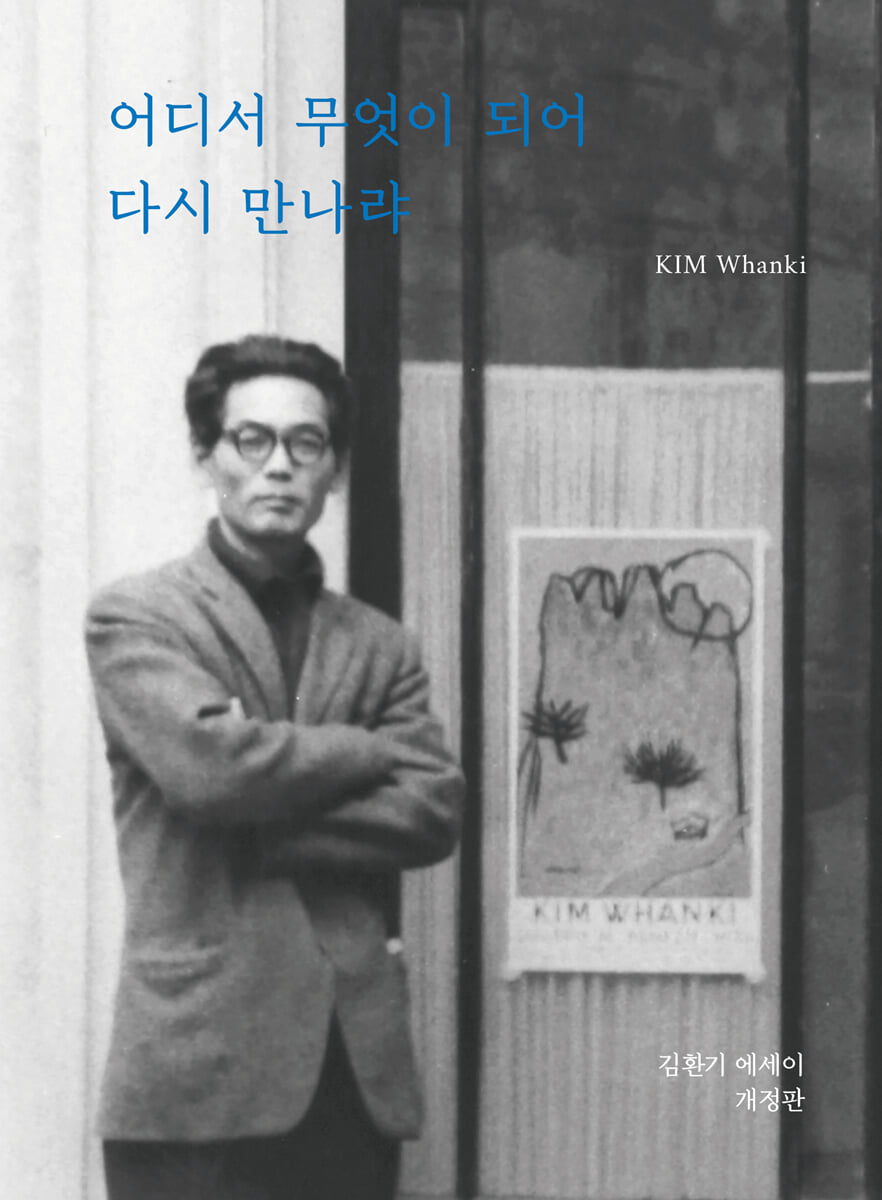
Where and in what form will we meet again?
 |
Description
Book Introduction
Thoughts on the era, life, and art left by Kim Hwan-ki, a pioneer of Korean abstract art
Artist Kim Hwan-ki was born in Sinan, Jeollanam-do in 1913 and died in New York in 1974. He was a first-generation Korean abstract artist, an educator who taught at Hongik University and Seoul National University, and a Korean citizen who experienced the ordeal of the Korean War. He wrote about his various thoughts in newspapers and magazines.
From the trivialities of daily life to themes of art, Kim Hwan-ki's writings capture the era in which he lived and his image as an intellectual.
The revised edition excludes the diary section from [Where and in What Form Will We Meet Again] published in 2005, and adds the articles [Abstract Essay], [Creeping Rose], [White Porcelain Jar], and [Magpie]. It has been edited faithfully to the original text and arranged in chronological order.
It includes illustrations previously published in newspapers, magazines, and books, as well as Kim Hwan-ki's drawings, and one of these was used as the inside cover to add more meaning.
Through this book, I hope you will discover how Kim Hwan-ki's life and thoughts have changed over time.
Artist Kim Hwan-ki was born in Sinan, Jeollanam-do in 1913 and died in New York in 1974. He was a first-generation Korean abstract artist, an educator who taught at Hongik University and Seoul National University, and a Korean citizen who experienced the ordeal of the Korean War. He wrote about his various thoughts in newspapers and magazines.
From the trivialities of daily life to themes of art, Kim Hwan-ki's writings capture the era in which he lived and his image as an intellectual.
The revised edition excludes the diary section from [Where and in What Form Will We Meet Again] published in 2005, and adds the articles [Abstract Essay], [Creeping Rose], [White Porcelain Jar], and [Magpie]. It has been edited faithfully to the original text and arranged in chronological order.
It includes illustrations previously published in newspapers, magazines, and books, as well as Kim Hwan-ki's drawings, and one of these was used as the inside cover to add more meaning.
Through this book, I hope you will discover how Kim Hwan-ki's life and thoughts have changed over time.
index
1930s~40s
Line│Abstract Essay│Southern Wind│Wave Market│Zape Azalea│Self-Portrait│White Porcelain Jar│Gundam│Poetry on Painting│Untitled I | Untitled II
1950s
A Mountain Wife's Story│A Letter to Paris│Cultivating New Talents is Urgent│Summer 2nd Issue│Circus│Woman│Back to Seoul│Back to Seoul Again│Seoul of Motivation│Grapes│Sanbanggi│Untitled│Tree Tale│Pumpkin│Fried Sundae│Seoul│Art Essay│The Cheerfulness of the National Art Exhibition│The World of Medieval Fables│The Ideal of Art Colleges│A Woman's Intellect│The Mountains of Seoul│A Story of Not Selling Paintings│Kicking Away the Thorn Hedge│Blue and White Porcelain Jar│A Startled Rabbit│Magpie│Wasting Time in a Six-Pyeong Workshop│To My Beloved Daughter│Painting a Self-Portrait│My First Exhibition│Paris Correspondence I│Paris Correspondence II│Paris Correspondence III│Paris Correspondence IV│To My Beloved Children│Under the Roofs of Paris
1960s
Spring is coming│Sky│Mountain│Brilliance in the rain│Paris painting album - Horse chestnuts, grapes, Parisian chimneys, cafes, Vernissage, chrysanthemums│Letter to my wife│Sangbong│Untitled│Pear blossoms│Bamseom and doves│Pigeons│Seoul│Pieces and pieces of thought│Spring in my hometown│Sounds of autumn│Picasso and a magnifying glass│Impressions from the São Paulo exhibition│Jar│Untitled I│Untitled II│New Year│Art writing 2nd topic - Fragments of a Buddhist statue, our neighborhood│Round moon and jar│Cover painting extras│Sonya│Natural life│Cuckoo and the scent of flowers│Ugly Seoul│New York correspondence│The mission of art schools│From Cubism to the present day│The challenge of avant-garde art
Line│Abstract Essay│Southern Wind│Wave Market│Zape Azalea│Self-Portrait│White Porcelain Jar│Gundam│Poetry on Painting│Untitled I | Untitled II
1950s
A Mountain Wife's Story│A Letter to Paris│Cultivating New Talents is Urgent│Summer 2nd Issue│Circus│Woman│Back to Seoul│Back to Seoul Again│Seoul of Motivation│Grapes│Sanbanggi│Untitled│Tree Tale│Pumpkin│Fried Sundae│Seoul│Art Essay│The Cheerfulness of the National Art Exhibition│The World of Medieval Fables│The Ideal of Art Colleges│A Woman's Intellect│The Mountains of Seoul│A Story of Not Selling Paintings│Kicking Away the Thorn Hedge│Blue and White Porcelain Jar│A Startled Rabbit│Magpie│Wasting Time in a Six-Pyeong Workshop│To My Beloved Daughter│Painting a Self-Portrait│My First Exhibition│Paris Correspondence I│Paris Correspondence II│Paris Correspondence III│Paris Correspondence IV│To My Beloved Children│Under the Roofs of Paris
1960s
Spring is coming│Sky│Mountain│Brilliance in the rain│Paris painting album - Horse chestnuts, grapes, Parisian chimneys, cafes, Vernissage, chrysanthemums│Letter to my wife│Sangbong│Untitled│Pear blossoms│Bamseom and doves│Pigeons│Seoul│Pieces and pieces of thought│Spring in my hometown│Sounds of autumn│Picasso and a magnifying glass│Impressions from the São Paulo exhibition│Jar│Untitled I│Untitled II│New Year│Art writing 2nd topic - Fragments of a Buddhist statue, our neighborhood│Round moon and jar│Cover painting extras│Sonya│Natural life│Cuckoo and the scent of flowers│Ugly Seoul│New York correspondence│The mission of art schools│From Cubism to the present day│The challenge of avant-garde art
Into the book
Although he occasionally stayed in foreign countries, he never wrote in his traveler's log that he was unemployed.
I used to write it as farming, but these days I have a habit of writing it as painting.
I don't even know what I'll write next, but I think I'll keep painting, whether I live or die, until the day I discover another interesting new subject besides painting, and I think I have no choice but to do so. But even now, while I'm painting, I can't help but feel the delusion of my mind that is always exploring the world.
---From "Self-Portrait from the 1930s and 1940s"
Every time I bought these numerous jars, none of them seemed expensive.
Rather, the jars were pitiful because they were so cheap.
As far as the beauty of ceramics is concerned, I am confident in the jars of the Joseon Dynasty.
Soon the world of white porcelain jars will come and new perceptions will unfold.
---From "White Porcelain Jars of the 1930s and 1940s"
It seems like a long time ago.
Cannonballs rained down from the back mountain and the cornerstones resonated.
I was really tired.
If you get hit by a cannonball and die, you're dead and have no energy to move.
The Federal Gurung- The cornerstone rang out along with the mountain echo and the house groaned.
This miserable sound and resonance was gradually drawing nearer.
No idea came to mind.
There was only one way, and that was the one that led south, with me joining the crowd of people.
But as I said before, my body and mind were so exhausted at the time that I had no energy to make any mental decisions. I couldn't tell the difference between living and dying.
Let it be.
---From "Seoul of Desire in the 1950s"
Lecture rooms on Eastern and Western art history, cultural history, and archaeology should also be located within this museum, and commentary and appreciation time for the artworks should also be held here.
Each year, one foreign student is awarded a scholarship.
I believe that by establishing this system in our academy, world-class artists will undoubtedly emerge from our country.
I believe that you will achieve a shining achievement that surpasses even the 'Prix de Rome' from the Paris National School of Fine Arts.
I want to create a fun environment and atmosphere where students can't help but study.
And I also want to provide facilities that are not cramped.
---From "The Ideal of Art Colleges in the 1950s"
The affection for Seoul is not because of the Central Government Complex or the Peninsula Hotel.
Namdaemun, Dongdaemun, Deoksugung, Changgyeongwon, Biwon, Gyeongbokgung - these are the things that make Seoul what it is, and they make me love Seoul and even somewhat proud of it.
Take a walk along the wall of Changgyeongwon.
Take a walk along the wall of Deoksugung Palace.
Think back to when you walked outside the old zoo-like barbed wire fence of the Governor-General's Office.
Why did the wall of Deoksugung Palace, seen from City Hall Plaza, become an eyesore?
If we can boast today that we are a nation with a history and a life, it is not only because of the buildings within those walls, but also because we have beautiful walls surrounding them.
---From "Seoul in the 1950s"
I want to live like that, planting flowers, sowing greens, and living with animals and birds.
You will agree, right?
We want to live and work hard just for the two of us.
This is my truth.
I am absolutely a happy person.
You too are absolutely a happy person.
When I go to Paris, I've been thinking about it for a while, but I want to stay there for as long as possible, or even permanently if possible.
But a weak-hearted artist like me will miss my homeland more than anyone else.
But one day, I felt this at Bulguksa Temple, but it seems like home is where your lover is.
How could a lonely stranger survive alone in Paris?
I can't even think of becoming the 'Lord of Paris' on my own, and I have no confidence in it whatsoever.
But I think I can do it if I'm with you.
It's not the same, I'm confident.
If the homeland is greater, then the one you love is also the homeland.
Aren't love and country inseparable?
---From "Letters to My Wife" from the 1960s
Picasso, who sometimes has a friend who is very open to him and asks him why he doesn't do abstract art, would reply that there are still many beautiful things on earth that he wants to express in concrete terms. For Picasso, the first half of this century, no, his entire life, he was at the forefront of discovering new art, and his later years are still something new and not something from yesterday, no matter when you look at them.
I used to write it as farming, but these days I have a habit of writing it as painting.
I don't even know what I'll write next, but I think I'll keep painting, whether I live or die, until the day I discover another interesting new subject besides painting, and I think I have no choice but to do so. But even now, while I'm painting, I can't help but feel the delusion of my mind that is always exploring the world.
---From "Self-Portrait from the 1930s and 1940s"
Every time I bought these numerous jars, none of them seemed expensive.
Rather, the jars were pitiful because they were so cheap.
As far as the beauty of ceramics is concerned, I am confident in the jars of the Joseon Dynasty.
Soon the world of white porcelain jars will come and new perceptions will unfold.
---From "White Porcelain Jars of the 1930s and 1940s"
It seems like a long time ago.
Cannonballs rained down from the back mountain and the cornerstones resonated.
I was really tired.
If you get hit by a cannonball and die, you're dead and have no energy to move.
The Federal Gurung- The cornerstone rang out along with the mountain echo and the house groaned.
This miserable sound and resonance was gradually drawing nearer.
No idea came to mind.
There was only one way, and that was the one that led south, with me joining the crowd of people.
But as I said before, my body and mind were so exhausted at the time that I had no energy to make any mental decisions. I couldn't tell the difference between living and dying.
Let it be.
---From "Seoul of Desire in the 1950s"
Lecture rooms on Eastern and Western art history, cultural history, and archaeology should also be located within this museum, and commentary and appreciation time for the artworks should also be held here.
Each year, one foreign student is awarded a scholarship.
I believe that by establishing this system in our academy, world-class artists will undoubtedly emerge from our country.
I believe that you will achieve a shining achievement that surpasses even the 'Prix de Rome' from the Paris National School of Fine Arts.
I want to create a fun environment and atmosphere where students can't help but study.
And I also want to provide facilities that are not cramped.
---From "The Ideal of Art Colleges in the 1950s"
The affection for Seoul is not because of the Central Government Complex or the Peninsula Hotel.
Namdaemun, Dongdaemun, Deoksugung, Changgyeongwon, Biwon, Gyeongbokgung - these are the things that make Seoul what it is, and they make me love Seoul and even somewhat proud of it.
Take a walk along the wall of Changgyeongwon.
Take a walk along the wall of Deoksugung Palace.
Think back to when you walked outside the old zoo-like barbed wire fence of the Governor-General's Office.
Why did the wall of Deoksugung Palace, seen from City Hall Plaza, become an eyesore?
If we can boast today that we are a nation with a history and a life, it is not only because of the buildings within those walls, but also because we have beautiful walls surrounding them.
---From "Seoul in the 1950s"
I want to live like that, planting flowers, sowing greens, and living with animals and birds.
You will agree, right?
We want to live and work hard just for the two of us.
This is my truth.
I am absolutely a happy person.
You too are absolutely a happy person.
When I go to Paris, I've been thinking about it for a while, but I want to stay there for as long as possible, or even permanently if possible.
But a weak-hearted artist like me will miss my homeland more than anyone else.
But one day, I felt this at Bulguksa Temple, but it seems like home is where your lover is.
How could a lonely stranger survive alone in Paris?
I can't even think of becoming the 'Lord of Paris' on my own, and I have no confidence in it whatsoever.
But I think I can do it if I'm with you.
It's not the same, I'm confident.
If the homeland is greater, then the one you love is also the homeland.
Aren't love and country inseparable?
---From "Letters to My Wife" from the 1960s
Picasso, who sometimes has a friend who is very open to him and asks him why he doesn't do abstract art, would reply that there are still many beautiful things on earth that he wants to express in concrete terms. For Picasso, the first half of this century, no, his entire life, he was at the forefront of discovering new art, and his later years are still something new and not something from yesterday, no matter when you look at them.
---From "The Challenge of Avant-Garde Art in the 1960s"
GOODS SPECIFICS
- Date of issue: November 11, 2024
- Page count, weight, size: 312 pages | 140*188*30mm
- ISBN13: 9788992716543
- ISBN10: 8992716540
You may also like
카테고리
korean


korean

![GQ KOREA Mark (Monthly): December [2025]](http://librairie.coreenne.fr/cdn/shop/files/8ef265dbbfbf186523ed75ba7319009d.jpg?v=1765340328&width=3840)


