

What should I do, I want to play more!
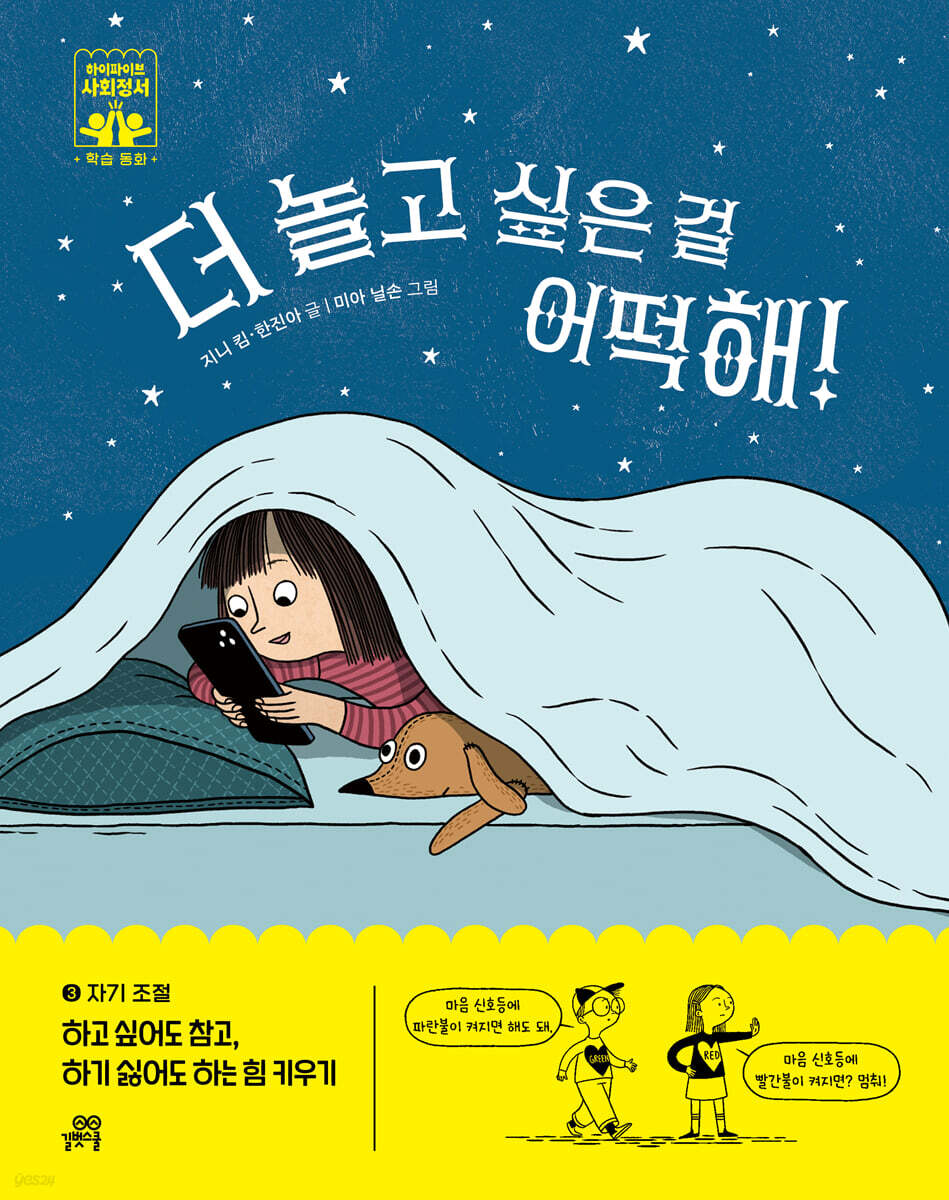 |
Description
Book Introduction
Not as you wish, but as you wish!
Self-control skills developed at age six last a lifetime.
“Self-regulation ability
Helping you grow and ensuring your success,
“It’s a lifelong asset for a child.” (Harvard education expert Jeannie Kim)
“Don’t put it off because it’s difficult.
It is the right time to develop self-regulation skills.
“It’s right now.” (Children’s book author Han Jin-ah)
There is no one who can live by doing only what they want to do.
Children need to learn from an early age that there are times when they have to do something even if they don't want to, and times when they have to endure something even if they want to.
Children who are good at self-regulation can form good peer relationships and achieve high academic achievement based on stable emotions and good lifestyle habits.
Harvard education expert Dr. Jini Kim and children's book author guide you step-by-step on how to manage your behavior, thoughts, and emotions in your daily life.
The vibrant illustrations of renowned Swedish artist Mia Nilsson help you learn self-regulation techniques with ease.
"What should I do if I want to play more!" is the third picture book in the "High Five Social-Emotional Learning Fairy Tales" series.
Self-control skills developed at age six last a lifetime.
“Self-regulation ability
Helping you grow and ensuring your success,
“It’s a lifelong asset for a child.” (Harvard education expert Jeannie Kim)
“Don’t put it off because it’s difficult.
It is the right time to develop self-regulation skills.
“It’s right now.” (Children’s book author Han Jin-ah)
There is no one who can live by doing only what they want to do.
Children need to learn from an early age that there are times when they have to do something even if they don't want to, and times when they have to endure something even if they want to.
Children who are good at self-regulation can form good peer relationships and achieve high academic achievement based on stable emotions and good lifestyle habits.
Harvard education expert Dr. Jini Kim and children's book author guide you step-by-step on how to manage your behavior, thoughts, and emotions in your daily life.
The vibrant illustrations of renowned Swedish artist Mia Nilsson help you learn self-regulation techniques with ease.
"What should I do if I want to play more!" is the third picture book in the "High Five Social-Emotional Learning Fairy Tales" series.
- You can preview some of the book's contents.
Preview
Detailed image

Into the book
Self-regulation begins with following rules.
You know the game of tag?
If you feel like you're about to be caught by a thief, you should shout "Ice!" and freeze as if you were frozen.
You must not move until someone says "ding!" to save you.
If you don't follow these rules, you can't play.
There are rules in school life too.
In the hallway, you should walk slowly and not run so as not to bump into your friends.
During class, you should sit still and not move around, and in the library, you should walk quietly and whisper.
For everyone to be safe and comfortable, you can't just do whatever you want.
Even if there is something you want to do, you have to hold back and follow the established rules.
--- p.8
Blue light behavior and red light behavior
Now you know how important thoughts are?
So, let's think about your actions by dividing them into blue and red lights.
What does the blue light mean? You can go!
Red light? Stop!
What actions would cause the blue light to turn on?
Waiting for your turn, putting away your toys, washing your hands when you get home… … .
So what actions trigger a red light?
Throwing things, yelling in anger, throwing tantrums… … .
--- p.12
In what realm are your emotions located?
Want to learn more about how to regulate your emotions?
So first, you need to know in which realm your emotions are.
If you're sad, tired, or bored, you're in the blue zone.
If you are happy, calm, or joyful, it is the green area. If you are worried, annoyed, or anxious, it is the yellow area.
If you're angry, scared, or overly excited, you're in the red zone.
Just as there are no good or bad emotions, the same goes for the area that expresses emotions.
There is no good area or bad area.
I'm just expressing my feelings through color right now.
That way you know what to do to regulate your emotions.
You know the game of tag?
If you feel like you're about to be caught by a thief, you should shout "Ice!" and freeze as if you were frozen.
You must not move until someone says "ding!" to save you.
If you don't follow these rules, you can't play.
There are rules in school life too.
In the hallway, you should walk slowly and not run so as not to bump into your friends.
During class, you should sit still and not move around, and in the library, you should walk quietly and whisper.
For everyone to be safe and comfortable, you can't just do whatever you want.
Even if there is something you want to do, you have to hold back and follow the established rules.
--- p.8
Blue light behavior and red light behavior
Now you know how important thoughts are?
So, let's think about your actions by dividing them into blue and red lights.
What does the blue light mean? You can go!
Red light? Stop!
What actions would cause the blue light to turn on?
Waiting for your turn, putting away your toys, washing your hands when you get home… … .
So what actions trigger a red light?
Throwing things, yelling in anger, throwing tantrums… … .
--- p.12
In what realm are your emotions located?
Want to learn more about how to regulate your emotions?
So first, you need to know in which realm your emotions are.
If you're sad, tired, or bored, you're in the blue zone.
If you are happy, calm, or joyful, it is the green area. If you are worried, annoyed, or anxious, it is the yellow area.
If you're angry, scared, or overly excited, you're in the red zone.
Just as there are no good or bad emotions, the same goes for the area that expresses emotions.
There is no good area or bad area.
I'm just expressing my feelings through color right now.
That way you know what to do to regulate your emotions.
--- p.18
Publisher's Review
“Stop doing red lights, just do blue lights!”
“When you get angry, take a deep breath, hoo, ha, hoo, ha!”
"Don't do that!" "Do it now!" How long will nagging like this last? Help your child learn to regulate themselves without parental intervention.
The time before and after entering elementary school, when children's living radius expands, is the best time to learn self-control.
"What Should I Do If I Want to Play More!" is a picture book that specifically teaches children how to follow rules, think of their actions as blue and red lights, imagine the consequences of their actions, and appropriately control their emotions according to the time and place.
It starts with behavior control and then explains step-by-step how to control thoughts and emotions, so children can easily follow along and put it into practice.
The world's most affectionate and exciting cheer! "High Five Social-Emotional Learning Fairy Tale"
"What Should I Do If I Want to Play More?" is the third picture book in the "High Five Social-Emotional Learning Fairy Tales."
The 'High Five Social Emotional' series is based on the Ministry of Education's social emotional education theory and was designed to help caregivers systematically develop and support their children's social emotional capabilities at home.
We selected seven core socio-emotional competencies, including understanding emotions, self-esteem, self-regulation, empathy, diversity, manners and etiquette, and good choices, and designed them so that these competencies are strengthened through a cycle.
“When you get angry, take a deep breath, hoo, ha, hoo, ha!”
"Don't do that!" "Do it now!" How long will nagging like this last? Help your child learn to regulate themselves without parental intervention.
The time before and after entering elementary school, when children's living radius expands, is the best time to learn self-control.
"What Should I Do If I Want to Play More!" is a picture book that specifically teaches children how to follow rules, think of their actions as blue and red lights, imagine the consequences of their actions, and appropriately control their emotions according to the time and place.
It starts with behavior control and then explains step-by-step how to control thoughts and emotions, so children can easily follow along and put it into practice.
The world's most affectionate and exciting cheer! "High Five Social-Emotional Learning Fairy Tale"
"What Should I Do If I Want to Play More?" is the third picture book in the "High Five Social-Emotional Learning Fairy Tales."
The 'High Five Social Emotional' series is based on the Ministry of Education's social emotional education theory and was designed to help caregivers systematically develop and support their children's social emotional capabilities at home.
We selected seven core socio-emotional competencies, including understanding emotions, self-esteem, self-regulation, empathy, diversity, manners and etiquette, and good choices, and designed them so that these competencies are strengthened through a cycle.
GOODS SPECIFICS
- Date of issue: May 15, 2025
- Page count, weight, size: 32 pages | 280g | 180*230*15mm
- ISBN13: 9791164069026
- ISBN10: 1164069020
- KC Certification: Certification Type: Conformity Confirmation
You may also like
카테고리
korean


korean

![GQ KOREA Mark (Monthly): December [2025]](http://librairie.coreenne.fr/cdn/shop/files/8ef265dbbfbf186523ed75ba7319009d.jpg?v=1765340328&width=3840)


