

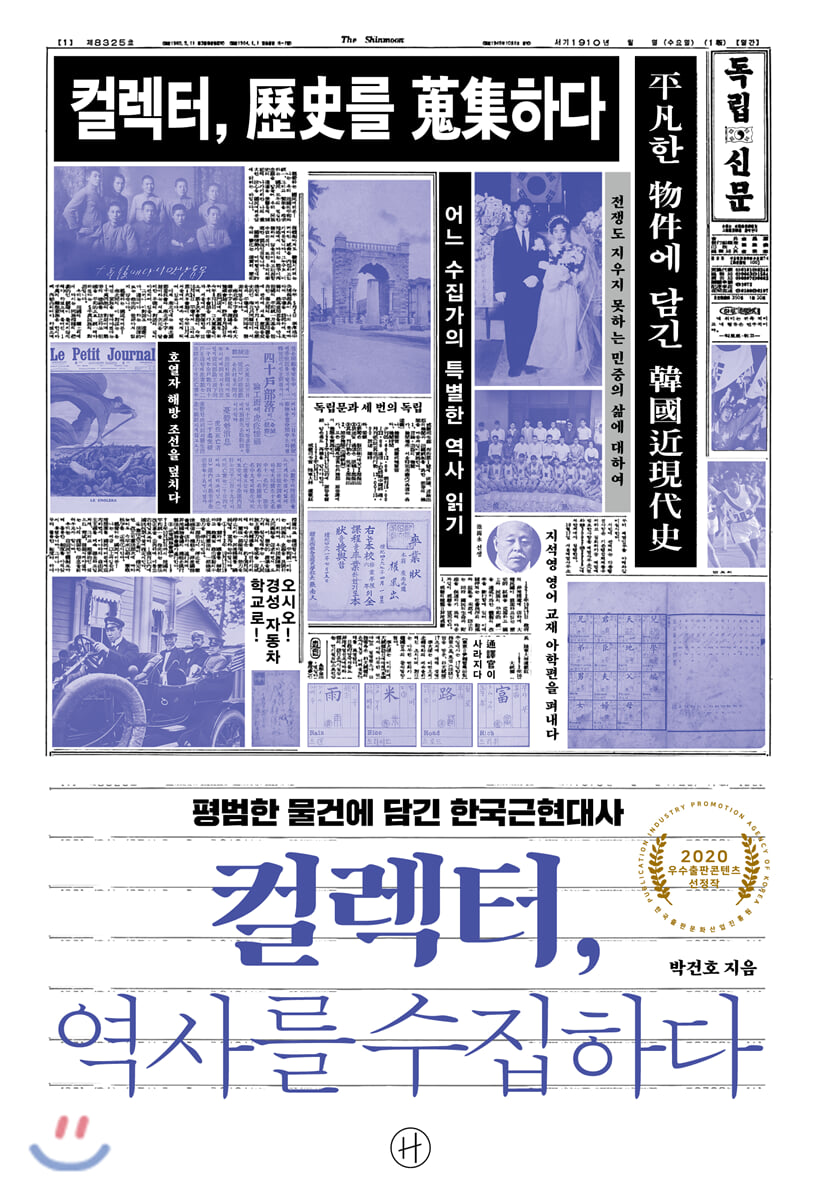
Collector, collecting history
 |
Description
Book Introduction
“I collect people’s lives, “I am absorbed in conversing with the traces of history.” The moment when ordinary things become history, Read about a collector's special and heart-pounding history. About 30 years ago, a single pottery fragment found by chance at a prehistoric site marked the beginning of a passionate history collection. From a single photo to a diary, letters, receipts, autographs, resignation letters, and all kinds of certificates, I collected and collected objects that contained the lives and daily lives of individuals. Tracing the historical codes hidden in the materials one by one, restoring the voices of the people who lived that day, and piecing together the pieces of history brought me joy and emotion. We invite you to an exciting place of collecting and historical reading that has captivated collectors for over 30 years. |
- You can preview some of the book's contents.
Preview
index
In publishing the book
MY COLLECTION 1 Independence Association Subsidy Receipt
Independence Gate and three independences
MY COLLECTION 2 Instructions to Find the Missing Person, Jo Yong-ik
The Jeongmi Righteous Army and the Missing Interpreter
MY COLLECTION 3 Joseon's English textbook, 『Ahakpyeon』 by Ji Seok-yeong
Jeong Yak-yong and Ji Seok-yeong discuss the Ahakpyeon.
MY COLLECTION 4 A postcard sent to his hometown by Kim Nam-du, a young man from Jeongeup.
Come to Gyeongseong Automobile School!
MY COLLECTION 5 Son Kee-chung's autograph from the 1936 Berlin Olympics
I am not Kitei Son, I am Son Ki-jeong.
MY COLLECTION 6 Photos of Comrades We'll Meet Again
War and peace in one picture
MY COLLECTION 7 A letter of resignation written in opposition to the trusteeship
The story of the anti-trusteeship movement contained in a resignation letter written in blood
MY COLLECTION 8 Certificate of Order for Students to Return Home Due to Cholera Outbreak
Cerebral fever strikes liberated Korea in 1946
MY COLLECTION 9: Cha Young-geun's Exhibition Notebook from the Korean War
Nanjung Ilgi, capturing the tragedy of fierce highland battles
MY COLLECTION 10 Letters from the POW Camp
How did young Kwon Bong-chul become a North Korean prisoner of war?
MY COLLECTION 11 Commemorative Photos from Track and Field Competitions During the Korean War
About the lives of the people that even war cannot erase
MY COLLECTION 12 Wedding commemorative photo with the Taegeukgi flag
Marriage, Childbirth, and Nationalism
MY COLLECTION 13 The Diary of Kim Jang-hwan, a 3rd-year student at Gyeonggi Middle School
What's so important about the President's birthday?
MY COLLECTION 14 Photos from the exhibition of General Kim Yu-sin's paintings
How did Kim Yu-sin become an icon of Yushin?
MY COLLECTION 1 Independence Association Subsidy Receipt
Independence Gate and three independences
MY COLLECTION 2 Instructions to Find the Missing Person, Jo Yong-ik
The Jeongmi Righteous Army and the Missing Interpreter
MY COLLECTION 3 Joseon's English textbook, 『Ahakpyeon』 by Ji Seok-yeong
Jeong Yak-yong and Ji Seok-yeong discuss the Ahakpyeon.
MY COLLECTION 4 A postcard sent to his hometown by Kim Nam-du, a young man from Jeongeup.
Come to Gyeongseong Automobile School!
MY COLLECTION 5 Son Kee-chung's autograph from the 1936 Berlin Olympics
I am not Kitei Son, I am Son Ki-jeong.
MY COLLECTION 6 Photos of Comrades We'll Meet Again
War and peace in one picture
MY COLLECTION 7 A letter of resignation written in opposition to the trusteeship
The story of the anti-trusteeship movement contained in a resignation letter written in blood
MY COLLECTION 8 Certificate of Order for Students to Return Home Due to Cholera Outbreak
Cerebral fever strikes liberated Korea in 1946
MY COLLECTION 9: Cha Young-geun's Exhibition Notebook from the Korean War
Nanjung Ilgi, capturing the tragedy of fierce highland battles
MY COLLECTION 10 Letters from the POW Camp
How did young Kwon Bong-chul become a North Korean prisoner of war?
MY COLLECTION 11 Commemorative Photos from Track and Field Competitions During the Korean War
About the lives of the people that even war cannot erase
MY COLLECTION 12 Wedding commemorative photo with the Taegeukgi flag
Marriage, Childbirth, and Nationalism
MY COLLECTION 13 The Diary of Kim Jang-hwan, a 3rd-year student at Gyeonggi Middle School
What's so important about the President's birthday?
MY COLLECTION 14 Photos from the exhibition of General Kim Yu-sin's paintings
How did Kim Yu-sin become an icon of Yushin?
Detailed image
Publisher's Review
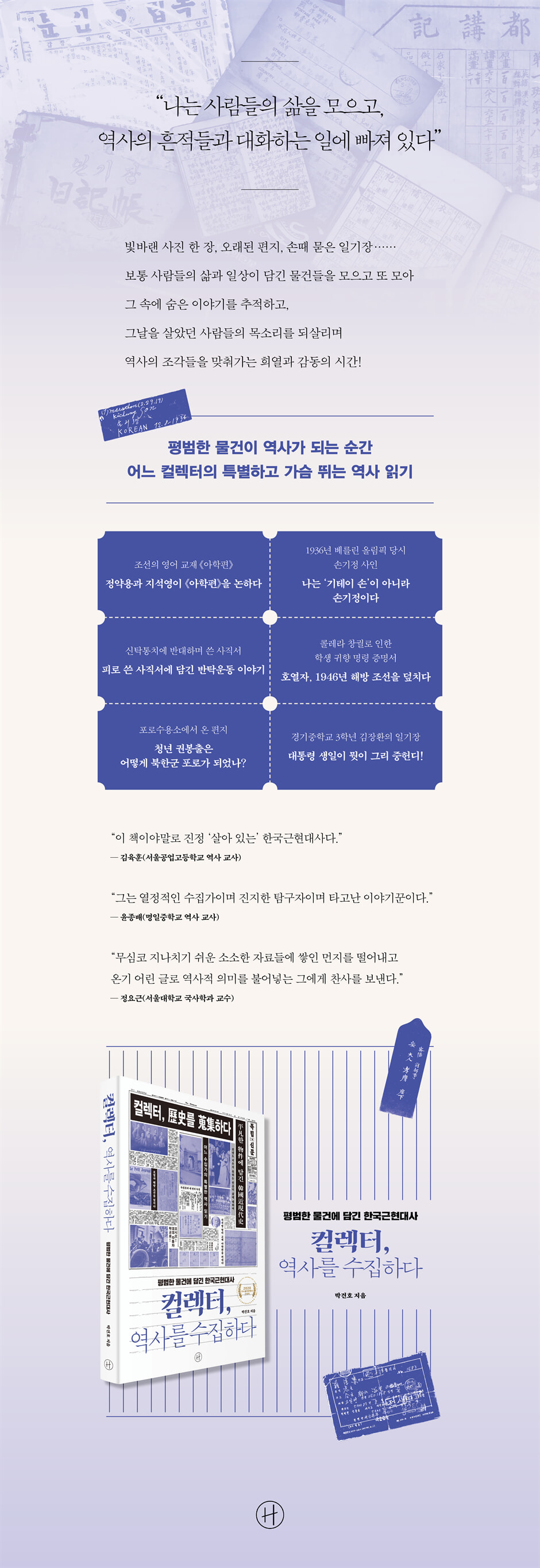
“I collect people’s lives,
“I am absorbed in conversing with the traces of history.”
The moment when ordinary things become history,
Read about a collector's special and heart-pounding history.
About 30 years ago, a single pottery fragment found by chance at a prehistoric site marked the beginning of a passionate history collection.
From a single photo to a diary, letters, receipts, autographs, resignation letters, and all kinds of certificates, I collected and collected objects that contained the lives and daily lives of each individual.
Tracing the historical codes hidden in the materials one by one, restoring the voices of the people who lived that day, and piecing together the pieces of history brought me joy and emotion.
We invite you to an exciting place of collecting and historical reading that has captivated collectors for over 30 years.
1.
Read the collector's special history
―Reviving the lives of ordinary people throughout history through conversations with collectibles.
When we think of a 'collector', we often think of someone who collects very old artifacts or expensive works of art.
But here, there is a collector who is completely absorbed in the fun of collecting everyday materials that contain the lives of ordinary people, from a single photograph to receipts, diaries, letters, and even resignation letters, and piecing together the puzzle of history hidden within them.
These materials, personally discovered over 30 years of research, may seem trivial and ordinary on the surface, but each and every piece in the collection holds a heart-pounding story.
So, whenever he encounters a new collection, he constantly tries to have a conversation with the material, tracing the story and history it contains.
This book introduces 14 collectibles from the collector's vast collection that vividly reveal the spirit of the times and provide a glimpse into the background of great historical events. Through these ordinary objects that contain the stories of our lives, it vividly restores the history of ordinary people that has been obscured by the grand history.
Through the dates written on the Independence Association subsidy receipts, we revisit the meaning of 'independence' that people had in mind when the Independence Gate was built. Through the tearful postcards describing how many times they crossed the Han River Bridge, we recall the hardships of life and unemployment experienced by young people during the colonial period. From the Taegeukgi made by recycling the Japanese flag, we feel the sudden joy of independence. And from a single commemorative photo of a high school winning a track and field competition, we revive the lives of the people that even war could not erase.
In this way, this book is a conversation between collectors and their collections, and a conversation with the 'nameless ones' in history.
Through the collector's collection, which seems to be everywhere but is not easily accessible, and the stories contained within it, you can fully encounter the joys and sorrows, desires, frustrations, and challenges to overcome difficulties felt by people living in the turbulent modern and contemporary times of Korea.
My collecting is not simply an act of finding and gathering old objects, but a process of constantly conversing with traces of history, encountering and understanding fragments of history.
I searched for and collected materials that preserved traces of history.
We collected historical materials in various forms, regardless of size or material, including diaries, pamphlets, newspapers, magazines, daily life documents, and photographs.
If you look closely at the materials, some of them have angry expressions, while others contain emotions of excitement and joy.
Some contain the pain and sadness of the sky falling down, while others have the expressions of life reflected in them.
―From “Preparing the Book” (pp. 7-8)
I have an old Taegeukgi in my collection.
This Taegeukgi is a rough drawing of the four trigrams, and the Taegeuk is only red.
But if you look closely, you can see traces of blue painted over red.
It was a Taegeukgi that I had personally decorated with the Japanese flag.
On August 15, 1945, Koreans suddenly experienced liberation.
People must have been so happy that they wanted to wave the Taegeukgi.
However, since it was not easy to obtain the Taegeukgi, the Rising Sun Flag caught my eye.
That's right! Just draw the Taegeuk pattern and the four trigrams on the Japanese flag.
It may be difficult to make the Taegeukgi into the Rising Sun Flag, but it would be easy to make the Rising Sun Flag into the Taegeukgi.
In this way, many of the Taegeukgi used immediately after liberation were recycled versions of the Japanese flag.
… … I feel the emotion and joy of the Korean people who endured 35 years of Japanese colonial rule and welcomed liberation in the Taegeukgi, which is a recycled version of the Japanese flag.
―From “Preparing the Book” (page 7)
2.
How Collectors Communicate with Their Collections
―Tracing the stories contained in objects to piece together the puzzle of history.
The process of collectors conversing with their collections, that is, tracing the stories contained within them, offers readers a new and truly enjoyable way to read history.
To complete the story, we must find and fit together the pieces of the historical puzzle one by one.
The 'Commemorative Photograph of the Track and Field Competition during the Korean War' (page 211) introduced in this book clearly shows the process.
This photo is a commemorative photo taken by a high school teacher and students to commemorate the victory in a track and field competition.
It is easy to see that the date written on the photo was taken in July 1952, during the Korean War.
So, where is the location? In which region is the school? The collector finds the inscription "Yeongdong School Athletics Competition Commemorative Victory" in the photo, which reads "Gangwon-do," and the school emblem on the students' uniforms, which reads "Samcheok Technical High School."
Now the most important piece remains.
How could a track and field competition have been held during the war? To find this piece, we must examine the situation in the Samcheok area during the Korean War.
The collector, who researched the history of Samcheok City along with the well-known historical background, revealed that the period when Samcheok was under the control of the North Korean army was not long, that the North Korean army was not able to advance south to Samcheok after the January 4th retreat, and that after the armistice talks in July 1951, fighting only took place in the form of high-altitude battles near today's Military Demarcation Line, so the time when the photo was taken was a time when everyday life was being restored to the past.
But this is not the end.
In the photo, we pay attention to the glass-less windows and the military and police support posters, and also read the anxious hearts of the people who had to live their daily lives in the midst of war.
Life went on even during the war.
Markets opened to buy and sell daily necessities, classes were held under open-air tents, and church bells and prayers filled the chapels, yearning for peace.
… … Among the collected photos, there are some that give us a glimpse into this history.
This is a commemorative photo of a high school teacher and students winning a track and field competition, collected in April 2017.
The year written on the photo is July 13, 4285 in the Dangi Era, so it was taken in 1952 AD, during the Korean War.
It was a track and field competition during the war… … .
It's not easy to understand.
This is especially true because the competition was held in an area not far from the front lines.
'Can daily life continue even during war?' This question is why I collected these photos.
―From “MY COLLECTION 11: On the lives of the people that even war cannot erase” (pp. 214-216)
3.
Beyond the history told in textbooks
―A Living History of Modern and Contemporary Korea Through Materials from Everyday Life
The history we learn from textbooks is vast and structural.
If that were all there was to history, wouldn't it be too bleak? "The history in textbooks is only half-true," says the collector.
Even when historical events occurred, people went about their daily lives and recorded and left behind their own records in their own way.
This book contains historical events that reflect the times, from the late 19th century when Joseon opened its doors to the world to the 1970s when the Yushin regime was established, as well as the lives of ordinary people who lived during that era.
Most of the people who left behind the collector's collection are unknown.
That doesn't mean the stories they tell are light or worthless.
Rather, it guides us into a world beyond the history we know.
It can be said to be a truly 'living' and 'real' modern and contemporary history of Korea.
Certificates of return orders issued to students due to the cholera outbreak immediately after liberation, letters of resignation written in blood in protest of the trusteeship, a letter sent to parents by a young man imprisoned in a prisoner-of-war camp during the Korean War, the diary of a middle school student expressing his doubts about the birthday celebration of President Syngman Rhee, etc.
The vivid images of the lives of people who lived during the time of well-known historical events, including what they felt and how they lived, come to life.
I collected some materials related to the Independence Gate a long time ago.
The first is the 'Independence Association Subsidy Receipt' received by a person named Ahn Hyo-eung of Miryang who donated 1 won during the nationwide fundraising campaign for the construction of the Independence Gate in 1897.
… … The second is materials related to the Independence Gate after liberation, which are less rare than the Independence Association subsidy receipt introduced first.
First, the Liberation Day commemorative stamp issued in 1955 expressed the meaning of the 10th anniversary of liberation with the Taegeukgi, the Independence Gate, and a broken chain.
The 30th anniversary of liberation commemorative coin issued in 1975 is similar, with the meaning of liberation engraved on the front and back with martyr Yu Gwan-sun holding the Taegeukgi and shouting “Manse” and the Independence Gate.
However, the Independence Gate that appears in these first and second sources has different meanings as much as the 50-year time difference.
The meaning of the Independence Gate when it was built was very different from the meaning people perceived after liberation.
―From 〈MY COLLECTION 1 Independence Association Subsidy Receipt〉 (pp. 19-20)
I have one of Son Ki-jeong's autographs.
It was a meaningful autograph that contained the heartbreaking story of marathon runner Son Ki-jeong, so I collected it with great determination and difficulty.
The autographs I collected are too small to contain the story of Son Ki-jeong during the colonial period.
Just 10 centimeters wide and 3.5 centimeters high! Here, Son Ki-chung's Korean name ('손기정') and English name ('Kichung Son') are written.
The English name was not written as 'Kitei Son' either.
Underneath the name, it says 'KOREAN'.
The letters that say 'KOREAN' are the largest.
Could it be that Son Ki-jeong intentionally wrote it in large letters? … … In this small piece of paper, we encounter the sorrow of the ‘bowed-headed champion’ who lived through the colonial period.
And knowing how big and heavy it was, it's easy to understand why the aging champion was so thrilled when Hwang Young-cho won the 1992 Barcelona Olympics, and why he hopped and skipped as he entered the stadium carrying the torch at the opening ceremony of the 1988 Seoul Olympics.
―From “MY COLLECTION 5 Son Ki-jeong’s Photos from the 1936 Berlin Olympics” (pp. 108-110)
I collected a certificate issued immediately after liberation.
This old certificate belongs to Jang Sang-gi, a first-year student at Muan Public Agricultural and Sericulture School in Jeollanam-do. It was issued when the school closed indefinitely and students were sent home.
The date of issuance was August 29, 1946, and the reason for the school closure was none other than the ‘routine outbreak of cholera.’
Cholera is our name for cholera.
… … The reason I became interested in Jang Sang-gi’s ‘Certificate of Order to Return Home’ was because of the date, August 1946.
What I knew about that period, a year after liberation, was mainly political history, and beyond that, I knew little about the daily lives of the people of that era.
… … However, the cholera outbreak that occurred that year is also an important historical event that cannot be left out when talking about August 1946.
Wouldn't it be possible to understand the lives of the people of that era more vividly by including the indiscriminate spread of the epidemic?
―From 〈MY COLLECTION 8 Certificate of Student Return Home Due to Cholera Outbreak〉 (pp. 156-157)
In 2016, several pieces of data on 'Kwon Bong-chul' were collected in one bundle.
The materials included various awards, diplomas, and transcripts, but the reason I was interested was because of a letter mixed in among them.
This letter, clearly marked with a censor, was unexpectedly sent by Kwon Bong-chul to his father, Kwon Ju-seon, who lived in his hometown of Yecheon, North Gyeongsang Province, from the Geoje Island POW camp, which held North Korean prisoners of war, in January 1952 during the Korean War.
A letter from a POW camp! And what's more, the North Korean POW's hometown was Yecheon, North Gyeongsang Province, then South Korea! What could have been the story behind Kwon Bong-chul's story? ―From "MY COLLECTION 10 Letters from a POW Camp" (pp. 194-196)
Nowadays, people choose to marry and have children according to their own free will, but this was not always the case and was not always the case.
Even deeply personal matters like love, marriage, and childbirth were not free from the direct and indirect policies and controls of public power.
… … The reason I have been going on about nationalistic ideas related to marriage and childbirth is because of the wedding photos I have collected.
Looking at these commemorative photos, it seems that weddings follow trends and each has its own unique characteristics.
It was fun to observe the changes in wedding attire, but what particularly caught my attention was the Taegeukgi flag decorating the background.
Looking at several of these photos, it seems that hanging the Taegeukgi was once a popular wedding custom or had a special meaning.
What would it be like to be invited to a wedding and see a large Taegeukgi flag hanging? And what if they even saluted the flag at the start of the ceremony? It's hard to imagine now, but we did have a time like that.
―From “12 Wedding Commemorative Photos with Taegeukgi” (pp. 237, 240)
“I am absorbed in conversing with the traces of history.”
The moment when ordinary things become history,
Read about a collector's special and heart-pounding history.
About 30 years ago, a single pottery fragment found by chance at a prehistoric site marked the beginning of a passionate history collection.
From a single photo to a diary, letters, receipts, autographs, resignation letters, and all kinds of certificates, I collected and collected objects that contained the lives and daily lives of each individual.
Tracing the historical codes hidden in the materials one by one, restoring the voices of the people who lived that day, and piecing together the pieces of history brought me joy and emotion.
We invite you to an exciting place of collecting and historical reading that has captivated collectors for over 30 years.
1.
Read the collector's special history
―Reviving the lives of ordinary people throughout history through conversations with collectibles.
When we think of a 'collector', we often think of someone who collects very old artifacts or expensive works of art.
But here, there is a collector who is completely absorbed in the fun of collecting everyday materials that contain the lives of ordinary people, from a single photograph to receipts, diaries, letters, and even resignation letters, and piecing together the puzzle of history hidden within them.
These materials, personally discovered over 30 years of research, may seem trivial and ordinary on the surface, but each and every piece in the collection holds a heart-pounding story.
So, whenever he encounters a new collection, he constantly tries to have a conversation with the material, tracing the story and history it contains.
This book introduces 14 collectibles from the collector's vast collection that vividly reveal the spirit of the times and provide a glimpse into the background of great historical events. Through these ordinary objects that contain the stories of our lives, it vividly restores the history of ordinary people that has been obscured by the grand history.
Through the dates written on the Independence Association subsidy receipts, we revisit the meaning of 'independence' that people had in mind when the Independence Gate was built. Through the tearful postcards describing how many times they crossed the Han River Bridge, we recall the hardships of life and unemployment experienced by young people during the colonial period. From the Taegeukgi made by recycling the Japanese flag, we feel the sudden joy of independence. And from a single commemorative photo of a high school winning a track and field competition, we revive the lives of the people that even war could not erase.
In this way, this book is a conversation between collectors and their collections, and a conversation with the 'nameless ones' in history.
Through the collector's collection, which seems to be everywhere but is not easily accessible, and the stories contained within it, you can fully encounter the joys and sorrows, desires, frustrations, and challenges to overcome difficulties felt by people living in the turbulent modern and contemporary times of Korea.
My collecting is not simply an act of finding and gathering old objects, but a process of constantly conversing with traces of history, encountering and understanding fragments of history.
I searched for and collected materials that preserved traces of history.
We collected historical materials in various forms, regardless of size or material, including diaries, pamphlets, newspapers, magazines, daily life documents, and photographs.
If you look closely at the materials, some of them have angry expressions, while others contain emotions of excitement and joy.
Some contain the pain and sadness of the sky falling down, while others have the expressions of life reflected in them.
―From “Preparing the Book” (pp. 7-8)
I have an old Taegeukgi in my collection.
This Taegeukgi is a rough drawing of the four trigrams, and the Taegeuk is only red.
But if you look closely, you can see traces of blue painted over red.
It was a Taegeukgi that I had personally decorated with the Japanese flag.
On August 15, 1945, Koreans suddenly experienced liberation.
People must have been so happy that they wanted to wave the Taegeukgi.
However, since it was not easy to obtain the Taegeukgi, the Rising Sun Flag caught my eye.
That's right! Just draw the Taegeuk pattern and the four trigrams on the Japanese flag.
It may be difficult to make the Taegeukgi into the Rising Sun Flag, but it would be easy to make the Rising Sun Flag into the Taegeukgi.
In this way, many of the Taegeukgi used immediately after liberation were recycled versions of the Japanese flag.
… … I feel the emotion and joy of the Korean people who endured 35 years of Japanese colonial rule and welcomed liberation in the Taegeukgi, which is a recycled version of the Japanese flag.
―From “Preparing the Book” (page 7)
2.
How Collectors Communicate with Their Collections
―Tracing the stories contained in objects to piece together the puzzle of history.
The process of collectors conversing with their collections, that is, tracing the stories contained within them, offers readers a new and truly enjoyable way to read history.
To complete the story, we must find and fit together the pieces of the historical puzzle one by one.
The 'Commemorative Photograph of the Track and Field Competition during the Korean War' (page 211) introduced in this book clearly shows the process.
This photo is a commemorative photo taken by a high school teacher and students to commemorate the victory in a track and field competition.
It is easy to see that the date written on the photo was taken in July 1952, during the Korean War.
So, where is the location? In which region is the school? The collector finds the inscription "Yeongdong School Athletics Competition Commemorative Victory" in the photo, which reads "Gangwon-do," and the school emblem on the students' uniforms, which reads "Samcheok Technical High School."
Now the most important piece remains.
How could a track and field competition have been held during the war? To find this piece, we must examine the situation in the Samcheok area during the Korean War.
The collector, who researched the history of Samcheok City along with the well-known historical background, revealed that the period when Samcheok was under the control of the North Korean army was not long, that the North Korean army was not able to advance south to Samcheok after the January 4th retreat, and that after the armistice talks in July 1951, fighting only took place in the form of high-altitude battles near today's Military Demarcation Line, so the time when the photo was taken was a time when everyday life was being restored to the past.
But this is not the end.
In the photo, we pay attention to the glass-less windows and the military and police support posters, and also read the anxious hearts of the people who had to live their daily lives in the midst of war.
Life went on even during the war.
Markets opened to buy and sell daily necessities, classes were held under open-air tents, and church bells and prayers filled the chapels, yearning for peace.
… … Among the collected photos, there are some that give us a glimpse into this history.
This is a commemorative photo of a high school teacher and students winning a track and field competition, collected in April 2017.
The year written on the photo is July 13, 4285 in the Dangi Era, so it was taken in 1952 AD, during the Korean War.
It was a track and field competition during the war… … .
It's not easy to understand.
This is especially true because the competition was held in an area not far from the front lines.
'Can daily life continue even during war?' This question is why I collected these photos.
―From “MY COLLECTION 11: On the lives of the people that even war cannot erase” (pp. 214-216)
3.
Beyond the history told in textbooks
―A Living History of Modern and Contemporary Korea Through Materials from Everyday Life
The history we learn from textbooks is vast and structural.
If that were all there was to history, wouldn't it be too bleak? "The history in textbooks is only half-true," says the collector.
Even when historical events occurred, people went about their daily lives and recorded and left behind their own records in their own way.
This book contains historical events that reflect the times, from the late 19th century when Joseon opened its doors to the world to the 1970s when the Yushin regime was established, as well as the lives of ordinary people who lived during that era.
Most of the people who left behind the collector's collection are unknown.
That doesn't mean the stories they tell are light or worthless.
Rather, it guides us into a world beyond the history we know.
It can be said to be a truly 'living' and 'real' modern and contemporary history of Korea.
Certificates of return orders issued to students due to the cholera outbreak immediately after liberation, letters of resignation written in blood in protest of the trusteeship, a letter sent to parents by a young man imprisoned in a prisoner-of-war camp during the Korean War, the diary of a middle school student expressing his doubts about the birthday celebration of President Syngman Rhee, etc.
The vivid images of the lives of people who lived during the time of well-known historical events, including what they felt and how they lived, come to life.
I collected some materials related to the Independence Gate a long time ago.
The first is the 'Independence Association Subsidy Receipt' received by a person named Ahn Hyo-eung of Miryang who donated 1 won during the nationwide fundraising campaign for the construction of the Independence Gate in 1897.
… … The second is materials related to the Independence Gate after liberation, which are less rare than the Independence Association subsidy receipt introduced first.
First, the Liberation Day commemorative stamp issued in 1955 expressed the meaning of the 10th anniversary of liberation with the Taegeukgi, the Independence Gate, and a broken chain.
The 30th anniversary of liberation commemorative coin issued in 1975 is similar, with the meaning of liberation engraved on the front and back with martyr Yu Gwan-sun holding the Taegeukgi and shouting “Manse” and the Independence Gate.
However, the Independence Gate that appears in these first and second sources has different meanings as much as the 50-year time difference.
The meaning of the Independence Gate when it was built was very different from the meaning people perceived after liberation.
―From 〈MY COLLECTION 1 Independence Association Subsidy Receipt〉 (pp. 19-20)
I have one of Son Ki-jeong's autographs.
It was a meaningful autograph that contained the heartbreaking story of marathon runner Son Ki-jeong, so I collected it with great determination and difficulty.
The autographs I collected are too small to contain the story of Son Ki-jeong during the colonial period.
Just 10 centimeters wide and 3.5 centimeters high! Here, Son Ki-chung's Korean name ('손기정') and English name ('Kichung Son') are written.
The English name was not written as 'Kitei Son' either.
Underneath the name, it says 'KOREAN'.
The letters that say 'KOREAN' are the largest.
Could it be that Son Ki-jeong intentionally wrote it in large letters? … … In this small piece of paper, we encounter the sorrow of the ‘bowed-headed champion’ who lived through the colonial period.
And knowing how big and heavy it was, it's easy to understand why the aging champion was so thrilled when Hwang Young-cho won the 1992 Barcelona Olympics, and why he hopped and skipped as he entered the stadium carrying the torch at the opening ceremony of the 1988 Seoul Olympics.
―From “MY COLLECTION 5 Son Ki-jeong’s Photos from the 1936 Berlin Olympics” (pp. 108-110)
I collected a certificate issued immediately after liberation.
This old certificate belongs to Jang Sang-gi, a first-year student at Muan Public Agricultural and Sericulture School in Jeollanam-do. It was issued when the school closed indefinitely and students were sent home.
The date of issuance was August 29, 1946, and the reason for the school closure was none other than the ‘routine outbreak of cholera.’
Cholera is our name for cholera.
… … The reason I became interested in Jang Sang-gi’s ‘Certificate of Order to Return Home’ was because of the date, August 1946.
What I knew about that period, a year after liberation, was mainly political history, and beyond that, I knew little about the daily lives of the people of that era.
… … However, the cholera outbreak that occurred that year is also an important historical event that cannot be left out when talking about August 1946.
Wouldn't it be possible to understand the lives of the people of that era more vividly by including the indiscriminate spread of the epidemic?
―From 〈MY COLLECTION 8 Certificate of Student Return Home Due to Cholera Outbreak〉 (pp. 156-157)
In 2016, several pieces of data on 'Kwon Bong-chul' were collected in one bundle.
The materials included various awards, diplomas, and transcripts, but the reason I was interested was because of a letter mixed in among them.
This letter, clearly marked with a censor, was unexpectedly sent by Kwon Bong-chul to his father, Kwon Ju-seon, who lived in his hometown of Yecheon, North Gyeongsang Province, from the Geoje Island POW camp, which held North Korean prisoners of war, in January 1952 during the Korean War.
A letter from a POW camp! And what's more, the North Korean POW's hometown was Yecheon, North Gyeongsang Province, then South Korea! What could have been the story behind Kwon Bong-chul's story? ―From "MY COLLECTION 10 Letters from a POW Camp" (pp. 194-196)
Nowadays, people choose to marry and have children according to their own free will, but this was not always the case and was not always the case.
Even deeply personal matters like love, marriage, and childbirth were not free from the direct and indirect policies and controls of public power.
… … The reason I have been going on about nationalistic ideas related to marriage and childbirth is because of the wedding photos I have collected.
Looking at these commemorative photos, it seems that weddings follow trends and each has its own unique characteristics.
It was fun to observe the changes in wedding attire, but what particularly caught my attention was the Taegeukgi flag decorating the background.
Looking at several of these photos, it seems that hanging the Taegeukgi was once a popular wedding custom or had a special meaning.
What would it be like to be invited to a wedding and see a large Taegeukgi flag hanging? And what if they even saluted the flag at the start of the ceremony? It's hard to imagine now, but we did have a time like that.
―From “12 Wedding Commemorative Photos with Taegeukgi” (pp. 237, 240)
GOODS SPECIFICS
- Date of publication: July 13, 2020
- Page count, weight, size: 292 pages | 470g | 150*220*20mm
- ISBN13: 9791160803990
- ISBN10: 1160803994
You may also like
카테고리
korean


korean

![GQ KOREA Mark (Monthly): December [2025]](http://librairie.coreenne.fr/cdn/shop/files/8ef265dbbfbf186523ed75ba7319009d.jpg?v=1765340328&width=3840)


