

The Art of Travel
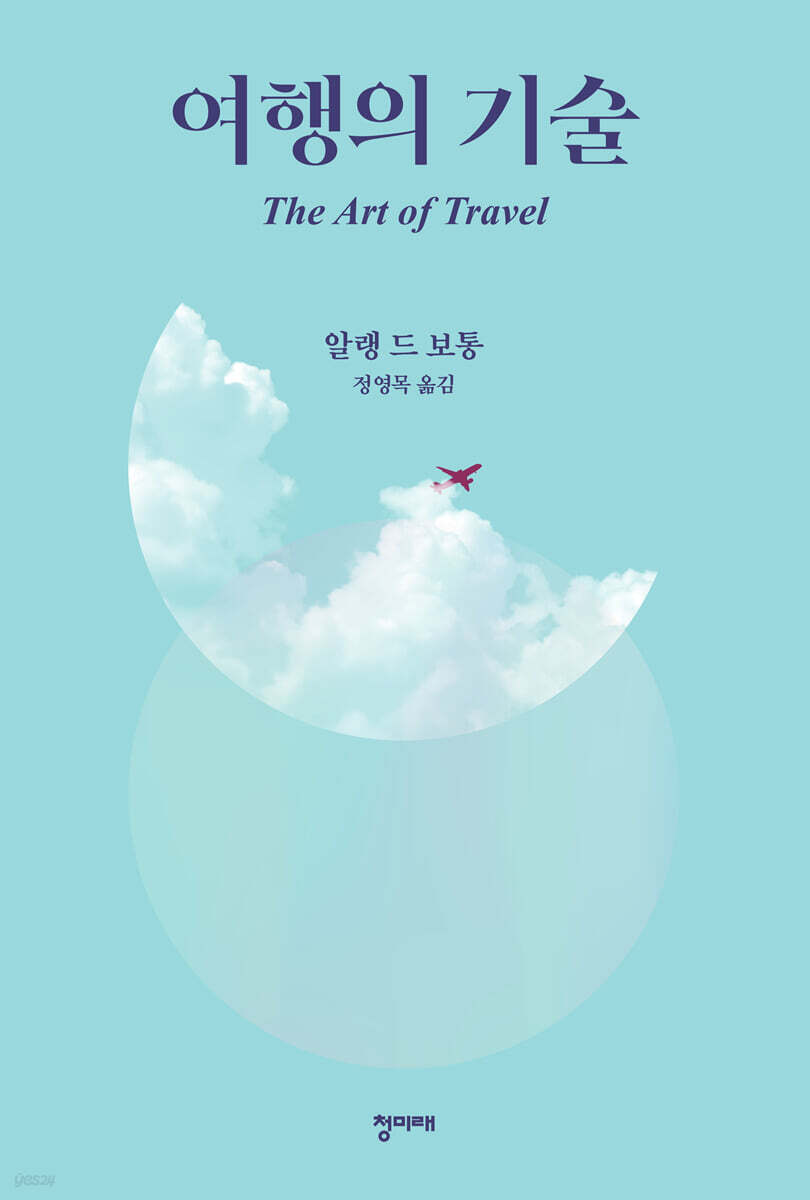 |
Description
Book Introduction
All About Travel from World-Bestselling Author Alain de Botton
The one travel book you must read before you go on a trip.
★ Recommended by The Times, The Wall Street Journal, The New Statesman, and The Baltimore Sun ★
Alain de Botton, “the inventor of the everyday,” has written with a unique perspective on a wide range of topics, including love, architecture, philosophy, and religion.
Everything about the journey he embarks on is contained in this book.
This time he doesn't disappoint us either.
With his sparkling intellect and seemingly nonchalant charm, he invites readers to ponder the joys of anticipation, the allure of the exotic, and the value to be found in everything from the seascapes of Barbados to the takeoff of a plane at Heathrow Airport.
This book tells people who are planning to travel not only the destination, but also how to travel and why to travel.
The one travel book you must read before you go on a trip.
★ Recommended by The Times, The Wall Street Journal, The New Statesman, and The Baltimore Sun ★
Alain de Botton, “the inventor of the everyday,” has written with a unique perspective on a wide range of topics, including love, architecture, philosophy, and religion.
Everything about the journey he embarks on is contained in this book.
This time he doesn't disappoint us either.
With his sparkling intellect and seemingly nonchalant charm, he invites readers to ponder the joys of anticipation, the allure of the exotic, and the value to be found in everything from the seascapes of Barbados to the takeoff of a plane at Heathrow Airport.
This book tells people who are planning to travel not only the destination, but also how to travel and why to travel.
- You can preview some of the book's contents.
Preview
index
depart
I.
About expectations
Location - Hammersmith, London, Barbados
Guide - J.
K. Wismans
II.
About places to travel
Places - rest areas, airports, airplanes, trains
Guide - Charles Baudelaire, Edward Hopper
motive
III.
About the exotic
Location - Amsterdam
The Guide - Gustave Flaubert
IV.
About curiosity
Location - Madrid
Guide - Alexander von Humboldt
sight
V.
About the countryside and the city
Location - Lake District
The Guide - William Wordsworth
VI.
On the Sublime
Location - Sinai Desert
Guide - Edmund Burke, Job
art
VII.
About Art that Opens Your Eyes
Location - Provence
Guide - Vincent van Gogh
VIII.
On the Possession of Beauty
Locations: Lake District, Madrid, Amsterdam, Barbados, London Docklands
The Guide - John Ruskin
return
IX.
About habits
Location - Hammersmith, London
Guide - Xavier de Maistre
supplement
Translator's Note on the Revised Version
Translator's Note on the First Edition
Biographical Index
I.
About expectations
Location - Hammersmith, London, Barbados
Guide - J.
K. Wismans
II.
About places to travel
Places - rest areas, airports, airplanes, trains
Guide - Charles Baudelaire, Edward Hopper
motive
III.
About the exotic
Location - Amsterdam
The Guide - Gustave Flaubert
IV.
About curiosity
Location - Madrid
Guide - Alexander von Humboldt
sight
V.
About the countryside and the city
Location - Lake District
The Guide - William Wordsworth
VI.
On the Sublime
Location - Sinai Desert
Guide - Edmund Burke, Job
art
VII.
About Art that Opens Your Eyes
Location - Provence
Guide - Vincent van Gogh
VIII.
On the Possession of Beauty
Locations: Lake District, Madrid, Amsterdam, Barbados, London Docklands
The Guide - John Ruskin
return
IX.
About habits
Location - Hammersmith, London
Guide - Xavier de Maistre
supplement
Translator's Note on the Revised Version
Translator's Note on the First Edition
Biographical Index
Detailed image

Into the book
“If the search for happiness dominates our lives, travel reveals its dynamism—from its passion to its paradoxes—more richly than any other activity.
Travel, though in an ambiguous way, shows us what life might be like without the constraints of work and the struggle for survival.
Yet, few people believe that travel raises philosophical questions, issues that require thinking beyond the practical realm.
“Advice about where to go is everywhere, but it’s rare to hear stories about why we should go and how to get there.”
--- p.17
“Travel is the midwife of thoughts.
It's hard to find a place more conducive to internal dialogue than a moving plane, ship, or train.
There is a strange, if somewhat strange, correlation between what we see before our eyes and the thoughts that arise in our minds.
Sometimes big ideas require big sights, and new ideas require new places.
“In other cases, even internal thoughts that would otherwise be halting progress smoothly with the help of the flowing scenery.”
--- p.78
“Once I started thinking that everything had potential interest, that there were layers of values hidden within it.”
--- p.314
“I thought it would be nice to travel alone.
Our reactions to the world are determined by the people we walk with.
Because we refine our curiosity to meet other people's expectations.
They may have a certain idea of who we are, and so they may subtly block certain aspects of us from emerging.”
Travel, though in an ambiguous way, shows us what life might be like without the constraints of work and the struggle for survival.
Yet, few people believe that travel raises philosophical questions, issues that require thinking beyond the practical realm.
“Advice about where to go is everywhere, but it’s rare to hear stories about why we should go and how to get there.”
--- p.17
“Travel is the midwife of thoughts.
It's hard to find a place more conducive to internal dialogue than a moving plane, ship, or train.
There is a strange, if somewhat strange, correlation between what we see before our eyes and the thoughts that arise in our minds.
Sometimes big ideas require big sights, and new ideas require new places.
“In other cases, even internal thoughts that would otherwise be halting progress smoothly with the help of the flowing scenery.”
--- p.78
“Once I started thinking that everything had potential interest, that there were layers of values hidden within it.”
--- p.314
“I thought it would be nice to travel alone.
Our reactions to the world are determined by the people we walk with.
Because we refine our curiosity to meet other people's expectations.
They may have a certain idea of who we are, and so they may subtly block certain aspects of us from emerging.”
--- p.316
Publisher's Review
Alain de Botton travels to various places - Barbados, Madrid, the Sinai Desert, Provence, the Lake District and Amsterdam.
He says that what sets us on a journey there may be determined by the expectation of a single photo of an exotic landscape.
He also says that we can find solace in our loneliness at the places we pass through on our journeys - rest areas, airports.
They say that the books that best comfort us when we are sad are sad books, and when we are lonely, the place we should run to is a rest area.
We travel to find the exotic and to satisfy our curiosity.
In a place other than here, in a strange land where no one knows us, we develop a mindset of accepting everything.
So, even from small things, we feel greater comfort, greater fun, and greater emotion.
The grandeur of the scenery is also what drives us to travel.
Guided by the 18th-century English poet Wordsworth, we travel through the countryside.
Wordsworth brought people's attention to the nature of the countryside, which had previously been overlooked.
This has led countless city dwellers to travel to the Lake District in search of solace.
And Alain de Botton is also given a scene that provides comfort.
He also guides us through the sublime landscapes of the Sinai Desert.
There we are shown a sight that overwhelms us and makes us feel small.
Alain de Botton talks about the beauty we can feel through travel.
See Van Gogh's paintings in Provence and see the olive trees and cypresses there in a new light.
We perceive the landscape anew through the artist's choices.
And an artist's worth as an artist is evaluated by that choice.
When we discover beauty, we want to possess it.
One way is through photography.
When we discover beauty, we feel the urge to capture it and preserve it.
But another way to fully embrace its beauty is to paint a “horse picture”, as John Ruskin suggested.
The best way to understand beauty is to express it in your own words.
Finally, Alain de Botton takes us to a familiar place, guided by Xavier de Maistre.
The very places we have lived in for so long that we have dismissed them as nothing new.
It is said that even there we can discover new curiosities and beauty.
We “poke you in the side” to explore your surroundings before you go on a trip.
He says that what sets us on a journey there may be determined by the expectation of a single photo of an exotic landscape.
He also says that we can find solace in our loneliness at the places we pass through on our journeys - rest areas, airports.
They say that the books that best comfort us when we are sad are sad books, and when we are lonely, the place we should run to is a rest area.
We travel to find the exotic and to satisfy our curiosity.
In a place other than here, in a strange land where no one knows us, we develop a mindset of accepting everything.
So, even from small things, we feel greater comfort, greater fun, and greater emotion.
The grandeur of the scenery is also what drives us to travel.
Guided by the 18th-century English poet Wordsworth, we travel through the countryside.
Wordsworth brought people's attention to the nature of the countryside, which had previously been overlooked.
This has led countless city dwellers to travel to the Lake District in search of solace.
And Alain de Botton is also given a scene that provides comfort.
He also guides us through the sublime landscapes of the Sinai Desert.
There we are shown a sight that overwhelms us and makes us feel small.
Alain de Botton talks about the beauty we can feel through travel.
See Van Gogh's paintings in Provence and see the olive trees and cypresses there in a new light.
We perceive the landscape anew through the artist's choices.
And an artist's worth as an artist is evaluated by that choice.
When we discover beauty, we want to possess it.
One way is through photography.
When we discover beauty, we feel the urge to capture it and preserve it.
But another way to fully embrace its beauty is to paint a “horse picture”, as John Ruskin suggested.
The best way to understand beauty is to express it in your own words.
Finally, Alain de Botton takes us to a familiar place, guided by Xavier de Maistre.
The very places we have lived in for so long that we have dismissed them as nothing new.
It is said that even there we can discover new curiosities and beauty.
We “poke you in the side” to explore your surroundings before you go on a trip.
GOODS SPECIFICS
- Date of issue: June 12, 2025
- Page count, weight, size: 336 pages | 402g | 135*200*22mm
- ISBN13: 9791199020504
- ISBN10: 1199020508
You may also like
카테고리
korean


korean

![GQ KOREA Mark (Monthly): December [2025]](http://librairie.coreenne.fr/cdn/shop/files/8ef265dbbfbf186523ed75ba7319009d.jpg?v=1765340328&width=3840)


