

The wind blows, you are good
 |
Description
Book Introduction
The second story of 『Attraction』, which came out after years.
As time passed, the writer packed his bags many times, left many times, and returned without fail.
What hasn't changed is 'people'.
Even on solo trips, he is always surrounded by people, and never loses his warm curiosity about people and his lonely or tingling heart waiting for them.
That's why it's true that the places people travel to are ultimately their hearts.
The author's travel notes are not grand and grand travelogues planned long in advance, but rather allow us to see the raw, everyday life of a small but unfamiliar travel destination and the stories of the people around him.
This isn't something I wrote after returning from a trip, sitting down at my desk, and organizing things neatly. Rather, it's something I wrote while sitting on a street in some country, waiting for food to be ordered at a restaurant, or lying down on an old bed, just as my thoughts came to me.
The raw yet vibrant writing allows the reader to breathe the air of that time and place.
The Indian untouchables who planted beans in discarded ramen packets and let them sprout, the Romanian taxi driver who said the cost was too high and instead wanted to charge half, the grandfather who loves flying and goes to Frankfurt Airport two or three times a week to meet people leaving or coming back, the son who travels around Hong Kong just like his father did, the young Yemeni man Muhammed who walks up to the top floor of his hotel holding an internet cable - all of these scenes pass by with a very analog sound, like a slide film turning.
This time too, just like 『Attraction』, there is no table of contents or pages.
So, there is no order.
Open the book to any page, and feel along with the author, wherever the camera shutter pauses and the pen lingers, somewhere around the world.
That is both the starting point and the ending point.
As is the case with our travels.
As time passed, the writer packed his bags many times, left many times, and returned without fail.
What hasn't changed is 'people'.
Even on solo trips, he is always surrounded by people, and never loses his warm curiosity about people and his lonely or tingling heart waiting for them.
That's why it's true that the places people travel to are ultimately their hearts.
The author's travel notes are not grand and grand travelogues planned long in advance, but rather allow us to see the raw, everyday life of a small but unfamiliar travel destination and the stories of the people around him.
This isn't something I wrote after returning from a trip, sitting down at my desk, and organizing things neatly. Rather, it's something I wrote while sitting on a street in some country, waiting for food to be ordered at a restaurant, or lying down on an old bed, just as my thoughts came to me.
The raw yet vibrant writing allows the reader to breathe the air of that time and place.
The Indian untouchables who planted beans in discarded ramen packets and let them sprout, the Romanian taxi driver who said the cost was too high and instead wanted to charge half, the grandfather who loves flying and goes to Frankfurt Airport two or three times a week to meet people leaving or coming back, the son who travels around Hong Kong just like his father did, the young Yemeni man Muhammed who walks up to the top floor of his hotel holding an internet cable - all of these scenes pass by with a very analog sound, like a slide film turning.
This time too, just like 『Attraction』, there is no table of contents or pages.
So, there is no order.
Open the book to any page, and feel along with the author, wherever the camera shutter pauses and the pen lingers, somewhere around the world.
That is both the starting point and the ending point.
As is the case with our travels.
- You can preview some of the book's contents.
Preview
Detailed image
Publisher's Review
[The Wind Blows, I Like You]
It's been a long wait.
We were always thirsty for the fresh shock we felt when 『Attraction』 was first published.
At the time, the travel book market was filled with books densely listing simple travel information in small print, but one day, a collection of emotional travel essays, 『Attraction』, suddenly appeared.
Since its first publication seven years ago and the revised edition with some additional content two years ago, it has consistently, steadily, and firmly maintained its position as a steady seller.
The youth, desperately thirsty for romance, read and reread the book, folding the corners of each chapter, until the covers became worn and tattered, and the pages fell apart.
And then it became a love letter that conveyed shy feelings to a loved one, and a youthful passion letter that gave hope to a precious friend.
In that way, 『Attraction』 had a presence that was indiscriminately placed on the bookshelf wherever there was a place with passionate youth.
And after that, if you go to a bookstore, the travel section will always be filled with travel essays that add a new sensibility to the records of what you saw, heard, and ate at your travel destination.
Lifelong learning centers and private educational institutions even offer courses on "How to Become a Travel Writer," teaching the entire process, from planning your own travel destinations to technical techniques for reporting, storytelling, and photography, and even contacting publishers to publish your work.
All of this is the aftermath of 『Attraction』.
This is not an exaggeration, it is true.
People, relationships, and love written and photographed on the road
After seven years, the second story of 『Attraction』, 『The Wind Blows, I Like You』, was published.
As time passed, the writer packed his bags many times, left many times, and returned without fail.
His passport had immigration stamps from over 80 countries.
That's what travel is.
In order to leave again, you must return.
So, we stand back at the 'starting point' and let our guard down on the map.
Then he slowly walks into the 'people'.
Even though new buildings have been built and the scenery has changed, what remains unchanged are ‘people.’
Even on his solo travels, the author is always present among 'people', and never loses his warm curiosity about 'people' or the loneliness or tingling feeling of waiting for 'people'.
Poet Jeong Ho-seung's words that the places people travel to are ultimately only their hearts are thus correct.
It seems like the first word you learn when you arrive in a foreign country is water.
Next is the word 'thank you'.
'Water' is a word for me, and 'thank you' is a word for someone else.
I don't want to be a traveler who is dying of thirst and who doesn't share eye contact with anyone.
_ From the text [31# Because I can't speak the language]
The author's travel notes are not grand and grand travelogues planned long in advance, but rather allow us to see the raw, everyday life of a small but unfamiliar travel destination and the stories of the people around him.
This isn't something I wrote after returning from a trip, sitting down at my desk, and organizing things neatly. Rather, it's something I wrote while sitting on a street in some country, waiting for food to be ordered at a restaurant, or lying down on an old bed, just as my thoughts came to me.
The raw yet vibrant writing allows the reader to breathe the air of that time and place.
The Indian untouchables who planted beans in discarded ramen packets and let them sprout, the Romanian taxi driver who said the cost was too high and instead wanted to charge half, the grandfather who loves flying and goes to Frankfurt Airport two or three times a week to meet people leaving or coming back, the son who travels around Hong Kong just like his father did, the young Yemeni man Muhammed who walks up to the top floor of his hotel holding an internet cable - all of these scenes pass by with a very analog sound, like a slide film turning.
What's good about you is that I can't help it
In fact, the phrase 'the wind blows' in the title is in the same context as other phrases such as 'it's raining' or 'the sun has risen'.
In such an extremely natural daily life where 'the wind blows, the rain falls, and the sun rises', 'you' are not a given.
So, ‘good things for you’ are only possible because it is ‘you’.
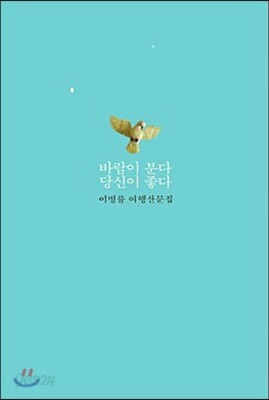
Even just looking at the cover, you can feel a refreshing feeling as if a cool breeze is blowing in this collection of essays. You can feel a sentiment that is even more resonant and warmer than that of 『Attraction』.
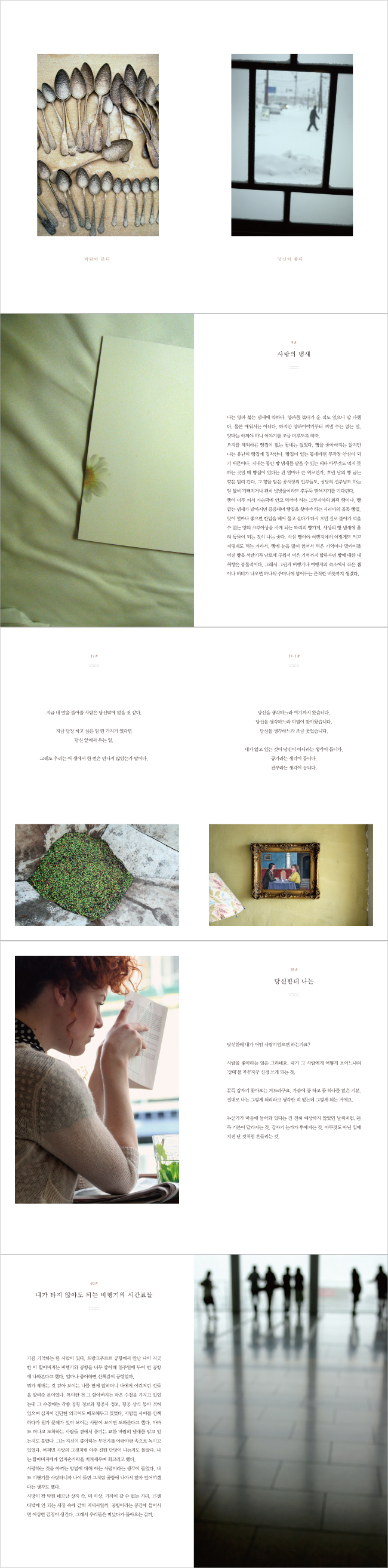
The witty yet profound sentences and the photos full of emotion hit the heart and leave a painful impression.
Somewhere in my heart, a corner of me feels a pang of sadness, but I don't sink into sadness.
The wind blowing from somewhere in our hearts causes us to sway without mercy, and soon our hearts turn red.
And I cry a cry that is not sad.
To say that you are good means that your color is good, and that I will move to your color.
But if I unconsciously say, "I don't like your color," I'm simultaneously communicating that we need to keep a certain distance and that I've decided not to show you my whole self.
Color never comes first.
Just as you can't necessarily dislike someone just because they're wearing clothes of a color you don't like, even if I'm wearing clothes of a color you dislike, that standard can be sacrificed and adjusted depending on how each other's hearts reflect that color.
_ From the text [29# Please stay by my side a little longer]
In this collection of essays, the topic of ‘color’ stands out.
The author himself says, “I have been dyed in many colors and have also discarded many colors.”
With so many colors to live with, what stories did the artist want to tell about the paints scattered throughout the world?
The shameful 'pink' that is delivered to your home... ... The 'orange' of the body ache that strikes like a bat at the same time as love begins... ... The heartache of hating someone who shares the same color as you intensely like someone, even 'red'... ... .
Also, 『The Wind Blows, I Like You』 is not just about stories of strangers in unfamiliar places.
In fact, it brings out a few episodes about people around author Lee Byeong-ryul.
If you read with a little care, you will find that some people appear that everyone should know.
We too, like that, take a little step into the writer's life.
I was exchanging text messages with my senior who cooks and writes, and one line of text made me feel like my heart was going to break.
(Omitted) I didn't say anything about feeling unwell, but my senior might have sent me a text message telling me to 'stay strong and do well even if you have to go alone' while I was away, but my body keeps collapsing.
_ From the text [49# I'm glad it's not my heart]
When you left in a hurry and found your empty house, you were gone.
It was the first time your expression wasn't there in your house.
Without you, your house seemed to be hanging on a cliff.
(Omitted) But you seem to be lying.
_ From the text [43# Tall and Lonely You]
It was one evening after I finished reporting with a senior writer (omitted) and when we came in, it was around 7 o'clock on a weekday. She looked like she had just finished cutting her fingernails.
The room was full of such things.
_ From the text [51# The Mood of the Day]
Rather than grandly defining this book as a 'travelogue,' it is a passage that proves once again that a part of the author's life is completely absorbed into a life that is a journey of departure and return, and is itself life itself.
We, who stand opposite the author through the book in our hands, also look around us and think of the 'people'.
When you leave a place, don't you often think of the neighbors you used to live with more fondly?
Many 'people' pass by us too.
Slowly, 'you' remain.
So let's meet after you come back
This time too, just like with 『Attraction』, there is no table of contents or pages.
So, there is no set order.
There is no need here for calculating thoughts like how much you have read and how much is left.
You can freely open the book to any page whenever your heart desires, and feel along with the author, following the places where the camera shutter paused and the pen lingered somewhere around the world.
That place can be both the starting point and the ending point.
As with all our journeys.
As is the case with all of our lives.
It's been a long wait.
We were always thirsty for the fresh shock we felt when 『Attraction』 was first published.
At the time, the travel book market was filled with books densely listing simple travel information in small print, but one day, a collection of emotional travel essays, 『Attraction』, suddenly appeared.
Since its first publication seven years ago and the revised edition with some additional content two years ago, it has consistently, steadily, and firmly maintained its position as a steady seller.
The youth, desperately thirsty for romance, read and reread the book, folding the corners of each chapter, until the covers became worn and tattered, and the pages fell apart.
And then it became a love letter that conveyed shy feelings to a loved one, and a youthful passion letter that gave hope to a precious friend.
In that way, 『Attraction』 had a presence that was indiscriminately placed on the bookshelf wherever there was a place with passionate youth.
And after that, if you go to a bookstore, the travel section will always be filled with travel essays that add a new sensibility to the records of what you saw, heard, and ate at your travel destination.
Lifelong learning centers and private educational institutions even offer courses on "How to Become a Travel Writer," teaching the entire process, from planning your own travel destinations to technical techniques for reporting, storytelling, and photography, and even contacting publishers to publish your work.
All of this is the aftermath of 『Attraction』.
This is not an exaggeration, it is true.
People, relationships, and love written and photographed on the road
After seven years, the second story of 『Attraction』, 『The Wind Blows, I Like You』, was published.
As time passed, the writer packed his bags many times, left many times, and returned without fail.
His passport had immigration stamps from over 80 countries.
That's what travel is.
In order to leave again, you must return.
So, we stand back at the 'starting point' and let our guard down on the map.
Then he slowly walks into the 'people'.
Even though new buildings have been built and the scenery has changed, what remains unchanged are ‘people.’
Even on his solo travels, the author is always present among 'people', and never loses his warm curiosity about 'people' or the loneliness or tingling feeling of waiting for 'people'.
Poet Jeong Ho-seung's words that the places people travel to are ultimately only their hearts are thus correct.
It seems like the first word you learn when you arrive in a foreign country is water.
Next is the word 'thank you'.
'Water' is a word for me, and 'thank you' is a word for someone else.
I don't want to be a traveler who is dying of thirst and who doesn't share eye contact with anyone.
_ From the text [31# Because I can't speak the language]
The author's travel notes are not grand and grand travelogues planned long in advance, but rather allow us to see the raw, everyday life of a small but unfamiliar travel destination and the stories of the people around him.
This isn't something I wrote after returning from a trip, sitting down at my desk, and organizing things neatly. Rather, it's something I wrote while sitting on a street in some country, waiting for food to be ordered at a restaurant, or lying down on an old bed, just as my thoughts came to me.
The raw yet vibrant writing allows the reader to breathe the air of that time and place.
The Indian untouchables who planted beans in discarded ramen packets and let them sprout, the Romanian taxi driver who said the cost was too high and instead wanted to charge half, the grandfather who loves flying and goes to Frankfurt Airport two or three times a week to meet people leaving or coming back, the son who travels around Hong Kong just like his father did, the young Yemeni man Muhammed who walks up to the top floor of his hotel holding an internet cable - all of these scenes pass by with a very analog sound, like a slide film turning.
What's good about you is that I can't help it
In fact, the phrase 'the wind blows' in the title is in the same context as other phrases such as 'it's raining' or 'the sun has risen'.
In such an extremely natural daily life where 'the wind blows, the rain falls, and the sun rises', 'you' are not a given.
So, ‘good things for you’ are only possible because it is ‘you’.
Even just looking at the cover, you can feel a refreshing feeling as if a cool breeze is blowing in this collection of essays. You can feel a sentiment that is even more resonant and warmer than that of 『Attraction』.
The witty yet profound sentences and the photos full of emotion hit the heart and leave a painful impression.
Somewhere in my heart, a corner of me feels a pang of sadness, but I don't sink into sadness.
The wind blowing from somewhere in our hearts causes us to sway without mercy, and soon our hearts turn red.
And I cry a cry that is not sad.
To say that you are good means that your color is good, and that I will move to your color.
But if I unconsciously say, "I don't like your color," I'm simultaneously communicating that we need to keep a certain distance and that I've decided not to show you my whole self.
Color never comes first.
Just as you can't necessarily dislike someone just because they're wearing clothes of a color you don't like, even if I'm wearing clothes of a color you dislike, that standard can be sacrificed and adjusted depending on how each other's hearts reflect that color.
_ From the text [29# Please stay by my side a little longer]
In this collection of essays, the topic of ‘color’ stands out.
The author himself says, “I have been dyed in many colors and have also discarded many colors.”
With so many colors to live with, what stories did the artist want to tell about the paints scattered throughout the world?
The shameful 'pink' that is delivered to your home... ... The 'orange' of the body ache that strikes like a bat at the same time as love begins... ... The heartache of hating someone who shares the same color as you intensely like someone, even 'red'... ... .
Also, 『The Wind Blows, I Like You』 is not just about stories of strangers in unfamiliar places.
In fact, it brings out a few episodes about people around author Lee Byeong-ryul.
If you read with a little care, you will find that some people appear that everyone should know.
We too, like that, take a little step into the writer's life.
I was exchanging text messages with my senior who cooks and writes, and one line of text made me feel like my heart was going to break.
(Omitted) I didn't say anything about feeling unwell, but my senior might have sent me a text message telling me to 'stay strong and do well even if you have to go alone' while I was away, but my body keeps collapsing.
_ From the text [49# I'm glad it's not my heart]
When you left in a hurry and found your empty house, you were gone.
It was the first time your expression wasn't there in your house.
Without you, your house seemed to be hanging on a cliff.
(Omitted) But you seem to be lying.
_ From the text [43# Tall and Lonely You]
It was one evening after I finished reporting with a senior writer (omitted) and when we came in, it was around 7 o'clock on a weekday. She looked like she had just finished cutting her fingernails.
The room was full of such things.
_ From the text [51# The Mood of the Day]
Rather than grandly defining this book as a 'travelogue,' it is a passage that proves once again that a part of the author's life is completely absorbed into a life that is a journey of departure and return, and is itself life itself.
We, who stand opposite the author through the book in our hands, also look around us and think of the 'people'.
When you leave a place, don't you often think of the neighbors you used to live with more fondly?
Many 'people' pass by us too.
Slowly, 'you' remain.
So let's meet after you come back
This time too, just like with 『Attraction』, there is no table of contents or pages.
So, there is no set order.
There is no need here for calculating thoughts like how much you have read and how much is left.
You can freely open the book to any page whenever your heart desires, and feel along with the author, following the places where the camera shutter paused and the pen lingered somewhere around the world.
That place can be both the starting point and the ending point.
As with all our journeys.
As is the case with all of our lives.
GOODS SPECIFICS
- Date of issue: July 1, 2012
- Page count, weight, size: 300 pages | 536g | 130*210*20mm
- ISBN13: 9788993928488
- ISBN10: 8993928487
You may also like
카테고리
korean


korean

![GQ KOREA Mark (Monthly): December [2025]](http://librairie.coreenne.fr/cdn/shop/files/8ef265dbbfbf186523ed75ba7319009d.jpg?v=1765340328&width=3840)


