

AI Asks About the Future of Art
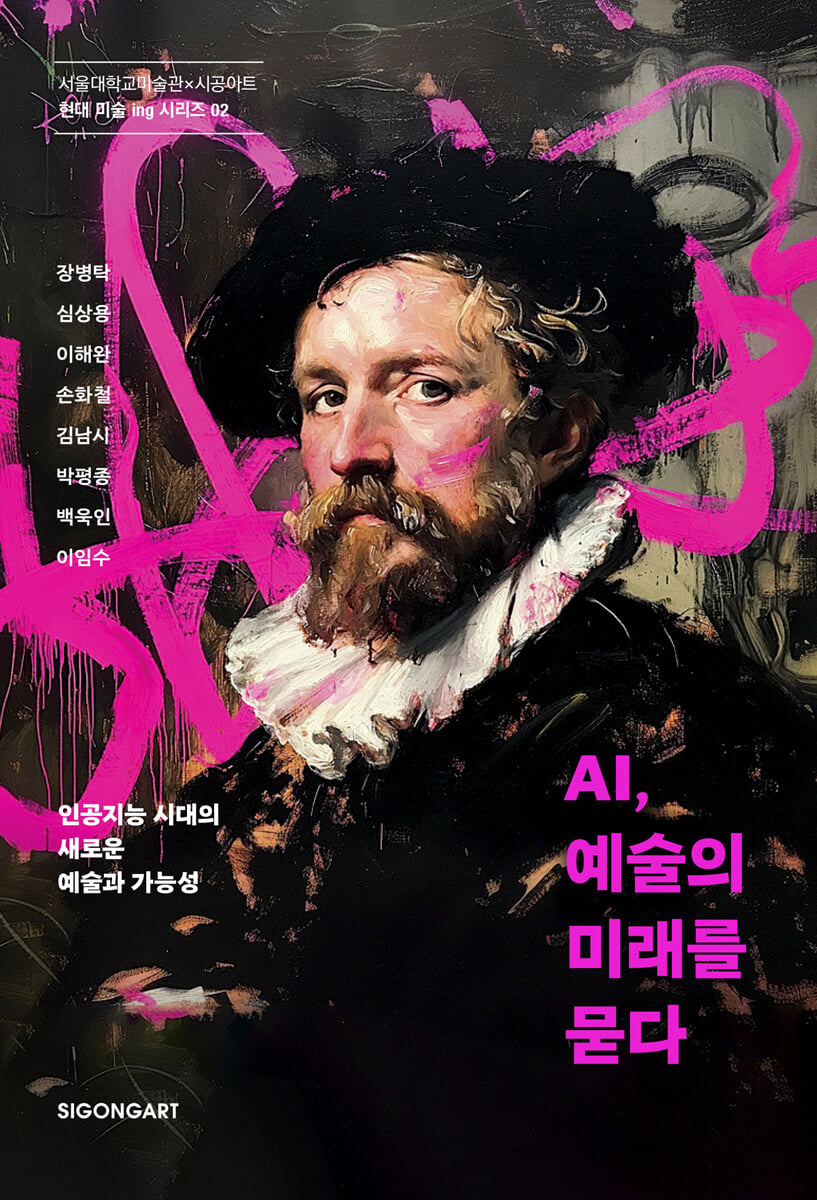 |
Description
Book Introduction
Seoul National University Museum of Art × Sigong Art Contemporary Art ing Series
Generative AI, which has emerged as a leading force in creation,
How will 'art' evolve in the face of technological changes that shake the concept of art?
The advent of artificial intelligence is bringing about various changes in the field of art.
Artificial intelligence, which digests human creations into data, is demonstrating a combination of various media beyond text.
These results, which appear to be no different from those created by humans on the surface, are shocking us as we perceive them as evidence that artificial intelligence has now become capable of creating things that were once considered the exclusive domain of humans.
We now live in an age where high-quality images can be created with just a simple sentence.
Will artificial intelligence truly spell the end of art? Or will art undergo a transformation in the face of technological changes that shake up the very concept of art?
New technologies have always transformed art.
Technology is not only a tool for creating works of art, but it is also a subject that revolutionizes the way works of art exist and the way people view them.
Photography has redefined the concept of traditional painting, film has created new perspectives with moving images and scene editing, and digital has changed the way we view art, allowing us to view it in real time, anywhere.
New technologies have changed and expanded previous concepts and norms of art.
The same goes for generative AI.
Just as advanced technologies have opened up possibilities for art, artificial intelligence technology will open up a new world beyond the art we know.
"AI, Asking the Future of Art" is the second book in the Contemporary Art ing series.
We will explore a wide range of topics, from the concept of artificial intelligence used in the arts, to discussions about AI's role in artistic creation, AI art viewed from a techno-philosophical perspective, copyright issues, trends from the perspectives of cybernetics and contemporary art, to the works of contemporary artists collaborating with AI, and to future issues and prospects.
This is a guidebook that helps you understand the possibilities and issues of generative artificial intelligence from the perspectives of various experts.
Generative AI, which has emerged as a leading force in creation,
How will 'art' evolve in the face of technological changes that shake the concept of art?
The advent of artificial intelligence is bringing about various changes in the field of art.
Artificial intelligence, which digests human creations into data, is demonstrating a combination of various media beyond text.
These results, which appear to be no different from those created by humans on the surface, are shocking us as we perceive them as evidence that artificial intelligence has now become capable of creating things that were once considered the exclusive domain of humans.
We now live in an age where high-quality images can be created with just a simple sentence.
Will artificial intelligence truly spell the end of art? Or will art undergo a transformation in the face of technological changes that shake up the very concept of art?
New technologies have always transformed art.
Technology is not only a tool for creating works of art, but it is also a subject that revolutionizes the way works of art exist and the way people view them.
Photography has redefined the concept of traditional painting, film has created new perspectives with moving images and scene editing, and digital has changed the way we view art, allowing us to view it in real time, anywhere.
New technologies have changed and expanded previous concepts and norms of art.
The same goes for generative AI.
Just as advanced technologies have opened up possibilities for art, artificial intelligence technology will open up a new world beyond the art we know.
"AI, Asking the Future of Art" is the second book in the Contemporary Art ing series.
We will explore a wide range of topics, from the concept of artificial intelligence used in the arts, to discussions about AI's role in artistic creation, AI art viewed from a techno-philosophical perspective, copyright issues, trends from the perspectives of cybernetics and contemporary art, to the works of contemporary artists collaborating with AI, and to future issues and prospects.
This is a guidebook that helps you understand the possibilities and issues of generative artificial intelligence from the perspectives of various experts.
- You can preview some of the book's contents.
Preview
index
time
Introduction
Chapter 1: A Guide to Artificial Intelligence (Jang Byeong-tak)
: From the concept of artificial intelligence to its development trends
1.
The concept of artificial intelligence
2.
History of Artificial Intelligence
3.
Trends in the development of artificial intelligence
4.
Contemporary Art and Artificial Intelligence
5.
Artificial intelligence of the future
Chapter 2: Does artificial intelligence dream of art?
: A Hot Topic in the Art World: The Problem of Acceptance and Evaluation (Lee Hae-wan)
1.
AI Art: Positive and Negative
2.
Is a painting art?
3.
cat drawing
4.
Cats and artificial intelligence
5.
How AI Art Is Made Possible
6.
Artificial Intelligence and Self-Reflective Art
7.
The possibility of artificial intelligence thinking about itself
Chapter 3 Artificial Intelligence, Humans, and Art.
What and how to discuss
: Contemporary Art in the Age of Artificial Intelligence from a Technological Philosophy Perspective (Son Hwa-cheol)
1.
Artificial Intelligence: Standing at the forefront of technological philosophy
2.
The Encounter of Artificial Intelligence and Contemporary Art
3.
Technological advancements and changes in existing semantic systems
4.
The distance between art and the public
5.
Back to being human
Chapter 4: Creative Fields and Artificial Intelligence I
Artists' Attitudes to AI Technology (Kim Nam-si)
1.
The Dialectic of Technology and Art
2.
Generative AI products
3.
An interface called prompt input
4.
Object recognition technology
5.
The possibilities of art that have never existed before
Chapter 5: Creative Fields and Artificial Intelligence II
Generative Artificial Intelligence and Innovation in Image Production (Park Pyeong-jong)
1.
From hand to algorithm
2.
Initial Generation Model: Genetic Algorithm
3.
Game Changer: The Emergence of Generative Adversarial Networks (GANs)
4.
Photos of people who have never been photographed
5.
Another Leap Forward: Text-to-Image Generation Models
6.
Issues Surrounding Generative AI
Chapter 6: AI and the Problem of Knowledge
The Future of Art in the Age of Artificial Intelligence (Baek Wook-in)
1.
The emergence of artificial intelligence art
2.
From copying to imitation
3.
Datasets and Intellectual Property
4.
The Future of Art in the Age of Artificial Intelligence, Art of the Future
Chapter 7: Art and Technology: A History of Their Resonance (Lee Im-su)
: Cybernetics and Contemporary Art
1.
Resonance of Art and Technology
2.
Postwar cybernetics and modern art
3.
Art as Information and Conceptual Art
4.
Cybernetic epistemology and video
5.
Artificial Intelligence and Art as Agents
6.
Art, Technology, Industry
Chapter 8: Reflecting on Art in the Age of Artificial Intelligence
: Revenant, the one who returned (Sim Sang-yong)
1.
Science, Technology, and Art: Nam June Paik's "Good Morning, Mr. Orwell"
2. AI and Humans: Unchanging Conditions
3.
Lebrun, the one who returned
main
Introduction
Chapter 1: A Guide to Artificial Intelligence (Jang Byeong-tak)
: From the concept of artificial intelligence to its development trends
1.
The concept of artificial intelligence
2.
History of Artificial Intelligence
3.
Trends in the development of artificial intelligence
4.
Contemporary Art and Artificial Intelligence
5.
Artificial intelligence of the future
Chapter 2: Does artificial intelligence dream of art?
: A Hot Topic in the Art World: The Problem of Acceptance and Evaluation (Lee Hae-wan)
1.
AI Art: Positive and Negative
2.
Is a painting art?
3.
cat drawing
4.
Cats and artificial intelligence
5.
How AI Art Is Made Possible
6.
Artificial Intelligence and Self-Reflective Art
7.
The possibility of artificial intelligence thinking about itself
Chapter 3 Artificial Intelligence, Humans, and Art.
What and how to discuss
: Contemporary Art in the Age of Artificial Intelligence from a Technological Philosophy Perspective (Son Hwa-cheol)
1.
Artificial Intelligence: Standing at the forefront of technological philosophy
2.
The Encounter of Artificial Intelligence and Contemporary Art
3.
Technological advancements and changes in existing semantic systems
4.
The distance between art and the public
5.
Back to being human
Chapter 4: Creative Fields and Artificial Intelligence I
Artists' Attitudes to AI Technology (Kim Nam-si)
1.
The Dialectic of Technology and Art
2.
Generative AI products
3.
An interface called prompt input
4.
Object recognition technology
5.
The possibilities of art that have never existed before
Chapter 5: Creative Fields and Artificial Intelligence II
Generative Artificial Intelligence and Innovation in Image Production (Park Pyeong-jong)
1.
From hand to algorithm
2.
Initial Generation Model: Genetic Algorithm
3.
Game Changer: The Emergence of Generative Adversarial Networks (GANs)
4.
Photos of people who have never been photographed
5.
Another Leap Forward: Text-to-Image Generation Models
6.
Issues Surrounding Generative AI
Chapter 6: AI and the Problem of Knowledge
The Future of Art in the Age of Artificial Intelligence (Baek Wook-in)
1.
The emergence of artificial intelligence art
2.
From copying to imitation
3.
Datasets and Intellectual Property
4.
The Future of Art in the Age of Artificial Intelligence, Art of the Future
Chapter 7: Art and Technology: A History of Their Resonance (Lee Im-su)
: Cybernetics and Contemporary Art
1.
Resonance of Art and Technology
2.
Postwar cybernetics and modern art
3.
Art as Information and Conceptual Art
4.
Cybernetic epistemology and video
5.
Artificial Intelligence and Art as Agents
6.
Art, Technology, Industry
Chapter 8: Reflecting on Art in the Age of Artificial Intelligence
: Revenant, the one who returned (Sim Sang-yong)
1.
Science, Technology, and Art: Nam June Paik's "Good Morning, Mr. Orwell"
2. AI and Humans: Unchanging Conditions
3.
Lebrun, the one who returned
main
Detailed image

Into the book
Artificial intelligence refers to machines that think and act like humans.
(...) The ability to solve problems under uncertainty when faced with a new problem can be called 'intelligence'.
If artificial intelligence is defined as a machine that mimics human intelligence, then artificial intelligence can be redefined as “a machine that has the ability to solve problems on its own under the uncertainty of a complex environment.”
--- From Chapter 1, "A Guide to Artificial Intelligence"
The reason that a painting produced by a new medium called artificial intelligence can be considered art is not because artificial intelligence is recognized as a human-like being.
Art can become a product of human practice as it changes, how we use the product and how we handle the technology involved.
--- From Chapter 2, "Does Artificial Intelligence Dream of Art?"
If the definition of "modern art" already includes traces of the new technology of photography, what kind of mark will AI leave behind? Will it redefine the definition of art, like photography, expanding and evolving it into the next stage of art? Or will it usher in the end of art, as people feared when photography was introduced?
--- Chapter 3 'Artificial Intelligence, Humans, and Art.
From "What and How to Discuss"
Artificial intelligence is a defining technology of our time.
(...) Artificial intelligence technology is dismantling the status of (human) artists, the method of producing works, and the relationship between artists, works, and viewers more radically than any previous technology.
It is no coincidence that the argument that 'artificial intelligence cannot create art' is raised.
But this technology will ultimately change not only the forms and norms of art up to now, but also our very idea of what art is and what it should be.
Therefore, rather than debating whether current products that imitate previous art forms using artificial intelligence technology are art or not, it is more important to assess the unique possibilities and potential of this technology that will change the very concept of art in the future.
--- From Chapter 4, “Creative Field and Artificial Intelligence I”
The 'generator' of artificial intelligence is a black box.
In other words, it is a 'dark box' where one cannot know what is happening inside, and the images produced by the creator are the product of complete coincidence and combination.
So, does the involvement of AI in the production of art create a rift in the very principles of art? What will the future of art look like as human artists collaborate with AI?
--- From Chapter 5, "Creative Field and Artificial Intelligence II"
The accelerating automation of knowledge and art in the age of artificial intelligence brings to mind the Industrial Revolution, when handicrafts transitioned to factory-based industries.
Despite the automation of manufacturing, the last sector that has not been mass-produced, the knowledge and arts sector, is also rapidly being automated with the emergence of artificial intelligence, a means of producing knowledge and arts.
Generative AI is replacing the small-scale production of intellectuals and artists with a unique mass production system of user-tailored production.
(...) User-generated content has become food for generative AI, and AI-generated content is rapidly replacing content created by “humans”.
The machine's eye recognizes and remembers hundreds of millions of photos, then finds patterns and creates shapes.
Artificial intelligence is a combination of aggregated eyes, socialized vision, and statistically processed images.
It is not an eye focused on an individual's attention, but an eye that is averaged out, and at the same time, it is the eye of the whole.
--- From Chapter 6, “AI and the Problem of Knowledge”
Can the expectation that a creative fusion of technology and art will be possible through collaboration between art and industry be realized in the current era of AI? As technological advancements follow the direction of the digital industry, which seeks to understand consumers, build markets, and shape the future, the question of what art can do is deepening. What can AI art do to address capitalist desires?
--- From Chapter 7, “Art and Technology, the History of Their Resonance”
The question of whether the subject of image production is a human artist or an AI is not the essence of the matter.
What we should be focusing on is not what happens to AI, but what happens to humans—the ominous cracks quietly developing within human perception.
A crack is beginning to appear in the perception that humans are the most important thinkers and actors in all situations, a crack that is seen in the attitude of unhesitatingly requesting and accepting the help of AI software, such as Midjourney, rather than the thoughts and feelings that their own lives provide.
(...) The ability to solve problems under uncertainty when faced with a new problem can be called 'intelligence'.
If artificial intelligence is defined as a machine that mimics human intelligence, then artificial intelligence can be redefined as “a machine that has the ability to solve problems on its own under the uncertainty of a complex environment.”
--- From Chapter 1, "A Guide to Artificial Intelligence"
The reason that a painting produced by a new medium called artificial intelligence can be considered art is not because artificial intelligence is recognized as a human-like being.
Art can become a product of human practice as it changes, how we use the product and how we handle the technology involved.
--- From Chapter 2, "Does Artificial Intelligence Dream of Art?"
If the definition of "modern art" already includes traces of the new technology of photography, what kind of mark will AI leave behind? Will it redefine the definition of art, like photography, expanding and evolving it into the next stage of art? Or will it usher in the end of art, as people feared when photography was introduced?
--- Chapter 3 'Artificial Intelligence, Humans, and Art.
From "What and How to Discuss"
Artificial intelligence is a defining technology of our time.
(...) Artificial intelligence technology is dismantling the status of (human) artists, the method of producing works, and the relationship between artists, works, and viewers more radically than any previous technology.
It is no coincidence that the argument that 'artificial intelligence cannot create art' is raised.
But this technology will ultimately change not only the forms and norms of art up to now, but also our very idea of what art is and what it should be.
Therefore, rather than debating whether current products that imitate previous art forms using artificial intelligence technology are art or not, it is more important to assess the unique possibilities and potential of this technology that will change the very concept of art in the future.
--- From Chapter 4, “Creative Field and Artificial Intelligence I”
The 'generator' of artificial intelligence is a black box.
In other words, it is a 'dark box' where one cannot know what is happening inside, and the images produced by the creator are the product of complete coincidence and combination.
So, does the involvement of AI in the production of art create a rift in the very principles of art? What will the future of art look like as human artists collaborate with AI?
--- From Chapter 5, "Creative Field and Artificial Intelligence II"
The accelerating automation of knowledge and art in the age of artificial intelligence brings to mind the Industrial Revolution, when handicrafts transitioned to factory-based industries.
Despite the automation of manufacturing, the last sector that has not been mass-produced, the knowledge and arts sector, is also rapidly being automated with the emergence of artificial intelligence, a means of producing knowledge and arts.
Generative AI is replacing the small-scale production of intellectuals and artists with a unique mass production system of user-tailored production.
(...) User-generated content has become food for generative AI, and AI-generated content is rapidly replacing content created by “humans”.
The machine's eye recognizes and remembers hundreds of millions of photos, then finds patterns and creates shapes.
Artificial intelligence is a combination of aggregated eyes, socialized vision, and statistically processed images.
It is not an eye focused on an individual's attention, but an eye that is averaged out, and at the same time, it is the eye of the whole.
--- From Chapter 6, “AI and the Problem of Knowledge”
Can the expectation that a creative fusion of technology and art will be possible through collaboration between art and industry be realized in the current era of AI? As technological advancements follow the direction of the digital industry, which seeks to understand consumers, build markets, and shape the future, the question of what art can do is deepening. What can AI art do to address capitalist desires?
--- From Chapter 7, “Art and Technology, the History of Their Resonance”
The question of whether the subject of image production is a human artist or an AI is not the essence of the matter.
What we should be focusing on is not what happens to AI, but what happens to humans—the ominous cracks quietly developing within human perception.
A crack is beginning to appear in the perception that humans are the most important thinkers and actors in all situations, a crack that is seen in the attitude of unhesitatingly requesting and accepting the help of AI software, such as Midjourney, rather than the thoughts and feelings that their own lives provide.
--- From Chapter 8, "Thinking about Art in the Age of Artificial Intelligence"
Publisher's Review
Does AI Dream of Art?
The excitement about AI art seems to come from the idea that it shows how much more human-like AI has become.
Artificial intelligence is producing things that are indistinguishable from what we used to call works of art.
AI that 'learns on its own' based on data has also become capable of creating paintings in the unique styles of artists of the past.
Some people question whether AI can now 'create' on its own, given that the creations are no different in terms of completeness from those drawn by humans.
Can AI truly become a creative agent, an artist? Can something be judged as art solely based on its resemblance to existing art?
In this regard, 『AI, Asking the Future of Art』 approaches it from various perspectives.
(Refer to Chapter 2) When an AI painting is similar to an existing work, there are two positions: one is that it cannot be considered art because it is not an intentional product, and the other is that it can be considered art because it has aesthetic value that is already classified as art.
Additionally, AI can be viewed as a tool or medium, avoiding discussion of its creator.
Because it is bound by the existing methods of artificial intelligence, it can be said that it cannot reach the meta-level creativity that art advocates, the creativity that defines what is new in art.
This is what is important in various discussions related to artificial intelligence and creation.
The reason why AI paintings can be considered art is not because AI is recognized as a human-like being.
The fact is that art can be created through changes in human institutions and practices, depending on how the products and technologies are handled.
What possibilities does artificial intelligence bring to art?
In every era where art has existed, there have been implicit norms about what art is and what it should be like.
The norms are particularly powerful when new technologies first emerge.
Because it provides direction on how innovative technological devices or media can become ‘art.’
The positions that seek to defend past artistic norms and those that actively dismantle them are in conflict with each other, establishing a concept of art that is different from the past.
History is on the side of technological innovation.
Therefore, what is decisive is the unique possibilities that only that technology offers.
Artists are already experimenting with the possibilities of artificial intelligence.
AI creations have unique characteristics that set them apart from traditional art forms.
The first feature is that it creates images that are expressed realistically.
Advanced digital technology makes non-existent objects appear real.
The second feature is that it reparameterizes any existing visual image with just a simple prompt input.
Intermedial practices in which text and images describe each other have contributed greatly to the expansion of art.
When we consider artificial intelligence, which moves across different media such as text, video, and sound, from a conversion/translation perspective, we can see new artistic possibilities.
What are the issues surrounding artificial intelligence creation?
The relationship between artificial intelligence and humans is being redefined.
Generative artificial intelligence, unlike existing instrumental media, has the characteristic of ‘self-learning.’
The problem is that humans cannot intervene in the creative process that occurs within artificial intelligence.
Freedom of choice is a limited freedom within the results presented by artificial intelligence.
Artificial intelligence creations affect human perception.
This kind of generative approach of providing what you want to see can lead to AI mannerisms.
In addition, the workings of artificial intelligence creation, the process of forming hidden datasets, and the intellectual property issues between imitation and replication are not unrelated.
Throughout history, we know of many instances where technological advancements have threatened humanity.
We must examine the destructive power of artificial intelligence technology along with its creative power.
This is why new reflection is needed beyond the immediate utility that technology provides.
In the era of generative AI coexisting with artificial intelligence, "AI: Asking the Future of Art" will serve as a valuable guide for readers seeking a broader perspective beyond the illusion of AI creation.
The excitement about AI art seems to come from the idea that it shows how much more human-like AI has become.
Artificial intelligence is producing things that are indistinguishable from what we used to call works of art.
AI that 'learns on its own' based on data has also become capable of creating paintings in the unique styles of artists of the past.
Some people question whether AI can now 'create' on its own, given that the creations are no different in terms of completeness from those drawn by humans.
Can AI truly become a creative agent, an artist? Can something be judged as art solely based on its resemblance to existing art?
In this regard, 『AI, Asking the Future of Art』 approaches it from various perspectives.
(Refer to Chapter 2) When an AI painting is similar to an existing work, there are two positions: one is that it cannot be considered art because it is not an intentional product, and the other is that it can be considered art because it has aesthetic value that is already classified as art.
Additionally, AI can be viewed as a tool or medium, avoiding discussion of its creator.
Because it is bound by the existing methods of artificial intelligence, it can be said that it cannot reach the meta-level creativity that art advocates, the creativity that defines what is new in art.
This is what is important in various discussions related to artificial intelligence and creation.
The reason why AI paintings can be considered art is not because AI is recognized as a human-like being.
The fact is that art can be created through changes in human institutions and practices, depending on how the products and technologies are handled.
What possibilities does artificial intelligence bring to art?
In every era where art has existed, there have been implicit norms about what art is and what it should be like.
The norms are particularly powerful when new technologies first emerge.
Because it provides direction on how innovative technological devices or media can become ‘art.’
The positions that seek to defend past artistic norms and those that actively dismantle them are in conflict with each other, establishing a concept of art that is different from the past.
History is on the side of technological innovation.
Therefore, what is decisive is the unique possibilities that only that technology offers.
Artists are already experimenting with the possibilities of artificial intelligence.
AI creations have unique characteristics that set them apart from traditional art forms.
The first feature is that it creates images that are expressed realistically.
Advanced digital technology makes non-existent objects appear real.
The second feature is that it reparameterizes any existing visual image with just a simple prompt input.
Intermedial practices in which text and images describe each other have contributed greatly to the expansion of art.
When we consider artificial intelligence, which moves across different media such as text, video, and sound, from a conversion/translation perspective, we can see new artistic possibilities.
What are the issues surrounding artificial intelligence creation?
The relationship between artificial intelligence and humans is being redefined.
Generative artificial intelligence, unlike existing instrumental media, has the characteristic of ‘self-learning.’
The problem is that humans cannot intervene in the creative process that occurs within artificial intelligence.
Freedom of choice is a limited freedom within the results presented by artificial intelligence.
Artificial intelligence creations affect human perception.
This kind of generative approach of providing what you want to see can lead to AI mannerisms.
In addition, the workings of artificial intelligence creation, the process of forming hidden datasets, and the intellectual property issues between imitation and replication are not unrelated.
Throughout history, we know of many instances where technological advancements have threatened humanity.
We must examine the destructive power of artificial intelligence technology along with its creative power.
This is why new reflection is needed beyond the immediate utility that technology provides.
In the era of generative AI coexisting with artificial intelligence, "AI: Asking the Future of Art" will serve as a valuable guide for readers seeking a broader perspective beyond the illusion of AI creation.
GOODS SPECIFICS
- Date of issue: September 6, 2024
- Page count, weight, size: 260 pages | 128*188*20mm
- ISBN13: 9791171257393
- ISBN10: 1171257392
You may also like
카테고리
korean


korean

![GQ KOREA Mark (Monthly): December [2025]](http://librairie.coreenne.fr/cdn/shop/files/8ef265dbbfbf186523ed75ba7319009d.jpg?v=1765340328&width=3840)


