

Walking on the border island of the sea
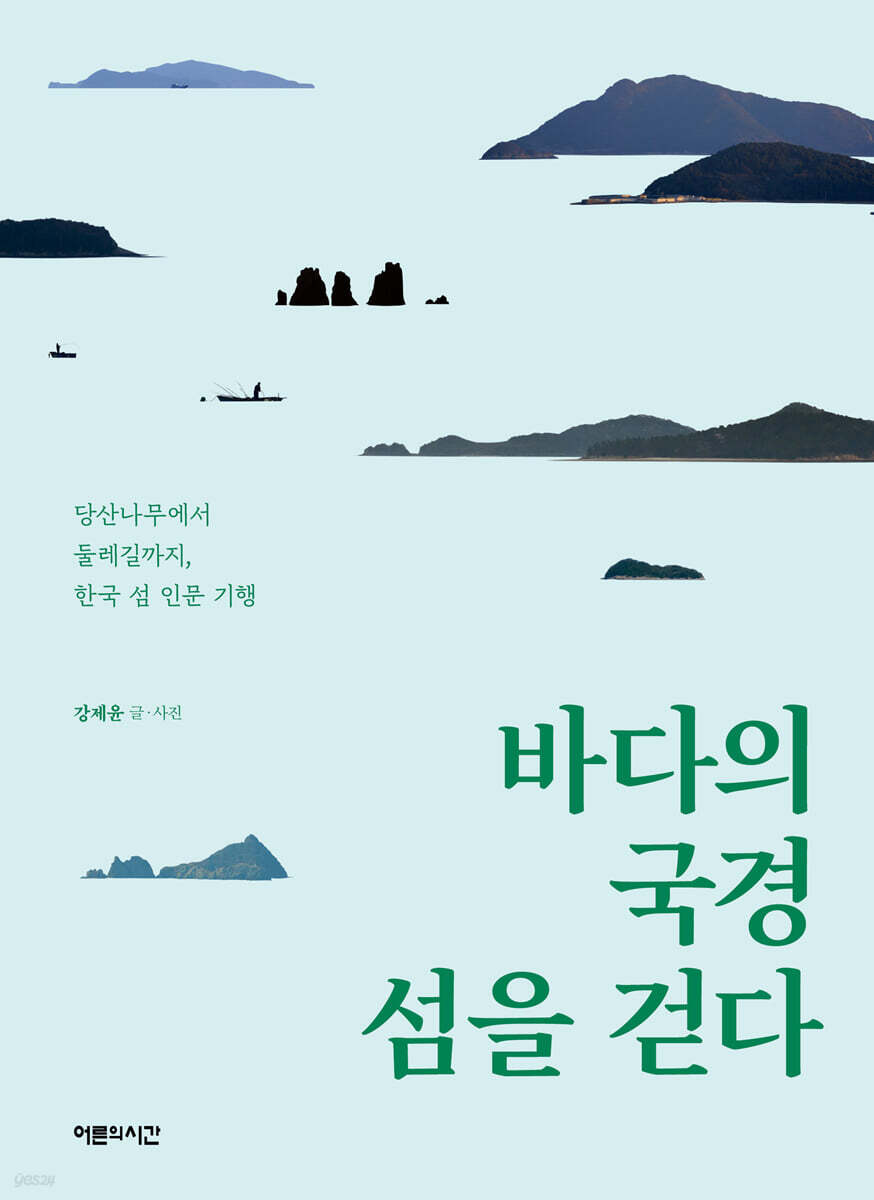 |
Description
Book Introduction
This is the result of author Kang Je-yoon, who was born and raised on an island, traveling around the island for over 20 years after leaving his hometown to record and restore forgotten island stories.
Eight stories about trees, seven stories about roads, nine stories about people, and seven stories about history are told in an exciting, entertaining, and sometimes moving way about islands that you won't hear anywhere else.
Moreover, the photographs, which capture the tranquility of the 31 islands and the intense lives of the islanders, breathe life into the forgotten island stories.
As you read the stories of the islanders, the sentinels who protect the island, the maritime border, you will realize that the island, standing alone and fiercely on the border, is actually a community filled with hospitality and care.
Eight stories about trees, seven stories about roads, nine stories about people, and seven stories about history are told in an exciting, entertaining, and sometimes moving way about islands that you won't hear anywhere else.
Moreover, the photographs, which capture the tranquility of the 31 islands and the intense lives of the islanders, breathe life into the forgotten island stories.
As you read the stories of the islanders, the sentinels who protect the island, the maritime border, you will realize that the island, standing alone and fiercely on the border, is actually a community filled with hospitality and care.
- You can preview some of the book's contents.
Preview
index
Opening Remarks | Korea is an Island Nation
Part 1: There are trees on the island
Sweating and going_Maehwado, Sinan | Amtaedo '20', stronger than Sparta's '300'_Amtaedo, Sinan | Island of the fountain of prophecy and goddess_Wando's birthday island | Money island where people played with money_Manjaedo, Sinan | Ginkgo tree couple living separated by the North and South_Boleumdo, Ganghwa | Islanders who even burned God's butthole_Jaendo, Sinan | Island where Guan Yu is worshipped as a god_Daeheunggando, Yeosu | Hometown island of the girl who became the world's second-ranked shooter_Dangsado, Sinan
Part 2 There is a road on the island
Anmyeondo Island, a paradise for walking - Ulleungdo Island | Tongyeong was not Gyeongsang-do - Mireukdo Island, Tongyeong | Jukdo Island, an energy-independent island in the West Sea - Jukdo Island, Hongseong | The fire burning in my heart cannot be extinguished even with water - Sinjido Island, Wando | Past the Cat's Head Village to Kkotmeori Mountain - Hwataedo Island, Yeosu | Past the pine tree-lined road to the land of anti-Japanese resistance - Dochodo Island, Sinan
Part 3: There are people on the island
Women, women, an island full of women_Yeosu Yeosado | When you're hungry, let's go to Gopado_Seosan Gopado | Who is that crow trying to take with him?_Wando Daemodo | Eat a bowl of red bean porridge and go_Yeosu Songdo | A ship of mercy floating on the sea of pain_Yeosu Dolsando | An islander who tasted champagne before Emperor Gojong_Sinan Bigeumdo | Come to the island in the lake on a moonlit night_Yeosu Wolhodo | I feel wronged even though I lived here before, I want to live a little longer_Sacheon Sinsudo | What a bother! What is there to see on this fancy island?_Geoje Hwado
Part 4: The island has history
An island that was both a home and a prison_Namhae Nodo | The immortal island that won the world's longest peasant uprising of 333 years_Haeido in Sinan | The legendary island where the King of the West Sea lived_Taedo in Sinan | The island where Prince Sado, who arrived on an iron horse, is worshipped as a god_Suita in Sinan | The home of islands coveted by the British Empire_Tsuma Island in Jindo | The island where a training camp for North Korean agents was located_Silmido in Incheon | The island that won against Napoleon's army_Ganghwado
Part 1: There are trees on the island
Sweating and going_Maehwado, Sinan | Amtaedo '20', stronger than Sparta's '300'_Amtaedo, Sinan | Island of the fountain of prophecy and goddess_Wando's birthday island | Money island where people played with money_Manjaedo, Sinan | Ginkgo tree couple living separated by the North and South_Boleumdo, Ganghwa | Islanders who even burned God's butthole_Jaendo, Sinan | Island where Guan Yu is worshipped as a god_Daeheunggando, Yeosu | Hometown island of the girl who became the world's second-ranked shooter_Dangsado, Sinan
Part 2 There is a road on the island
Anmyeondo Island, a paradise for walking - Ulleungdo Island | Tongyeong was not Gyeongsang-do - Mireukdo Island, Tongyeong | Jukdo Island, an energy-independent island in the West Sea - Jukdo Island, Hongseong | The fire burning in my heart cannot be extinguished even with water - Sinjido Island, Wando | Past the Cat's Head Village to Kkotmeori Mountain - Hwataedo Island, Yeosu | Past the pine tree-lined road to the land of anti-Japanese resistance - Dochodo Island, Sinan
Part 3: There are people on the island
Women, women, an island full of women_Yeosu Yeosado | When you're hungry, let's go to Gopado_Seosan Gopado | Who is that crow trying to take with him?_Wando Daemodo | Eat a bowl of red bean porridge and go_Yeosu Songdo | A ship of mercy floating on the sea of pain_Yeosu Dolsando | An islander who tasted champagne before Emperor Gojong_Sinan Bigeumdo | Come to the island in the lake on a moonlit night_Yeosu Wolhodo | I feel wronged even though I lived here before, I want to live a little longer_Sacheon Sinsudo | What a bother! What is there to see on this fancy island?_Geoje Hwado
Part 4: The island has history
An island that was both a home and a prison_Namhae Nodo | The immortal island that won the world's longest peasant uprising of 333 years_Haeido in Sinan | The legendary island where the King of the West Sea lived_Taedo in Sinan | The island where Prince Sado, who arrived on an iron horse, is worshipped as a god_Suita in Sinan | The home of islands coveted by the British Empire_Tsuma Island in Jindo | The island where a training camp for North Korean agents was located_Silmido in Incheon | The island that won against Napoleon's army_Ganghwado
Into the book
Our island has no consistent government-level statistics.
According to statistics from the Ministry of Public Safety and Security, which governs inhabited islands, the number is 481 as of 2025.
According to statistics from the Ministry of Oceans and Fisheries, which has jurisdiction over uninhabited islands, the number is 2,918.
The combined total is 3,399, but this statistic is hardly an accurate count of our islands.
The number of inhabited islands changes frequently depending on the resident registration status, but uninhabited islands are surveyed only once every ten years.
In addition, there are many unregistered islands.
--- p.9 From the “Opening Remarks”
In fact, all islands are located in the middle of maritime territory.
The border on land is the ceasefire line, but the border on the sea is the islands.
It's not just Dokdo and the West Sea Five Islands.
Most of the islands in the East, West, and South Seas are adjacent to the international borders of North Korea, Japan, China, and the United States.
Islands are borders on maritime territory, and islanders are the guardians of those borders.
We have been too indifferent to the islands that guard our maritime territories and borders.
Now is the time to give him the respect he deserves.
--- From the "Opening Remarks" on pp.10-11
In Sandu Village, there is a pine tree that is considered a sacred tree of the village.
For the children, it was a pine tree with a map of the Republic of Korea on it.
Did the shape of the tree resemble a map of the Korean Peninsula?
No, the shape is not a map.
The children of the island village cannot leave the island, but the trees hold dreams of going to the cities on the mainland that they would like to visit someday.
--- p.21 From "Let's Go, Sweating"
“Isn’t it bad?
“The sky is wide open and you can see the whole world.” The grandmother couldn’t find the open sea so refreshing.
So I climb this mountain every day.
“The whole world looks like that.
When I get sick, I cry here and look over there, and it feels so good and clear inside.
“I feel so relieved and happy.” Was it really that good?
Did you get so attached that you didn't want to leave?
My grandmother also prepared a grave site on this steep slope that was the support of this world.
--- pp.73-74 From "The Island Where Guan Yu is Worshipped as a God"
Among the markets, the Pasi (波市) was originally a maritime market opened for trading fish.
When the fishing season began, merchant ships flocked to the fishing grounds where fishing boats operated.
Fishing boats sold fish, and merchant ships sold fishing gear, food, firewood, and so on.
The origin of Pashi was the maritime market where fishing boats and merchant ships were intertwined and buying and selling with each other.
However, as the number of fishing boats and merchant ships increased and the catch increased, the market gradually moved to islands or ports near fishing grounds.
Pashi developed into a temporary village during the peak fishing season, equipped with a fish market, a fishing boat shop, restaurants, bars, general stores, lodging facilities, and various other institutions, and also served as a forward base for the fishing industry.
According to statistics from the Ministry of Public Safety and Security, which governs inhabited islands, the number is 481 as of 2025.
According to statistics from the Ministry of Oceans and Fisheries, which has jurisdiction over uninhabited islands, the number is 2,918.
The combined total is 3,399, but this statistic is hardly an accurate count of our islands.
The number of inhabited islands changes frequently depending on the resident registration status, but uninhabited islands are surveyed only once every ten years.
In addition, there are many unregistered islands.
--- p.9 From the “Opening Remarks”
In fact, all islands are located in the middle of maritime territory.
The border on land is the ceasefire line, but the border on the sea is the islands.
It's not just Dokdo and the West Sea Five Islands.
Most of the islands in the East, West, and South Seas are adjacent to the international borders of North Korea, Japan, China, and the United States.
Islands are borders on maritime territory, and islanders are the guardians of those borders.
We have been too indifferent to the islands that guard our maritime territories and borders.
Now is the time to give him the respect he deserves.
--- From the "Opening Remarks" on pp.10-11
In Sandu Village, there is a pine tree that is considered a sacred tree of the village.
For the children, it was a pine tree with a map of the Republic of Korea on it.
Did the shape of the tree resemble a map of the Korean Peninsula?
No, the shape is not a map.
The children of the island village cannot leave the island, but the trees hold dreams of going to the cities on the mainland that they would like to visit someday.
--- p.21 From "Let's Go, Sweating"
“Isn’t it bad?
“The sky is wide open and you can see the whole world.” The grandmother couldn’t find the open sea so refreshing.
So I climb this mountain every day.
“The whole world looks like that.
When I get sick, I cry here and look over there, and it feels so good and clear inside.
“I feel so relieved and happy.” Was it really that good?
Did you get so attached that you didn't want to leave?
My grandmother also prepared a grave site on this steep slope that was the support of this world.
--- pp.73-74 From "The Island Where Guan Yu is Worshipped as a God"
Among the markets, the Pasi (波市) was originally a maritime market opened for trading fish.
When the fishing season began, merchant ships flocked to the fishing grounds where fishing boats operated.
Fishing boats sold fish, and merchant ships sold fishing gear, food, firewood, and so on.
The origin of Pashi was the maritime market where fishing boats and merchant ships were intertwined and buying and selling with each other.
However, as the number of fishing boats and merchant ships increased and the catch increased, the market gradually moved to islands or ports near fishing grounds.
Pashi developed into a temporary village during the peak fishing season, equipped with a fish market, a fishing boat shop, restaurants, bars, general stores, lodging facilities, and various other institutions, and also served as a forward base for the fishing industry.
--- p.279 From “The Legendary Island Where the King of the West Sea Lived”
Publisher's Review
“On the island, there was the world we dreamed of, a lost hometown, a sense of community.
This book was born from the hospitality and care of such an island.
“I pay tribute to the precious islanders who have lived protecting the border.”
The island is the border, and the islanders are the border guards.
August 8th is 'Island Day'.
The Ministry of Public Administration and Security designated it as a national holiday to inform the public of the value and importance of islands, which means that islands have infinite (∞) potential for development.
However, there is little interest in the value and importance of the island.
Korea's maritime territory is 4.4 times larger than its land territory.
Of the 23 territorial waters, 20 are on islands.
The border on land is the ceasefire line, but the border on the sea is the island.
It's not just Dokdo and the West Sea Five Islands.
Many islands border North Korea, Japan, China, and the high seas.
So the islanders are the sentinels who guard the border.
As of 2023, the number of islands in Japan increased by 7,273, from 6,852 to 14,125.
It includes our land, Dokdo.
Japan's discovery of islands beyond the map and their inclusion in its territory is an attempt to increase the value of its maritime territory.
As of 2025, according to statistics from the Ministry of the Interior and Safety, which oversees inhabited islands in South Korea, and the Ministry of Oceans and Fisheries, which oversees uninhabited islands, there are 3,399 islands (481 inhabited islands, 2,918 uninhabited islands), but the numbers announced by each government ministry vary.
Dr. Jiyeon Choi of the Korea Ocean Research and Development Institute compared and analyzed electronic nautical charts and satellite images to discover that there are approximately 12,000 islands in our waters.
This is at least three times more than the statistics from government ministries.
Author Kang Je-yoon, who has been working hard to promote the value of islands and the basic rights of island residents, published “Walking the Border Islands of the Sea” on August 8th, Island Day, to inform more people about the reality of islands.
Stories of trees, paths, people, and history hidden across Korea's 31 islands
"Walking the Border Island of the Sea" is the result of the author, who was born and raised on an island, traveling around the island for over 20 years after leaving his hometown to restore forgotten island stories.
In the process, the author says, “The island was always warm, welcoming, and satisfying,” and adds that “this book was possible thanks to the island’s hospitality and care.”
The book contains eight stories about trees, seven stories about roads, nine stories about people, and seven stories about history.
Stories about islands you won't hear anywhere else unfold in an exciting, entertaining, and sometimes moving way, including the Money Island where people played with money, the ginkgo tree couple living apart in the North and South, Ulleungdo, a paradise for walking, the islander who tasted champagne before Emperor Gojong, and the legendary island where the King of the West Sea lived.
Moreover, the photographs, which capture the tranquility of the 31 islands and the intense lives of the islanders, breathe life into the forgotten island stories.
In one book, you can vividly encounter the hidden stories of the islands located on Korea's border and the islanders who protect them.
On the island lies the world we dream of, our lost homeland.
According to the results of a comparison and analysis of electronic nautical charts and satellite images by the Korea Ocean Research and Development Institute, there are approximately 12,000 islands in our seas.
If so, the hidden stories of our island would also amount to about 12,000.
It may not be possible to restore all these stories and histories, but the author's 20 years of effort to gather and record even the smallest stories while traveling around the island are fully captured in "Walking the Border Islands of the Sea."
Stories about the history, people, trees, and roads that have supported the island are woven together as warp and weft, becoming a friendly island guide.
As you read the stories of the islanders, the sentinels who protect the island, the maritime border, you will realize that the island, standing alone and fiercely on the border, is actually a community filled with hospitality and care.
This book was born from the hospitality and care of such an island.
“I pay tribute to the precious islanders who have lived protecting the border.”
The island is the border, and the islanders are the border guards.
August 8th is 'Island Day'.
The Ministry of Public Administration and Security designated it as a national holiday to inform the public of the value and importance of islands, which means that islands have infinite (∞) potential for development.
However, there is little interest in the value and importance of the island.
Korea's maritime territory is 4.4 times larger than its land territory.
Of the 23 territorial waters, 20 are on islands.
The border on land is the ceasefire line, but the border on the sea is the island.
It's not just Dokdo and the West Sea Five Islands.
Many islands border North Korea, Japan, China, and the high seas.
So the islanders are the sentinels who guard the border.
As of 2023, the number of islands in Japan increased by 7,273, from 6,852 to 14,125.
It includes our land, Dokdo.
Japan's discovery of islands beyond the map and their inclusion in its territory is an attempt to increase the value of its maritime territory.
As of 2025, according to statistics from the Ministry of the Interior and Safety, which oversees inhabited islands in South Korea, and the Ministry of Oceans and Fisheries, which oversees uninhabited islands, there are 3,399 islands (481 inhabited islands, 2,918 uninhabited islands), but the numbers announced by each government ministry vary.
Dr. Jiyeon Choi of the Korea Ocean Research and Development Institute compared and analyzed electronic nautical charts and satellite images to discover that there are approximately 12,000 islands in our waters.
This is at least three times more than the statistics from government ministries.
Author Kang Je-yoon, who has been working hard to promote the value of islands and the basic rights of island residents, published “Walking the Border Islands of the Sea” on August 8th, Island Day, to inform more people about the reality of islands.
Stories of trees, paths, people, and history hidden across Korea's 31 islands
"Walking the Border Island of the Sea" is the result of the author, who was born and raised on an island, traveling around the island for over 20 years after leaving his hometown to restore forgotten island stories.
In the process, the author says, “The island was always warm, welcoming, and satisfying,” and adds that “this book was possible thanks to the island’s hospitality and care.”
The book contains eight stories about trees, seven stories about roads, nine stories about people, and seven stories about history.
Stories about islands you won't hear anywhere else unfold in an exciting, entertaining, and sometimes moving way, including the Money Island where people played with money, the ginkgo tree couple living apart in the North and South, Ulleungdo, a paradise for walking, the islander who tasted champagne before Emperor Gojong, and the legendary island where the King of the West Sea lived.
Moreover, the photographs, which capture the tranquility of the 31 islands and the intense lives of the islanders, breathe life into the forgotten island stories.
In one book, you can vividly encounter the hidden stories of the islands located on Korea's border and the islanders who protect them.
On the island lies the world we dream of, our lost homeland.
According to the results of a comparison and analysis of electronic nautical charts and satellite images by the Korea Ocean Research and Development Institute, there are approximately 12,000 islands in our seas.
If so, the hidden stories of our island would also amount to about 12,000.
It may not be possible to restore all these stories and histories, but the author's 20 years of effort to gather and record even the smallest stories while traveling around the island are fully captured in "Walking the Border Islands of the Sea."
Stories about the history, people, trees, and roads that have supported the island are woven together as warp and weft, becoming a friendly island guide.
As you read the stories of the islanders, the sentinels who protect the island, the maritime border, you will realize that the island, standing alone and fiercely on the border, is actually a community filled with hospitality and care.
GOODS SPECIFICS
- Date of issue: August 8, 2025
- Page count, weight, size: 320 pages | 153*210*30mm
- ISBN13: 9791187438328
- ISBN10: 1187438324
You may also like
카테고리
korean


korean

![GQ KOREA Mark (Monthly): December [2025]](http://librairie.coreenne.fr/cdn/shop/files/8ef265dbbfbf186523ed75ba7319009d.jpg?v=1765340328&width=3840)


