

I would hate that too!
 |
Description
Book Introduction
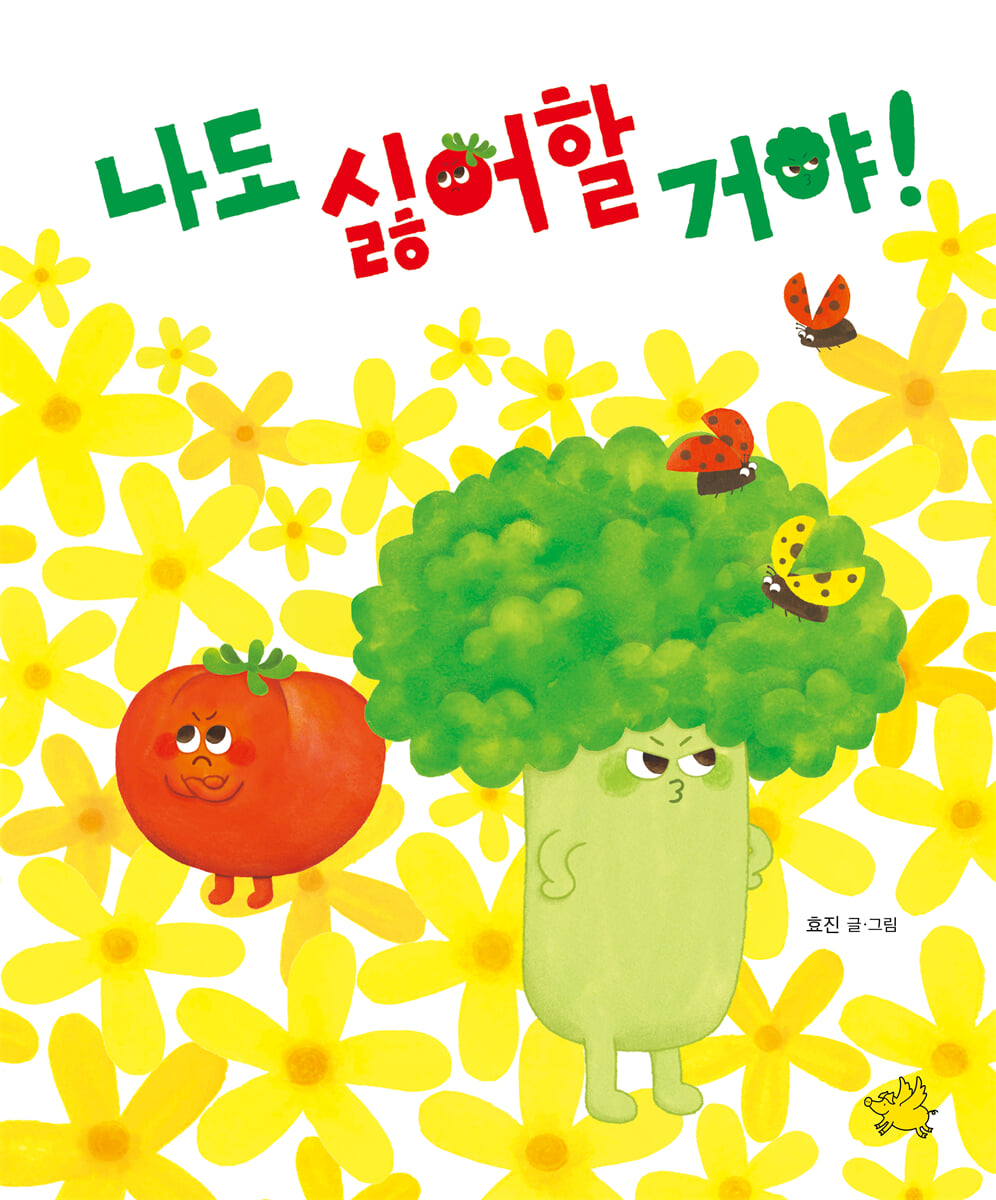
"I'd Hate It Too!" is a picture book that tells the story of how misunderstandings arise and are resolved between children, and how friendships deepen in the process.
Tomato, who recently moved into Haenim Village, becomes best friends with Broccoli, who lives next door.
One day, yellow flowers bloomed all over the village friends' bodies, and they worried that it might be an infectious disease.
Then Tomato says that in fact, flowers bloom on the bodies of the friends he likes for a day.
Then everyone is happy and says thank you for liking it.
But for some reason, only broccoli doesn't have flowers.
As Broccoli begins to misunderstand that Tomato hates him, their relationship begins to sour… … .
Can the two become as close as before?
This book shows the sadness and misunderstandings children experience in peer relationships, as well as the process of apologizing and reconciling.
It shows the childlike emotions of responding with, 'If you don't like it, I'll hate you too,' and it evokes empathy in children.
It also makes you realize how important it is to express your feelings honestly and not hide them.
Tomato, who recently moved into Haenim Village, becomes best friends with Broccoli, who lives next door.
One day, yellow flowers bloomed all over the village friends' bodies, and they worried that it might be an infectious disease.
Then Tomato says that in fact, flowers bloom on the bodies of the friends he likes for a day.
Then everyone is happy and says thank you for liking it.
But for some reason, only broccoli doesn't have flowers.
As Broccoli begins to misunderstand that Tomato hates him, their relationship begins to sour… … .
Can the two become as close as before?
This book shows the sadness and misunderstandings children experience in peer relationships, as well as the process of apologizing and reconciling.
It shows the childlike emotions of responding with, 'If you don't like it, I'll hate you too,' and it evokes empathy in children.
It also makes you realize how important it is to express your feelings honestly and not hide them.
- You can preview some of the book's contents.
Preview
Detailed image

Publisher's Review
"Why am I the only one without flowers? The tomatoes must hate me."
A story about misunderstandings, reconciliation, and a friendship that grows stronger.
Tomatoes move into Haenim Village, where vegetables live together.
The first friend that tomatoes met was broccoli.
Since they live next door, Broccoli helps Tomato move, and the two of them drink tea together and become best friends.
One day, when I woke up, yellow flowers had bloomed on the bodies of my village friends.
As it turned out, the flower was a tomato flower.
The tomato shyly tells its friends that it only flowers for a day.
My friends who were worried that it might be an infectious disease are all happy and thank me for liking the tomatoes.
Except broccoli.
Broccoli, no matter how hard it looks, notices that it has no flowers on its body, so it mistakes that for a tomato it hates it.
The misunderstanding deepens as you begin to think, 'Tomato must hate me.'
From that day on, Broccoli pretends not to hear Tomato talking to her.
Seeing that broccoli, Tomato doesn't know what's going on, but he tries to clear up the misunderstanding.
But when he continues to be ignored, Tomato decides to ignore Broccoli.
Can Broccoli rekindle his friendship with Tomato? But why isn't there a tomato flower on Broccoli's body? "I'd Hate You Too!" is a picture book that tells the story of how misunderstandings arise and are resolved between children, and how their friendship deepens in the process.
It contains a precious message that 'friendship becomes stronger when you share honest feelings' along with warm and lovely illustrations.
“Huh! I hate you too!”
A book that teaches us the importance of expressing our emotions without hiding them.
Not only children, but also adults, in relationships between people, especially close ones, resentment often leads to misunderstandings.
This book addresses issues that anyone in a relationship, from children to adults, will have experienced.
It allows us to take a step back and see how the subtle resentment that arises between people can lead to misunderstandings, and how those misunderstandings can be solidified into our own thoughts. It allows us to see the complex and difficult-to-explain emotions from a distance.
Broccoli thought he was a more special friend to Tomato than to his other friends.
But since I was the only one without flowers, I felt several times more disappointed.
This feeling of resentment from the broccoli leads to the thought, 'I guess the tomato hates me.'
Anyone who sees Broccoli tossing and turning in bed thinking about tomatoes will think, 'Oh, that happens sometimes.
You'll think, 'I've been there too.'
At first, he has a small doubt, thinking, 'Do tomatoes hate me?', but eventually he concludes, 'Yes, they definitely hate me,' and then he comes to the absurd conclusion, 'Then I must hate tomatoes too.'
Broccoli, who had a misunderstanding, was actually hurt.
When I felt sad, it would have been nice to say right then and there, "I'm also upset because there are no flowers," but even adults find it difficult to do that.
Broccoli tries to protect its heart by keeping its distance and turning away rather than showing its wounds.
But the more this happens, the more uncomfortable I feel.
Because broccoli still has a precious relationship with tomatoes.
Broccoli is going through an internal conflict, wondering, 'Is this the right thing to do?'
Then, when even the tomato pretended not to know him, the broccoli finally realized, 'Tomato must have felt the same way.'
Sadness turns into empathy.
It's a kind of mirror therapy.
Finally, Broccoli goes to Tomato and honestly confesses his feelings, saying, "I was upset because I was the only one without flowers."
In this way, this book contains a well-organized account of the stages of emotions experienced between people.
It shows a series of events where a misunderstanding caused by resentment creates a defensive attitude, which then makes you feel more uncomfortable, and then you come to understand the other person, empathize, and then express yourself honestly.
As children read, they will learn that acknowledging their feelings and expressing their honest feelings are key to restoring relationships.
A book that parents and children can read together and talk about emotions.
If the first society children encounter is ‘family,’ the second society they encounter is ‘friends.’
You build social skills by hanging out with friends and joining forces.
When children are excluded or misunderstood in their friendships, they are easily hurt, but this also becomes an opportunity for them to look into their own hearts and become stronger.
This book contains many elements that adults and children can read and discuss together.
In the scene where Broccoli misunderstands and thinks, "I think Tomato hates me," you can ask your child if he or she has ever felt this way about a friend.
If you tell your child that feeling is 'sadness', he will be able to name his feelings and recognize them when he feels that way in the future.
You will also learn that resentment can lead to misunderstandings.
Also, in the scene where Broccoli pretends not to notice Tomato and looks uncomfortable, you can ask the child, "Why is it so hard to hide your feelings of sadness?"
Additionally, in the scene where Tomato pretends not to know Broccoli, you can talk about 'empathy' by asking, 'Does Broccoli feel the same way Tomato felt?'
In the scene where Broccoli apologizes, you can ask, "What's good about being honest?" and practice expressing your feelings in words.
This book contains many points that can help you look into your own mind.
Parents can also have time to grow together by reading picture books and talking with their children.
A story about misunderstandings, reconciliation, and a friendship that grows stronger.
Tomatoes move into Haenim Village, where vegetables live together.
The first friend that tomatoes met was broccoli.
Since they live next door, Broccoli helps Tomato move, and the two of them drink tea together and become best friends.
One day, when I woke up, yellow flowers had bloomed on the bodies of my village friends.
As it turned out, the flower was a tomato flower.
The tomato shyly tells its friends that it only flowers for a day.
My friends who were worried that it might be an infectious disease are all happy and thank me for liking the tomatoes.
Except broccoli.
Broccoli, no matter how hard it looks, notices that it has no flowers on its body, so it mistakes that for a tomato it hates it.
The misunderstanding deepens as you begin to think, 'Tomato must hate me.'
From that day on, Broccoli pretends not to hear Tomato talking to her.
Seeing that broccoli, Tomato doesn't know what's going on, but he tries to clear up the misunderstanding.
But when he continues to be ignored, Tomato decides to ignore Broccoli.
Can Broccoli rekindle his friendship with Tomato? But why isn't there a tomato flower on Broccoli's body? "I'd Hate You Too!" is a picture book that tells the story of how misunderstandings arise and are resolved between children, and how their friendship deepens in the process.
It contains a precious message that 'friendship becomes stronger when you share honest feelings' along with warm and lovely illustrations.
“Huh! I hate you too!”
A book that teaches us the importance of expressing our emotions without hiding them.
Not only children, but also adults, in relationships between people, especially close ones, resentment often leads to misunderstandings.
This book addresses issues that anyone in a relationship, from children to adults, will have experienced.
It allows us to take a step back and see how the subtle resentment that arises between people can lead to misunderstandings, and how those misunderstandings can be solidified into our own thoughts. It allows us to see the complex and difficult-to-explain emotions from a distance.
Broccoli thought he was a more special friend to Tomato than to his other friends.
But since I was the only one without flowers, I felt several times more disappointed.
This feeling of resentment from the broccoli leads to the thought, 'I guess the tomato hates me.'
Anyone who sees Broccoli tossing and turning in bed thinking about tomatoes will think, 'Oh, that happens sometimes.
You'll think, 'I've been there too.'
At first, he has a small doubt, thinking, 'Do tomatoes hate me?', but eventually he concludes, 'Yes, they definitely hate me,' and then he comes to the absurd conclusion, 'Then I must hate tomatoes too.'
Broccoli, who had a misunderstanding, was actually hurt.
When I felt sad, it would have been nice to say right then and there, "I'm also upset because there are no flowers," but even adults find it difficult to do that.
Broccoli tries to protect its heart by keeping its distance and turning away rather than showing its wounds.
But the more this happens, the more uncomfortable I feel.
Because broccoli still has a precious relationship with tomatoes.
Broccoli is going through an internal conflict, wondering, 'Is this the right thing to do?'
Then, when even the tomato pretended not to know him, the broccoli finally realized, 'Tomato must have felt the same way.'
Sadness turns into empathy.
It's a kind of mirror therapy.
Finally, Broccoli goes to Tomato and honestly confesses his feelings, saying, "I was upset because I was the only one without flowers."
In this way, this book contains a well-organized account of the stages of emotions experienced between people.
It shows a series of events where a misunderstanding caused by resentment creates a defensive attitude, which then makes you feel more uncomfortable, and then you come to understand the other person, empathize, and then express yourself honestly.
As children read, they will learn that acknowledging their feelings and expressing their honest feelings are key to restoring relationships.
A book that parents and children can read together and talk about emotions.
If the first society children encounter is ‘family,’ the second society they encounter is ‘friends.’
You build social skills by hanging out with friends and joining forces.
When children are excluded or misunderstood in their friendships, they are easily hurt, but this also becomes an opportunity for them to look into their own hearts and become stronger.
This book contains many elements that adults and children can read and discuss together.
In the scene where Broccoli misunderstands and thinks, "I think Tomato hates me," you can ask your child if he or she has ever felt this way about a friend.
If you tell your child that feeling is 'sadness', he will be able to name his feelings and recognize them when he feels that way in the future.
You will also learn that resentment can lead to misunderstandings.
Also, in the scene where Broccoli pretends not to notice Tomato and looks uncomfortable, you can ask the child, "Why is it so hard to hide your feelings of sadness?"
Additionally, in the scene where Tomato pretends not to know Broccoli, you can talk about 'empathy' by asking, 'Does Broccoli feel the same way Tomato felt?'
In the scene where Broccoli apologizes, you can ask, "What's good about being honest?" and practice expressing your feelings in words.
This book contains many points that can help you look into your own mind.
Parents can also have time to grow together by reading picture books and talking with their children.
GOODS SPECIFICS
- Date of issue: October 20, 2025
- Format: Hardcover book binding method guide
- Pages, weight, size: 44 pages | 320g | 190*230*10mm
- ISBN13: 9791159955358
- KC Certification: Certification Type: Conformity Confirmation
You may also like
카테고리
korean


korean

![GQ KOREA Mark (Monthly): December [2025]](http://librairie.coreenne.fr/cdn/shop/files/8ef265dbbfbf186523ed75ba7319009d.jpg?v=1765340328&width=3840)


