

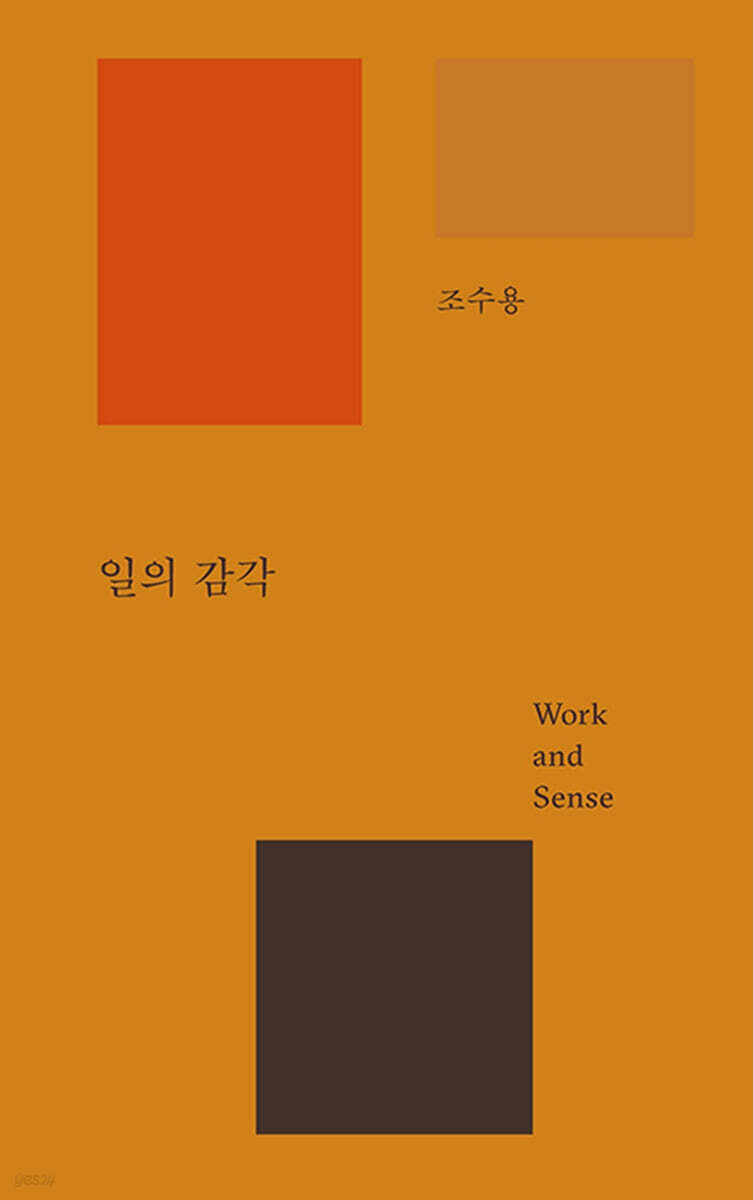
sense of work
 |
Description
Book Introduction
- A word from MD
-
Exploring the delicate 'sensibilities' of working peopleThe first solo book by Jo Su-yong, publisher of Magazine <B>.
Over the past 32 years, he has earned a reputation as a person with a keen sense of design and brand creative, but this book also captures the inner workings of his attitude and mindset to make the best decisions.
Insight into the core of the sense of returning to essence is a great example to those who work.
- PD Odaeun Oh's insight into self-development is a great example to working people.
-November 26, 2024. Self-Development PD Oh Da-eun
To have a good sense,
To be good at design,
How to Build a Better Brand
Exploring the delicate 'sensibilities' of 'working' people
Jo Su-yong's first solo essay
The essay "The Sense of Work" by Jo Su-yong, publisher of the magazine "B," which selects one well-balanced brand per issue and introduces its philosophy, sensibility, and story, has been published.
"The Sense of Work" is Jo Su-yong's first solo book. It tells the story of his work ethic from the time he first started until now, and how he maintained his focus and developed his sensibilities as his scope of responsibility expanded from designer to creative director and then to CEO, through the projects he has worked on.
Jo Soo-yong is a design and brand expert who oversaw Naver's brand marketing and design and served as co-CEO of Kakao.
He designed Naver's green search bar, was in charge of planning the free font 'Nanum Font' campaign and the new building 'Green Factory', and after founding JOH, he worked across various fields, including launching the magazine 'B', planning the spaces of Yeongjongdo Nest Hotel and Gwanghwamun D Tower, and creating the complex cultural space Sound Hannam.
He was known as a "person with good taste" for successfully completing projects that combined design and branding, but beneath that reputation lies a longing for excellence, a challenging attitude, and a time of tireless effort to consider the best decision even in difficult moments.
Here are five words that Jo Soo-yong uses to talk about work in this book:
Empathy, sense, essence, brand, me living as myself.
These words, which also serve as the titles of each chapter, capture the author's 32 years of experience in the creative field, where he strived to grasp the essence beyond phenomena rather than chasing trends.
The book also includes three interviews with various media outlets at various turning points in his career, providing a more three-dimensional look at his work style and reflections on brands.
This book will serve as a helpful guide not only for service planners, designers, and marketers, but also for readers who wish to utilize their senses in their work.
To be good at design,
How to Build a Better Brand
Exploring the delicate 'sensibilities' of 'working' people
Jo Su-yong's first solo essay
The essay "The Sense of Work" by Jo Su-yong, publisher of the magazine "B," which selects one well-balanced brand per issue and introduces its philosophy, sensibility, and story, has been published.
"The Sense of Work" is Jo Su-yong's first solo book. It tells the story of his work ethic from the time he first started until now, and how he maintained his focus and developed his sensibilities as his scope of responsibility expanded from designer to creative director and then to CEO, through the projects he has worked on.
Jo Soo-yong is a design and brand expert who oversaw Naver's brand marketing and design and served as co-CEO of Kakao.
He designed Naver's green search bar, was in charge of planning the free font 'Nanum Font' campaign and the new building 'Green Factory', and after founding JOH, he worked across various fields, including launching the magazine 'B', planning the spaces of Yeongjongdo Nest Hotel and Gwanghwamun D Tower, and creating the complex cultural space Sound Hannam.
He was known as a "person with good taste" for successfully completing projects that combined design and branding, but beneath that reputation lies a longing for excellence, a challenging attitude, and a time of tireless effort to consider the best decision even in difficult moments.
Here are five words that Jo Soo-yong uses to talk about work in this book:
Empathy, sense, essence, brand, me living as myself.
These words, which also serve as the titles of each chapter, capture the author's 32 years of experience in the creative field, where he strived to grasp the essence beyond phenomena rather than chasing trends.
The book also includes three interviews with various media outlets at various turning points in his career, providing a more three-dimensional look at his work style and reflections on brands.
This book will serve as a helpful guide not only for service planners, designers, and marketers, but also for readers who wish to utilize their senses in their work.
- You can preview some of the book's contents.
Preview
index
Opening remarks
Chapter 1 | Empathy
1.
Owner's worries
2.
A desire to help
3.
People who don't care
4.
A person with full authority
5.
My taste and the world
Chapter 2 | Senses
1.
Source of sense
2.
Effort to like
3.
Virtual Shopping
4.
A sincere 'why'
5.
Fit design
6.
Design by the developer
7.
The string of stability
8.
Subtractive selection
9.
sum of feelings
Interview 1
Chapter 3 | Essence
1.
Design that doesn't
2.
Our uniqueness
3.
Common sense planning
4.
Methods of Innovation
5.
There are no experts
Interview 2
Chapter 4 | Brand
1. JOH, not CHO
2.
Tetrahedron brand
3.
Attractive conviction
4.
Big brands, small brands
5.
Stories of people living
6.
The beauty of being yourself
Interview 3
Chapter 5 | Living as Me
1.
mental attitude
2.
The wall of occupation
3.
Beginning and ending, and beginning
Episode (Recommendation)
In conclusion
Chapter 1 | Empathy
1.
Owner's worries
2.
A desire to help
3.
People who don't care
4.
A person with full authority
5.
My taste and the world
Chapter 2 | Senses
1.
Source of sense
2.
Effort to like
3.
Virtual Shopping
4.
A sincere 'why'
5.
Fit design
6.
Design by the developer
7.
The string of stability
8.
Subtractive selection
9.
sum of feelings
Interview 1
Chapter 3 | Essence
1.
Design that doesn't
2.
Our uniqueness
3.
Common sense planning
4.
Methods of Innovation
5.
There are no experts
Interview 2
Chapter 4 | Brand
1. JOH, not CHO
2.
Tetrahedron brand
3.
Attractive conviction
4.
Big brands, small brands
5.
Stories of people living
6.
The beauty of being yourself
Interview 3
Chapter 5 | Living as Me
1.
mental attitude
2.
The wall of occupation
3.
Beginning and ending, and beginning
Episode (Recommendation)
In conclusion
Detailed image

Into the book
As I worked across multiple companies, various fields, and diverse projects, what always kept me grounded was the mindset of taking responsibility and making decisions for myself.
Behind the results I've achieved in the form of design and branding, and my reputation as someone with a "good sense," lies a desire to always do well, a dedication to my work, and a time spent striving to make decisions in my own way when faced with difficult choices.
--- From the opening remarks
As you become more immersed in your work and take ownership, there will come a time when you have to say, “I don’t think I’ll be needed for this.”
You realize that using me is a waste of money for the client.
I'm so deeply immersed in my client's work that I sometimes consider the owner's business more important than my own interests.
--- p.27
I often talk to designers who create online services.
“Try to get possessed by people who don’t care.”
As a designer, you have to put yourself in the shoes of someone who has no interest in the service.
Typically, when planners or designers create a service, they often naturally use themselves as a standard because they are already familiar with the task.
However, since it is a service used by an unspecified number of people, we must look at the service through the eyes of users who have little involvement.
--- p.35
I have my own order for 'digging' into things I like.
For example, if you want to buy a bicycle, you spend a long time exploring the world of bicycles.
Let's start by looking at the most expensive bikes, high-end brands.
And we search by dividing the market into professional and entry-level bikes, and we go down the ladder and persistently search for the bike we like.
Finally, let's look at comments from the cycling community.
I also look for magazines in that field and read every single advertisement.
--- p.47
The beginning of sensation is attitude.
It's the mindset that no matter how much you're actually paid, you can't do the work half-heartedly.
They treat everything as if it were a billion won request.
People who work like this produce uniquely sensuous results no matter what they do.
It's the same whether you're designing a logo, doing interior design, or creating a mobile page.
--- pp.71-72
Services or products that look good have something in common.
It doesn't look like it was designed with a lot of thought put into it.
I often use the expression "a design done in one second by a genius" as a joke.
This expression is used to mean that you have to do it very well, but it should not show any traces of having thought about it for a long time.
--- p.88
The most important keyword here is ‘choice’.
'Choosing something' is the same as 'not choosing something'.
In other words, sense is the ability to discern what I should and should not choose.
--- p.99
There is nothing like that in the world.
Whether we look at a piece of bread or a building in a city, we must constantly ask ourselves why.
Going back to the basics.
That's the essence of sense.
Just by consistently going back to common sense and thinking about what is normal for you, you can make a difference.
We need to break free from established inertia and look at things as if nothing was originally like that.
A sensitive person is someone who can rediscover the essence we have forgotten.
--- pp.154-155
I often feel like the meaning of branding is being distorted these days.
The essence is often put on the back burner, and branding is often seen as packaging the image shown to consumers.
Everyone wants to ask so-called branding experts for advice on current trends and how to run a campaign.
Actually, you don't need an expert in branding.
Because real branding is what's inside, not what's on the packaging.
Branding is the essence of work and the work that sharpens the meaning of existence.
The packaging will soon be removed and the original appearance will be revealed before long.
--- p.162
Now big brands have to act like small brands, and small brands have to think like big brands.
Acting like a small brand means finding what excites the "conscious minority" rather than the "unspecified majority" and putting it into practice.
Thinking like a big brand means pursuing a sense of stability, a feeling that "people who are serious about their business are working hard."
--- p.201
A brand story is a story about people and a history that transcends time.
I would like to argue that the humanities of the 21st century emerge from these brand stories.
Ultimately, every business is about people, and that's the fascinating story that emerges at every turning point in human history.
Behind the results I've achieved in the form of design and branding, and my reputation as someone with a "good sense," lies a desire to always do well, a dedication to my work, and a time spent striving to make decisions in my own way when faced with difficult choices.
--- From the opening remarks
As you become more immersed in your work and take ownership, there will come a time when you have to say, “I don’t think I’ll be needed for this.”
You realize that using me is a waste of money for the client.
I'm so deeply immersed in my client's work that I sometimes consider the owner's business more important than my own interests.
--- p.27
I often talk to designers who create online services.
“Try to get possessed by people who don’t care.”
As a designer, you have to put yourself in the shoes of someone who has no interest in the service.
Typically, when planners or designers create a service, they often naturally use themselves as a standard because they are already familiar with the task.
However, since it is a service used by an unspecified number of people, we must look at the service through the eyes of users who have little involvement.
--- p.35
I have my own order for 'digging' into things I like.
For example, if you want to buy a bicycle, you spend a long time exploring the world of bicycles.
Let's start by looking at the most expensive bikes, high-end brands.
And we search by dividing the market into professional and entry-level bikes, and we go down the ladder and persistently search for the bike we like.
Finally, let's look at comments from the cycling community.
I also look for magazines in that field and read every single advertisement.
--- p.47
The beginning of sensation is attitude.
It's the mindset that no matter how much you're actually paid, you can't do the work half-heartedly.
They treat everything as if it were a billion won request.
People who work like this produce uniquely sensuous results no matter what they do.
It's the same whether you're designing a logo, doing interior design, or creating a mobile page.
--- pp.71-72
Services or products that look good have something in common.
It doesn't look like it was designed with a lot of thought put into it.
I often use the expression "a design done in one second by a genius" as a joke.
This expression is used to mean that you have to do it very well, but it should not show any traces of having thought about it for a long time.
--- p.88
The most important keyword here is ‘choice’.
'Choosing something' is the same as 'not choosing something'.
In other words, sense is the ability to discern what I should and should not choose.
--- p.99
There is nothing like that in the world.
Whether we look at a piece of bread or a building in a city, we must constantly ask ourselves why.
Going back to the basics.
That's the essence of sense.
Just by consistently going back to common sense and thinking about what is normal for you, you can make a difference.
We need to break free from established inertia and look at things as if nothing was originally like that.
A sensitive person is someone who can rediscover the essence we have forgotten.
--- pp.154-155
I often feel like the meaning of branding is being distorted these days.
The essence is often put on the back burner, and branding is often seen as packaging the image shown to consumers.
Everyone wants to ask so-called branding experts for advice on current trends and how to run a campaign.
Actually, you don't need an expert in branding.
Because real branding is what's inside, not what's on the packaging.
Branding is the essence of work and the work that sharpens the meaning of existence.
The packaging will soon be removed and the original appearance will be revealed before long.
--- p.162
Now big brands have to act like small brands, and small brands have to think like big brands.
Acting like a small brand means finding what excites the "conscious minority" rather than the "unspecified majority" and putting it into practice.
Thinking like a big brand means pursuing a sense of stability, a feeling that "people who are serious about their business are working hard."
--- p.201
A brand story is a story about people and a history that transcends time.
I would like to argue that the humanities of the 21st century emerge from these brand stories.
Ultimately, every business is about people, and that's the fascinating story that emerges at every turning point in human history.
--- p.206
Publisher's Review
A sense is not a novel idea.
Developing through constant thinking and training
Whenever he is asked what a sense is and who a person with good sense is, Jo Soo-yong begins his story by carefully reflecting on how he started his work and what mindset he has when he works.
In this book, he also lists 'ownership' as the first thing that comes to mind when working, and shares his experience of starting his career as a designer and then expanding his scope to become a planner.
Beyond faithfully carrying out assigned tasks, it is important to consider the client's (owner's) concerns as if they were your own, and when things are not going well, to persuade the other party and think together, which builds trust in the long run and gives you decision-making authority.
The author acknowledges the inherent nature of corporate organizations, which are inevitably influenced by the owner's decisions, and calmly explains that in order to enjoy work and grow within them, one must ultimately take ownership of the work as if one were the master of it.
Ownership is a great ability to empathize, and it is also a quality that can be demonstrated to colleagues and customers, making work easier.
When the author founded JOH, he divided the organization into director units rather than job units and then had them collaborate to carry out projects.
All employees were encouraged to work with a sense of ownership.
From the perspective of a salaried worker, it is natural to feel like, ‘This isn’t even my company…’, let alone feeling a sense of ownership.
But I think that working like that is not only boring, but also leads to going back down the path you had to take anyway.
Not only will the company think of me as an employee who only works for the amount of money I earn, but I will also end up just being someone who 'does the work I'm given and waits for permission to do it.'
Is this really a good thing for me?
─In the text
Jo Soo-yong believes that even the senses that are often considered innate talents come from a state of mind.
The sense that starts from 'the heart that tries to like' is refined when you delve deep into your own tastes and appropriately combine and coordinate the perspectives of others.
The author also writes specifically about how to hone one's senses. When purchasing a bicycle, he researches everything from high-end brands to professional models and even basic models, and he also shares his own experience of reading community posts and magazines to gather information, and he even explains the order in which to "dig" for one's taste.
This is advice that readers can practically apply to develop their senses.
This meticulously trained sense is also linked to the ability to choose, to properly discern what to take and what to discard.
The ability to judge what's important and add or subtract from it without being swayed by other people's opinions or trends is also connected to the sensibility needed in the branding process.
For anything to be successful, you have to go beyond your own tastes.
We need to find that subtle point where our preferences and our empathy for others meet, where we feel the pressure of their mutual push and pull.
It's where my tastes and the world's tastes meet.
─In the text
“There is nothing ‘original’ in the world.”
Branding is about revealing the essence.
The essence of the senses is to recall the essence.
People who are good at their jobs and have good sense are ultimately people who think about the 'essence'.
Ownership, sense, design, and branding, which Jo Soo-yong talks about, should also be about essence.
If you don't think about the essence during the branding process, you'll end up rushing to follow trends and focusing only on packaging.
So how can we grasp the essence? The author suggests asking questions with a common-sense lens.
When you ask questions based on extremely basic common sense without being swayed by stereotypes, you will discover problems. When you try to solve them rather than just dismiss them as "that's just how it is," a sensible plan is born.
The author cites examples such as the Green Factory parking lot, which reminds people of the floor number through sound, and the Samsung Card, which was designed with a focus on its original function of "consumption," as examples, emphasizing that all seemingly innovative ideas were actually plans focused on the essence.
There is nothing like that in the world.
Whether we look at a piece of bread or a building in a city, we must constantly ask ourselves why.
Going back to the basics.
That's the essence of sense.
Just by consistently going back to common sense and thinking about what is normal for you, you can make a difference.
We need to break free from established inertia and look at things as if nothing was originally like that.
A sensitive person is someone who can rediscover the essence we have forgotten.
─In the text
'How to do a good job without destroying your soul' is a question that every working person ponders.
Jo Soo-yong has also been working at the forefront of design and brand creativity for 32 years and has faced similar concerns.
Chapter 1 of this book begins by emphasizing ownership, but Chapter 5 concludes by talking about the times I struggled to work without losing my authenticity.
The author says that just as “many brands in the world are the result of someone’s efforts to exist as themselves,” he too works to prove himself to the world and make his beliefs known.
Listening to one's inner voice and protecting oneself while working may also be important 'essences' of a working person.
I recommend this book, "The Sense of Work," to the countless readers who, as working people, are questioning their own essence.
Developing through constant thinking and training
Whenever he is asked what a sense is and who a person with good sense is, Jo Soo-yong begins his story by carefully reflecting on how he started his work and what mindset he has when he works.
In this book, he also lists 'ownership' as the first thing that comes to mind when working, and shares his experience of starting his career as a designer and then expanding his scope to become a planner.
Beyond faithfully carrying out assigned tasks, it is important to consider the client's (owner's) concerns as if they were your own, and when things are not going well, to persuade the other party and think together, which builds trust in the long run and gives you decision-making authority.
The author acknowledges the inherent nature of corporate organizations, which are inevitably influenced by the owner's decisions, and calmly explains that in order to enjoy work and grow within them, one must ultimately take ownership of the work as if one were the master of it.
Ownership is a great ability to empathize, and it is also a quality that can be demonstrated to colleagues and customers, making work easier.
When the author founded JOH, he divided the organization into director units rather than job units and then had them collaborate to carry out projects.
All employees were encouraged to work with a sense of ownership.
From the perspective of a salaried worker, it is natural to feel like, ‘This isn’t even my company…’, let alone feeling a sense of ownership.
But I think that working like that is not only boring, but also leads to going back down the path you had to take anyway.
Not only will the company think of me as an employee who only works for the amount of money I earn, but I will also end up just being someone who 'does the work I'm given and waits for permission to do it.'
Is this really a good thing for me?
─In the text
Jo Soo-yong believes that even the senses that are often considered innate talents come from a state of mind.
The sense that starts from 'the heart that tries to like' is refined when you delve deep into your own tastes and appropriately combine and coordinate the perspectives of others.
The author also writes specifically about how to hone one's senses. When purchasing a bicycle, he researches everything from high-end brands to professional models and even basic models, and he also shares his own experience of reading community posts and magazines to gather information, and he even explains the order in which to "dig" for one's taste.
This is advice that readers can practically apply to develop their senses.
This meticulously trained sense is also linked to the ability to choose, to properly discern what to take and what to discard.
The ability to judge what's important and add or subtract from it without being swayed by other people's opinions or trends is also connected to the sensibility needed in the branding process.
For anything to be successful, you have to go beyond your own tastes.
We need to find that subtle point where our preferences and our empathy for others meet, where we feel the pressure of their mutual push and pull.
It's where my tastes and the world's tastes meet.
─In the text
“There is nothing ‘original’ in the world.”
Branding is about revealing the essence.
The essence of the senses is to recall the essence.
People who are good at their jobs and have good sense are ultimately people who think about the 'essence'.
Ownership, sense, design, and branding, which Jo Soo-yong talks about, should also be about essence.
If you don't think about the essence during the branding process, you'll end up rushing to follow trends and focusing only on packaging.
So how can we grasp the essence? The author suggests asking questions with a common-sense lens.
When you ask questions based on extremely basic common sense without being swayed by stereotypes, you will discover problems. When you try to solve them rather than just dismiss them as "that's just how it is," a sensible plan is born.
The author cites examples such as the Green Factory parking lot, which reminds people of the floor number through sound, and the Samsung Card, which was designed with a focus on its original function of "consumption," as examples, emphasizing that all seemingly innovative ideas were actually plans focused on the essence.
There is nothing like that in the world.
Whether we look at a piece of bread or a building in a city, we must constantly ask ourselves why.
Going back to the basics.
That's the essence of sense.
Just by consistently going back to common sense and thinking about what is normal for you, you can make a difference.
We need to break free from established inertia and look at things as if nothing was originally like that.
A sensitive person is someone who can rediscover the essence we have forgotten.
─In the text
'How to do a good job without destroying your soul' is a question that every working person ponders.
Jo Soo-yong has also been working at the forefront of design and brand creativity for 32 years and has faced similar concerns.
Chapter 1 of this book begins by emphasizing ownership, but Chapter 5 concludes by talking about the times I struggled to work without losing my authenticity.
The author says that just as “many brands in the world are the result of someone’s efforts to exist as themselves,” he too works to prove himself to the world and make his beliefs known.
Listening to one's inner voice and protecting oneself while working may also be important 'essences' of a working person.
I recommend this book, "The Sense of Work," to the countless readers who, as working people, are questioning their own essence.
GOODS SPECIFICS
- Date of issue: November 10, 2024
- Format: Hardcover book binding method guide
- Page count, weight, size: 264 pages | 120*189*20mm
- ISBN13: 9791193383193
- ISBN10: 1193383196
You may also like
카테고리
korean


korean

![GQ KOREA Mark (Monthly): December [2025]](http://librairie.coreenne.fr/cdn/shop/files/8ef265dbbfbf186523ed75ba7319009d.jpg?v=1765340328&width=3840)


