

Sima Qian's Records of the Grand Historian, Volume 56
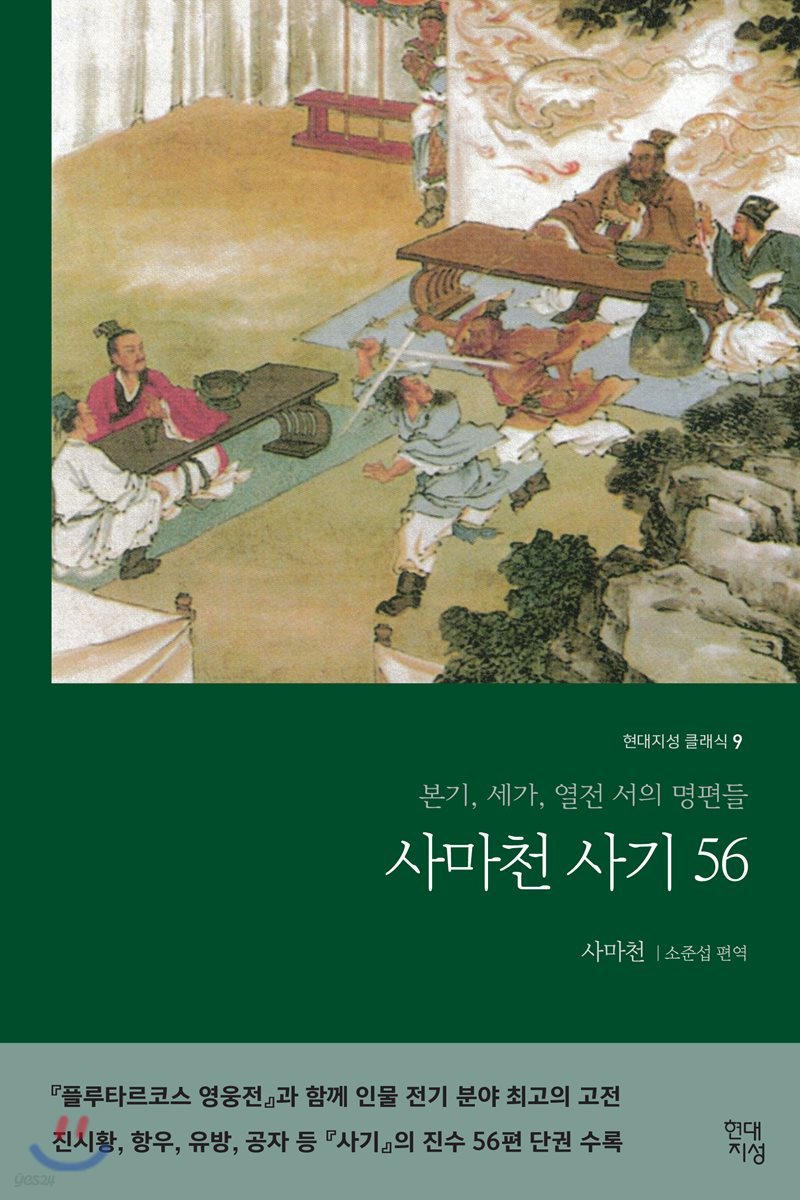 |
Description
Book Introduction
Along with Plutarch's Lives, the ultimate classic in biographies!
It is said that the most read book for outsiders to understand China is Sima Qian's Records of the Grand Historian.
Because the Records of the Grand Historian is an important historical source that has shaped Chinese culture and spirit to this day.
《Sagi》 is composed of ‘Bon-gi’, ‘Se-ga’, ‘Pyo’, ‘Seo’, and ‘Yeol-bi’.
'Bon-gi' describes the words and deeds and achievements of the emperors in chronological order, 'Se-ga' describes the rise and fall of vassal states and the achievements of heroes, 'Pyo' records the major events of each period by year, and 'Seo' records the history of various systems.
And 'The Chronicles' records the activities of various representative figures.
Sima Qian creatively synthesized these five parts to create a complete, unified system.
The entire 『Records of the Grand Historian』 consists of 130 chapters, which are in fact excessively large and contain many parts that are no longer useful in modern times. Therefore, in this book, Dr. So Jun-seop, a Chinese expert, carefully selected 56 chapters that carry on the essence of the Records of the Grand Historian but are deep in meaning and have excellent sentence structure, and they were collected into one volume.
Furthermore, Dr. So Jun-seop added relevant commentary before each chapter, and paid special attention to the annotation work to accurately interpret various terms and systems used in the original text and to broadly examine their origins, adding a total of 845 footnotes.
It is said that the most read book for outsiders to understand China is Sima Qian's Records of the Grand Historian.
Because the Records of the Grand Historian is an important historical source that has shaped Chinese culture and spirit to this day.
《Sagi》 is composed of ‘Bon-gi’, ‘Se-ga’, ‘Pyo’, ‘Seo’, and ‘Yeol-bi’.
'Bon-gi' describes the words and deeds and achievements of the emperors in chronological order, 'Se-ga' describes the rise and fall of vassal states and the achievements of heroes, 'Pyo' records the major events of each period by year, and 'Seo' records the history of various systems.
And 'The Chronicles' records the activities of various representative figures.
Sima Qian creatively synthesized these five parts to create a complete, unified system.
The entire 『Records of the Grand Historian』 consists of 130 chapters, which are in fact excessively large and contain many parts that are no longer useful in modern times. Therefore, in this book, Dr. So Jun-seop, a Chinese expert, carefully selected 56 chapters that carry on the essence of the Records of the Grand Historian but are deep in meaning and have excellent sentence structure, and they were collected into one volume.
Furthermore, Dr. So Jun-seop added relevant commentary before each chapter, and paid special attention to the annotation work to accurately interpret various terms and systems used in the original text and to broadly examine their origins, adding a total of 845 footnotes.
- You can preview some of the book's contents.
Preview
index
Chronicles
1.
Qin Shi Huang's Chronicles - Unification was difficult, but collapse was swift.
2.
Duke Mu of Qin (from the Annals of Qin) - Let my mistakes be remembered forever.
3.
Xiang Yu's Chronicles - Farewell My Concubine
4.
Han Gaozu's Chronicles - He who knows how to use talent will conquer the world.
5.
The Annals of the Empress Dowager - Is the ruler of the world the Liu clan or the Yeo clan?
Sega (世家)
6.
The Battle of Wu and Yue (from the Wu and Yue Sega) - Wuyue Dongju, Wasin Sangdam
7.
Jiang Taigong (from the book of the same name) - I only follow the mandate of heaven.
8.
Jehwan Gong (from Je Se Ga) - If you abandon your trust, you will lose the world's trust.
9.
Jeongyeong and Gongson Jeogu (from the Jo family) - The Jo orphans who survived
10.
King Mu-ryeong of Jo (from the Jo family) - How can a great power be created?
11.
Duke Wen of Jin (from the Jin Dynasty) - Temporary gains cannot surpass the work of a thousand years.
12.
King Zhang of Chu (from the Chu Dynasty) - It is more important to keep one's word than to gain a country.
13.
Confucius's Teachings - Look up at the high mountains and follow the broad road.
14.
Jinseop's family - Is there a separate lineage for the king, queen, general, and minister?
15.
The Oedipus family - If you cannot master the changes of yin and yang, how can you know the destiny?
16.
Small and Medium Business - Whose contribution is the greatest?
17.
Yufu Sega - Planning within the tent determines victory a thousand miles away.
18.
Jin Chansang Se-ga - You can win the world on horseback, but you can't rule it on horseback.
19.
Kang Hoo Jubal Sega - The sun sets from the moment it rises to its zenith.
Biographies
20.
The Biography of Baek Yi - Is Heaven's Will Really Right or Wrong?
21.
An-yeong (from the biography of Gwan-an) - If he were alive, I would gladly become his groom.
22.
The Biography of Sun Tzu and Wu Qi: Winning without fighting is the best strategy.
23.
The Biography of the Great King - Being able to control one's desires is considered strong.
24.
The Chronicles of Sojin - Those who do not keep their promises are the ones who are most useful.
25.
Jang's Chronicles - If Only Three Inches of Tongue Were Alive
26.
Baekgi and Wangjeon Chronicles - Submit to your subjects and conquer the world!
27.
The Biography of Maeng Sang-gun - Loving Guests and Enjoying Themselves
28.
The Biography of Confucius - A Polite and Moral Gentleman
29.
The Biography of Prince Pyeongwon - Desire darkens one's wisdom.
30.
The Chronicles of Prince Chunshin - No one is bad at starting, but few are good at finishing.
31.
The Biography of Beomjeo and Chaetaek - Those who use others as mirrors can know their own fortunes.
32.
The Chronicles of Evil and the Chronicles of War - A loyal subject's name remains unsullied even when he is away from his country.
33.
The Biography of Yeompa and Insangyeo - How to Face Death is Truly Difficult
34.
The biographies of Noh Jung-ryeon and Chu Yang - Do not harm public justice for personal gain.
35.
Assassin's Tale - The Wind is Dreary and the Water is Cold
36.
The Chronicles of the Perineum - If you are afraid of small shame, how can you shine?
37.
The Biography of Yu Gyeong and Suk Son Tong - A Truly Straight Road Always Appears Curved
38.
The Chronicles of Gyeongpo, Peng Yue, and Nanpo - The General Who Never Returned
39.
The Biography of Mandarin Duck and Jochak - Don't Spare a Single Person, Apologize to the World
40.
Jang Seok-ji's Biography - A subordinate imitates a superior faster than an echo can answer.
41.
Manseok's Chronicles - Honest but Without Grand Ideas
42.
The Biography of Pyeonjak and Changgong - All that is beautiful and good is inauspicious.
43.
The Chronicles of Crisis and Muanhu - Those who take their anger out on others will not end well.
44.
General Lee's Chronicles - Peach and plum trees don't speak on their own, but a path forms beneath them.
45.
The Xiongnu Chronicles - We Live Our Way
46.
The above generals and biographies - Do not go beyond your duties as a subject.
47.
Joseon Chronicles - No One Accomplished Anything
48.
The Biography of Sima Xiangru - The Great Writer Who Stole the Heart of a Beautiful Widow
49.
Sudden and serious battles - Don't damage branches to protect leaves.
50.
Biography of Pyeongjinhu and Biography of Confucian Scholars - Even if you have the large wings of a goose, if you don't meet the right time,
51.
The Chronicles of Hokri - Laws were refined, but state affairs were in disarray.
52.
The Biography of Yuhyeop - A person's face fades, but an honorable name endures forever (including the biography of Gyepo)
53.
The Chronicles of the Golgyes - Fluent speech and unhindered thinking
54.
The Worst Policy is to Fight with the People
55.
The Taishagong's Autobiography - Describing the Past to Hope for the Future
Book
56.
The Pyeongjunseo - The nation becomes rich, but the people become impoverished.
*Appendix: Sima Qian's letter to Im An
*Annotation of the Records of the Grand Historian - Sima Qian and the Records of the Grand Historian
1.
Qin Shi Huang's Chronicles - Unification was difficult, but collapse was swift.
2.
Duke Mu of Qin (from the Annals of Qin) - Let my mistakes be remembered forever.
3.
Xiang Yu's Chronicles - Farewell My Concubine
4.
Han Gaozu's Chronicles - He who knows how to use talent will conquer the world.
5.
The Annals of the Empress Dowager - Is the ruler of the world the Liu clan or the Yeo clan?
Sega (世家)
6.
The Battle of Wu and Yue (from the Wu and Yue Sega) - Wuyue Dongju, Wasin Sangdam
7.
Jiang Taigong (from the book of the same name) - I only follow the mandate of heaven.
8.
Jehwan Gong (from Je Se Ga) - If you abandon your trust, you will lose the world's trust.
9.
Jeongyeong and Gongson Jeogu (from the Jo family) - The Jo orphans who survived
10.
King Mu-ryeong of Jo (from the Jo family) - How can a great power be created?
11.
Duke Wen of Jin (from the Jin Dynasty) - Temporary gains cannot surpass the work of a thousand years.
12.
King Zhang of Chu (from the Chu Dynasty) - It is more important to keep one's word than to gain a country.
13.
Confucius's Teachings - Look up at the high mountains and follow the broad road.
14.
Jinseop's family - Is there a separate lineage for the king, queen, general, and minister?
15.
The Oedipus family - If you cannot master the changes of yin and yang, how can you know the destiny?
16.
Small and Medium Business - Whose contribution is the greatest?
17.
Yufu Sega - Planning within the tent determines victory a thousand miles away.
18.
Jin Chansang Se-ga - You can win the world on horseback, but you can't rule it on horseback.
19.
Kang Hoo Jubal Sega - The sun sets from the moment it rises to its zenith.
Biographies
20.
The Biography of Baek Yi - Is Heaven's Will Really Right or Wrong?
21.
An-yeong (from the biography of Gwan-an) - If he were alive, I would gladly become his groom.
22.
The Biography of Sun Tzu and Wu Qi: Winning without fighting is the best strategy.
23.
The Biography of the Great King - Being able to control one's desires is considered strong.
24.
The Chronicles of Sojin - Those who do not keep their promises are the ones who are most useful.
25.
Jang's Chronicles - If Only Three Inches of Tongue Were Alive
26.
Baekgi and Wangjeon Chronicles - Submit to your subjects and conquer the world!
27.
The Biography of Maeng Sang-gun - Loving Guests and Enjoying Themselves
28.
The Biography of Confucius - A Polite and Moral Gentleman
29.
The Biography of Prince Pyeongwon - Desire darkens one's wisdom.
30.
The Chronicles of Prince Chunshin - No one is bad at starting, but few are good at finishing.
31.
The Biography of Beomjeo and Chaetaek - Those who use others as mirrors can know their own fortunes.
32.
The Chronicles of Evil and the Chronicles of War - A loyal subject's name remains unsullied even when he is away from his country.
33.
The Biography of Yeompa and Insangyeo - How to Face Death is Truly Difficult
34.
The biographies of Noh Jung-ryeon and Chu Yang - Do not harm public justice for personal gain.
35.
Assassin's Tale - The Wind is Dreary and the Water is Cold
36.
The Chronicles of the Perineum - If you are afraid of small shame, how can you shine?
37.
The Biography of Yu Gyeong and Suk Son Tong - A Truly Straight Road Always Appears Curved
38.
The Chronicles of Gyeongpo, Peng Yue, and Nanpo - The General Who Never Returned
39.
The Biography of Mandarin Duck and Jochak - Don't Spare a Single Person, Apologize to the World
40.
Jang Seok-ji's Biography - A subordinate imitates a superior faster than an echo can answer.
41.
Manseok's Chronicles - Honest but Without Grand Ideas
42.
The Biography of Pyeonjak and Changgong - All that is beautiful and good is inauspicious.
43.
The Chronicles of Crisis and Muanhu - Those who take their anger out on others will not end well.
44.
General Lee's Chronicles - Peach and plum trees don't speak on their own, but a path forms beneath them.
45.
The Xiongnu Chronicles - We Live Our Way
46.
The above generals and biographies - Do not go beyond your duties as a subject.
47.
Joseon Chronicles - No One Accomplished Anything
48.
The Biography of Sima Xiangru - The Great Writer Who Stole the Heart of a Beautiful Widow
49.
Sudden and serious battles - Don't damage branches to protect leaves.
50.
Biography of Pyeongjinhu and Biography of Confucian Scholars - Even if you have the large wings of a goose, if you don't meet the right time,
51.
The Chronicles of Hokri - Laws were refined, but state affairs were in disarray.
52.
The Biography of Yuhyeop - A person's face fades, but an honorable name endures forever (including the biography of Gyepo)
53.
The Chronicles of the Golgyes - Fluent speech and unhindered thinking
54.
The Worst Policy is to Fight with the People
55.
The Taishagong's Autobiography - Describing the Past to Hope for the Future
Book
56.
The Pyeongjunseo - The nation becomes rich, but the people become impoverished.
*Appendix: Sima Qian's letter to Im An
*Annotation of the Records of the Grand Historian - Sima Qian and the Records of the Grand Historian
Detailed image

Publisher's Review
Discover China's greatest historical classics in one volume!
56 essential pieces of 『Fraud』 carefully selected by Dr. So Jun-seop.
Learning human nature and life wisdom from historical figures such as Qin Shi Huang, Liu Bang, and Confucius
Modern Jisung Classic No. 9.
Sima Qian's Records of the Grand Historian, 56
(The Modern Intelligence Literature Library and Humanities Library series have been integrated into ‘Modern Intelligence Classics.’)
It is said that the most read book for outsiders to understand China is Sima Qian's Records of the Grand Historian.
Because 『Records of the Grand Historian』 is an important historical source that has continuously shaped Chinese culture and spirit to this day.
『Sagi』 is composed of ‘Bon-gi (本紀),’ ‘Se-ga (世家),’ ‘Pyo (表),’ ‘Seo (書),’ and ‘Yeol-jeon (列傳).’
'Bon-gi (本紀)' describes the words and deeds and achievements of the emperors in chronological order, 'Se-ga (世家)' describes the rise and fall of vassal states and the achievements of heroes, 'Pyo (表)' records the major events of each period by year, and 'Seo (書)' records the history of various systems.
And 'Biographies' records the activities of various representative figures.
Sima Qian creatively synthesized these five parts to create a complete, unified system.
The most distinctive feature of the biographies of 『Sagi』 is the spirit of historical records.
Sima Qian was not bound by the existing historical writing methods, but recorded history realistically based on his own perspective and attitude toward history, objectively reflecting the full picture of the characters.
When describing a person's life in detail, I focused on their 'humanity' and at the same time paid attention to the complexity of that human nature.
When describing a character, he revealed his own perspective by comparing it to objective facts, and at the same time, he expressed his love and hate for the character he was describing by using facts.
In particular, Sima Qian increased the authenticity of the content by using facts he personally experienced, heard directly, and learned through exchanges, as well as information obtained through meticulous local investigation.
『Records of the Grand Historian』 is a work written by the so-called ‘multiple eyes’ of the author Sima Qian.
Sima Qian never evaluates any person or event one-sidedly.
Always comprehensively understood and interpreted from multiple perspectives.
Thus, those who are frustrated and discouraged in adversity can gain the strength and wisdom to overcome adversity through the 『Sagi』, and those who are in a position of glory can realize the principles of maintaining that glory through the 『Sagi』.
Those who engage in politics can learn the principles of governance, and those who engage in economics can master the principles of economics.
Moreover, for those in unfortunate situations, 『The Four Books』 will give them the courage to rise again, and for those who want to know how to navigate life, it will offer advice on how to think about navigating this difficult world.
Indeed, 『Records of the Grand Historian』 is a work of the highest caliber not only in terms of the richness of its historical materials and the progressiveness of its perspective, but also in terms of the vividness of its sentences, its outstanding expressiveness, and the figurativeness of its narrative. Liang Qichao, a great scholar in the late Qing Dynasty, called it “an exquisite work of a thousand years,” and Lu Xun also praised it as “a masterpiece of the historians.”
It is no exaggeration to say that 『Records of the Grand Historian』 forms the foundation of Chinese culture, and even Eastern culture, not just from a literary perspective.
Many historical sources and idioms that form the basis of Chinese history and culture have their origins in the Records of the Grand Historian.
Indeed, it can be said that 『Records of the Grand Historian』 provided an important foundation for building the Chinese spirit, and further, the Eastern spirit.
The entire 『Records of the Grand Historian』 consists of 130 chapters, which are in fact excessively large and contain many parts that are no longer useful in modern times. Therefore, in this book, Dr. So Jun-seop, a Chinese expert, carefully selected 56 chapters that carry on the essence of the Records of the Grand Historian but are deep in meaning and have excellent sentence structure, and they were collected into one volume.
In addition, Dr. So Jun-seop added relevant commentary before each chapter, and paid special attention to the annotation work to accurately interpret various terms and systems used in the original text and to broadly examine their origins, adding a total of 845 footnotes.
56 essential pieces of 『Fraud』 carefully selected by Dr. So Jun-seop.
Learning human nature and life wisdom from historical figures such as Qin Shi Huang, Liu Bang, and Confucius
Modern Jisung Classic No. 9.
Sima Qian's Records of the Grand Historian, 56
(The Modern Intelligence Literature Library and Humanities Library series have been integrated into ‘Modern Intelligence Classics.’)
It is said that the most read book for outsiders to understand China is Sima Qian's Records of the Grand Historian.
Because 『Records of the Grand Historian』 is an important historical source that has continuously shaped Chinese culture and spirit to this day.
『Sagi』 is composed of ‘Bon-gi (本紀),’ ‘Se-ga (世家),’ ‘Pyo (表),’ ‘Seo (書),’ and ‘Yeol-jeon (列傳).’
'Bon-gi (本紀)' describes the words and deeds and achievements of the emperors in chronological order, 'Se-ga (世家)' describes the rise and fall of vassal states and the achievements of heroes, 'Pyo (表)' records the major events of each period by year, and 'Seo (書)' records the history of various systems.
And 'Biographies' records the activities of various representative figures.
Sima Qian creatively synthesized these five parts to create a complete, unified system.
The most distinctive feature of the biographies of 『Sagi』 is the spirit of historical records.
Sima Qian was not bound by the existing historical writing methods, but recorded history realistically based on his own perspective and attitude toward history, objectively reflecting the full picture of the characters.
When describing a person's life in detail, I focused on their 'humanity' and at the same time paid attention to the complexity of that human nature.
When describing a character, he revealed his own perspective by comparing it to objective facts, and at the same time, he expressed his love and hate for the character he was describing by using facts.
In particular, Sima Qian increased the authenticity of the content by using facts he personally experienced, heard directly, and learned through exchanges, as well as information obtained through meticulous local investigation.
『Records of the Grand Historian』 is a work written by the so-called ‘multiple eyes’ of the author Sima Qian.
Sima Qian never evaluates any person or event one-sidedly.
Always comprehensively understood and interpreted from multiple perspectives.
Thus, those who are frustrated and discouraged in adversity can gain the strength and wisdom to overcome adversity through the 『Sagi』, and those who are in a position of glory can realize the principles of maintaining that glory through the 『Sagi』.
Those who engage in politics can learn the principles of governance, and those who engage in economics can master the principles of economics.
Moreover, for those in unfortunate situations, 『The Four Books』 will give them the courage to rise again, and for those who want to know how to navigate life, it will offer advice on how to think about navigating this difficult world.
Indeed, 『Records of the Grand Historian』 is a work of the highest caliber not only in terms of the richness of its historical materials and the progressiveness of its perspective, but also in terms of the vividness of its sentences, its outstanding expressiveness, and the figurativeness of its narrative. Liang Qichao, a great scholar in the late Qing Dynasty, called it “an exquisite work of a thousand years,” and Lu Xun also praised it as “a masterpiece of the historians.”
It is no exaggeration to say that 『Records of the Grand Historian』 forms the foundation of Chinese culture, and even Eastern culture, not just from a literary perspective.
Many historical sources and idioms that form the basis of Chinese history and culture have their origins in the Records of the Grand Historian.
Indeed, it can be said that 『Records of the Grand Historian』 provided an important foundation for building the Chinese spirit, and further, the Eastern spirit.
The entire 『Records of the Grand Historian』 consists of 130 chapters, which are in fact excessively large and contain many parts that are no longer useful in modern times. Therefore, in this book, Dr. So Jun-seop, a Chinese expert, carefully selected 56 chapters that carry on the essence of the Records of the Grand Historian but are deep in meaning and have excellent sentence structure, and they were collected into one volume.
In addition, Dr. So Jun-seop added relevant commentary before each chapter, and paid special attention to the annotation work to accurately interpret various terms and systems used in the original text and to broadly examine their origins, adding a total of 845 footnotes.
GOODS SPECIFICS
- Date of publication: July 25, 2016
- Page count, weight, size: 976 pages | 1,175g | 150*225*40mm
- ISBN13: 9791187142126
- ISBN10: 1187142123
You may also like
카테고리
korean


korean

![GQ KOREA Mark (Monthly): December [2025]](http://librairie.coreenne.fr/cdn/shop/files/8ef265dbbfbf186523ed75ba7319009d.jpg?v=1765340328&width=3840)


