

Inspector's Chronicle
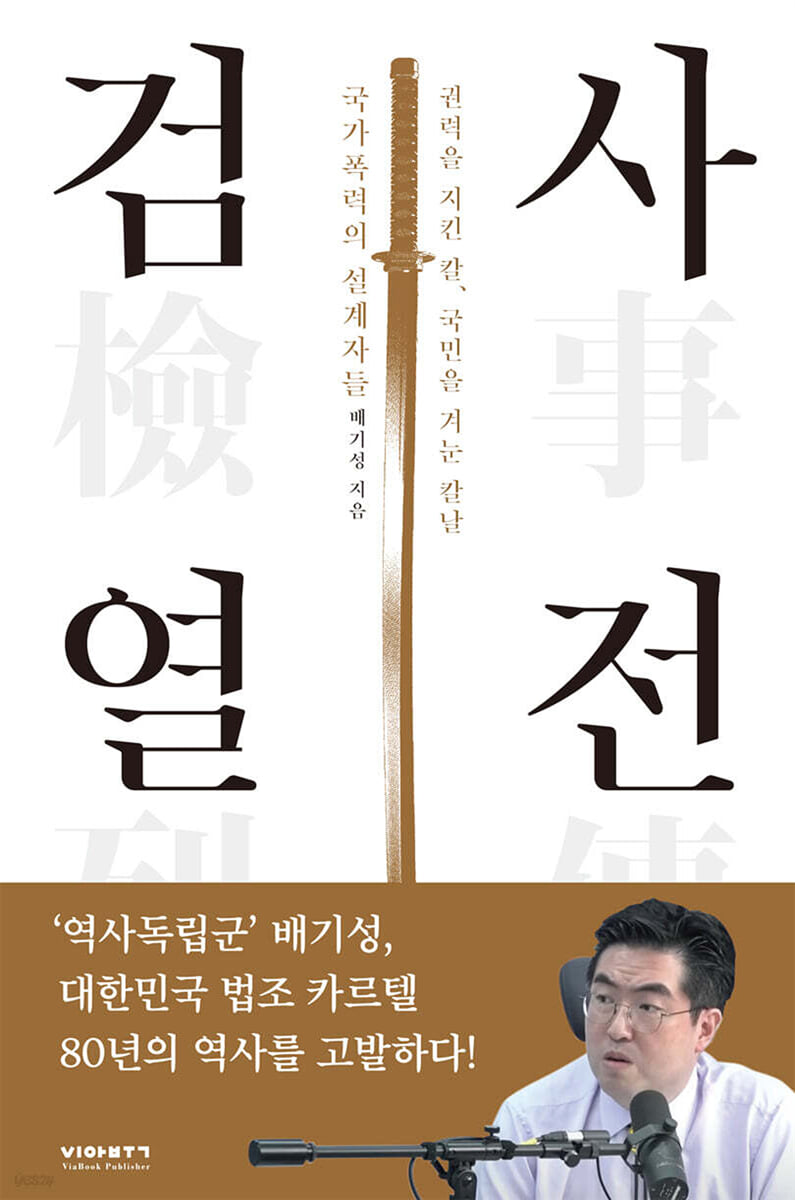 |
Description
Book Introduction
“They create sins that do not exist, and cover up sins that exist!”
From the Joseon Jeongpansa counterfeiting case
Even the Seoul Metropolitan Government civil servant spy fabrication case,
A Chronicle of Manipulation and Fabrication That Rocked South Korea
Since liberation, the prosecution has grown its organization by cracking down on 'communist spies'.
The dictatorial regimes from Syngman Rhee to Park Chung-hee and Chun Doo-hwan willingly wielded them as tools.
During this period, countless fabricated cases of communist spies were committed, centered around the prosecution and the Central Intelligence Agency.
Not only political opponents who fell out of favor with the establishment, but also innocent citizens, including artists and cultural figures, were targeted in "spy hunts," and it was not uncommon for them to be tortured to the point of admitting guilt.
As the author points out in the preface, “behind these manipulations, there were always political goals of the vested interests.” In the process, countless lives were sacrificed.
The cases introduced in this book are only those that could be called communist fabrication cases, cases for which the Truth and Reconciliation Commission and its predecessor, the Commission on the Investigation of Suspicious Deaths, decided to retry, cases for which the retrial decision was overturned to not guilty, and cases for which the Supreme Court ruled not guilty.
In addition, many other cases are still shrouded in darkness, waiting to be resolved.
The 'clearly fabricated' incidents introduced in this book were also acknowledged as state violence after a long wait, but no perpetrators have been properly punished.
It revisits the fabricated communist incidents of the past 80 years, calls out the names of forgotten victims and perpetrators of state violence, and warns of the dangers of corrupt groups.
From the Joseon Jeongpansa counterfeiting case
Even the Seoul Metropolitan Government civil servant spy fabrication case,
A Chronicle of Manipulation and Fabrication That Rocked South Korea
Since liberation, the prosecution has grown its organization by cracking down on 'communist spies'.
The dictatorial regimes from Syngman Rhee to Park Chung-hee and Chun Doo-hwan willingly wielded them as tools.
During this period, countless fabricated cases of communist spies were committed, centered around the prosecution and the Central Intelligence Agency.
Not only political opponents who fell out of favor with the establishment, but also innocent citizens, including artists and cultural figures, were targeted in "spy hunts," and it was not uncommon for them to be tortured to the point of admitting guilt.
As the author points out in the preface, “behind these manipulations, there were always political goals of the vested interests.” In the process, countless lives were sacrificed.
The cases introduced in this book are only those that could be called communist fabrication cases, cases for which the Truth and Reconciliation Commission and its predecessor, the Commission on the Investigation of Suspicious Deaths, decided to retry, cases for which the retrial decision was overturned to not guilty, and cases for which the Supreme Court ruled not guilty.
In addition, many other cases are still shrouded in darkness, waiting to be resolved.
The 'clearly fabricated' incidents introduced in this book were also acknowledged as state violence after a long wait, but no perpetrators have been properly punished.
It revisits the fabricated communist incidents of the past 80 years, calls out the names of forgotten victims and perpetrators of state violence, and warns of the dangers of corrupt groups.
- You can preview some of the book's contents.
Preview
index
preface
Part 1: The Age of Savagery
01 Disbandment of the Special Committee on Anti-National Activities and the National Assembly Spy Incident
02 Jo Bong-am's extrajudicial murder case
03 The Cho Yong-su incident in the Minjok Ilbo
04 People's Revolutionary Party Incident
05 Camellia Forest Incident
06 Unification Revolutionary Party Incident
07 European Spy Case
08 The "Five Bandits" Painting Incident
09 People's Revolutionary Party Reconstruction Committee Incident
10 Zainichi Korean spy ring cases
11 Namminjeon Incident
Part 2: The Age of Sacrifice
12 Jeju Spy Fabrication Case
13 Kim Dae-jung's conspiracy to commit sedition
14 The first and second Jindo spy ring incidents
15 Haklim Incident
16 Burim Incident
17 Gumi International Student Spy Case
18 Civil Struggle Incident
19 Bucheon Police Station sexual torture case
20 Hong Kong Suzy Kim spy fabrication case
Part 3: The Age of Fear
21 Pastor Moon Ik-hwan's visit to North Korea
22 Lim Su-kyung's visit to North Korea
23 Security Command civilian surveillance revelation incident
24 Kang Ki-hoon's ghostwriting case
25. The Grassland Restoration Incident
26. Arrest of former Presidents Chun Doo-hwan and Roh Tae-woo
27 Korea Minting and Security Printing Corporation strike inducement incident and clothing lobbying incident
28 Seoul Metropolitan Government Official Spy Fabrication Case
Conclusion
Appendix 01 Judge Jeong's Counterfeit Money Case
02 Mongyang Yeo Un-hyeong's assassination
Part 1: The Age of Savagery
01 Disbandment of the Special Committee on Anti-National Activities and the National Assembly Spy Incident
02 Jo Bong-am's extrajudicial murder case
03 The Cho Yong-su incident in the Minjok Ilbo
04 People's Revolutionary Party Incident
05 Camellia Forest Incident
06 Unification Revolutionary Party Incident
07 European Spy Case
08 The "Five Bandits" Painting Incident
09 People's Revolutionary Party Reconstruction Committee Incident
10 Zainichi Korean spy ring cases
11 Namminjeon Incident
Part 2: The Age of Sacrifice
12 Jeju Spy Fabrication Case
13 Kim Dae-jung's conspiracy to commit sedition
14 The first and second Jindo spy ring incidents
15 Haklim Incident
16 Burim Incident
17 Gumi International Student Spy Case
18 Civil Struggle Incident
19 Bucheon Police Station sexual torture case
20 Hong Kong Suzy Kim spy fabrication case
Part 3: The Age of Fear
21 Pastor Moon Ik-hwan's visit to North Korea
22 Lim Su-kyung's visit to North Korea
23 Security Command civilian surveillance revelation incident
24 Kang Ki-hoon's ghostwriting case
25. The Grassland Restoration Incident
26. Arrest of former Presidents Chun Doo-hwan and Roh Tae-woo
27 Korea Minting and Security Printing Corporation strike inducement incident and clothing lobbying incident
28 Seoul Metropolitan Government Official Spy Fabrication Case
Conclusion
Appendix 01 Judge Jeong's Counterfeit Money Case
02 Mongyang Yeo Un-hyeong's assassination
Detailed image

Publisher's Review
Dongbaekrim incident, Jindo spy ring incident…
Not only political enemies but also innocent citizens
The trap of 'anti-communism' that drove them to death
The victims of the incidents introduced in this book are diverse.
The victims of the 'Cho Bong-am judicial murder case' and the 'Kim Dae-jung conspiracy case' were accused of fabricated crimes because they were political enemies who posed a threat to the regime at the time.
The victims of the 'Dongbaekrim Incident', Cheon Sang-byeong, Yun I-sang, and Lee Eung-no, were scapegoats for the Park Chung-hee regime, which sought to overcome its low approval ratings.
The 'First Jindo Spy Case' and the 'Second Jindo Spy Case' are both cases in which innocent citizens were accused of being spies and forced to make false confessions through torture and other cruel acts.
In January 1981, the Central Intelligence Agency (CIA) announced that it had arrested a spy ring that had been operating in the Jindo area for 10 years.
The incident stemmed from a single piece of intelligence received by the Central Intelligence Agency in August 1980, during which time the spy's nephew, Kim Jong-in, along with his maternal relatives, distant relatives, villagers, and friends, were all arrested on charges of espionage and aiding and abetting espionage.
Despite the weak basis for the charges, the 'mastermind' Kim Jong-in was ultimately executed on October 31, 1985, leaving behind a shameful history of innocent citizens being robbed of their lives by state power.
During this process, it was later revealed that the suspects had made false confessions under torture, and all those involved were found not guilty.
This incident is the 'First Jindo Spy Case'.
The 'Second Jindo Spy Ring Incident' also tore apart a family in Jindo by accusing them of being spies.
Both incidents were cleverly fabricated for the political purpose of promoting anti-communist sentiment and maintaining the new military regime's power by highlighting the existence of spies sent to the South.
What is particularly vicious is that the main targets are 'people from remote rural areas' who are not familiar with legal procedures and have difficulty asking for help from lawyers and other sources.
From a tool of power to a subject
After democratization
Prosecutorial power becomes more solid
If the prosecution acted as a servant protecting power under the dictatorships of Syngman Rhee, Park Chung-hee, and Chun Doo-hwan, after democratization, the prosecution took advantage of the vacuum created by the end of military rule and the dissolution of the Central Intelligence Agency and established itself as the center of power.
It has truly moved from being a tool of power to being the subject of power.
The prosecutorial power thus consolidated continues to this day.
In 1999, when the Korea Minting and Security Printing Corporation unilaterally merged the Okcheon Mint with Gyeongsan, the Okcheon Mint labor union began a strike.
After the union's will was broken by the harsh crackdown, Jin Hyeong-gu, the head of the Daejeon High Prosecutors' Office's Public Security Department at the time of the Korea Minting and Security Printing Corporation strike, stated at a drinking party that the Public Security Department had in fact instigated the Okcheon Chang strike and that the purpose was to set an example for public enterprise strikes.
This is the so-called 'Minting and Security Printing Corporation strike induction incident'.
In the process, it was revealed that he had pressured Kang Hee-bok, the president of the Korea Minting and Security Printing Corporation, to announce an unreasonable merger plan.
This incident sparked nationwide outrage and even led to the formation of a special prosecutor, but it ended with the Minister of Justice Kim Tae-jung, who was responsible, being dismissed and Jin Hyung-goo receiving an eight-month prison sentence suspended for one year.
The son of Jin Hyung-gu, the mastermind behind this case, was a prosecutor, but resigned without disciplinary action after controversy arose over sexual harassment. His son-in-law went on to become the Minister of Justice and even the leader of the ruling party.
Movements to pass down power can also be found in other places.
During the military dictatorship era, 'anti-communism' was an invincible means of consolidating power and weakening political opponents.
Even in cases where it was clear that the evidence had been fabricated, the investigation and trial proceeded smoothly when the charge of 'spying' was used.
Even after democratization, the manipulation of counterintelligence investigations did not stop.
The 'Seoul City Civil Servant Spy Fabrication Case' that occurred in 2013 shocked the nation.
The photos submitted as evidence by the National Intelligence Service and the prosecution not only showed clear signs of manipulation, but the witness's testimony also did not follow procedures, making it ineffective as evidence.
In the end, the National Intelligence Service's coercive intervention was acknowledged, and the defendant, Yoo Woo-seong, was found not guilty, but no one was properly held accountable, such as the prosecutor in charge who was promoted to the position of Secretary for Public Official Discipline in the Yoon Seok-yeol administration.
“Even if you are indicted and face a very legally skilled prosecutor in court, go through a trial for several years, and eventually get to the Supreme Court and get acquitted, your life will be ruined.
"It's not like the judge finds you not guilty at the end and you're free."
Former President Yoon Seok-yeol made these remarks during a meeting with college students in November 2021.
His remarks are even more chilling when you consider that he has spent his entire life as a prosecutor, rising to the position of Prosecutor General and even serving as the president, the pinnacle of power.
This is because cases of prosecutors abusing their right to prosecute to ‘protect their own’ are still piling up.
From the Syngman Rhee regime to the present day
Looking into the communist fabrication case
Shadows of modern and contemporary history in Korea
Part 1 of this book, "The Age of Savagery," deals with the fabricated incidents of communist spies that occurred during the era of state violence under the Syngman Rhee and Park Chung-hee regimes, which were marked by aimless manipulation and oppression.
Part 2, "The Age of Sacrifice," examines the atrocities committed by the Chun Doo-hwan regime and public prosecutors, who sacrificed countless lives to solidify their dictatorial regime. Part 3, "The Age of Fear," examines fabricated cases spearheaded by prosecutors from the Roh Tae-woo regime to the present day.
The cases are arranged chronologically, allowing readers to naturally observe how the prosecution has transformed from a tool of power to a subject of power.
In order to focus on the role of the prosecutor and the process of its transformation, two representative fabricated cases of communist spies that occurred during the US military government after liberation are also included as appendices, although they are not covered in the main text.
In the ‘Conclusion’, the author emphasizes a ‘common-sense society’.
In a sensible society, things should proceed in the following order: “When a criminal case arises, the police investigate, the prosecutors decide whether to indict based on the investigation, and the court determines guilt or innocence and the sentence.”
However, as the role of the prosecution has grown unreasonably, the process from investigation to indictment and verdict has become unreliable.
In this book, the author simultaneously reflects on past events and offers insights into the direction in which the prosecution organization should move forward in the future.
Not only political enemies but also innocent citizens
The trap of 'anti-communism' that drove them to death
The victims of the incidents introduced in this book are diverse.
The victims of the 'Cho Bong-am judicial murder case' and the 'Kim Dae-jung conspiracy case' were accused of fabricated crimes because they were political enemies who posed a threat to the regime at the time.
The victims of the 'Dongbaekrim Incident', Cheon Sang-byeong, Yun I-sang, and Lee Eung-no, were scapegoats for the Park Chung-hee regime, which sought to overcome its low approval ratings.
The 'First Jindo Spy Case' and the 'Second Jindo Spy Case' are both cases in which innocent citizens were accused of being spies and forced to make false confessions through torture and other cruel acts.
In January 1981, the Central Intelligence Agency (CIA) announced that it had arrested a spy ring that had been operating in the Jindo area for 10 years.
The incident stemmed from a single piece of intelligence received by the Central Intelligence Agency in August 1980, during which time the spy's nephew, Kim Jong-in, along with his maternal relatives, distant relatives, villagers, and friends, were all arrested on charges of espionage and aiding and abetting espionage.
Despite the weak basis for the charges, the 'mastermind' Kim Jong-in was ultimately executed on October 31, 1985, leaving behind a shameful history of innocent citizens being robbed of their lives by state power.
During this process, it was later revealed that the suspects had made false confessions under torture, and all those involved were found not guilty.
This incident is the 'First Jindo Spy Case'.
The 'Second Jindo Spy Ring Incident' also tore apart a family in Jindo by accusing them of being spies.
Both incidents were cleverly fabricated for the political purpose of promoting anti-communist sentiment and maintaining the new military regime's power by highlighting the existence of spies sent to the South.
What is particularly vicious is that the main targets are 'people from remote rural areas' who are not familiar with legal procedures and have difficulty asking for help from lawyers and other sources.
From a tool of power to a subject
After democratization
Prosecutorial power becomes more solid
If the prosecution acted as a servant protecting power under the dictatorships of Syngman Rhee, Park Chung-hee, and Chun Doo-hwan, after democratization, the prosecution took advantage of the vacuum created by the end of military rule and the dissolution of the Central Intelligence Agency and established itself as the center of power.
It has truly moved from being a tool of power to being the subject of power.
The prosecutorial power thus consolidated continues to this day.
In 1999, when the Korea Minting and Security Printing Corporation unilaterally merged the Okcheon Mint with Gyeongsan, the Okcheon Mint labor union began a strike.
After the union's will was broken by the harsh crackdown, Jin Hyeong-gu, the head of the Daejeon High Prosecutors' Office's Public Security Department at the time of the Korea Minting and Security Printing Corporation strike, stated at a drinking party that the Public Security Department had in fact instigated the Okcheon Chang strike and that the purpose was to set an example for public enterprise strikes.
This is the so-called 'Minting and Security Printing Corporation strike induction incident'.
In the process, it was revealed that he had pressured Kang Hee-bok, the president of the Korea Minting and Security Printing Corporation, to announce an unreasonable merger plan.
This incident sparked nationwide outrage and even led to the formation of a special prosecutor, but it ended with the Minister of Justice Kim Tae-jung, who was responsible, being dismissed and Jin Hyung-goo receiving an eight-month prison sentence suspended for one year.
The son of Jin Hyung-gu, the mastermind behind this case, was a prosecutor, but resigned without disciplinary action after controversy arose over sexual harassment. His son-in-law went on to become the Minister of Justice and even the leader of the ruling party.
Movements to pass down power can also be found in other places.
During the military dictatorship era, 'anti-communism' was an invincible means of consolidating power and weakening political opponents.
Even in cases where it was clear that the evidence had been fabricated, the investigation and trial proceeded smoothly when the charge of 'spying' was used.
Even after democratization, the manipulation of counterintelligence investigations did not stop.
The 'Seoul City Civil Servant Spy Fabrication Case' that occurred in 2013 shocked the nation.
The photos submitted as evidence by the National Intelligence Service and the prosecution not only showed clear signs of manipulation, but the witness's testimony also did not follow procedures, making it ineffective as evidence.
In the end, the National Intelligence Service's coercive intervention was acknowledged, and the defendant, Yoo Woo-seong, was found not guilty, but no one was properly held accountable, such as the prosecutor in charge who was promoted to the position of Secretary for Public Official Discipline in the Yoon Seok-yeol administration.
“Even if you are indicted and face a very legally skilled prosecutor in court, go through a trial for several years, and eventually get to the Supreme Court and get acquitted, your life will be ruined.
"It's not like the judge finds you not guilty at the end and you're free."
Former President Yoon Seok-yeol made these remarks during a meeting with college students in November 2021.
His remarks are even more chilling when you consider that he has spent his entire life as a prosecutor, rising to the position of Prosecutor General and even serving as the president, the pinnacle of power.
This is because cases of prosecutors abusing their right to prosecute to ‘protect their own’ are still piling up.
From the Syngman Rhee regime to the present day
Looking into the communist fabrication case
Shadows of modern and contemporary history in Korea
Part 1 of this book, "The Age of Savagery," deals with the fabricated incidents of communist spies that occurred during the era of state violence under the Syngman Rhee and Park Chung-hee regimes, which were marked by aimless manipulation and oppression.
Part 2, "The Age of Sacrifice," examines the atrocities committed by the Chun Doo-hwan regime and public prosecutors, who sacrificed countless lives to solidify their dictatorial regime. Part 3, "The Age of Fear," examines fabricated cases spearheaded by prosecutors from the Roh Tae-woo regime to the present day.
The cases are arranged chronologically, allowing readers to naturally observe how the prosecution has transformed from a tool of power to a subject of power.
In order to focus on the role of the prosecutor and the process of its transformation, two representative fabricated cases of communist spies that occurred during the US military government after liberation are also included as appendices, although they are not covered in the main text.
In the ‘Conclusion’, the author emphasizes a ‘common-sense society’.
In a sensible society, things should proceed in the following order: “When a criminal case arises, the police investigate, the prosecutors decide whether to indict based on the investigation, and the court determines guilt or innocence and the sentence.”
However, as the role of the prosecution has grown unreasonably, the process from investigation to indictment and verdict has become unreliable.
In this book, the author simultaneously reflects on past events and offers insights into the direction in which the prosecution organization should move forward in the future.
GOODS SPECIFICS
- Date of issue: October 24, 2025
- Page count, weight, size: 230 pages | 324g | 143*210*14mm
- ISBN13: 9791194348399
- ISBN10: 1194348394
You may also like
카테고리
korean


korean

![GQ KOREA Mark (Monthly): December [2025]](http://librairie.coreenne.fr/cdn/shop/files/8ef265dbbfbf186523ed75ba7319009d.jpg?v=1765340328&width=3840)


