

Mongyang Yeo Un-hyeong, a new leader for a new era
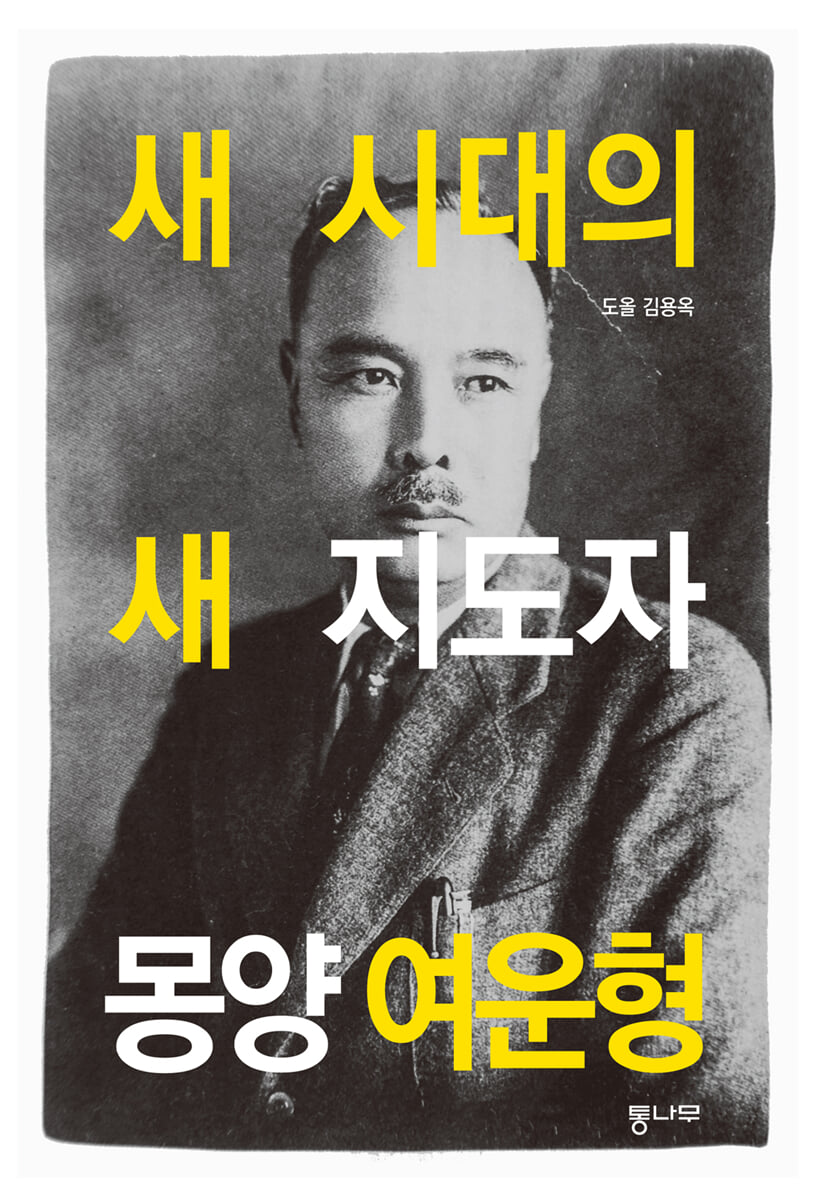 |
Description
Book Introduction
A new era cannot begin without an outstanding leader!!
The immortal leader of the Republic of Korea, Mongyang Yeo Un-hyeong!!
Now, 80 years after liberation, let us renew the leadership of Yeo Un-hyeong, who was frustrated!!
Since our people were liberated from Japanese colonial rule, the people's efforts to correct the historical errors of that era have been continuously driven, but the efforts of those forces to thwart them have also been persistent.
The recent civil war is a clear manifestation of that persistence.
But we, the people, overcame the civil war with common sense.
Now we are creating a new country.
What should the new nation's leader look like? This book presents the life and vision of Mongyang Yeo Un-hyeong as an answer.
This is to allow Mongyang's leadership, which was frustrated by a bullet, to blossom properly in this land.
Mongyang Yeo Un-hyeong is the immortal leader of our people.
Yeo Un-hyeong was a visionary social reformer who was active during the Japanese colonial period and the chaotic period immediately following liberation, and an outstanding political leader who devoted himself to the struggle for independence.
He was a giant internationally as well.
His life was the pinnacle of efforts for national independence, unification, and advancement in the modern history of the 20th century.
In this book, author Dool Kim Yong-ok meticulously portrays the philosophical thought of Yeo Un-hyeong, who always pioneered a new era amidst hardship, and his various social activities, focusing on his aspect as a leader.
We must have a perspective that sees great people as great.
The great Mongyang's leadership should be emulated.
The immortal leader of the Republic of Korea, Mongyang Yeo Un-hyeong!!
Now, 80 years after liberation, let us renew the leadership of Yeo Un-hyeong, who was frustrated!!
Since our people were liberated from Japanese colonial rule, the people's efforts to correct the historical errors of that era have been continuously driven, but the efforts of those forces to thwart them have also been persistent.
The recent civil war is a clear manifestation of that persistence.
But we, the people, overcame the civil war with common sense.
Now we are creating a new country.
What should the new nation's leader look like? This book presents the life and vision of Mongyang Yeo Un-hyeong as an answer.
This is to allow Mongyang's leadership, which was frustrated by a bullet, to blossom properly in this land.
Mongyang Yeo Un-hyeong is the immortal leader of our people.
Yeo Un-hyeong was a visionary social reformer who was active during the Japanese colonial period and the chaotic period immediately following liberation, and an outstanding political leader who devoted himself to the struggle for independence.
He was a giant internationally as well.
His life was the pinnacle of efforts for national independence, unification, and advancement in the modern history of the 20th century.
In this book, author Dool Kim Yong-ok meticulously portrays the philosophical thought of Yeo Un-hyeong, who always pioneered a new era amidst hardship, and his various social activities, focusing on his aspect as a leader.
We must have a perspective that sees great people as great.
The great Mongyang's leadership should be emulated.
- You can preview some of the book's contents.
Preview
index
Chapter 1: Intro 13
Fates 15
Dool's 10-part series on the history of the Korean independence movement, part 16
Breathing with Yeo Woon-hyung 18
The True Meaning of Life and Peace 20
22 people ranked as the nation's top leaders during the liberation period
Revolutionaries Don't Die in Bed 24
Vortex 26 by Gregory Henderson
Sagu Heights's Aunt 27
It's thrilling! It feels like a hole has been opened. 28
Normal People Are Bad Guys 30
White House 32 in Lexington
Yoon Nae-hyun, me, and Henderson 33
George McCune, a Giant of Korean Studies Who Must Be Remembered (34)
Henderson's Mongyang Hall 37
Book 38 given to Henderson by Yeo Woon-hong
Poem 39 I left in the biography of Yeo Un-hyeong
Chapter 2: Physical Education and Dreaming 45
Changju Lee Je-hwang 47
Do-ui-sang-ma is a unique sentence structure of Mr. Chang-ju 48
The Way is a metaphysical discipline 49
Righteousness is social justice 50
The True Meaning of the Word "Yok-i-wi-in" 52
Why do you practice martial arts? 52
Mongyang and Changju 55
Mongyang, Lee Je-hwang, and Son Ki-jeong 57
Kanoo Jigoro 59
Judo is a uniquely Korean gesture! Lee Je-hwang's claim 60
Yeo Un-hyeong's admission to the English Literature Department at Geumneung University and his return to Korea after 15 years (61)
Preparing for the founding of the nation in Korea 62
Kazushige Ugaki's Advice 62
64, appointed president of JoongAng Ilbo, one of the three major newspapers of the colonial era.
The History of the JoongAng Ilbo, Part 65
66 Literary Works Created by the Chosun Ilbo
Physical strength is national strength.
The spirit of boxing is the spirit of independence 66
A Shout to the Youth of Joseon: Let's Build a Strong Nation! 67
Mongyang's promotion of horizontal bar exercise 69
Mongyang and Salmusong Two 71
The Eradication of the Japanese Flag from Son Ki-jeong's Chest 72
You are running as a Korean 73
Mongyang's Philosophy of Physical Education: The Foundation of Education is Physical Education! 74
The Will to the Power of Mongyang 75
Shim Hoon's Last Poem, 76
From the initial stunned shock to the flag of victory 77
Let's remember Nam Seung-ryong, who placed third in the Berlin Olympic marathon! 79
Son Ki-chung and Adolf Hitler's Handshake 79
Rising Sun Flag Removal Pass! 80
Chosun JoongAng Ilbo's voluntary suspension of publication 81
The closure of the Chosun Ilbo marked the beginning of the downfall of Japanese imperialism.
The World's Most Prestigious School: "Struggle and Effort" 83
Independence Movement = 87, the fight for the universal right to survival
Chapter 3: Donghak and Mongyang 89
The core of Donghak is Donghak scriptures 91
The only scripture not altered by the kerygma 92
The place where Donghak was spread was not Jeolla-do, but the east coast of Gyeongsangbuk-do.
94 Witdaechi, Ilwolsan, Yeongyang-gun
A Man Who Devoted His Life to Revolution, Lee Pil-je, 95
Disciples of Haewol, impressed by the name of the founder of the religion, 95
Haewol and Pilje Lee's Encounter 96
Haewol's proactive participation marks the beginning of a true Dobari 98
Reevaluation of Lee Pil-je 98
Sun, Moon, and Rain 99
Mongyang's great-uncle Yeo Gyu-deok and Haewol's reunion, Part 99
Hamyang Yeo Clan World 101
Great-grandfather Yeo Jang-seop and four other generations of the extended family 102
Haewol's Promise to the Master 104
The Meaning of Suun's Publication Request 103
Now, Gapdun-ri Gakpanso.
The first publication of the Donghak scriptures, 1880, woodblock print 103
The Ultimate Way of Chinese and Korean 105
The Revolutionary Nature of the Classic "Yongdam Yusa" 105
Mongyang's great-uncle suggests to Haewol that the Yongdam Yusa be published.
Record 107 of the "Cheondo Church History Draft"
Distortion of the Yareo Lee Donhwa 107
Irresponsible Transmission of Distortion 108
The most basic original source is the 〈Haewolseonsaeng Munjip〉(1906). 109
The house of Mongyang's great-uncle Yeo Gyu-deok was a representative gathering place for Donghak 111
The Yeo Un-hyeong family is the origin of popular Donghak philanthropy.
From Yeo Gyu-deok to Kim Eun-gyeong, Mokcheon's publication of scriptures became the main body of Donghak Po-deok 113.
Spreading from Chungcheong Province's Open Garden to Jeolla Province 113
His paternal grandfather, Yeo Gyu-shin, is also considered by the history of Donghak to be the founder of early Donghak.
Mongyang's Grandfather's Memories 114
Yeo Gyu-shin, Yeo Gyu-deok, Yeo Seung-hyeon, Yeo Jun 115
The Unique Nuances of Yeo Gyu-shin's Chinese Pure Land 116
Mongyang's idealism originated from his grandfather Yeo Gyu-sin's great national boundary poetry 116
Great-grandfather Yeo Jang-seop's Donghak Guiui 118
Yeo Un-hyeong was conceived in Samgol, Danyang, a mecca of Donghak: Dreaming of the Sun 118
Mongyang's father, Yeo Jeong-hyeon, was a staunch anti-yangban 119 who had no ties to Donghak.
The true education of Mongyang begins with the family.
The World's Greatest Heroine, Tiger Lady's Mom 120
Living in seclusion in the mountains without considering the development of descendants, family misfortune 121
All religions are a lie, Tiger Mom's opinion 122
Mother's Rebellion.
122
Chapter 4: The World Historical Context of the March 1st Independence Movement 125
An incident is a collection of countless incidents 127
The March 1st Movement, as people often refer to it, was not a movement but a world-historical "revolution." 128
In the 20th century, 80% of the land area was colonized. 128
Amritsar Massacre, Mohandas Gandhi 129
Satyagraha: Following the March 1st Revolution 129
March 1st Independence Movement and May 4th Movement 130
Peking University Student Salvation Association's monthly magazine, "Kookmin," publishes the full text of the Gimi Independence Declaration, Issue 131.
A gruesome sight in Jeongju.
Osan School Spirit 132
The Russian October Revolution was ideological, the March 1st Revolution was a sympathy of the heart. 132
The March 1st Revolution as Appeared in the Beijing Student Union Declaration 133
The Chinese Revolutionary Party-Kuomintang official newspaper, the Republic of China Daily, reports on and commentates on the March 1st Revolution, 20+ issues, 134
Jin Dok-su and Lee Dae-jo's "Maeju Review" Calls for Chinese Youth to Rise Up 134
Who is China's Yi Wan-yong? 135
Busa Nyeon's thesis, "New Lessons from the Korean Independence Movement," 135
The March 1st Movement was a revolution! 136 reasons why it was a revolution
Revolution is not simply about overturning things.
Element of Newness 137
There is no revolution in Japan 138
Joseon's history began with revolution and ended with revolution.
Still ongoing 138
From the March 1st Revolution to the Revolution of Light 139
Memories of a Sharp First Kiss = March 1st Independence Movement 140
Mongyang's uncle, Yeo Byeong-hyeon 141
Baejae School and Hyupsunghoe 141
Jonggajip Yeonamsik 142
Fire and Disaster Prevention 143
145. Emancipation of Slaves
Chapter 5: Mongyang's Shinhan Youth Party Leads the March 1st Independence Revolution 147
Mongyang and Jo Dong-ho enter Jinling University in Nanjing.
A theology student becomes an English literature student 150
Yoo Jeong-jo Dong-ho, the spiritual root of the Hankyoreh newspaper, is a thief of Mongyang. 151
From Nanjing to Shanghai! From History to the Present! 152
George Fitch, 153, of the Hyowhaseo Bureau
Yegwan Shin Gyu-sik, the father of the Korean independence movement, 153
A Great Tycoon with Money, Ideals, and Morality 154
Shin Gyu-sik's Scope of Interaction: The Foundation of the Future Provisional Government of the Republic of Korea 155
Neighboring with Jin Gi-mi and Jin Dok-su 156
Shin Gyu-sik's Secret Society Organization Activities 156
Great history is created when great people are treated with greatness. 157
The origin and leader of the March 1st Independence Movement was Mongyang! 158
The Shinhan Youth Party is Korea's first modern political party, founded in 158 by Mongyang.
The logical inevitability of the March 1st Independence Revolution and the establishment of the Provisional Government of the Republic of Korea 159
The founding of the Shinhan Youth Party: 6 founding members, 160
Reason for disbandment 161
Shin Adongjesa 162 organized by Shin Gyu-sik
Korean Association, Dongjesa 162
Woodrow Wilson's special envoy, Charles Richard Crane 164
166 Thanks to the friendship of Chinese athlete Wang Zhengyan
Interview 166 that night
Crane, the Humanist 167
The Encounter between Crane and Yeo Un-hyeong: A Watershed in Korean History 168
There is no direct connection between the Korean people and Wilson's principle of national self-determination. 169
The sagas omit the first half of the revolution. 170
Crane's Recommendation: Rise Up the Korean People! 170
Bring in Kim Kyu-sik! 171
Kim Kyu-sik's English skills 171
The deadline for completing the petition for Korean independence: A tearful effort 172
A Ship from Shanghai to France, with the Help of a Beautiful-Hearted Butcher 173
The fateful month of February 1st, March 1st 174
Chapter 6: The Tokyo Imperial Hotel Speech and Taisho Democracy 177
Missing Link 179
The Korean People's Reaction to the Shinhan Youth Party's Initiative 179
Pletarchia's longing and Hongik Ingan's wish are internally 180
Japan's Shock: Unforeseen 181
Bring Yeo Woon-hyung! 182
Lee Jae-yi: Divisions within the revolutionary group itself 182
Taisho Democracy 183
Taisho Romance 184
The Kumiai Christian Church and the Chosik Kingdom 185
The pros and cons are evenly divided 185
Yeo Woon-hyung's four conditions and Jang Deok-su 186
187 People You'll Meet in Tokyo Over 13 Days
Yeo Woon-hyung and Koga 189
The analogy between the annexation of Joseon and the merger of companies is absurd. 191
A nation needs more than profit 191
Mongyang's Great Counterattack 196
Bibimbap of Abstract and Concrete 197
The era of cold winds, cold snow, and the era of strong power is over.
International relations are not determined solely by force. 199
Koga's Sweet Proposal 199
Koga's Mansion Banquet 201
Army Minister Kiichi Tanaka 201
202 people in attendance
Why did the Titanic sink? 204
If I could burn down the whole thatched house and only the bedbug, I would be 205
The Power of the Fight for Justice 206
Greetings from Mizuno 206
Minister of Posts and Telecommunications Noda Utaro 208
The grand atmosphere of the Tokyo Imperial Hotel speech 209
The Finale of the March 1st Independence Movement: From the Crane Interview to the Imperial Hotel 209
Speech Summary 210
Independence: A Natural Principle of Self-Survival and a Human Principle 211
The Philosophy of "Time": Independence is the Demand of Time: Like the Coming of Heaven 213
Our independence revolution has nothing to do with the US president's principle of national self-determination. 213
It's just a demand within the nation 213
The Korean people's national vision differs from Japan's! 215
Encounter with Professor Sakuzo Yoshino 216
Shimonoseki's Fugu Sashimi Restaurant 217
Appendix: Mongyang Yeo Un-hyeong Chronology 219
Fates 15
Dool's 10-part series on the history of the Korean independence movement, part 16
Breathing with Yeo Woon-hyung 18
The True Meaning of Life and Peace 20
22 people ranked as the nation's top leaders during the liberation period
Revolutionaries Don't Die in Bed 24
Vortex 26 by Gregory Henderson
Sagu Heights's Aunt 27
It's thrilling! It feels like a hole has been opened. 28
Normal People Are Bad Guys 30
White House 32 in Lexington
Yoon Nae-hyun, me, and Henderson 33
George McCune, a Giant of Korean Studies Who Must Be Remembered (34)
Henderson's Mongyang Hall 37
Book 38 given to Henderson by Yeo Woon-hong
Poem 39 I left in the biography of Yeo Un-hyeong
Chapter 2: Physical Education and Dreaming 45
Changju Lee Je-hwang 47
Do-ui-sang-ma is a unique sentence structure of Mr. Chang-ju 48
The Way is a metaphysical discipline 49
Righteousness is social justice 50
The True Meaning of the Word "Yok-i-wi-in" 52
Why do you practice martial arts? 52
Mongyang and Changju 55
Mongyang, Lee Je-hwang, and Son Ki-jeong 57
Kanoo Jigoro 59
Judo is a uniquely Korean gesture! Lee Je-hwang's claim 60
Yeo Un-hyeong's admission to the English Literature Department at Geumneung University and his return to Korea after 15 years (61)
Preparing for the founding of the nation in Korea 62
Kazushige Ugaki's Advice 62
64, appointed president of JoongAng Ilbo, one of the three major newspapers of the colonial era.
The History of the JoongAng Ilbo, Part 65
66 Literary Works Created by the Chosun Ilbo
Physical strength is national strength.
The spirit of boxing is the spirit of independence 66
A Shout to the Youth of Joseon: Let's Build a Strong Nation! 67
Mongyang's promotion of horizontal bar exercise 69
Mongyang and Salmusong Two 71
The Eradication of the Japanese Flag from Son Ki-jeong's Chest 72
You are running as a Korean 73
Mongyang's Philosophy of Physical Education: The Foundation of Education is Physical Education! 74
The Will to the Power of Mongyang 75
Shim Hoon's Last Poem, 76
From the initial stunned shock to the flag of victory 77
Let's remember Nam Seung-ryong, who placed third in the Berlin Olympic marathon! 79
Son Ki-chung and Adolf Hitler's Handshake 79
Rising Sun Flag Removal Pass! 80
Chosun JoongAng Ilbo's voluntary suspension of publication 81
The closure of the Chosun Ilbo marked the beginning of the downfall of Japanese imperialism.
The World's Most Prestigious School: "Struggle and Effort" 83
Independence Movement = 87, the fight for the universal right to survival
Chapter 3: Donghak and Mongyang 89
The core of Donghak is Donghak scriptures 91
The only scripture not altered by the kerygma 92
The place where Donghak was spread was not Jeolla-do, but the east coast of Gyeongsangbuk-do.
94 Witdaechi, Ilwolsan, Yeongyang-gun
A Man Who Devoted His Life to Revolution, Lee Pil-je, 95
Disciples of Haewol, impressed by the name of the founder of the religion, 95
Haewol and Pilje Lee's Encounter 96
Haewol's proactive participation marks the beginning of a true Dobari 98
Reevaluation of Lee Pil-je 98
Sun, Moon, and Rain 99
Mongyang's great-uncle Yeo Gyu-deok and Haewol's reunion, Part 99
Hamyang Yeo Clan World 101
Great-grandfather Yeo Jang-seop and four other generations of the extended family 102
Haewol's Promise to the Master 104
The Meaning of Suun's Publication Request 103
Now, Gapdun-ri Gakpanso.
The first publication of the Donghak scriptures, 1880, woodblock print 103
The Ultimate Way of Chinese and Korean 105
The Revolutionary Nature of the Classic "Yongdam Yusa" 105
Mongyang's great-uncle suggests to Haewol that the Yongdam Yusa be published.
Record 107 of the "Cheondo Church History Draft"
Distortion of the Yareo Lee Donhwa 107
Irresponsible Transmission of Distortion 108
The most basic original source is the 〈Haewolseonsaeng Munjip〉(1906). 109
The house of Mongyang's great-uncle Yeo Gyu-deok was a representative gathering place for Donghak 111
The Yeo Un-hyeong family is the origin of popular Donghak philanthropy.
From Yeo Gyu-deok to Kim Eun-gyeong, Mokcheon's publication of scriptures became the main body of Donghak Po-deok 113.
Spreading from Chungcheong Province's Open Garden to Jeolla Province 113
His paternal grandfather, Yeo Gyu-shin, is also considered by the history of Donghak to be the founder of early Donghak.
Mongyang's Grandfather's Memories 114
Yeo Gyu-shin, Yeo Gyu-deok, Yeo Seung-hyeon, Yeo Jun 115
The Unique Nuances of Yeo Gyu-shin's Chinese Pure Land 116
Mongyang's idealism originated from his grandfather Yeo Gyu-sin's great national boundary poetry 116
Great-grandfather Yeo Jang-seop's Donghak Guiui 118
Yeo Un-hyeong was conceived in Samgol, Danyang, a mecca of Donghak: Dreaming of the Sun 118
Mongyang's father, Yeo Jeong-hyeon, was a staunch anti-yangban 119 who had no ties to Donghak.
The true education of Mongyang begins with the family.
The World's Greatest Heroine, Tiger Lady's Mom 120
Living in seclusion in the mountains without considering the development of descendants, family misfortune 121
All religions are a lie, Tiger Mom's opinion 122
Mother's Rebellion.
122
Chapter 4: The World Historical Context of the March 1st Independence Movement 125
An incident is a collection of countless incidents 127
The March 1st Movement, as people often refer to it, was not a movement but a world-historical "revolution." 128
In the 20th century, 80% of the land area was colonized. 128
Amritsar Massacre, Mohandas Gandhi 129
Satyagraha: Following the March 1st Revolution 129
March 1st Independence Movement and May 4th Movement 130
Peking University Student Salvation Association's monthly magazine, "Kookmin," publishes the full text of the Gimi Independence Declaration, Issue 131.
A gruesome sight in Jeongju.
Osan School Spirit 132
The Russian October Revolution was ideological, the March 1st Revolution was a sympathy of the heart. 132
The March 1st Revolution as Appeared in the Beijing Student Union Declaration 133
The Chinese Revolutionary Party-Kuomintang official newspaper, the Republic of China Daily, reports on and commentates on the March 1st Revolution, 20+ issues, 134
Jin Dok-su and Lee Dae-jo's "Maeju Review" Calls for Chinese Youth to Rise Up 134
Who is China's Yi Wan-yong? 135
Busa Nyeon's thesis, "New Lessons from the Korean Independence Movement," 135
The March 1st Movement was a revolution! 136 reasons why it was a revolution
Revolution is not simply about overturning things.
Element of Newness 137
There is no revolution in Japan 138
Joseon's history began with revolution and ended with revolution.
Still ongoing 138
From the March 1st Revolution to the Revolution of Light 139
Memories of a Sharp First Kiss = March 1st Independence Movement 140
Mongyang's uncle, Yeo Byeong-hyeon 141
Baejae School and Hyupsunghoe 141
Jonggajip Yeonamsik 142
Fire and Disaster Prevention 143
145. Emancipation of Slaves
Chapter 5: Mongyang's Shinhan Youth Party Leads the March 1st Independence Revolution 147
Mongyang and Jo Dong-ho enter Jinling University in Nanjing.
A theology student becomes an English literature student 150
Yoo Jeong-jo Dong-ho, the spiritual root of the Hankyoreh newspaper, is a thief of Mongyang. 151
From Nanjing to Shanghai! From History to the Present! 152
George Fitch, 153, of the Hyowhaseo Bureau
Yegwan Shin Gyu-sik, the father of the Korean independence movement, 153
A Great Tycoon with Money, Ideals, and Morality 154
Shin Gyu-sik's Scope of Interaction: The Foundation of the Future Provisional Government of the Republic of Korea 155
Neighboring with Jin Gi-mi and Jin Dok-su 156
Shin Gyu-sik's Secret Society Organization Activities 156
Great history is created when great people are treated with greatness. 157
The origin and leader of the March 1st Independence Movement was Mongyang! 158
The Shinhan Youth Party is Korea's first modern political party, founded in 158 by Mongyang.
The logical inevitability of the March 1st Independence Revolution and the establishment of the Provisional Government of the Republic of Korea 159
The founding of the Shinhan Youth Party: 6 founding members, 160
Reason for disbandment 161
Shin Adongjesa 162 organized by Shin Gyu-sik
Korean Association, Dongjesa 162
Woodrow Wilson's special envoy, Charles Richard Crane 164
166 Thanks to the friendship of Chinese athlete Wang Zhengyan
Interview 166 that night
Crane, the Humanist 167
The Encounter between Crane and Yeo Un-hyeong: A Watershed in Korean History 168
There is no direct connection between the Korean people and Wilson's principle of national self-determination. 169
The sagas omit the first half of the revolution. 170
Crane's Recommendation: Rise Up the Korean People! 170
Bring in Kim Kyu-sik! 171
Kim Kyu-sik's English skills 171
The deadline for completing the petition for Korean independence: A tearful effort 172
A Ship from Shanghai to France, with the Help of a Beautiful-Hearted Butcher 173
The fateful month of February 1st, March 1st 174
Chapter 6: The Tokyo Imperial Hotel Speech and Taisho Democracy 177
Missing Link 179
The Korean People's Reaction to the Shinhan Youth Party's Initiative 179
Pletarchia's longing and Hongik Ingan's wish are internally 180
Japan's Shock: Unforeseen 181
Bring Yeo Woon-hyung! 182
Lee Jae-yi: Divisions within the revolutionary group itself 182
Taisho Democracy 183
Taisho Romance 184
The Kumiai Christian Church and the Chosik Kingdom 185
The pros and cons are evenly divided 185
Yeo Woon-hyung's four conditions and Jang Deok-su 186
187 People You'll Meet in Tokyo Over 13 Days
Yeo Woon-hyung and Koga 189
The analogy between the annexation of Joseon and the merger of companies is absurd. 191
A nation needs more than profit 191
Mongyang's Great Counterattack 196
Bibimbap of Abstract and Concrete 197
The era of cold winds, cold snow, and the era of strong power is over.
International relations are not determined solely by force. 199
Koga's Sweet Proposal 199
Koga's Mansion Banquet 201
Army Minister Kiichi Tanaka 201
202 people in attendance
Why did the Titanic sink? 204
If I could burn down the whole thatched house and only the bedbug, I would be 205
The Power of the Fight for Justice 206
Greetings from Mizuno 206
Minister of Posts and Telecommunications Noda Utaro 208
The grand atmosphere of the Tokyo Imperial Hotel speech 209
The Finale of the March 1st Independence Movement: From the Crane Interview to the Imperial Hotel 209
Speech Summary 210
Independence: A Natural Principle of Self-Survival and a Human Principle 211
The Philosophy of "Time": Independence is the Demand of Time: Like the Coming of Heaven 213
Our independence revolution has nothing to do with the US president's principle of national self-determination. 213
It's just a demand within the nation 213
The Korean people's national vision differs from Japan's! 215
Encounter with Professor Sakuzo Yoshino 216
Shimonoseki's Fugu Sashimi Restaurant 217
Appendix: Mongyang Yeo Un-hyeong Chronology 219
Into the book
Modern history is the “framework” that constitutes my modern existence.
Without modern history, my existence would not reveal itself.
--- p.17
Modern history is composed of various concepts.
Words like communist, leftist, rightist, democracy, communism, class, and revolution are thrown around countless times.
And these concepts ultimately form the basis of my ideas.
--- p.18
There is probably no easier way to understand our modern history than Mongyang.
Mongyang's life is not closed.
It fairly implements the meaning of all ideologies.
--- p.18
The person who captured the hearts of the people as a leader who organized the chaos and led the nation during the liberation period was Yeo Un-hyeong.
--- p.23
Henderson opened his mouth.
"On August 15, 1948, the person who should have stood in front of the Central Government Complex was not Unam, but Mongyang."
--- p.36
Lee Je-hwang naturally became Yeo Woon-hyung's personal secretary, and also took on the role of chief of security, protecting him as a martial artist.
--- p.55
Lee Je-hwang carried Mongyang's coffin from the Gwanghwamun Workers' Party headquarters to Seoul Stadium.
A crowd of 600,000 people in the heart of Seoul, a wave of mourning unlike anything seen since the war.
Beside him, Son Ki-jeong followed, carrying Mongyang's coffin silently, with tears streaming down his face.
--- p.57
Son Ki-jeong attended Yangjeong High School and was a classmate of Hong Gu, the second son of Yeo Un-hyeong.
--- p.72
Yeo Gyu-deok was the most progressive intellectual in the Yeo family and accepted the Donghak Revolution as a legitimate demand of the people.
--- p.104
Mongyang's father, Yeo Jeong-hyeon, was a character who did not fit in with the atmosphere of this family at all.
The normative ethics for the nobles and the commoners were unconditionally strict.
--- p.119
Grandfather Yeo Gyu-shin was a man of eccentric beliefs, but he was a righteous man with no worldly desires.
--- p.143
For Mongyang, the liberation of household slaves was a practice of social revolution and an instinctive decision.
Mongyang was a true modern man from birth.
--- p.146
While working at Hyeophwaseoguk, Mongyang became the head of the Korean community in Shanghai and worked hard to arrange for Korean youth to study abroad and travel to Europe and America.
At this time, through his arrangement, about 300 students were admitted to schools in Europe, America, and China.
--- p.153
The obvious fact is that the driving force behind the March 1st Independence Movement, the most brilliant revolution in our nation's history, was an outstanding individual named Yeo Un-hyeong.
--- p.159
The meeting between Wilson's special envoy Crane and the leader of the New Korea Youth Party, Yeo Woon-hyung, was the beginning of a revolution that changed the course of world history.
--- p.170
The activities of the Shinhan Youth Party have been dazzling even since Kim Kyu-sik's trip to Paris.
The Manse Revolutionary Movement they carried out by utilizing their international network is unprecedented in world history.
--- p.174
As the representative of the New Korea Youth Party, the premise that Kim Kyu-sik was at the Paris Peace Conference became the basis for the necessity of launching a nationwide independence movement demonstration, and the appeal of the New Korea Youth Party to support him became the main motivation for the March 1st Independence Movement.
--- p.175
“Japan’s annexation of Korea was the beginning of a sin that destroyed peace in the East.”
--- p.207
No matter how intolerable his plans were for the empire, our conscience does not permit us to morally degrade and insult him.
(Yoshino Sakujo)
Without modern history, my existence would not reveal itself.
--- p.17
Modern history is composed of various concepts.
Words like communist, leftist, rightist, democracy, communism, class, and revolution are thrown around countless times.
And these concepts ultimately form the basis of my ideas.
--- p.18
There is probably no easier way to understand our modern history than Mongyang.
Mongyang's life is not closed.
It fairly implements the meaning of all ideologies.
--- p.18
The person who captured the hearts of the people as a leader who organized the chaos and led the nation during the liberation period was Yeo Un-hyeong.
--- p.23
Henderson opened his mouth.
"On August 15, 1948, the person who should have stood in front of the Central Government Complex was not Unam, but Mongyang."
--- p.36
Lee Je-hwang naturally became Yeo Woon-hyung's personal secretary, and also took on the role of chief of security, protecting him as a martial artist.
--- p.55
Lee Je-hwang carried Mongyang's coffin from the Gwanghwamun Workers' Party headquarters to Seoul Stadium.
A crowd of 600,000 people in the heart of Seoul, a wave of mourning unlike anything seen since the war.
Beside him, Son Ki-jeong followed, carrying Mongyang's coffin silently, with tears streaming down his face.
--- p.57
Son Ki-jeong attended Yangjeong High School and was a classmate of Hong Gu, the second son of Yeo Un-hyeong.
--- p.72
Yeo Gyu-deok was the most progressive intellectual in the Yeo family and accepted the Donghak Revolution as a legitimate demand of the people.
--- p.104
Mongyang's father, Yeo Jeong-hyeon, was a character who did not fit in with the atmosphere of this family at all.
The normative ethics for the nobles and the commoners were unconditionally strict.
--- p.119
Grandfather Yeo Gyu-shin was a man of eccentric beliefs, but he was a righteous man with no worldly desires.
--- p.143
For Mongyang, the liberation of household slaves was a practice of social revolution and an instinctive decision.
Mongyang was a true modern man from birth.
--- p.146
While working at Hyeophwaseoguk, Mongyang became the head of the Korean community in Shanghai and worked hard to arrange for Korean youth to study abroad and travel to Europe and America.
At this time, through his arrangement, about 300 students were admitted to schools in Europe, America, and China.
--- p.153
The obvious fact is that the driving force behind the March 1st Independence Movement, the most brilliant revolution in our nation's history, was an outstanding individual named Yeo Un-hyeong.
--- p.159
The meeting between Wilson's special envoy Crane and the leader of the New Korea Youth Party, Yeo Woon-hyung, was the beginning of a revolution that changed the course of world history.
--- p.170
The activities of the Shinhan Youth Party have been dazzling even since Kim Kyu-sik's trip to Paris.
The Manse Revolutionary Movement they carried out by utilizing their international network is unprecedented in world history.
--- p.174
As the representative of the New Korea Youth Party, the premise that Kim Kyu-sik was at the Paris Peace Conference became the basis for the necessity of launching a nationwide independence movement demonstration, and the appeal of the New Korea Youth Party to support him became the main motivation for the March 1st Independence Movement.
--- p.175
“Japan’s annexation of Korea was the beginning of a sin that destroyed peace in the East.”
--- p.207
No matter how intolerable his plans were for the empire, our conscience does not permit us to morally degrade and insult him.
(Yoshino Sakujo)
--- p.217
Publisher's Review
What should the leader who opens a new era look like?
Mongyang is not just an independence activist, he is the potential of the Republic of Korea!!
First of all, if you read this book, you will be amazed at the capabilities of our Korean people.
History is said to be a response to a challenge, but it also reveals how so many great figures emerged during the Japanese colonial period in the first half of the 20th century, carving out their own paths on the world stage and defining history.
Although the nation was taken away, that era was not one of only oppression and submission in terms of the growth of people.
Among those characters, the main character of this book, Mongyang Yeo Un-hyeong, is representative.
He is a Korean with both leadership and intelligence, and a bold spirit.
Yeo Woon-hyung, who excelled in practical inclusiveness, organizational skills, moral purity, and public speaking skills, was a charismatic leader with both character and ability.
Mongyang planned the March 1st Revolution in Shanghai and led its execution.
As an extension of that, he received an official invitation from the Japanese government and gave a speech that chilled their hearts at the Imperial Hotel in Tokyo.
This speech spread throughout Japan and the world as a just cry for Korean independence.
He was always anticipating and preparing for liberation.
He was the only person who actually prepared concrete measures and negotiated with the Japanese on the verge of defeat.
Mongyang had the insight to read the flow of the times, the overwhelming power of thought, and the wisdom to connect the times and thought.
This book focuses on five themes!!
Following the introduction in Chapter 1, this book focuses on five key topics about Mongyang Yeo Un-hyeong and explains them in depth.
These are stories that have not yet received attention or been properly known.
However, these parts are rather important themes for deeply understanding Mongyang's thoughts and explaining the greatness of his leadership.
This is the unique feature of this book.
Let's build a strong nation with sports and dreams!!
Mongyang's philosophy of physical education: the foundation of education is physical education!!
From a young age, Mongyang developed the idea that the physical strength of young people was the strength of the nation.
I thought that the youth's physical strength was the source of resistance against Japan and independence.
Mongyang says that the fundamental foundation of education is only physical education.
If a young person fails in sports, there is no future for him.
We call for building a strong nation for our people through sports.
This is also natural in the basis of his philosophy of life, which places the utmost importance on human activity, vitality, and movement.
Mongyang's belief in physical education is directly passed on to the Judo University and Yongin University through his disciple, Changju Lee Je-hwang.
And it introduces the various efforts made by Mongyang to promote sports during his tenure as president of the Chosun Ilbo.
Son Ki-jeong's victory in the Olympic marathon and the Japanese flag erasure incident are also great achievements achieved by Mongyang's athletic spirit.
Donghak and Mongyang, the background of Mongyang's ideology is Donghak!!
The Mongyang family were pioneers in publishing the Donghak scriptures!!
The ideological background that governs Mongyang's spirit is characterized by a mature harmony of tradition and new learning.
He already had a magnificent spiritual scale, built on the foundation of Confucianism and Donghak that had been passed down from his family.
Mongyang fused Christianity and Western learning in line with the spirit of the Enlightenment period.
So the depth and breadth of the thought are extraordinary.
The grandfather and brothers of the Mongyang family all took a leading role in the publication of the early Donghak scriptures in Danyang.
And the group of family members surrounding Yeo Woon-hyung, who stands out as a character with a strong personality, is interesting.
The world historical context of the “March 1st Independence Movement”
It was a new wave in the history of world revolution!!
The March 1st Movement, as it is commonly called, is a revolution of world history.
The author suggests that the term “March 1st Movement” be accurately called “March 1st Independence Revolution.”
The nationwide cry of the Korean people for independence was a world-historical event that raised universal awareness of the problem of post-imperialism.
At that time, more than 80% of the world's land area and 60% of the world's population were under colonial rule.
Korea's March 1st Independence Movement provided inspiration and awakening to a new form of liberation struggle for oppressed people around the world who were under colonial rule.
It had a direct influence on the non-violent resistance against Britain called “Satyagraha” led by Gandhi in India and the “May Fourth Movement” led by Peking University students in China against Japan’s ambitions.
Mongyang's enlightenment is the epicenter of the March 1st Independence Movement.
Mongyang's Shinhan Youth Party led the revolution!!
The March 1st Movement is recognized as an event in which 33 national representatives, inspired by U.S. President Wilson's declaration of the principle of national self-determination, signed a declaration and shouted "Manse" (hurrah) across the nation.
The story is composed using only the second half of the revolution, omitting the first half.
The process of planning this independence movement began entirely with the insight that Yeo Un-hyeong gained from meeting Crane, the special envoy of U.S. President Wilson, in Shanghai.
And the promotion was led by the Shinhan Youth Party, which Yeo Un-hyeong had already formed.
The dramatic details of this are explained in a tense manner.
Tokyo Imperial Hotel Speech and Taisho Democracy!!
Mongyang's intelligence and spirit shine even brighter in the heart of the enemy, Tokyo!!
The Japanese government, shocked by the world-historical event of the March 1st Independence Movement, properly grasped the situation after several months of investigation and ultimately pointed to one person, Yeo Un-hyeong.
And in order to silence the meaning of the independence movement and weaken his leadership, they officially invite Yeo Un-hyeong to Tokyo.
In this context, the dazzling activities of the 33-year-old Korean youth Yeo Un-hyeong, who had a bold spirit, unfold in Tokyo amidst the atmosphere of the time known as “Taisho Democracy.”
We can feel the thrill of Mongyang's extraordinary intellect as he introduces his monumental and exhilarating Imperial Hotel speech, and engages in a series of discussions with influential figures in Japanese politics, debunking them all.
This story is the highlight of this book.
The chronology of Mongyang Yeo Un-hyeong, which contains the soul of the nation!!
This timeline contains the entire life of Yeo Woon-hyung!!
This book contains an extensive chronology that details various events and people related to Mongyang's life, from his birth to his death.
The flow of the times in which Mongyang lived is described chronologically, and how Mongyang responds to that flow is captured.
Mongyang's journey through the times toward his goal is vividly portrayed through his own writing.
The activities of the main figures involved in each event of each era are covered.
This chronology is the true picture of Yeo Un-hyeong's life and the living, moving history of our 20th century.
A typical chronology tends to be dry, focusing only on facts about objective events.
In contrast, the log's chronology is alive with the abstract imagery of the Spring and Autumn Annals and the spirit of the nation's cause.
It is well known for its strict standards of value.
Let's get to know Mongyang's life exactly!!
Knowledge is fun!!
Author Dool says that as a human living in civilization, one cannot be called human if one does not know modern history.
Modern history is our language, our literature, our philosophy, and our history.
However, the modern history of mankind in the 20th century could only be described by distorting facts for various reasons.
Our modern history has been traversed by the shackles of distortion.
But the distortion is supposed to be removed when you know the whole thing.
The way out of distortion is to know exactly.
Knowledge is a pleasure.
At the center of that knowledge is Mongyang Yeo Un-hyeong.
When we know Mongyang's life, all of history, which has been suppressed by distortion, is revealed.
All missing links are being released.
That's where the fun of this book lies.
Great history is created when great people are treated with greatness.
The leadership of Mongyang Yeo Un-hyeong is a future that continues to be realized in the Republic of Korea.
We must revive this great leadership, who was struck down by a bullet, here and now on this land.
Mongyang is not just an independence activist, he is the potential of the Republic of Korea!!
First of all, if you read this book, you will be amazed at the capabilities of our Korean people.
History is said to be a response to a challenge, but it also reveals how so many great figures emerged during the Japanese colonial period in the first half of the 20th century, carving out their own paths on the world stage and defining history.
Although the nation was taken away, that era was not one of only oppression and submission in terms of the growth of people.
Among those characters, the main character of this book, Mongyang Yeo Un-hyeong, is representative.
He is a Korean with both leadership and intelligence, and a bold spirit.
Yeo Woon-hyung, who excelled in practical inclusiveness, organizational skills, moral purity, and public speaking skills, was a charismatic leader with both character and ability.
Mongyang planned the March 1st Revolution in Shanghai and led its execution.
As an extension of that, he received an official invitation from the Japanese government and gave a speech that chilled their hearts at the Imperial Hotel in Tokyo.
This speech spread throughout Japan and the world as a just cry for Korean independence.
He was always anticipating and preparing for liberation.
He was the only person who actually prepared concrete measures and negotiated with the Japanese on the verge of defeat.
Mongyang had the insight to read the flow of the times, the overwhelming power of thought, and the wisdom to connect the times and thought.
This book focuses on five themes!!
Following the introduction in Chapter 1, this book focuses on five key topics about Mongyang Yeo Un-hyeong and explains them in depth.
These are stories that have not yet received attention or been properly known.
However, these parts are rather important themes for deeply understanding Mongyang's thoughts and explaining the greatness of his leadership.
This is the unique feature of this book.
Let's build a strong nation with sports and dreams!!
Mongyang's philosophy of physical education: the foundation of education is physical education!!
From a young age, Mongyang developed the idea that the physical strength of young people was the strength of the nation.
I thought that the youth's physical strength was the source of resistance against Japan and independence.
Mongyang says that the fundamental foundation of education is only physical education.
If a young person fails in sports, there is no future for him.
We call for building a strong nation for our people through sports.
This is also natural in the basis of his philosophy of life, which places the utmost importance on human activity, vitality, and movement.
Mongyang's belief in physical education is directly passed on to the Judo University and Yongin University through his disciple, Changju Lee Je-hwang.
And it introduces the various efforts made by Mongyang to promote sports during his tenure as president of the Chosun Ilbo.
Son Ki-jeong's victory in the Olympic marathon and the Japanese flag erasure incident are also great achievements achieved by Mongyang's athletic spirit.
Donghak and Mongyang, the background of Mongyang's ideology is Donghak!!
The Mongyang family were pioneers in publishing the Donghak scriptures!!
The ideological background that governs Mongyang's spirit is characterized by a mature harmony of tradition and new learning.
He already had a magnificent spiritual scale, built on the foundation of Confucianism and Donghak that had been passed down from his family.
Mongyang fused Christianity and Western learning in line with the spirit of the Enlightenment period.
So the depth and breadth of the thought are extraordinary.
The grandfather and brothers of the Mongyang family all took a leading role in the publication of the early Donghak scriptures in Danyang.
And the group of family members surrounding Yeo Woon-hyung, who stands out as a character with a strong personality, is interesting.
The world historical context of the “March 1st Independence Movement”
It was a new wave in the history of world revolution!!
The March 1st Movement, as it is commonly called, is a revolution of world history.
The author suggests that the term “March 1st Movement” be accurately called “March 1st Independence Revolution.”
The nationwide cry of the Korean people for independence was a world-historical event that raised universal awareness of the problem of post-imperialism.
At that time, more than 80% of the world's land area and 60% of the world's population were under colonial rule.
Korea's March 1st Independence Movement provided inspiration and awakening to a new form of liberation struggle for oppressed people around the world who were under colonial rule.
It had a direct influence on the non-violent resistance against Britain called “Satyagraha” led by Gandhi in India and the “May Fourth Movement” led by Peking University students in China against Japan’s ambitions.
Mongyang's enlightenment is the epicenter of the March 1st Independence Movement.
Mongyang's Shinhan Youth Party led the revolution!!
The March 1st Movement is recognized as an event in which 33 national representatives, inspired by U.S. President Wilson's declaration of the principle of national self-determination, signed a declaration and shouted "Manse" (hurrah) across the nation.
The story is composed using only the second half of the revolution, omitting the first half.
The process of planning this independence movement began entirely with the insight that Yeo Un-hyeong gained from meeting Crane, the special envoy of U.S. President Wilson, in Shanghai.
And the promotion was led by the Shinhan Youth Party, which Yeo Un-hyeong had already formed.
The dramatic details of this are explained in a tense manner.
Tokyo Imperial Hotel Speech and Taisho Democracy!!
Mongyang's intelligence and spirit shine even brighter in the heart of the enemy, Tokyo!!
The Japanese government, shocked by the world-historical event of the March 1st Independence Movement, properly grasped the situation after several months of investigation and ultimately pointed to one person, Yeo Un-hyeong.
And in order to silence the meaning of the independence movement and weaken his leadership, they officially invite Yeo Un-hyeong to Tokyo.
In this context, the dazzling activities of the 33-year-old Korean youth Yeo Un-hyeong, who had a bold spirit, unfold in Tokyo amidst the atmosphere of the time known as “Taisho Democracy.”
We can feel the thrill of Mongyang's extraordinary intellect as he introduces his monumental and exhilarating Imperial Hotel speech, and engages in a series of discussions with influential figures in Japanese politics, debunking them all.
This story is the highlight of this book.
The chronology of Mongyang Yeo Un-hyeong, which contains the soul of the nation!!
This timeline contains the entire life of Yeo Woon-hyung!!
This book contains an extensive chronology that details various events and people related to Mongyang's life, from his birth to his death.
The flow of the times in which Mongyang lived is described chronologically, and how Mongyang responds to that flow is captured.
Mongyang's journey through the times toward his goal is vividly portrayed through his own writing.
The activities of the main figures involved in each event of each era are covered.
This chronology is the true picture of Yeo Un-hyeong's life and the living, moving history of our 20th century.
A typical chronology tends to be dry, focusing only on facts about objective events.
In contrast, the log's chronology is alive with the abstract imagery of the Spring and Autumn Annals and the spirit of the nation's cause.
It is well known for its strict standards of value.
Let's get to know Mongyang's life exactly!!
Knowledge is fun!!
Author Dool says that as a human living in civilization, one cannot be called human if one does not know modern history.
Modern history is our language, our literature, our philosophy, and our history.
However, the modern history of mankind in the 20th century could only be described by distorting facts for various reasons.
Our modern history has been traversed by the shackles of distortion.
But the distortion is supposed to be removed when you know the whole thing.
The way out of distortion is to know exactly.
Knowledge is a pleasure.
At the center of that knowledge is Mongyang Yeo Un-hyeong.
When we know Mongyang's life, all of history, which has been suppressed by distortion, is revealed.
All missing links are being released.
That's where the fun of this book lies.
Great history is created when great people are treated with greatness.
The leadership of Mongyang Yeo Un-hyeong is a future that continues to be realized in the Republic of Korea.
We must revive this great leadership, who was struck down by a bullet, here and now on this land.
GOODS SPECIFICS
- Date of issue: August 15, 2025
- Page count, weight, size: 304 pages | 462g | 152*222*18mm
- ISBN13: 9788982641664
- ISBN10: 8982641661
You may also like
카테고리
korean


korean

![GQ KOREA Mark (Monthly): December [2025]](http://librairie.coreenne.fr/cdn/shop/files/8ef265dbbfbf186523ed75ba7319009d.jpg?v=1765340328&width=3840)


