

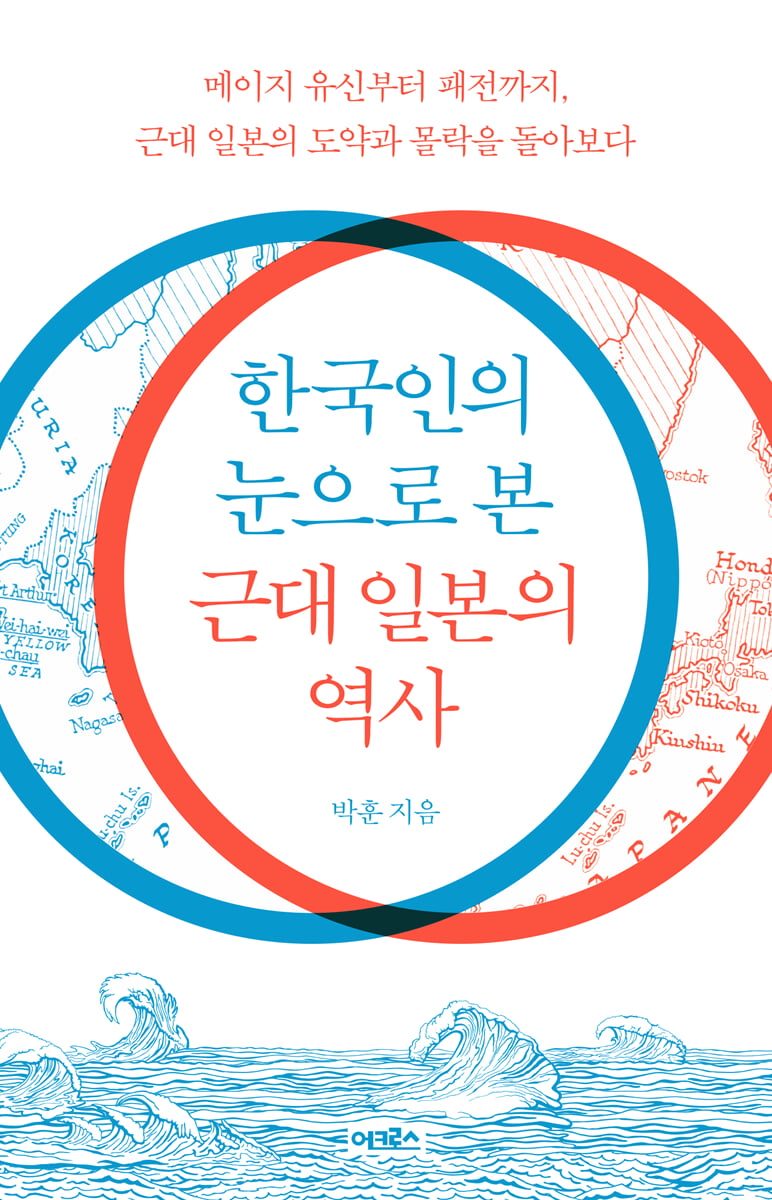
Modern Japanese History as Seen Through Korean Eyes
 |
Description
Book Introduction
“What questions does this history pose to us today?”
Professor Park Hoon of the Department of History at Seoul National University
Reflecting on Today's Korea through Modern Japan
To Koreans, Japan is still a ‘close yet distant country.’
Although they are geographically the closest neighbors, the emotional gap between the two countries is not easily bridged due to the clash of memories of colonial rule and historical perceptions, the Dokdo issue, and the battle over responsibility for past events.
So how should we view Japan, and what attitude should we adopt toward it? In 2025, the 80th anniversary of liberation and the 60th anniversary of the normalization of diplomatic relations between Korea and Japan, and with the potential for change in Korea-Japan relations beyond longstanding conflict and confrontation, Professor Park Hoon of the Department of History at Seoul National University has published "Modern Japanese History as Seen through Korean Eyes."
In this book, Professor Park Hoon does not simply criticize or emotionally approach modern Japan.
Instead, we read Japanese history based on reason and reflection, and look back on Korea's present and future within it.
He says.
"To live together as true neighbors, we need to go beyond superficial reconciliation and make the intellectual effort to learn from each other's history and reflect on ourselves within it." At a time when we must grapple with strategic choices within a complex international order, this book provides a humanistic compass for a deeper understanding of East Asian geopolitics.
Professor Park Hoon of the Department of History at Seoul National University
Reflecting on Today's Korea through Modern Japan
To Koreans, Japan is still a ‘close yet distant country.’
Although they are geographically the closest neighbors, the emotional gap between the two countries is not easily bridged due to the clash of memories of colonial rule and historical perceptions, the Dokdo issue, and the battle over responsibility for past events.
So how should we view Japan, and what attitude should we adopt toward it? In 2025, the 80th anniversary of liberation and the 60th anniversary of the normalization of diplomatic relations between Korea and Japan, and with the potential for change in Korea-Japan relations beyond longstanding conflict and confrontation, Professor Park Hoon of the Department of History at Seoul National University has published "Modern Japanese History as Seen through Korean Eyes."
In this book, Professor Park Hoon does not simply criticize or emotionally approach modern Japan.
Instead, we read Japanese history based on reason and reflection, and look back on Korea's present and future within it.
He says.
"To live together as true neighbors, we need to go beyond superficial reconciliation and make the intellectual effort to learn from each other's history and reflect on ourselves within it." At a time when we must grapple with strategic choices within a complex international order, this book provides a humanistic compass for a deeper understanding of East Asian geopolitics.
- You can preview some of the book's contents.
Preview
index
At the beginning of the book
Part 1: The Road to the Meiji Restoration
Chapter 1: The Appearance of Perry's Fleet and the Shogunate's Response
Chapter 2: The Emergence of the Emperor and the Rise of Anti-Shogunate Forces
Chapter 3: The Overthrow of the Shogunate and the Success of the Meiji Restoration
Part 2: The Light and Shadows of Modern Korean and Japanese History in the 19th Century
Chapter 4: The Western Shock and Japan-Korea Responses
Chapter 5: Joseon's Anti-Qing Struggle in the 1880s
Chapter 6: The Enlightenment Movement in Japan and Korea
Part 3: 20th Century Japanese History and Korea
Chapter 7: Imperialism and Democracy in Modern Japan
Chapter 8: The Rise of the Japanese Military and Militarism
Chapter 9: The Fall of the Empire of Japan and Postwar Japan-Korea Relations
Part 1: The Road to the Meiji Restoration
Chapter 1: The Appearance of Perry's Fleet and the Shogunate's Response
Chapter 2: The Emergence of the Emperor and the Rise of Anti-Shogunate Forces
Chapter 3: The Overthrow of the Shogunate and the Success of the Meiji Restoration
Part 2: The Light and Shadows of Modern Korean and Japanese History in the 19th Century
Chapter 4: The Western Shock and Japan-Korea Responses
Chapter 5: Joseon's Anti-Qing Struggle in the 1880s
Chapter 6: The Enlightenment Movement in Japan and Korea
Part 3: 20th Century Japanese History and Korea
Chapter 7: Imperialism and Democracy in Modern Japan
Chapter 8: The Rise of the Japanese Military and Militarism
Chapter 9: The Fall of the Empire of Japan and Postwar Japan-Korea Relations
Detailed image

Into the book
In the 18th century, Japan had a large overall population, but more importantly, it had one of the highest urban population ratios in the world.
In addition to Edo (1 million people), Osaka (380,000 people), and Kyoto (340,000 people), which are known as the three major cities of Japan, the capitals of each domain, the castle towns, also had populations in the tens of thousands.
In the mid-18th century, Beijing's population was estimated at 1 million, London at 650,000, Paris at 550,000, and Seoul at less than 300,000.
Edo was one of the largest cities in the world.
After Perry left, Masahiro Abe pushed forward with reform policies.
First, the Naval School was opened in Nagasaki.
That's his kind of insight.
This is because I realized that the world has become one where you have to give up your country's lifeline just to catch a fish from the sea.
Dutch instructors were brought in to teach shipbuilding and navigation skills.
Regardless of whether it was the shogunate or the domain, they began to train future naval talents by enrolling excellent vassals.
Hiring talented foreigners at the highest possible wages to train Japanese disciples was the starting point of the development strategy later adopted by modern Japan.
Just 50 years later, in 1905, the Japanese Navy destroyed the Russian Baltic Fleet in the Battle of Tsushima (Russo-Japanese War).
--- From "Chapter 1: The Appearance of the Perry Fleet and the Shogunate's Response"
While the shogunate and samurai were overly proud and looked down on the emperor and his subjects as "weak, worldly people in long sleeves," Kyoto was slowly but steadily changing.
In 1858, when the shogunate dispatched Hotta Masayoshi to obtain imperial approval for a trade treaty, Emperor Komei was a young monarch of 27 years in his 12th year of reign.
It was rather natural that these young emperors and their subjects, who had grown up and learned in such an atmosphere, would take independent political action when faced with the national crisis of opening the ports.
It is not uncommon in history for the world to be shocked when changes that have accumulated over a long period of time, though not readily apparent, are revealed to the surface.
--- From "Chapter 2: The Emergence of the Emperor and the Rise of Anti-Shogunate Forces"
If Yoshida Shoin represents the radical idealism, fanatical nationalism, and potential aggression of the Meiji Restoration, Sakamoto Ryoma symbolizes astute realism, insight into international affairs, and gradual pacifism.
Shinzo Abe likes Shoin Yoshida, and SoftBank Chairman Masayoshi Son likes Ryoma Sakamoto.
Yoshida may have shone in the era of nationalism and imperialism, but the Japan of the future will have to look to Sakamoto for guidance.
Sakamoto Ryoma met Katsu Kaishu in Edo.
Among the shogunate officials, he was the greatest Western scholar of his time and the person who laid the foundation for the Japanese navy.
After meeting Katsu, Sakamoto's eyes were opened to the importance of the navy and trade.
I had a feeling that the master of the sea would conquer the world.
He followed in Katsu's footsteps and established Kameyama Satsu in Nagasaki.
It's an organization like a trading company.
Its goals were to recruit talent regardless of social status, promote trade, learn foreign languages, and develop Ezo (present-day Hokkaido).
This later received official support from the Tosa clan and developed into the Gaientai, a modern navy and trading company.
--- From "Chapter 3: The Overthrow of the Shogunate and the Success of the Meiji Restoration"
When Daewongun came to power in 1864, it was the year in which the shogunate and anti-shogunate factions (Satsuma and Choshu clans) began competing to enrich the country, strengthen its military, and modernize the country.
No matter who won, Japan's path was set.
With a rich and powerful country and Westernization.
And four years later, the Meiji Restoration broke out.
Daewongun was overthrown in 1873, after ten years in power.
It was a limitation that he could not become king himself.
Behind-the-scenes manipulation is always risky and has its limitations.
The Gojong and Min regimes that replaced him tried hard, but they did not have strong political leadership like that of Daewongun.
From then until the fall of Joseon, no other leader as powerful as him emerged.
For nearly 60 years, Joseon's political leadership was thoroughly divided, let alone its leadership.
The reason I dreamed was because of my complex.
A small-country complex toward the West and China, an autistic self-awareness that comes from being confined to the archipelago for 300 years due to national isolation, and a complex from the humiliation of the process of opening the country, etc.
However, if you dream often enough, it will become public opinion and eventually a movement to make it a reality will arise.
For that to happen, several conditions are necessary.
There must be a large number of people who cannot distinguish between fantasy and reality, and there must be a political reason and political power to exploit such people.
The Seikanron, which began to boil over immediately after the Meiji Restoration, emerged in precisely such an environment.
--- From "Chapter 4: The Shock from the West and the Response of Korea and Japan"
What exactly was ‘Colonial Korea’ to the Japanese Empire?
Colonial Korea was unique in many ways.
First of all, Joseon was a neighboring country of Japan.
Western countries also had colonies all over the world, but they could not do the same to the countries right next door.
(...) Moreover, Joseon was a country that maintained its own independent kingdom for over 1,000 years.
At the time, the Japanese insisted that Joseon had been a country subordinate to China since the Han Dynasty, but when we look at the fact that they referred to Joseon among themselves as a “millennium-old kingdom” and a “people with strong pride and no sense of superiority,” we can see that they secretly acknowledged that Joseon was an independent country.
Moreover, at the time of Korea's annexation, the Korean Empire, unlike other colonies, had a proper national flag (Taegeukgi), and many people accepted it.
If you look at the scene of a political rally at the end of the Joseon Dynasty, you can see people wearing hats and white clothes gathered under a large Taegeukgi (Korean flag), but they were already 'citizens' rather than 'people'.
--- From “Chapter 7 Imperialism and Democracy in Modern Japan”
The Chinese, who were thought to be naive, began to unite in response to Japan's provocations.
Japan gave the gift of 'nationalism' to the scattered grains of sand of the Chinese people.
Chiang Kai-shek quickly climbed on board.
(...) No matter how hard they tried, Japan could not completely control China.
The land was too vast and there were too many people.
Even in colonial Korea, even if they requisitioned rice bowls and mobilized Koreans as soldiers, it was like pouring water into a bottomless pit.
I was stuck in the mud and couldn't do anything.
Every country has times when it is confused and times when it appears weak.
You feel a temptation that seems like it could be easily subdued.
(...) Moreover, Japan's opponent at the time was China.
In 1941, the Japanese military expanded its front to the United States and Southeast Asia, but was unable to withdraw its troops from China for fear of a Chinese counterattack.
The Empire of Japan drowned in the huge swamp called China.
--- From "Chapter 8: The Rise of the Japanese Military and Militarism"
But why do Koreans keep demanding an apology?
First of all, there are probably not many Korean citizens who remember the fact of Japan's apology introduced above.
A bigger problem is the Japanese people's 'nonsense'.
The constantly spewing out ‘nonsense’ such as “Koreans changed their names because they wanted to”, “Japan did many good things during the colonial period”, and “Comfort women on the battlefield were a necessary system” instantly rendered the above ‘apology relay’ meaningless.
Moreover, the fact that those who made the 'reckless remarks' were not ordinary citizens but current ministers and influential politicians caused even more anger.
This may be why Koreans are skeptical of Japan's apology, saying it lacks sincerity.
In addition to Edo (1 million people), Osaka (380,000 people), and Kyoto (340,000 people), which are known as the three major cities of Japan, the capitals of each domain, the castle towns, also had populations in the tens of thousands.
In the mid-18th century, Beijing's population was estimated at 1 million, London at 650,000, Paris at 550,000, and Seoul at less than 300,000.
Edo was one of the largest cities in the world.
After Perry left, Masahiro Abe pushed forward with reform policies.
First, the Naval School was opened in Nagasaki.
That's his kind of insight.
This is because I realized that the world has become one where you have to give up your country's lifeline just to catch a fish from the sea.
Dutch instructors were brought in to teach shipbuilding and navigation skills.
Regardless of whether it was the shogunate or the domain, they began to train future naval talents by enrolling excellent vassals.
Hiring talented foreigners at the highest possible wages to train Japanese disciples was the starting point of the development strategy later adopted by modern Japan.
Just 50 years later, in 1905, the Japanese Navy destroyed the Russian Baltic Fleet in the Battle of Tsushima (Russo-Japanese War).
--- From "Chapter 1: The Appearance of the Perry Fleet and the Shogunate's Response"
While the shogunate and samurai were overly proud and looked down on the emperor and his subjects as "weak, worldly people in long sleeves," Kyoto was slowly but steadily changing.
In 1858, when the shogunate dispatched Hotta Masayoshi to obtain imperial approval for a trade treaty, Emperor Komei was a young monarch of 27 years in his 12th year of reign.
It was rather natural that these young emperors and their subjects, who had grown up and learned in such an atmosphere, would take independent political action when faced with the national crisis of opening the ports.
It is not uncommon in history for the world to be shocked when changes that have accumulated over a long period of time, though not readily apparent, are revealed to the surface.
--- From "Chapter 2: The Emergence of the Emperor and the Rise of Anti-Shogunate Forces"
If Yoshida Shoin represents the radical idealism, fanatical nationalism, and potential aggression of the Meiji Restoration, Sakamoto Ryoma symbolizes astute realism, insight into international affairs, and gradual pacifism.
Shinzo Abe likes Shoin Yoshida, and SoftBank Chairman Masayoshi Son likes Ryoma Sakamoto.
Yoshida may have shone in the era of nationalism and imperialism, but the Japan of the future will have to look to Sakamoto for guidance.
Sakamoto Ryoma met Katsu Kaishu in Edo.
Among the shogunate officials, he was the greatest Western scholar of his time and the person who laid the foundation for the Japanese navy.
After meeting Katsu, Sakamoto's eyes were opened to the importance of the navy and trade.
I had a feeling that the master of the sea would conquer the world.
He followed in Katsu's footsteps and established Kameyama Satsu in Nagasaki.
It's an organization like a trading company.
Its goals were to recruit talent regardless of social status, promote trade, learn foreign languages, and develop Ezo (present-day Hokkaido).
This later received official support from the Tosa clan and developed into the Gaientai, a modern navy and trading company.
--- From "Chapter 3: The Overthrow of the Shogunate and the Success of the Meiji Restoration"
When Daewongun came to power in 1864, it was the year in which the shogunate and anti-shogunate factions (Satsuma and Choshu clans) began competing to enrich the country, strengthen its military, and modernize the country.
No matter who won, Japan's path was set.
With a rich and powerful country and Westernization.
And four years later, the Meiji Restoration broke out.
Daewongun was overthrown in 1873, after ten years in power.
It was a limitation that he could not become king himself.
Behind-the-scenes manipulation is always risky and has its limitations.
The Gojong and Min regimes that replaced him tried hard, but they did not have strong political leadership like that of Daewongun.
From then until the fall of Joseon, no other leader as powerful as him emerged.
For nearly 60 years, Joseon's political leadership was thoroughly divided, let alone its leadership.
The reason I dreamed was because of my complex.
A small-country complex toward the West and China, an autistic self-awareness that comes from being confined to the archipelago for 300 years due to national isolation, and a complex from the humiliation of the process of opening the country, etc.
However, if you dream often enough, it will become public opinion and eventually a movement to make it a reality will arise.
For that to happen, several conditions are necessary.
There must be a large number of people who cannot distinguish between fantasy and reality, and there must be a political reason and political power to exploit such people.
The Seikanron, which began to boil over immediately after the Meiji Restoration, emerged in precisely such an environment.
--- From "Chapter 4: The Shock from the West and the Response of Korea and Japan"
What exactly was ‘Colonial Korea’ to the Japanese Empire?
Colonial Korea was unique in many ways.
First of all, Joseon was a neighboring country of Japan.
Western countries also had colonies all over the world, but they could not do the same to the countries right next door.
(...) Moreover, Joseon was a country that maintained its own independent kingdom for over 1,000 years.
At the time, the Japanese insisted that Joseon had been a country subordinate to China since the Han Dynasty, but when we look at the fact that they referred to Joseon among themselves as a “millennium-old kingdom” and a “people with strong pride and no sense of superiority,” we can see that they secretly acknowledged that Joseon was an independent country.
Moreover, at the time of Korea's annexation, the Korean Empire, unlike other colonies, had a proper national flag (Taegeukgi), and many people accepted it.
If you look at the scene of a political rally at the end of the Joseon Dynasty, you can see people wearing hats and white clothes gathered under a large Taegeukgi (Korean flag), but they were already 'citizens' rather than 'people'.
--- From “Chapter 7 Imperialism and Democracy in Modern Japan”
The Chinese, who were thought to be naive, began to unite in response to Japan's provocations.
Japan gave the gift of 'nationalism' to the scattered grains of sand of the Chinese people.
Chiang Kai-shek quickly climbed on board.
(...) No matter how hard they tried, Japan could not completely control China.
The land was too vast and there were too many people.
Even in colonial Korea, even if they requisitioned rice bowls and mobilized Koreans as soldiers, it was like pouring water into a bottomless pit.
I was stuck in the mud and couldn't do anything.
Every country has times when it is confused and times when it appears weak.
You feel a temptation that seems like it could be easily subdued.
(...) Moreover, Japan's opponent at the time was China.
In 1941, the Japanese military expanded its front to the United States and Southeast Asia, but was unable to withdraw its troops from China for fear of a Chinese counterattack.
The Empire of Japan drowned in the huge swamp called China.
--- From "Chapter 8: The Rise of the Japanese Military and Militarism"
But why do Koreans keep demanding an apology?
First of all, there are probably not many Korean citizens who remember the fact of Japan's apology introduced above.
A bigger problem is the Japanese people's 'nonsense'.
The constantly spewing out ‘nonsense’ such as “Koreans changed their names because they wanted to”, “Japan did many good things during the colonial period”, and “Comfort women on the battlefield were a necessary system” instantly rendered the above ‘apology relay’ meaningless.
Moreover, the fact that those who made the 'reckless remarks' were not ordinary citizens but current ministers and influential politicians caused even more anger.
This may be why Koreans are skeptical of Japan's apology, saying it lacks sincerity.
--- From "Chapter 9: The Fall of the Empire of Japan and Postwar Japan-Korea Relations"
Publisher's Review
What did Japan's "death leap" leave behind?
Asking questions through the eyes of a Korean
This book traces Japan's 100-year rise, transformation, and decline, from the arrival of the Perry Fleet in 1853, when Japan embarked on a path of full-scale modernization, to the Meiji Restoration, imperialist expansion, war and defeat, and post-war recovery and the normalization of diplomatic relations between Japan and Korea.
The lens through which the author views this history is clear.
Japan was not simply 'dragged' by the external pressure of Western powers, but rather took advantage of it as a turning point for the nation and actively took a 'leap forward'.
It was the so-called “leap of death.”
But this leap had fatal consequences for East Asia.
From the colonization of Joseon, to the wars of aggression against Asia, to the conflicts of the past that continue to this day.
Therefore, before we praise or condemn Japan's leap forward, we need to calmly analyze the structure and driving force behind its choices.
In the process, Professor Park Hoon calmly and three-dimensionally depicts how Japan was the fastest to perceive global changes, achieved its own systemic transformation, and ultimately emerged as the dominant power in East Asia.
What is interesting is that this book is not simply a narrative of Japanese history.
This book is, after all, a history of Japan seen through the eyes of Koreans.
The author sees Joseon (Korea) through Japan.
This book shows specifically how the choices made by Japan and Korea differed through a comparative historical perspective.
It shows the differences between Daewongun's reforms and the Meiji Restoration, Kim Ok-gyun and Ito Hirobumi, the Treaty of Ganghwa Island and Japan's trade treaty, and goes beyond simply listing historical episodes to asking the essence of what a nation considers and how it makes decisions when faced with a crisis.
From the Meiji Restoration to the defeat of the Japanese Empire
A complete look at modern Japan
Part 1 of the book, "The Road to the Meiji Restoration," covers the period from Commodore Perry's demand for the opening of the ports to the completion of the Meiji Restoration.
It provides an interesting account of how Japan responded to the shocks of foreign powers and how it reorganized its national system amidst the power struggle between the Imperial Court and the Shogunate.
It vividly portrays the turmoil and anxiety in Japanese society at the time through the political rise of the emperor and the thoughts and activities of figures such as Yoshida Shoin and Sakamoto Ryoma.
Part 2, “The Light and Shadow of Modern Korean and Japanese History in the 19th Century,” compares the choices and outcomes of Joseon and Japan, which lived during the same period.
Through the reforms of Daewongun, the division of Joseon's reformists, and the differences between the Meiji Restoration and Japan's diplomatic strategies, we look back on why Joseon lost its way at the crossroads of modernity.
Reinterprets major events in 19th-century East Asia, from the Treaty of Ganghwa to the Gapsin Coup, the exile and death of Kim Ok-gyun, and the Sino-Japanese War.
Part 3, “20th Century Japanese History and Korea,” examines the expansion and fall of Japanese imperialism, and the post-war recovery process.
It analyzes the history of aggression that unfolded during the Russo-Japanese War, the Second Sino-Japanese War, and the Pacific War, as well as the process by which Japan transformed into an economic powerhouse while avoiding responsibility after its defeat.
It also sheds light on the roots of long-standing Korea-Japan relations, from the normalization of diplomatic relations between Korea and Japan, to apologies for past wrongdoings, to the anti-Korean sentiment of today, within a historical context.
Reading history with insight over condemnation, with questions over anger.
What choices could Korea make, and what choices must it make now?
"Modern Japanese History Through Korean Eyes" stimulates historical and three-dimensional thinking through a structural and comparative perspective, rather than simply listing events. It also immerses readers in historical storytelling through extensive data and vivid character portrayals.
Professor Park Hoon's concise sentences, free of unnecessary details, and his outstanding insight in organizing complex issues into easy-to-understand texts stand out.
Above all, what makes this book special is its balanced perspective and solid problem awareness.
The author says:
“Just condemning modern Japan might feel good, but it still leaves you feeling heavy-headed.” The author doesn’t romanticize Japan, but he doesn’t get caught up in emotions either.
He simply asks, 'How did Japan get to that point?' and, within that question, reflects on what choices Korea could have made.
Furthermore, it naturally leads us to look back on our own past, present, and future direction.
History is not a moral lesson, but rather an accumulation of choices and consequences faced by people and nations.
This book makes us reflect on where we were in the process of accumulation.
That is why this book is both Japanese history and Korean history, the past and the present, a history book and a guide to preparing for the future.
This book will be a great companion on the journey of self-reflection through the lens of Japan.
Asking questions through the eyes of a Korean
This book traces Japan's 100-year rise, transformation, and decline, from the arrival of the Perry Fleet in 1853, when Japan embarked on a path of full-scale modernization, to the Meiji Restoration, imperialist expansion, war and defeat, and post-war recovery and the normalization of diplomatic relations between Japan and Korea.
The lens through which the author views this history is clear.
Japan was not simply 'dragged' by the external pressure of Western powers, but rather took advantage of it as a turning point for the nation and actively took a 'leap forward'.
It was the so-called “leap of death.”
But this leap had fatal consequences for East Asia.
From the colonization of Joseon, to the wars of aggression against Asia, to the conflicts of the past that continue to this day.
Therefore, before we praise or condemn Japan's leap forward, we need to calmly analyze the structure and driving force behind its choices.
In the process, Professor Park Hoon calmly and three-dimensionally depicts how Japan was the fastest to perceive global changes, achieved its own systemic transformation, and ultimately emerged as the dominant power in East Asia.
What is interesting is that this book is not simply a narrative of Japanese history.
This book is, after all, a history of Japan seen through the eyes of Koreans.
The author sees Joseon (Korea) through Japan.
This book shows specifically how the choices made by Japan and Korea differed through a comparative historical perspective.
It shows the differences between Daewongun's reforms and the Meiji Restoration, Kim Ok-gyun and Ito Hirobumi, the Treaty of Ganghwa Island and Japan's trade treaty, and goes beyond simply listing historical episodes to asking the essence of what a nation considers and how it makes decisions when faced with a crisis.
From the Meiji Restoration to the defeat of the Japanese Empire
A complete look at modern Japan
Part 1 of the book, "The Road to the Meiji Restoration," covers the period from Commodore Perry's demand for the opening of the ports to the completion of the Meiji Restoration.
It provides an interesting account of how Japan responded to the shocks of foreign powers and how it reorganized its national system amidst the power struggle between the Imperial Court and the Shogunate.
It vividly portrays the turmoil and anxiety in Japanese society at the time through the political rise of the emperor and the thoughts and activities of figures such as Yoshida Shoin and Sakamoto Ryoma.
Part 2, “The Light and Shadow of Modern Korean and Japanese History in the 19th Century,” compares the choices and outcomes of Joseon and Japan, which lived during the same period.
Through the reforms of Daewongun, the division of Joseon's reformists, and the differences between the Meiji Restoration and Japan's diplomatic strategies, we look back on why Joseon lost its way at the crossroads of modernity.
Reinterprets major events in 19th-century East Asia, from the Treaty of Ganghwa to the Gapsin Coup, the exile and death of Kim Ok-gyun, and the Sino-Japanese War.
Part 3, “20th Century Japanese History and Korea,” examines the expansion and fall of Japanese imperialism, and the post-war recovery process.
It analyzes the history of aggression that unfolded during the Russo-Japanese War, the Second Sino-Japanese War, and the Pacific War, as well as the process by which Japan transformed into an economic powerhouse while avoiding responsibility after its defeat.
It also sheds light on the roots of long-standing Korea-Japan relations, from the normalization of diplomatic relations between Korea and Japan, to apologies for past wrongdoings, to the anti-Korean sentiment of today, within a historical context.
Reading history with insight over condemnation, with questions over anger.
What choices could Korea make, and what choices must it make now?
"Modern Japanese History Through Korean Eyes" stimulates historical and three-dimensional thinking through a structural and comparative perspective, rather than simply listing events. It also immerses readers in historical storytelling through extensive data and vivid character portrayals.
Professor Park Hoon's concise sentences, free of unnecessary details, and his outstanding insight in organizing complex issues into easy-to-understand texts stand out.
Above all, what makes this book special is its balanced perspective and solid problem awareness.
The author says:
“Just condemning modern Japan might feel good, but it still leaves you feeling heavy-headed.” The author doesn’t romanticize Japan, but he doesn’t get caught up in emotions either.
He simply asks, 'How did Japan get to that point?' and, within that question, reflects on what choices Korea could have made.
Furthermore, it naturally leads us to look back on our own past, present, and future direction.
History is not a moral lesson, but rather an accumulation of choices and consequences faced by people and nations.
This book makes us reflect on where we were in the process of accumulation.
That is why this book is both Japanese history and Korean history, the past and the present, a history book and a guide to preparing for the future.
This book will be a great companion on the journey of self-reflection through the lens of Japan.
GOODS SPECIFICS
- Date of issue: July 21, 2025
- Page count, weight, size: 352 pages | 448g | 136*210*20mm
- ISBN13: 9791167742216
- ISBN10: 1167742214
You may also like
카테고리
korean


korean

![GQ KOREA Mark (Monthly): December [2025]](http://librairie.coreenne.fr/cdn/shop/files/8ef265dbbfbf186523ed75ba7319009d.jpg?v=1765340328&width=3840)


