

Dangun's Country, Kazakhstan (Color Edition)
 |
Description
Book Introduction
Color edition of "Dangun's Country, Kazakhstan" released
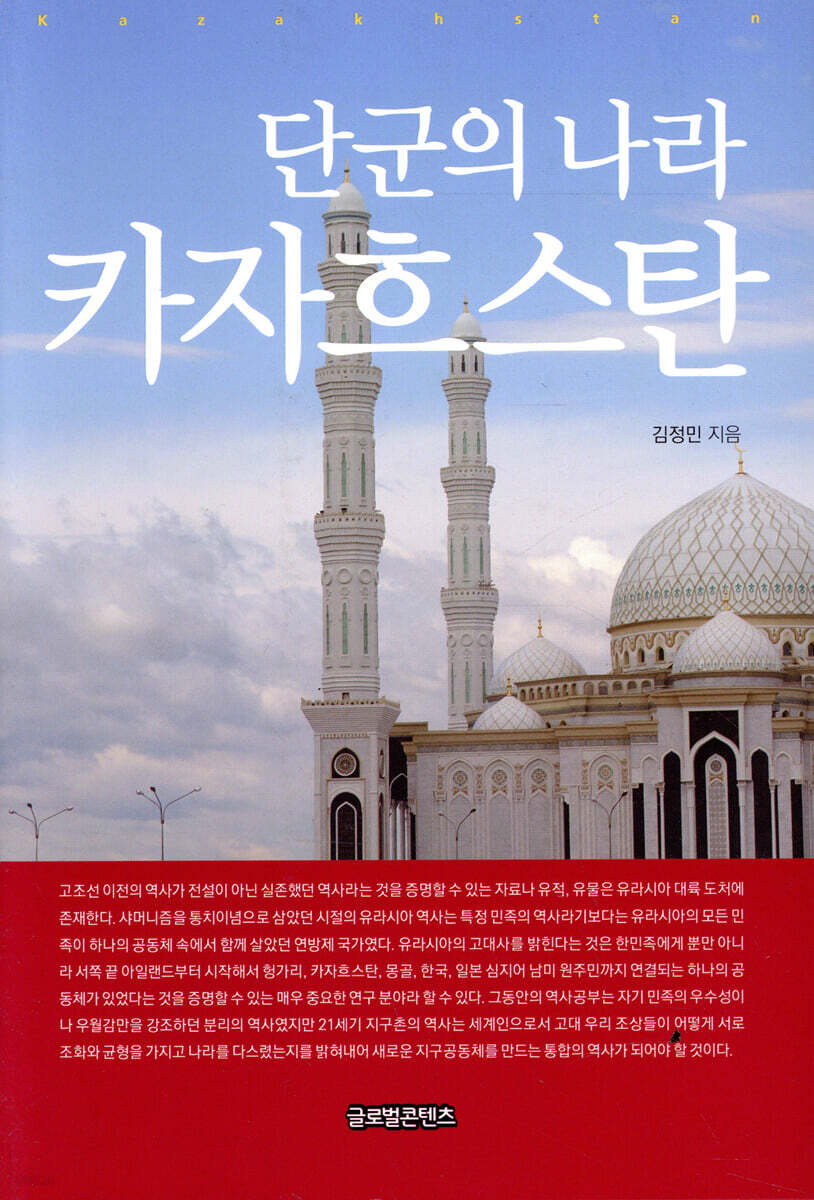
‘Kazakhstan, the Land of Dangun’, first published in January 2015, has been published in color.
This book, published thanks to the support of readers who loved the first edition, features visual aids such as color photographs that help provide more accurate explanations and understanding.
History, the key to the New Silk Road era
Westerners created computers, the Internet, and the IT industry based on the binary system of mathematics.
I believe that it is time for the Korean people of the 21st century, living in the capitalist era, to study history not simply from a purely academic perspective, but with the understanding that it can serve as a historical philosophy for the construction of the New Silk Road and the foundation for the construction of a Eurasian common economic zone.
This book was written with the aim of Korea actively participating in the 'Pan-Turkic Peoples Joint History Textbook Establishment Movement' currently underway among Central Asian countries, creating a joint history textbook for the northern Eurasian peoples, fostering a sense of brotherhood, and expanding high-speed rail trade, resource diplomacy, and civilian exchanges across the Eurasian continent.
‘Kazakhstan, the Land of Dangun’, first published in January 2015, has been published in color.
This book, published thanks to the support of readers who loved the first edition, features visual aids such as color photographs that help provide more accurate explanations and understanding.
History, the key to the New Silk Road era
Westerners created computers, the Internet, and the IT industry based on the binary system of mathematics.
I believe that it is time for the Korean people of the 21st century, living in the capitalist era, to study history not simply from a purely academic perspective, but with the understanding that it can serve as a historical philosophy for the construction of the New Silk Road and the foundation for the construction of a Eurasian common economic zone.
This book was written with the aim of Korea actively participating in the 'Pan-Turkic Peoples Joint History Textbook Establishment Movement' currently underway among Central Asian countries, creating a joint history textbook for the northern Eurasian peoples, fostering a sense of brotherhood, and expanding high-speed rail trade, resource diplomacy, and civilian exchanges across the Eurasian continent.
- You can preview some of the book's contents.
Preview
index
Before we begin…
Chapter 1: The Formation of the Ural-Altaic Peoples as Explained through Mythology
1.
Flood legend
2.
The relationship between the area where Nuh's Ark settled and the Hwan-guk
3.
Traces of Gojoseon and Hwan-guk remain in the Pamir Plateau
4.
The legend of Ashina
5.
The founding myth of the Wisun (?йс?н, 烏孫) tribe
6.
Is the Kunmo King myth the Geumwa King myth?
Chapter 2: The Common Origins of Northern Peoples and the Korean People
1.
The Huns and the Korean people are the same people
2.
Buyeo is a country founded by the descendants of wolves.
3.
Joseon (Buyeo) and the Huns are the same country.
4.
Similarities between Central Asian warriors and Goguryeo's Gaema warriors
5.
Similarities between the attire of Bilgeka Khan and Goguryeo warriors
6.
The Rise of the Huns
Chapter 3: The Gojoseon People's Seocheon
1.
Xiongnu's Xichuan
2.
The mysterious Scythian people
3.
Reason for having a headache
Chapter 4: Kazakh Zhu (Ж?з) and Gojoseon Joseon
1.
Composition of the Kazakh people
2.
Scythian bone rank system: Ak-Suiek (А?с?йек: white bone)
3.
Are the Scythians a Dongi people?
Chapter 5: Similarities between Kazakh and Korean-Sino-Korean Languages
1.
The bow is the symbol of the Dongi people
2.
Words commonly found in Sino-Korean, Korean, and Kazakh
3.
Another piece of evidence that Chinese characters were widely used among northern peoples.
4.
Pronunciation rules of Altaic languages
Chapter 6: Koreans who advanced into Central Asia 1
1.
Estimated locations of the Hwan states based on the distribution of the Scythians
2.
The Hungarian-Bulgarian legend of Hunor and Magor
3.
The policy of dividing the country into three parts: Scythia, Huns, Joseon, and Kazakhstan
4.
The westward advance of the Uzbeks
5.
Kangre (?а?лы)'s westward advance
6.
Where does Kangr (?а?лы) come from?
7.
Kerei and Buryat
Chapter 7: Koreans who advanced into Central Asia 2
1.
Kazakhstan's Seven-Legged Golden Sword
2.
Who is the woman on the sword of the Kimak (?има?) tribe?
3.
What the Golden Sword and the Sword of the Kimak Tribe Mean
4.
The "Arrow": A Link Between Hungary, Kazakhstan, and Uyghurs
5.
The relationship between Silla's golden sword and Ogz
6.
Origin of the Tatars
7.
The first founder of the Hwan-guk was a Tatar.
8.
Territories and migration routes of the Tatar tribes
Chapter 8: The Huan System as Seen Through the Culture of Central Asian Peoples
1.
Suksin-Yeojin-Joseon-Jushin-Jusin are words with the same etymology
2.
What is Jushin?
3.
Traces of Hwanung's god and Dangun Joseon remaining in Kazakhstan and Korea
4.
Where was the first city built by Hwanung (Geobalhan)?
Chapter 9: Turkic pronunciation of characters and place names in "Handangogi"
1.
Central Asian pronunciation of characters in the Dangun myth
2.
Where does the word "delivery people" come from?
3.
What are the Tungusic people?
Chapter 10 Hercules and Nymph
1.
Who is the snake woman who married Targtai?
2.
Why is it shaped like a snake or a bird?
3.
Images of Tahobokhui and Nüwa spread throughout the world
4.
Tribes that migrated from Central Asia to Europe
Chapter 11: Traces of Joseon Remaining in Europe
1.
Similarities between Slavic and Altai-Turkic folk religions
2.
Similarities between the Celts and the Altai-Turkic peoples
3.
The Turkic gods who brought civilization to the Vikings
4.
Was ancient Greco-Roman civilization European?
5.
Similarities between ancient Greco-Roman civilization and northern nomadic culture
6.
Is the woman from Pazyryk Kurgan a woman?
7.
The formation of Eastern European peoples
8.
The possibility that Altaic-Turkic languages existed in the Middle East
Chapter 12: Destroyed History
1.
Westerners' Erasing of Asian Traces
2.
Reasons for isolating the Dravidian language family
3.
White complex
4.
Are Aryans white?
5.
When did blond white people come to live in Europe?
6.
Why is the grammar of Ancient Latin different from that of Modern Latin?
In closing
References
Chapter 1: The Formation of the Ural-Altaic Peoples as Explained through Mythology
1.
Flood legend
2.
The relationship between the area where Nuh's Ark settled and the Hwan-guk
3.
Traces of Gojoseon and Hwan-guk remain in the Pamir Plateau
4.
The legend of Ashina
5.
The founding myth of the Wisun (?йс?н, 烏孫) tribe
6.
Is the Kunmo King myth the Geumwa King myth?
Chapter 2: The Common Origins of Northern Peoples and the Korean People
1.
The Huns and the Korean people are the same people
2.
Buyeo is a country founded by the descendants of wolves.
3.
Joseon (Buyeo) and the Huns are the same country.
4.
Similarities between Central Asian warriors and Goguryeo's Gaema warriors
5.
Similarities between the attire of Bilgeka Khan and Goguryeo warriors
6.
The Rise of the Huns
Chapter 3: The Gojoseon People's Seocheon
1.
Xiongnu's Xichuan
2.
The mysterious Scythian people
3.
Reason for having a headache
Chapter 4: Kazakh Zhu (Ж?з) and Gojoseon Joseon
1.
Composition of the Kazakh people
2.
Scythian bone rank system: Ak-Suiek (А?с?йек: white bone)
3.
Are the Scythians a Dongi people?
Chapter 5: Similarities between Kazakh and Korean-Sino-Korean Languages
1.
The bow is the symbol of the Dongi people
2.
Words commonly found in Sino-Korean, Korean, and Kazakh
3.
Another piece of evidence that Chinese characters were widely used among northern peoples.
4.
Pronunciation rules of Altaic languages
Chapter 6: Koreans who advanced into Central Asia 1
1.
Estimated locations of the Hwan states based on the distribution of the Scythians
2.
The Hungarian-Bulgarian legend of Hunor and Magor
3.
The policy of dividing the country into three parts: Scythia, Huns, Joseon, and Kazakhstan
4.
The westward advance of the Uzbeks
5.
Kangre (?а?лы)'s westward advance
6.
Where does Kangr (?а?лы) come from?
7.
Kerei and Buryat
Chapter 7: Koreans who advanced into Central Asia 2
1.
Kazakhstan's Seven-Legged Golden Sword
2.
Who is the woman on the sword of the Kimak (?има?) tribe?
3.
What the Golden Sword and the Sword of the Kimak Tribe Mean
4.
The "Arrow": A Link Between Hungary, Kazakhstan, and Uyghurs
5.
The relationship between Silla's golden sword and Ogz
6.
Origin of the Tatars
7.
The first founder of the Hwan-guk was a Tatar.
8.
Territories and migration routes of the Tatar tribes
Chapter 8: The Huan System as Seen Through the Culture of Central Asian Peoples
1.
Suksin-Yeojin-Joseon-Jushin-Jusin are words with the same etymology
2.
What is Jushin?
3.
Traces of Hwanung's god and Dangun Joseon remaining in Kazakhstan and Korea
4.
Where was the first city built by Hwanung (Geobalhan)?
Chapter 9: Turkic pronunciation of characters and place names in "Handangogi"
1.
Central Asian pronunciation of characters in the Dangun myth
2.
Where does the word "delivery people" come from?
3.
What are the Tungusic people?
Chapter 10 Hercules and Nymph
1.
Who is the snake woman who married Targtai?
2.
Why is it shaped like a snake or a bird?
3.
Images of Tahobokhui and Nüwa spread throughout the world
4.
Tribes that migrated from Central Asia to Europe
Chapter 11: Traces of Joseon Remaining in Europe
1.
Similarities between Slavic and Altai-Turkic folk religions
2.
Similarities between the Celts and the Altai-Turkic peoples
3.
The Turkic gods who brought civilization to the Vikings
4.
Was ancient Greco-Roman civilization European?
5.
Similarities between ancient Greco-Roman civilization and northern nomadic culture
6.
Is the woman from Pazyryk Kurgan a woman?
7.
The formation of Eastern European peoples
8.
The possibility that Altaic-Turkic languages existed in the Middle East
Chapter 12: Destroyed History
1.
Westerners' Erasing of Asian Traces
2.
Reasons for isolating the Dravidian language family
3.
White complex
4.
Are Aryans white?
5.
When did blond white people come to live in Europe?
6.
Why is the grammar of Ancient Latin different from that of Modern Latin?
In closing
References
Publisher's Review
Color edition of "Dangun's Country, Kazakhstan" released
‘Kazakhstan, the Land of Dangun’, first published in January 2015, has been published in color.
This book, published thanks to the support of readers who loved the first edition, features visual aids such as color photographs that help provide more accurate explanations and understanding.
Uncovering the ancient history of Eurasia
There are materials, relics, and artifacts all over the Eurasian continent that can prove that the history before Gojoseon was not a legend but a real history.
The history of Eurasia during the period when shamanism was the ruling ideology was not the history of a specific ethnic group, but rather a federal state in which all ethnic groups of Eurasia lived together in a single community.
Unraveling the ancient history of Eurasia is a crucial academic discipline, as it can prove that there was a single community that stretched from Ireland in the far west to Hungary, Kazakhstan, Mongolia, Korea, Japan, and even the indigenous peoples of South America.
The study of history thus far has been a history of separation, emphasizing only the superiority or superiority of one's own people. However, the history of the 21st century global village must become a history of integration, creating a new global community by uncovering how our ancient ancestors, as global citizens, governed their countries in harmony and balance.
An independent view of history that must be rediscovered
There have been many stories that the Korean people did not originally live on the Korean Peninsula but migrated from far away places.
The countries mentioned in our history books, such as Gojoseon, Goguryeo, and Balhae, all existed in Manchuria, and if we go back further to the ancient times and mention the Twelve Kingdoms and the Baedal Kingdom, we reach the Pamirs and Tibet.
Unfortunately, in the process of building a modern nation, we were colonized by Japan, and after liberation, the relationship between North and South Korea worsened due to the Korean War, and we went through the Cold War era. As a result, we were unable to establish an independent view of history that reflected our own position amidst the storm of foreign intervention and war in the process of establishing a modern historiography.
Moreover, the Cold War, which lasted nearly 60 years, presented many obstacles to our ability to record our own independent history even after independence.
The capitals of the former nations were all incorporated into the territories of communist China and Russia, making it a very dangerous time not only for academic research or excavation of historical sites, but also for reading books by local historians.
Now that the Cold War era has ended and an era of limitless competition has arrived, many Central Asian peoples, as well as Koreans, are living in a hectic time where they must worry about their immediate livelihoods, and efforts to establish identity or foster national pride feel like great luxuries.
However, even in this busy life, if we fail to understand the shared history of Eurasia, we will lose the basic knowledge that can open up even greater business and private diplomacy opportunities in the era of the New Silk Road. Therefore, we must realize that taking some time to acquire knowledge and information about this region will benefit our future and our lives.
History, the key to the New Silk Road era
Westerners created computers, the Internet, and the IT industry based on the binary system of mathematics.
I believe that it is time for the Korean people of the 21st century, living in the capitalist era, to study history not simply from a purely academic perspective, but with the understanding that it can serve as a historical philosophy for the construction of the New Silk Road and the foundation for the construction of a Eurasian common economic zone.
This book was written with the aim of Korea actively participating in the 'Pan-Turkic Peoples Joint History Textbook Establishment Movement' currently underway among Central Asian countries, creating a joint history textbook for the northern Eurasian peoples, fostering a sense of brotherhood, and expanding high-speed rail trade, resource diplomacy, and civilian exchanges across the Eurasian continent.
Brotherly peoples, Kazakhs and Mongols
The history of the Kazakhs and Mongols, like that of Korea, was under the rule of the Russian Empire and the Soviet Union, and many shamans who had passed down ancient history and knowledge were massacred and books and cultural assets were plundered, causing them to lose much of their history.
Nevertheless, it is surprising to see that the history of the Kazakhs and Mongols overlaps with that of Korea in many respects, even if we only look at the historical records that remain today and the history of nomadic peoples recorded in some records by Russian scholars.
Not only the Kazakhs and Mongols, but also all the peoples of Central Asia, and even many peoples in Eastern Europe and Russia, are peoples with whom we have deep historical and blood ties.
Therefore, we must have a sense of kinship with them, not as foreigners, but as our own brother people, and they are a people with whom we must maintain good relations in order for our people to usher in an era of the New Silk Road in Central Asia and to pursue resource diplomacy superior to that of other countries.
Brotherly Peoples of Central Asia
The reason why Turks do better business in Central Asia than other foreigners is because of the Pan-Turkic movement they advocate. Turks see Central Asians as brother nations, and when Central Asian countries gained independence from the Soviet Union, the Turkish government sent many doctors, nurses, and teachers to help Central Asian countries escape communism and adapt to the unfamiliar capitalism, which later led to many business opportunities from these countries.
In order for our people to develop and advance toward a better future, we must abandon the diplomatic approach of simply spitting out what's bitter and swallowing what's sweet, blinded by short-term gains. Instead, we must quickly adopt an attitude of treating the northern peoples of Eurasia as our long-lost compatriots.
Even if only a small number of Koreans show interest, I have no doubt that if those with a proper understanding of our Central Asian brotherhood come to Central Asia and do business, they can, thanks to the current popularity of the Korean Wave, instantly restore relations and lay the philosophical foundation for rebuilding the nomadic federation that once existed on the ancient Eurasian continent.
‘Kazakhstan, the Land of Dangun’, first published in January 2015, has been published in color.
This book, published thanks to the support of readers who loved the first edition, features visual aids such as color photographs that help provide more accurate explanations and understanding.
Uncovering the ancient history of Eurasia
There are materials, relics, and artifacts all over the Eurasian continent that can prove that the history before Gojoseon was not a legend but a real history.
The history of Eurasia during the period when shamanism was the ruling ideology was not the history of a specific ethnic group, but rather a federal state in which all ethnic groups of Eurasia lived together in a single community.
Unraveling the ancient history of Eurasia is a crucial academic discipline, as it can prove that there was a single community that stretched from Ireland in the far west to Hungary, Kazakhstan, Mongolia, Korea, Japan, and even the indigenous peoples of South America.
The study of history thus far has been a history of separation, emphasizing only the superiority or superiority of one's own people. However, the history of the 21st century global village must become a history of integration, creating a new global community by uncovering how our ancient ancestors, as global citizens, governed their countries in harmony and balance.
An independent view of history that must be rediscovered
There have been many stories that the Korean people did not originally live on the Korean Peninsula but migrated from far away places.
The countries mentioned in our history books, such as Gojoseon, Goguryeo, and Balhae, all existed in Manchuria, and if we go back further to the ancient times and mention the Twelve Kingdoms and the Baedal Kingdom, we reach the Pamirs and Tibet.
Unfortunately, in the process of building a modern nation, we were colonized by Japan, and after liberation, the relationship between North and South Korea worsened due to the Korean War, and we went through the Cold War era. As a result, we were unable to establish an independent view of history that reflected our own position amidst the storm of foreign intervention and war in the process of establishing a modern historiography.
Moreover, the Cold War, which lasted nearly 60 years, presented many obstacles to our ability to record our own independent history even after independence.
The capitals of the former nations were all incorporated into the territories of communist China and Russia, making it a very dangerous time not only for academic research or excavation of historical sites, but also for reading books by local historians.
Now that the Cold War era has ended and an era of limitless competition has arrived, many Central Asian peoples, as well as Koreans, are living in a hectic time where they must worry about their immediate livelihoods, and efforts to establish identity or foster national pride feel like great luxuries.
However, even in this busy life, if we fail to understand the shared history of Eurasia, we will lose the basic knowledge that can open up even greater business and private diplomacy opportunities in the era of the New Silk Road. Therefore, we must realize that taking some time to acquire knowledge and information about this region will benefit our future and our lives.
History, the key to the New Silk Road era
Westerners created computers, the Internet, and the IT industry based on the binary system of mathematics.
I believe that it is time for the Korean people of the 21st century, living in the capitalist era, to study history not simply from a purely academic perspective, but with the understanding that it can serve as a historical philosophy for the construction of the New Silk Road and the foundation for the construction of a Eurasian common economic zone.
This book was written with the aim of Korea actively participating in the 'Pan-Turkic Peoples Joint History Textbook Establishment Movement' currently underway among Central Asian countries, creating a joint history textbook for the northern Eurasian peoples, fostering a sense of brotherhood, and expanding high-speed rail trade, resource diplomacy, and civilian exchanges across the Eurasian continent.
Brotherly peoples, Kazakhs and Mongols
The history of the Kazakhs and Mongols, like that of Korea, was under the rule of the Russian Empire and the Soviet Union, and many shamans who had passed down ancient history and knowledge were massacred and books and cultural assets were plundered, causing them to lose much of their history.
Nevertheless, it is surprising to see that the history of the Kazakhs and Mongols overlaps with that of Korea in many respects, even if we only look at the historical records that remain today and the history of nomadic peoples recorded in some records by Russian scholars.
Not only the Kazakhs and Mongols, but also all the peoples of Central Asia, and even many peoples in Eastern Europe and Russia, are peoples with whom we have deep historical and blood ties.
Therefore, we must have a sense of kinship with them, not as foreigners, but as our own brother people, and they are a people with whom we must maintain good relations in order for our people to usher in an era of the New Silk Road in Central Asia and to pursue resource diplomacy superior to that of other countries.
Brotherly Peoples of Central Asia
The reason why Turks do better business in Central Asia than other foreigners is because of the Pan-Turkic movement they advocate. Turks see Central Asians as brother nations, and when Central Asian countries gained independence from the Soviet Union, the Turkish government sent many doctors, nurses, and teachers to help Central Asian countries escape communism and adapt to the unfamiliar capitalism, which later led to many business opportunities from these countries.
In order for our people to develop and advance toward a better future, we must abandon the diplomatic approach of simply spitting out what's bitter and swallowing what's sweet, blinded by short-term gains. Instead, we must quickly adopt an attitude of treating the northern peoples of Eurasia as our long-lost compatriots.
Even if only a small number of Koreans show interest, I have no doubt that if those with a proper understanding of our Central Asian brotherhood come to Central Asia and do business, they can, thanks to the current popularity of the Korean Wave, instantly restore relations and lay the philosophical foundation for rebuilding the nomadic federation that once existed on the ancient Eurasian continent.
GOODS SPECIFICS
- Date of issue: April 15, 2016
- Page count, weight, size: 388 pages | 664g | 152*224*21mm
- ISBN13: 9791158520892
- ISBN10: 1158520891
You may also like
카테고리
korean


korean

![GQ KOREA Mark (Monthly): December [2025]](http://librairie.coreenne.fr/cdn/shop/files/8ef265dbbfbf186523ed75ba7319009d.jpg?v=1765340328&width=3840)


